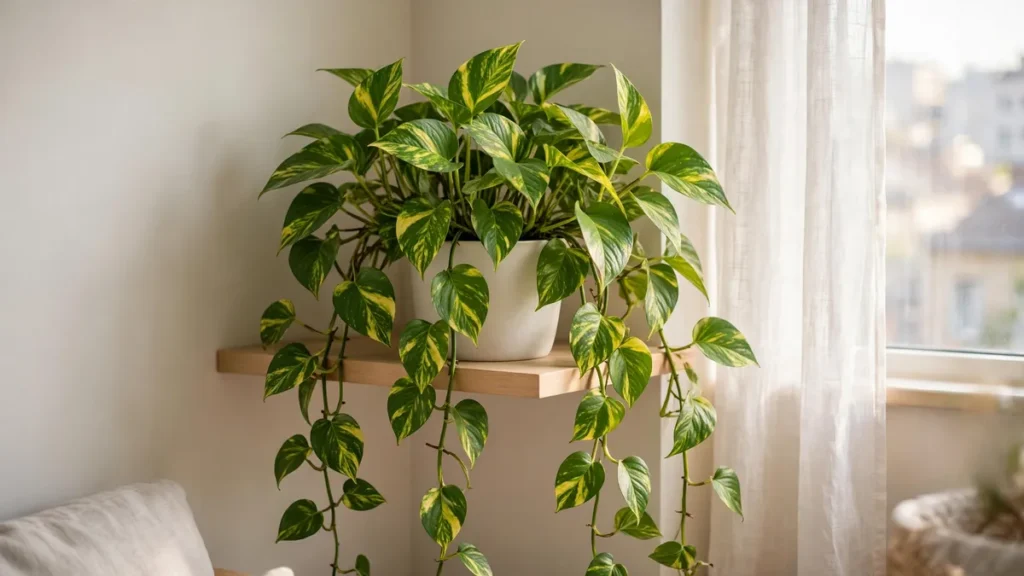
The best low light indoor plants for a small apartment are pothos, snake plant, ZZ plant, cast iron plant and Chinese evergreen, because they keep growing at light levels where most houseplants stall. Every plant here survives at 100 foot-candles or less, and several manage on half. Each entry gives minimum light in foot-candles and lux, whether it is safe around cats and dogs, and how hard it is to keep alive, so you can match one to your darkest corner. This guide is part of our low light plants hub, where every low-light guide lives in one place.
What Low Light Actually Means (Foot-Candles and Lux, Simply Explained)
Low light means 25 to 100 foot-candles, which converts to about 270 to 1,080 lux. A foot-candle is the light of one candle at one foot away, and lux is the metric version of the same idea. In a flat, low light is the spot a few feet from a north-facing window, or a corner lit mostly by ceiling lights. Use the book test: if you can read a book comfortably at midday without switching on a lamp, most plants on this list will cope there. No plant survives true zero light forever, though, because every plant needs some light to make food. Free phone light meter apps read lux and are close enough to compare one corner with another.
The 15 Best Low Light Indoor Plants for Small Spaces
1. Pothos (Epipremnum aureum)
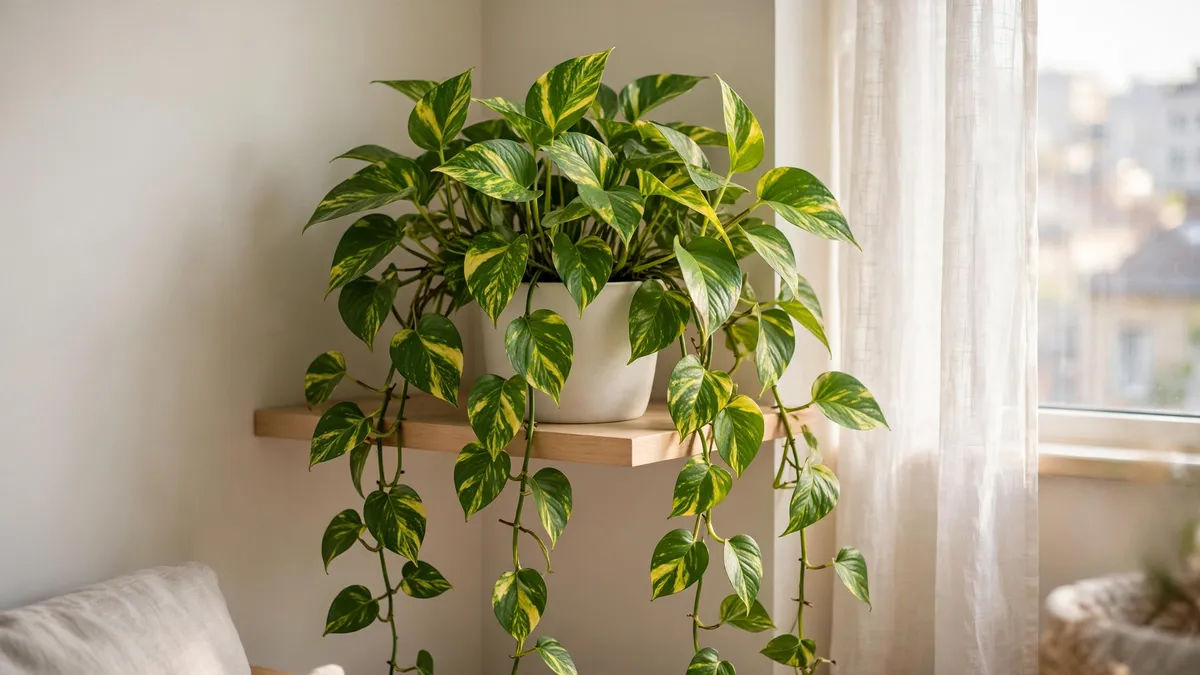
Minimum light: 50 foot-candles (about 540 lux) | Pet-safe: No | Difficulty: Very easy
Pothos is the safest first buy for a dim flat: it trails from a shelf or cabinet and uses no floor space. Green types hold colour best; variegated leaves turn plain green and growth slows. The danger in a dark spot is kindness: soggy soil rots stems fast, so water only when the top two inches feel dry. Our complete pothos plant care guide covers feeding, pruning and propagation.
2. Snake Plant (Dracaena trifasciata)
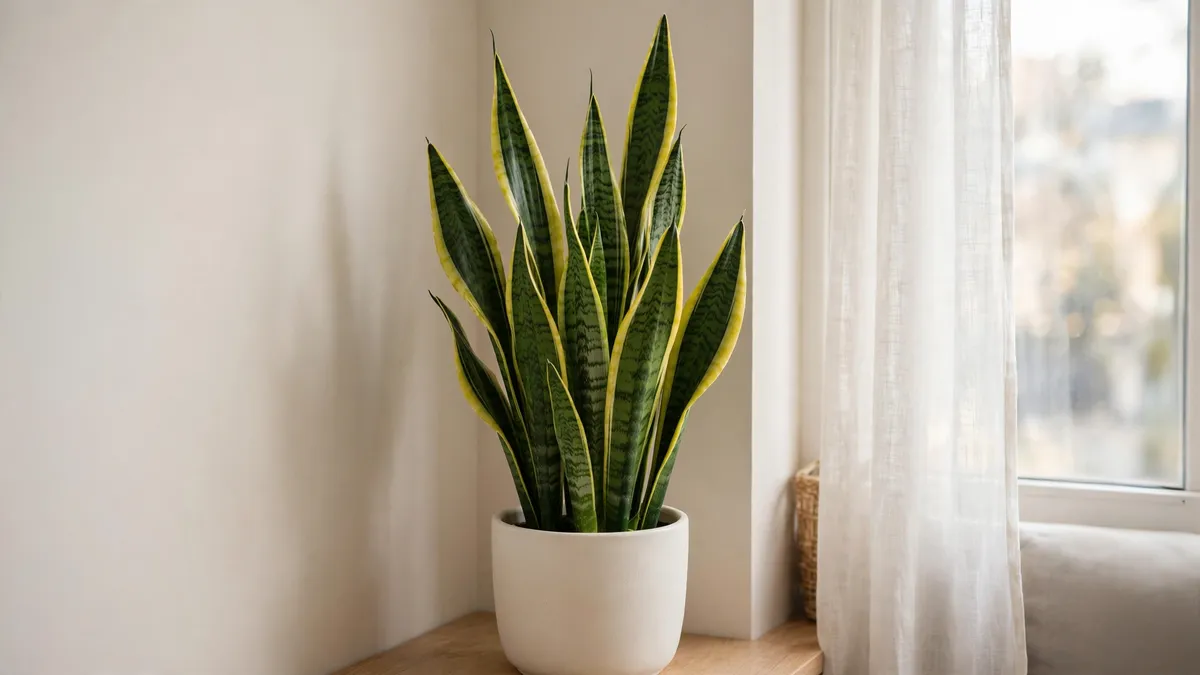
Minimum light: 50 foot-candles (about 540 lux) | Pet-safe: No | Difficulty: Very easy
A snake plant grows up, so it fills a floor corner or the gap beside a sofa without spreading. Leaves store water, so it copes with dim light and missed watering. In deep shade growth stops, but the plant waits instead of declining. Keep it dry: wet roots rot weeks before leaves topple. Water monthly in winter. Our full snake plant care guide covers pots, soil and rescue steps.
3. ZZ Plant (Zamioculcas zamiifolia)
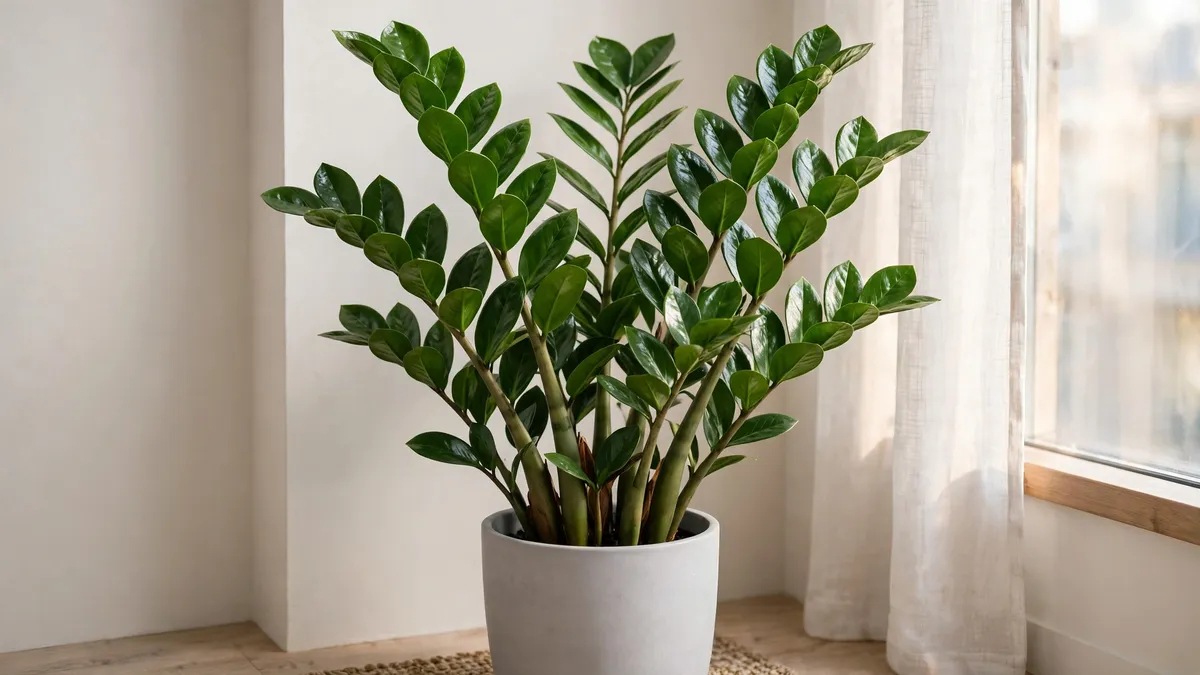
Minimum light: 50 foot-candles (about 540 lux) | Pet-safe: No (mildly toxic) | Difficulty: Very easy
The ZZ plant stores water in underground rhizomes, so it shrugs off weak light and irregular watering. It holds shape for months in a windowless hallway, which few plants can do. Expect slow growth; that is normal, not a problem to fix with fertiliser. The one risk is overwatering, which turns the rhizomes to mush. Let the soil dry fully between drinks. Our ZZ plant care guide covers watering and repotting.
4. Peace Lily (Spathiphyllum)
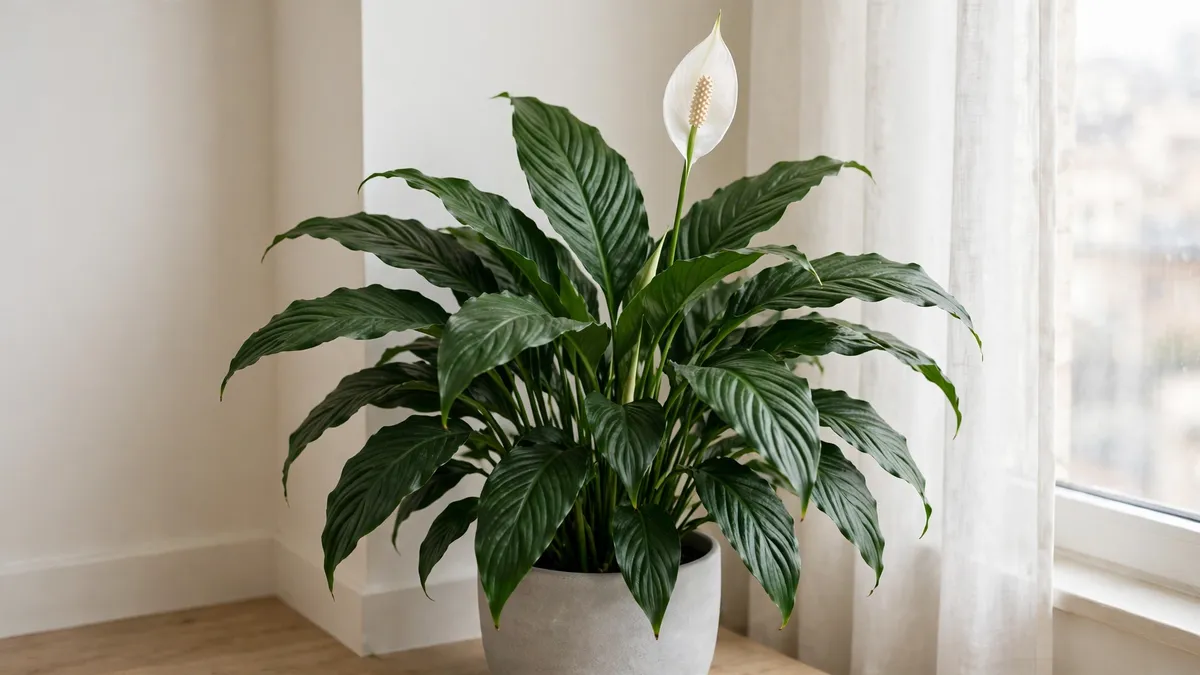
Minimum light: 50 foot-candles (about 540 lux; 150 foot-candles to flower) | Pet-safe: No | Difficulty: Easy
Peace lily is the rare low-light plant that can flower indoors, although blooms need 150 foot-candles, so a dark corner gives glossy leaves instead. It droops when thirsty and perks up within hours of watering. The leaves are toxic to cats and dogs, so keep it high if you have pets, and check whether peace lilies are toxic to cats before you buy. It likes steady moisture. When it outgrows its pot, learn how to propagate a peace lily by division.
5. Cast Iron Plant (Aspidistra elatior)
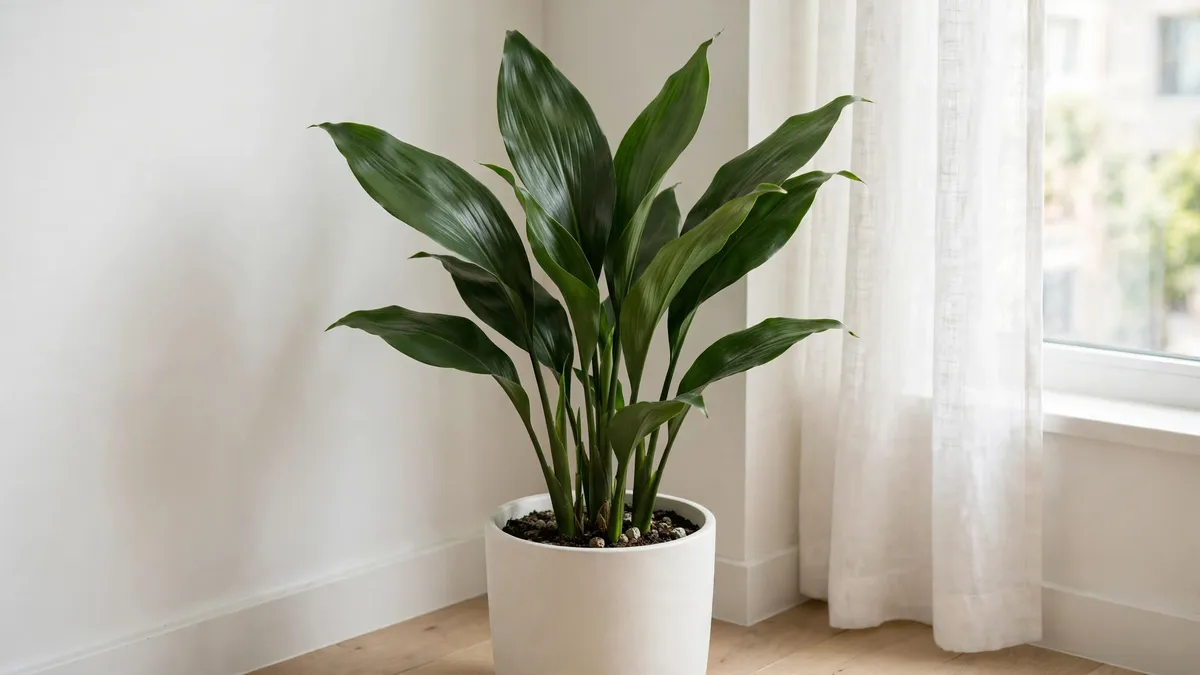
Minimum light: 25 foot-candles (about 270 lux, lowest on this list) | Pet-safe: Yes | Difficulty: Easy
Cast iron plant earned its name in Victorian parlours that were dark, cold and smoky, and tolerates more shade than anything else here. It is also pet-safe, the default pick for a dark hallway with cats. Growth is slow, so buy the biggest plant instead of waiting for a small one to fill out. One warning: it hates wet feet, so empty the saucer after watering.
6. Chinese Evergreen (Aglaonema)
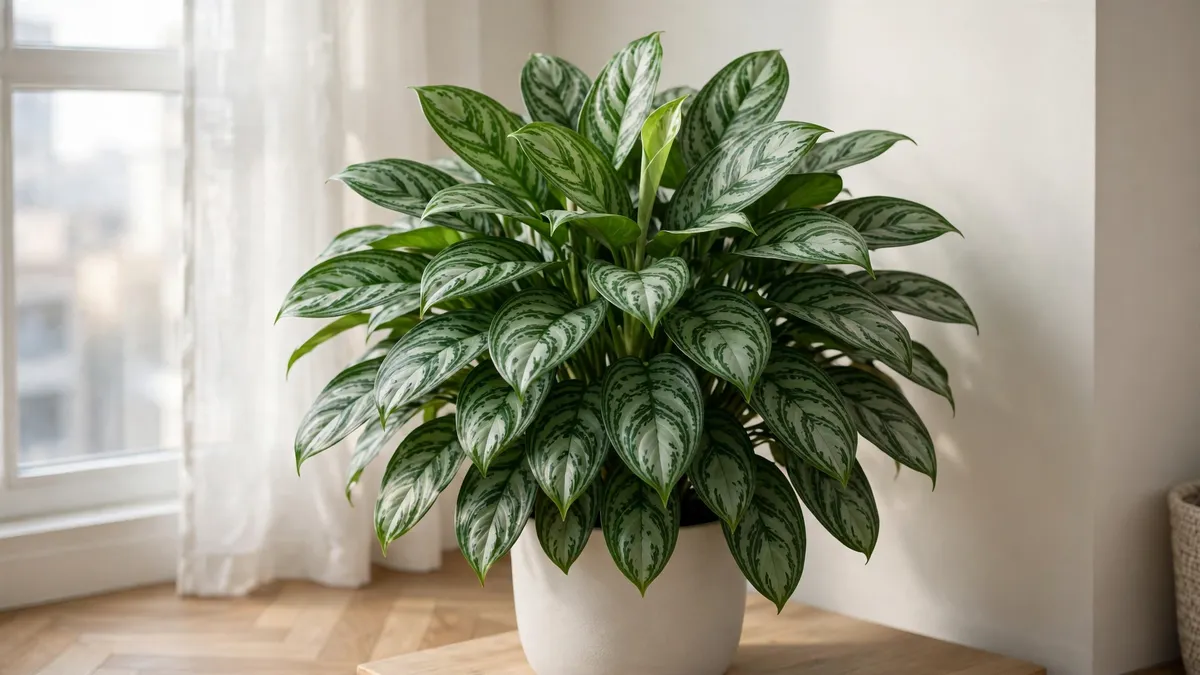
Minimum light: 50 foot-candles (about 540 lux) | Pet-safe: No | Difficulty: Easy
Chinese evergreen brings pattern and colour to spots where most plants turn plain green. Choose mostly green varieties for the darkest corners, because silvered or pink types need more light to keep markings. It stays a tidy tabletop size for years, which suits shelves and side tables. Keep it away from cold draughts and chilly windowsills in winter, since cold marks leaves brown. Water when the top inch of soil is dry.
7. Dracaena (Dracaena fragrans)
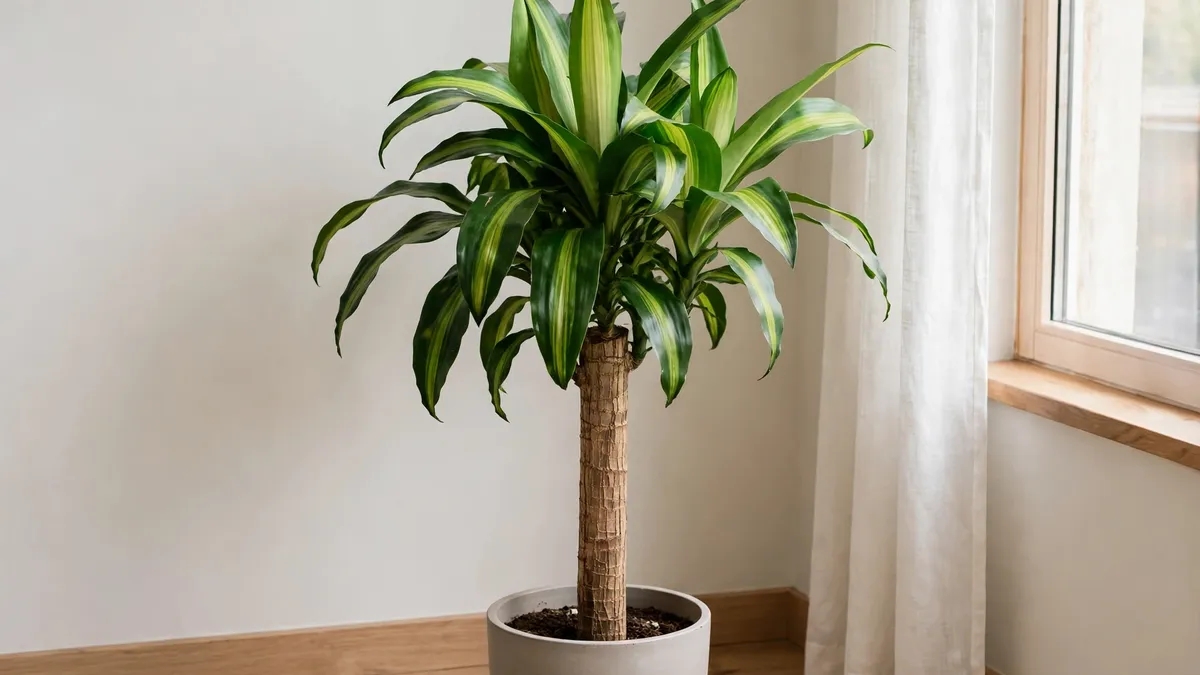
Minimum light: 100 foot-candles (about 1,080 lux) | Pet-safe: No | Difficulty: Easy
Dracaena grows as a slim cane with a tuft of leaves, so it adds height without the wide footprint of floor plants. It needs slightly more light than most, around 100 foot-candles, and rewards you by keeping its lower leaves. It is sensitive to fluoride and salts in tap water, which show up as brown leaf tips. Use rainwater or distilled water if tips keep browning. It drinks slowly in low light, so water sparingly.
8. Spider Plant (Chlorophytum comosum)
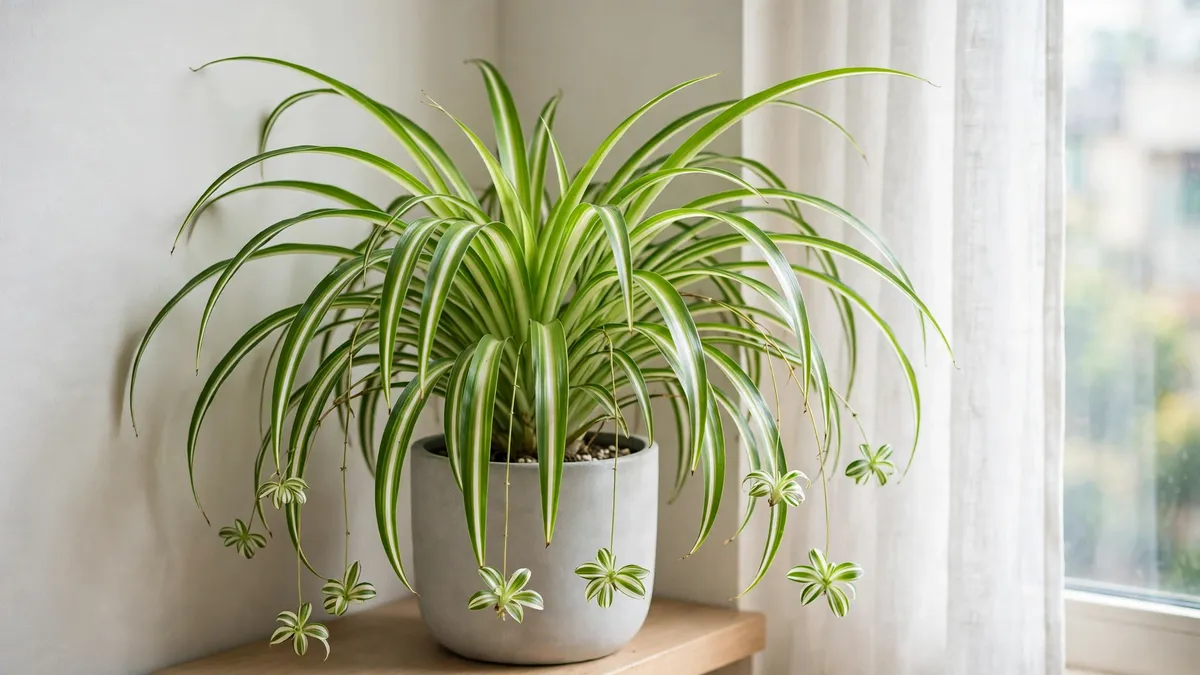
Minimum light: 100 foot-candles (about 1,080 lux) | Pet-safe: Yes | Difficulty: Easy
Spider plant is the classic hanging basket plant for a dim room, and hanging keeps shelf and floor space free. It is pet-safe, and cats bat the dangling baby plants harmlessly. In low light the stripes fade toward green and fewer babies appear, but the plant stays healthy. Brown tips come from dry air or tap water, not light. Hang it in a bathroom for humidity. Our spider plant care guide shows how to root the babies.
9. Heartleaf Philodendron (Philodendron hederaceum)
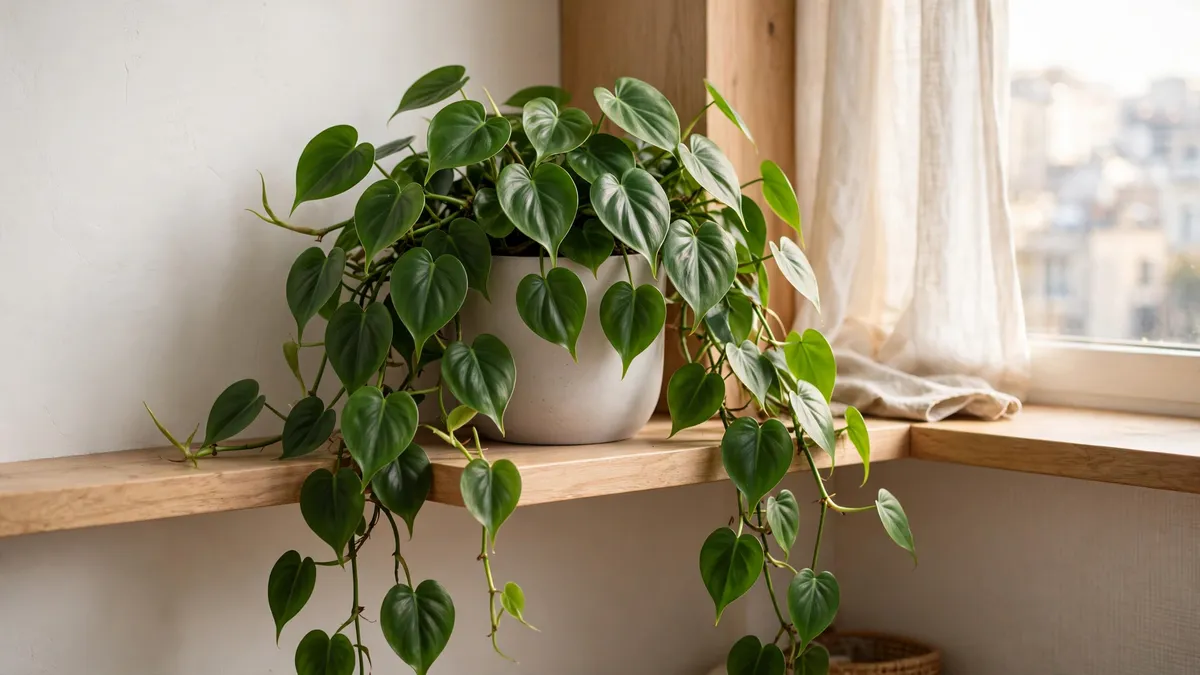
Minimum light: 50 foot-candles (about 540 lux) | Pet-safe: No | Difficulty: Easy
Heartleaf philodendron trails like pothos but with softer leaves, and keeps growing faster in dim corners than most. Trail it from a bookcase, or let it climb a moss pole. In low light the stems stretch with wider gaps between leaves, so pinch tips now and then to keep it bushy, and use cuttings to fill the pot. It dislikes soggy soil, so an airy mix and drainage holes matter more than feeding.
10. Parlor Palm (Chamaedorea elegans)
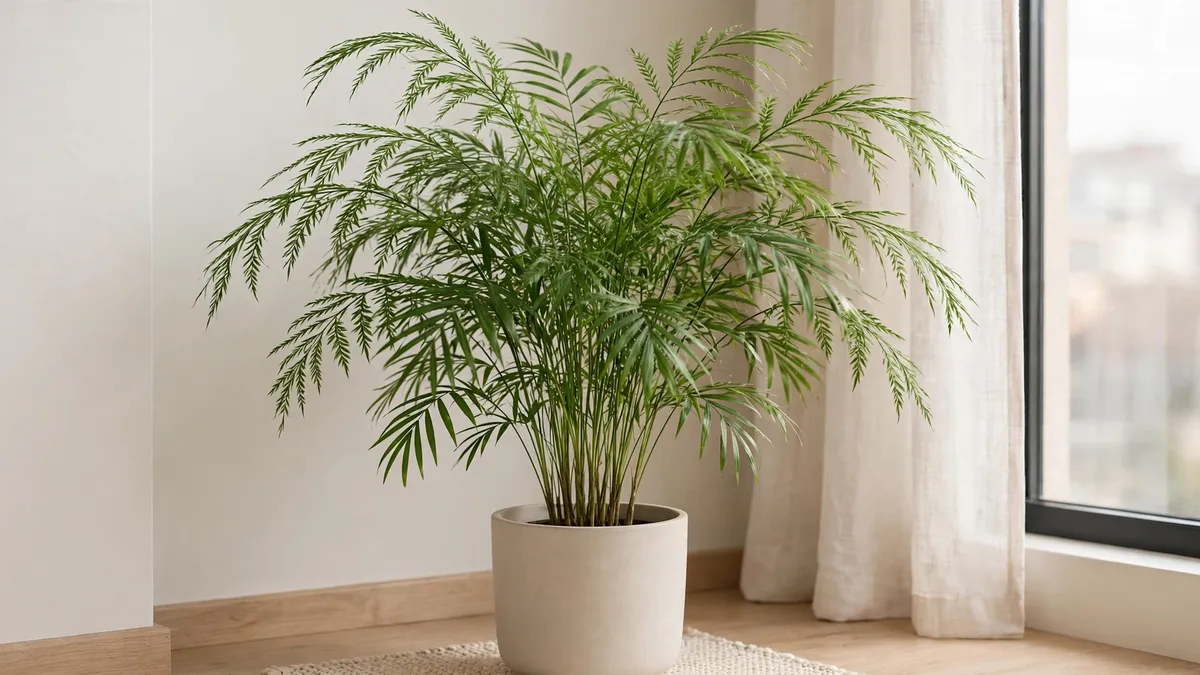
Minimum light: 50 foot-candles (about 540 lux) | Pet-safe: Yes | Difficulty: Easy
Parlor palm has been the dim-room default since Victorian times because it tolerates low light, dry indoor air and neglect. It grows slowly and stays a tabletop size for years, so it suits a desk or bedside table. It is pet-safe, which removes the worry about a palm within nibbling reach. Spider mite is the main pest in hot, dry rooms, so mist leaves now and then. Water when the top soil feels dry.
11. Peperomia (Peperomia obtusifolia)
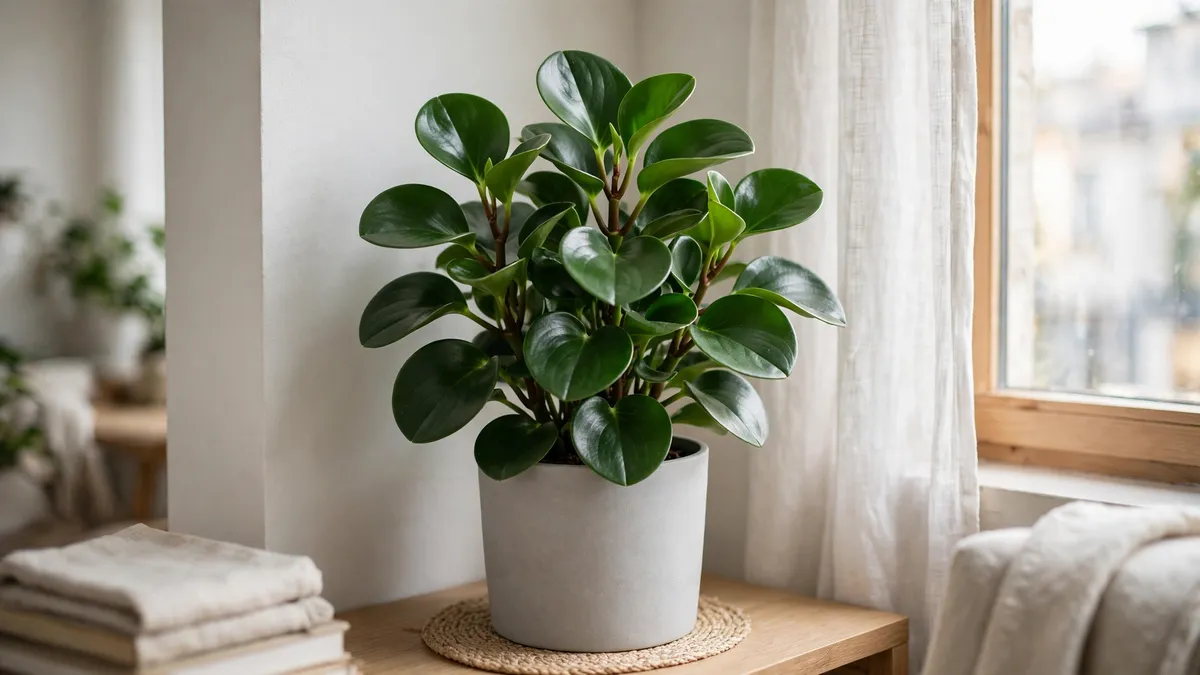
Minimum light: 100 foot-candles (about 1,080 lux) | Pet-safe: Yes | Difficulty: Easy
Peperomia is a compact desk plant with thick, succulent-like leaves that store water, so it forgives missed waterings. It rarely passes 30 centimetres, one of the best fits for a tiny flat or studio shelf. It needs slightly more light than the toughest plants, around 100 foot-candles, and rewards it with steady, tidy growth. The risk is stem rot from heavy, wet soil, so choose a gritty mix and a small pot.
12. Prayer Plant (Maranta leuconeura)
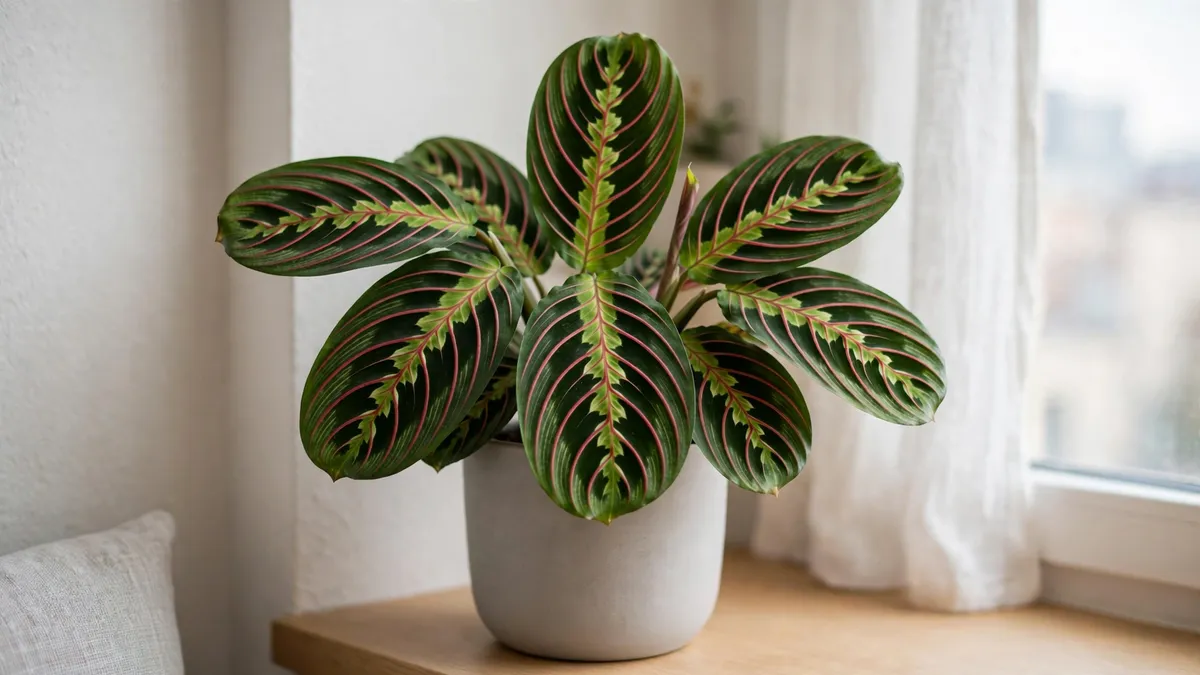
Minimum light: 100 foot-candles (about 1,080 lux) | Pet-safe: Yes | Difficulty: Medium
Prayer plant folds its leaves upward at night, which is how it earned its name, and markings stay bold even in low light. It is small enough for a bathroom shelf and pet-safe. It rates medium difficulty for one reason: humidity. Dry air crisps the leaf edges, so group it with other plants, use a pebble tray, or keep it in a steamy bathroom. It prefers rainwater; tap water chemicals spot the leaves. Learn how to care for a prayer plant.
13. Boston Fern (Nephrolepis exaltata)
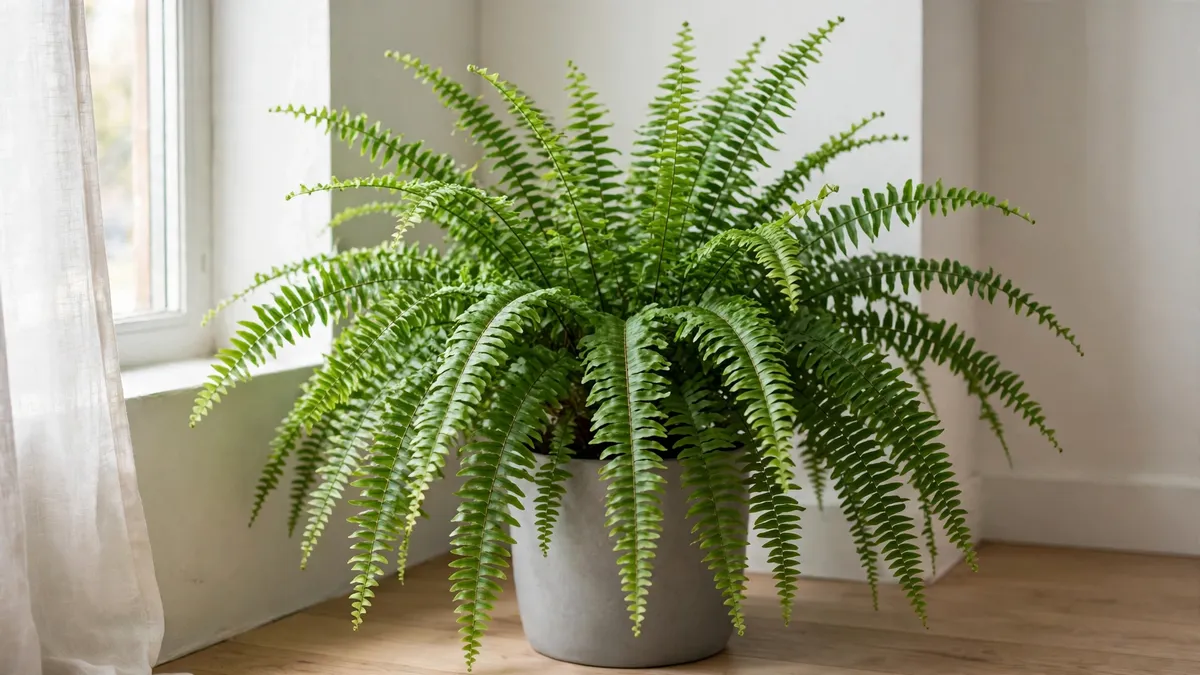
Minimum light: 100 foot-candles (about 1,080 lux) | Pet-safe: Yes | Difficulty: Medium
Boston fern gives you arching fronds for a shady bathroom, where shower steam does half the work. It is pet-safe and fits a stool or a hanging basket above the bath. The catch is water: roots should never dry out completely, and dry room air makes it drop leaflets everywhere. In low light it grows slowly and stays compact. Choose it only if you can water little and often.
14. Nerve Plant (Fittonia)
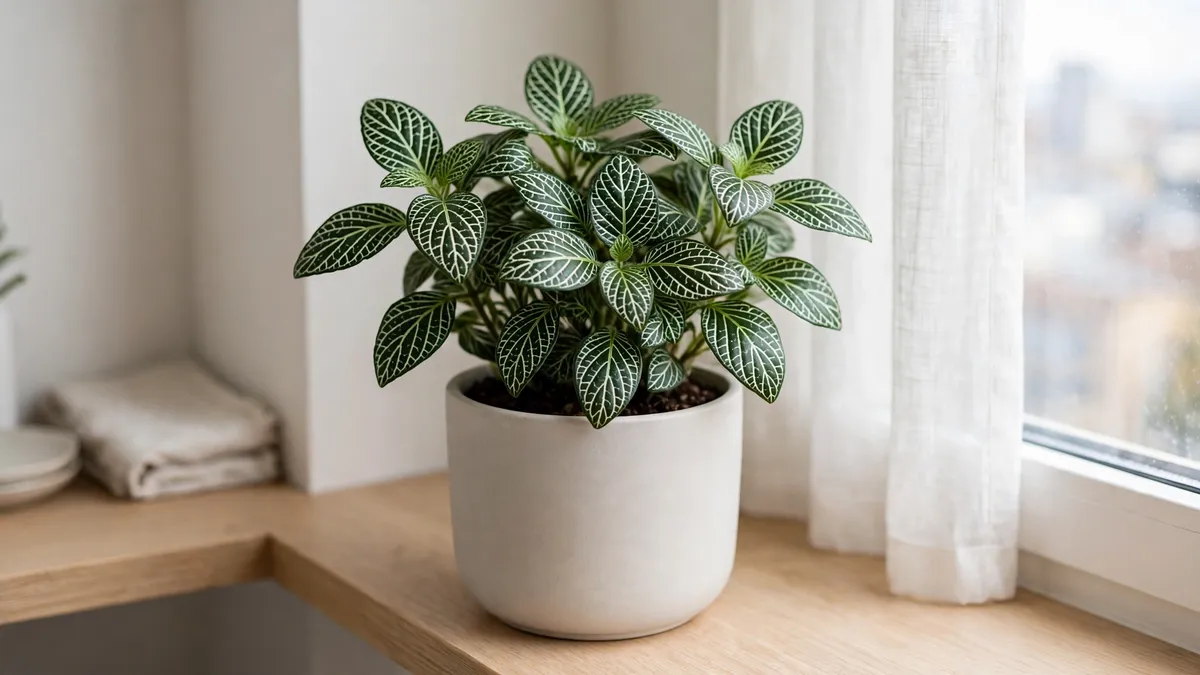
Minimum light: 50 foot-candles (about 540 lux) | Pet-safe: Yes | Difficulty: Medium
Nerve plant is a terrarium plant with veined leaves in pink, red or white, and fits where nothing else will: desk corner, bathroom shelf, glass jar. It faints when the soil dries, folding flat as if dead, then revives within hours of watering. That drama is an alarm, not a flaw. It loves humidity and moisture, so a terrarium or cloche keeps it happiest. It stays under 15 centimetres and is pet-safe.
15. Lucky Bamboo (Dracaena sanderiana)
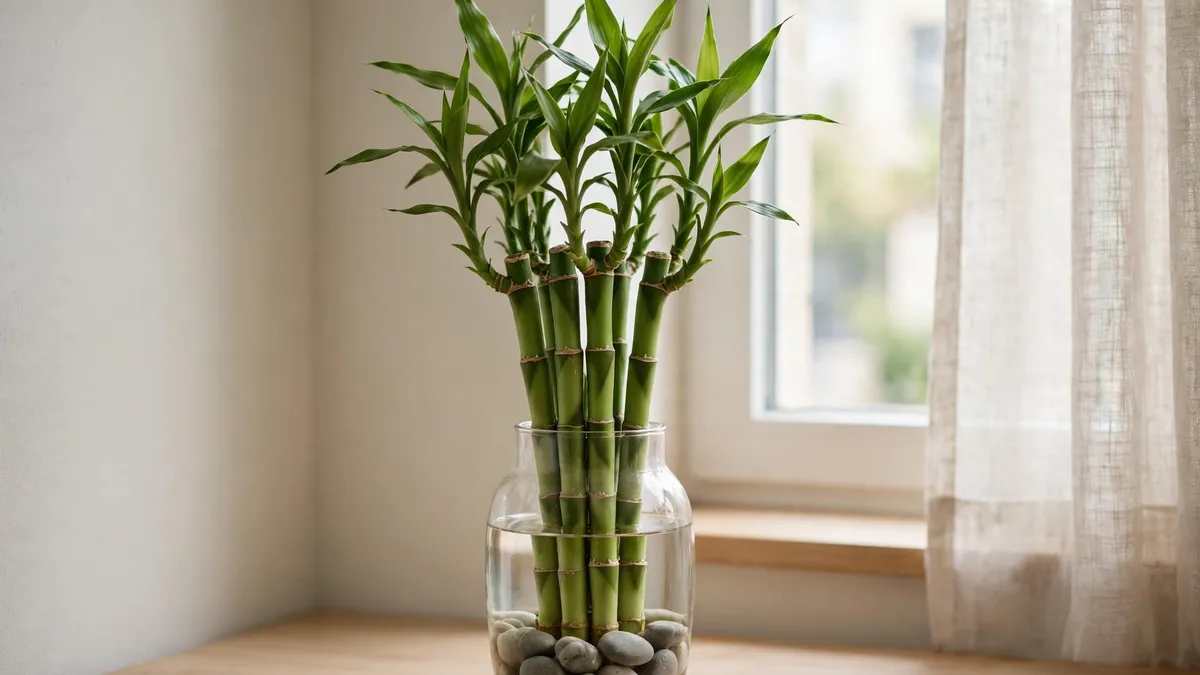
Minimum light: 50 foot-candles (about 540 lux) | Pet-safe: No | Difficulty: Easy
Lucky bamboo is sold as canes in water, the easiest plant to place: desk, bathroom counter or shelf, no soil, no mess. It tolerates low light and grows slowly, so it never outgrows a flat. Change the water weekly and keep it out of sun, which scorches leaves. Yellowing stems trace back to chlorine in tap water, so use filtered water. Keep it from pets: it is toxic if chewed.
Low Light Plants Compared: Light, Pet Safety and Difficulty
All fifteen side by side, matched to your light, pets and effort.
| Plant | Minimum light (fc) | Minimum light (lux) | Pet-safe | Difficulty | Best for |
|---|---|---|---|---|---|
| Pothos | 50 | 540 | No | Very easy | Shelves |
| Snake Plant | 50 | 540 | No | Very easy | Floor corners |
| ZZ Plant | 50 | 540 | No | Very easy | Desks |
| Peace Lily | 50 | 540 | No | Easy | Bathrooms |
| Cast Iron Plant | 25 | 270 | Yes | Easy | Darkest corners |
| Chinese Evergreen | 50 | 540 | No | Easy | Side tables |
| Dracaena | 100 | 1,080 | No | Easy | Tall corners |
| Spider Plant | 100 | 1,080 | Yes | Easy | Hanging baskets |
| Heartleaf Philodendron | 50 | 540 | No | Easy | Bookcases |
| Parlor Palm | 50 | 540 | Yes | Easy | Bedside tables |
| Peperomia | 100 | 1,080 | Yes | Easy | Desks |
| Prayer Plant | 100 | 1,080 | Yes | Medium | Bathroom shelves |
| Boston Fern | 100 | 1,080 | Yes | Medium | Bathrooms |
| Nerve Plant | 50 | 540 | Yes | Medium | Terrariums |
| Lucky Bamboo | 50 | 540 | No | Easy | Office desks |
The Best Low Light Plants for Every Room
Start from the room instead of the plant with the picks below, and see our roundup of small low-light plants made for tiny spaces for more compact choices.
Bedroom
Bedrooms sit on the shady side, and a snake plant handles it fine in almost no floor space. Trail pothos from a wardrobe top, or put a parlor palm on the nightstand if you have pets. All three tolerate dry air and need water rarely.
Bathroom
Bathrooms give humidity but one small, frosted window, exactly what a peace lily likes. Boston fern and prayer plant thrive in the steam and stay on a shelf. Avoid desert types: a ZZ plant in damp air and low light rots slowly.
Living Room
The living room has the best light in the flat, plus one dark corner behind the sofa. Give it a dracaena for height, or a cast iron plant if gloomy. Put Chinese evergreen on a side table where leaves show, and trail philodendron along a bookcase.
Office
Desks need plants that survive weekends and holidays, and ZZ plant is the champion of neglect. Lucky bamboo in a jar takes no soil and no space, and a peperomia sits beside a monitor. Ceiling lights add up, so desks are brighter than they look.
Dark Rooms and Windowless Corners
Be honest: in a dark room nothing photosynthesises in darkness, so the game is endurance. Cast iron plant lasts longest, then ZZ plant and snake plant. Rotate two plants monthly, swapping the dark-room one somewhere brighter, or fit an LED grow light on a timer. Our guide to plants that survive the lowest light of all ranks the toughest candidates.
How to Keep Plants Alive in Low Light
Low light care is mostly about restraint. Rotate each pot a quarter turn every week so all sides take a turn facing the room’s light source, otherwise plants lean and grow lopsided. Dust is a problem in dim rooms, because a dirty leaf harvests even less light, so wipe leaves with a damp cloth monthly. Water less than you think: a plant in low light drinks slowly, and root rot from kind watering kills far more of them than thirst does, so check the soil first. In winter, move plants closer to the window and shift them back in spring. If a corner is dark, an LED grow light on a timer for eight hours fixes it.
Frequently Asked Questions
What is considered low light for indoor plants?
Low light is 25 to 100 foot-candles, roughly 270 to 1,080 lux: no direct sun, near a north-facing window, or a corner lit by ceiling lights. If you can read at midday without a lamp, you are in low light.
Can a plant survive in a room with no windows at all?
Not indefinitely. In a windowless room a plant slowly spends stored energy instead of making food. Tough plants like cast iron, ZZ and snake plant last many months if rotated somewhere brighter monthly.
Which low light indoor plants are safe for cats and dogs?
Seven plants here are pet-safe: cast iron plant, spider plant, parlor palm, peperomia, prayer plant, Boston fern and nerve plant. Our guide to indoor plants that are safe for cats and dogs covers care for each; check others with our free pet-safe plant checker tool. The official reference is the ASPCA toxic and non-toxic plants list.
What is the hardest low light plant to kill?
The cast iron plant. It survives at 25 foot-candles, the lowest here, tolerates missed waterings, dry air and cold rooms, and is pet-safe. The snake plant runs close, but for a dark corner and forgetful owner, cast iron wins. Its weakness is overwatering.
How do I know if my plant is getting enough light?
Watch new growth. Long gaps between leaves, paler new leaves, fading variegation and leaning toward the window mean it wants more light. Move it closer to the window, rotate weekly, or add a grow light.
Conclusion
Start with one plant matched to your worst corner and you learn more than any guide teaches. If you are a beginner, buy a pothos or a ZZ plant and water it less than feels right. If you have cats or dogs, make it a cast iron plant or a spider plant and skip the toxic ones. And for the darkest corner in the flat, choose the cast iron plant and let it get on with the job.
Pingback: Snake Plant vs ZZ Plant: Key Differences & Winner (2026)
Pingback: Snake Plant Light: How Much It Really Needs (Indoor Guide)
Pingback: Best Soil Mix for Snake Plants (4 Ingredients, No More Rot)
Pingback: Pet Safe Hanging Indoor Plants for Cat Owners: 5 Picks
Pingback: ZZ Plant vs Money Plant: Pick the Right One for Your Home
Pingback: Why Is My Plant Shedding Leaves? Causes and Easy Recovery Tips
Pingback: 7 Large Snake Plants for Low Light (With Pictures)
Pingback: 8 Hanging Pothos Plants Ideas for Renter-Friendly Apartments
Pingback: Best Pet Safe Low Light Indoor Plants for Cats and Dogs
Pingback: Calathea Care: The Complete Calathea Plant Care Guide
Pingback: Prayer Plant Care Guide: Light, Water and Humidity
Pingback: Calathea Lancifolia Care: Rattlesnake Plant Guide
Pingback: Calathea Dottie Care: Dark Leaves and Pink Stripe Guide
Pingback: Calathea Dottie Plant Care Guide: Dark Leaves, Pink Stripe, Light and Humidity
Pingback: Calathea Medallion Plant Care Guide: Feathered Pattern, Light and Humidity
Pingback: Calathea White Fusion Plant Care Guide: White Feather Stripe, Light and High Humidity
Pingback: Brown Tips on Prayer Plant: Causes and Fixes That Work
Pingback: Calathea Plant Light Requirements: How Much Light, Measured
Pingback: Calathea Plant Leaves Curling: Read the Curl Pattern and Fix It
Pingback: Calathea Orbifolia Care Guide: Light, Water, Humidity and Brown Edges
Pingback: Prayer Plant Problems: Symptom Guide, First Checks and Fixes
Pingback: How to Grow a Large Dracaena in Low Light (2026 Guide)
Pingback: How to Help a Snake Plant Grow Taller: Care & Limits