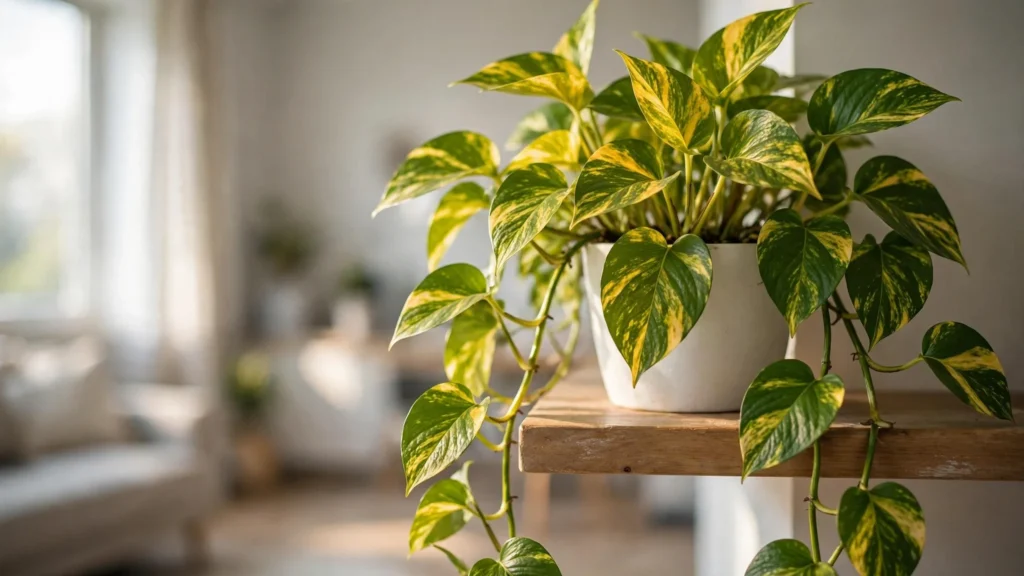
If you want one plant that survives your learning curve, pothos is the safest choice. It bounces back from missed waterings, forgives dim corners, and grows fast enough that you see progress within weeks.
That said, easy does not mean unkillable. Most pothos deaths come from one mistake: watering on a calendar instead of checking the soil. This guide covers the exact routines for light, watering, soil, feeding, pruning, propagation, and every common problem, all framed for apartments and small spaces.
Give your pothos bright, indirect light and water it only when the top 2 inches of soil feel dry, usually every 1 to 2 weeks. Use a well-draining potting mix, keep it between 15 and 30°C, and feed monthly in spring and summer. It tolerates low light and missed waterings, which is why beginners love it.
Pothos earns its reputation as the easiest houseplant to keep alive. In this guide you will learn the watering rhythm that prevents root rot, how to read light levels in a dim apartment, which soil mix keeps roots healthy, and how to prune and propagate vines so the plant stays full. You also get variety-by-variety differences, a stalled-growth recovery plan, and pet safety facts.
One mistake many people make with a new pothos is treating it like a decoration instead of a plant with needs. In practice, the fullest pothos belong to owners who check the soil with a finger before every watering and move the pot closer to the window when vines stretch. Every recommendation below reflects what works in real apartments, not greenhouses.
Why Pothos Is So Forgiving
Pothos (Epipremnum aureum) comes from the forests of Southeast Asia, where it climbs tree trunks in deep shade (Patch Plants). It evolved for filtered light, aerial-root moisture, and dry spells between rains. Your apartment is easy mode by comparison.
Three traits do the heavy lifting. Pothos stores water in its fleshy stems, so a missed watering is a shrug, not a crisis. Its vines root from nodes, so one plant can repair and multiply itself. And it tells you what it needs: leaves droop when thirsty and perk up within hours of water.
This toughness suits beginner schedules. The plant slows down in poor conditions instead of dying, which gives you time to correct course.
What You Need Before You Start
You do not need much. A pothos, a pot with drainage holes, and a bag of standard potting mix cover it. Add perlite if your mix feels heavy, because soggy soil is the one thing pothos does not forgive.
Pick a pot 1 to 2 inches wider than the root ball. Oversized pots hold water the roots cannot reach, and that extra moisture invites rot. If you hang the plant, check the hook holds a soaked pot, not just a dry one.
One optional upgrade: a small bottle of balanced liquid fertilizer for spring and summer. Skip the gadgets. Your finger, pushed 2 inches into the soil, is the most reliable tool you own.
Light: What Your Pothos Needs
Bright, indirect light is the sweet spot. An east-facing window, or a spot a few feet back from a south or west window with a sheer curtain, gives fast growth and strong variegation.
Pothos survives in low light, but expect trade-offs: slower growth, smaller leaves, and variegated types like Marble Queen fading toward plain green. Variegated varieties need more light than plain green jade to hold their patterns.
Keep it out of harsh direct sun. Midday sun through glass scorches leaves, leaving pale patches that do not heal. A simple test: if you can read comfortably in the spot without a lamp at midday, your pothos can grow there.
With one small window, place the pothos close to the glass and rotate the pot every couple of weeks so all sides get light.
Watering: The One Rule That Matters Most
Water only when the top 2 inches of soil feel dry. Push your finger in. Dry means water, damp means wait. In most apartments this lands at every 1 to 2 weeks, but the soil is the truth and the calendar is a guess. Summer heat dries pots faster, winter slows everything down.
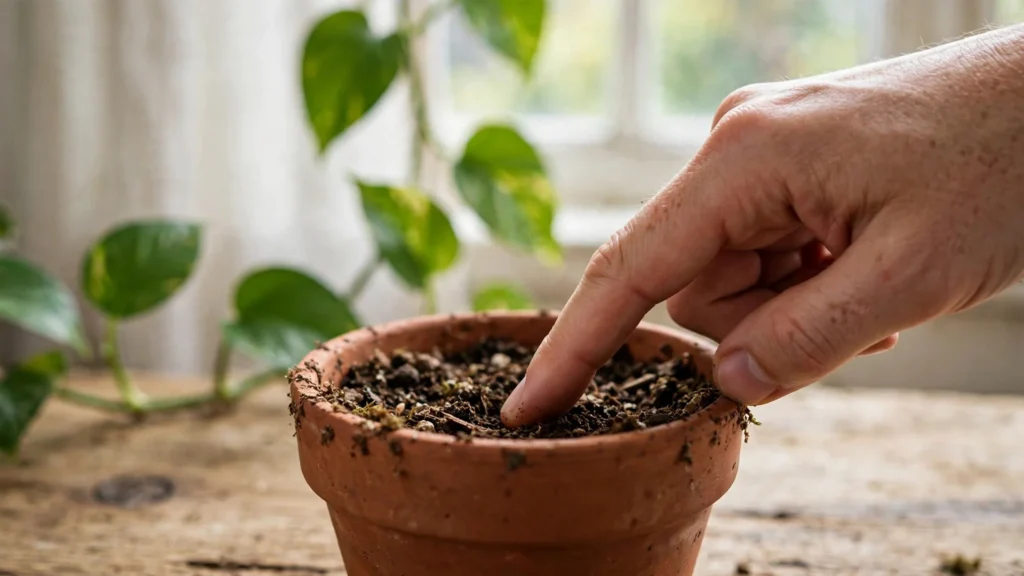
When you water, water thoroughly. Pour slowly until water runs out of the drainage holes, then empty the saucer. A full soak followed by a real dry-down grows deep roots.
The number one killer of pothos is overwatering, not neglect. Constantly wet soil suffocates roots and invites rot, which shows up as soft yellow leaves. If you are unsure, wait another day. Pothos forgives drought far better than a swamp. For the warning signs on both sides, read our guide to overwatering vs underwatering signs.
Bottom watering works too. Set the pot in a basin of water for 15 to 20 minutes, then drain fully. It wets the root ball evenly and keeps the top dry, which discourages fungus gnats. For full technique, see our guide on how to water indoor plants properly.
Soil, Pot, and Repotting
Standard well-draining potting mix suits pothos. For a simple upgrade, mix two parts potting soil with one part perlite and one part orchid bark or coco coir. Perlite keeps air around the roots and bark resists compaction.
Repot every 1 to 2 years, or when roots circle the pot or push through drainage holes. Move up one pot size only. A much larger pot is the classic trigger for overwatering problems.
After repotting, expect a short sulk. A few droopy days are normal while roots settle. If stress lasts beyond a week, our guide to plant shock after repotting covers recovery.
Feeding and Humidity
Feed monthly in spring and summer with a balanced liquid fertilizer at half strength. Full-strength doses risk salt buildup that burns leaf tips. Skip feeding in fall and winter, when a non-growing plant cannot use the nutrients.
Average indoor humidity is fine, though pothos grows faster near 50 to 70 percent. If leaf edges turn brown and crispy in winter, group it with other plants or run a small humidifier. Misting does almost nothing for humidity, so skip it as a strategy.
Temperature matters more than humidity. Keep your pothos between 15 and 30°C and never below 10°C (GrowersGuide). Keep it away from cold windows, drafty doors, and heater or air conditioner blasts.
Pruning and Propagation: Filling Out the Plant
A pothos left alone grows long and sparse. Pruning turns a stringy vine into a full plant. Cut any vine just above a node, the small brown bump where leaves and roots emerge. New growth usually sprouts below the cut within weeks.
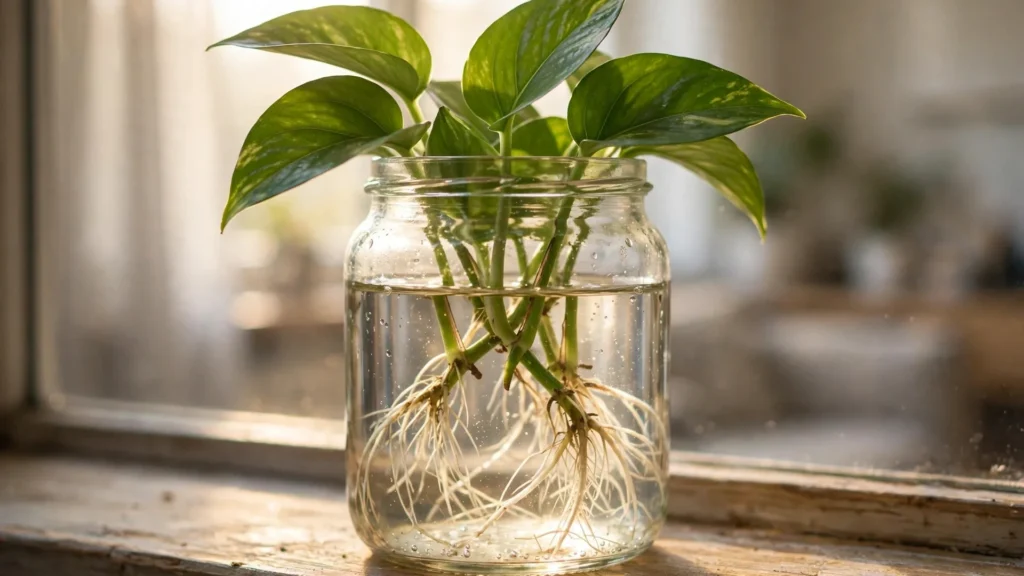
Each cutting with at least one node and one leaf roots easily in water. Drop the node end in a glass, change the water weekly, and pot up when roots reach 2 to 3 inches. Rooted cuttings poked back into the mother pot are the fastest way to fill a thin plant.
For a climbing look, train vines up a moss pole or trellis. Tie stems loosely and keep the pole slightly damp so aerial roots grab on. Leaves grow noticeably larger on climbed vines. For styling ideas once your vines get long, see our pothos hanging plant ideas.
Signs It Is Working
New leaves unfurl every few weeks in the growing season, each roughly the size of the last or bigger. That is the clearest signal your routine is right.
Vines feel firm, stems hold their shape, and leaf color looks rich: deep green on jade types, crisp contrast on variegated ones. A healthy pothos also pushes aerial roots from its nodes.
Steady, moderate growth is the goal. A pothos adding a few inches a month in an apartment is thriving.
Signs It Failed
Yellow leaves are the classic distress signal, and the pattern tells the story. Several lower leaves yellowing at once with damp soil means overwatering. One or two old leaves yellowing is normal aging. Check the roots: white and firm means recoverable, brown and mushy means rot. Our guide on how to fix yellow leaves on indoor plants covers every cause.
Leggy vines with long bare gaps between leaves mean low light. Move the plant closer to a window and prune bare sections back to a leafy node. New growth comes in tighter when light improves.
Brown crispy edges point to underwatering or dry air. Black spots or a foul smell from the soil point to advanced rot. Take healthy cuttings immediately and start fresh, because a rotted root system rarely recovers.
What to Do If Growth Stalls
A pothos that stops growing but looks healthy is usually resting, especially in winter. Do not fertilize a resting plant into growth. Check the basics: light, watering rhythm, and whether the pot is root-bound.
Root-bound pothos stall because no soil is left to hold water or nutrients. Slide the plant out. A solid mat of circling roots means it is time to repot one size up, and growth usually resumes within a month.
If roots look fine and light is decent, the stall may be seasonal. Short winter days slow every houseplant. Hold the fertilizer until spring and judge the plant by its health, not its speed.
Pothos Varieties at a Glance
All pothos share the same basic care, but varieties differ in light needs and speed. Variegated types carry less chlorophyll, so they need more light and grow slower.
| Variety | Look | Light needs | Growth speed | Notes |
|---|---|---|---|---|
| Golden Pothos | Green leaves with yellow marbling | Bright indirect, tolerates low light | Fast | The classic and most forgiving |
| Marble Queen | Green and creamy white | Bright indirect, needs good light to keep variegation | Medium | Fades to green in dim spots |
| Neon Pothos | Solid chartreuse yellow-green | Bright indirect, color fades in low light | Medium | No variegation to lose, but needs light for color |
| N’Joy / Pearls and Jade | Small leaves, white edges | Bright indirect | Slower | Compact, great for shelves |
| Satin Pothos | Dark green with silver spots | Bright indirect, tolerates medium light | Medium | Scindapsus genus, same care |
Pothos and Pets: A Quick Safety Note
Pothos is toxic to cats and dogs if chewed. It contains calcium oxalate crystals that irritate the mouth and throat. The fix is placement: hang the plant or use a high shelf your pets cannot reach. If a pet chews leaves and shows drooling or pawing at the mouth, call your vet. Plan the location before you bring the plant home.
Pothos Care FAQs
How often should I water my pothos?
Water when the top 2 inches of soil feel dry, typically every 1 to 2 weeks. Always check the soil instead of following a fixed schedule.
Can pothos grow in low light?
Yes, it survives in low light, but growth slows and variegated leaves may revert to green. Bright indirect light gives the best results.
Why are my pothos leaves turning yellow?
Most often overwatering or poor drainage. Let the soil dry out, check that the pot drains, and inspect roots for rot if yellowing spreads.
How do I make my pothos bushier?
Prune vines just above a node, root the cuttings in water, then plant them back into the same pot. More light encourages tighter, fuller growth.
Does pothos need fertilizer?
Feed monthly in spring and summer with half-strength balanced liquid fertilizer. Skip feeding in fall and winter when growth slows.
Can I grow pothos in water forever?
Yes, cuttings live for years in water with occasional liquid fertilizer, but soil-grown pothos grow larger and fuller. Change the water weekly to keep it fresh.
A Plant That Rewards Small Habits
Pothos care comes down to three habits: check the soil before watering, give it the brightest indirect spot you have, and prune when vines get sparse. It asks for minutes a week and returns trailing vines that make any apartment feel alive. If you enjoy easy, forgiving plants, our spider plant care guide covers another beginner favorite.
Pingback: Golden Pothos vs Marble Queen: Which One Fits Your Home?
Pingback: Why Is My Pothos Leggy? Causes, Fixes & Prevention Tips
Pingback: How to Propagate Pothos Cuttings: Water, Soil & Layering
Pingback: Pothos Varieties: 13 Types Compared for Your Home (2026)
Pingback: Pothos Plant Leaves Turning Yellow? 9 Causes & How to Fix Them
Pingback: Snake Plant vs Pothos Plant: Which Is Right for You? (2026)