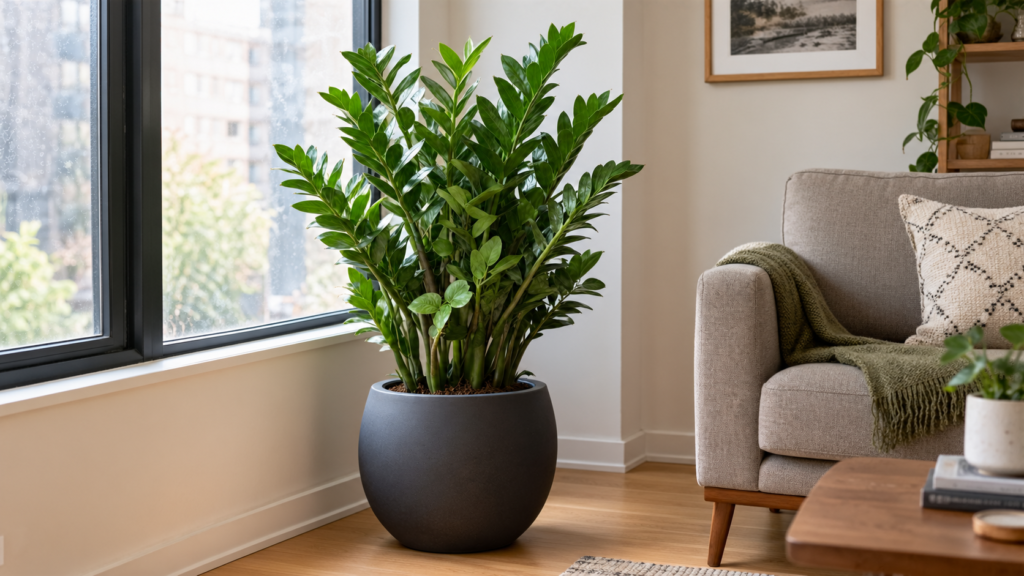
The ZZ plant (Zamioculcas zamiifolia) survives conditions that kill most other houseplants. Dim corners with no direct window, weeks without watering, and dry apartment air from heating or air conditioning barely slow it down.
This guide covers everything you need for ZZ plant care, from the biology that makes it so tough to light, watering, soil, repotting, propagation, and the problems you are most likely to run into. Whether this is your first plant or your fiftieth, the ZZ plant rewards you for doing less rather than more.
Most of the mistakes people make with this plant come from treating it like a typical houseplant that needs regular attention. Understanding why it behaves so differently makes every other care decision easier.
Quick Answer
ZZ plant care requires watering every 3 to 4 weeks in spring and summer, less in winter, bright to low indirect light, well-draining soil with added perlite, temperatures between 60 and 85 degrees Fahrenheit, and repotting every 2 to 3 years. It is toxic to cats and dogs. Its underground rhizomes store water and nutrients, which is why it tolerates neglect better than almost any other houseplant.
Quick Take
The ZZ plant’s toughness comes down to one adaptation: thick, potato-like rhizomes beneath the soil that store water and nutrients for the plant to draw on later. This reserve system lets it coast through weeks without watering, low light, and general neglect without visible stress. Overwatering is the one condition that genuinely threatens it, since the rhizomes rot quickly in soil that stays wet. Everything else, including missed waterings, dim rooms, and dry indoor air, falls well within what this plant handles without difficulty.
One mistake many new owners make is watering a ZZ plant on the same schedule they use for other houseplants. In practice, this plant needs far less water than it looks like it should, and the soil check matters more than any calendar you follow.
Why the ZZ Plant Is So Tough
Every stem connects underground to a thick, fleshy rhizome that stores water and carbohydrates. This reserve is what the plant draws on when conditions above the soil turn difficult, whether that means a missed watering or a stretch of low light.
In its native range across East Africa, from Kenya to South Africa, the ZZ plant grows through alternating wet and dry seasons with unpredictable rainfall. The rhizome evolved for exactly this pattern, storing moisture during wet periods and releasing it slowly during dry ones. That same adaptation is why the plant handles the irregular watering and limited light common in apartments.
The practical result is a plant that goes 3 to 4 weeks without water in most indoor conditions with no visible stress, and 6 to 8 weeks during winter dormancy. It also explains why overwatering is so damaging. Rhizomes sitting in wet, oxygen-poor soil rot quickly because they hold so much stored moisture already and have almost no tolerance for staying waterlogged.
Light Requirements
The ZZ plant tolerates a wider light range than almost any other common houseplant. It grows in bright indirect light near a window, in moderate light across the room, and in genuinely dim corners where most plants decline within months.
In brighter conditions, the plant grows more actively and produces new stems more often. In dim corners, growth slows considerably, but the plant holds its shape and glossy appearance for years without decline. The glossy leaf surface reflects available light back into the room, which is part of why it still looks healthy in spots where flatter-leafed plants tend to fade.
Keep it out of direct sun. The glossy leaves scorch and bleach under prolonged direct sunlight through glass, and the pale patches that result do not recover. An east-facing window with gentle morning sun works well. Direct afternoon sun from a south or west-facing window without a curtain causes visible damage within weeks.
Rotate the pot a quarter turn every 4 to 6 weeks. A ZZ plant left in one position for months leans gradually toward its light source, and regular rotation keeps growth even on all sides.
Watering
Watering is the part of ZZ plant care that causes the most problems. Overwatering is behind nearly every issue this plant develops, from yellowing leaves to soft stems to rotted rhizomes.
Check the soil before watering rather than following a fixed schedule. Push your finger 2 to 3 inches into the soil, and water only if it comes out completely dry. In a typical apartment, this works out to about every 3 to 4 weeks in spring and summer and every 5 to 8 weeks in fall and winter.
Light level changes this timing more than most people expect. A ZZ plant in a dim north-facing corner uses water more slowly and may only need watering every 5 to 6 weeks in summer, compared with every 3 weeks for the same plant near a bright east-facing window.
When you do water, water thoroughly. Pour slowly until water runs freely from the drainage holes, then let the pot drain completely before returning it to its saucer. Empty any standing water from the saucer within an hour, since even brief periods of standing water around the rhizomes raise the risk of rot.
It is easy to feel like you are underwatering this plant simply because you water it so much less often than other houseplants. Trust the soil check over the calendar, and resist the urge to water early.
Watering Frequency by Season and Pot Type
| Season | Pot Type | Check Soil Every |
| Spring/Summer | Terracotta | 18 to 24 days |
| Spring/Summer | Plastic or ceramic | 24 to 30 days |
| Fall/Winter | Terracotta | 4 to 5 weeks |
| Fall/Winter | Plastic or ceramic | 5 to 8 weeks |
| Low light, any season | Any | Add 1 to 2 weeks to the above |
Soil and Potting
The ZZ plant needs fast-draining soil that does not hold water around its rhizomes for long. A standard potting mix on its own usually holds too much moisture for this plant, especially in apartments with limited light and airflow.
A reliable mix combines 60 percent standard potting soil with 40 percent perlite, which creates a well-aerated medium that drains quickly and dries at a pace that suits the plant’s low water use. A cactus or succulent mix with extra perlite added works just as well and is often easier to find pre-made.
Skip moisture-retaining additives or water-storing crystals in the mix, since these work directly against the fast drainage the rhizomes need.
The pot needs drainage holes. Without them, excess water pools at the base and creates a permanently wet zone around the rhizomes that leads to rot. If you want to use a decorative pot without drainage, keep the plant in a plastic nursery pot with holes inside the decorative cover, and remove it to water and drain before setting it back in place.
Repotting
ZZ plants grow slowly and tolerate being pot-bound better than most houseplants. Most need repotting only every 2 to 3 years, once roots visibly emerge from the drainage holes or the plant starts drying out unusually fast after watering.
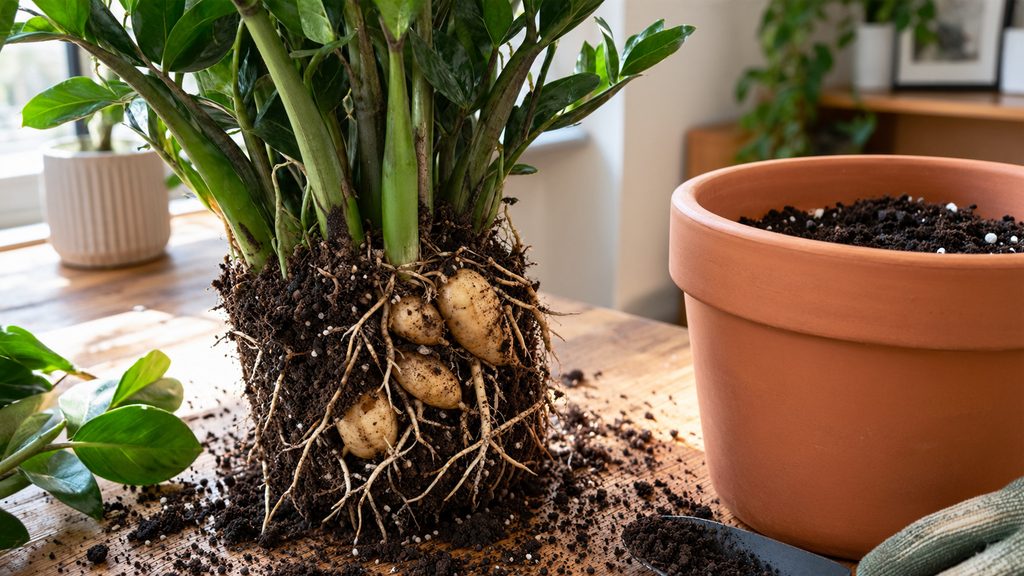
Move up only one pot size at a time, meaning 1 to 2 inches larger in diameter. A pot that is too large holds excess wet soil away from the rhizome zone, which raises the risk of rot without offering any real growth benefit. Spring is the best time to repot, since active growth helps the plant recover faster from the disturbance.
When you repot, you will see the rhizomes clearly: thick, oval, pale tan structures clustered near the base that look similar to small potatoes. These are healthy and normal. Handle them gently, since they bruise more easily than woody roots. Trim away any sections that feel soft, look dark, or smell bad before potting the plant into fresh soil.
Fertilizing
The ZZ plant is a light feeder and does not need frequent fertilizing to stay healthy. A balanced liquid fertilizer diluted to half strength, applied once a month during spring and summer, supports steady growth without causing the salt buildup that leads to brown leaf tips over time.
Stop fertilizing entirely from October through March, since the plant uses almost no nutrients during its slower winter period. If you notice a white, crusty deposit on the soil surface, flush the pot thoroughly with plain water to clear the salt buildup before resuming fertilizer in spring.
Propagation
The ZZ plant propagates through division, stem cuttings, or leaf cuttings, and each method moves at a very different pace. Division gives you an established plant within weeks, since it works with rhizomes the plant has already grown. Stem cuttings take one to several months to form a new rhizome, and leaf cuttings, the slowest method, often take four to nine months or longer before any real progress shows.
For the full step-by-step process, timelines, and how to tell whether a cutting is working or rotting, see the ZZ plant propagation guide.
ZZ Plant Varieties Worth Knowing
ZZ Plant (standard) is the original form, with deep glossy green leaves on upright, arching stems that reach 2 to 3 feet indoors. It is the most widely available and most forgiving variety, and a good starting point for a first ZZ plant.
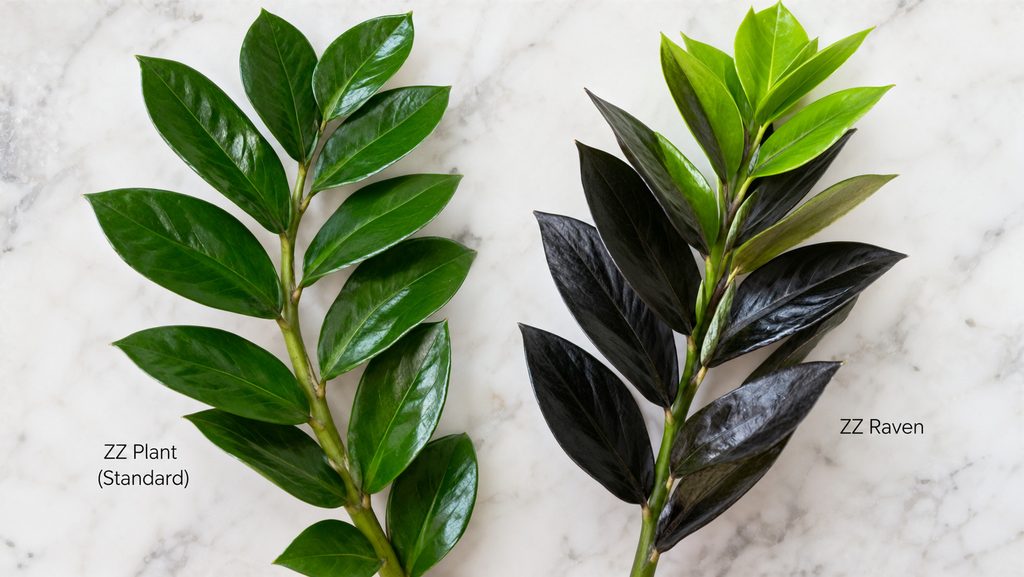
ZZ Raven is the most visually striking variety available. New growth emerges bright lime green and gradually darkens to a near-black purple over several weeks as the leaves mature. A mature Raven plant carries both bright new growth and fully darkened leaves at once, giving it a multi-toned look no other common houseplant matches. Care requirements match the standard variety, though growth is slightly slower.
ZZ Zenzi is a compact dwarf variety that stays around 12 to 18 inches tall, with more densely spaced leaflets that give it a fuller look than the standard plant. It suits desks, shelves, and small apartment spaces where a full-size ZZ plant would feel too large.
ZZ Lucky is a newer cultivar with slightly rounded, lighter green leaflets and a compact form. It is less widely available than the Raven or standard variety.
Common Problems and What They Mean
Yellow leaves are the clearest sign of overwatering. Yellowing that starts at the base of a stem and feels soft usually means the rhizomes have been sitting in wet soil. Stop watering right away, and if several stems are yellowing with soft bases, unpot the plant and check the rhizomes. Firm, tan rhizomes are healthy, while soft, dark, or foul-smelling ones need trimming before you repot into dry soil.
Brown leaf tips usually come from fluoride or mineral salts in tap water, over-fertilizing, or low humidity from forced-air heating. Switch to filtered water, flush the soil to clear salt buildup, and cut back on fertilizing frequency. Brown tips do not spread once the underlying cause is corrected, though the damaged tissue itself will not turn green again.
Drooping or leaning stems are usually caused by overwatering, which weakens the rhizome’s ability to support the growth above it. Root-bound conditions or very low light can also contribute. Check soil moisture first, and inspect the rhizomes if drooping shows up alongside other overwatering signs.
No new growth is normal in winter, when the plant slows down naturally. If growth stays stalled through spring and summer, check light levels first, since low light is the most common cause once watering is confirmed correct. Moving a dim-corner plant to a brighter spot usually triggers new stems within 4 to 8 weeks.
Pale or washed-out leaves point to direct sunlight or excessively bright light through glass. Move the plant back from the window or add a sheer curtain to soften the light.
Best Apartment Placement by Room
A north-facing living room corner is one of the strongest apartment spots for a standard or large ZZ plant. The ambient daylight, even without direct sun, supports steady if slow growth, and the plant’s upright form fills a corner without needing much floor space.
A desk or shelf near any window suits the compact Zenzi variety well, since it stays proportional to the surface and handles typical office or apartment lighting.
A bathroom with a small or frosted window works surprisingly well, since the plant tolerates the humidity swings from regular showers as long as it still gets some ambient light.
A bedroom corner away from the main window suits a standard ZZ plant as a floor plant beside a dresser or wardrobe, adding visual structure without the bright light most bedroom floor plants demand.
For more low-light options across your apartment, see tall low-light indoor plants for other floor-plant choices by room.
Pet Toxicity
The ASPCA lists ZZ plant as toxic to cats and dogs. It contains calcium oxalate crystals, the same compound found in pothos and peace lily, which cause oral irritation, drooling, and gastrointestinal upset if chewed or swallowed. It does not cause the kidney failure linked to true lilies, but the symptoms are still uncomfortable for the animal.
Keep the plant somewhere pets cannot easily reach, such as a high shelf or a room they do not access unsupervised. If a pet chews on a ZZ plant leaf, contact your veterinarian or the ASPCA Animal Poison Control Center. If pet safety is a priority for your whole plant collection, pet safe low-light plants covers non-toxic alternatives that share the same low-light tolerance.
FAQs
How often should I water a ZZ plant?
Water every 3 to 4 weeks in spring and summer and every 5 to 8 weeks in fall and winter, checking the soil at 2 to 3 inches deep before each watering. In low-light conditions, these intervals stretch out further since the plant uses water more slowly.
Can a ZZ plant survive in a room with no windows?
It tolerates low light better than most houseplants, but no plant survives indefinitely without any light source. In a windowless room, a full-spectrum LED grow light running 10 to 12 hours a day provides enough light for steady health.
Why are my ZZ plant leaves turning yellow?
Yellow leaves almost always signal overwatering. Stop watering, check the rhizomes for soft or dark sections, trim away any rot, and repot into fresh, fast-draining soil.
Is ZZ plant toxic to cats and dogs?
Yes, the ASPCA lists it as toxic due to calcium oxalate crystals that cause oral irritation and digestive upset if chewed. Keep it out of reach of pets and contact your veterinarian if ingestion occurs.
How fast does a ZZ plant grow?
Growth is slow in most indoor conditions, typically a few new stems per year. Brighter indirect light and regular feeding during the growing season speed this up, while dim corners slow it further without harming the plant’s health.
What is the difference between ZZ plant and ZZ Raven?
The standard ZZ plant keeps consistently deep green leaves throughout its life. ZZ Raven produces new growth as bright lime green that darkens to near-black over several weeks, giving mature plants a multi-toned look. Both share the same care needs.
How do I know if my ZZ plant needs repotting?
Repot every 2 to 3 years, or sooner if roots emerge from the drainage holes or the soil dries out unusually fast after watering. Move up only one pot size to avoid excess wet soil around the rhizomes.
Conclusion
ZZ plant care comes down to understanding one thing: this plant stores its own reserves and needs far less intervention than it looks like it should. Water only when the soil is completely dry, keep it out of direct sun, use a fast-draining soil mix, and repot every few years. Watch for yellowing or soft stems as your main warning sign, since almost every problem this plant develops traces back to too much water rather than too little.
Pingback: ZZ Plant Not Growing: 8 Causes and Fixes
Pingback: ZZ Plant Yellow Leaves: Causes and How to Fix It
Pingback: How Often to Water ZZ Plant: By Light and Season
Pingback: ZZ Plant Propagation: Division, Stem, and Leaf Cuttings
Pingback: ZZ Plant Pests: Identification and Treatment Guide
Pingback: ZZ Plant for Office: Does It Survive Fluorescent Light?
Pingback: Plant Stand Ideas for Small Spaces – 4 Easy Designs (2026)
Pingback: Snake Plant vs ZZ Plant: Key Differences & Winner (2026)