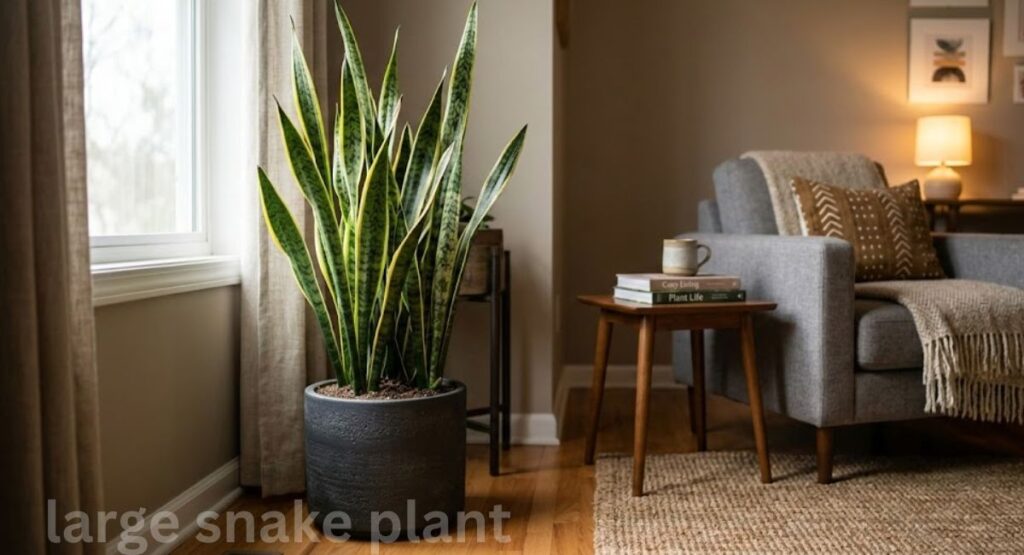
Looking for a large snake plant that can handle a low-light corner? Several tall snake plant varieties can tolerate dim indoor conditions, but some are better suited to low light than others.
I learned this after trying different plants in the darker corners of my home. My fiddle leaf fig struggled, and even my pothos lost its vibrancy. That empty corner stayed frustratingly dull for months.
Then I brought home my first large snake plant.
I wasn’t expecting much. I just wanted something tall, structured, and easy to care for. Instead, it quickly became one of my favorite plants for that space. It added height, filled the empty corner, and stayed upright even with limited natural light.
Over the last decade, I’ve grown different snake plant varieties in a range of indoor lighting conditions. Some handled low light exceptionally well, while others needed brighter indirect light to maintain their best color and growth.
In this guide, you’ll discover 7 large snake plant varieties that can work well in low-light spaces, with pictures, typical indoor heights, light tolerance, and care tips to help you choose the right one for your home.
Why a Large Snake Plant Is the Best Tall Indoor Plant for Dark Corners
When someone asks me for a reliable tall indoor plant for low light, snake plant is almost always my answer.
It tolerates:
- Indirect light
- Artificial lighting
- Inconsistent watering
- Dry indoor air
Unlike many indoor plants, it doesn’t demand constant attention. In fact, too much care often harms it.
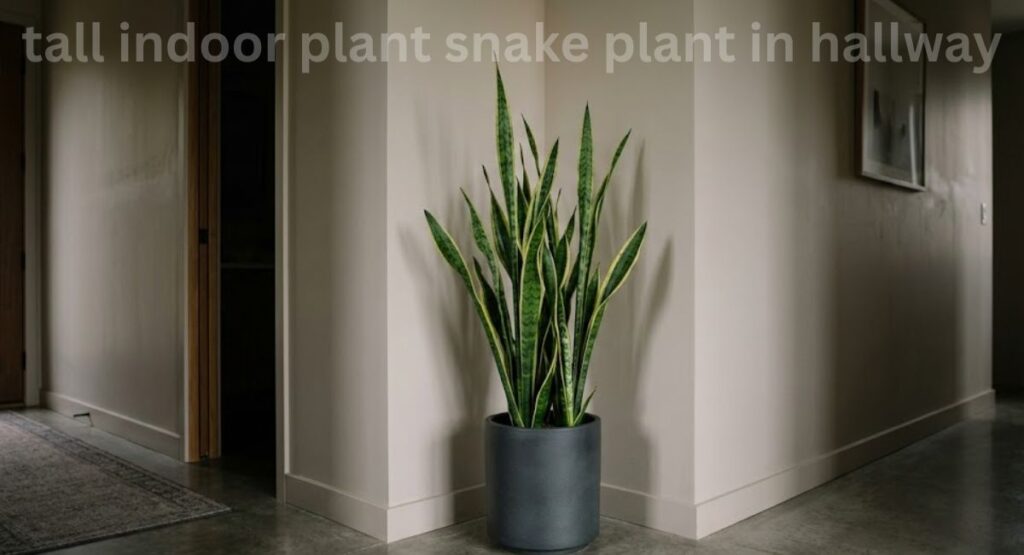
I once placed a snake plant in a hallway corner that barely received daylight. I expected it to decline slowly. Instead, it stayed upright and steady for years.
That’s when I realized something important:
A large snake plant isn’t just decorative. It’s dependable.
1. Sansevieria Laurentii – The Classic Large Snake Plant
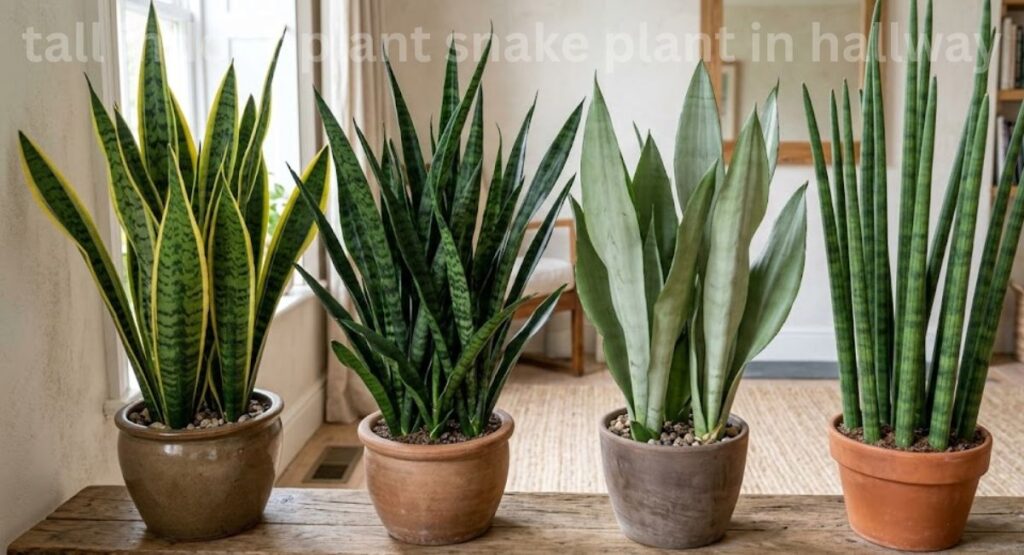
Sansevieria Laurentii is the most recognizable large snake plant variety.
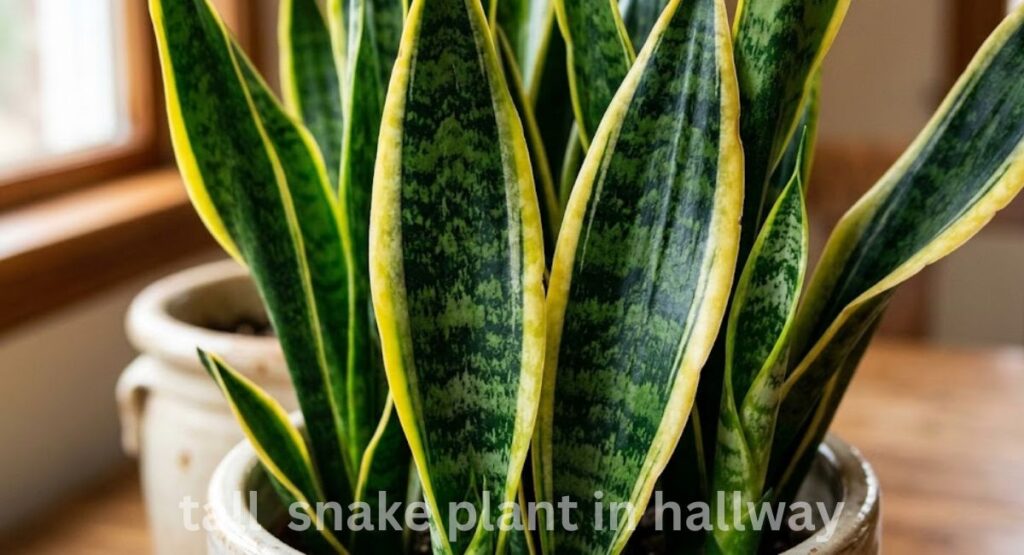
Dark green upright leaves with bold yellow edges. Structured. Clean. Timeless.
Mine grew to nearly 4 feet indoors.
Why It Works in Low Light
Laurentii tolerates dim conditions extremely well. Growth slows, but structure remains strong.
The best large snake plant varieties for low light are
Sansevieria Laurentii, Black Coral, and Zeylanica.
These varieties maintain upright growth even in dim
corners and require very little maintenance.
What I’ve Observed
When I moved mine to a darker bedroom corner for three months, it didn’t collapse. It just paused growth.
That resilience makes it ideal for beginners.
2. Sansevieria Zeylanica – Deep Green and Low Maintenance
Zeylanica has darker striping without yellow edges.
It gives a minimalist, modern look.
I kept one in a low light office corner for over a year. It handled inconsistent watering better than most plants I own.
If you want a no-drama tall house plant, this is a safe choice.
3. Sansevieria Cylindrica – Sculptural and Unique
Cylindrica grows tubular, spear-like leaves.
It feels architectural.
I once placed a braided version in my workspace. Even under artificial lighting, it stayed healthy.
It prefers moderate indirect light, but tolerates low light surprisingly well.
4. Sansevieria Moonshine – Brightens Dark Corners
Moonshine has pale silvery-green leaves.
It visually brightens darker spaces.
However, from experience, it performs best in moderate indirect light rather than deep shade.
If your corner gets some filtered daylight, Moonshine adds elegance.
5. Sansevieria Black Coral – Dark and Sophisticated
Black Coral has deep green leaves with subtle striping.
It looks expensive and refined.
I placed one in a white planter in my hallway. The contrast made it a focal point instantly.
It handles low light extremely well.
6. Sansevieria Robusta – Bold and Wide
Robusta grows thicker, broader leaves.
It feels fuller compared to other varieties.
If you need a large snake plant to fill a bigger empty corner, Robusta makes a stronger visual impact.
7. Sansevieria Bantel’s Sensation – Striped and Elegant
This variety features vertical white striping.
It’s visually striking but slightly less tolerant of deep low light.
Best for corners that receive soft indirect light.
Large Snake Plant Varieties Comparison Chart
Here’s a quick breakdown for easy decision-making:
| Variety | Avg. Height Indoors | Light Tolerance | Difficulty |
| Laurentii | 3–4 ft | Low to Bright Indirect | Very Easy |
| Zeylanica | 3–4 ft | Low to Moderate | Very Easy |
| Cylindrica | 2–4 ft | Moderate Indirect | Easy |
| Moonshine | 2–3 ft | Moderate | Easy |
| Black Coral | 3–4 ft | Low to Moderate | Very Easy |
| Robusta | 3–5 ft | Moderate | Easy |
| Bantel’s Sensation | 2–3 ft | Bright Indirect Preferred | Moderate |
If your corner is truly dim, Laurentii or Black Coral are safest.
How to Choose the Right Large Snake Plant for Your Corner
Not every corner is the same.
Ask yourself:
How Dark Is the Space?
Very dim?
Choose Laurentii or Zeylanica.
Some filtered light?
Moonshine or Robusta will thrive.
What Look Do You Prefer?
Bold contrast → Laurentii
Dark dramatic → Black Coral
Modern sculptural → Cylindrica
Soft elegant → Moonshine
How Much Effort Do You Want?
Complete beginner? Stick to Laurentii.
Some experience? Try Bantel’s Sensation.
Large Snake Plant Care: Light, Water, Soil Guide
Even the toughest indoor plant needs basic care.
Light
Low to bright indirect light works.
Avoid harsh direct sunlight.
Water
Water only when soil is completely dry.
Overwatering is the #1 cause of issues.
Soil
Use well-draining indoor potting mix.
Avoid heavy garden soil.
If you notice yellow leaves, it may be watering-related.
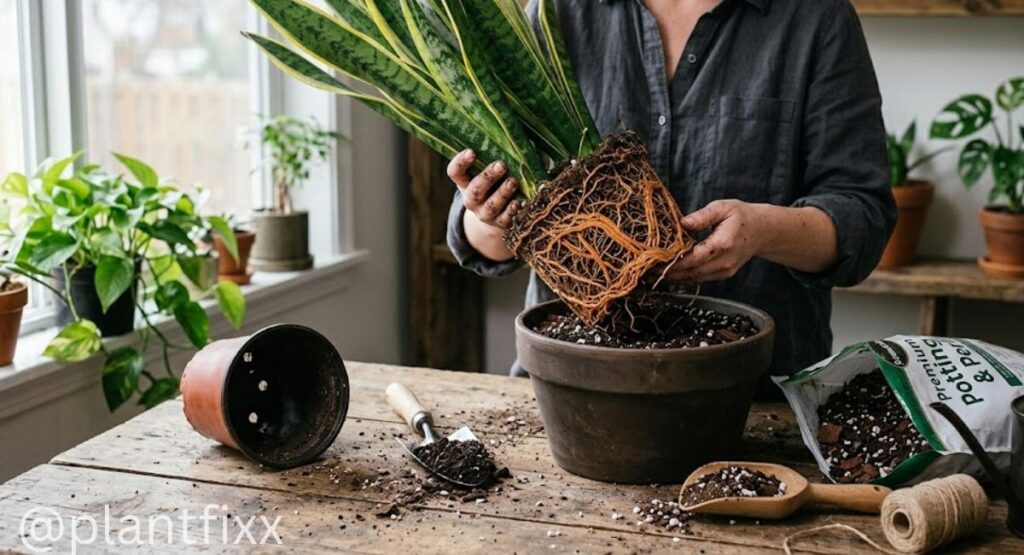
Repotting a Large Snake Plant: When and How
Repotting a tall indoor plant requires care.
I once moved a 4-foot snake plant into a much larger pot thinking it would grow faster.
Instead, the soil stayed wet for weeks.
Lesson learned.
When to Repot
- Roots coming out of drainage holes
- Plant becoming unstable
- Soil drying too fast
- Every 2–3 years
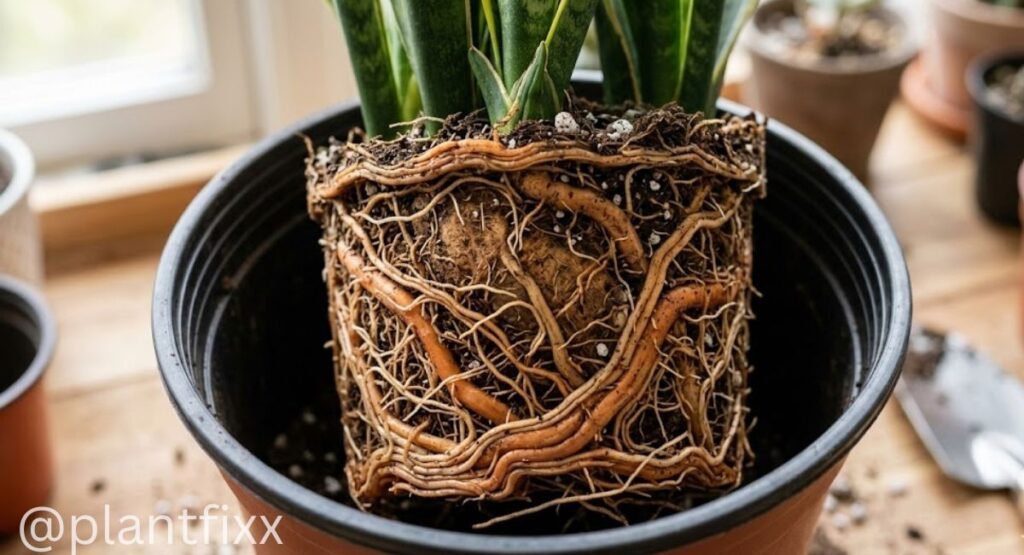
How to Repot Safely
- Choose a pot 1–2 inches larger only
- Use fast-draining soil mix
- Add perlite for airflow
- Wait 3 days before watering
Snake plants prefer being slightly root-bound.
My Simple Routine for Tall Snake Plants
- Check soil every 10–14 days
- Rotate monthly
- Wipe leaves every few weeks
- Inspect roots annually
No complicated schedule.
Common Mistakes With Large Snake Plants
I’ve made these mistakes myself:
- Watering weekly regardless of soil
- Using pots without drainage
- Over-fertilizing
- Ignoring seasonal changes
- Treating all indoor plants the same
Snake plants don’t die from neglect.
They die from too much love.
Prevention Strategy
To keep your large snake plant healthy:
- Use well-draining soil
- Avoid cold drafts
- Adjust watering seasonally
- Observe plant signals
Consistency beats perfection.
FAQs
How tall does a large snake plant grow indoors?
Most reach 3–5 feet depending on variety and conditions.
Is snake plant good for very low light?
Yes, but growth slows in darker spaces.
How often should I water it?
Usually every 2–4 weeks, depending on season and light.
Do large snake plants need fertilizer?
Light feeding during growing season is enough.
Can it stay in a bedroom corner?
Absolutely. It’s one of the best tall house plant options for bedrooms.
Final Thoughts
If you have an empty corner that feels dull, a large snake plant might be exactly what you need.
It’s structured. Calm. Reliable.
Over the years, many indoor plants have come and gone in my home. But my snake plants? They stayed strong.
And sometimes, that quiet resilience is exactly what makes a plant special.
Start with one variety. Place it thoughtfully.
You’ll be surprised how much presence one tall indoor plant can bring into your space. 🌿