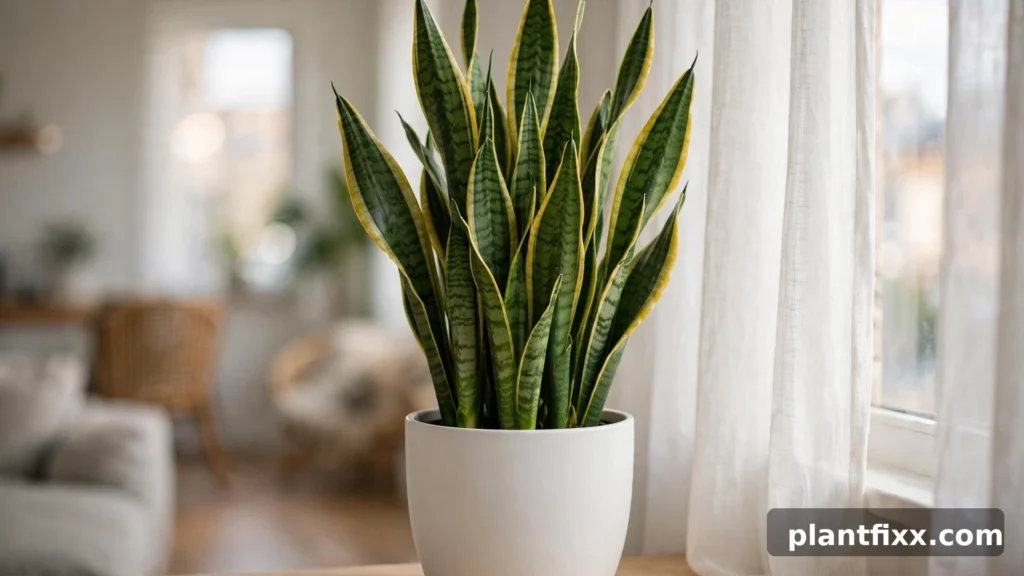
Snake plants have a reputation for surviving anything. Miss a few waterings, stick one in a dim hallway, forget it exists for a month, and it still stands there looking sharp. That reputation is mostly earned. But “hard to kill” is not the same as “thrives on neglect,” and the gap between those two ideas is where most snake plants quietly decline.
This snake plant care guide covers everything that actually matters: how to water without rotting the roots, what light really grows the best leaves, which soil mix drains fast enough, and the seven mistakes that kill more snake plants than anything else. If you are growing yours in a small apartment, you will find placement tips for tight spaces too.
One note before we start. Botanists now classify the snake plant as Dracaena trifasciata, though nurseries and most care guides still call it Sansevieria trifasciata. Same plant, two names. If a label says Sansevieria, you are holding the right thing.
Water your snake plant only when the soil is completely dry all the way through, give it bright indirect light, and plant it in a fast-draining cactus-style mix. That is 90 percent of snake plant care. Everything else on this page fine-tunes those three basics so your plant does more than just survive.
Snake plants store water in their thick leaves, which is why they forgive missed waterings but punish overwatering with root rot. They tolerate low light but grow faster and hold stronger leaf patterns in bright indirect light. A pot with drainage holes and gritty soil matters more than fertilizer, misting, or any gadget. Most dying snake plants are drowning, not thirsty.
One mistake many people make is treating a snake plant like a tropical foliage plant that wants constant moisture. It does not. In practice, the owners with the healthiest snake plants are usually the ones who check the soil, find it still damp, and walk away. Learning to hold back the watering can is the single most useful skill in this guide.
Why Snake Plants Forgive Almost Everything
A snake plant survives neglect because of how it is built. Its thick, upright leaves are water reservoirs. When the soil dries out, the plant draws on stored moisture instead of wilting. Its rhizomes, the thick underground stems, store energy and push up new leaves even after long dry spells. This is a plant designed by evolution to wait out bad conditions.
That design has one blind spot: standing water. In the wild, snake plants grow in gritty, fast-draining soils across West Africa. Their roots never sit in soggy ground. In a pot with heavy soil and no drainage, water lingers around the roots, oxygen drops, and rot-causing fungi move in. The plant that survives a month of drought can die from two weeks of wet feet.
Understanding this trade-off changes how you care for the plant. Every decision, from pot choice to watering day, should answer one question: will the roots dry out between waterings? If yes, the plant will almost certainly be fine.
What You Need Before You Start
You do not need much. A pot with at least one drainage hole, a bag of cactus or succulent potting mix (or regular potting mix blended half and half with perlite), and a spot with decent light. A wooden skewer or chopstick works as a soil moisture probe and costs nothing. That is the full kit.
Skip the moisture meter, the misting bottle, and the fancy fertilizer for now. Snake plants do not need high humidity, and feeding matters far less than most guides suggest. Get the pot, the soil, and the watering habit right first. Everything else is optional.
Light: What Your Snake Plant Actually Wants
Snake plants tolerate low light better than almost any common houseplant. A north-facing room or a hallway with no direct sun will keep one alive. But tolerance is not preference. In brighter indirect light, leaves grow faster, stand stiffer, and hold their variegation. A Laurentii kept in a dark corner slowly loses its gold edges and turns plain green.
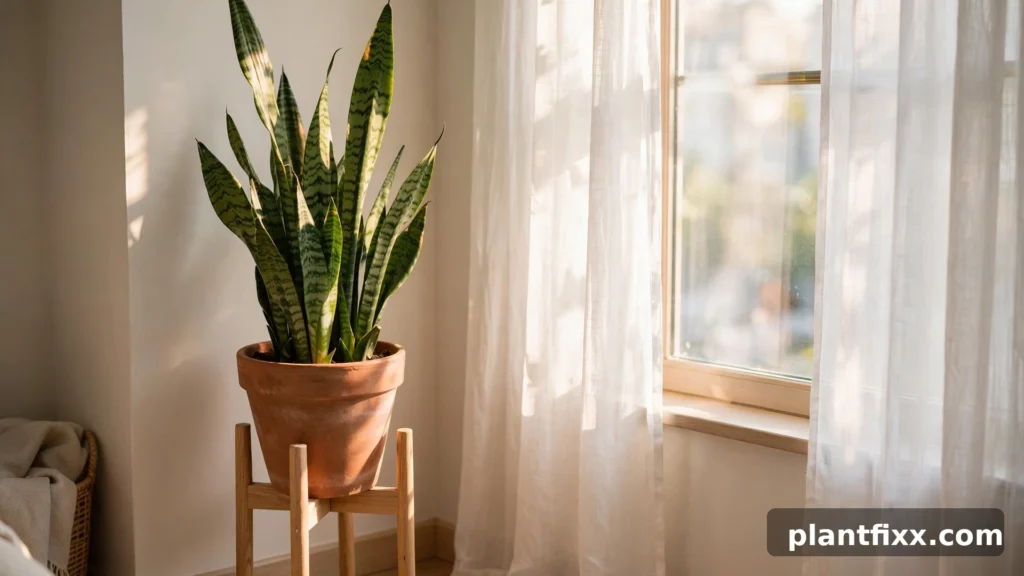
The sweet spot is bright indirect light: near an east or west-facing window, or a few feet back from a south-facing one. Gentle morning sun is fine and even helpful. Harsh midday sun through glass can scorch leaves, leaving pale bleached patches that never heal.
If your only spot is dim, the plant will adapt by growing slowly. Water even less often in low light, because the soil stays wet much longer without light driving evaporation. For a deeper look at matching light levels to placement, read our snake plant light requirements guide.
Watering: The One Rule That Matters Most
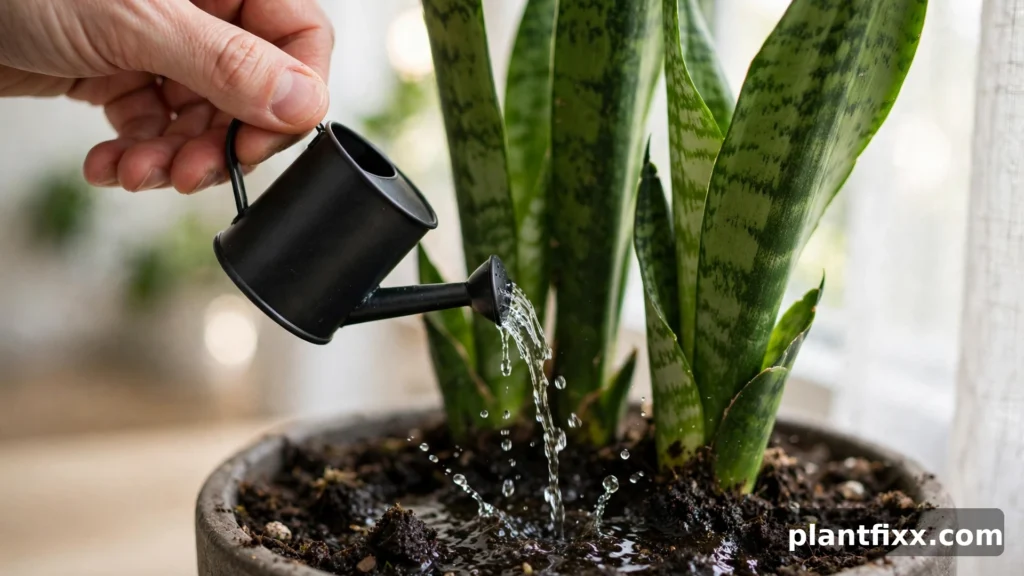
Water only when the soil is completely dry from top to bottom. Not the top inch. All of it. Push a wooden skewer down to the base of the pot. If it comes out with damp soil stuck to it, wait. If it comes out clean and dry, it is time to water.
When you water, do it thoroughly. Soak the entire root ball until water runs freely from the drainage holes, then empty the saucer. A full soak followed by a full dry-down mimics the downpours and dry spells of the plant’s natural habitat. Light sips of water every few days are far worse: they keep the top moist while the roots stay dry, or worse, they keep everything half-wet all the time.
How often is that in practice? In a bright warm room, every two to three weeks. In low light or winter, once a month or even less. Never water on a calendar schedule. Your home’s light, temperature, pot size, and soil mix all change the timing, so the skewer test beats any schedule. Our full snake plant watering guide walks through the method step by step, and how often to water a snake plant covers seasonal timing in detail.
Use room-temperature water. Very cold water can shock the roots. If your tap water is heavily chlorinated, letting it sit out overnight helps, though most snake plants handle tap water without complaint.
Soil: Build a Mix That Drains Fast
Regular potting soil holds too much water for a snake plant on its own. It stays soggy for days after watering, which is exactly what rots roots. You need a mix that lets water pass through quickly while holding just enough moisture for the roots to drink.
The simplest fix is a bagged cactus or succulent mix. It is pre-made for exactly this job. If you only have regular indoor potting mix, blend it half and half with perlite or coarse pumice. The perlite creates air pockets that keep the mix open even when wet. A handful of orchid bark improves it further, but perlite alone does the heavy lifting.
Whatever you use, the pot must have drainage holes. No exceptions. Decorative pots without holes trap water at the bottom where you cannot see it, and that hidden reservoir is where rot starts. If you love a hole-less cache pot, keep the plant in a plastic nursery pot inside it and lift the inner pot out to water. See our best soil mix for snake plants for exact ratios and three tested recipes.
Temperature and Humidity
Snake plants like the same temperatures you do: roughly 60 to 85 degrees Fahrenheit (15 to 29 Celsius). They sulk below 50 degrees, so keep them away from drafty windows in winter and off cold tile floors. A plant sitting against icy glass on a freezing night can take real damage.
Humidity is a non-issue. Average indoor air is fine. Do not mist a snake plant. Misting wets the leaves without helping the roots, and water sitting in the leaf crowns invites rot. If your home is extremely dry in winter, the plant will not care. Save the humidifier for your ferns.
Fertilizer: Less Than You Think
Snake plants are light feeders. In most homes, they grow perfectly well for a year or more on whatever nutrients came in the potting mix. When you do feed, less is more.
Feed only during the growing season, spring through early fall, and only if the plant is actively growing. Use a balanced liquid houseplant fertilizer at half the label strength, once a month at most. Two or three light feedings per year is plenty for most plants. Never fertilize in winter, when growth stalls and unused salts build up in the soil.
More snake plants are harmed by over-fertilizing than by skipping it. Brown crispy leaf tips are a common sign of salt buildup. If you see them, flush the pot with clean water and cut back on feeding.
Repotting Without Stress
Snake plants like being slightly root-bound, so do not rush to repot. Every two to three years is typical. The signs it is time: roots circling out of the drainage holes, the pot bulging or cracking, or water running straight through because roots have displaced most of the soil.
Move up only one pot size, about one to two inches wider. A much larger pot holds excess soil that stays wet around a small root system, which brings back the rot risk. Use fresh fast-draining mix, set the plant at the same depth it was growing before, and wait a few days before watering so any damaged roots can callus.
Spring is the best time to repot, when the plant is entering its growth phase and recovers fastest. Our how to repot a snake plant guide covers the full process with photos of each step.
Propagation: Turn One Plant Into Many
Snake plants propagate easily, which makes them great plants to share. The fastest method is division: during repotting, pull or cut the rhizome clump into sections, making sure each section has roots and at least a few leaves, then pot each one separately. Divided plants establish quickly because they already have roots.
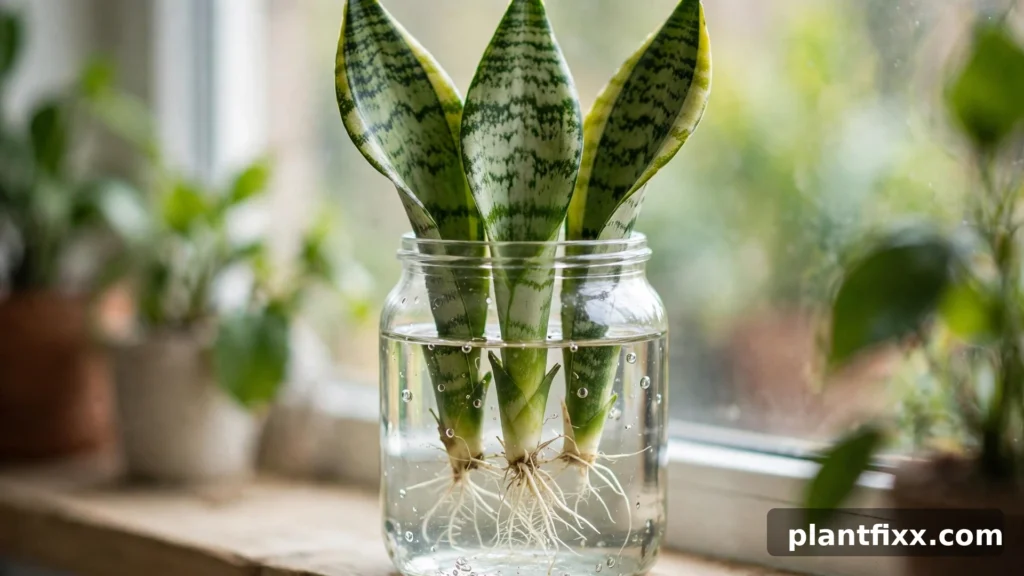
Leaf cuttings work too but take patience. Cut a healthy leaf into three to four inch sections, let the cut ends dry for a day or two so they callus, then place them cut-end down in water or moist soil. Roots appear in a few weeks, and a new pup can take two to three months. One warning: leaf cuttings of variegated varieties like Laurentii usually grow back plain green. Division is the only way to keep the variegation.
For the complete method with timelines and troubleshooting, see snake plant propagation.
Best Varieties for Beginners
All snake plant varieties share the same basic care, but a few are especially forgiving for beginners. Laurentii, with its gold-edged leaves, is the classic and widely available. Zeylanica has dark green patterned leaves and tolerates lower light a bit better. Hahnii stays short and compact, which suits desks and shelves.
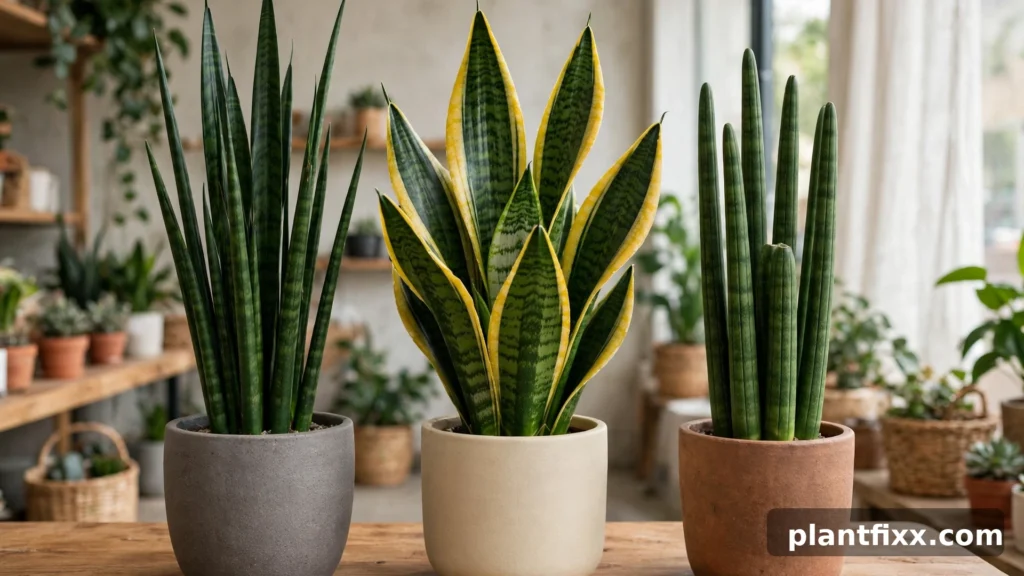
If you want something unusual, the cylindrical snake plant grows round spear-like leaves and needs even less water than the flat-leaf types. Whale fin produces single enormous paddle leaves and makes a striking statement plant. Browse our snake plant varieties roundup to compare them side by side.
Snake Plant Care in Small Apartments
Snake plants might be the ideal small-space plant. They grow upright instead of sprawling, so a large plant occupies only its pot’s footprint. They tolerate the low light of interior rooms. And they do not mind dry apartment air in winter.
Placement ideas for tight spaces: a tall Laurentii in an empty corner adds height without taking floor space. A compact Hahnii fits on a desk or bookshelf. Snake plants also work well in bedrooms, where their tolerance for low light and nighttime oxygen release make them popular. See our picks for the best snake plant for bedroom setups.
One apartment-specific warning: small pots dry faster, but tiny decorative pots without drainage are everywhere in apartment decor. Always check for a drainage hole before buying the pot, not after the plant is already in it.
Troubleshooting: Reading What Your Plant Tells You
Snake plants communicate clearly once you know the signs. Learn to read them and you will fix most problems before they turn serious.
Signs Your Plant Is Thriving
New leaves emerging from the center of the rosette, firm upright foliage, and rich leaf color all signal a happy plant. In spring and summer, you might notice a new pup pushing up beside the mother plant. That is the plant telling you conditions are right. Keep doing what you are doing.
Signs Something Is Wrong
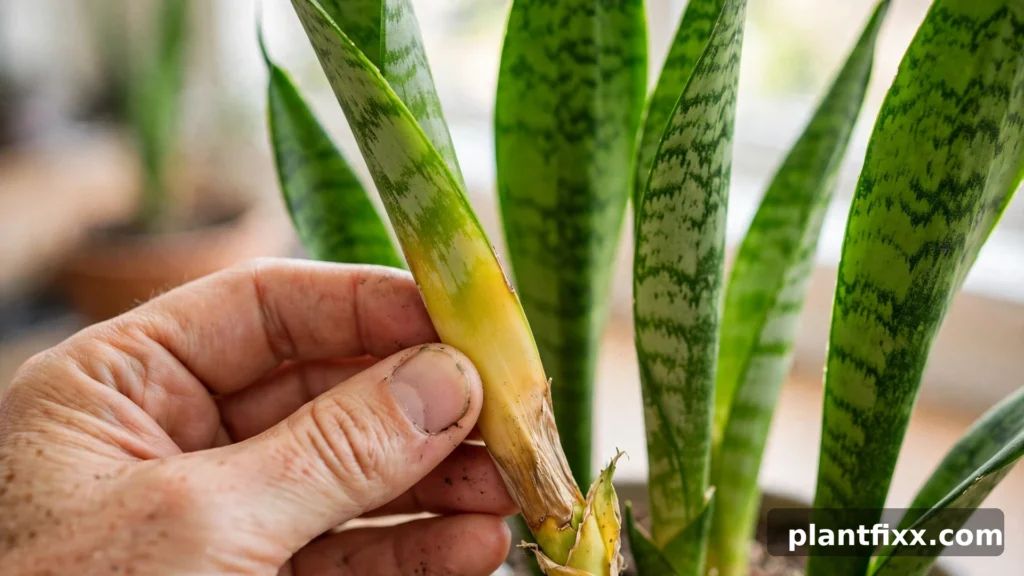
Yellow leaves, especially soft or mushy ones at the base, almost always mean too much water. Check the roots: white and firm is healthy, brown and slimy is rot. If you catch it early, letting the soil dry fully can save the plant. Advanced rot needs surgery, which our snake plant root rot guide walks through.
Brown crispy tips usually point to underwatering, low humidity extremes, or fertilizer salt buildup. They are cosmetic and will not heal, but new growth comes in clean once you fix the cause. See snake plant brown tips for the full diagnosis.
Leaves turning yellow from the bottom up can also signal overwatering rather than age. Our snake plant yellow leaves article helps you tell the difference. And if your plant has not grown in months, why your snake plant is not growing covers every cause from light to pot size.
Winter Care Adjustments
Winter changes the equation. Shorter days and cooler rooms slow growth to a crawl, which means the plant drinks far less. This is when most overwatering deaths happen: owners keep the summer schedule while the plant has stopped drinking.
Cut watering roughly in half. If you watered every three weeks in summer, stretch to five or six in winter. Move the plant away from cold windows and heating vents, both of which stress it. Stop fertilizing entirely until spring. Our snake plant winter care guide has the full seasonal checklist.
Are Snake Plants Safe for Pets?
No. Snake plants are mildly toxic to cats and dogs. They contain saponins, which cause nausea, vomiting, and diarrhea if chewed or eaten. The ASPCA lists snake plants as toxic to both cats and dogs, so keep them out of reach of curious pets. Hanging planters, high shelves, and closed rooms work well.
The risk is moderate, not severe. A nibble usually causes stomach upset rather than an emergency, but there is no reason to gamble. If your pet eats a significant amount, call your vet.
7 Mistakes That Kill Snake Plants
One, watering on a schedule instead of checking the soil. Two, using a pot with no drainage holes. Three, planting in dense regular potting soil that never dries. Four, placing the plant where cold drafts hit it in winter. Five, fertilizing in winter or at full strength. Six, repotting into a much larger pot. Seven, misting the leaves, which wets the crown and invites rot.
Notice what is missing from that list: underwatering, low light, and dry air. Beginners worry about those three constantly, yet they almost never kill a snake plant. The real killers are all versions of too much water and too little drainage. Fix your watering habit and your drainage, and the plant handles the rest.
Snake Plant Care at a Glance
| Care aspect | What to do |
|---|---|
| Light | Bright indirect preferred, tolerates low light |
| Water | Only when soil is fully dry, every 2 to 6 weeks |
| Soil | Fast-draining cactus or succulent mix |
| Pot | Must have drainage holes, only slightly larger than roots |
| Temperature | 60 to 85 F (15 to 29 C), never below 50 F |
| Humidity | Average indoor air, no misting |
| Fertilizer | Half strength, monthly in growing season only |
| Repotting | Every 2 to 3 years, one size up |
| Pets | Mildly toxic to cats and dogs |
Frequently Asked Questions
How often should I water my snake plant?
Water only when the soil is completely dry all the way through, which is typically every two to three weeks in bright warm rooms and monthly or less in low light or winter. Always check with a wooden skewer rather than following a calendar.
Do snake plants need direct sunlight?
No. They prefer bright indirect light and tolerate low light well. A few hours of gentle morning sun is fine, but harsh midday sun through glass can scorch the leaves.
Why are my snake plant leaves turning yellow?
Yellow, soft leaves almost always mean overwatering. Let the soil dry completely and check the roots for rot. Yellow dry leaves on an underwatered plant are much less common.
Can a snake plant survive in a dark room?
It can survive for months in very low light, but it will barely grow and the soil stays wet longer, raising rot risk. For long-term health, give it at least medium indirect light.
Should I mist my snake plant?
No. Misting does not help snake plants and water sitting in the leaf crown can cause rot. They are fine in normal dry indoor air.
Is a snake plant toxic to cats and dogs?
Yes, mildly. Snake plants contain saponins that cause nausea and vomiting if ingested. The ASPCA lists them as toxic to cats and dogs, so keep them out of pets’ reach.
How do I make my snake plant grow taller?
Give it bright indirect light, water correctly, and avoid oversized pots. Taller varieties like Laurentii also grow taller than compact types like Hahnii, so variety choice matters.
That covers the complete picture. Start with the three basics: dry soil between waterings, decent light, and a pot that drains. Get those right and your snake plant will not just survive your apartment, it will thrive in it for years. If you run into yellow leaves or stalled growth down the road, the troubleshooting guides linked above will walk you through each fix.