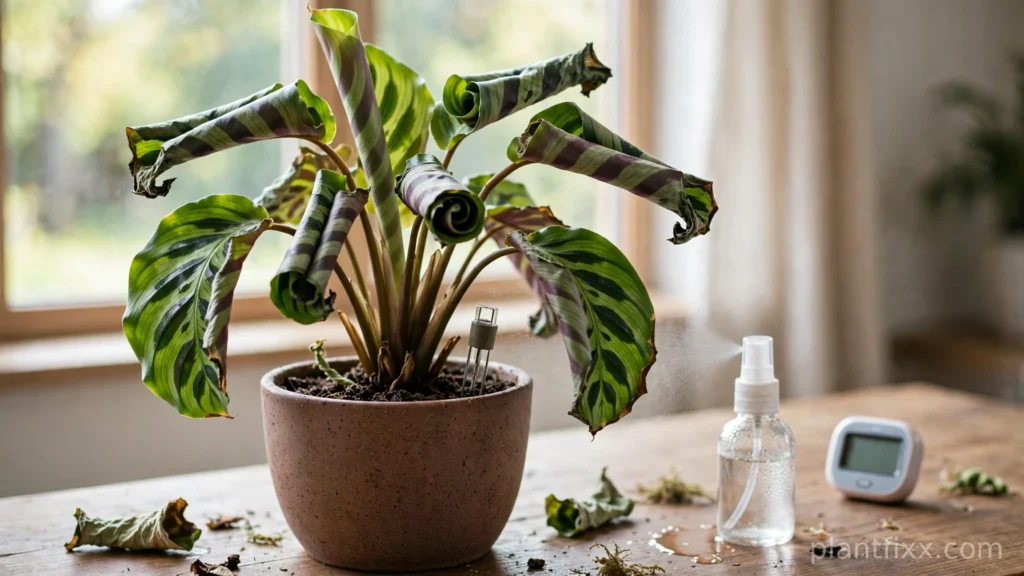
When calathea plant leaves curling is the first thing you notice on a mature leaf, read the shape before you reach for water. A whole leaf rolled into a tube, edges tucking under, or a leaf folding lengthwise each point at a different shortage.
One roll is not a warning at all. A brand new leaf arrives furled like a tight spear and opens on its own over several days, so leave that single roll alone.
For mature leaves, work in this order: soil moisture, air humidity, water quality, light and heat, then roots and leaf undersides. Fix only the first cause that fails, and judge the result by the next leaves.
First, Is This Curl Normal? The Furled New Leaf Test
Every calathea leaf starts life rolled. The young blade forms a narrow tube at the centre of the clump, pushes upward on its stalk, and then slowly unfurls into a flat, patterned leaf.
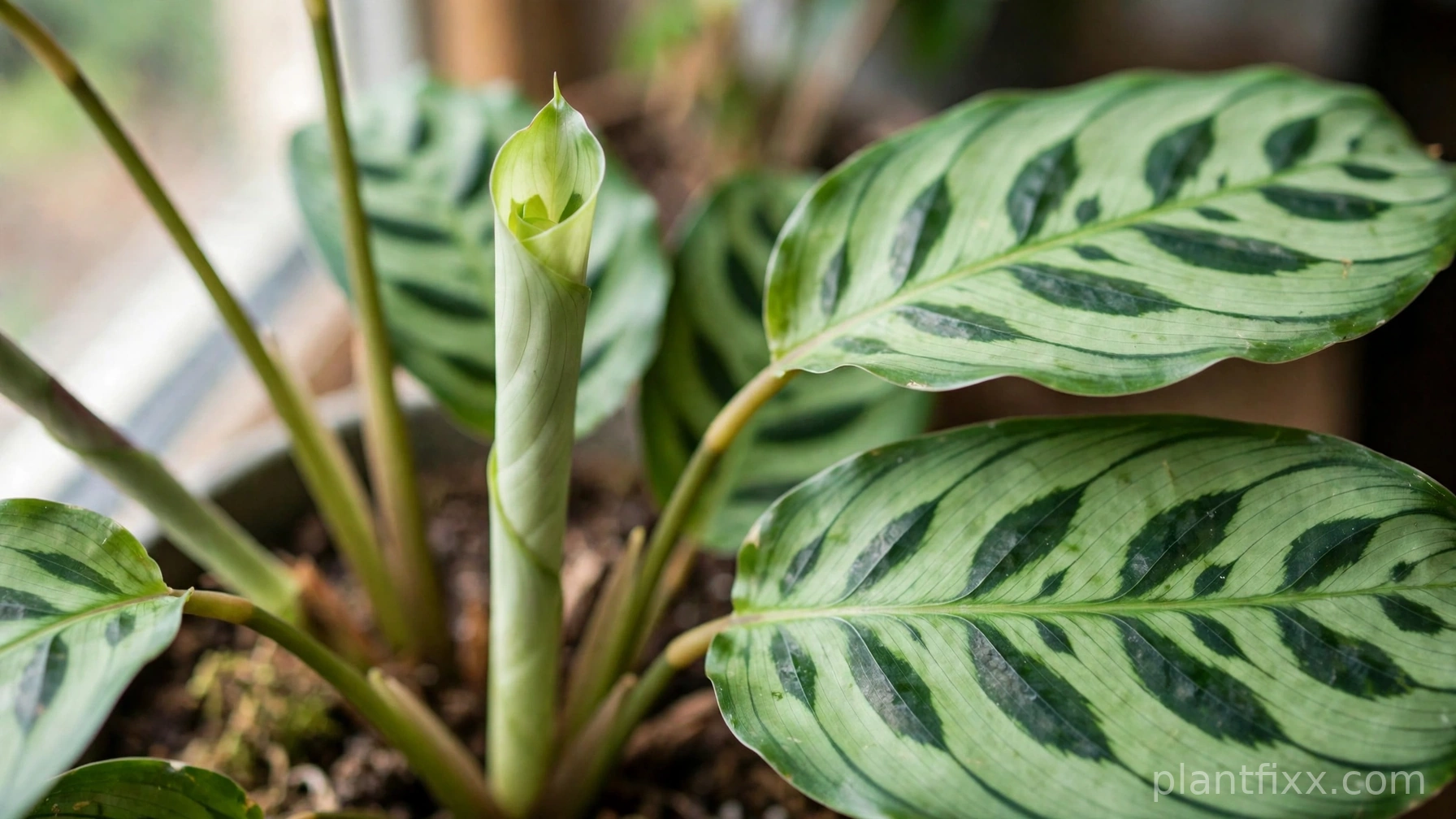
That tube is firm, clean and evenly coloured, and it sits among older leaves that stay open. Give it days, not help. Fingers prising it open tear tissue that is still soft and folded tight.
Night movement is a second false alarm. Calathea and Goeppertia leaves lift upward after dark and settle lower in daylight, a habit explained in our prayer plant care guide. Do not use that lift as the main test here.
Read the Curl Pattern: What Each Shape Points To
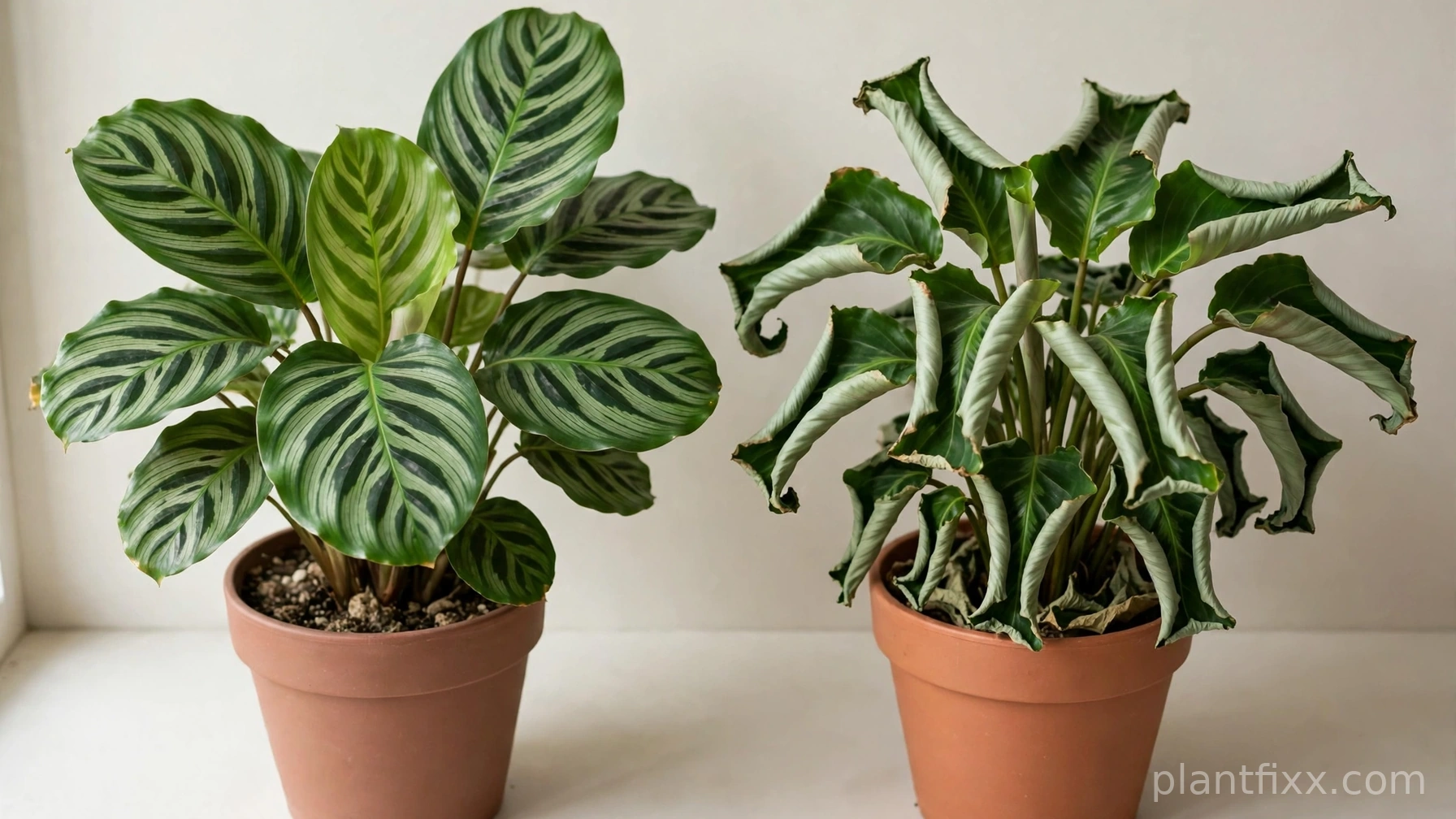
Shape narrows the search before you touch the pot. Match the pattern you see to the first check in the table, then confirm it with the sections that follow.
| Curl pattern | Likely cause | First fix |
|---|---|---|
| Whole mature leaf rolled into a tube | Dry roots, the plant short of water overall | Check the mix an inch down, water deeply if dry |
| Edges curling under, centre still fairly flat | Dry air pulling moisture from the margins first | Measure humidity at leaf height, raise it |
| Leaf canoeing, folded upward along the midrib | Strong light or heat on that side of the plant | Move it out of direct sun and away from heat |
| Curling plus brown edges and tips | Tap water minerals, fluoride or feeding salts | Switch to rain or distilled water, flush the mix |
| Curling plus pale spots or speckles | Spider mites feeding under the leaf | Inspect the underside, rinse and treat if found |
| One new leaf furled, older leaves flat | Normal growth, no cause | Leave it to unfurl on its own |
What You Need Before You Start
- A finger or a wooden skewer for checking moisture below the surface.
- Rainwater or distilled water for the test watering and the flush.
- A small hygrometer that can sit at leaf height beside the pot.
- Clean scissors, in case root work or dead leaf removal is needed.
- A sheet of white paper for the mite tap test.
- Ten minutes at midday, when a stress curl is easiest to read.
Why a Mature Leaf Rolls: Surface, Transpiration and Turgor
A flat leaf offers its full upper surface to the room. Water vapour escapes through that surface all day, a loss called transpiration, and the roots must replace it at the same pace.
Rolling cuts the bill. Edges that turn inward hide part of the surface, trap a thin layer of still air against the leaf, and slow the rate at which water leaves the tissue.
Cell pressure sets the shape underneath. Water filled cells press outward and keep the blade open and firm. When loss runs ahead of supply, pressure falls and the thinner margins move first.
The North Carolina State Extension notes for Goeppertia roseopicta name the two triggers behind most cases: leaf curling follows low humidity or inadequate watering. The other causes in this guide widen that gap from the root side or the leaf side.
Dry Roots: The Whole Leaf Tube
Start with the mix, because dry roots produce the tightest roll. Push a finger an inch into the pot. If that depth is dry and the pot feels light, watering is the first fix.
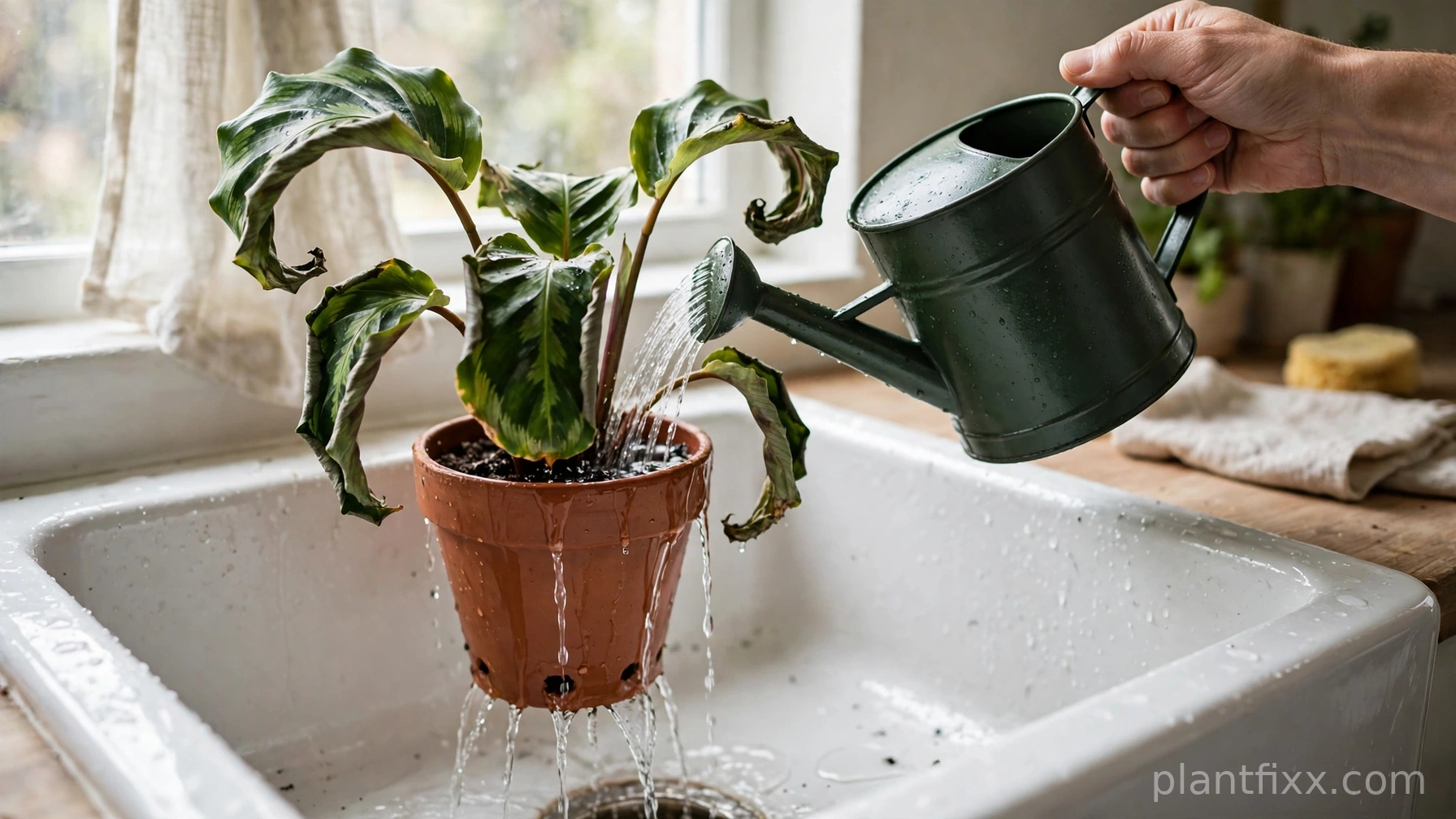
Pour room temperature soft water slowly over the whole surface until it runs from the drainage holes. Wait a few minutes, pour again, then empty any water left standing in the saucer.
After that reset, keep the mix evenly moist rather than swinging between dry and soaked. Water again when the top inch dries, which is the rhythm in our complete calathea plant care guide.
Dry Air: Edges Curling Over Moist Soil
If the mix is moist an inch down and the edges still tuck under, look at the air. Heated rooms in winter and air conditioning in summer both pull moisture straight off the margins.
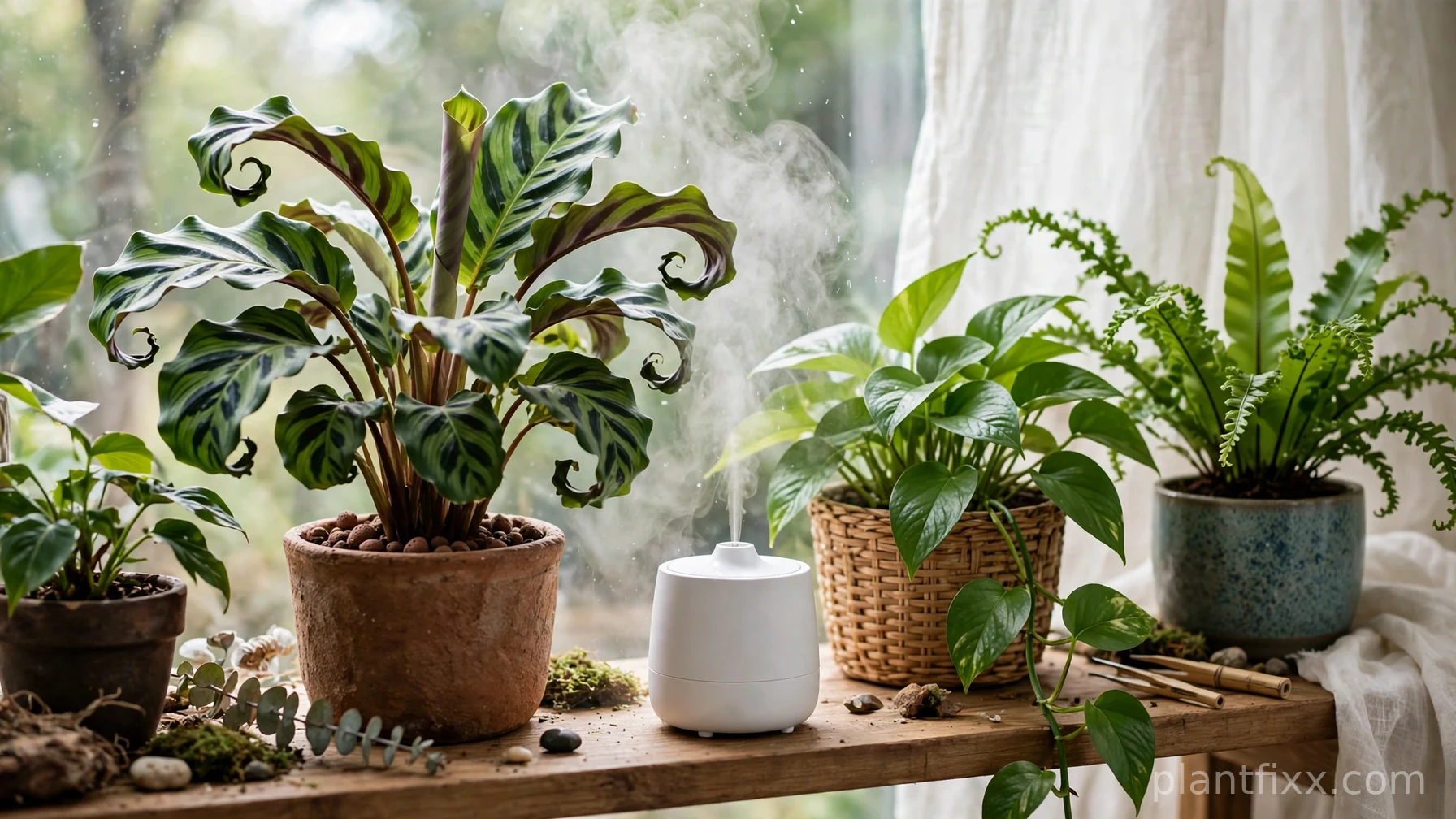
Set the hygrometer at leaf height, not across the room. Calathea grows best with humidity above 50 percent, and extension guidance for this genus puts the target nearer 60 percent.
A small humidifier near the plant holds that level for hours. Grouping calathea with other leafy plants shares transpired moisture in one pocket of air, and a pebble tray adds a smaller local lift.
Curling With Brown Edges: Tap Water, Fluoride and Salts
This pairing is the calathea specific clue in the table. A plain thirst curl can relax after one watering. Curling that returns beside brown edges and tips points at what the water carried in.
Water moves up the plant and leaves through the leaf, but fluoride and dissolved salts cannot leave with it. They gather where the flow ends, at the tips and margins, until that tissue browns.
Change the water first. Use rainwater or distilled water for the next month, and note whether new leaves open clean. Standing tap water overnight clears chlorine, but fluoride and most minerals stay behind.
Then flush once with that soft water. Run soft water slowly through the pot several times in a sink, let it drain fully, and pause feeding for a month before restarting at half strength in the growing season.
Too Much Light, Heat and Cold Drafts: The Canoe Test
A leaf folding upward along its midrib, like a shallow canoe, often faces the problem. Check whether the canoeing is worst on the window side and whether the pattern there looks washed out.
Direct sun raises leaf temperature and water loss at the same time, so the blade folds to cut its exposure. Scorched pale patches on that side confirm light, rather than soil, as the driver.
Move it a few feet back from the glass or behind a sheer curtain. Calathea still belongs on our list of best low light indoor plants for small spaces, with slower growth in dimmer spots.
Heat and cold work from the other side of the thermometer. The RHS guide to growing calatheas advises keeping plants away from draughts and direct heat sources, at steady warmth with no sharp swings.
Curling With Spots: Spider Mites Under the Leaf
Pale speckling on top is the surface clue. Turn the leaf over in good light. Spider mites gather on the underside, and a settled group leaves fine webbing between the blade and its stalk.
Test before treating. Tap a curled leaf sharply over white paper and watch the specks for a minute. Specks that walk are mites, while still specks are usually grit or dried spray residue.
If mites are present, isolate the pot, rinse both sides of every leaf, and apply insecticidal soap as its label directs. Repeat on the label interval, because eggs laid before the first rinse can hatch later.
Raising humidity helps beyond the treatment window, since mites favour dry air. Calathea is non toxic to cats and dogs, but keep pets off treated leaves until they dry, and confirm any plant in our pet safe plant checker for cats and dogs.
Curling Over Wet Soil: Root Bound and Root Rot
Curling that holds while the mix stays wet for many days is a root warning. The leaf is short of water, yet the pot is not, so the failure sits between the mix and the blade.
Check for a root bound pot first. Roots circling the drainage hole, a root ball that lifts out as one tight plug, and water running straight through all leave parts of the clump dry.
Repot a root bound plant one size up in spring, teasing the outer roots loose and filling the gap with fresh, airy mix. Water it in once, drain it, and expect a short pause in growth.
For rot, slide the plant out first. Pale, firm roots are healthy, while brown, soft roots are damaged. Trim those back to firm tissue, repot into fresh mix, and water lightly.
Recovery: What May Flatten, What Will Not
A leaf rolled by a short dry spell may relax within hours of a deep watering. A leaf rolled by dry air, salts or light needs days of steady conditions before its shape changes.
Be honest about the limit. A badly curled leaf, and any leaf whose edges have gone crisp and brown, may never lie fully flat again, even after the cause is fixed.
New growth is the scorecard. A fresh spear that unfurls flat, holds its pattern, and stays open at midday for a week shows the fix reached the roots and the air around them.
A Short Routine That Keeps Leaves Flat
Check the mix twice a week with a finger, read the hygrometer when heating or cooling is running, and glance under one leaf each time you water. Those three habits catch most curls early.
For the full routine behind these checks, work through our complete calathea plant care guide and keep this page for the days a mature leaf rolls. Read by shape, most calathea curls name their own cause.
Why are my calathea leaves curling inward?
Inward rolling on a mature leaf means the leaf is losing water faster than the roots replace it. Test dry mix first, then dry air, then light, heat, salts, mites and roots, in that order.
Is a new calathea leaf supposed to be rolled up?
Yes. A new leaf emerges furled like a tube or spear and unfurls over several days as it matures. Leave it closed, keep conditions steady, and only worry if opened leaves roll too.
Will curled calathea leaves uncurl after watering?
Leaves rolled by a short dry spell often relax within hours to a day after a deep watering. Leaves held curled for weeks, or crisped at the edges, may stay partly rolled.
Why are my calathea leaves curling and browning at the edges?
That pairing most often points at water quality or dry air. Fluoride, minerals and feeding salts gather at the margins and brown them, so switch to rain or distilled water and raise humidity.
How can I tell thirst curling from humidity curling?
Feel the mix an inch down at midday. Dry mix points at thirst, so water deeply. Moist mix with edges tucking under points at the air, so check the hygrometer at leaf height.
Can spider mites make calathea leaves curl?
Yes. Mites drain cells from the underside, so the blade loses pressure and distorts, usually with pale speckling on top. Confirm with the white paper tap test before you treat the plant.
Should I cut off curled calathea leaves?
No, not while a leaf is mostly green and firm, because it still feeds the plant during recovery. Cut only fully dead or crisp leaves, at the base of the stalk, with clean scissors.
Do calathea leaves curl at night?
Healthy leaves lift upward at night and lower again in daylight, which is normal movement, not a stress curl. Judge rolling at midday, when a stress curl stays shut and a night lift has opened.
Pingback: Calathea Plant Care Guide: Light, Water, Humidity and Pet Safety
Pingback: Calathea Orbifolia Care Guide: Light, Water, Humidity and Brown Edges
Pingback: Calathea Spider Mites: Confirm, Treat and Prevent Them