
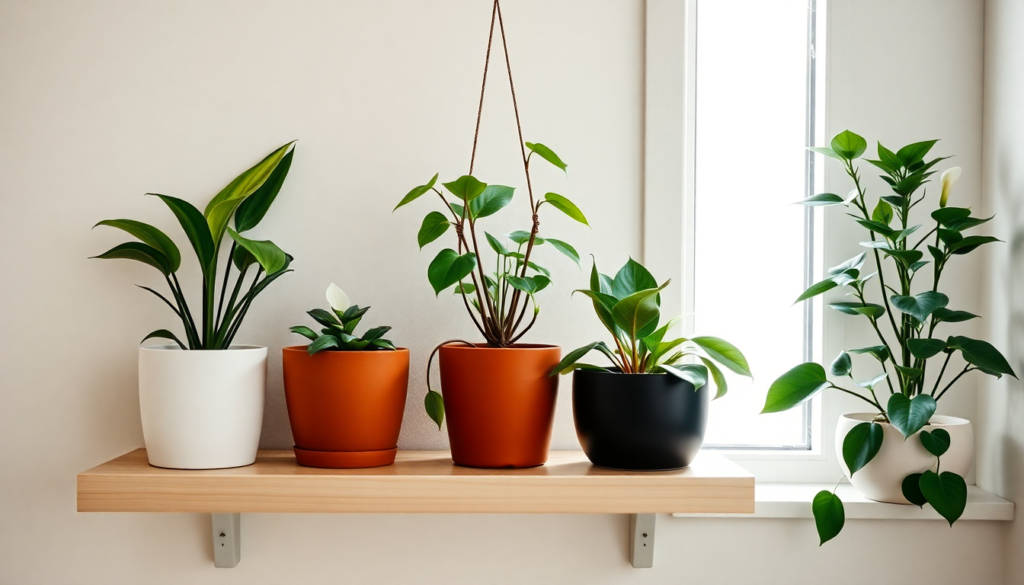
Finding small low light indoor plants that genuinely work in a dim apartment is harder than it looks. Most lists include plants that tolerate low light temporarily before declining, or plants that stay compact at purchase but outgrow a shelf within a year. Neither helps when your apartment has one north-facing window and floor space measured in square feet.
Every plant on this list meets two specific criteria: it stays naturally compact at full maturity, and it performs in 50 to 200 foot-candles of indirect light, the real-world range of most dim apartment rooms. No grow lights required for any of them, though a basic LED grow light on a timer extends what each plant can do in the darkest spaces.
Quick Answer
The best small low light indoor plants for tiny apartments are ZZ plant, Bird’s Nest Hahnii, pothos, peace lily, Chinese evergreen, heartleaf philodendron, cast iron plant, spider plant, parlor palm, nerve plant, radiator plant, lucky bamboo, oxalis, button fern, and creeping fig. All stay under 24 inches and grow in 50 to 200 foot-candles.
Quick Take Small low light indoor plants thrive in 50 to 200 foot-candles of ambient light, the equivalent of a room with a window but no direct sun, or a position 6 to 10 feet from any window. The best apartment picks stay under 2 feet at maturity, fit in 4 to 6 inch pots, and tolerate the dry indoor air produced by heating and air conditioning. No plant grows in complete darkness permanently, but the 15 plants below come closest to that standard for real apartment conditions in 2026.
What “Small” and “Low Light” Actually Mean for Apartments
One mistake many apartment plant buyers make is assuming any plant sold in a small nursery pot stays small. Snake plants, monstera, and rubber plants all start small and grow large. For a tiny apartment, you need plants that max out naturally under 20 to 24 inches or trail rather than spread upward.
Low light in apartment terms means 50 to 200 foot-candles. A north-facing room typically sits at 75 to 150 foot-candles during daylight hours. A room with a window but positioned across the room from it sits at 100 to 200 foot-candles. These are real numbers that separate plants that genuinely thrive from plants that merely survive long enough to disappoint you.
Full Comparison Table
| Plant | Max Size | Min Light (FC) | Pot Size | Pet Safe | Watering |
| ZZ Plant | 2 to 3 ft | 50 | 4 to 6 in | No | Every 3 to 4 weeks |
| Bird’s Nest Hahnii | 6 to 10 in | 50 | 4 in | No | Every 2 to 3 weeks |
| Pothos | Trailing | 50 | 4 to 6 in | No | Every 1 to 2 weeks |
| Peace Lily | 1 to 3 ft | 100 | 4 to 6 in | No | Weekly |
| Chinese Evergreen | 1 to 3 ft | 100 | 4 to 6 in | No | Every 1 to 2 weeks |
| Heartleaf Philodendron | Trailing | 75 | 4 to 6 in | No | Every 1 to 2 weeks |
| Cast Iron Plant | Up to 2 ft | 25 | 6 in | Yes | Every 2 to 3 weeks |
| Spider Plant | 12 to 24 in | 100 | 4 to 6 in | Yes | Every 1 to 2 weeks |
| Parlor Palm | 2 to 4 ft | 100 | 6 in | Yes | Every 1 to 2 weeks |
| Nerve Plant | 6 to 12 in | 100 | 4 in | Yes | Every 4 to 5 days |
| Radiator Plant (Peperomia) | 6 to 12 in | 100 | 4 in | Yes | Every 1 to 2 weeks |
| Lucky Bamboo | 1 to 3 ft | 75 | 4 to 6 in | No | Water weekly in vase |
| Oxalis | 6 to 12 in | 100 | 4 in | No | Every 1 to 2 weeks |
| Button Fern | 6 to 12 in | 100 | 4 in | Yes | Every 3 to 4 days |
| Creeping Fig | Trailing | 100 | 4 in | No | Every 1 to 2 weeks |
1. ZZ Plant (Zamioculcas zamiifolia)
Max size: 2 to 3 feet. Pot size: 4 to 6 inch. Min light: 50 foot-candles. Pet safe: No.
The ZZ plant is the most low-light tolerant plant on this entire list and the single best choice for the darkest apartment corners. It stores water and energy in thick underground rhizomes and potato-like tubers, running its own reserves for weeks without much photosynthesis. Its glossy, dark green leaves reflect available light efficiently, which is why it looks healthy in dim corners where every other plant fades. It grows slowly but reliably even in 50 foot-candle conditions, producing new stems regularly throughout the growing season. The only real threat is overwatering since the rhizomes rot in consistently wet soil.
2. Bird’s Nest Hahnii (Sansevieria trifasciata ‘Hahnii’)
Max size: 6 to 10 inches. Pot size: 4 inch. Min light: 50 foot-candles. Pet safe: No.
Bird’s Nest Hahnii is the most space-efficient snake plant variety available and one of the best small low light indoor plants for windowsills, desk corners, and bathroom shelves. It grows in a tight circular rosette that never outgrows a 4-inch pot for several years and handles 50 foot-candle conditions better than most compact varieties. The dark green leaves have silver-grey horizontal banding that stays visible even in dim light. It needs watering only every 2 to 3 weeks in the growing season and even less in winter, making it ideal for busy apartment dwellers who travel or have inconsistent routines.
3. Pothos (Epipremnum aureum)
Max size: Trailing, manageable with pruning. Pot size: 4 to 6 inch. Min light: 50 foot-candles. Pet safe: No.
Pothos is the most forgiving trailing plant for dim apartments. It adapts its chlorophyll concentration to match available light, staying green in conditions that bleach most other plants. In very low light it reverts from golden variegation toward solid green, which actually improves its efficiency since solid green leaves absorb more light than variegated ones. It takes up no floor space when hung from a shelf or placed on a high cabinet and trails downward without maintenance. Prune it back whenever the trails get longer than you want and use the cuttings to propagate new plants in water for free.
4. Peace Lily (Spathiphyllum)
Max size: 1 to 3 feet. Pot size: 4 to 6 inch. Min light: 100 foot-candles. Pet safe: No.
Peace lily is the only flowering plant on this list that reliably blooms in low light. It produces white spathes in 100 foot-candle conditions, making it the best option for anyone who wants color in a dim room without direct sunlight. It also communicates its water needs directly by drooping noticeably when thirsty and recovering within hours after watering. This visual feedback system makes it one of the easiest apartment plants for beginners who have not yet developed a watering routine. Keep it away from cold drafts and direct AC airflow, which causes brown leaf edges.
5. Chinese Evergreen (Aglaonema)
Max size: 1 to 3 feet. Pot size: 4 to 6 inch. Min light: 100 foot-candles. Pet safe: No.
Chinese evergreens come in dozens of color varieties from deep green to silver, pink, and red. For low light apartments, the darker green and silver varieties perform best since they contain more chlorophyll per leaf surface area. Aglaonema ‘Silver Bay’ and ‘Maria’ both handle 100 foot-candle conditions reliably and maintain their silver-green coloring without fading. They tolerate drought reasonably well, adapt to low humidity from heating and air conditioning, and grow slowly enough that a 6-inch pot lasts 2 to 3 years before repotting.
6. Heartleaf Philodendron (Philodendron hederaceum)
Max size: Trailing. Pot size: 4 to 6 inch. Min light: 75 foot-candles. Pet safe: No.
Heartleaf philodendron trails faster than pothos in similarly low light, which makes it the better choice for covering a dark wall or bookcase shelf quickly. Its heart-shaped, deep green leaves photosynthesize efficiently at 75 foot-candles and produce new growth visibly even in genuinely dim conditions. It signals water stress with slightly drooping leaves before any permanent damage occurs, which gives apartment growers enough time to correct the situation without losing the plant. It is one of the most apartment-friendly plants on this list because of how forgiving it is of inconsistent care.
7. Cast Iron Plant (Aspidistra elatior)
Max size: Up to 2 feet. Pot size: 6 inch. Min light: 25 foot-candles. Pet safe: Yes.
The cast iron plant tolerates lower light than any other plant on this list, down to 25 foot-candles, the equivalent of a dim hallway or a windowless bathroom. It grows one or two new leaves per year in very dim conditions, which sounds slow but means it also never outgrows its space. It is the correct choice for truly dark spots where every other plant has failed. It is also pet-safe, which narrows the list of suitable options significantly for cat and dog owners in apartments.
8. Spider Plant (Chlorophytum comosum)
Max size: 12 to 24 inches including trailing babies. Pot size: 4 to 6 inch. Min light: 100 foot-candles. Pet safe: Yes.
Spider plants are pet-safe, fast-growing, and produce cascading baby plantlets on long runners that trail from the mother plant. These babies can be snipped off and propagated in water to create new plants for free, making spider plants one of the best value options for apartment growers on a budget. The variegated varieties lose some of their white striping in low light but stay green and healthy. They handle dry indoor air better than ferns or tropical varieties, which suits the conditions most apartments create with heating and air conditioning.
9. Parlor Palm (Chamaedorea elegans)
Max size: 2 to 4 feet. Pot size: 6 inch. Min light: 100 foot-candles. Pet safe: Yes.
Parlor palm brings a tropical quality to dim rooms with its arching fronds and bamboo-like stems. It is pet-safe and one of the few palm species that genuinely performs in low light indoors rather than merely surviving until it declines. It grows slowly, which keeps it manageable in apartment spaces for several years before repotting becomes necessary. Keep soil consistently moist but never waterlogged and mist occasionally in very dry apartments to prevent brown leaf tip development.
10. Nerve Plant (Fittonia albivenis)
Max size: 6 to 12 inches. Pot size: 4 inch. Min light: 100 foot-candles. Pet safe: Yes.
Nerve plant is one of the most visually striking small low light indoor plants available, with vivid green and white, red, or pink leaf veining that creates a detailed, almost painted appearance on each leaf. It stays genuinely tiny, maxing out at 12 inches in a 4-inch pot, which makes it ideal for windowsills, bathroom shelves, and desk surfaces in the smallest apartments. It needs consistently moist soil and higher humidity than most plants on this list, so group it with other plants or place a small tray of pebbles with water nearby to maintain the microclimate it needs.
11. Radiator Plant (Peperomia)
Max size: 6 to 12 inches. Pot size: 4 inch. Min light: 100 foot-candles. Pet safe: Yes.
Peperomia is one of the most underrated small low light indoor plants for apartments. With over 1,000 species, the genus offers enormous visual variety in an extremely compact form. Peperomia obtusifolia, rotundifolia, and caperata all perform well in 100 foot-candle conditions and stay under 12 inches permanently. They store water in thick, succulent-like leaves, which means they tolerate missed waterings better than most small tropical plants. They are pet-safe, produce no toxic compounds, and need only a 4-inch pot for their entire lifespan in most indoor conditions.
12. Lucky Bamboo (Dracaena sanderiana)
Max size: 1 to 3 feet depending on how shoots are managed. Pot size: 4 to 6 inch vase or pot. Min light: 75 foot-candles. Pet safe: No.
Lucky bamboo grows in water or soil and handles 75 foot-candle conditions reliably, which makes it one of the most flexible small low light indoor plants for dim apartment corners. It is commonly sold in decorative vases with pebbles and water, which suits apartments where soil mess is inconvenient. Change the water every 7 to 10 days and use filtered water to prevent the salt buildup that causes yellow tips. Height is controlled simply by cutting the shoots to the desired level and the plant regrows from the cut point.
13. Oxalis (Oxalis triangularis)
Max size: 6 to 12 inches. Pot size: 4 inch. Min light: 100 foot-candles. Pet safe: No.
Oxalis triangularis, also called purple shamrock, is one of the most visually dramatic small plants that performs in low to moderate indoor light. Its deep purple, triangular leaves fold closed at night and reopen in the morning in a movement called nyctinasty, which makes it one of the most animated plants on this list. It produces small pink or white flowers periodically in indoor conditions. It grows from bulbs, which means if it ever appears to die back completely, it is simply dormant. Resume light watering after 4 to 6 weeks and new growth pushes up reliably.
14. Button Fern (Pellaea rotundifolia)
Max size: 6 to 12 inches. Pot size: 4 inch. Min light: 100 foot-candles. Pet safe: Yes.
Button fern is one of the most apartment-suitable fern species because it handles drier indoor air better than most ferns, which typically struggle and crisp in the low-humidity conditions produced by apartment heating and air conditioning. Its small, round leaflets grow on arching dark stems and create a delicate, layered appearance that suits small shelves and bathroom counters. It needs consistently moist but not waterlogged soil and prefers temperatures between 60 and 75 degrees Fahrenheit. It is genuinely tiny, never exceeding 12 inches, and pet-safe.
15. Creeping Fig (Ficus pumila)
Max size: Trailing and vining, manageable with pruning. Pot size: 4 inch. Min light: 100 foot-candles. Pet safe: No.
Creeping fig is the most versatile trailing plant on this list for covering vertical surfaces in dim apartment rooms. Its small, heart-shaped leaves grow densely along thin, fast-moving vines that attach to walls, shelves, and trellises without mechanical support. It fills a vertical surface quickly, which makes it an excellent choice for apartment growers who want to green a wall without taking any floor space. Keep soil consistently moist and prune back any vines that outgrow their designated space. It adapts to 100 foot-candle conditions and maintains its dense, leafy appearance without direct sunlight.
Placement Guide for Tiny Apartments
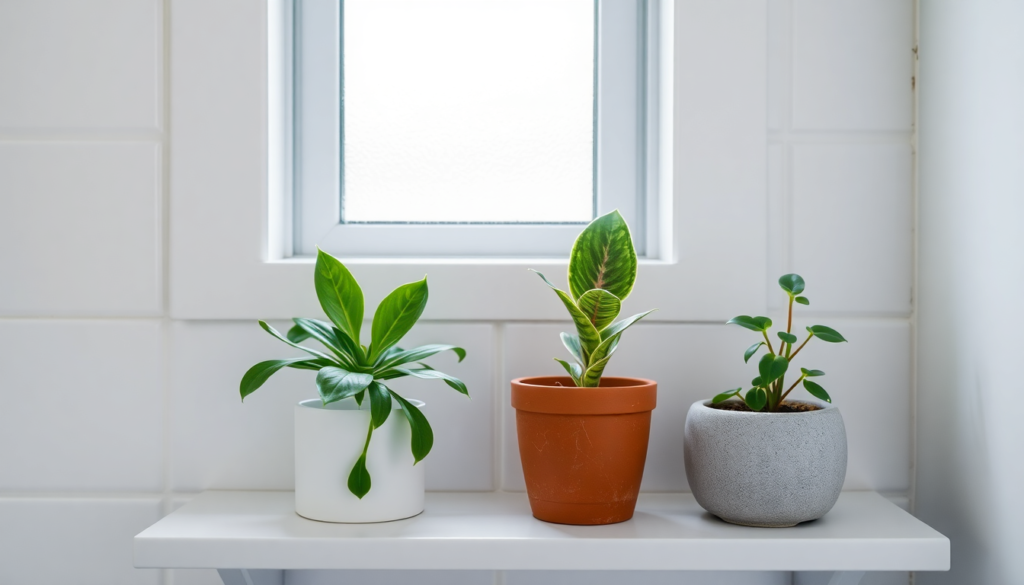
Windowsill (any direction): Bird’s Nest Hahnii, nerve plant, peperomia, button fern, oxalis. All stay under 12 inches and suit a windowsill that gets ambient rather than direct light.
Bathroom shelf: Cast iron plant, nerve plant, peperomia, spider plant. Bathroom ambient light and higher humidity suit these varieties particularly well.
Desk or bedside table: ZZ plant (small specimen), lucky bamboo, peperomia, oxalis. All stay compact enough to sit beside a laptop or lamp without overwhelming the surface.
High shelf or cabinet top: Pothos, heartleaf philodendron, creeping fig. All trail downward and fill vertical space rather than horizontal floor space.
Floor corner (dim): ZZ plant (mature), cast iron plant, parlor palm, Chinese evergreen. All handle genuinely dim floor positions in corners far from windows.
When to Add a Grow Light
If your apartment has zero natural light or you see the following signs across multiple plants, a basic full-spectrum LED grow light on a timer for 10 to 12 hours daily solves the problem without changing the aesthetic of your space. Watch for new leaves emerging pale, tiny, or widely spaced on long stems (etiolation), complete reversion of variegated plants to solid green, zero new growth across an entire growing season despite correct watering, or existing leaves yellowing gradually without any watering problem present.
Frequently Asked Questions
What are the best small low light indoor plants for apartments? The best small low light indoor plants for tiny apartments are ZZ plant, Bird’s Nest Hahnii snake plant, pothos, peace lily, and Chinese evergreen. All stay compact at maturity, perform in 50 to 200 foot-candles of ambient light, and tolerate the dry indoor air conditions of heated or air-conditioned apartments without special care.
What small plants grow well in low light without direct sun? ZZ plant and cast iron plant perform best in the lowest light, down to 25 to 50 foot-candles. Pothos, heartleaf philodendron, and lucky bamboo perform well at 75 foot-candles. Peace lily, Chinese evergreen, spider plant, nerve plant, and peperomia all grow reliably at 100 foot-candles with no direct sun required.
Which low light plants are safe for cats and dogs in apartments? Cast iron plant, spider plant, parlor palm, nerve plant, peperomia, button fern, and radiator plant are all pet-safe and low-light tolerant. ZZ plant, pothos, peace lily, Chinese evergreen, heartleaf philodendron, lucky bamboo, oxalis, and creeping fig are toxic to cats and dogs if ingested.
How do I keep small indoor plants alive in a dim apartment? Water only when the soil feels dry at 1 to 2 inches depth, since plants in low light use water much more slowly than plants in bright light. Use fast-draining soil and pots with drainage holes. Choose varieties from this list that match your actual light level rather than adjusting care to compensate for a wrong plant choice. Add a full-spectrum LED grow light on a 10 to 12 hour timer if multiple plants show etiolation or zero new growth despite correct watering.
Do small low light plants need fertilizing in apartments? Yes, but less often than plants in bright light. Fertilize with a half-strength balanced liquid fertilizer once per month during spring and summer only. In low light, plants grow more slowly and use nutrients more sparingly. Over-fertilizing in low light conditions causes salt buildup in the soil that damages roots without producing any growth benefit.
Pingback: 10 Tall Indoor Plant Stand Ideas for Narrow Spaces (2026)