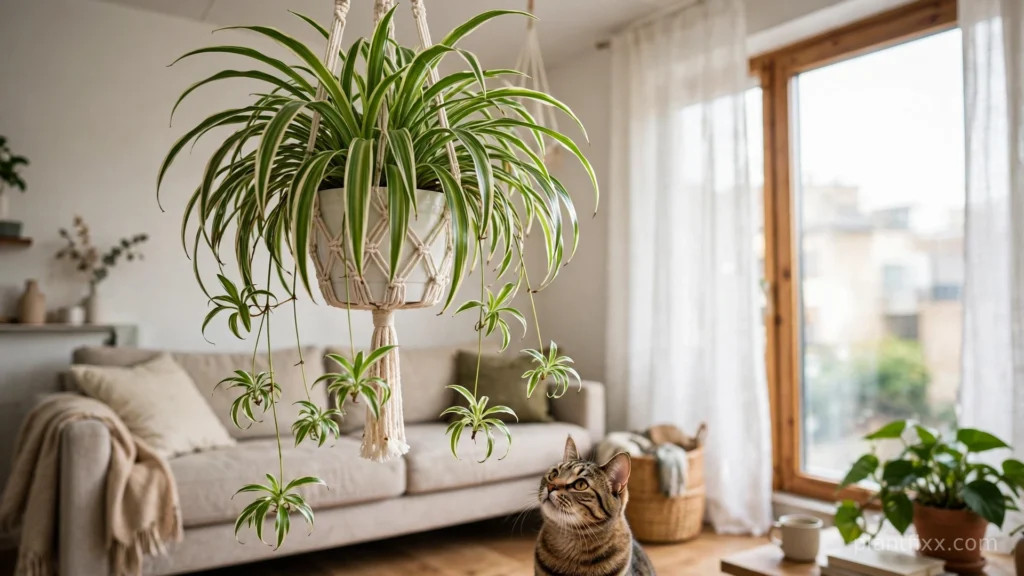
You want greenery overhead, but your cat treats every dangling leaf as a personal invitation. If you are hunting for pet safe hanging indoor plants for cat owners, you need two things at once: plants that will not poison your cat, and a hanging setup your cat cannot defeat.
Most lists stop at naming a few non-toxic plants. They skip the part that matters in a real cat home: how high to hang, which popular hanging plants are secretly toxic, and what to do when your cat chews a safe plant anyway.
This guide covers five hanging plants the ASPCA lists as non-toxic to cats, the exact placement rules that keep them out of reach, and the common hanging plants you should keep out of a cat home entirely.
The safest hanging plants for cat owners are the spider plant, Boston fern, burro’s tail, hoya, and prayer plant, because the ASPCA lists all five as non-toxic to cats. Hang each at least 5 to 6 feet off the floor, away from shelves your cat can launch from, and trim any stems that dangle low enough to bat.
Non-toxic does not mean zero stomach trouble. Cats are obligate carnivores, and chewing a lot of any leaf can cause vomiting or loose stool. The setup that actually works pairs safe plants with smart placement and a pot of cat grass your cat is allowed to eat. Most chewing problems fade once the cat has its own greens, so treat cat grass as part of the safety plan, not an extra.
One mistake I see again and again: someone hangs a toxic plant like pothos from the ceiling and assumes height solved the problem. Cats jump onto bookcases, and a trailing pothos vine that touches a shelf becomes a bridge. If you already own toxic plants, keep them in a room your cat never enters instead of trusting a hook alone.
Why Hanging Is the Smartest Setup in a Cat Home
Hanging works because it gives you two layers of safety instead of one. The first layer is elevation. A plant on a ceiling hook in open space has no launch pad nearby, unlike a plant on a shelf that sits on your cat’s daily highway.
The second layer is the plant choice itself. Even the best hook fails sometimes. Cats surprise you. When the plant your cat finally reaches is non-toxic, a chewing session ends with, at worst, an upset stomach instead of an emergency vet visit. That combination, height plus a safe species, is the whole strategy. Everything below follows from it.
Floor plants fail in cat homes in predictable ways. Cats dig in the soil and use large pots as litter boxes, they knock lightweight pots off stands during zoomies, and low foliage sits exactly at nose height for a curious sniff that turns into a bite. Hanging removes all three problems at once: no accessible soil, nothing to knock over, and the foliage starts above the cat’s normal patrol zone.
What to Set Up Before You Hang Anything
Get the hardware right once and you will not think about it again. A watered 8-inch pot is heavier than it looks, so anchor your hook into a ceiling joist, not drywall alone. Choose a pot with drainage holes and set it inside a cache pot or over a saucer, so water never drips onto the cat, the furniture, or the floor.
Check the light next. Four of the five plants below want bright indirect light, which usually means a spot near an east or north window, or a few feet back from a brighter one. If your only hanging spot is a dim corner, look through our best low light indoor plants guide first and pick from there instead of forcing a light-lover into the dark.
Finally, keep plants out of the swing path of doors and away from the cat’s food, water bowls, and favorite sleeping spot. Drips and falling leaves should never land where your cat eats and sleeps.
Pick a hanger you trust with weight. Macrame hangers look great but stretch slightly under a heavy watered pot, which lowers the plant over time. A metal chain or a wooden bead hanger holds its length. Whatever you choose, hang the pot and fill it with water once before you commit to the spot, so you see the true hanging height under load.
5 Pet-Safe Hanging Plants for Cat Owners
All five plants below appear on the ASPCA’s toxic and non-toxic plant list as non-toxic to cats (https://www.aspca.org/pet-care/animal-poison-control/toxic-and-non-toxic-plants). That is the standard most vets point to, and it is worth checking yourself before any new plant comes home.
1. Spider Plant (Chlorophytum comosum)
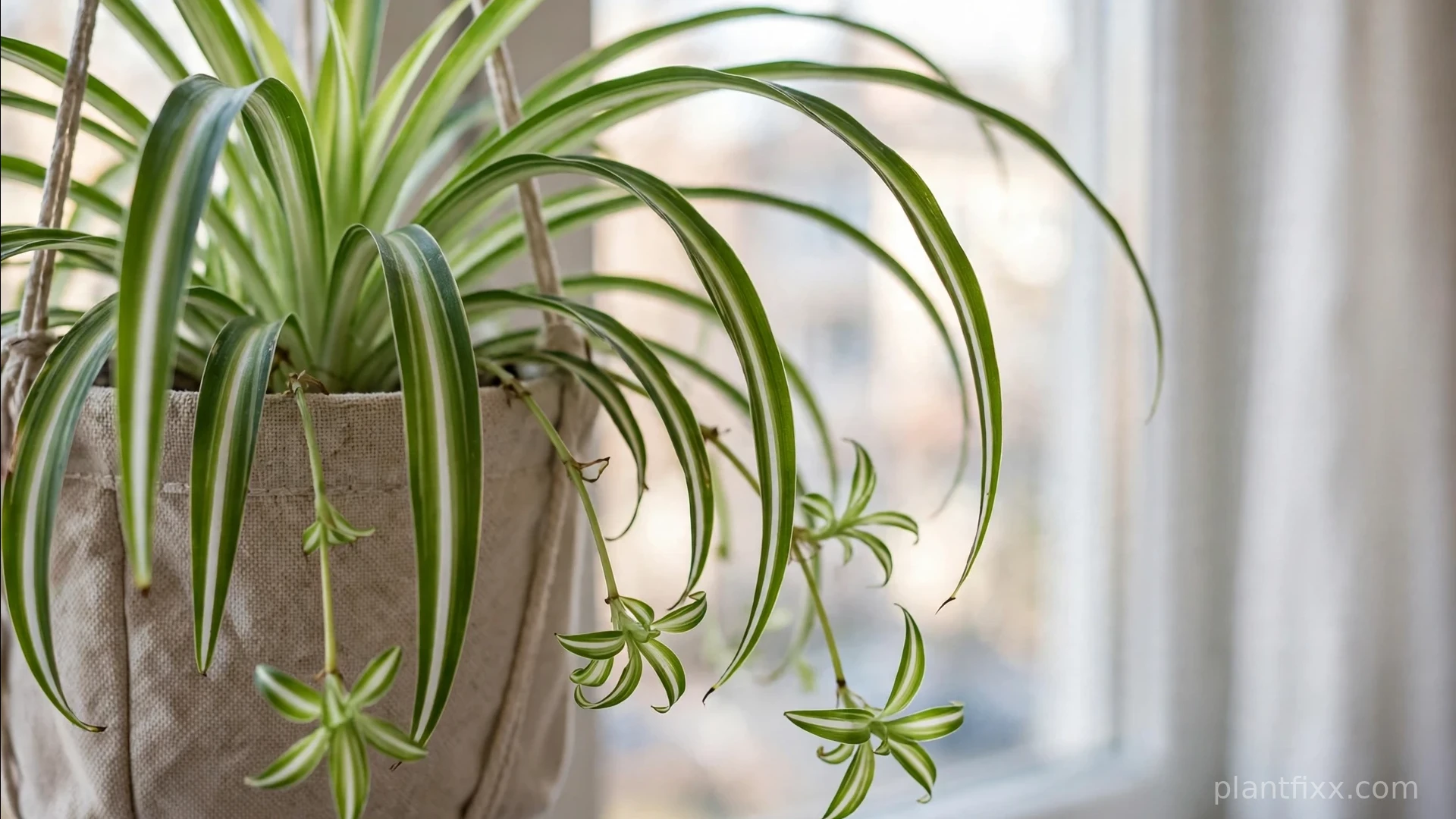
The classic hanging plant for cat homes. Long arching striped leaves, dangling baby plantlets you can root for free plants, and it bounces back from missed waterings.
Here is the catch: cats are strongly drawn to those grassy leaves. This is the plant to hang highest in your home. Chewing will not poison your cat, but a long chewing session often ends in vomit on the rug, so height still matters. For the full safety breakdown, read our spider plant safety guide, and for day-to-day care see our spider plant care guide.
Care is simple. Give it bright indirect light and water when the top inch of soil feels dry, roughly once a week in summer and every ten days or so in winter. Its thick white roots store water, so a dry spell will not kill it, but soggy soil will. Repot only when roots circle the bottom of the pot, and go just one size up. Brown leaf tips are common and mostly cosmetic. They usually point to fluoride in tap water, so flushing the pot with plain water every few months helps.
2. Boston Fern (Nephrolepis exaltata)
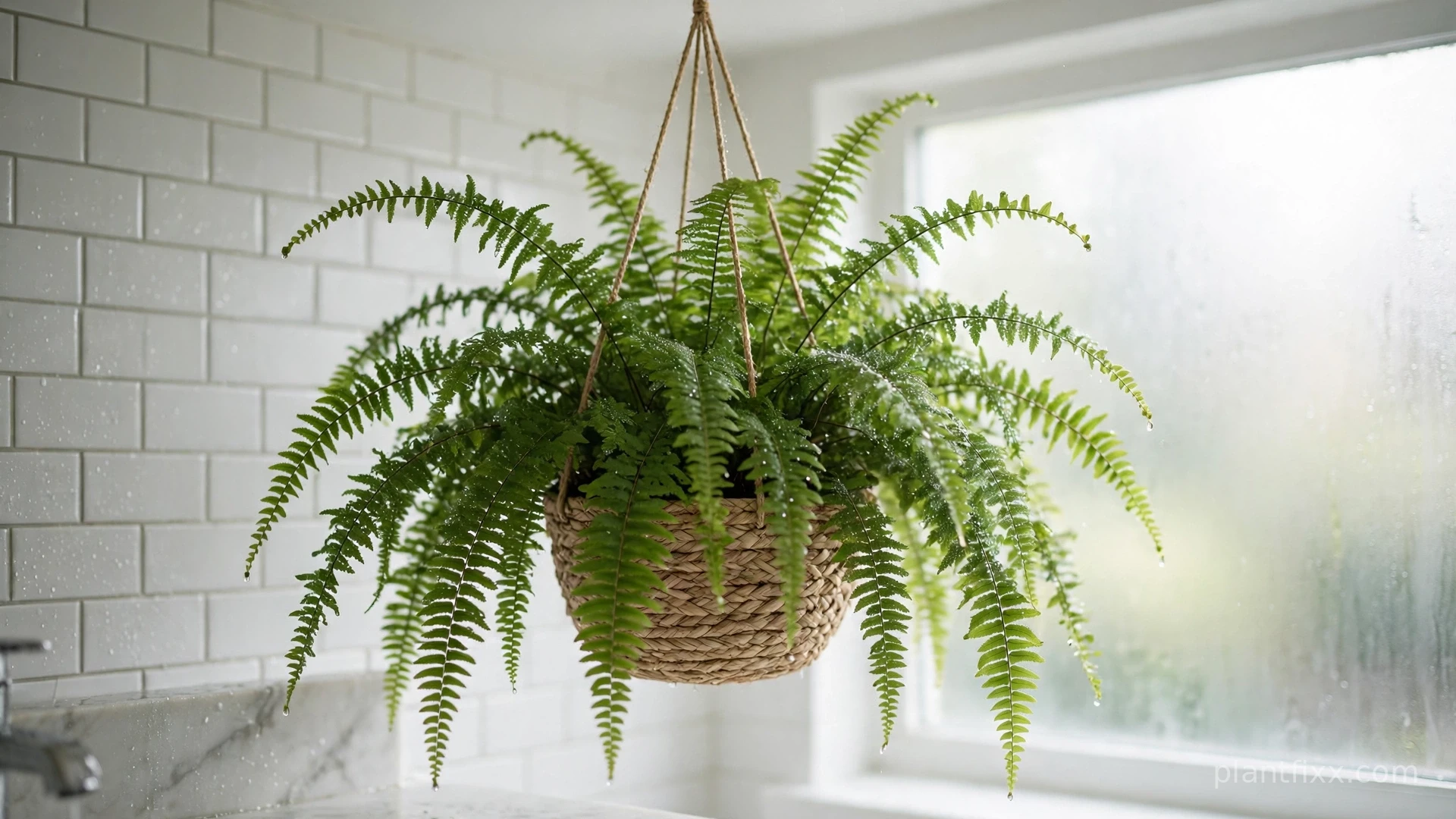
Few plants look better in a hanging basket than a Boston fern. Its soft, cascading fronds fill vertical space fast, and it is fully non-toxic to cats.
It asks for humidity in return. A bright bathroom is the ideal home for one. Keep the soil lightly moist at all times, never soggy and never bone dry. In dry winter air with the heat running, the fronds shed tiny leaflets all over the floor. A pebble tray under the pot or a small humidifier nearby keeps the shedding under control. Mist the fronds a few times a week if your home runs dry, and keep it away from heating vents that blast hot air straight at the foliage.
3. Burro’s Tail (Sedum morganianum)
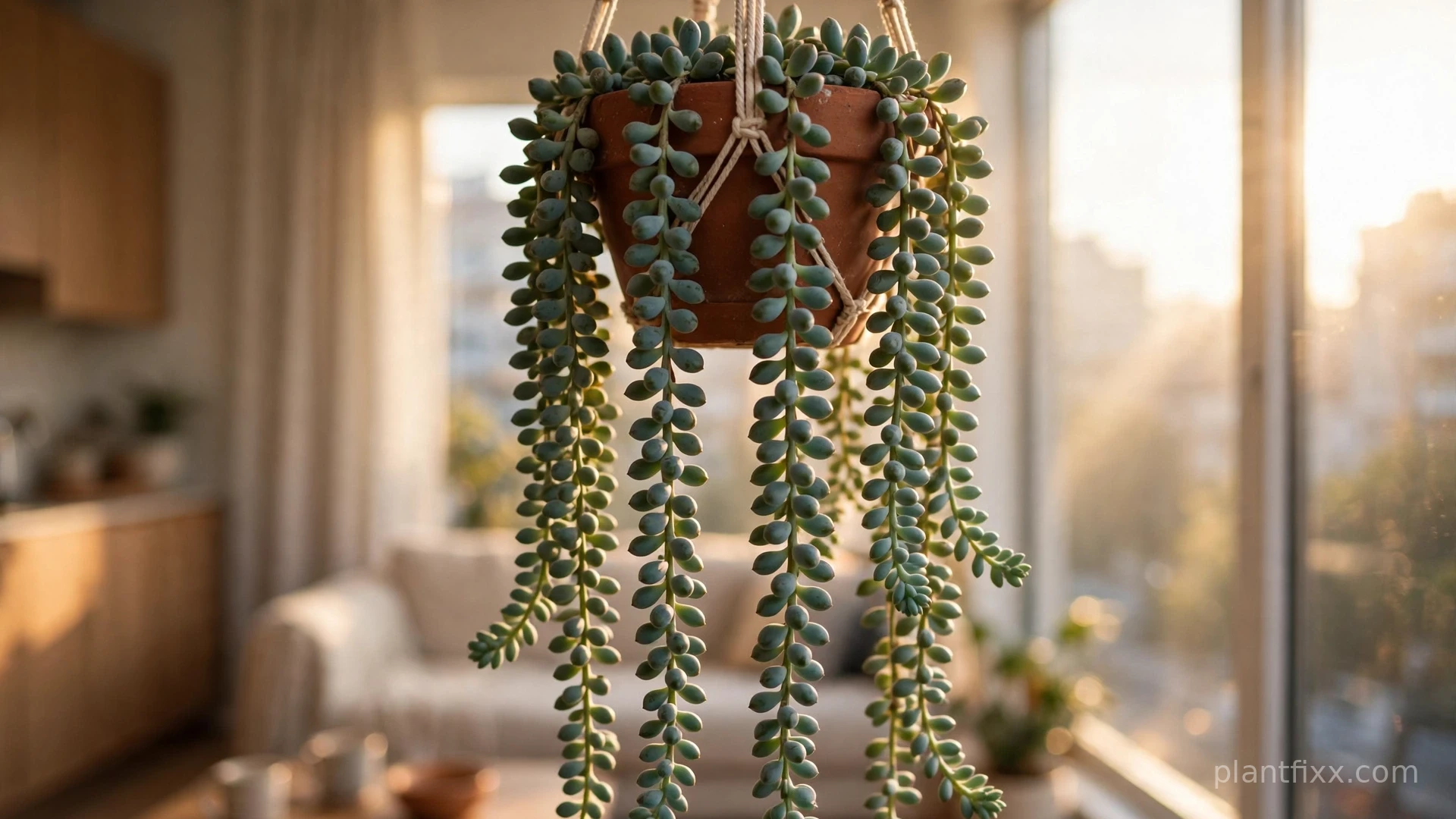
A trailing succulent with long stems of plump blue-green leaves, made for hanging planters. Non-toxic to cats and very low maintenance, which suits busy owners.
It wants bright light and water only when the soil is completely dry, which in most homes means every two to three weeks. A gritty cactus-style mix with extra drainage keeps the roots happy. The one handling note: the leaves bruise and drop at the slightest knock. Hang it where the cat cannot bat the stems. A nibble is harmless, but a battered plant drops leaves for weeks.
4. Hoya (Hoya carnosa)
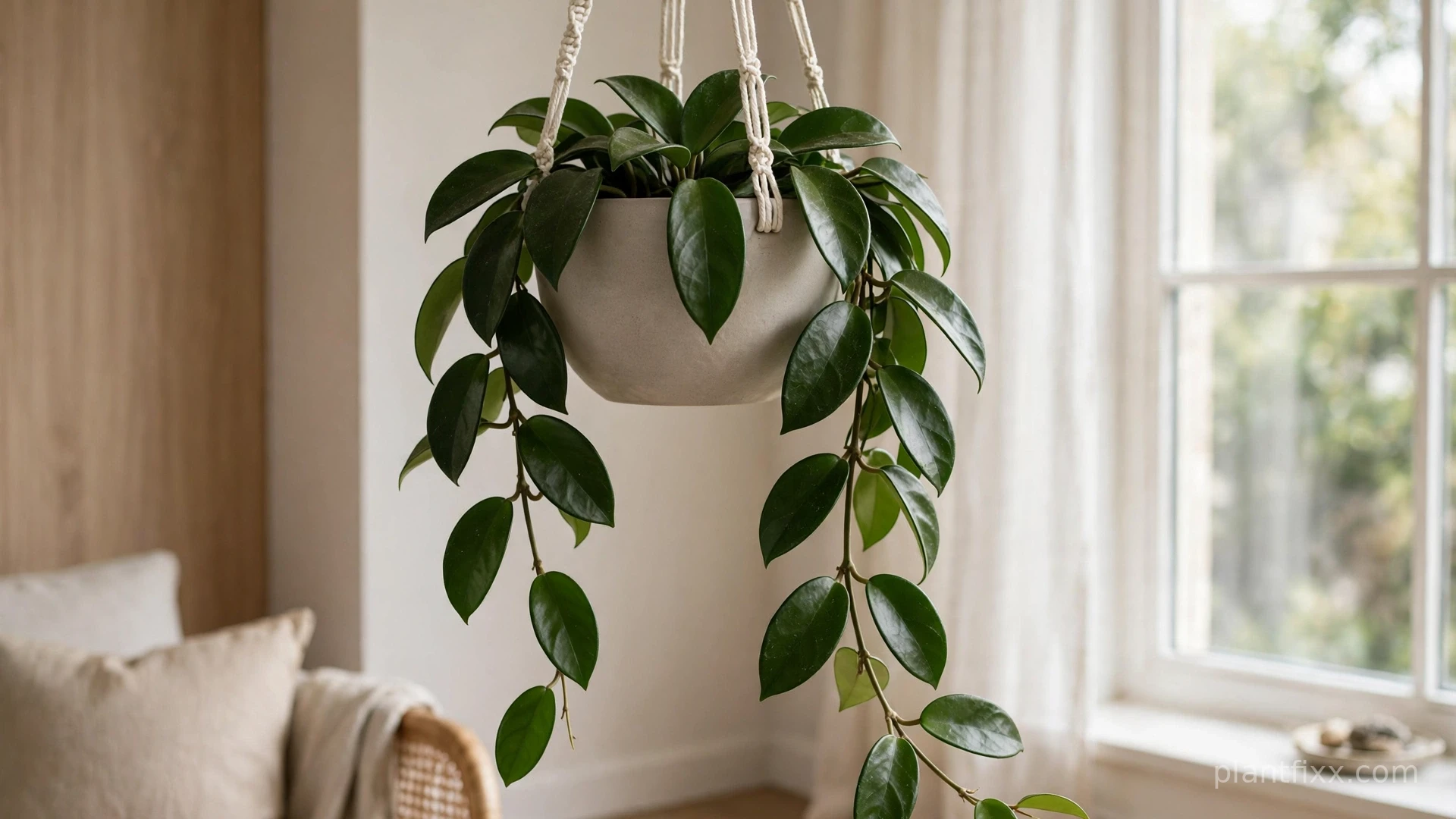
Hoyas bring thick, waxy leaves on long trailing vines, and mature plants sometimes reward you with clusters of fragrant star-shaped flowers. The ASPCA lists Hoya carnosa as non-toxic to cats.
It is one of the most forgiving trailers you can hang. Bright indirect light, water only when the soil dries out, and leave it alone otherwise. A few hours of gentle morning sun encourages stronger growth and, on mature plants, those fragrant flower clusters. Hoyas bloom best when slightly root-bound, so resist the urge to repot every year.
5. Prayer Plant (Maranta leuconeura)
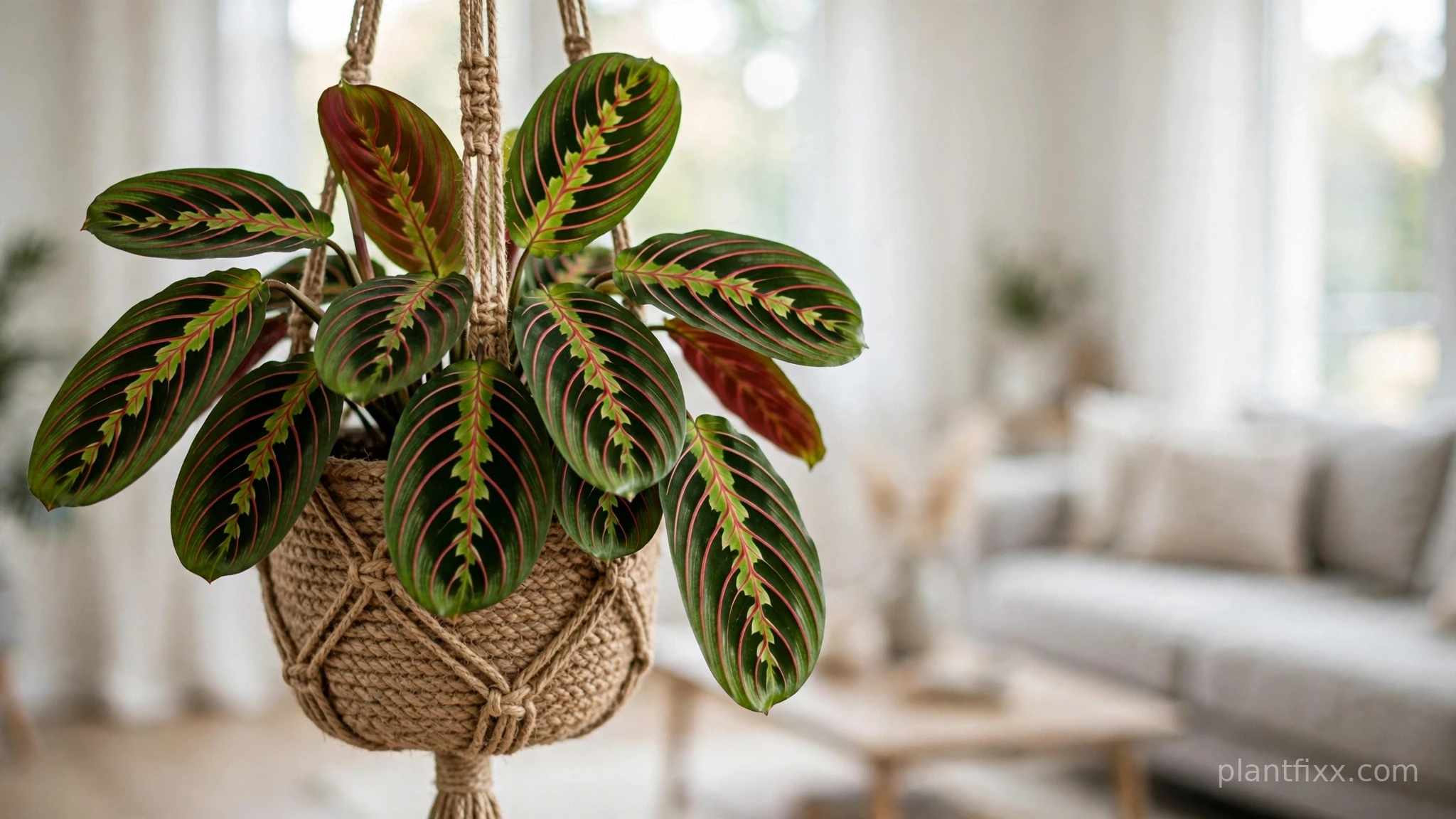
The prayer plant earns its spot with patterned leaves in deep green and red that fold upward at night. It stays compact, so it suits smaller hangers, and it is non-toxic to cats.
It likes steadier moisture than the others on this list. Water when the top half inch of soil dries, keep it out of direct sun and cold drafts, and give it some humidity. A light, peat-based mix that holds moisture without staying soggy suits it best. Brown edges usually mean the air is too dry, not that you watered wrong, so check humidity before you change your watering routine.
Quick Comparison: Which One Fits Your Home
| Plant | Light | Water | Care level | Cat note |
|---|---|---|---|---|
| Spider plant | Bright indirect | Top inch dry | Easy | Cats love chewing it, hang highest |
| Boston fern | Bright indirect | Evenly moist | Moderate | Loves humidity, great for bathrooms |
| Burro’s tail | Bright light | Fully dry between waterings | Easy | Fragile leaves, keep out of batting range |
| Hoya | Bright indirect | Dry between waterings | Easy | Slow grower, very forgiving |
| Prayer plant | Medium to bright indirect | Top half inch dry | Moderate | Compact, good for small hangers |
Hanging Plants That Are NOT Safe for Cats
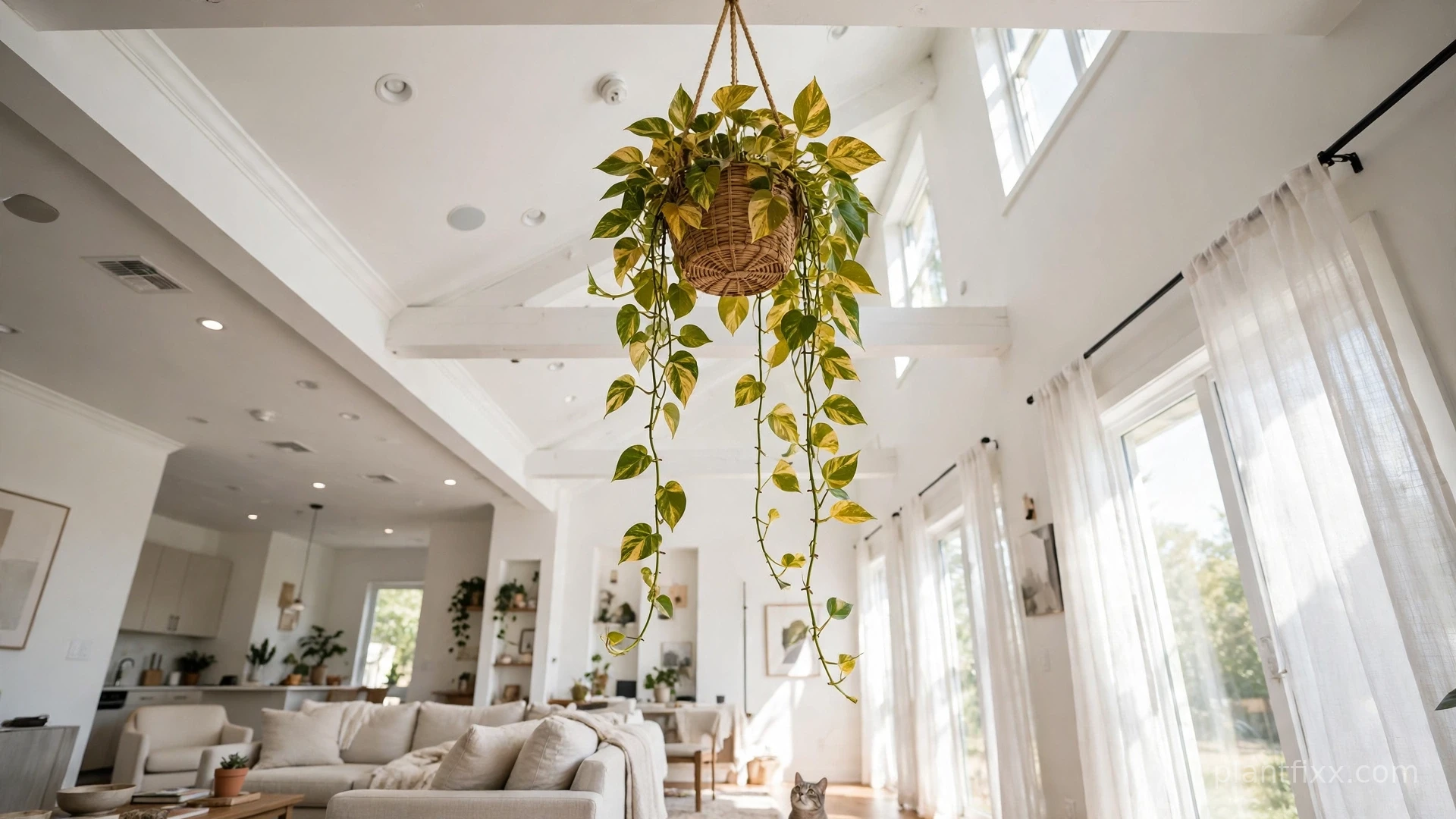
Some of the most recommended hanging plants are toxic to cats, so check this list before you buy:
- Pothos (golden pothos, marble queen, and the rest): toxic to cats. Insoluble calcium oxalates cause mouth pain, drooling, pawing at the mouth, and vomiting. Our pothos toxicity guide covers symptoms and first aid in full.
- Heartleaf philodendron: carries the same irritant compounds as pothos, with the same symptoms.
- English ivy: toxic as well, and larger amounts can cause more severe stomach upset and breathing difficulty.
If you already own these, keep them in a room your cat never enters. Hanging high is better than nothing, but a trail that grows long enough to touch a shelf is a bridge, and fallen leaves land on the floor where cats walk.
How High and Where to Hang
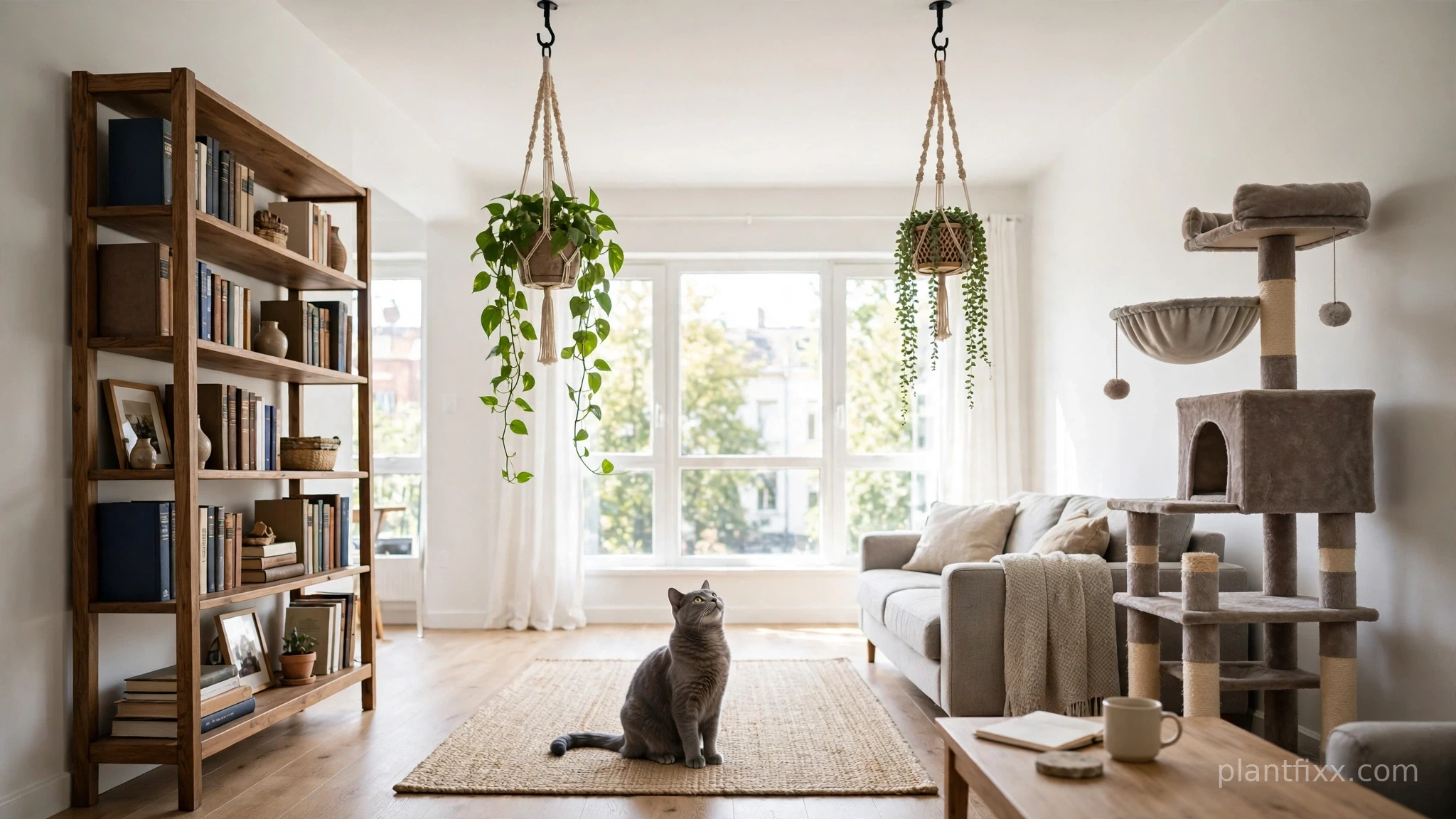
Hang each plant at least 5 to 6 feet off the floor, and just as important, keep it away from anything your cat can launch from. Measure the gap from the nearest shelf, bookcase top, or cat tree, not just the floor. Cats clear surprising horizontal distances when a leafy target is involved.
Trim any stems that dangle low enough to bat. With spider plants this is a feature, not a chore: the trimmed plantlets root in a glass of water within weeks and become free plants for friends.
Anchor every hook into a joist. A hook that slowly works loose from drywall will eventually drop a pot, soil, and a startled cat in one event. And never hang plants over food bowls, water bowls, or the cat’s bed.
What to Do If Your Cat Chews a Non-Toxic Plant
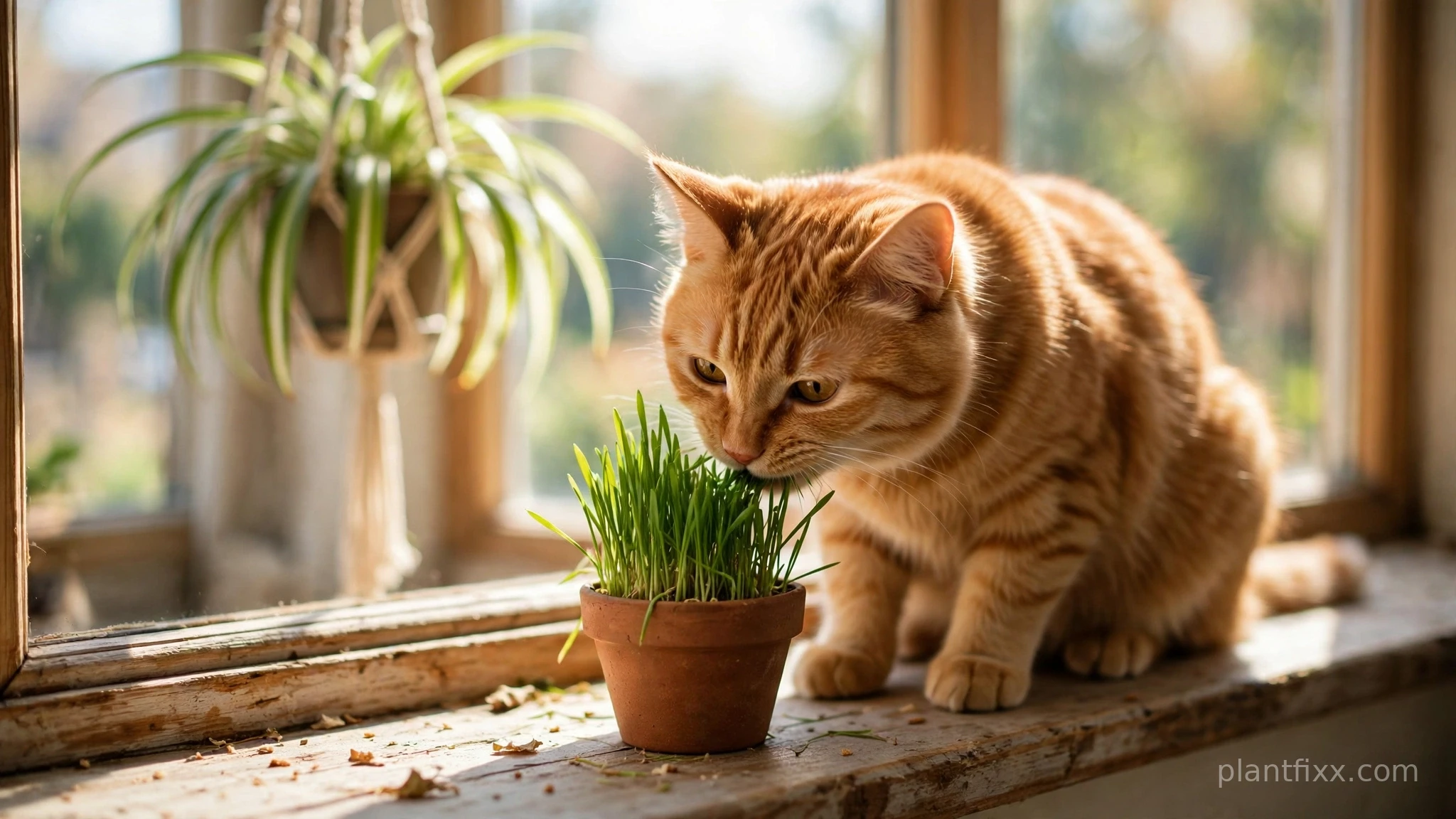
Stay calm. A nibble of a non-toxic plant is not an emergency. Some cats vomit the leaves back up within the hour. An isolated episode like that, with the cat acting normal afterward, is not a crisis.
Call your vet if the vomiting repeats, your cat turns lethargic or stops eating, or you cannot identify which plant was chewed. When the plant is unknown, bring a photo of it and note how much is missing.
The long-term fix is giving your cat something it is allowed to chew. A pot of cat grass, usually wheat or oat grass grown from seed, on a sunny sill works for most cats. Sow a fresh pot every couple of weeks, since old grass turns tough and moldy. Most plant-chewing fades once the cat has its own greens.
Before any nursery trip, run your shortlist through our free Pet Safe Plant Checker to confirm each plant is safe for your cat.
Frequently Asked Questions
Are spider plants safe for cats even though cats love chewing them?
Yes. The ASPCA lists the spider plant as non-toxic to cats, so chewing will not poison your cat. Hang it high anyway, because heavy chewing often ends in vomiting.
Which hanging plants are toxic to cats?
Pothos, heartleaf philodendron, and English ivy are the common toxic trailers. Keep them out of cat homes, or in rooms the cat never enters.
Can a non-toxic plant still make my cat sick?
Eating a lot of any leaf can cause vomiting or loose stool, because cats are carnivores and do not digest plant fiber well. Potting soil and fertilizer residue add their own risk, so discourage heavy chewing even on safe plants.
How high should I hang plants to keep cats away from them?
At least 5 to 6 feet off the floor, with no nearby shelf, bookcase, or cat tree your cat can launch from. Trim any stems that dangle into batting range.
Is pothos safe if I hang it completely out of reach?
Safer, but not risk-free. Trails grow long and can reach nearby furniture, and fallen leaves land on the floor. A closed room is the only truly safe spot for pothos in a cat home.
What can I give my cat to chew instead of my houseplants?
Fresh cat grass, usually wheat or oat grass grown from seed. Keep a pot on a sunny sill and start a fresh one every couple of weeks.
Do I need to worry about fertilizer or pesticides on pet-safe plants?
Yes, and this is the detail most guides skip. A non-toxic plant can still carry systemic pesticides or fertilizer salts from the nursery. Rinse new plants under the shower, let the soil flush through once, and wait two to three weeks before hanging them where the cat can reach. After that, feed with a plain, pet-safe fertilizer and skip leaf-shine sprays entirely.
The Bottom Line
Five hanging plants, the spider plant, Boston fern, burro’s tail, hoya, and prayer plant, give cat owners the trailing look they want without the poisoning risk. Pair them with real hanging height, five to six feet up and clear of launch points, keep the toxic trailers out of the house, and put a pot of cat grass where your cat hangs out.
Before your next nursery trip, run your shortlist through the Pet Safe Plant Checker and hang with confidence.
Pingback: 8 Hanging Pothos Plants Ideas for Renter-Friendly Apartments