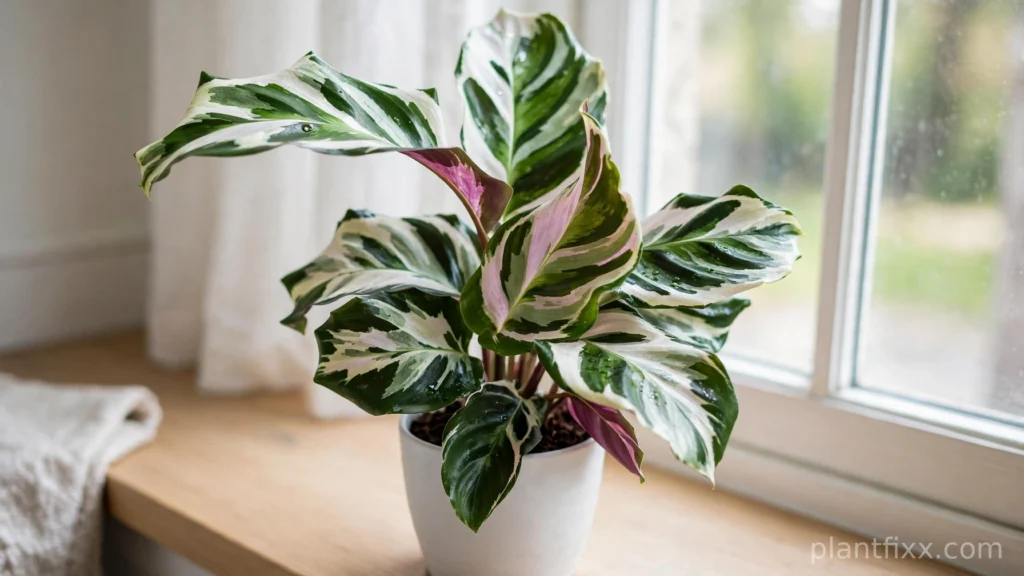
A calathea white fusion keeps its white feather centre stripe only in bright indirect light, with soil that stays lightly moist, soft low mineral water, and humidity above 60 percent. It is the fussiest calathea in this group, and it shows a wrong routine on the white tissue first.
The reward is a compact plant for a shelf or cabinet, with marbled leaves and purple backs, and it is non toxic to cats and dogs. The guide below puts the white stripe first, then covers the shared basics in brief.
You will learn why white tissue cannot feed itself, how light can starve or scorch it, and when to walk away from this cultivar.
What Is a Calathea White Fusion Plant: White Feather Centre and Purple Back ID
Shop labels read Calathea lietzei White Fusion or Fusion White. Botanists now accept Goeppertia lietzei Fusion White, and the RHS Fusion White page records the calathea name as a synonym.
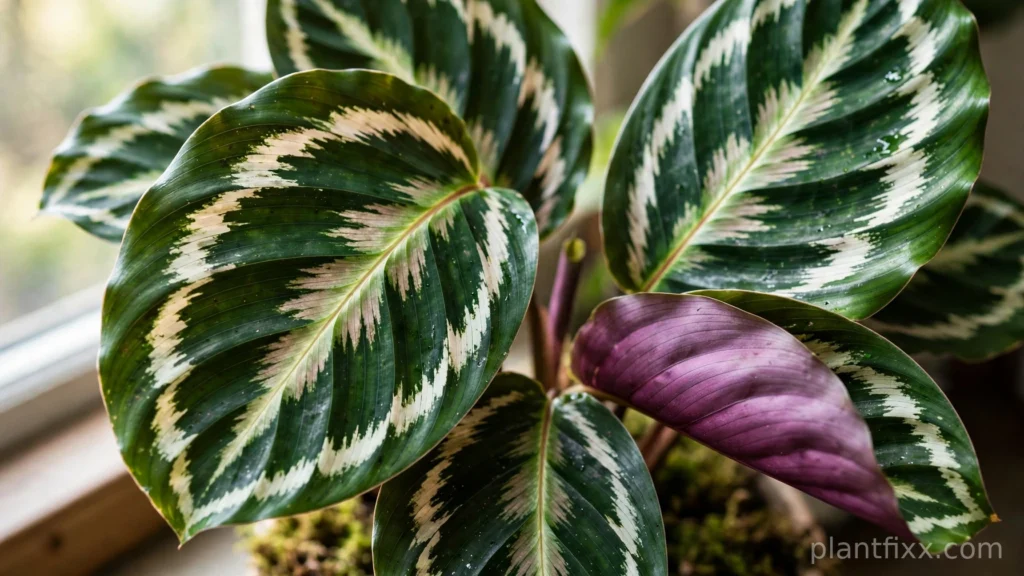
North Carolina State Extension notes for Goeppertia lietzei place the species in Eastern Brazil, in the prayer plant family Marantaceae, and call this cultivar highly prized.
The plant forms a tight clump of slender stems, each carrying one elliptic leaf. A mature indoor clump stays roughly a foot to a foot and a half tall and wide.
Read the leaf from the centre out. A bold white feather stripe runs along the midrib, then breaks into marbled white, pale green and deep green patches toward the wavy edges.
Turn a leaf over and the underside is flushed pink and purple. That purple back shows most in the evening, when the leaves lift and fold for the night.
White Fusion or Stella: A Short Identification Contrast
White Fusion and Stella are both Goeppertia lietzei cultivars, which is why shops swap their labels. The leaf edge separates them faster than any tag.
| Check | White Fusion | Stella |
|---|---|---|
| Centre | Open white feather stripe | Pale mottling, no bold feather |
| Leaf edge | Marbling reaches a wavy edge | Dark green frame around the centre |
| Pattern | Changes a lot leaf to leaf | More even and framed |
| Underside | Pink to purple flush | Purple flush, violet stalk |
An open white centre with colour reaching the edge means White Fusion. Pale mottling locked inside a dark border means Stella.
Calathea White Fusion Care at a Glance
| Factor | Target for White Fusion | First sign it is off |
|---|---|---|
| Light | Bright indirect, no direct midday sun | White scorches, or new leaves turn plain green |
| Water | Lightly moist, top inch dry first | Curling when dry, yellowing when soggy |
| Water type | Rain, distilled or filtered only | Brown tips, white patches turning tan |
| Humidity | Above 60 percent, near 70 preferred | Crispy edges within weeks |
| Temperature | 18 to 27 C, steady, no draughts | Drooping after cold nights |
| Soil | Coir or peat mix, perlite and bark | Dries in a day, or stays heavy and wet |
| Feeding | Half strength, monthly, in growth | Tip burn from stored salts |
| Propagation | Division in late spring | Single leaves never root |
What You Need Before You Start
This cultivar needs its support kit in place on day one:
- A hygrometer at leaf height, reading the air the plant sits in
- A compact humidifier, or a glass cabinet that holds humid air
- A jug kept for rain, distilled or filtered water only
- A sheer curtain, or a shelf a step back from bright glass
- A pot with drainage holes, one size up from the root ball
- A soft dusting cloth and clean scissors
Why the White Stripe Makes This Plant Harder
Chlorophyll is the green pigment that turns light into food, and it lives only in green tissue. The white centre and white patches hold none, so those parts of the leaf make no food at all.
The green parts therefore carry a double load. They feed themselves, the white tissue beside them, the stems and the rhizome below the soil, all from a reduced working area.
That smaller engine explains the tight margins. A green calathea in a dim corner slows down, while this plant runs short of energy and starts cutting losses.
One cut is colour. In poor light the plant favours green tissue on new leaves, because green keeps it fed, so the white stripe narrows leaf by leaf.
White tissue is also the weakest defence on the leaf. Strong light energy that green cells would absorb instead damages white cells, which have no chlorophyll to use it.
Light for a Leaf That Is Part White: The Tight Balance
Bright indirect light is a narrower target here than on any green variety. The plant needs strong light to feed its reduced green area, yet no direct beam may sit on the white.
An east window is the easiest seat, with gentle morning light and no hard afternoon load. South and west glass needs a sheer curtain or a clear step back from the pane.
Distance drops light fast, so a plant several feet from glass may starve in a room that looks bright. Rotate the pot weekly for even growth.
This plant appears among the best low light indoor plants for small spaces, but its white stripe needs a brighter seat than survival alone.
When Light Falls Short
New leaves open with less white, growth slows to a crawl, and the white that appears looks grey and dull. Slow uptake also leaves the mix wet for longer, which invites root trouble.
When Light Hits Too Hard
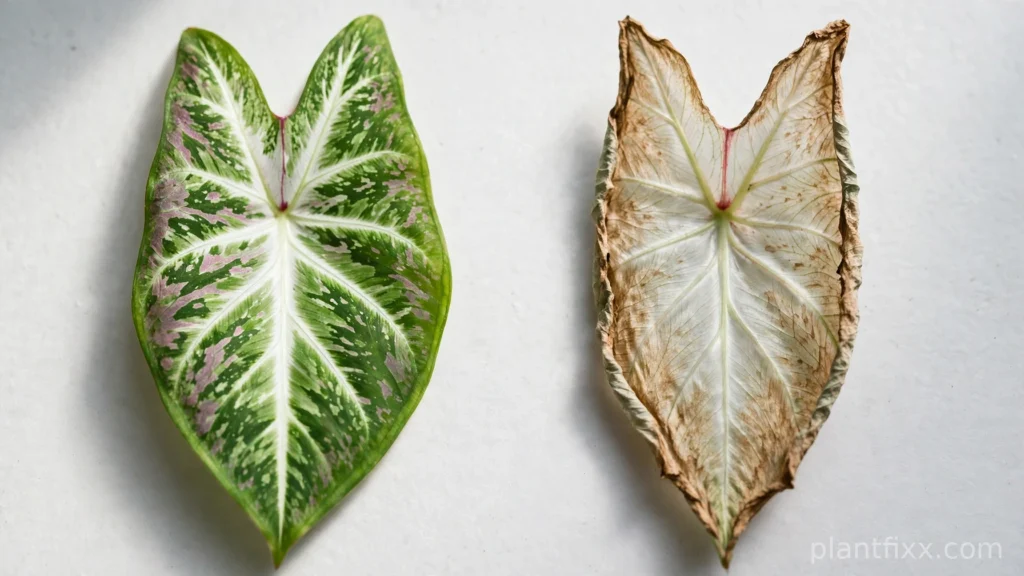
Direct sun marks the white first, often while the green still looks sound. Pale patches turn papery, then tan, starting on the centre stripe and the widest white areas.
Move a scorched plant back in small steps over several days. A jump into deep shade swaps burn for starvation.
Humidity: The Highest Bar of Any Variety in This Cluster
Hold the air above 60 percent humidity, and aim near 70 percent where you can. NC State sets above 60 percent for this species, and growers rate the higher band as the comfort zone.
Leaves lose water through their surface all day, and dry air pulls it out faster than roots replace it. The leaf edge sits at the far end of that supply line, so it crisps first.
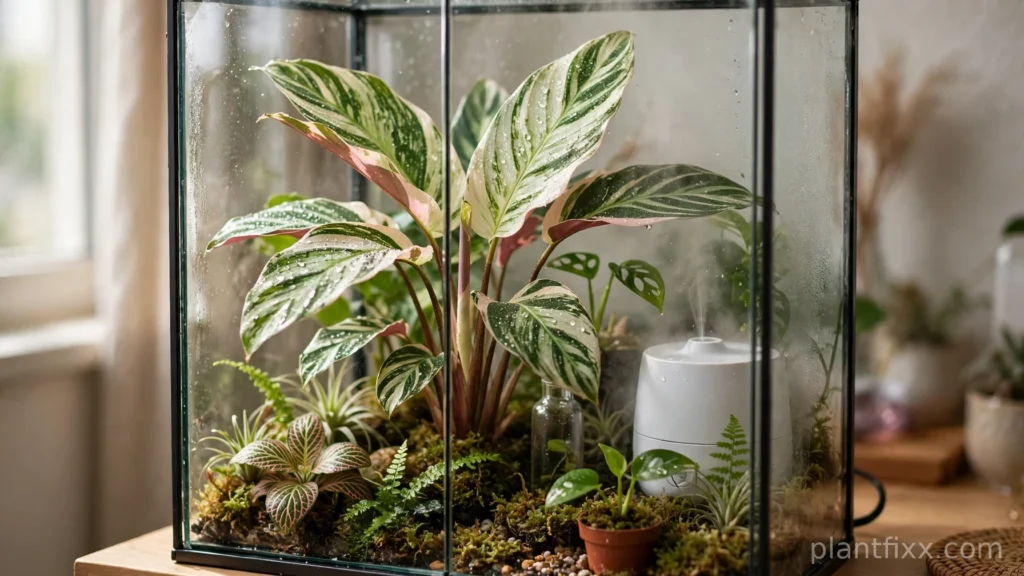
A humidifier beside the plant is the most reliable tool in an open room. It holds a set level for hours, where misting lifts the air for minutes and then lets it fall again.
A glass cabinet holds humid air around the pot with far less effort. Open the door briefly each day, because still wet air held against leaves invites leaf spot.
Grouped plants share moister air, and a bright bathroom adds shower steam daily. Neither replaces a humidifier in a heated winter room.
Water and Water Quality: The Brief Basics for White Fusion
Water when the top inch of mix feels dry, soak until water runs from the base, then empty the saucer. Keep the mix lightly damp below, never wet enough to smell sour.
Most homes water about weekly in growth and less in winter. The full family method sits in our complete calathea plant care guide, so this section stays brief by design.
Hold the room at 18 to 27 C, away from radiators, vents and cold glass. Chilled roots drink slowly, and sudden swings stress this plant.
Why the White Shows Mineral Burn First
Water climbs the stems and leaves through the leaf surface as vapour. Fluoride and salts travel with it, cannot leave with the vapour, and settle at the tips and margins where the flow ends.
NC State names fluoride in tap water as a browning cause for this species. On white tissue the early tan stain stands out at once, and a jug left out overnight fades chlorine only, not fluoride.
Soil, Pot and Feeding: The Brief Basics
Mix the base as 2 parts coir or peat mix, then add 1 part perlite and 1 part fine bark. Coir holds water films around roots, while the coarse parts keep air channels open.
Plastic or glazed pots suit this plant, because they hold moisture longer than bare terracotta. Any pot you use needs drainage holes.
Feed in spring and summer only, using a balanced liquid feed once a month at half strength. Flush the pot with plain soft water once a season to wash out salts stored from feeding.
Growing Calathea White Fusion in a Small Apartment
The compact clump is the apartment asset. It asks for one shelf or side table, and gives back the boldest leaf pattern in this cluster for that small footprint.
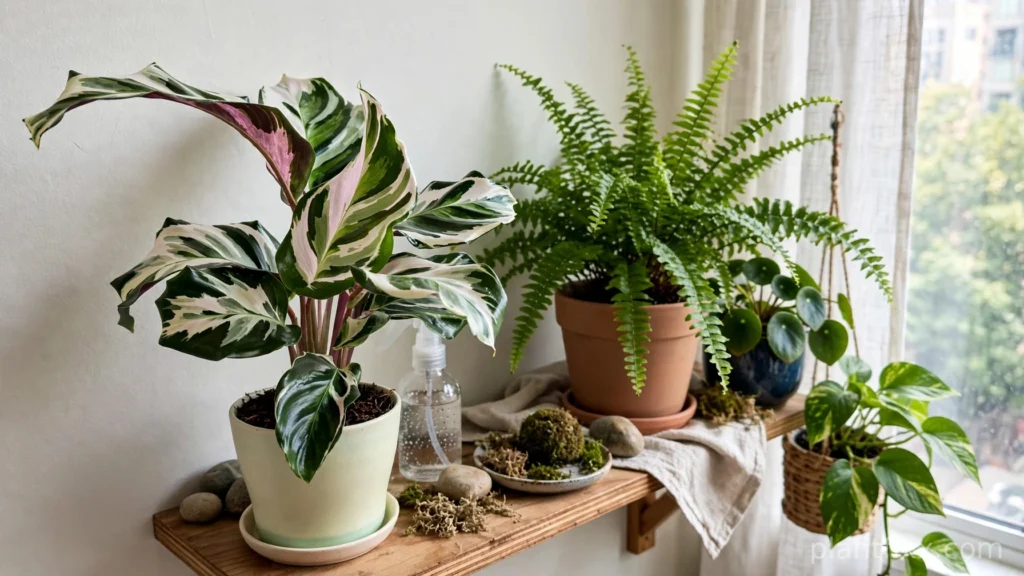
A glass cabinet on a bookcase is the strongest small space setup here. It holds humidity near the leaves and keeps draughts off.
A bright bathroom is the next best seat, with shower steam daily and frosted glass filtering light. On an open shelf, place it mid group around one humidifier.
Keep the pot off cold floors and away from heating vents in winter. The evening leaf lift behind the purple backs is covered in our prayer plant care guide.
Is Calathea White Fusion Safe for Cats and Dogs
Yes, this is a pet safe choice. NC State lists this species as non toxic to pets and humans, and that listing covers the White Fusion cultivar grown from it.
Pet safe does not mean salad. Eating much leaf can upset a stomach, and shop sprays on new leaves are a separate risk worth washing off.
Check any new plant first in our pet safe plant checker for cats and dogs. More options sit in our guide to pet safe indoor plants for cats and dogs.
Crispy Edges, Fading White and Other White Fusion Problems
Diagnose in a fixed order: air moisture first, water source second, light direction third. Those three cover nearly every mark on this cultivar.
White Stripe Turning Cream, Yellow or Brown
A white patch that yellows, then turns papery tan in a bright seat, is scorch in progress, and that patch will not recover. A whole plant reading cream or grey instead points to a seat that is too dim.
Correct the light in weekly steps, and judge only leaves that form after the move.
New Leaves Coming Out Mostly Green
Greener new leaves are the plant protecting its food supply, not a feeding fault. In low light it builds more green tissue per leaf, because green tissue is the only part that earns energy.
Add light, not fertiliser. Open leaves keep their pattern, so the white share returns across the next few leaves.
Crispy Edges and Brown Tips
Three causes burn the same edge tissue: dry air, minerals and fluoride in water, and salts from feeding. Crisping in heated weeks points to air, a slow tan creep to water, and burn after feeding to salts.
Fix the cause first, then trim dead tissue with clean scissors, cutting just inside the brown. Dead edge cannot turn white or green again.
Leaves Curling in the Daytime
A leaf rolled inward at midday is cutting water loss, so check the mix an inch down, then humidity. That roll differs from the nightly fold, which lifts whole leaves and is gone by morning.
Yellow Leaves
A single ageing leaf turning yellow at the base from time to time is routine on a dense clump. Several leaves yellowing together in mix that never dries points to roots sitting without air.
Pests to Watch For
Spider mites lead the list, and they favour the dry air this plant hates. Look under the leaves for fine webbing and pale speckling, where the purple underside makes early webbing easier to spot.
A leaf wash and higher humidity settle most early cases, since mites struggle in moist air. For mealybugs, scale or aphids, wipe colonies off, then use insecticidal soap if they return.
How to Propagate and Repot Calathea White Fusion
New plants come only from dividing the clump, and the RHS gives late spring for this cultivar. Water the day before, slide the root ball out, and ease rhizome sections apart by hand.
Each division needs its own roots and at least two or three leaves. Keep divisions warm and humid until they settle, as the RHS advises, which a cabinet shelf does well.
A single leaf piece will not root, because growth starts from the rhizome at the clump base. Repot every 1 to 2 years, stepping up only 1 to 2 inches.
Signs Your White Stripe Care Is Working
- New leaves open with a clean white centre as wide as earlier leaves
- Edges stay free of fresh tan through a full month
- Leaves lift each evening and open flat by morning
- Newest leaves keep their white share instead of turning plain green
The Honest Limits: Who Should Skip This Plant
Skip this cultivar if your home is dry all winter and you will not run a humidifier or cabinet. No watering routine offsets air that dries white edges faster than roots refill them.
Skip it if your only seats are a dim corner or a bare sunny sill. The corner turns new leaves green and dull, and the sill burns the white centre the plant was bought for.
Skip it as a first calathea, and choose it once soft water and steady humidity are already routine. Under that routine the white stripe holds, and few compact plants match it.
The Routine, in One Place
Hold calathea white fusion in bright indirect light, keep humidity above 60 percent, and water with soft water when the top inch dries. Those three habits protect the stripe, the edges and the roots together.
Dust the leaves monthly, read each new leaf as a light and air report, and divide the clump in late spring.
Is calathea white fusion hard to care for?
Yes, it is the most demanding calathea in this cluster. White tissue holds no chlorophyll, the humidity bar is the highest here, and mistakes show within weeks.
Why is the white stripe on my calathea white fusion turning brown?
Direct light burns white tissue first, while fluoride or salts settle on white margins early. Fix the one that fits your plant, light or water.
Why are new leaves on my calathea white fusion mostly green?
The plant is favouring food making tissue in light that is too low. Move it brighter in steps, and expect the white share to return on later leaves only.
How often do you water a calathea white fusion?
Water when the top inch of mix feels dry, about weekly in growth for most homes. Use rain, distilled or filtered water, and empty the saucer after draining.
What humidity does calathea white fusion need?
Above 60 percent at all times, with a band near 70 percent preferred. A humidifier or glass cabinet holds that level. Misting lifts it only briefly.
Is calathea white fusion safe for cats and dogs?
Yes. NC State lists this species as non toxic to pets and humans, so a pet can still get a stomach upset from eating a lot of leaf, but there is no poison risk.
Can you propagate calathea white fusion from a leaf cutting?
No. A leaf piece has no rhizome and will not root. Divide the clump in late spring instead, keeping roots and two or three leaves per piece.
How big does calathea white fusion get indoors?
About a foot to a foot and a half tall and wide indoors. That size suits a cabinet shelf or side table.