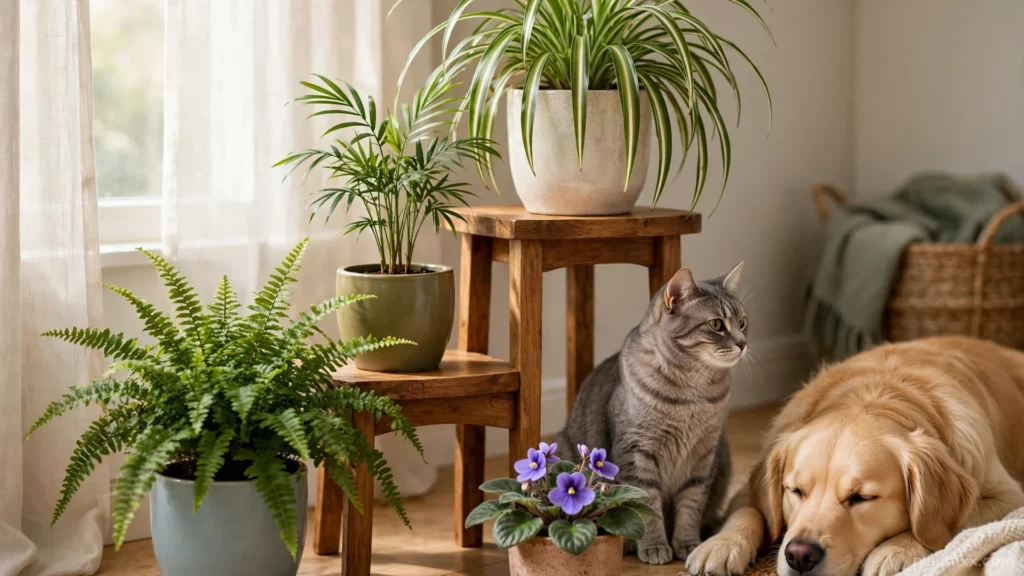
You love your plants. You love your pets. This guide to pet safe indoor plants for cats and dogs gives you 10 houseplants listed as non-toxic to both species by the ASPCA, plus which common plants to move out, what to do if a pet takes a bite, and five habits that keep greenery and animals living peacefully together.
One mistake many people make is trusting the nursery tag that says “pet friendly.” Those labels are marketing, not toxicology. Before any plant earns a spot in my home, I check its botanical name in the ASPCA database, because common names lie.
What “pet safe” actually means
“Pet safe” has one real meaning: the species has been assessed by a poison authority and placed on the non-toxic list. The ASPCA database covers dogs, cats, and horses separately, which matters: true lilies can cause severe kidney damage in cats from a tiny amount, while dogs react far less severely.
Three rules come with the label. Non-toxic is not edible: even the safest plant can cause vomiting if a dog strips half its leaves. A missing database entry is not a clearance. And always check the botanical name, not the shop label, because common names overlap across toxic and safe species.
To check any plant before buying, use the PlantFixx Pet Safe Plant Checker, which tells you in seconds whether a houseplant is toxic to cats and dogs.
The 10 best pet safe indoor plants for cats and dogs
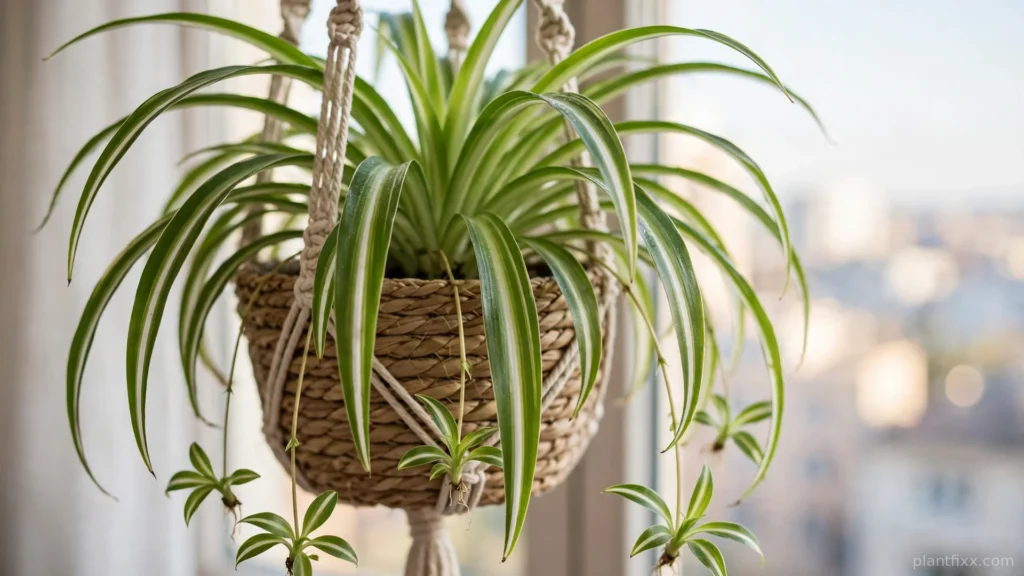
1. Spider Plant (Chlorophytum comosum)
The default answer for a reason. Spider plants tolerate low light, irregular watering, and neglect, and they throw out baby plantlets you can root in water. One warning: cats adore the dangling leaves, so hang it high (see why cats target spider plants).
Light: bright indirect. Water: when the top inch dries. Difficulty: beginner.
2. Parlor Palm (Chamaedorea elegans)
The small, slow-growing palm for apartments. It tops out around 2 to 3 feet indoors and survives dim corners where brighter palms give up.
Light: low to medium indirect. Water: when the top inch dries. Difficulty: beginner.
3. Boston Fern (Nephrolepis exaltata)
Lush, feathery, and non-toxic to cats and dogs. Boston ferns love humidity, which makes them ideal for bathrooms. They shed fronds constantly, so expect to sweep nearby, and never let one sit in a dry, heated room.
Light: bright indirect. Water: keep soil evenly moist. Difficulty: intermediate.
4. Prayer Plant (Maranta leuconeura)
Leaves fold upward at night like praying hands, with striking red veining. Fully non-toxic to cats and dogs. It wants humidity and dislikes dry air, so a pebble tray or bathroom spot helps in winter.
Light: low to medium indirect. Water: keep soil barely moist. Difficulty: intermediate.
5. Calathea (Calathea species)
Bold patterned leaves with colorful undersides, all commonly sold species non-toxic to pets. Slightly fussy: use filtered or rainwater, because tap water spots the leaves, and keep humidity steady.
Light: medium indirect. Water: regular, never soggy. Difficulty: intermediate to hard.
6. Baby Rubber Plant (Peperomia obtusifolia)
Know it by its botanical name. Baby rubber plant is a compact, thick-leaved Peperomia listed as non-toxic, while the true rubber tree (Ficus elastica) is toxic. Never buy anything labeled only “rubber plant.” It stays around a foot tall and suits desks.
Light: medium indirect, tolerates shade. Water: let soil dry between waterings. Difficulty: beginner.
7. African Violet (Saintpaulia)
One of the few pet-safe plants that flowers indoors, sometimes year-round. Bottom watering works best, since wet leaves spot and rot. Compact enough for a windowsill.
Light: bright indirect. Water: from the bottom, keep leaves dry. Difficulty: intermediate.
8. Cast Iron Plant (Aspidistra elatior)
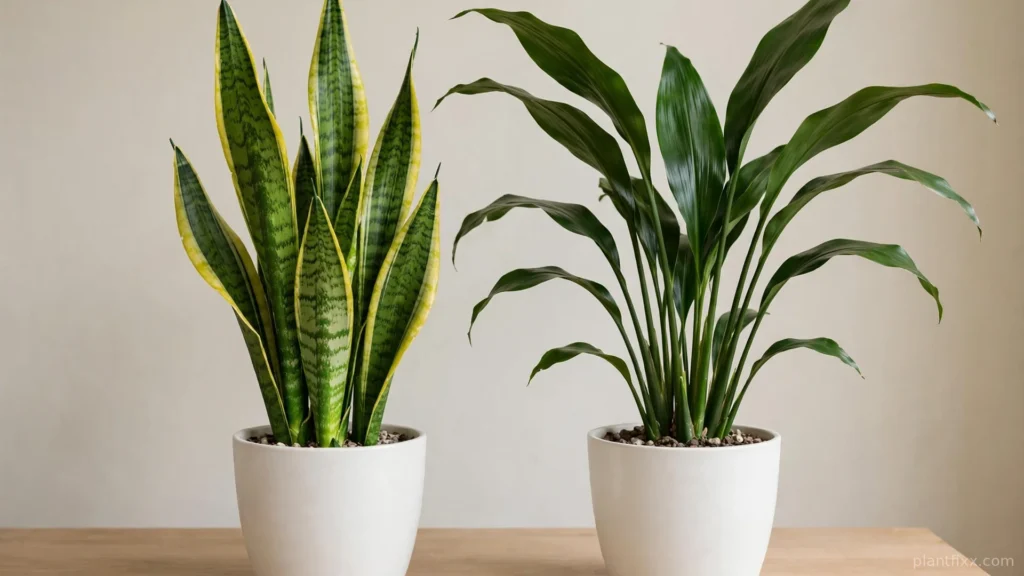
Your snake plant replacement. Same tall, architectural leaves and same tolerance for dark corners and forgotten waterings, but listed as non-toxic to cats and dogs.
Light: low to medium indirect. Water: infrequent. Difficulty: beginner.
9. Christmas Cactus (Schlumbergera)
Blooms in late fall through winter, lives for decades, fully non-toxic. To get flowers, give it 12 to 14 hours of darkness each night for about six weeks in autumn.
Light: bright indirect. Water: sparingly, more during bloom. Difficulty: beginner.
10. Moth Orchid (Phalaenopsis)
The elegant swap for anyone who loves flowers but knows true lilies are dangerous around cats. Moth orchids are listed as non-toxic, and blooms last for weeks.
Light: bright indirect. Water: when bark dries out. Difficulty: intermediate.
Quick comparison table
| Plant | Light | Difficulty | Best for |
|---|---|---|---|
| Spider Plant | Bright indirect | Beginner | First plant, hanging baskets |
| Parlor Palm | Low to medium | Beginner | Dim corners, floor pots |
| Boston Fern | Bright indirect | Intermediate | Humid bathrooms |
| Prayer Plant | Low to medium | Intermediate | Shelves, patterned leaves |
| Calathea | Medium | Intermediate | Statement foliage |
| Baby Rubber Plant | Medium, shade tolerant | Beginner | Desks, small spaces |
| African Violet | Bright indirect | Intermediate | Windowsill flowers |
| Cast Iron Plant | Low to medium | Beginner | Dark rooms, snake plant fans |
| Christmas Cactus | Bright indirect | Beginner | Holiday blooms |
| Moth Orchid | Bright indirect | Intermediate | Safe flowers, gifts |
6 toxic plants to swap out today
Most people arrive at a pet-safe list after falling for a plant that failed the safety check. The swap usually exists:
- Have pothos? Get a spider plant. Pothos contains calcium oxalate crystals that irritate mouths and cause drooling. Spider plants trail from a hanger just as nicely, with zero toxicity. See is pothos toxic to cats and dogs.
- Have a snake plant? Get a cast iron plant. Snake plants contain saponins that cause nausea and diarrhea in pets (see snake plant toxicity). Cast iron plant gives the same upright silhouette, fully pet safe.
- Have a ZZ plant? Get a baby rubber plant. ZZ plants cause oral irritation and GI upset. Baby rubber plant gives the same glossy, low-water look (ZZ plant toxicity details).
- Have a peace lily? Get an African violet. Peace lilies are toxic to cats and cause intense mouth pain (see is peace lily toxic to cats). African violets flower safely on the same sill.
- Have a sago palm? Get a parlor palm. Sago palm is one of the most dangerous houseplants for dogs and can cause liver failure. Parlor palm gives you palm fronds with no poison risk.
- Love lilies? Get a moth orchid. True lilies can cause kidney failure in cats. Moth orchids bring the same elegant flowers, safely.
What to do if your cat or dog eats a houseplant
Do not panic, but do not wait either. Move the pet away from the plant and remove leaf bits from its mouth, then identify the exact species. Call your vet or ASPCA Animal Poison Control at 1-888-426-4435 with details of what was eaten. Do not induce vomiting unless a professional tells you to. If your pet is drooling heavily, vomiting repeatedly, or has trouble breathing, go to the emergency vet immediately.
5 habits that keep plants and pets safe together
1. Check the botanical name before you buy. Common names overlap across toxic and safe species. Look up the Latin name in the ASPCA database while still at the nursery.
2. Cover the soil for diggers. If your dog digs or your cat treats pots as a litter box, cover the soil with pebbles or large stones.
3. Give cats a legal chewing target. A pot of cat grass satisfies the urge to nibble and steers teeth away from your houseplants.
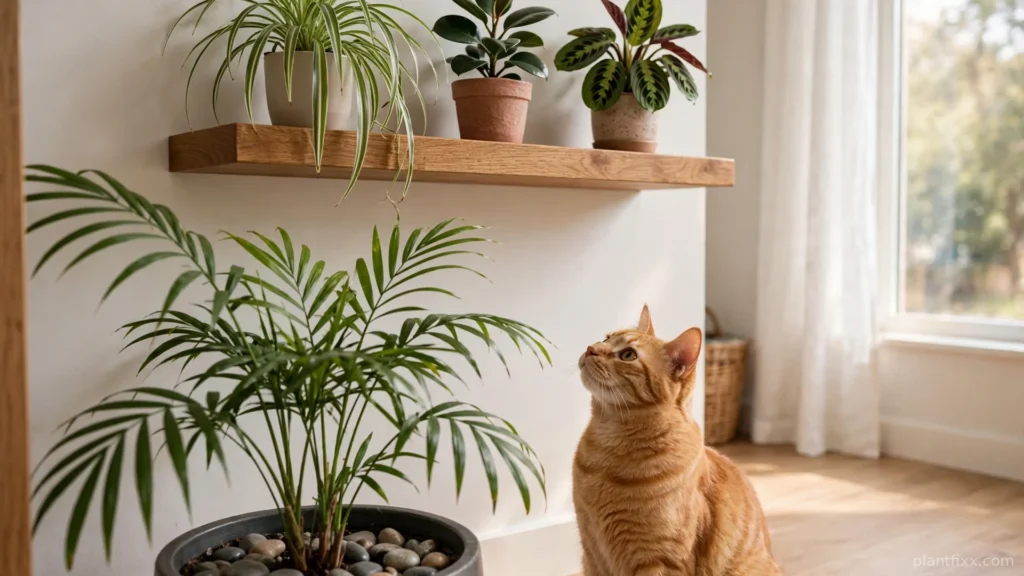
4. Hang the temptations. Trailing plants invite batting, so hang them from the ceiling or place them on high shelves (see pet-safe hanging plants for cat owners).
5. Skip harsh chemicals. Some fertilizers and systemic pesticides are harmful to pets. Use pet-safe options and keep treated plants out of reach until the product has dried.
FAQs
What are the safest indoor plants for cats and dogs?
Spider plant, parlor palm, Boston fern, prayer plant, calathea, baby rubber plant, African violet, cast iron plant, Christmas cactus, and moth orchid. All are listed as non-toxic to both cats and dogs by the ASPCA.
Is a spider plant safe for cats?
Yes. Spider plant (Chlorophytum comosum) is listed as non-toxic to cats by the ASPCA. Cats often chew it because of the dangling leaves, which can still cause mild stomach upset in large amounts, so hang it out of reach.
What does “non-toxic to pets” actually mean?
It means a poison authority like the ASPCA has assessed the species and listed it as non-toxic. It does not mean the plant is food. Any plant eaten in large quantities can irritate the stomach and cause vomiting.
Are snake plants toxic to cats and dogs?
Yes. Snake plants contain saponins that cause nausea, vomiting, and diarrhea in cats and dogs. If you like the look, swap it for a cast iron plant, which is pet safe.
What should I do if my cat eats a toxic plant?
Remove the plant from reach, identify the exact species, and call your vet or the ASPCA Animal Poison Control Center at 1-888-426-4435. Do not induce vomiting unless told to. Go to the emergency vet if your pet is vomiting repeatedly, drooling heavily, or collapses.
Which pet-safe plant is easiest in low light?
Cast iron plant or parlor palm. Both tolerate dim corners, need little water, and are listed as non-toxic to cats and dogs.
Choosing pet safe indoor plants for cats and dogs does not mean settling for boring greenery. Start with one beginner pick, check anything new with the Pet Safe Plant Checker, and enjoy a home where plants and pets share the same sunlight.
Pingback: 15 Best Low Light Indoor Plants for Small Spaces (2026)
Pingback: Is a ZZ Plant Toxic to Cats and Dogs? The Honest Answer