Most people get snake plant light requirements wrong in the same direction. They put the plant in a dark corner because they read it tolerates low light, and then wonder why it stops growing, turns pale, or falls over.
Tolerating low light and thriving in low light are two different things. Snake plant light requirements are specific. Get them right and the plant grows strong, upright, and vibrant. Get them wrong and the plant survives but never does anything worth watching.
This guide covers exactly how much light snake plants need indoors, outdoors, by window direction, by season, and by variety. It also covers artificial lighting, the low light myth, and how light connects directly to watering, growth rate, and leaf health.
What Snake Plants Need: The Baseline
Snake plants (Dracaena trifasciata, formerly Sansevieria trifasciata) originate from the rocky, semi-arid regions of West Africa. In their natural habitat, they grow under the partial canopy of trees and shrubs. Sunlight reaches them filtered, dappled, and never harsh.
This natural environment tells you everything about snake plant light requirements. The plant evolved for bright, indirect light. Not deep shade. Not direct midday sun.
The target:
- Light intensity: 300 to 500 foot-candles for healthy growth.
- Duration: 8 to 10 hours of indirect light per day.
- Type: Bright indirect light. Filtered, diffused, or reflected sunlight.
Snake plants store energy from light through photosynthesis and use that energy for root function, new leaf production, and maintaining the firm upright structure their leaves are known for. Without adequate light, every one of those functions slows down or stops.
The Low Light Myth: What It Actually Means
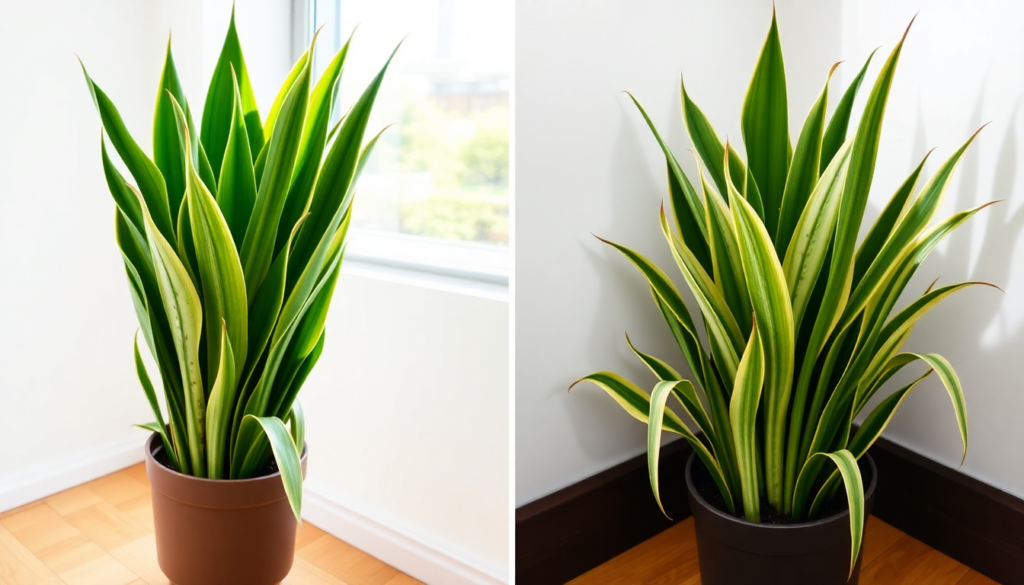
“Low light tolerant” is the most misquoted phrase in snake plant care. It appears on plant tags, in garden center descriptions, and across hundreds of websites. It leads plant owners to place their Sansevieria in windowless bathrooms and dim hallways and then wonder why nothing happens.
Here is what low light tolerance actually means:
Snake plants survive in low light. They do not grow in it.
In low light conditions (below 100 foot-candles, typical of a room more than 8 feet from any window), a snake plant:
- Stops producing new leaves entirely.
- Loses chlorophyll from existing leaves, turning them pale yellow-green.
- Develops etiolated growth: leaves become long, weak, and lean toward any distant light source.
- Loses variegation on patterned varieties like Laurentii and Moonshine.
- Uses water more slowly, which keeps soil wet longer and raises root rot risk.
- Loses its upright posture. Leaves droop and eventually collapse.
A snake plant in a truly dark corner is in survival mode. It is not thriving. Snake plant light requirements for actual healthy growth start at a minimum of 100 to 150 foot-candles and reach their optimal range between 300 and 1,000 foot-candles of indirect light.
Indoor Snake Plant Light Requirements: Window by Window
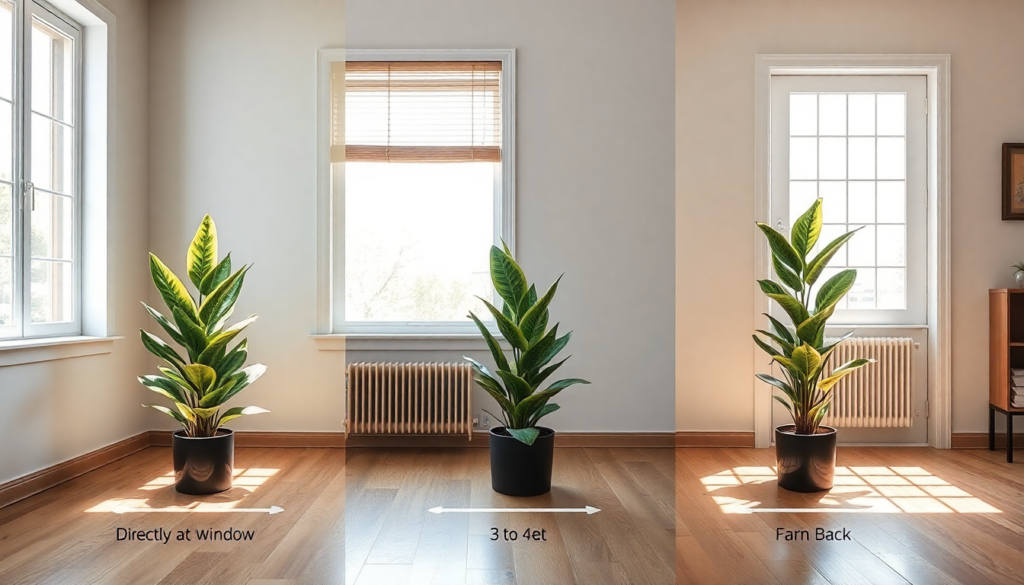
The direction your windows face determines the quality and intensity of natural light inside your home. Each window direction creates different conditions for snake plant light needs.
East-Facing Windows: Best for Snake Plants Indoors
East-facing windows receive gentle morning sun. The light is soft, warm, and indirect by nature. Direct sun from the east hits at a low angle and lasts only 1 to 2 hours in the morning before the sun moves overhead.
This is the ideal indoor position for snake plant light requirements. Place your Sansevieria directly in front of or within 2 to 3 feet of an east-facing window. The plant receives bright indirect light for most of the morning, which supports strong upright growth, deep green color, and consistent new leaf production without any risk of sunburn.
South-Facing Windows: Good With Distance or a Sheer Curtain
South-facing windows receive the most light of any direction throughout the day. In summer, they get intense, high-angle sun. In winter, the lower sun angle sends deeper light into the room.
Place your snake plant 3 to 6 feet back from a south-facing window, or hang a sheer curtain to diffuse direct rays. At this distance or with diffusion, south-facing light meets snake plant light needs without causing the leaf bleaching and sunburn that direct south-facing sun causes.
Do not place the plant directly on a south-facing windowsill in summer. The glass intensifies heat and light. Leaf damage from this position looks like the yellow and white bleached patches described in snake plant sunburn diagnosis.
West-Facing Windows: Acceptable With Caution
West-facing windows receive intense afternoon sun. In summer, afternoon sun from the west is harsher and hotter than morning sun from the east. Snake plants in west-facing windows are at risk of leaf scorch during peak summer months.
Place the plant 3 to 5 feet from a west-facing window or use a sheer curtain. This position works well in fall and winter when afternoon sun intensity drops significantly and provides welcome warmth for the plant.
North-Facing Windows: Survival Only
North-facing windows receive no direct sun at any time of year. The light they provide is consistently low, typically below 100 foot-candles. This meets the bare minimum for snake plant low light tolerance but does not support healthy growth.
A snake plant in a north-facing room without supplemental lighting:
- Grows extremely slowly or not at all.
- Loses color vibrancy over time.
- Becomes susceptible to overwatering because the soil dries slowly in low light.
If a north-facing room is your only option, add an LED grow light. Position it 12 to 18 inches above the plant and run it 10 to 12 hours per day.
How Far From the Window?
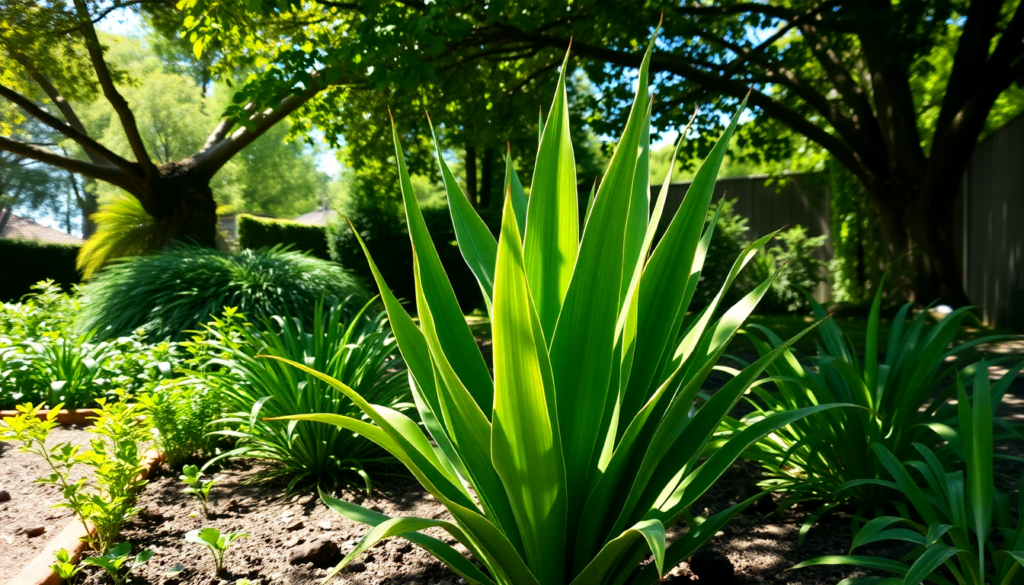
Distance from the window controls light intensity as much as window direction does. Light intensity drops significantly with distance.
| Distance from Window | Approximate Light Level | Snake Plant Result |
| 0 to 1 foot (south/west) | Very high, direct | Sunburn risk. Leaf bleaching. |
| 1 to 3 feet (east/south with curtain) | Bright indirect | Ideal. Strong growth, deep color. |
| 3 to 6 feet (any direction) | Moderate indirect | Good. Steady growth, healthy leaves. |
| 6 to 8 feet | Low to moderate | Slow growth. Survival mode beginning. |
| 8 feet or more | Low | No new growth. Etiolation risk. |
The sweet spot for most indoor environments is 3 to 6 feet from a bright east or south-facing window. At this distance, snake plant light requirements are met without sunburn risk, and the plant grows consistently throughout the growing season.
Rotate the pot 90 degrees every 2 to 3 weeks. Snake plants naturally grow toward the light source. Without rotation, one side of the plant stretches faster, producing the snake plant not growing straight problem that many indoor growers experience.
Do Snake Plants Need Sun Directly?
No. Snake plants do not need direct sunlight.
This is one of the most important distinctions in understanding snake plant light requirements. Direct sun and bright indirect light are not the same thing.
Direct sunlight hits the leaf surface with full, unfiltered intensity. Outdoors in summer, direct midday sun reaches 10,000 foot-candles or more. Indoors, direct sun through window glass reaches 2,000 to 5,000 foot-candles. Both levels exceed what snake plant leaves handle without damage.
Bright indirect light is filtered, reflected, or diffused sunlight. It reaches 300 to 1,000 foot-candles indoors, which falls exactly within the range where snake plant light needs are fully met.
Signs your snake plant is getting too much direct sun:
- Pale yellow, white, or bleached patches on leaves facing the light source.
- Dry, crispy brown edges or tips.
- Leaves feel dry and papery rather than firm and smooth.
- The damage appears only on the side of the plant closest to the window.
If you see these signs, move the plant further from the window or add a sheer curtain between the plant and the glass.
Outdoor Snake Plant Light Requirements
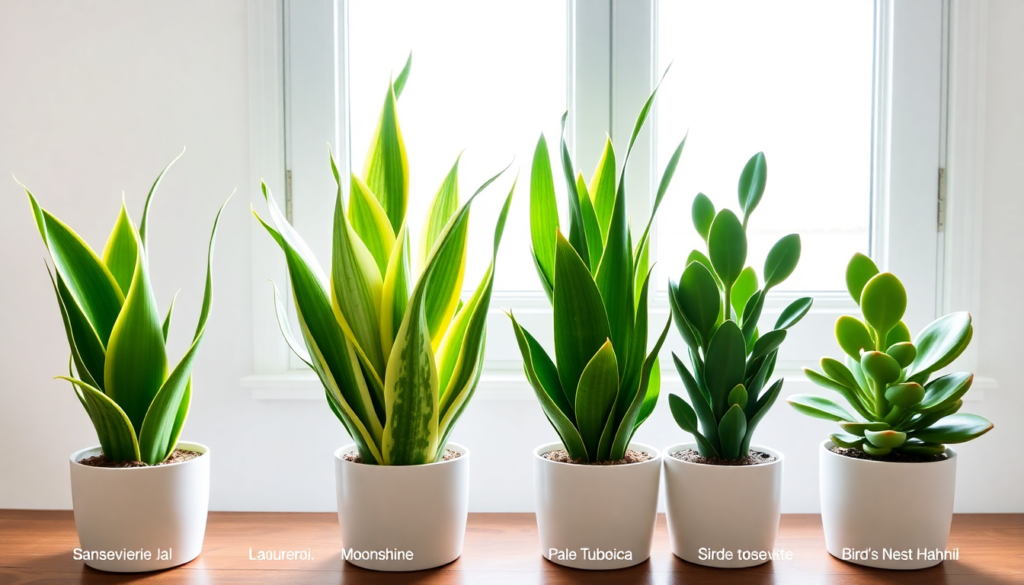
Snake plants grow outdoors in USDA hardiness zones 9 to 12, where winter temperatures stay above 30 degrees Fahrenheit. In cooler climates, they work as summer patio plants brought indoors before temperatures drop below 55 degrees Fahrenheit.
Outdoor snake plant light requirements differ significantly from indoor requirements because outdoor light intensity is far higher than indoor light, even on overcast days.
Best outdoor positions:
- Partial shade under tree canopy: Dappled light filtered through leaves matches the plant’s natural West African habitat. This is the ideal outdoor position for Sansevieria.
- Morning sun, afternoon shade: East-facing outdoor spots where the plant receives 2 to 3 hours of direct morning sun followed by shade work well.
- Under a covered patio or pergola: Provides bright ambient outdoor light without direct sun exposure.
Positions to avoid outdoors:
- Full sun all day. Outdoor midday sun is 10 to 20 times more intense than the bright indirect light the plant prefers. Even sun-tolerant Sansevieria varieties develop leaf scorch in full outdoor sun without gradual acclimation.
- South-facing walls in full summer sun. Reflected heat from walls adds thermal stress on top of light intensity.
Acclimating an Indoor Snake Plant to Outdoor Light
Never move a snake plant directly from an indoor low-light position to full outdoor sun. The sudden light intensity change shocks the plant and burns leaves within hours.
Acclimate over 2 to 3 weeks:
- Week 1: Place outdoors in full shade for 2 to 3 hours per day.
- Week 2: Move to dappled or partial shade for 4 to 5 hours per day.
- Week 3: Full outdoor partial shade position all day.
This gradual approach gives the leaf surface time to adjust its chlorophyll concentration and protective compounds to the higher light intensity.
Snake Plant Light Requirements by Variety
Not all snake plant varieties have identical light requirements. Variegation, leaf color, and growth habit all influence how much light each variety needs.
Sansevieria trifasciata Laurentii (Yellow-edged) Needs more light than solid green varieties to maintain its yellow leaf margins. In low light, the yellow edges fade and the plant reverts toward solid green. Position in bright indirect light for 8 to 10 hours daily to preserve the variegation.
Sansevieria Moonshine The pale silver-green coloring of Moonshine is light-dependent. In adequate bright indirect light, leaves maintain a striking silver sheen. In low light, Moonshine turns dull and loses its signature color. This variety is more sensitive to low light than standard trifasciata.
Sansevieria trifasciata Hahnii (Bird’s Nest) More tolerant of lower light than tall varieties because its compact rosette shape reduces the leaf surface area exposed to light stress. Still performs best in bright indirect light but handles north-facing windows better than Laurentii.
Sansevieria cylindrica Round, tubular leaves give this variety a larger surface area relative to leaf thickness, which makes it more efficient at capturing available light. Tolerates moderate indirect light well. One of the more adaptable varieties for indoor conditions.
Sansevieria Bantel’s Sensation The white vertical striping on this variety requires bright indirect light to stay vivid. Low light causes the white sections to narrow and fade. Keep this variety within 3 feet of a bright east or south-facing window.
How Light Connects to Snake Plant Water Requirements
Snake plant light requirements and snake plant water requirements are directly linked. This connection causes problems for growers who water on a fixed calendar schedule without adjusting for light levels.
Here is how it works:
In bright indirect light, a snake plant runs its metabolic processes at full speed. It photosynthesizes actively, uses water for cell function and transpiration, and dries the soil out at a predictable rate. In these conditions, watering every 2 to 3 weeks during the growing season is appropriate.
In low light, the plant slows down. Photosynthesis drops. Water use drops. The same amount of water you gave the plant in bright light takes much longer to be used and evaporated in low light conditions. The soil stays wet 2 to 3 times longer.
If you water your snake plant on the same schedule regardless of light conditions, plants in low light become overwatered. The soil never fully dries. Root rot follows. Yellow leaves appear.
The rule: Always check soil moisture before watering, regardless of schedule. Stick your finger 2 to 3 inches into the soil. Water only when it feels completely dry. In bright light this happens faster. In low light this takes longer.
Artificial Light for Snake Plants
If natural light is not available at the level your snake plant needs, artificial grow lights fill the gap effectively. LED grow lights now produce results nearly equivalent to natural window light at a fraction of the energy cost of older fluorescent systems.
Best artificial light options for snake plants:
Full-spectrum LED grow lights The best choice for snake plant light needs under artificial conditions. They produce the full spectrum of wavelengths (400 to 700 nanometers) that plants use for photosynthesis. They run cool, use little energy, and last 25,000 to 50,000 hours. Position 12 to 18 inches above the plant.
Fluorescent lights (T5 or T8) An acceptable and affordable option. Provide good light output for snake plants. Need to be positioned closer than LEDs (6 to 12 inches above the plant) because they produce less intense light per watt.
Incandescent bulbs Not suitable. They produce too much heat relative to usable light output and generate mostly red-spectrum light, missing the blue wavelengths snake plants need for compact, upright growth.
Duration for artificial light: Run grow lights 10 to 12 hours per day. Use a timer so the plant receives consistent light and dark cycles. Snake plants, like most plants, benefit from a dark period for nighttime metabolic processes. Do not run lights 24 hours per day.
Signs artificial light is working:
- New leaves emerge within 4 to 8 weeks of starting the artificial light routine.
- Leaf color deepens from pale yellow-green to deep green.
- Existing leaves firm up and stand more upright.
- Growth rate increases noticeably in spring and summer.
Seasonal Light Adjustments
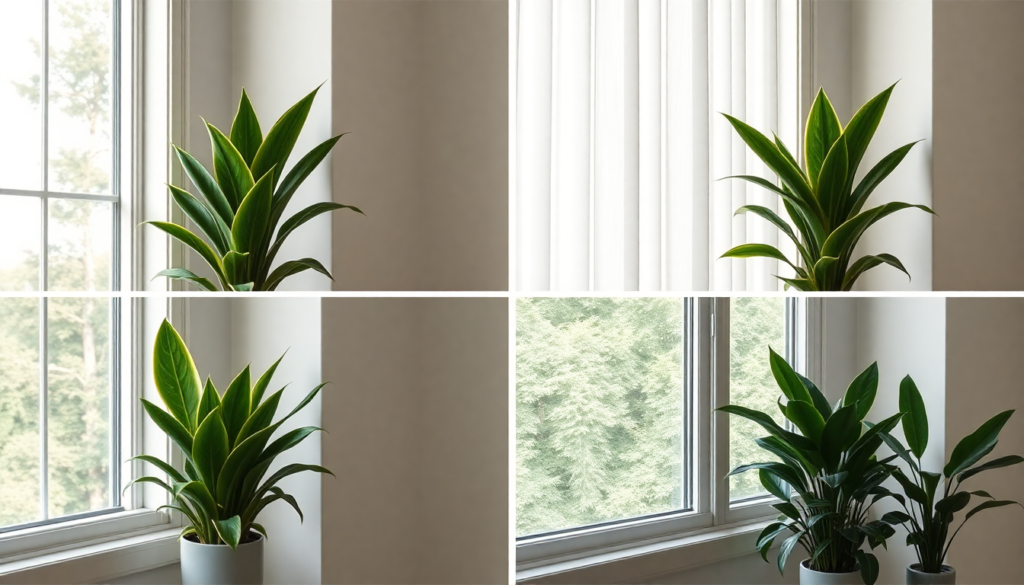
Snake plant light requirements change with the seasons because sunlight intensity, angle, and duration all change throughout the year. A fixed plant position that works in summer often fails in winter.
Spring (March to May) Light intensity increases as the sun angle rises. Ideal time to move snake plants closer to windows after winter. The growing season begins. Bright indirect light for 8 to 10 hours daily supports the strongest growth period of the year.
Summer (June to August) Peak light intensity. South and west-facing windows become too intense for close placement. Move plants slightly back from south and west windows or add sheer curtains. East-facing window positions remain ideal year-round.
Autumn (September to November) Light intensity drops as the sun angle lowers. Move plants closer to windows as outdoor light weakens. Reduce watering frequency as growth slows and light levels fall.
Winter (December to February) Natural light reaches its lowest intensity and shortest duration. Days with fewer than 8 hours of light are common at latitudes above 40 degrees north. Move plants to the brightest available window. Add a full-spectrum LED grow light if the plant shows signs of light deficiency (pale leaves, no new growth, leaning). Stop fertilizing. Reduce watering to every 4 to 6 weeks.
How to Test Your Light Level Without Equipment
You do not need a light meter to get a rough sense of whether your snake plant is getting enough light.
The shadow test: Hold your hand 12 inches above a white sheet of paper in the spot where you plan to put the plant.
- Sharp, clear shadow with defined edges: Direct sunlight. Too intense for most indoor positions. Add distance or a curtain.
- Soft shadow with blurred edges: Bright indirect light. This is your target zone for snake plant light needs.
- Very faint, barely visible shadow: Low light. Borderline for snake plants. Add a grow light.
- No shadow at all: Below the minimum for any houseplant growth. Use artificial lighting.
The phone app method: Light meter apps (Lux Meter, Photone, and similar tools) use your phone’s camera to give foot-candle or lux readings. These are rough estimates but useful for comparing positions around your home. Target 300 to 500 foot-candles (3,000 to 5,000 lux) for optimal snake plant light requirements indoors.
Signs Your Snake Plant Is Not Getting Enough Light
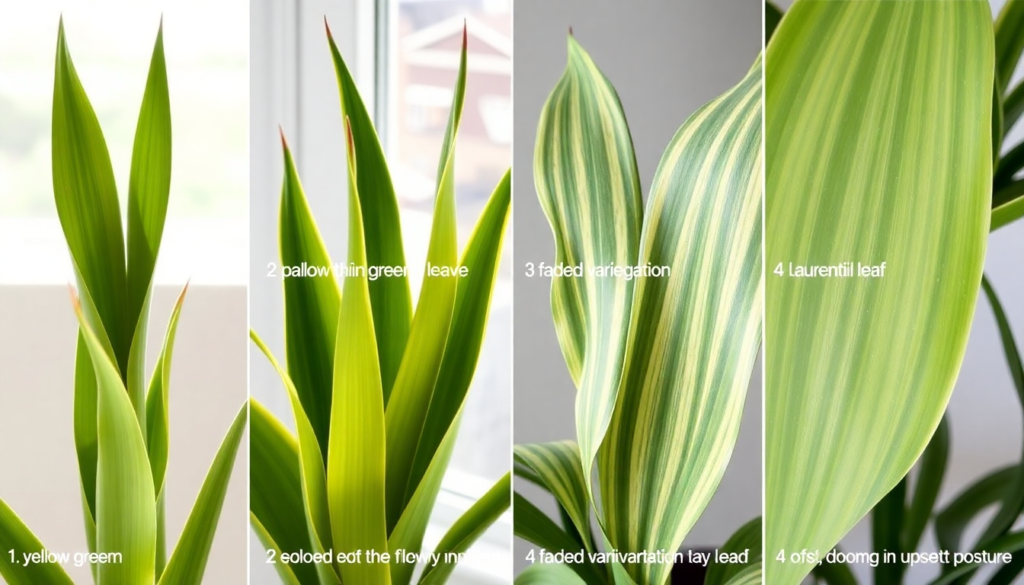
Watch for these signals that your snake plant light requirements are not being met:
- No new growth in spring or summer. The plant should produce at least one or two new leaves during the growing season with adequate light. Zero new growth in a full season points to light deficiency.
- Pale, washed-out leaf color. Deep green fades to yellow-green or dull olive. Variegated varieties lose their white, yellow, or silver patterning.
- Etiolated, elongated leaves. New leaves emerge longer and thinner than established leaves and lean toward the nearest light source.
- Soft, limp leaves. Without enough light energy, the plant cannot maintain the cell pressure that keeps leaves firm and upright.
- Soil staying wet too long. In low light, the plant uses water slowly. If your soil takes 4 or more weeks to dry in what should be a 2-week drying cycle, low light is likely slowing the plant’s metabolism.
Signs Your Snake Plant Is Getting Too Much Direct Light
- Pale yellow, white, or bleached patches on leaves, especially on the side facing the light source.
- Brown, dry, crispy leaf tips or edges.
- Leaves feel dry and papery rather than firm and smooth.
- The affected area does not recover. Sunburned tissue is permanently damaged.
- New leaves emerge looking healthy while older exposed leaves show the damage.
Spider Plant Light Requirements vs. Snake Plant Light Requirements
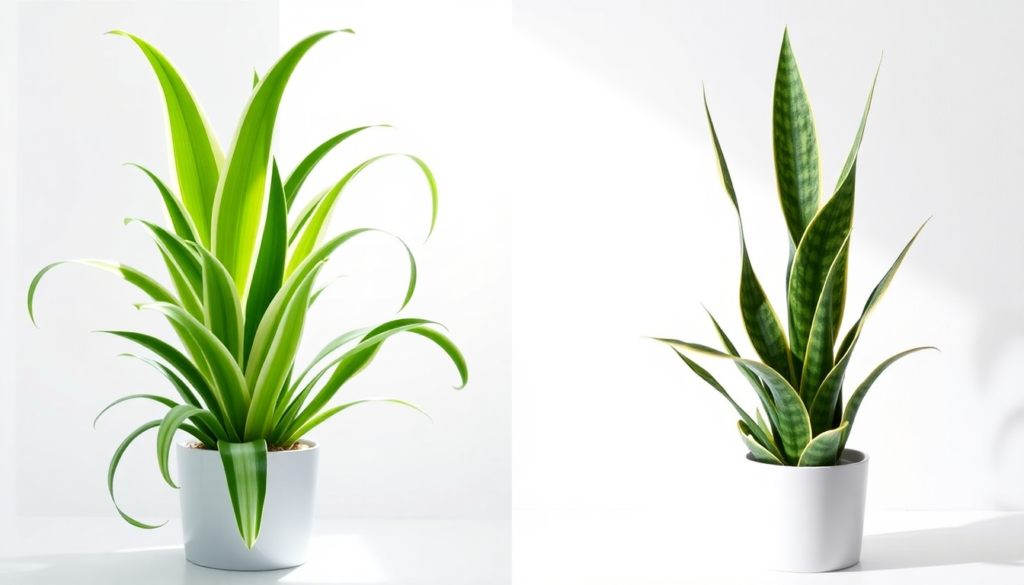
Both plants appear on low-light houseplant lists, which leads to confusion about their actual requirements. They are similar but not identical.
Spider plant light requirements: Spider plants (Chlorophytum comosum) prefer bright indirect light and handle moderate indirect light well. They tolerate low light better than snake plants because they have more chlorophyll-dense leaf tissue relative to their size. Direct sun scorches spider plant leaves the same way it scorches snake plants.
Snake plant light requirements: Slightly more tolerant of low light in the short term, but needs bright indirect light for actual growth. More sensitive to overwatering in low light because it uses water more slowly than spider plants.
Key difference: Spider plants grow faster and show light deficiency symptoms (stretching, pale color) more quickly than snake plants. Snake plants tolerate poor light longer before visibly declining, which makes the deficiency harder to catch early.
FAQ
What are snake plant light requirements indoors?
Snake plants need 8 to 10 hours of bright indirect light per day for healthy indoor growth. Position them 1 to 6 feet from an east or south-facing window. Avoid direct sun through glass and avoid placements more than 8 feet from any window without supplemental grow lighting.
Do snake plants need sun?
Snake plants need light, not direct sun. Bright indirect light between 300 and 1,000 foot-candles meets their full requirements. Direct sunlight exceeds this range and causes leaf bleaching, brown tips, and sunburn.
What are snake plant low light tolerance limits?
Snake plants survive in light levels as low as 50 to 100 foot-candles. Below this level, they decline over time. They do not produce new growth in low light. The minimum for actual healthy growth is 150 to 300 foot-candles, achievable near a north-facing window or under a grow light.
How do snake plant light needs change outdoors?
Outdoor light intensity is far higher than indoor light. Snake plants placed outdoors need partial shade or filtered light. Morning sun followed by afternoon shade works well. Never place an unacclimated indoor snake plant in full outdoor sun. Acclimate over 2 to 3 weeks.
Can snake plants grow under artificial light only?
Yes. Full-spectrum LED grow lights run for 10 to 12 hours per day produce results nearly identical to natural bright indirect light. This makes snake plants suitable for offices, windowless bathrooms, and rooms without adequate natural light.
How do I know if my snake plant needs more light?
Watch for these signs: no new growth during spring or summer, pale or yellowing leaf color, fading variegation, elongated leaning leaves, and soft or drooping leaf posture. Any of these signals indicate light deficiency. Move the plant closer to a window or add a grow light.
Do snake plant light requirements vary by variety?
Yes. Variegated varieties like Laurentii, Moonshine, and Bantel’s Sensation need more light than solid green types to maintain their color patterns. Bird’s Nest Hahnii is the most low-light tolerant of common varieties. In general, the more complex the variegation, the more light the plant needs to sustain it.
How does light affect snake plant water requirements? In bright light, snake plants use water faster and the soil dries out in 2 to 3 weeks. In low light, water use slows and the soil takes 4 to 6 weeks or more to dry. Always water based on soil dryness, not a fixed schedule. Adjust frequency based on your light conditions.
Pingback: Black Coral vs Zeylanica Snake Plant: Which to Buy (2026)