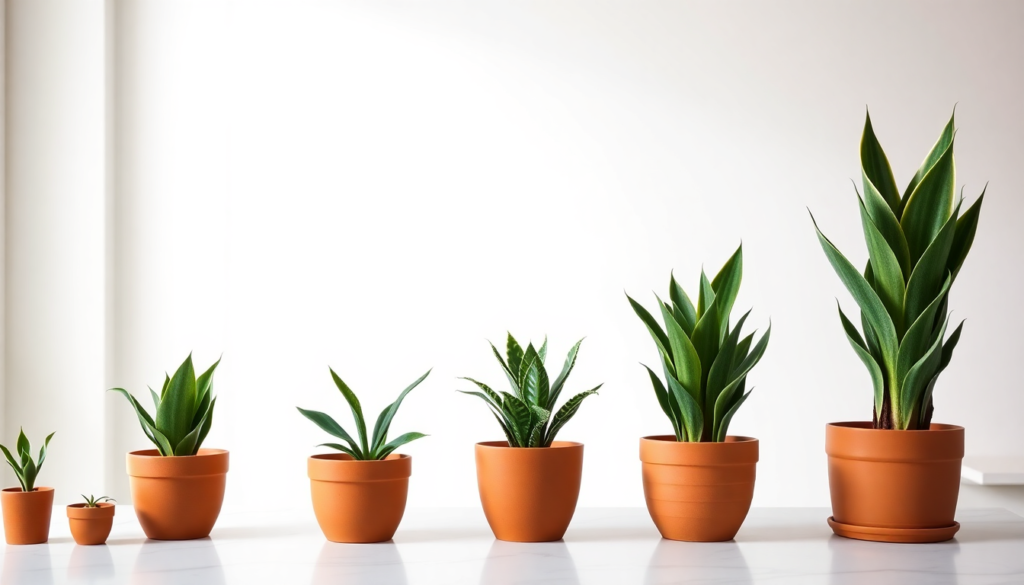
Choose a snake plant pot to fit its actual root ball, with drainage and enough stability for the plant. Leaf height alone is not a reliable pot-size rule. Avoid adding a large volume of unused mix around a small root system.
Measure the roots before choosing a size
When repotting is justified, gently inspect the root ball and record its width and depth. Choose a container that accommodates healthy roots and fresh mix without a large excess of space. Pot labels and nominal sizes vary, so compare usable internal dimensions as well as the number on the label.
A taller plant may need a heavier decorative outer container for stability rather than a much larger growing pot. Keep the growing pot removable so you can inspect it and empty drainage water.
When repotting may be useful
Inspect a plant whose roots are crowding the container, whose pot is splitting or whose growing mix has become difficult to manage. Roots at a drainage hole alone do not establish an emergency. Check the condition of the whole root ball and the plant before deciding.
If the base is soft or roots are visibly decaying, diagnose the problem before moving into a larger pot. Read the snake plant root-rot inspection guide. A bigger pot does not treat damaged roots.
Drainage, depth and pot material
Use a growing container with drainage holes and empty collected water. Match depth to the root system rather than burying the plant in extra mix. Plastic, terracotta and glazed containers can dry differently under the same conditions; monitor the actual root-zone moisture instead of applying a fixed watering interval.
See snake plant potting-mix considerations and the soil-first watering guide. Light, temperature, mix and container conditions all affect drying.
A measurement checklist
Record the root-ball width and depth, internal growing-pot dimensions, drainage arrangement and the decorative pot’s clearance. If using a stand, record the pot-base footprint and watered weight and check the manufacturer’s load and stability guidance.
The plant stand fit planner in inches or centimeters estimates spacing for identical round pots. It does not certify shelf strength, mounting hardware or stability.
After repotting
Keep the plant in suitable light and assess moisture below the surface before watering again. Watch for spreading softness, persistent wetness or worsening damage. Avoid making repeated pot changes merely because an old damaged leaf does not return to its former appearance.
Common questions
Is a smaller pot always safer? No. A container can be too small or poorly suited to the root system. Match the container to the plant, drainage and growing conditions rather than choosing the smallest available size.
Can a nursery pot stay inside a decorative pot? Yes, provided you can remove it, water appropriately and empty drainage water. Do not let the growing pot sit in collected water.
Does a tall snake plant need a deep pot? Not automatically. Inspect the roots and assess stability; leaf height does not tell you the root-ball depth.
Sources and scope
The University of Maryland guide to potting and repotting indoor plants explains general container and growing-medium considerations. NC State Extension’s Dracaena trifasciata entry provides species-level care context. This guide gives practical checks, not a PlantFixx controlled repotting experiment or a guaranteed recovery timeline.
Pingback: Snake Plant Flowering: Why It Blooms and What to Do Next
Pingback: 7 Best Large Snake Plant Varieties for Low Light (2026 Guide
Pingback: Snake Plant Leaves Curling? 7 Causes and How to Fix Them
Pingback: Whale Fin Snake Plant Care: Complete Beginner Guide (2026)
Pingback: Snake Plant Fungus Gnats: How to Get Rid of Them (3 Weeks)
Pingback: Snake Plant Light Requirements: How Much Light It Needs
Pingback: Rare Snake Plant Varieties Every Collector Should Know
Pingback: Snake Plant Root Rot: Signs, Treatment & Recovery
Pingback: Repot a Snake Plant: 7 Signs + Step-by-Step Guide (2026)