
“Rare snake plant” is a seller description, not a botanical category or a fixed price tier. Availability changes between nurseries and regions. Choose by the plant’s identity, health and suitability for your home rather than a scarcity label.
Snake plants are often listed under both Dracaena and their older Sansevieria names. A cultivar, a species and a trade name are different kinds of labels. Ask the seller for the fullest identification available; a familiar trade name alone does not authenticate a plant.
Collector forms worth comparing
Dracaena trifasciata “Bantel’s Sensation”: look for narrow upright foliage with pale lengthwise striping. NC State Extension lists this named cultivar. Ask for photographs of the actual plant and its label rather than relying on a listing title.
Variegated Dracaena masoniana, often sold as variegated whale fin: compare broad leaf shape and the pattern on the actual specimen. Variegation and size differ between plants. A single-leaf cutting and a rooted division are different offers, even when their photographs look similar.
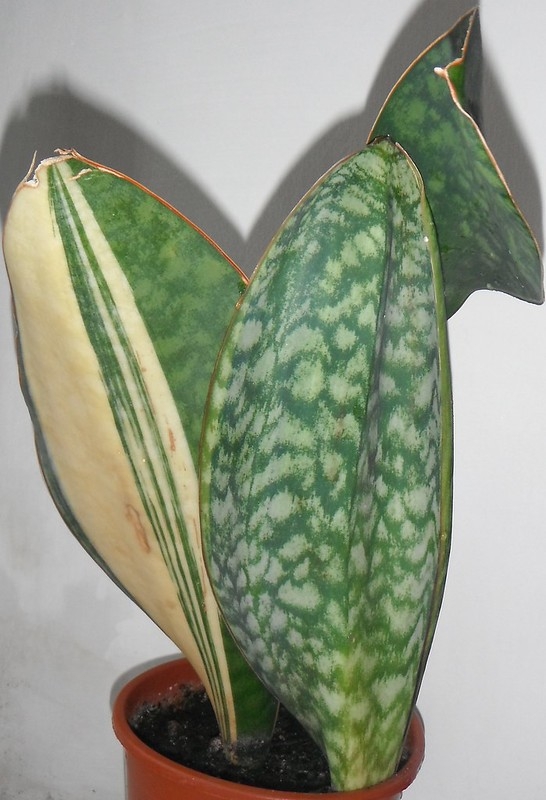
Other collector labels: you may encounter Cleopatra, Silver Blue, Sayuri and Siam Silver. This guide does not certify those trade labels, rank their rarity or establish current US availability. Ask for identification evidence and compare multiple reputable growers before paying a premium. If you want one proven type instead of a rare form, the best snake plant variety guide compares the most reliable choices for homes.
Questions to ask before buying
Is the photograph of the exact plant? Is the plant rooted, a division or an unrooted cutting? What species and cultivar name appear on the grower’s label? Can you inspect the base and roots where practical? What are the shipping-weather arrangements and return terms? Keep a copy of the listing and the seller’s answers.
Compare like with like: root development, pot size, number of growth points, shipping costs and plant condition can explain price differences. No current price survey or seller certification has been conducted for this guide. A high price does not prove rarity or health.
Identify before deciding on care
Do not apply a single care chart to every plant sold as a snake plant. Dracaena masoniana and Dracaena trifasciata are different species. Start with the identified species, the current roots, suitable light and a container with drainage. Check moisture below the surface before watering; a seller’s label cannot establish a watering interval.
Leaf appearance alone does not guarantee identity or explain every mark. Old damage, growing conditions, plant age and the photograph’s lighting can affect what you see. Ask a specialist grower to resolve uncertain identification before treating a listing as authenticated.
For general household checks, read how to decide when a snake plant needs water, how to choose a pot for the root ball and how to inspect possible root rot. Confirm species-specific differences before applying them.
Plan the space before expanding a collection
Compare mature growth habits and allow access for lifting pots and inspecting leaves. The plant stand fit planner estimates round-pot spacing, while the compact snake plant guide and larger snake plant forms provide further comparisons. A spacing estimate does not assess shelf load or stability.
US purchases and international shipments
For a domestic purchase, confirm the seller’s location and shipment terms. For plants crossing a border, check current USDA APHIS requirements for the plant, origin and shipment before paying. This article does not establish that a cultivar is prohibited, permit-free or exempt from inspection.
Sources and editorial limits
NC State Extension: Dracaena trifasciata and NC State Extension: Dracaena masoniana provide species-level information. Start international travel research with USDA APHIS plant guidance, then confirm the rules for the particular shipment. This is a researched buying guide, not a PlantFixx nursery trial, authentication service or live market survey.
Pingback: 7 Large Snake Plants for Low Light (With Pictures)
Pingback: Fastest Growing Snake Plant Varieties Compared (2026)
Pingback: 9 Snake Plant Varieties for Apartments (2026)