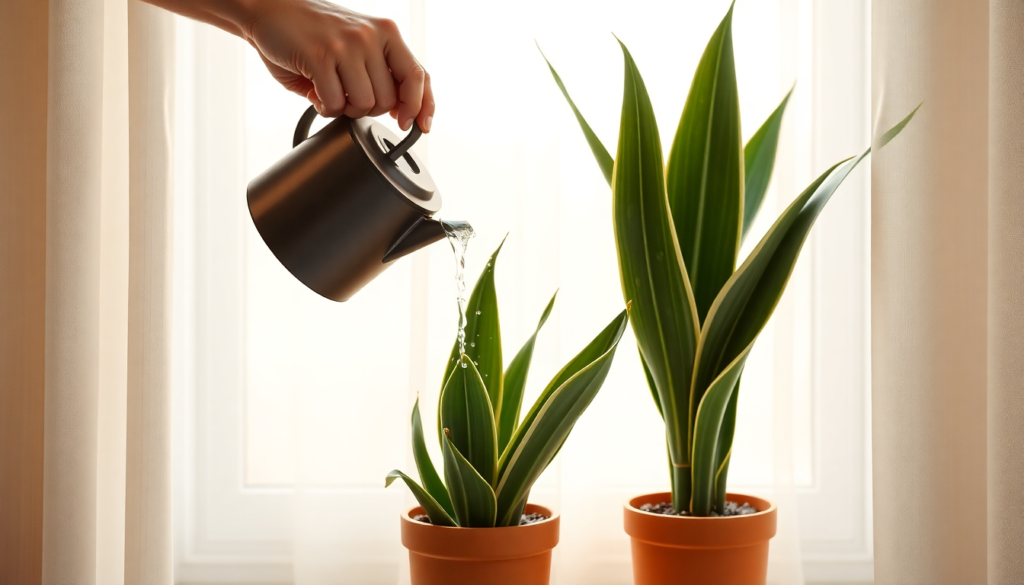
Most snake plant owners water too often. Not because they are careless, but because every care guide gives a fixed number and they follow it regardless of season, light, or pot size. That fixed number gets plants killed.
Snake plant watering does not work on a calendar. It works on one rule: water only when the top 2 to 3 inches of soil are completely dry. How often that happens changes with every season, every light condition, and every pot type.
Quick Answer
Water a snake plant every 2 to 4 weeks in spring and summer, every 4 to 6 weeks in autumn, and every 5 to 8 weeks in winter. Always check the top 2 to 3 inches of soil first. If any moisture remains, wait. Overwatering kills more snake plants than any other cause.
Quick Take Snake plants (Dracaena trifasciata) are succulents that store water in their thick leaves and rhizomes. They need far less water than most houseplants. Watering frequency changes with the season: most often in summer, least often in winter dormancy. The single most reliable method is the finger test: insert your finger 2 to 3 inches into the soil before every watering and water only when completely dry. Pot size, light level, and soil type all affect how fast the soil dries.
The One Test That Replaces Every Schedule
Before looking at any seasonal breakdown, learn this test. It works year-round and in any condition.
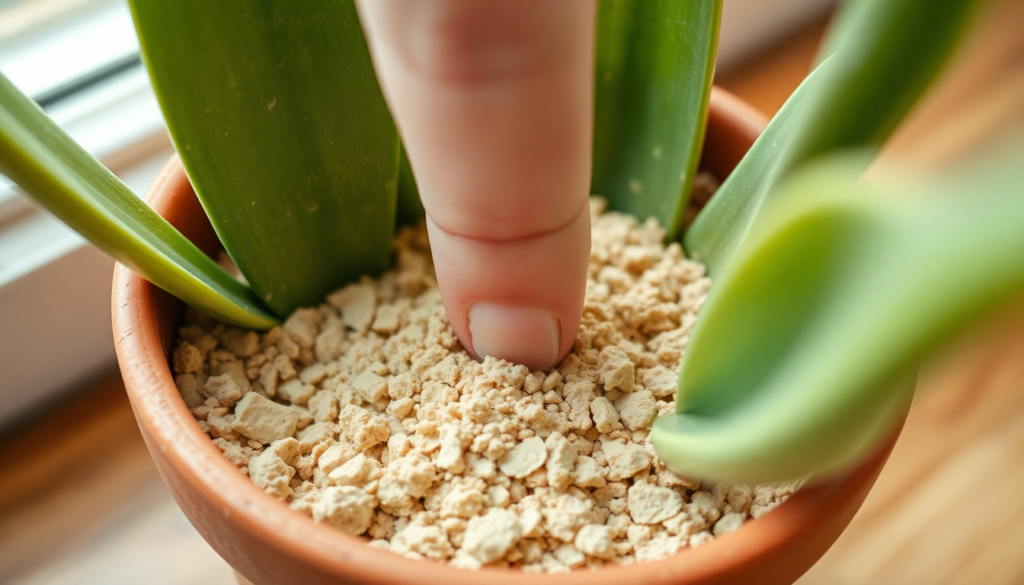
Insert your finger or a wooden chopstick 2 to 3 inches into the soil. If you feel any moisture, close the watering can and come back in a few days. If the soil feels completely dry and crumbly at that depth, water now.
One mistake many plant owners make is pressing just the surface of the soil and assuming the deeper layers match. The top half inch dries first. The root zone, where moisture damage actually happens, stays wet far longer. Always check at depth.
A moisture meter gives more reliable readings in dense or large pots where fingers cannot reach the root zone accurately. Water only when the meter reads in the dry zone.
Snake Plant Watering
Spring Watering Schedule (March to May)
Expected frequency: Every 2 to 3 weeks.
Spring is when the plant wakes from winter dormancy. Light levels increase, temperatures rise, and metabolic activity picks up. The root system starts absorbing water more actively and new leaves begin pushing up from the rhizome.
Check soil weekly through spring rather than waiting a fixed number of days. As daylight hours lengthen through April and May, soil dries noticeably faster than it did in February. Your natural check intervals will shorten on their own.
Summer Watering Schedule (June to August)
Expected frequency: Every 2 to 3 weeks indoors. Every 1 to 2 weeks for plants in very high light or outdoors.
Summer is peak growing season. The plant photosynthesizes at full capacity, uses water actively, and dries its soil fastest at this time of year.
Even in summer, the dry-before-you-water rule never changes. Water thoroughly when the soil passes the finger test, pouring until water runs freely from the drainage holes. Let the pot drain completely. Never let it sit in standing water in its saucer.
Avoid wetting the central rosette where leaves emerge. Water pooling at the crown promotes rot at the base even when the rest of the care routine is correct.
Autumn Watering Schedule (September to November)
Expected frequency: Every 3 to 5 weeks.
Growth slows as light intensity and day length decrease through autumn. Water use drops at the same rate. This is where overwatering mistakes begin for most growers because they keep the summer schedule into October without adjusting.
The same amount of water you gave in July sits in the pot two to three times longer in October. Reduce frequency gradually through September and October, following the soil rather than the calendar.
Winter Watering Schedule (December to February)
Expected frequency: Every 5 to 8 weeks.
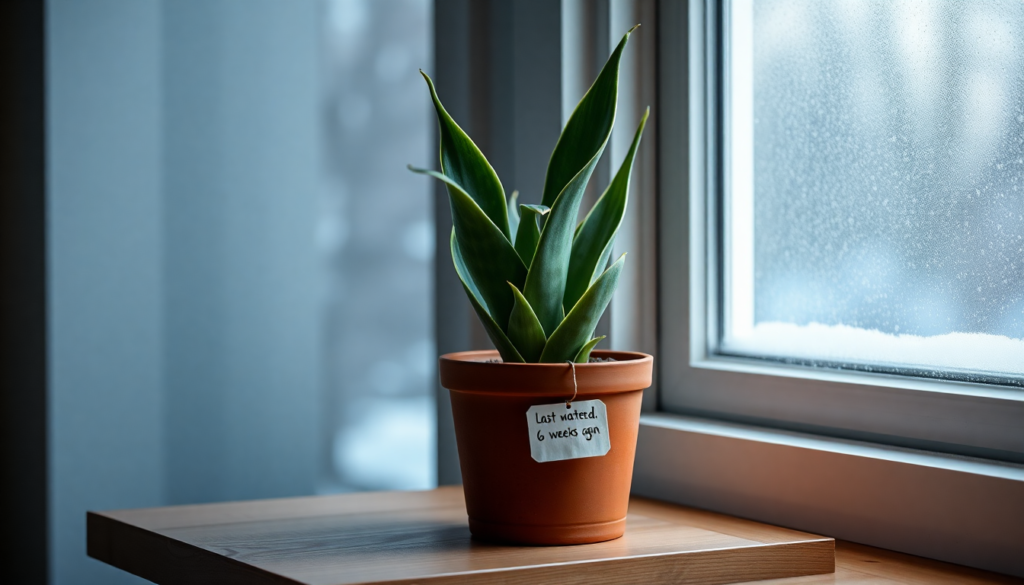
Winter dormancy is when most snake plant root rot deaths occur. The plant barely uses water, light levels are at their lowest, indoor temperatures drop near windows, and soil stays wet for weeks after a single watering. Growers who continue the summer schedule into December create the exact wet, oxygen-poor root environment that leads to Fusarium and Pythium fungal rot.
Water far less. If the soil feels even slightly damp at 2 to 3 inches, wait another week and check again.
How Light and Pot Type Shift Your Schedule
Two variables change your watering frequency more than anything outside of season.
Light level: A snake plant in bright indirect light dries its soil in 2 to 3 weeks because the plant actively photosynthesizes and transpires. The same plant in a dim corner uses almost no water and takes 4 to 6 weeks to reach the same dryness. Watering both on the same schedule overwatered the low-light plant every single time.
Pot type: Terracotta is porous and wicks moisture from the soil. It dries 30 to 40% faster than an identical plastic pot in the same conditions. Glazed ceramic sits between the two. If you switch pot materials, expect your watering frequency to change even if nothing else does.
| Condition | Frequency Adjustment |
| Bright light, terracotta | Water most frequently within each seasonal range |
| Moderate light, ceramic | Follow the middle of each seasonal range |
| Low light, plastic | Water at the longest end of each seasonal range |
| Winter dormancy, any pot | Always err toward less frequent regardless of pot type |
Water Quality and Temperature
Room-temperature water is always preferable to cold tap water. Cold water shocks the root system and slows absorption. Let tap water sit at room temperature for at least 30 minutes before watering.
If your snake plant develops recurring brown tips despite correct watering, hard tap water with high fluoride or dissolved mineral content is often the cause. Dracaena trifasciata is particularly sensitive to fluoride accumulation in leaf tissue. Switch to filtered water or rainwater to reduce this issue over time.
For authoritative guidance on water quality and houseplant health, the University of Florida IFAS Extension provides reliable research-backed information on fluoride toxicity in foliage plants.
Signs You Are Watering Wrong
Watering too often:
- Soil stays damp more than 48 hours after watering
- Leaves yellow from the base up and feel soft or mushy
- A sour or musty smell comes from the pot
- Leaves detach easily when touched at the base
Not watering often enough:
- Soil is bone dry and has pulled away from the pot edges
- Leaves feel firm but look dull, pale, or slightly wrinkled
- Brown, crispy tips develop gradually
- The pot feels unusually light when lifted.
Frequently Asked Questions
How often should I water a snake plant? Water only when the top 2 to 3 inches of soil are completely dry. This typically means every 2 to 3 weeks in spring and summer, every 3 to 5 weeks in autumn, and every 5 to 8 weeks in winter. Always test the soil directly rather than following a fixed schedule.
Do snake plants need less water in winter? Yes, significantly less. Snake plants enter near-total dormancy in winter, use minimal water, and sit in soil that dries very slowly due to lower light and cooler temperatures. Continuing a summer watering schedule into winter is the most common cause of root rot.
Can I water my snake plant from the bottom? Yes. Place the pot in a shallow basin of room-temperature water for 20 to 30 minutes, then remove and let it drain fully. This works especially well when soil has dried out and pulled away from the pot edges, since top watering in that situation often runs straight through without reaching the root ball.
What type of water is best for a snake plant? Room-temperature filtered water or rainwater works best. Tap water with high fluoride, chlorine, or dissolved mineral content contributes to brown tips over time. If using tap water, let it sit uncovered for 24 hours to allow chlorine to dissipate before watering.
Why is my snake plant turning yellow after watering? Yellow leaves after watering almost always indicate overwatering or poor soil drainage. The root system sits in wet, oxygen-poor soil, loses its ability to function, and stops supplying the leaves with nutrients. Check the soil dryness before every watering and ensure the pot has adequate drainage holes.