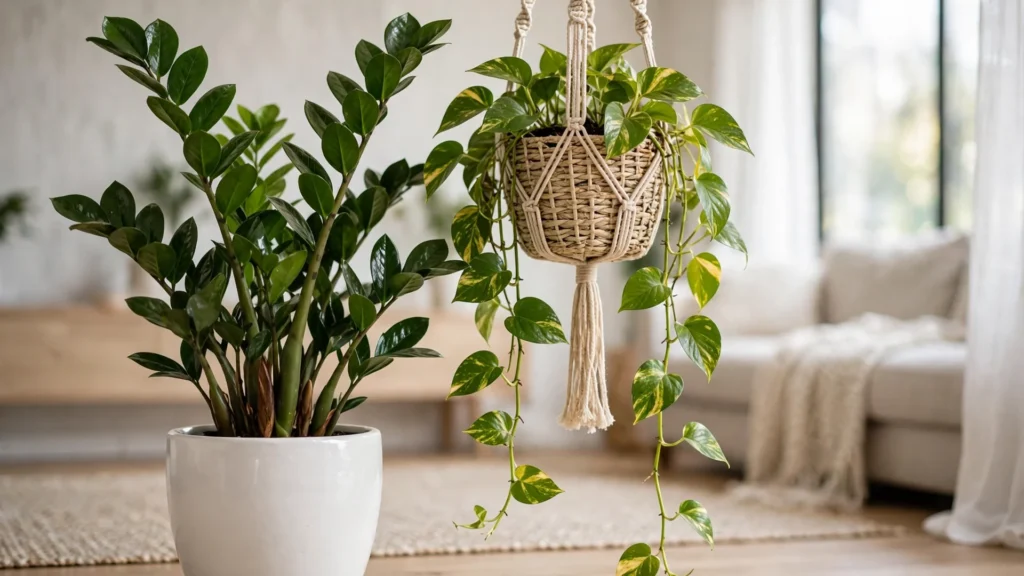
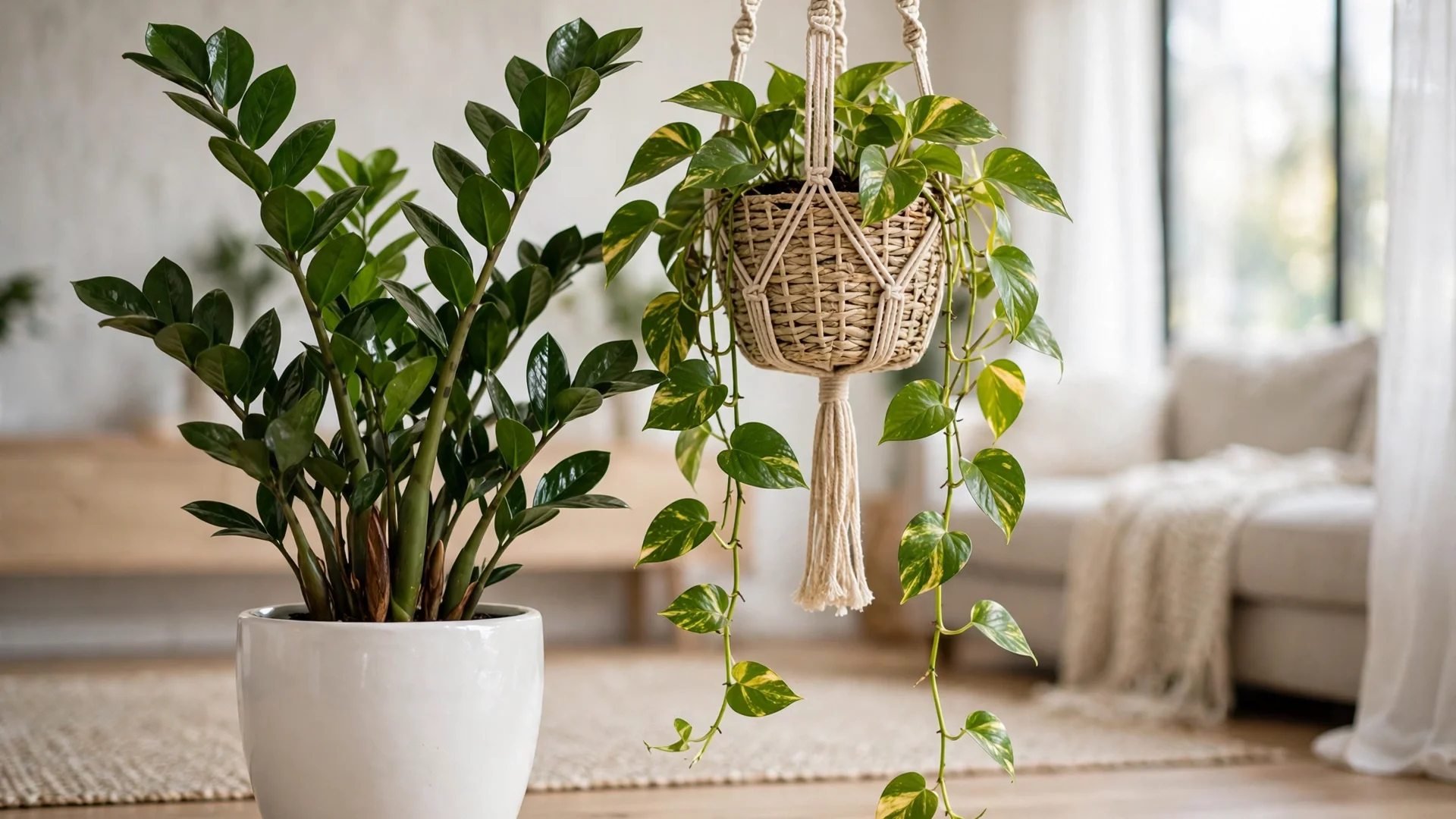
ZZ Plant vs Pothos Plant: Pick the Right One for Your Home
The ZZ plant and the pothos plant sit at the top of almost every easy-houseplant list, and for good reason. Both survive low light, forgive missed care, and cost little to buy. But they behave very differently in a real room. One stores water underground and grows slowly and upright. The other grows fast, trails for feet, and tells you when it wants water.
If you are unsure which one to take home, this comparison settles it. It covers how their watering, light, growth, pet safety, and propagation differ, then gives a clear answer for your room and routine.
Quick Answer
Pick the ZZ plant if you forget to water and want an upright plant that stays neat with almost no attention. Pick the pothos plant if you want fast, trailing growth and do not mind watering every week or two. Both survive low light, but the ZZ plant survives neglect better.
Quick Take
The ZZ plant stores water in thick underground rhizomes, so it can go 3 to 4 weeks without water and keeps a tidy, upright shape. The pothos plant grows faster and trails or climbs, but needs water about twice as often. Neither is safe for pets to chew. Choose the ZZ plant for dark corners and busy schedules, and the pothos plant for shelves, hanging baskets, and faster results.
In practice, far more ZZ plants die from kindness than from neglect. People water them like their other plants and the rhizomes rot. One mistake many people make with pothos plants is the opposite: they treat it as nearly indestructible, let it dry out for a month, and then wonder why lower leaves fall off. Each plant has its own failure mode, and knowing which one matches your habits matters more than any care schedule you find online.
How These Two Plants Actually Differ
The difference starts underground. A ZZ plant grows from thick, potato-like rhizomes that store water and energy, which is why it can sit in a dim office for a month and still look glossy. Growth stays slow because the plant runs on a limited battery it refills slowly.
A pothos plant has no such storage. Its thin roots pull water on demand, and its vines keep extending as long as conditions allow. The trade-off: the pothos plant notices when you skip waterings, and the ZZ plant notices when you add too many.
Watering: The Biggest Difference in Daily Life
Water a pothos plant when the top 1 to 2 inches of soil feel dry, which usually means every 1 to 2 weeks in spring and summer. Its leaves droop slightly when thirsty and perk up after a drink, which makes the schedule easy to learn. My guide on how often to water a pothos plant covers the signs in depth.
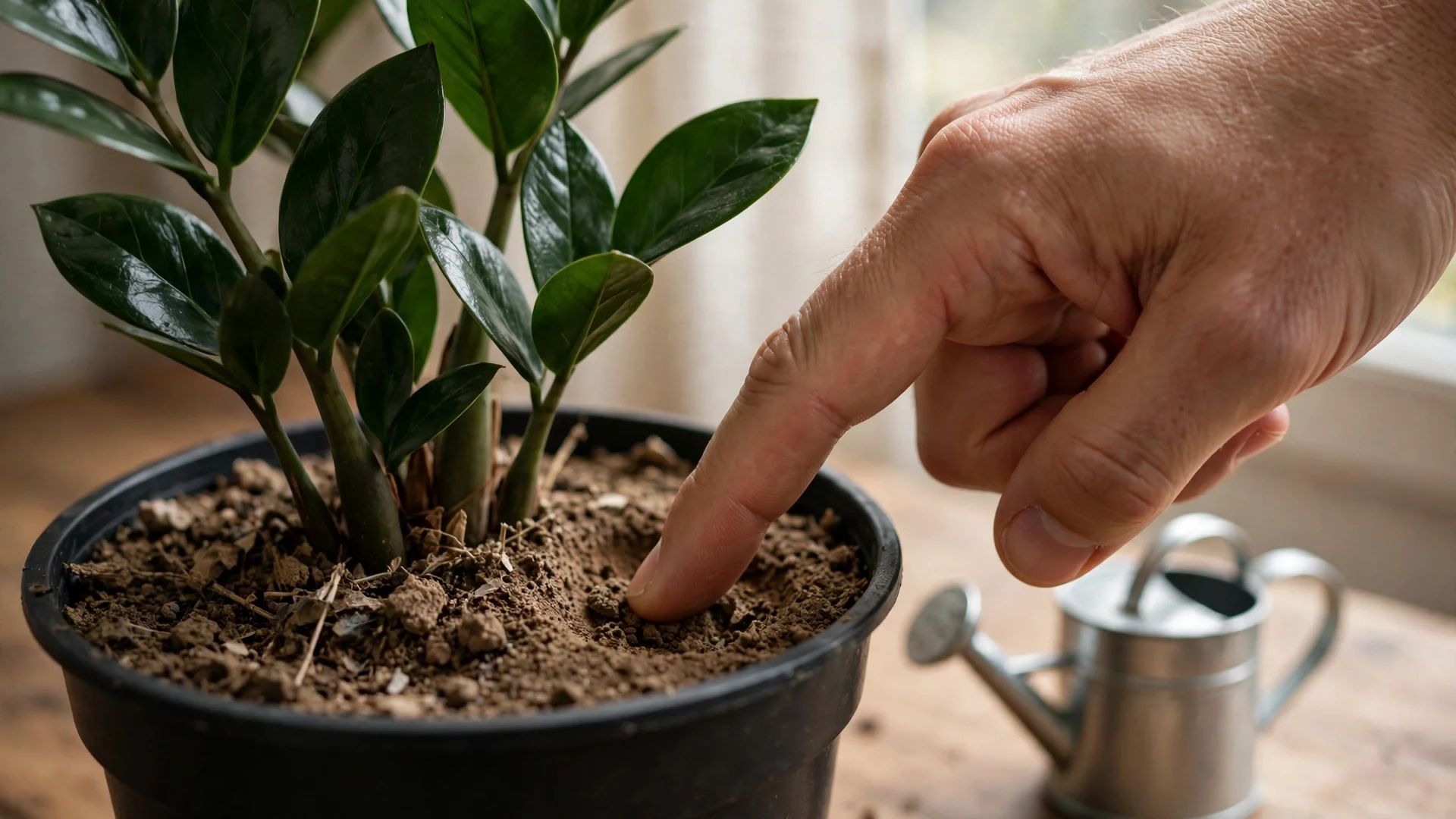
Water a ZZ plant only when the soil is dry all the way through, usually every 3 to 4 weeks in summer and every 6 to 8 weeks in a dim winter room. Yellowing stems or soft bases almost always mean too much water, never too little.
If you travel often or simply forget, the ZZ plant is the safer plant. If you enjoy checking and watering your plants, the pothos plant rewards that attention with visible growth.
Light: The ZZ Plant Wins the Dark Corner
Both tolerate low light, but the ZZ plant handles darker spots for longer. It keeps its deep green color in a north-facing room, a hallway, or a bathroom with a small window. Growth slows to a crawl there, but the plant stays alive and attractive.
A pothos plant also survives low light, but it pays a price: vines stretch long and sparse, and variegated types lose their cream patterns and turn plain green. It grows fullest in bright, indirect light.
Respect one thing with both plants: low light plus normal watering equals rot risk. A plant that barely grows uses barely any water, so cut watering back when the room is dim.
Growth and Shape Over Time
A ZZ plant grows 2 to 3 feet tall and stays upright and symmetrical, which suits a floor pot beside furniture. A pothos plant trails 6 to 10 feet from a hanging basket or climbs a moss pole if given support, which suits shelves and hanging spots where you want greenery to spill downward.
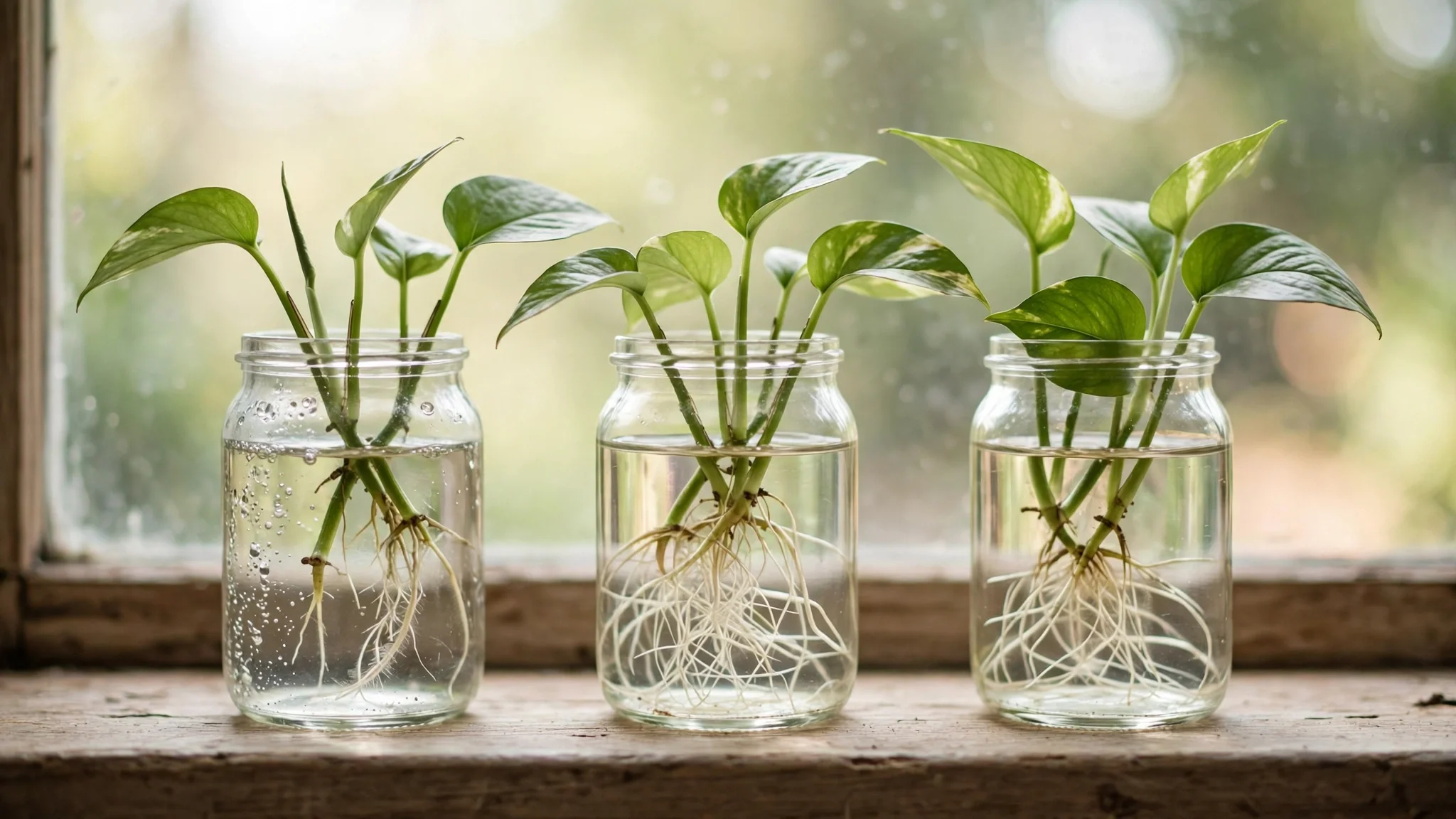
Fast growth needs management: pothos vines get leggy and bare at the base over time, so prune every few months. The cuttings root in water, the easiest propagation most beginners will ever try.
Head-to-Head Comparison Table
| Feature | ZZ Plant | Pothos Plant |
|---|---|---|
| Scientific name | Zamioculcas zamiifolia | Epipremnum aureum |
| Watering | Every 3-4 weeks, when soil is dry all the way through | Every 1-2 weeks, when top 1-2 inches of soil are dry |
| Low-light tolerance | Excellent, keeps color in dim rooms | Good, survives but stretches and loses variegation |
| Growth rate | Slow, a few stems per season | Fast, several feet of vine per season |
| Shape | Upright, arching, 2-3 ft | Trailing or climbing, 6-10 ft vines |
| Pruning needs | Almost none | Regular pruning to stay full |
| Propagation | Slow: cuttings take months | Fast: cuttings root in water in 1-3 weeks |
| Pet safety | Irritating if chewed (calcium oxalate) | Toxic to cats and dogs (calcium oxalate) |
| Best placement | Floor pots, dark corners, offices | Shelves, hanging baskets, moss poles |
| Main risk | Overwatering and rot | Leggy vines and underwatering stress |
Pet Safety: Neither Plant Is Chew-Safe
The pothos plant is listed as toxic to cats and dogs by the ASPCA because it contains insoluble calcium oxalate crystals (ASPCA toxic and non-toxic plants database). The ZZ plant is not on the ASPCA list, but it also contains calcium oxalate and irritates the mouth and throat on contact. My guide on whether pothos plants are toxic to cats and dogs covers symptoms and safer alternatives in full. Keep either plant on a high shelf or in a room your pet cannot enter.
Propagation: Pothos Is Faster by Months
A pothos cutting roots in water in 1 to 3 weeks, which my guide on how to propagate a pothos plant covers step by step. ZZ plant stem cuttings root in 1 to 2 months, and new shoots can take 6 months or more to appear. If free plants are part of the fun, get the pothos plant.
Which One Should You Choose?
Choose the ZZ plant if your room is dim, you travel or forget waterings, and you want a tidy floor plant.
Choose the pothos plant if your shelf or hanging spot gets decent light, you enjoy weekly plant care, and you want fast growth plus free cuttings.
Both? They make a good pair in one room. Use the ZZ plant as the upright anchor on the floor and the pothos plant as the trailing accent above it, in separate pots, since the pothos plant needs water roughly twice as often. For a complete routine, my ZZ plant care guide and pothos plant care guide cover soil, feeding, and repotting for each plant.
The ZZ plant is the plant you can almost forget, still finding it glossy months later. The pothos plant rewards you with new vines and free cuttings when you show up weekly. Pick the one that matches your habits and your spot.
If you decide on the pothos plant, start with my pothos plant care guide. If the ZZ plant is your pick, the ZZ plant care guide covers the same ground for its simpler needs.
Which is better for a complete beginner: a ZZ plant or a pothos plant?
The ZZ plant forgives forgetful watering while the pothos plant gives faster visible progress and easier propagation.
Is a ZZ plant or a pothos plant better for low light?
The ZZ plant handles darker rooms better and keeps its color longer, while a pothos plant survives low light but grows sparse and loses variegation.
How often should you water a ZZ plant vs a pothos plant?
Water a ZZ plant every 3 to 4 weeks, only when soil is dry all the way through. Water a pothos plant every 1 to 2 weeks, when the top 1 to 2 inches of soil are dry.
Are ZZ plants and pothos plants safe for cats and dogs?
No. Pothos plants are listed as toxic to cats and dogs, and ZZ plants irritate the mouth and throat if chewed. Keep both out of reach of pets.
Can a pothos plant grow in water?
Pothos cuttings root in water in 1 to 3 weeks and can live in water for months. ZZ plants can root cuttings in water but should be moved to soil, since their rhizomes rot in standing water.
Do ZZ plants or pothos plants clean indoor air?
Both absorb small amounts of indoor gases in lab chambers, but the effect is too small to change air quality in a real room. Buy either plant for its looks and easy care.