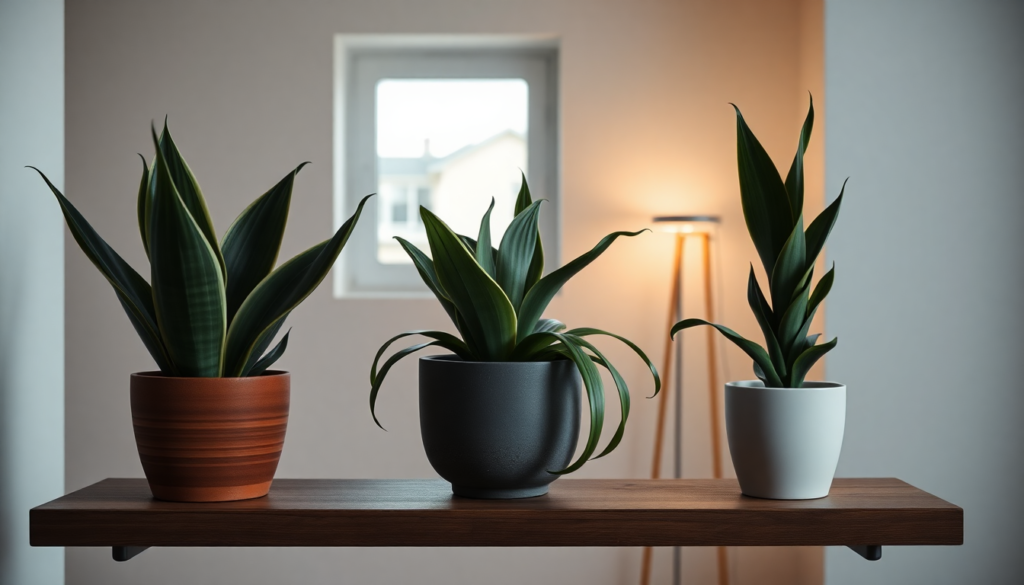
Not all snake plant varieties handle low light the same way. The label says “tolerates low light” on almost every snake plant tag at every garden center, but that label applies differently across the genus. Some varieties hold their color, structure, and slow growth in genuinely dim conditions for years. Others fade within months, losing their variegation, leaning toward any available light, and eventually declining into survival mode.
Choosing the best snake plant variety for low light is not about which plant survives the longest in a dark corner. It is about which variety maintains its appearance and health in the specific light conditions your home actually provides, without needing constant intervention.
Quick Answer
The best snake plant variety for low light is Dracaena trifasciata (standard solid green) or Zeylanica. Both have high chlorophyll density in their leaves, allowing more efficient photosynthesis in dim conditions. Futura Robusta and Bird’s Nest Hahnii are strong second choices. Avoid Moonshine and Laurentii in genuinely low light since their pale or variegated leaves contain less chlorophyll and lose their distinctive color quickly.
Quick Take Varieties with darker green leaves contain more chlorophyll, allowing them to photosynthesize more efficiently in low-light environments. This single biological fact is the most useful guide for choosing the best snake plant variety for a dim room. Solid green and dark-striped varieties like Zeylanica and standard trifasciata maintain their appearance and health at 50 to 150 foot-candles. Variegated varieties like Laurentii and Moonshine need at least 150 to 200 foot-candles to maintain their color and stay healthy over time. Low light does not mean no light. Every snake plant needs some natural or artificial light to survive.
The Chlorophyll Rule: Why It Determines Your Best Choice
The best snake plant variety for low light in your specific home comes down to one biological principle: chlorophyll density.
Varieties with darker green leaves contain more chlorophyll, allowing them to photosynthesize more efficiently in low-light environments. Chlorophyll is the pigment that absorbs light energy and drives photosynthesis. A leaf with more chlorophyll per square inch captures more photons from whatever limited light is available and converts them to the glucose the plant uses for maintaining cell pressure, root function, and slow growth.
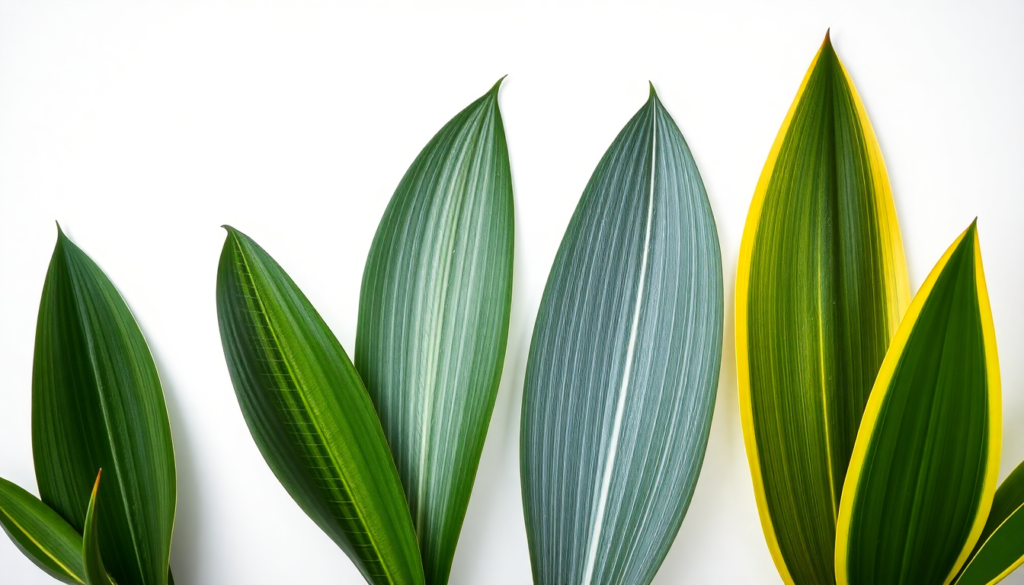
Variegated leaves contain sections with zero chlorophyll. The yellow margins of Laurentii, the pale silver sections of Moonshine, and the cream streaks of Bantel’s Sensation are all areas where chlorophyll-producing cells are absent. In bright light this is acceptable because the green sections receive enough light to compensate. In low light, the reduced green area produces insufficient energy for the plant to maintain its appearance over time. The pale sections fade further. The yellow margins on Laurentii become less vivid. Growth stops. The plant does not die quickly, but it slowly loses the traits that made you choose it.
One practical outcome worth knowing: in low light, previously variegated snake plants sometimes revert toward deeper green as the remaining chlorophyll-containing cells expand their expression in an attempt to capture more available light. This means a Laurentii in a dim room may look more like a standard trifasciata over time. Moving it to brighter light can restore some color contrast, but this process takes months.
What “Low Light” Means in Real Home Conditions
Low light in home terms means 50 to 150 foot-candles of ambient light. A north-facing room with a window typically provides 75 to 150 foot-candles during daylight hours. A room with a window but positioned 8 to 10 feet from it provides approximately 50 to 100 foot-candles. A hallway with no direct window provides 25 to 50 foot-candles.
One myth to clear up: low light does not mean no light. Every plant needs some light to survive. Low light plants simply tolerate indirect or limited light that would leave sun-lovers leggy and pale. The snake plant varieties on this list handle 50 to 150 foot-candles reliably, but none of them grow in complete darkness permanently.
The most common way to kill a low light houseplant is overwatering, not insufficient light. Plants growing slowly in dim conditions use far less water, so let the soil dry further between waterings than you would for a plant in bright light. A snake plant in a dim room may need watering every 5 to 6 weeks rather than every 2 to 3 weeks in a bright one. Following the snake plant watering schedule for each season and each light condition is the most important habit for keeping any snake plant healthy in a low light home.
7 Best Snake Plant Varieties for Low Light: Ranked and Compared
| Variety | Min. Light (FC) | Chlorophyll Level | Color Retention in Low Light | Growth in Low Light |
| Standard trifasciata | 50 | High | Excellent | Very slow but steady |
| Zeylanica | 50 | High | Excellent | Very slow but steady |
| Futura Robusta | 75 | High | Very good | Very slow |
| Bird’s Nest Hahnii | 50 | High (compact) | Good | Minimal but stable |
| Black Coral | 75 | Very high | Very good | Very slow |
| Whitney | 100 | Moderate | Acceptable | Minimal |
| Futura Superba | 100 | Moderate | Acceptable | Minimal |
| Laurentii | 150 | Moderate (margins absent) | Poor, margins fade | Near zero |
| Moonshine | 200 | Low | Poor, silver fades to green | Near zero |
Variety 1: Standard Dracaena trifasciata (The Most Reliable Choice)
The standard solid green Dracaena trifasciata, sometimes sold simply as mother-in-law’s tongue without a cultivar name, is the best snake plant variety for genuinely low light conditions because its fully green leaves contain the highest chlorophyll density of any commonly available snake plant. There are no yellow margins, no pale silver sections, no white streaks reducing the light-capturing surface. Every cell in the leaf that can contain chlorophyll does.
In 50 to 75 foot-candle conditions where most variegated varieties begin declining, standard trifasciata maintains its deep green color and upright posture. Growth slows to almost nothing in these conditions, which is expected and not a sign of decline. The plant holds its structure and color for years in a dim room rather than months. It is not the most visually striking variety in a well-lit room. In a dark room where striking varieties fade, it is the most reliable choice. Refer to the snake plant care complete guide for the full care requirements that apply to standard trifasciata as the baseline variety.
Variety 2: Zeylanica (Best for Visual Interest in Low Light)
The Zeylanica is the blueprint for snake plants. It features long, sword-like leaves with dark green and silver-grey horizontal striping across the full leaf surface. This patterning is a stable species characteristic rather than chimeric variegation, which means it persists across a wider range of light conditions than the gold margins of Laurentii or the silver tone of Moonshine.
In low light, Zeylanica’s dark green base color maintains efficient photosynthesis while its visible horizontal striping continues to provide decorative interest that makes it a more attractive low-light choice than plain green trifasciata for most home environments. It handles 50 to 100 foot-candle conditions without the fading that affects variegated cultivars, grows slightly taller than compact varieties at up to 2.5 to 3 feet, and suits both floor positions and mid-height shelf placement in dim rooms. Its banding is preserved through leaf cuttings unlike Laurentii, making propagation easier if you want to expand your collection. Refer to the black coral vs zeylanica snake plant guide for a direct comparison of these two dark-leafed varieties and how they perform differently in low light conditions.
Variety 3: Futura Robusta (Best for Dim Rooms With No Direct Window)
Futura Robusta is one of the most low-light tolerant varieties in the entire Dracaena trifasciata cultivar range. Its wide, silvery-gray leaves with subtle dark horizontal banding contain a high chlorophyll concentration despite their lighter appearance because the silvery tone comes from specialized epidermal cells that reflect light inward rather than from reduced chlorophyll content.
It handles 75 to 100 foot-candle conditions particularly well and is one of the few snake plant varieties that produces visible new growth even in rooms with no direct window access, provided some ambient daylight reaches the room during the day. Its manageable size of 16 to 20 inches at maturity suits shelf positions in dim living rooms and bedrooms where taller varieties would look proportionally overwhelming. The best large snake plant varieties for low light are Sansevieria Laurentii, Black Coral, and Zeylanica, but for compact low-light performance Futura Robusta is a stronger everyday choice than any of those three.
Variety 4: Bird’s Nest Hahnii (Best for Small Dim Spaces)
Bird’s Nest Hahnii grows in a tight compact rosette that reaches only 6 to 10 inches at full maturity, which makes it the best snake plant variety for small dim spaces like bathroom shelves, desktop corners, and low-light bedroom side tables where taller varieties are impractical.
Its dark green leaves in a compact rosette form contain sufficient chlorophyll to maintain stable health in 50 foot-candle conditions. It does not grow quickly in low light, adding perhaps 1 to 2 inches per year in dim conditions, but it holds its form and color reliably without the fading or leaning that affects taller varieties in the same conditions. The compact rosette shape also means it does not lean toward light sources as dramatically as upright sword-leafed varieties, reducing the rotation requirement that taller varieties need in dim rooms. Refer to the small snake plant varieties for apartments guide for the complete list of compact varieties suited to small, dim apartment spaces.
Variety 5: Black Coral (Best for Moody or Dark-Toned Interiors)
Black Coral (Dracaena trifasciata ‘Black Coral’) features very dark, near-black deep green leaves with faint silvery horizontal banding. The extreme darkness of the leaf coloring is not an absence of chlorophyll but the opposite: a very high concentration of chlorophyll pigments that absorb nearly all visible light wavelengths. This high chlorophyll density makes Black Coral one of the more efficient low-light performers among upright trifasciata cultivars.
In dim rooms, Black Coral’s near-black coloring creates a dramatic visual effect against light walls that lighter-colored varieties cannot match. The dark leaves absorb whatever ambient light is available more effectively than gray-green or silver varieties. It suits the moody, dark-toned interior aesthetic that has grown popular in modern USA homes specifically because its best qualities show most strongly in the lower-light conditions that this style typically creates.
What to Avoid: Varieties That Struggle in Low Light
Moonshine and Laurentii are two of the most popular snake plant varieties and two of the worst choices for genuinely low light conditions.
Moonshine’s pale silvery-sage color comes from reduced chlorophyll density across the entire leaf surface. In bright indirect light this creates a striking luminous appearance. In low light, the plant cannot generate enough photosynthetic energy from its pale leaves to maintain healthy function. Moonshine’s pale colouring is light-dependent. In low light, new leaves darken to standard green over time, losing the signature silvery tone. A Moonshine in a dim room loses its most distinctive trait within a growing season. Refer to the moonshine vs Laurentii snake plant guide for the full comparison of how both varieties behave in different light conditions.
Laurentii’s yellow margins reduce total photosynthetic capacity because those cells contain no chlorophyll. In adequate bright indirect light this is offset by the large total leaf surface area. In low light (below 150 foot-candles), the remaining green tissue cannot generate enough energy to maintain plant health and margin vibrancy simultaneously. The yellow margins fade toward cream and eventually toward white as the plant deprioritizes pigment production in favor of basic cellular maintenance.
Room-by-Room Variety Recommendation
Different rooms in a typical USA home provide different light levels. This practical guide matches the best snake plant variety to each room type.
A north-facing living room with ambient daylight but no direct sun (75 to 100 foot-candles) suits Zeylanica or Futura Robusta placed within 4 to 6 feet of the window. Both maintain good appearance at this light level and add visual interest without requiring supplemental lighting.
A bedroom with a small window or curtained window (50 to 75 foot-candles) suits standard trifasciata or Black Coral. Both maintain their appearance reliably at these low levels. Avoid placing any snake plant more than 8 to 10 feet from the window in a bedroom without adding a grow light.
A bathroom with a small frosted window (50 to 100 foot-candles ambient) suits Bird’s Nest Hahnii for shelf positions and standard trifasciata for floor positions. The slightly higher humidity of a bathroom does not harm snake plants but does not provide the tropical environment that fern or calathea species need.
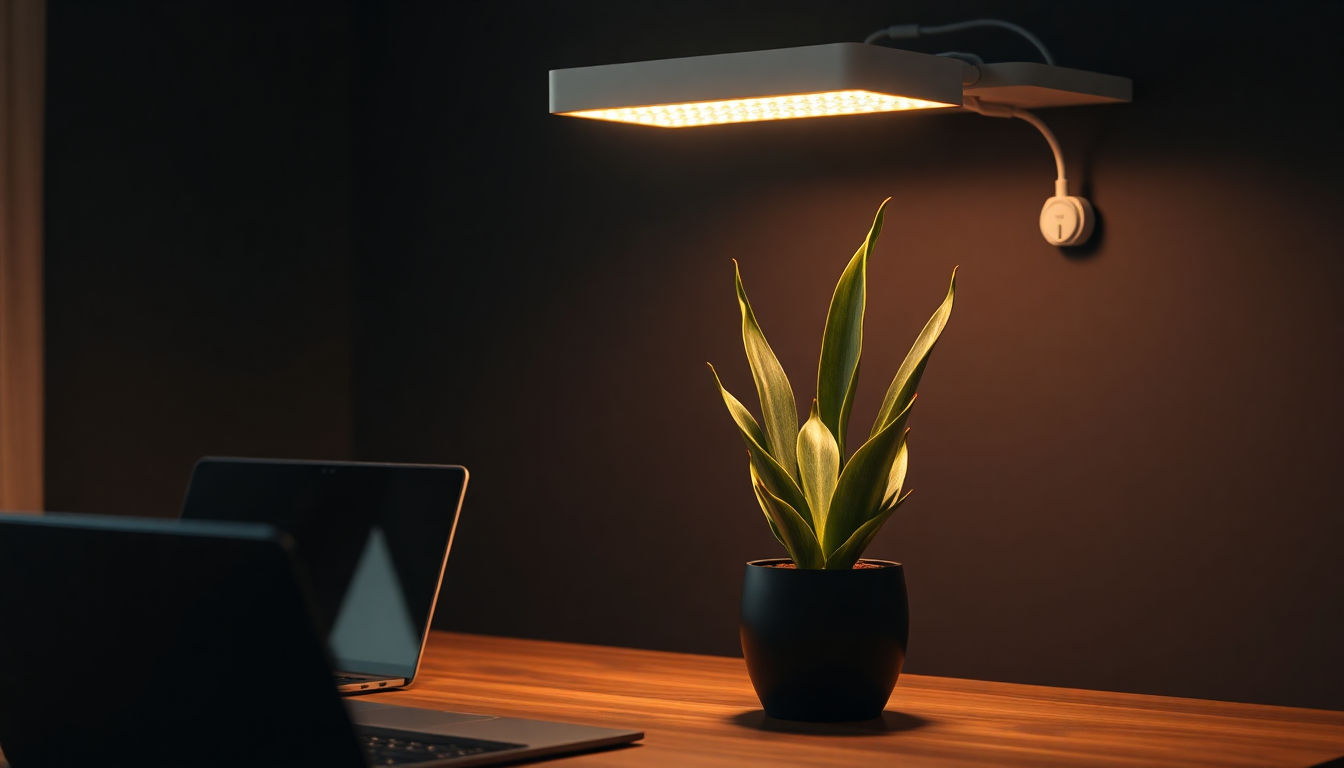
A home office or hallway with no direct window (25 to 50 foot-candles) requires a full-spectrum LED grow light for any snake plant to maintain health beyond 3 to 4 months. In these conditions, a grow light running 10 to 12 hours per day on a timer raises effective light levels enough for standard trifasciata or Futura Robusta to thrive. Refer to the can snake plants live without sunlight guide for the complete breakdown of what happens in genuinely dark conditions and how to use artificial lighting to compensate.
How to Keep Any Snake Plant Healthy in Low Light
Whichever variety you choose, three adjustments improve performance in low light conditions beyond simply picking the right variety.
Reduce watering frequency significantly. Plants growing slowly in dim conditions use far less water than plants in bright light. The same soil that dries in 2 to 3 weeks near a bright window takes 5 to 8 weeks to dry at the same depth in a dim room. Watering on a summer schedule in a dim room is the fastest way to cause root rot in an otherwise healthy plant.
Clean the leaves monthly. Dust accumulates on upright snake plant leaves and physically blocks the light reaching the chlorophyll. A monthly wipe with a soft damp cloth removes this layer and measurably improves the plant’s light capture efficiency without changing its position or the light source.
Add a grow light if multiple plants show signs of light deficiency: pale new leaves, leaning, no growth across a full growing season, or color loss in variegated varieties. A basic full-spectrum LED on a 10 to 12 hour timer raises effective light levels in any room to the range where snake plants grow rather than merely survive.
Frequently Asked Questions
What is the best snake plant variety for low light? Standard Dracaena trifasciata and Zeylanica are the best snake plant varieties for low light because their dark, fully green or dark-striped leaves contain the highest chlorophyll density among commonly available varieties. Higher chlorophyll density means more efficient photosynthesis in dim conditions. Futura Robusta and Bird’s Nest Hahnii are strong alternatives for smaller spaces or dim rooms with some ambient daylight.
Can Laurentii grow in low light? Laurentii tolerates low light for a period but its yellow margins, which contain no chlorophyll, reduce its total photosynthetic capacity compared to solid green varieties. In genuinely dim conditions below 150 foot-candles, the margins fade, growth stops, and the plant gradually loses the distinctive yellow edges that make it worth choosing. Standard trifasciata or Zeylanica are better low light choices.
Why does my snake plant lose color in a dark room? Snake plant color loss in low light happens for two reasons. In variegated varieties like Laurentii and Moonshine, the plant deprioritizes pigment production in low-energy conditions and the distinctive colors fade toward plain green as the remaining chlorophyll-containing cells try to compensate for insufficient light. Moving the plant to brighter light can restore some color, but recovery takes several months.
How much light does a snake plant need in a dim room? Snake plants need a minimum of 50 foot-candles of ambient light to survive long-term in any room. For the best snake plant variety choices to maintain their appearance rather than just survive, 75 to 150 foot-candles is the practical target. A north-facing room with a window typically provides this range during daylight hours. Rooms with no window access require a grow light.
Does a grow light help snake plants in dark rooms? Yes. A full-spectrum LED grow light running 10 to 12 hours per day on a timer raises effective light levels in any room to the range where snake plants grow actively rather than surviving on reserves. For the best results in a dark room, choose standard trifasciata or Futura Robusta as your variety and position the grow light 12 to 18 inches above the plant.
Which snake plant variety is best for a north-facing room? Zeylanica and Futura Robusta are the best snake plant variety choices for north-facing rooms. Both handle the 75 to 150 foot-candle range that north-facing windows typically provide without losing their color or structural integrity. Place either variety within 4 to 6 feet of the window for best results.