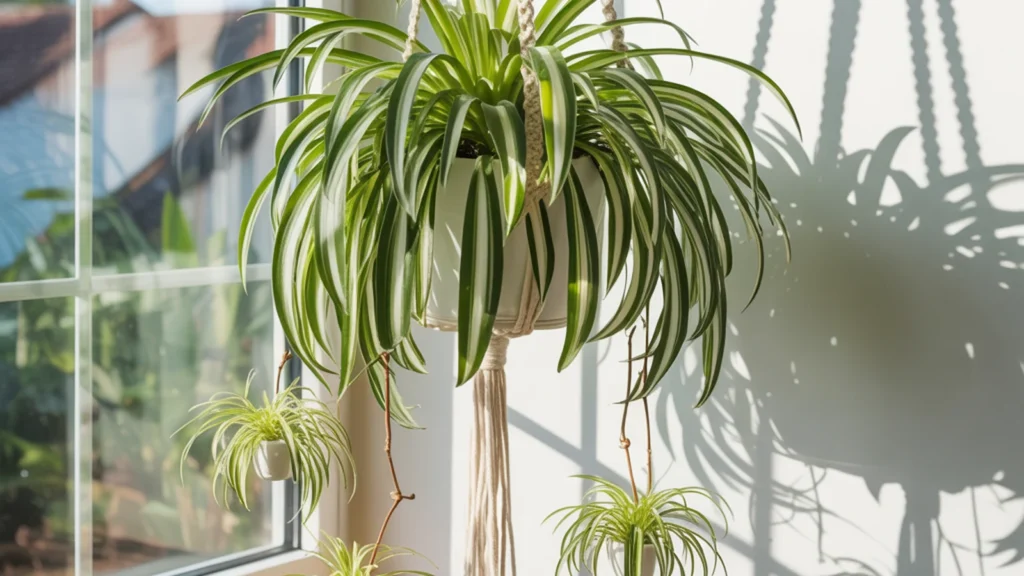
Spider plant temperature tolerance is wide for a houseplant, but it has clear limits at both ends. Clemson Extension lists 65 to 75°F (18 to 24°C) during the day and 50 to 55°F (10 to 13°C) at night as ideal. NC State Extension sets the lower limit at above 45°F (7°C).
Below that limit, cold can damage the leaves, and frost at 32°F (0°C) can injure the plant badly. At the warm end, UF/IFAS Gardening Solutions treats temperatures above 80°F (27°C) as too warm. This guide explains each threshold, the damage signs to watch for, and what to do after a cold night or hot spell.
The Ideal Temperature Range for a Spider Plant
Spider plants grow best at 65 to 75°F (18 to 24°C) during the day, with nights around 50 to 55°F (10 to 13°C). That night drop is normal for this plant and is not a problem. A heated living room in winter and an air conditioned room in summer both sit inside this range.
Steady temperatures matter as much as the average. A plant that swings between a hot afternoon and a cold night works harder than one held at a steady reading. Keep the basic routine from our complete spider plant care guide in place, and temperature stays the easiest part of care.
Spider plant (Chlorophytum comosum) comes from tropical West Africa and southern Africa, per NC State Extension. The plant is built for mild warmth, tolerates cool nights, and has no adaptation for frost.
Spider Plant Temperature Tolerance: Reading the Thresholds
Extension sources do not all draw the line in the same place, because they answer different questions. Clemson describes the ideal range. UF/IFAS describes the comfort window, calling anything below 55°F (13°C) too cool and anything above 80°F (27°C) too warm. NC State gives the floor to stay above, 45°F (7°C).
Read the thresholds this way. Plan around 55°F (13°C) as the practical lower limit for everyday placement. Treat 45°F (7°C) as the floor you do not test, not as a target the plant enjoys.
| Temperature at the plant | What the sources support | What to do |
|---|---|---|
| 65 to 75°F (18 to 24°C) by day | Ideal daytime range (Clemson) | Nothing to fix |
| 55 to 80°F (13 to 27°C) | Comfort window (UF/IFAS) | Normal care |
| 45 to 55°F (7 to 13°C) | Too cool per UF/IFAS, above the NC State floor | Move the plant to a warmer spot |
| Below 45°F (7°C) | Below the NC State minimum | Move it somewhere warmer the same day |
| 32°F (0°C) or below | Frost, protect the plant from it (UF/IFAS) | Bring it indoors before this happens |
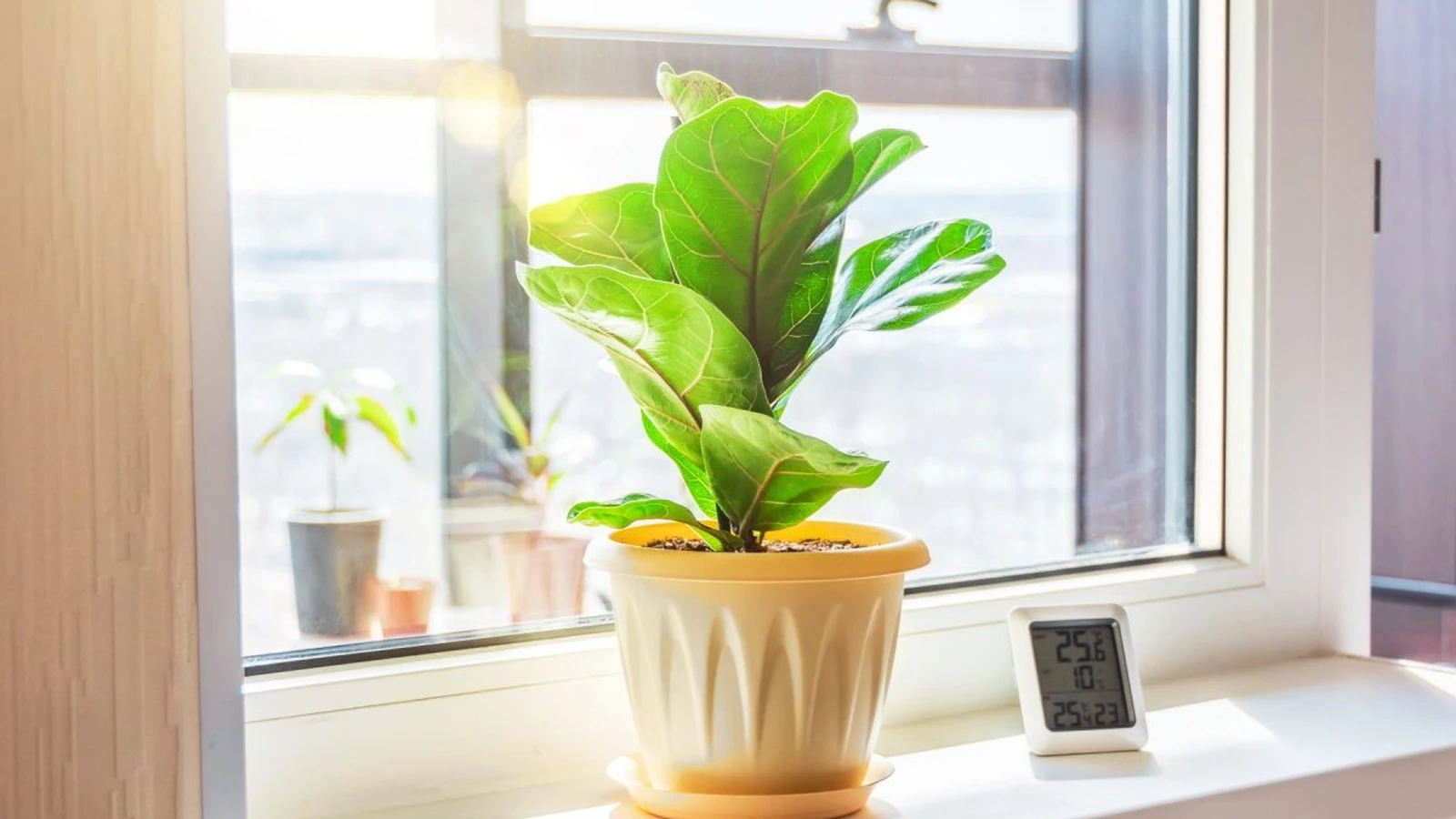
Measure where the leaves sit, not where the thermostat sits. A windowsill on a winter night can run far colder than the room behind it. A basic thermometer left beside the pot overnight gives you the low reading that matters.
What Happens When a Spider Plant Gets Too Cold
Cool Rooms and Slow Growth
A spider plant in a cool room usually slows down before it shows damage. Growth pauses, new leaves come in slowly, and the plant produces fewer plantlets. Check the temperature at leaf level before changing anything else.
If the reading sits between 45 and 55°F (7 to 13°C), the plant is below the comfort window UF/IFAS describes. It may hold on there for a while, but it is not growing conditions. Moving it a few feet into the room often fixes the reading.
Cold Damage and Frost
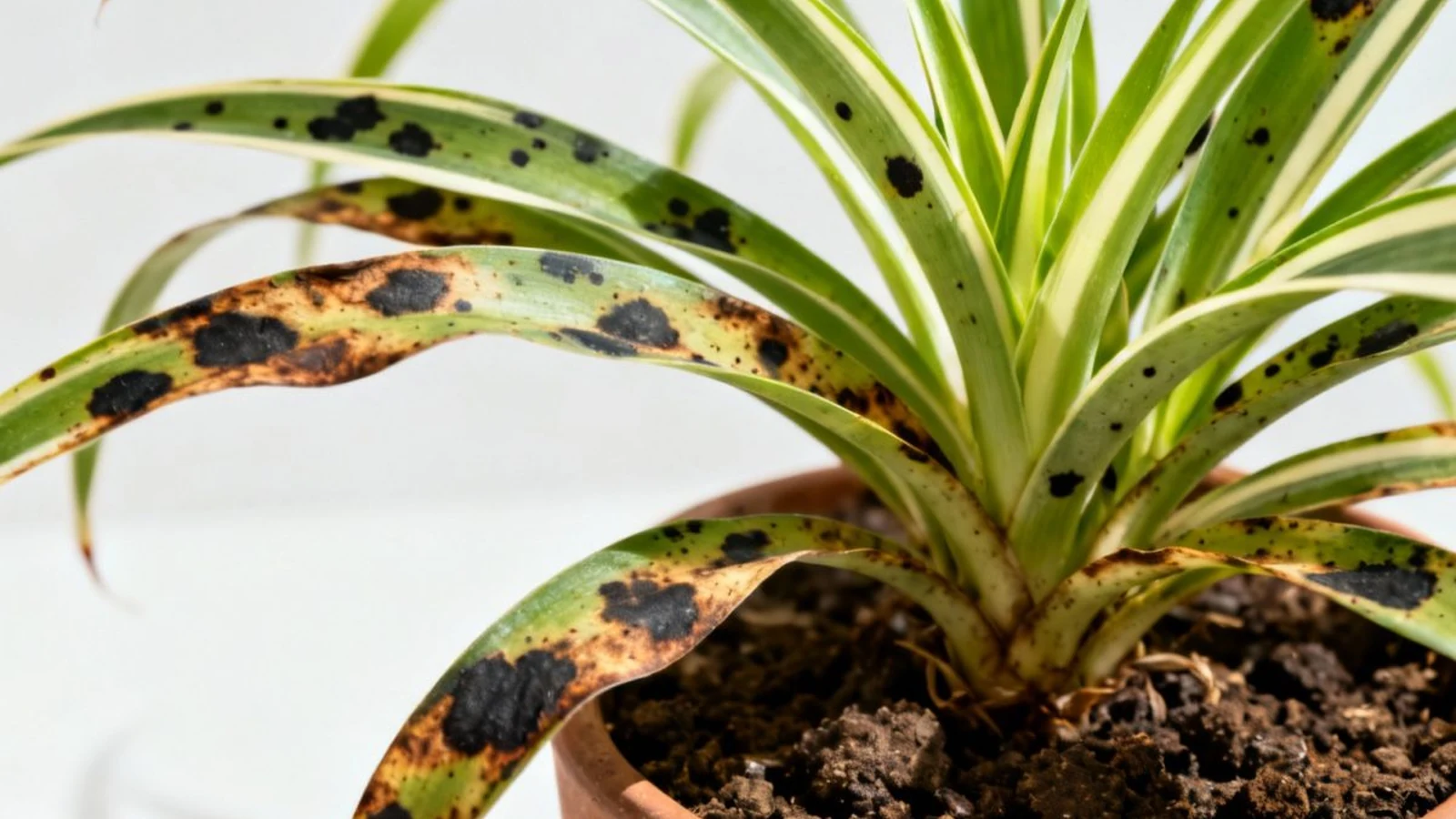
Damage becomes more likely as temperatures fall below the NC State floor of 45°F (7°C). Leaves closest to cold glass or a draft are usually hit first. Darkened tips and edges, limp foliage and leaves that stop holding their arch are the usual signs.
Frost is the hard limit. Freezing temperatures can rupture leaf cells, and thawed tissue often turns soft, dark and water soaked. UF/IFAS advises protecting spider plants from frost, and NC State lists the plant as hardy outdoors only in USDA zones 9 to 11, where hard freezes are rare.
A plant left outside in autumn needs to come in before nights approach the floor, not after the first frost warning. Check the forecast for your area, and bring the pot in while nights are still reliably above 55°F (13°C).
Heat Stress Signs in a Spider Plant
UF/IFAS treats anything above 80°F (27°C) as too warm for a spider plant. Warm rooms also dry the soil faster, so a plant in a hot spot needs its soil checked more often. The leaves lose water faster than the roots can replace it, and the foliage shows the strain first.
Heat stress signs include wilting during the hottest part of the day, leaf edges turning dry and brown, and faded or pale striping. Clemson notes that low humidity and dry soil can also cause brown leaf tips, so heat damage and dry air damage often arrive together in a heated or sun baked room.
Direct sun is a separate problem that heat makes worse. NC State lists spider plant as intolerant of direct sunlight, and Clemson warns that midday sun can scorch leaves. Pale, bleached patches on the sun facing side point to light, not air temperature, so check our guide to the best light for spider plant before you move the plant twice.
Temperature Damage Signs on Leaves
Match the symptom to the conditions around the plant before you act. Temperature damage overlaps with watering and water quality problems, so the check column matters as much as the symptom.
| Symptom | Possible temperature related cause | Check first |
|---|---|---|
| Soft, dark, mushy leaves after a cold night | Possible frost or near freezing exposure | The overnight low beside the pot |
| Brown, crispy leaf tips in winter | Possible dry heated air and low humidity | Distance from radiators and heating vents |
| Pale leaves and no new growth | Room may be persistently too cool | A thermometer reading at leaf level over 2 to 3 days |
| Bleached patches on one side of the plant | Possible sun scorch in a hot bright spot | Midday sun hitting that side |
| Leaves curling inward | Possible heat or cold stress | Temperature first, then soil moisture |
Brown tips alone do not prove a temperature problem. Fluoride and chlorine in tap water and fertilizer salts can brown tips too, which our guide to spider plant brown tips covers. Yellowing has its own set of causes, covered in our spider plant yellow leaves guide.
Curling also has more than one cause, and temperature is only one possibility. If the temperature reading is inside the ideal range, work through the other causes in our spider plant leaves curling guide before treating the plant.
What to Do After Cold or Heat Damage
Move the plant first. Put it in a spot that holds the ideal range, away from the window, vent or radiator that caused the problem. Do not place a cold damaged plant directly against a heat source to warm it up, because a sudden swing adds more stress.
Wait before you trim. Cold and heat damage can keep appearing for a few days after the event, as injured tissue darkens. Once the damage stops spreading, cut fully dead leaves at the base with clean scissors. For a leaf with only a damaged tip, you can trim the dead part and leave the green section.
Hold the fertilizer. A stressed plant is not growing, and fertilizer salts can add to tip burn. Water on the normal routine instead, letting the soil dry slightly between waterings, as Clemson advises for healthy plants.
Watch the crown, the center where new leaves emerge. New growth from the crown is the sign that the growing point survived. Leaves that turned fully soft or black will not turn green again, so judge recovery by new leaves, not by the damaged ones.
If weeks pass with no new growth in good conditions, the problem may not be temperature at all. Our spider plant not growing guide works through the other causes, from light to root problems.
Where to Place a Spider Plant for Stable Temperatures
Keep the plant a few feet back from windows in winter. Clemson gives this advice directly, because glass and drafts make the sill the coldest spot in the room. A plant that sits against single pane glass on a freezing night can be in frost range while the room reads fine.
Keep it out of the air paths in the room. Heating vents, radiators, air conditioning vents and frequently opened exterior doors all create swings. A hanging basket near a ceiling can run warm in a heated room, since warm air rises and collects.
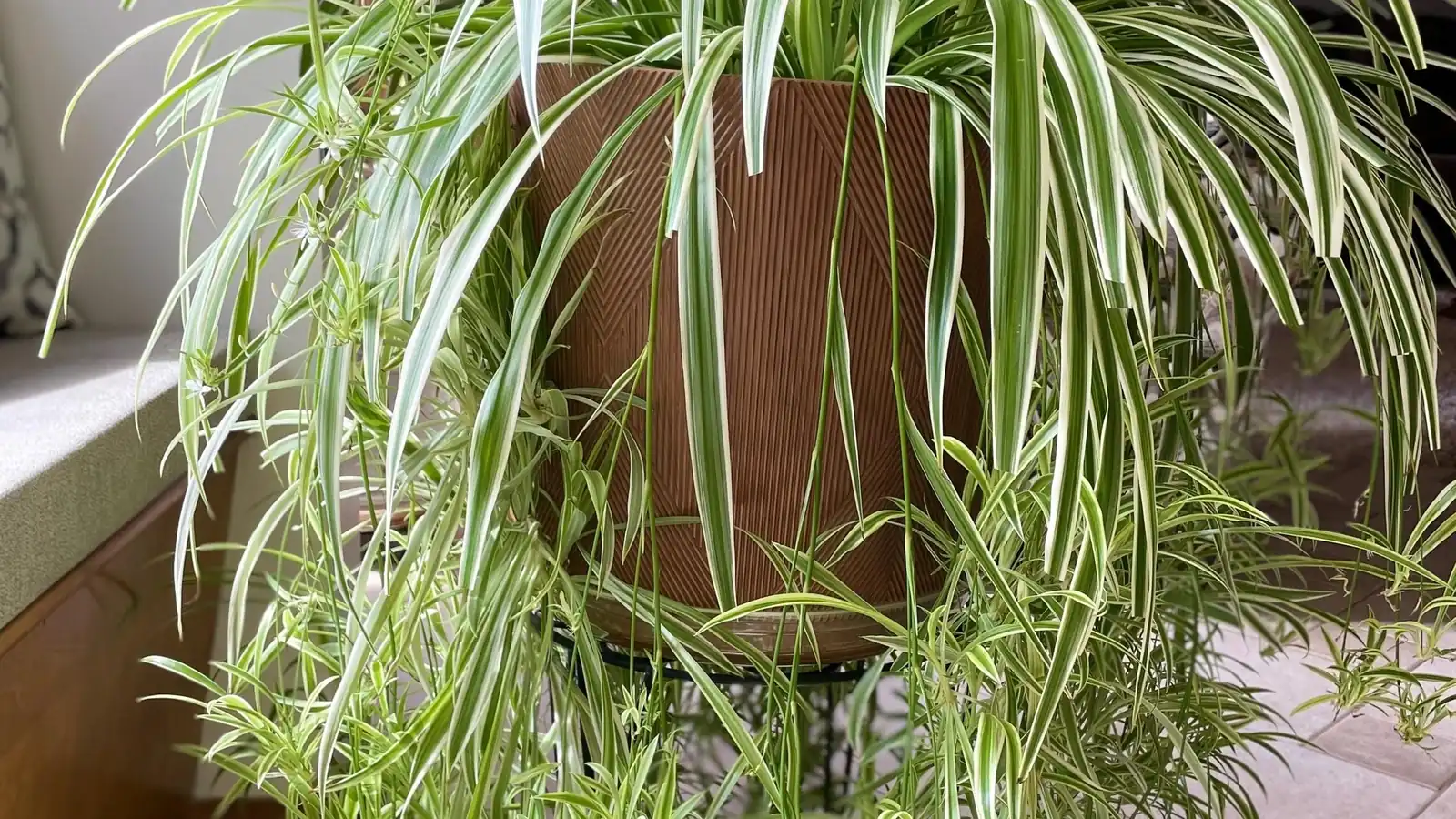
Summer outdoors is fine in shade once nights stay mild. Wisconsin Extension suggests setting the plant outside after the last frost, out of full sun. Bring it back in early in autumn, inspect the leaves for pests before it rejoins your other houseplants.
Conclusion
Spider plant temperature tolerance comes down to three numbers. Aim for 65 to 75°F (18 to 24°C) by day, plan around 55°F (13°C) as the practical lower limit, and never let the plant sit below 45°F (7°C) or in frost. Above 80°F (27°C), watch for wilting, dry edges and faster drying soil.
Placement is where temperature problems start, and placement is where you prevent them. A thermometer at leaf level and a spot away from glass, vents and radiators prevent nearly all of them. For the rest of the routine, watering, light and feeding, follow our complete spider plant care guide.
Frequently Asked Questions
What is the minimum temperature for a spider plant?
Sources differ, so plan with both numbers. NC State Extension says to keep spider plants above 45°F (7°C). UF/IFAS calls anything below 55°F (13°C) too cool. Use 55°F (13°C) as your everyday lower limit and 45°F (7°C) as the floor.
Can a spider plant survive frost?
Frost can seriously injure a spider plant, and UF/IFAS advises protecting it from frost. Freezing can rupture leaf cells, leaving soft, dark foliage. A plant may regrow from the crown after light exposure, but survival is not guaranteed, so bring it in before frost.
How cold can a spider plant tolerate outdoors?
Bring an outdoor spider plant in while nights are still reliably above 55°F (13°C). Do not wait for the 45°F (7°C) floor. Only in USDA zones 9 to 11, where NC State lists the plant as hardy, can it stay outside all year.
How do I help a cold damaged spider plant?
Move it into the ideal range, away from the cold source, and do not warm it against a radiator. Wait until the damage stops spreading, then trim fully dead leaves at the base. Hold fertilizer, water on the normal routine, and watch for new growth from the crown.
What temperature is too hot for a spider plant?
UF/IFAS treats temperatures above 80°F (27°C) as too warm. Signs include wilting in the heat of the day, dry brown leaf edges and soil that dries out fast. Move the plant out of the hot spot and check whether direct sun is part of the problem.
Should I move my spider plant away from the window in winter?
Yes, a few feet is enough in most rooms. Clemson advises moving spider plants a few feet from windows in winter to protect them from drafts. The air beside cold glass can be far colder than the room, especially at night.