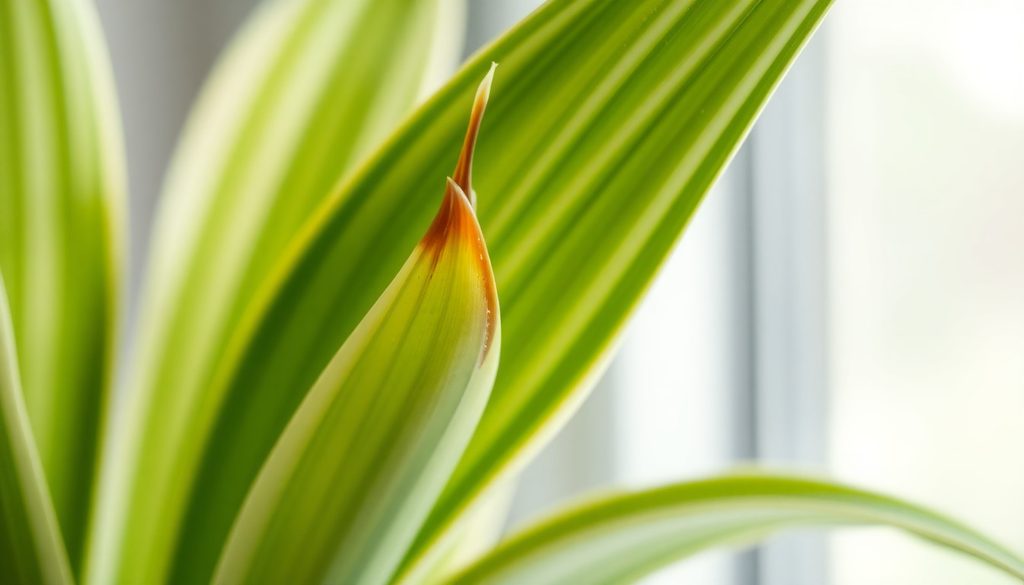

Spider plant brown tips rank among the most common complaints with this plant, and while the crispy brown edges look alarming, the cause almost always turns out to be minor and easy to fix. Chlorophytum comosum reacts to small stressors like water quality and humidity by browning at the leaf tips first, long before any other part of the plant shows a problem, which makes this an early warning sign rather than a serious issue.
Quick Answer
Spider plant brown tips most often come from fluoride or chlorine in tap water, low humidity, fertilizer salt buildup, or underwatering. Switching to filtered water and trimming existing brown tips usually solves the problem within a few weeks.
Quick Take
Brown tips on a spider plant point to a handful of common causes: minerals in tap water, dry indoor air, too much fertilizer building up salts in the soil, or inconsistent watering that lets the roots dry out too far between waterings. None of these causes threaten the plant seriously, and trimming the affected tips improves appearance immediately while the underlying cause gets addressed. Most cases clear up within a month once the right adjustment is made.
In practice, spider plant brown tips respond well to a simple process of elimination rather than guessing at one cause. Checking the water source first, since tap water sensitivity explains the largest share of cases, narrows things down quickly. Chlorophytum comosum shows this sensitivity more visibly than most houseplants because of its fine, ribbon-like leaves, which brown at the tip well before the rest of the leaf shows any stress.
Tap Water Minerals and Fluoride Sensitivity
Spider plants show notable sensitivity to fluoride, chlorine, and chloramine commonly added to municipal tap water. These compounds build up in the soil over repeated waterings and damage the delicate tip tissue first, since that’s where water and minerals concentrate as the leaf transpires. Switching to filtered, distilled, or rainwater removes this cause entirely, and letting tap water sit out overnight before use allows some chlorine to evaporate, though it does nothing for fluoride.
Low Humidity
Spider plants tolerate average indoor humidity reasonably well, but very dry air, especially during winter heating season, dries out the thin leaf tips faster than the plant can replace moisture. Running a small humidifier nearby, grouping plants together, or setting the pot on a pebble tray with water all raise humidity enough to reduce new tip browning.
Fertilizer Salt Buildup
Feeding too often, or using a fertilizer stronger than the plant needs, leaves mineral salts behind in the soil once the plant absorbs the nutrients it can use. These salts draw moisture out of the surrounding root tissue and leaf tips through osmotic pressure, showing up as browning that often follows a feeding schedule closely. Flushing the soil thoroughly with plain water every few months clears built-up salts, and feeding at half the recommended strength reduces the problem going forward.
Inconsistent or Insufficient Watering
Letting the soil dry out completely and stay dry for extended periods stresses the plant and shows up as brown, crispy tips, particularly on older leaves. Spider plants prefer soil that dries out partway between waterings rather than swinging between fully dry and fully soaked, so a more consistent watering routine reduces this specific cause.
Root-Bound Pots
A spider plant that has outgrown its pot sometimes develops brown tips simply because the root system can no longer take up enough water and nutrients to support all the foliage above it. Checking for roots circling the bottom of the pot or pushing through the soil surface identifies this cause, and repotting into a slightly larger container resolves it.
Sunburn and Heat Stress
Direct, intense sunlight through an unfiltered window scorches leaf tips and edges, sometimes producing a browner, crispier look than water-related causes. This type of browning tends to appear on the side of the plant facing the window and often comes with some fading or bleaching nearby. Moving the plant back from direct sun prevents further damage.
Brown tips can come from several care problems, including watering, light, and environmental stress. For the full care routine that helps prevent these issues, visit our Spider Plant Care Guide for Small Homes.
Spider Plant Brown Tips at a Glance
| Cause | Pattern | Fix |
| Tap water minerals | Gradual, widespread | Switch to filtered water |
| Low humidity | Dry, crispy, common in winter | Raise humidity |
| Fertilizer buildup | Follows feeding schedule | Flush soil, feed less |
| Inconsistent watering | Older leaves first | Water more consistently |
| Root-bound pot | Widespread, with stalled growth | Repot |
| Sunburn | One side, with fading | Move back from direct sun |
How to Prevent Spider Plant Brown Tips
Preventing spider plant brown tips starts with water quality, since this cause explains the largest share of cases. Use filtered, distilled, or rainwater when possible, and feed at half strength no more than once every four to six weeks during the growing season. Keep humidity above 40 percent where practical, water consistently rather than letting the soil swing between extremes, and repot every couple of years before the plant becomes severely root-bound.
Final Takeaway
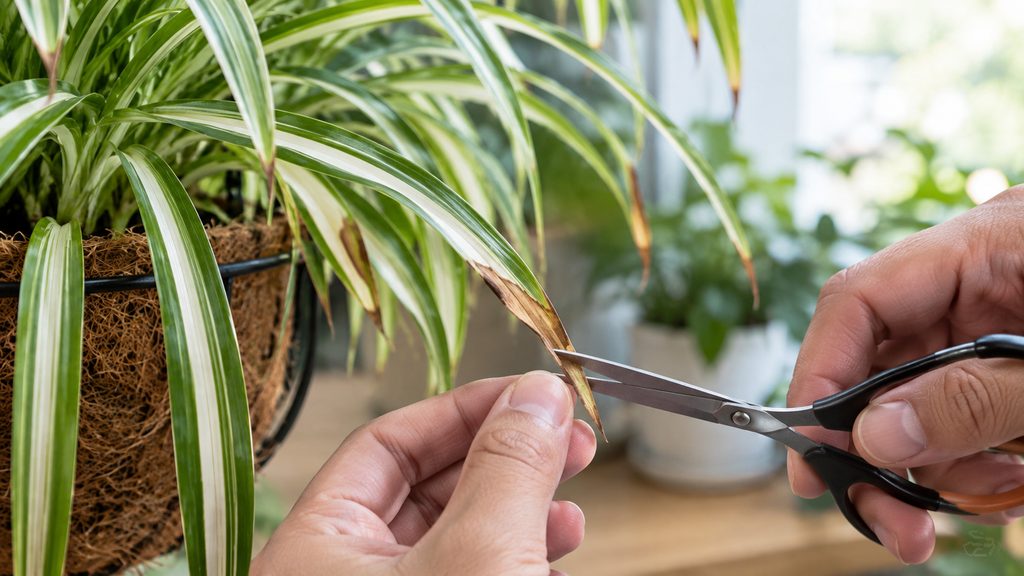
Spider plant brown tips almost always trace back to water quality, humidity, feeding, or watering consistency rather than anything serious. Trim existing brown tips with clean scissors for appearance, and address the underlying cause to stop new ones from forming. Most plants show clear improvement within a few weeks once the right adjustment sticks.
FAQ
Why does my spider plant have brown tips? Spider plant brown tips usually come from fluoride or chlorine in tap water, low humidity, fertilizer buildup, or inconsistent watering.
Should I cut off the brown tips on my spider plant? Yes, trimming brown tips with clean scissors, following the natural shape of the leaf, improves appearance without harming the plant.
Does filtered water stop spider plant brown tips? In most cases, yes, since tap water minerals cause the largest share of brown tips. Switching to filtered or distilled water often shows improvement within weeks.
Can overwatering cause brown tips on a spider plant? Overwatering more commonly causes yellow, soft leaves rather than brown tips, though root damage from overwatering can indirectly contribute to browning as well.
How long does it take for brown tips to stop appearing? Most spider plants show noticeably fewer new brown tips within three to four weeks once the underlying cause, like water quality or humidity, is addressed.
Are brown tips a sign my spider plant is dying? No, brown tips are one of the most common and least serious spider plant issues, and the plant typically stays otherwise healthy while the cause gets fixed.
Pingback: Best Light for Spider Plant: 2026 Guide
Pingback: Spider Plant Yellow Leaves: 7 Causes & Fixes (2026)
Pingback: Spider Plant for Beginners? Skip These 7 Common Mistakes
Pingback: spider plant for bathrooms and kitchens (2026)