
Spider plant yellow leaves show up for a handful of common reasons, and most of them trace back to watering, light, or simple aging rather than anything serious. Chlorophytum comosum tolerates a wide range of conditions, so yellowing usually signals one specific issue rather than general neglect, and reading the pattern on the leaf narrows down the cause quickly.
Quick Answer
Spider plant yellow leaves most often come from overwatering, tap water minerals, too much direct light, or natural aging of older leaves. Check the soil moisture and leaf location first, since these two clues point to the cause faster than anything else.
Quick Take
Yellow leaves on a spider plant usually fall into one of a few categories: soft, mushy yellowing near the base from overwatering, pale overall yellowing from too much direct sun, gradual yellowing tied to tap water minerals or fertilizer buildup, or a single old leaf yellowing slowly as part of normal aging. Matching the color, texture, and location of the yellowing to these patterns identifies the cause without much guesswork.
In practice, spider plant yellow leaves respond well to a quick process of elimination. Soft, collapsing leaves point toward a root problem almost every time, while pale, evenly yellowed leaves across the whole plant point toward too much light or a feeding issue instead. Chlorophytum comosum handles some neglect well but reacts poorly to consistently wet roots, so ruling out overwatering first catches the most common cause before moving on to lighting or water quality.
Overwatering and Root Stress
Overwatering ranks as the most common cause of spider plant yellow leaves. Soil that stays wet for days after watering starves the roots of oxygen, and a stressed root system pulls resources away from otherwise healthy leaves, showing up as soft, yellowing tissue near the base of the plant. Letting the soil dry out through the top two inches before the next watering, and making sure the pot has drainage holes, usually stops further yellowing within a couple of weeks.
Root Rot From Consistently Wet Soil
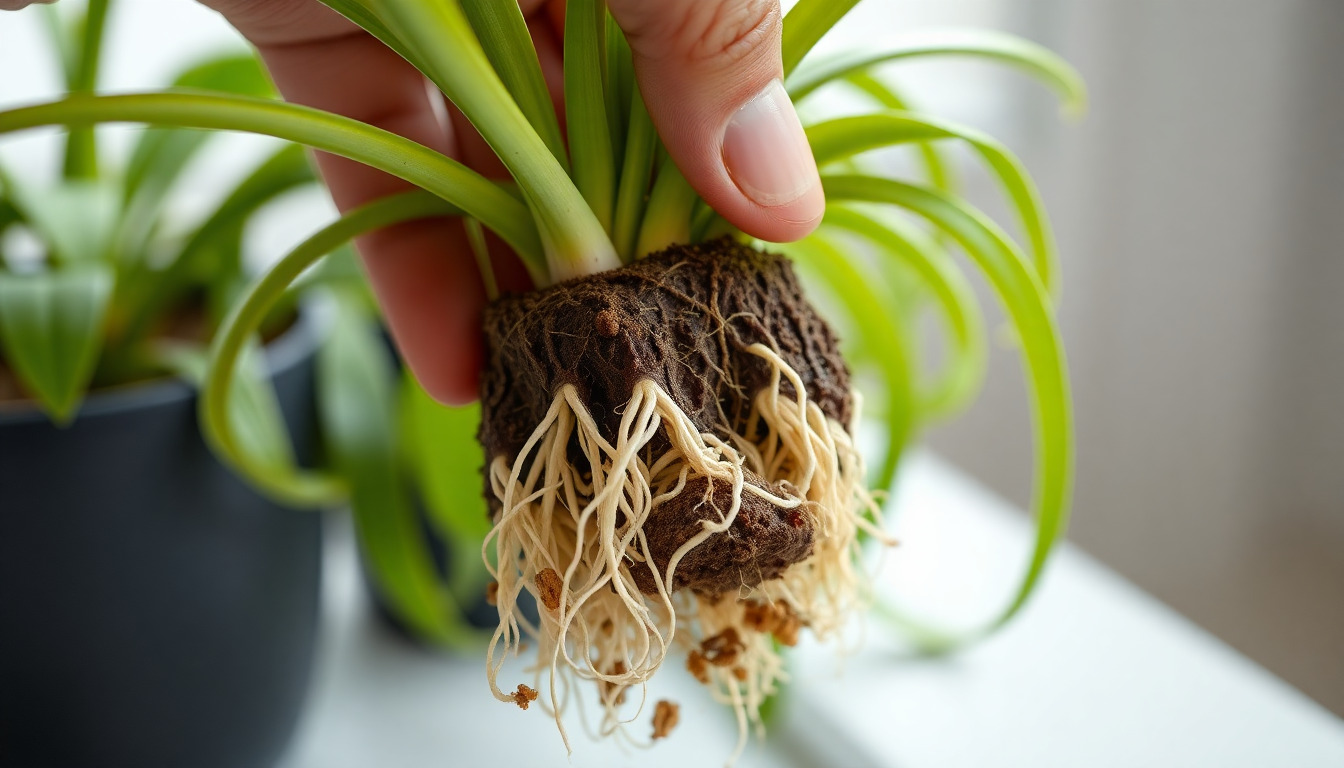
Left unchecked, overwatering progresses into root rot, and root rot pushes spider plant yellow leaves from a minor issue into a threat to the whole plant. Pulling the plant from its pot and checking the roots confirms this cause quickly: healthy roots stay firm and pale, while rotted roots turn dark, soft, and often carry a sour smell. Trimming away damaged roots and repotting into fresh, fast-draining soil gives the plant its best chance at recovery.
Too Much Direct Sunlight
Spider plants prefer bright, indirect light, and hours of direct sun through an unfiltered window scorches the leaf tissue over time. This often shows up as pale, washed-out yellowing across large sections of the leaf rather than the soft, localized yellowing seen with overwatering. Moving the plant a few feet back from the window or adding a sheer curtain to diffuse the light usually stops new damage.
Tap Water Minerals and Fertilizer Buildup
Spider plants show some sensitivity to fluoride, chlorine, and salts commonly found in tap water and standard fertilizers, and a buildup of these minerals in the soil sometimes shows up as gradual yellowing along with the more commonly known brown tip issue. Flushing the soil thoroughly with distilled or filtered water every few months helps clear built-up salts, and switching to filtered water going forward reduces the problem considerably.
Natural Aging of Older Leaves
Not every yellow leaf signals a problem. Spider plants shed their oldest leaves as part of normal growth, and this shows up as a single lower leaf slowly turning yellow over a couple of weeks before dying back completely while the rest of the plant looks healthy. This needs no intervention beyond trimming the spent leaf at the base once it turns fully yellow.
Nutrient Deficiency
A spider plant growing in the same unfed soil for years eventually runs low on nutrients, showing up as pale, uniformly yellow-green new growth rather than a sudden change in older leaves. Feeding a diluted, balanced fertilizer once during the growing season restores the nutrients needed for healthy green color, though overfeeding causes the opposite problem through salt buildup.
Spider Plant Yellow Leaves at a Glance
| Cause | Leaf Pattern | Fix |
| Overwatering | Soft, yellow near base | Let soil dry, check drainage |
| Root rot | Soft, collapsing, smelly roots | Trim roots, repot |
| Too much sun | Pale, washed out, widespread | Move back from window |
| Water/fertilizer buildup | Gradual, with brown tips | Flush soil, use filtered water |
| Natural aging | One lower leaf, slow | Trim once fully yellow |
| Nutrient deficiency | Pale new growth | Feed lightly in growing season |
How to Prevent Spider Plant Yellow Leaves
Preventing spider plant yellow leaves comes down to matching care to the plant’s real needs rather than a fixed routine. Check the soil before every watering rather than watering on a schedule, keep the plant in bright but indirect light, and use filtered or distilled water when possible to avoid mineral buildup. Feed lightly once or twice during the growing season, and repot every couple of years into fresh, well-draining soil to prevent salt accumulation over time.
Yellow leaves are often a sign that something is off with your spider plant’s care routine. For a complete overview of light, watering, soil, and general care, see our Spider Plant Care Guide for Small Homes.
Final Takeaway
Spider plant yellow leaves almost always point back to water, light, or age. Match the pattern and location of the yellowing to the likely cause, fix the root of the problem rather than just trimming the leaf, and adjust watering and light going forward. Most spider plants recover fully within a few weeks once the underlying issue gets addressed, and new growth coming in green confirms the fix worked.
FAQ
Why does my spider plant have yellow leaves? Spider plant yellow leaves most often come from overwatering, too much direct sun, tap water minerals, or natural aging of older leaves.
Should I cut off yellow leaves on my spider plant? Yes, once a leaf turns fully yellow it won’t turn green again, so trimming it at the base helps the plant direct energy toward healthy growth.
Can a spider plant recover from yellow leaves? The plant itself recovers fully once the underlying cause is fixed, though the yellow leaves themselves won’t reverse. New growth coming in green confirms recovery.
Is yellowing on one leaf something to worry about? Not usually. A single lower leaf yellowing slowly while the rest of the plant looks healthy typically points to natural aging rather than a problem.
Does tap water cause yellow leaves on spider plants? It can contribute, since fluoride, chlorine, and salts in tap water sometimes build up in the soil and cause gradual yellowing alongside brown tips.
How long does it take for a spider plant to recover from overwatering? Mild cases improve within one to two weeks once watering is reduced, while cases involving root rot take three to four weeks after trimming and repotting.