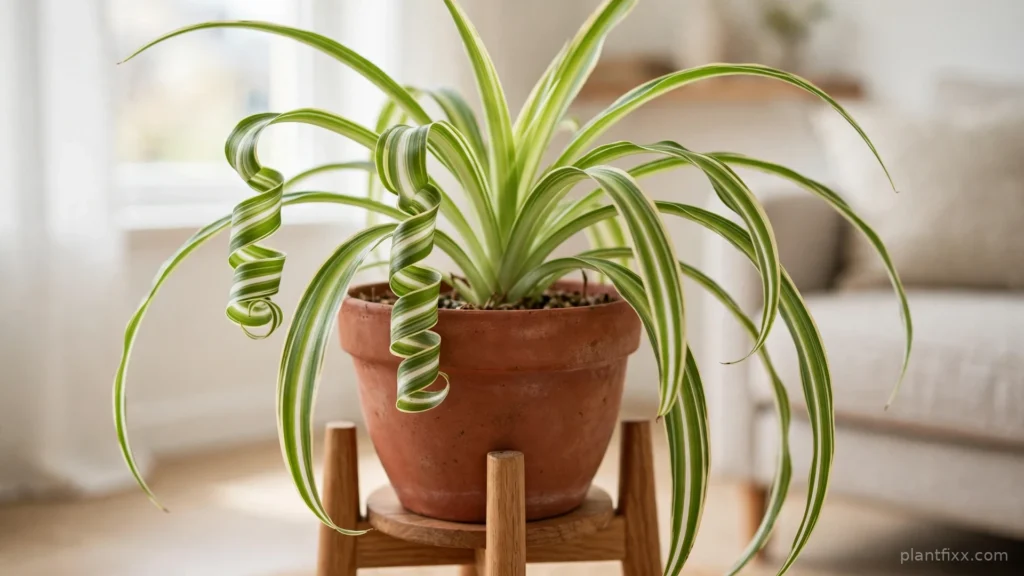
When spider plant leaves start curling, the plant is rarely being difficult. Those long striped leaves are good communicators. They fold, droop, twist and fade in fairly predictable ways, and each change points at a short list of causes.
The mistake most owners make is treating every symptom the same way. A curled leaf gets extra water, even when the soil is already wet. A pale leaf gets moved into stronger sun, even when light was never the problem. Guessing wastes the days the plant could spend recovering.
This guide works the other way around. You will match the symptom to the cause first, confirm it with a few quick checks, and then apply one fix at a time. Spider plant leaf problems look dramatic, but most of them reverse once the real cause is corrected.
Quick Answer
Spider plant leaves curl when the plant cannot keep its leaves supplied with water. The usual causes are dry soil, low humidity, too much direct sun, or damaged roots from overwatering. Check the soil first. If the top inch is dry, water deeply. If it is wet, inspect the roots before watering again.
Quick Take
Curling, drooping, folding and fading are different messages, not one problem. Dry soil and dry air pull leaves inward along the midrib. Wet soil and failing roots make leaves go soft, limp and pale. Too little light stretches and fades the stripes, while harsh direct sun bleaches patches. Work through the diagnosis table below, change one thing, and give the plant a week before you change anything else. Healthy new growth is the sign that you found the cause.
One pattern shows up again and again in practice. Owners water on a schedule instead of checking the soil, so the plant swings between drought and soggy roots. Both extremes produce similar leaf symptoms, which is why the checks below matter more than the calendar. A finger in the soil tells you more than any app reminder.
Why Spider Plant Leaves Curl, Fold and Lose Their Shape
A spider plant leaf holds its arch because of water pressure inside its cells. Plant cells push outward against their walls when they are full of water, and that pressure, called turgor, keeps each leaf firm and curved in its normal arc.
When water supply drops, turgor drops with it. The leaf loses its internal support and folds along the midrib to reduce the surface area losing moisture. That fold is a defense, not damage. It is the same reason spider plant leaves wilting on a hot afternoon often perk back up by evening.
Spider plants store water in thick fleshy roots, so they tolerate short dry spells well. The trouble starts when the dry spell runs long, or when the roots themselves are damaged and cannot move water even though the soil is wet. In both cases the leaves show the same distress signals, which is why leaf diagnosis always pairs the leaf check with a root and soil check.
When Curling Is Normal
One spider plant cultivar curls on purpose. Chlorophytum comosum ‘Bonnie’ grows naturally curly, wavy leaves, and a healthy Bonnie looks like it has been styled that way. If your plant has curled since the day you bought it, grows steadily and shows good color, it may simply be a Bonnie. Check photos of the cultivar before you start fixing a plant that is not broken.
What You Need Before You Start
You need very little for a spider plant leaf diagnosis, and most of it is already in your kitchen:
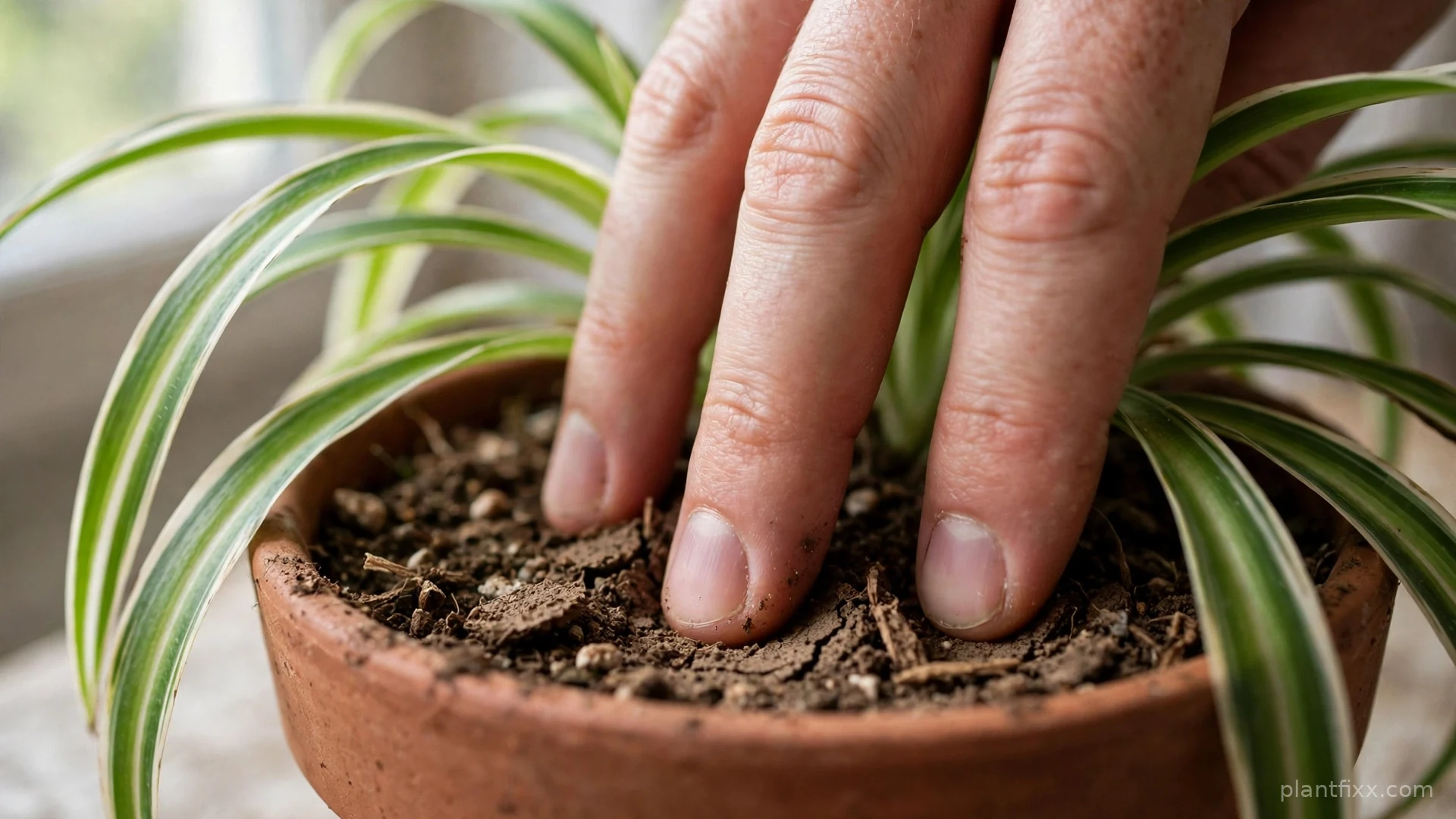
- Your finger or a wooden skewer, for checking soil moisture below the surface
- A phone flashlight or a small magnifier, for inspecting leaf undersides
- Clean scissors, in case you need to trim dead tissue or sample a root
- A saucer or sink, so you can water deeply and let the pot drain fully
- A notebook or phone note, to record what you changed and when
Work in good light, and handle the plant over a table. Spider plant leaves crease when they are bent hard, and a crease is permanent leaf damage, so lift leaves gently rather than pulling them aside.
How to Diagnose Spider Plant Leaf Problems in Five Minutes
Run these checks in order. Each one rules causes in or out, and together they cover nearly every spider plant leaf problem you will meet.
Step 1: Read the Pattern
Look at which leaves are affected. Symptoms on the oldest outer leaves only usually mean aging or a passing stress. Symptoms on new growth in the center point at an active problem with water, light or pests. Note whether the whole plant looks affected or only the side facing the window or a heating vent. One-sided symptoms almost always mean an environmental cause on that side.
Step 2: Feel the Leaves
Run a leaf between your fingers. A dry, papery leaf that folds crisply is short of water. A soft leaf that feels thin and floppy even though the soil is wet points at root trouble. A leaf that feels normal but looks pale is telling you about light or food, not water.
Step 3: Check the Soil
Push your finger two inches into the mix. Dry at that depth means the plant is thirsty now, whatever your schedule says. Wet and heavy means hold off watering and move to the root check. Also smell the soil. A sour or swampy smell is a reliable sign of roots sitting in water too long.
Step 4: Lift the Pot
A dry pot feels noticeably light. A waterlogged pot feels heavy days after watering. Pot weight is the fastest backup check when you are unsure about the finger test, and it takes two seconds.
Step 5: Inspect the Undersides
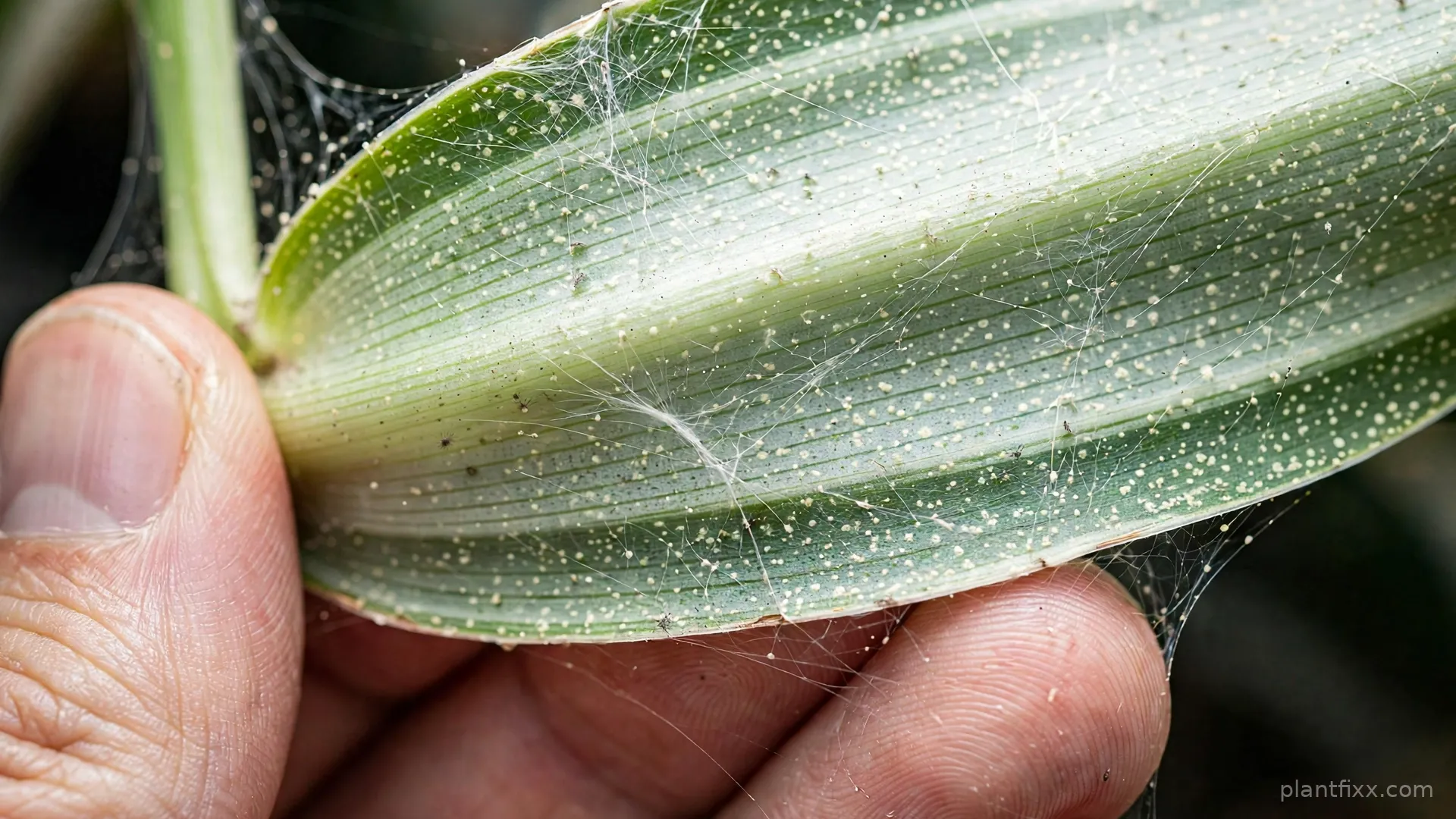
Turn a few leaves over and look with the flashlight. Fine webbing, tiny moving specks, white cottony clumps or sticky residue mean pests are part of the problem. Clean undersides rule pests down the list.
Step 6: Check the Light
Note where the plant sits and for how long. A plant that crept further from the window over months, or ended up behind a curtain, may now be in far lower light than you think. The diagnosis table below turns your answers into a cause.
Symptom to Cause: Spider Plant Leaf Diagnosis Table
| Symptom | What it looks like | Most likely cause | First fix |
|---|---|---|---|
| Leaves curling inward | Leaf edges roll toward the midrib, leaf feels dry | Dry soil or low humidity | Water deeply, then raise humidity |
| Leaves folding | Leaf creases flat along the center line | Thirst, the plant is conserving water | Deep watering and a regular soil check |
| Leaves twisting | Leaves spiral or corkscrew as they grow | Uneven light or pest feeding on new growth | Rotate the pot weekly, inspect undersides |
| Leaves drooping | Whole leaves hang down limply from the crown | Overwatering or root damage | Check roots, stop watering until soil dries |
| Leaves limp and soft | Leaves feel floppy and thin, soil stays wet | Root rot from soggy soil | Unpot, trim dead roots, repot in fresh mix |
| Leaves wilting | Leaves collapse, then partly recover after watering | Underwatering or heat stress | Water deeply, move away from heat sources |
| Pale leaves | Stripes fade, green washes out, growth slows | Too little light, or bleaching from harsh sun | Move to bright indirect light gradually |
| Leaves bending and creasing | Leaves fold over at the base and crease | Weak growth from low light, or heavy leaves on a thirsty plant | Brighter spot, steady watering, support the arch |
Curling and Twisting Leaves: Thirst and Dry Air
Spider plant leaves twisting as they grow is the close cousin of curling. Both start with water balance, so work through the thirst causes first, then check light and pests if the soil is fine.
Underwatering
The classic spider plant curl is a thirst signal. When the soil dries beyond what the fleshy roots can cover, you will see spider plant leaves folding inward along the midrib, and the tips may feel crisp. The plant is shrinking its exposed surface to slow water loss.
The fix is a deep drink, not a splash. Water slowly until it runs from the drainage holes, let the pot drain fully, and empty the saucer. Leaves that were only thirsty often start to relax within a day. Going forward, water when the top inch of soil is dry rather than on fixed days. Our spider plant watering guide walks through the seasonal rhythm in detail.
Low Humidity
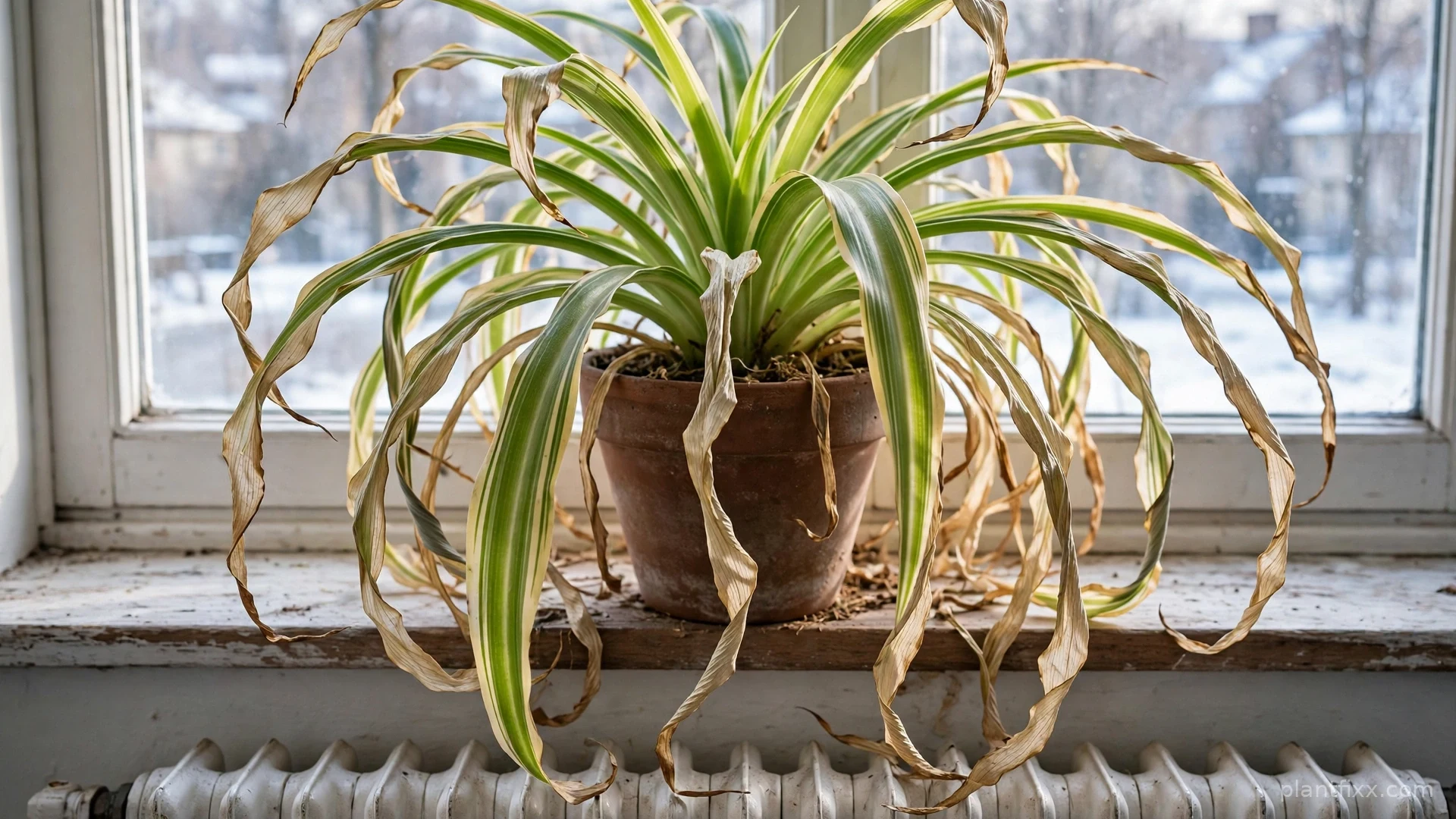
Heated and air-conditioned rooms pull moisture from leaves faster than roots can replace it, especially in winter. The result is curling that shows up even when your watering is correct, often with papery leaf edges.
Group plants together, set the pot on a tray of pebbles and water, or run a small humidifier nearby. Aim for the 40 to 60 percent humidity range that most homes can hold in the plant corner. Misting gives a brief lift but fades within the hour, so treat it as a supplement, not the fix.
Salts and Fluoride in Tap Water
Spider plants are sensitive to the fluoride and salts in treated tap water. The damage builds slowly. Leaves may curl at the edges, growth slows, and a white crust can form on the soil surface. This is a common hidden cause when watering, light and humidity all check out.
Switch to rainwater, distilled water, or tap water that has stood open overnight, and flush the pot with a slow deep watering every few months to wash salts through. If you feed the plant, keep fertilizer at half strength, because excess fertilizer salts cause the same slow leaf damage.
Drooping, Limp and Wilting Leaves: When Roots Cannot Keep Up
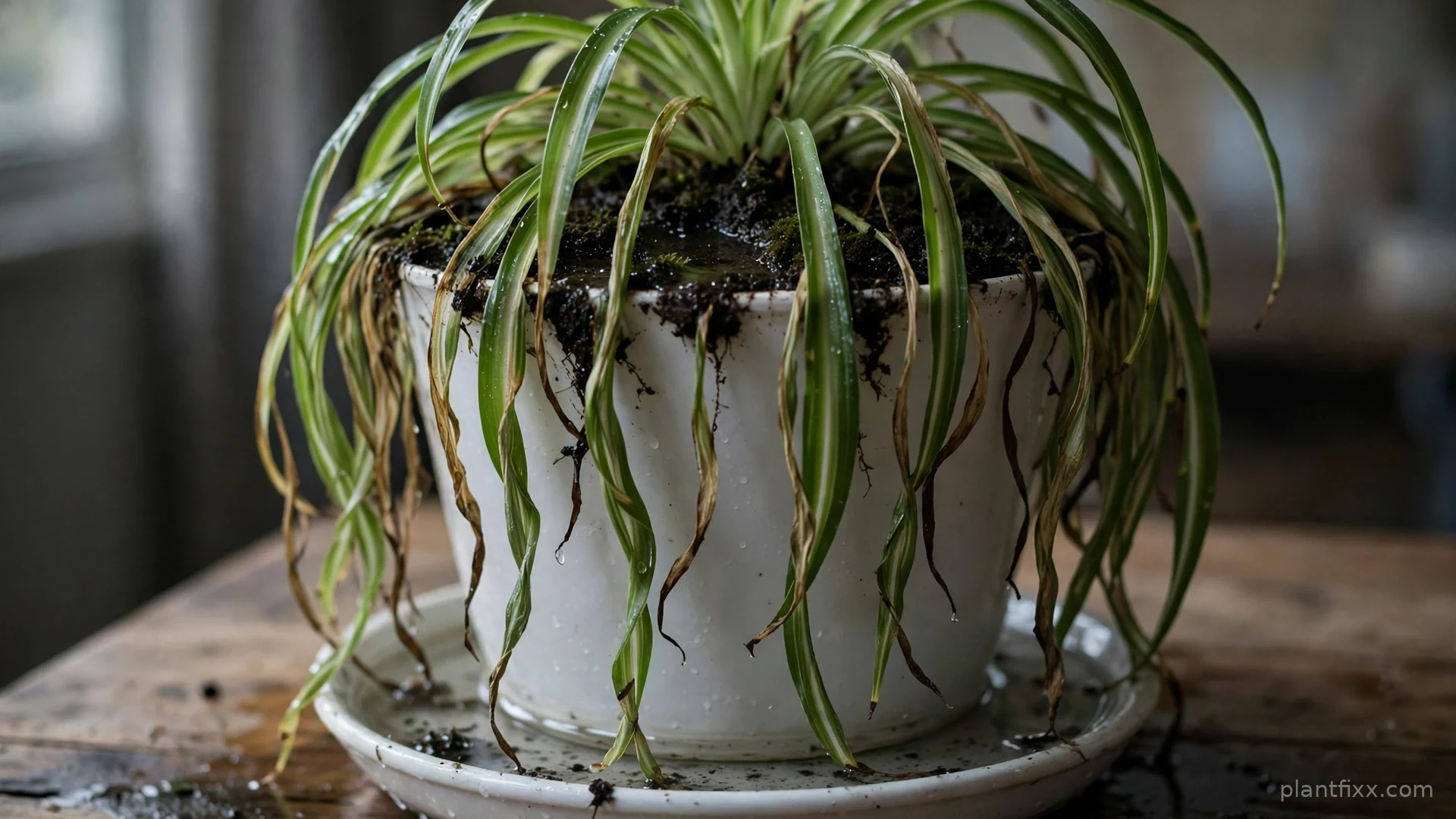
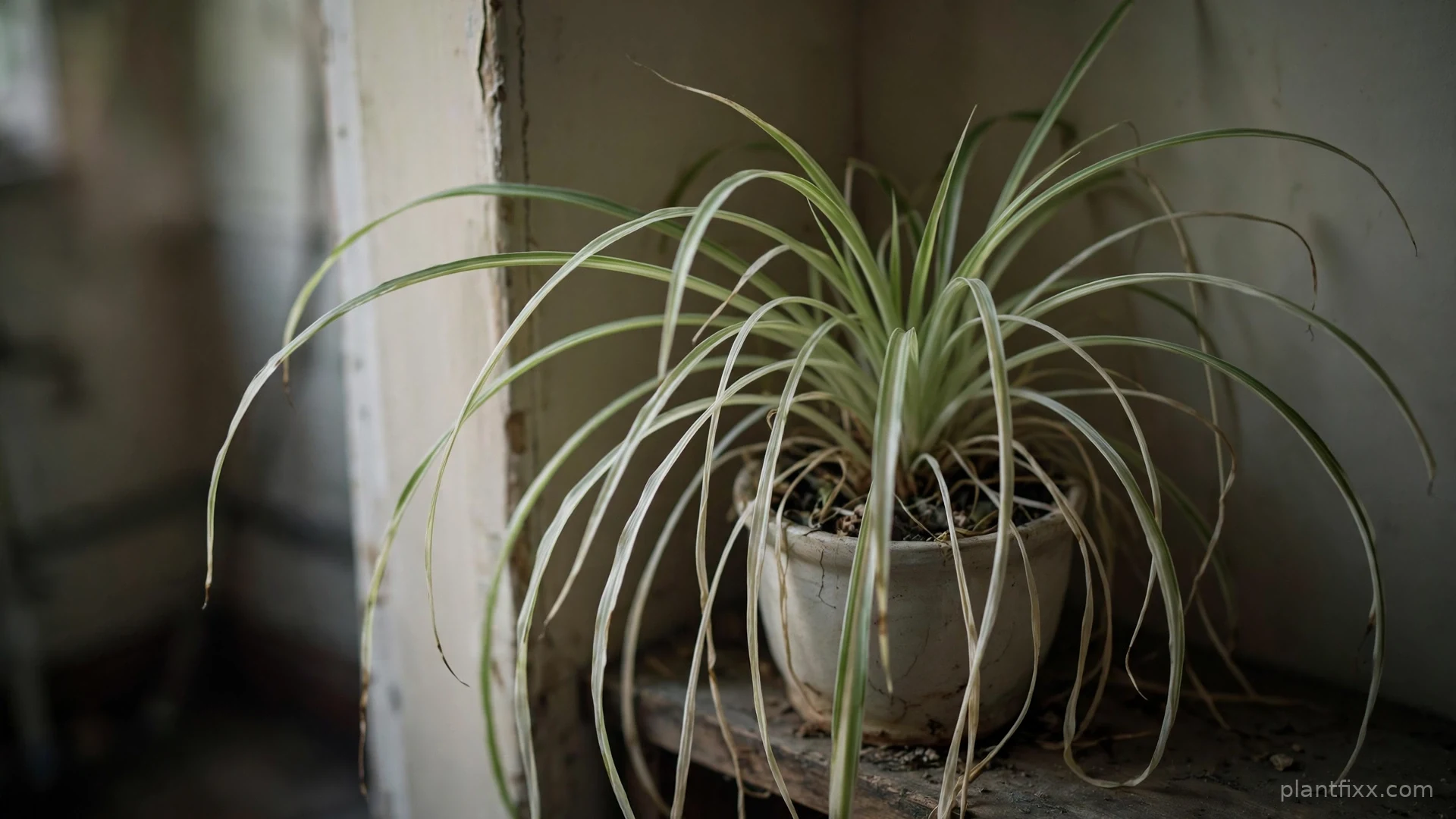
Spider plant leaves drooping with wet soil underneath is the opposite emergency. Roots that sit in water lose access to oxygen, begin to rot, and stop moving water to the leaves. The plant then wilts in wet soil, which confuses owners into watering more. Spider plant leaves limp from root trouble feel soft and heavy, unlike the crisp fold of a thirsty plant, and the soil check tells them apart.
Overwatering and Root Rot
Unpot the plant and look at the roots. Healthy spider plant roots are thick, white and firm. Rotted roots are brown or black, soft, and may smell. Trim every rotted section with clean scissors, let the cuts dry for an hour, and repot into fresh, free-draining mix in a pot with drainage holes.
After repotting, water lightly and wait. New roots need time to grow before they can support the leaves again, so keep the soil barely moist for the first two weeks. A plant caught early usually pushes fresh growth from the crown within a month.
Root-Bound Plants
A spider plant that has outgrown its pot can also droop and wilt on a short cycle. Water runs straight through the dense root ball, the plant drinks it within a day, and the leaves flag again. Thick roots pushing out of the drainage holes or lifting the plant in its pot are the giveaway.
Move up one pot size, loosen the outer roots gently, and fill around them with fresh mix. The wider moisture buffer ends the wilt cycle, and the leaves hold their arch for longer between waterings.
Pale Spider Plant Leaves: Light and Food Problems
Spider plant pale leaves are usually a light problem wearing a disguise. In low light, the plant produces less chlorophyll, the white or cream stripes widen and wash out, and the rich green between them fades. Growth slows, leaves grow long and thin, and plantlets may stop forming.
Too much direct sun causes the other kind of pale. Leaves develop bleached, papery patches where the sun hits hardest, and the color looks sun-washed rather than faded. The pattern tells them apart. Low light pales the whole leaf evenly, while sun bleaching marks the exposed side.
Move a faded plant toward brighter indirect light over a week, not in one jump, so the leaves adjust without scorching. A spot near an east or south window with the direct rays filtered suits most homes. Our guide to the best light for a spider plant covers placement room by room.
Food plays a smaller part. A plant in the same soil for years can run low on nitrogen and grow pale, soft new leaves. Feed at half strength once a month in spring and summer, and stop in winter. If the soil is old and compacted, fresh mix does more than fertilizer, because tired roots cannot take up food properly anyway.
Soft, Bending and Folding Leaves: Weak Growth
Spider plant leaves soft enough to bend and crease at the base are usually underbuilt. Leaves grown in low light come out long, thin and weak, and they fold under their own weight where they leave the crown. The crease that forms is permanent, even though the cause is fixable. Watch for the early sign: spider plant leaves bending lower week by week instead of holding their arch.
Overwatering adds to the problem. Roots in constant wet grow shallow and weak, and the leaves they support lack firmness. The combination of dim light and wet soil is the most common reason a spider plant looks floppy rather than arched.
Correct both halves. Brighter indirect light, and watering only when the top inch of soil has dried. New leaves will grow in firmer and hold the arch. Old creased leaves will not straighten, so judge your progress by the new growth. If the whole plant has also stalled and stopped producing plantlets, our guide on a spider plant not growing covers the slower growth problems in full.
Pests That Cause Leaf Damage and Distortion
Pests distort leaves as they feed, and their damage often gets blamed on watering. Spider mites are the main culprit on spider plants. They gather on leaf undersides, drain the cells, and leave fine stippled speckling, dull color and curling edges. In a heavy infestation you will see delicate webbing where the leaves meet the crown.
Mealybugs appear as white cottony clumps in the leaf joints and feed the same way, while thrips leave silvery patches and tiny black specks. All three thrive in the dry indoor air that also curls leaves, so the two problems often arrive together.
Start with a firm shower of water to knock pests off, then treat the undersides with insecticidal soap or neem oil, repeating weekly for three weeks. Isolate the plant from your other houseplants while you treat it. Our spider plant pests and diseases guide has the full identification and treatment rundown for each pest.
What About Brown Tips and Yellow Leaves?
Brown tips and yellowing leaves are the two spider plant complaints with their own dedicated guides on this site, so they get a short note here rather than a repeat. Brown tips usually trace back to fluoride, salts or dry air, and our spider plant brown tips guide covers the causes and trimming. Leaves turning yellow point more often at overwatering, aging or light changes, and our spider plant yellow leaves guide works through that diagnosis. If your plant shows curling alongside either symptom, fix the curling cause first using the table above, because the same water and light problems often sit behind all three.
Signs Your Spider Plant Is Recovering
Recovery shows in a predictable order. First, the curling stops spreading, and no new leaves come out distorted. Within one to two weeks, mildly curled leaves relax partway as turgor returns. The surest sign is new growth from the center of the crown that comes out flat, firm and well colored.
Plantlets are the long-term report card. A spider plant that resumes sending out runners and pups has its water and light balance back. Keep the routine that got you there, and resist the urge to keep adjusting. Steady care is what the plant was missing.
Signs the Leaf Damage Is Permanent
Not every leaf recovers. A leaf that has creased hard at the base keeps that crease. Leaves that went fully crisp, or rotted soft at the crown, are finished and will not green up again. That is normal. The plant replaces leaves from the center over time.
Spider plant leaves dying one or two at a time on the outside of the rosette is also normal aging. Worry only when the crown itself turns soft and brown, or when every new leaf emerges damaged. At that point the roots are usually too far gone, and propagating a healthy plantlet is a better use of your time than nursing the parent.
Prune dead and badly damaged leaves at the base with clean scissors. Removing them cuts pest hiding places, improves airflow, and lets you see new growth clearly. Never remove more than a third of the leaves at once, because the plant needs its remaining leaves to feed the recovery.
A Simple Spider Plant Leaf Care Routine
Most spider plant leaf problems never start if the basics stay steady. Water when the top inch of soil is dry, and always let the pot drain. Keep the plant in bright indirect light, rotate it a quarter turn each week so all sides grow evenly, and wipe the leaves with a damp cloth once a month so dust does not block the light they do get.
Check the undersides whenever you water. Thirty seconds of looking catches mites while they are still a minor problem. Feed lightly in the growing season and leave the plant alone in winter. That is the whole of spider plant leaf care, and it prevents nearly everything in the table above. Our full spider plant care guide pulls every part of the routine together.
One more note for pet homes. Spider plants are non-toxic to cats and dogs, so a chewed leaf counts as spider plant leaf damage, not a poisoning emergency. Cats still love to bat and bite the dangling leaves, so a hanging basket saves you the cosmetic damage. For any new plant you bring home, run it through our Pet Safe Plant Checker before it joins the collection.
Why are my spider plant leaves curling inward?
Inward curling is the leaf folding to reduce moisture loss. Dry soil is the most common cause, followed by low indoor humidity and roots damaged by overwatering. Check the soil moisture first, then the roots, then the humidity around the plant.
Can curled spider plant leaves uncurl after I fix the cause?
Mildly curled leaves usually relax within days once water balance returns, because the curl was a turgor response. Leaves that creased, crisped or stayed curled for weeks keep some of the bend. Judge recovery by new leaves, which should emerge flat.
Why are my spider plant leaves drooping even though I water them?
Drooping with wet soil means the roots are failing, not that the plant needs more water. Soggy roots rot and stop supplying the leaves. Unpot the plant, trim brown mushy roots, and repot in fresh mix with drainage.
Why are my spider plant leaves turning pale?
Low light is the usual cause. The plant makes less chlorophyll, stripes wash out and growth stretches thin. Harsh direct sun can also bleach pale patches on the exposed side. Move the plant to bright indirect light over about a week.
Are spider plant leaves supposed to curl?
Only one common type curls on purpose. The Bonnie cultivar grows naturally curly, wavy leaves and is healthy that way. Standard spider plants have straight, arching leaves, so new curling on those is a stress signal worth checking.
Should I cut off curled or damaged spider plant leaves?
Cut leaves that are fully dead, crisp or rotten at the base, and leave mildly curled leaves in place while the plant recovers. Never remove more than a third of the foliage at once, because the plant feeds its recovery through the remaining leaves.
How long does a spider plant take to recover from leaf problems?
Thirst curls can relax within a day or two of deep watering. Root problems take longer, usually three to six weeks before firm new growth confirms the fix. Pale plants recolor as new leaves grow in better light, over roughly a month.
Conclusion
Spider plant leaves talk in shapes. Curling and folding ask for water or humidity, drooping and limp leaves warn you about the roots, and pale leaves point at the light. Match the shape to the cause with the diagnosis table, confirm it with the five-minute checks, and change one thing at a time. Most plants are back to their arch within a few weeks. For the complete routine that keeps them that way, start with our spider plant care guide.
Pingback: Spider Plant Watering: Full 2026 Guide
Pingback: Best Light for Spider Plant: 2026 Guide