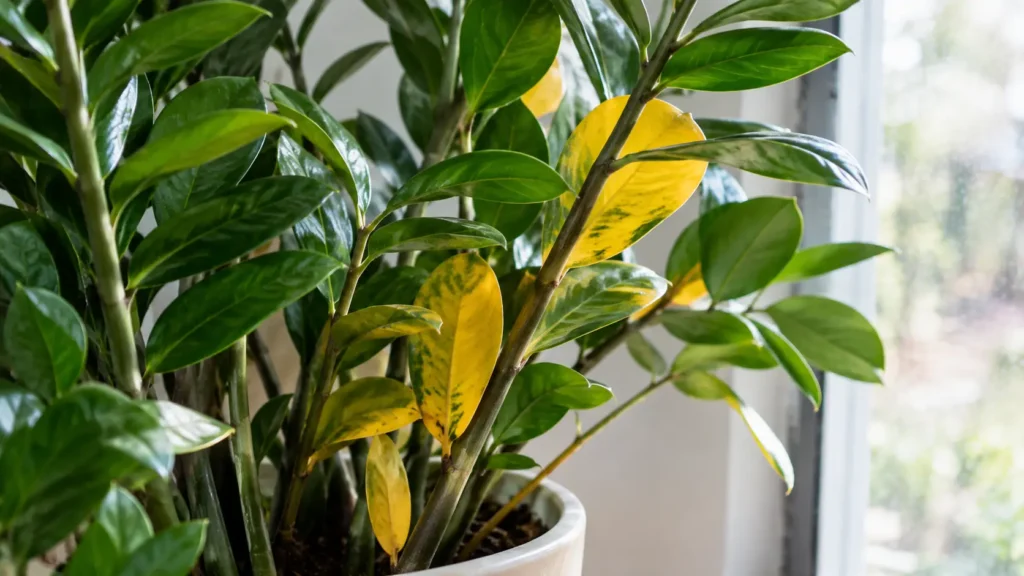
ZZ plant yellow leaves almost always point to one cause: overwatering. This plant stores water in thick underground rhizomes, so it handles drought far better than it handles soil that stays wet, and consistently soggy conditions are the most common reason its glossy green leaves turn yellow.
That said, overwatering is not the only cause. Underwatering, too much direct sun, nutrient deficiencies, pests, and simple leaf aging can all produce yellow leaves as well, and each one leaves slightly different clues. This guide walks you through a step-by-step way to identify which cause you are dealing with, then gives you the exact fix.
Work through the checks in order, since starting with the most likely cause first saves you from chasing the wrong fix.
Quick Answer
ZZ plant yellow leaves are most often caused by overwatering, which leads to root rot in the plant’s fleshy rhizomes. Less commonly, yellowing comes from underwatering, too much direct sun, nutrient deficiencies, pest infestations, or normal aging of the oldest leaves. Check soil moisture first, since it explains the large majority of cases.
Quick Take
A ZZ plant’s rhizomes store enough water to get it through weeks of drought, which is why overwatering, not underwatering, causes almost all yellowing on this plant. Soil that stays damp for more than a week deprives the roots of oxygen and quickly leads to rot, which shows up above the soil as yellow, sometimes soft, leaves. The pattern of yellowing also tells you a lot: only the oldest, lowest leaves usually means natural aging, new growth turning yellow points to a nutrient issue, and yellowing scattered randomly with visible specks often means pests.
One mistake many owners make is assuming more water will fix a yellowing ZZ plant, since yellow leaves look like a sign of thirst on most other houseplants. In practice, this usually makes the problem worse, since the plant is already holding more moisture than it can use.
Step 1: Check the Soil
Push your finger one to two inches into the soil, or use a moisture meter if you have one. If the soil feels wet, or has felt damp for more than a week since your last watering, overwatering is the likely cause and you can move directly to that section below.
If the soil was bone dry when you checked, underwatering becomes the more likely explanation, and you should look at your recent watering habits before checking other causes.
Overwatering (The Most Common Cause)
Overwatering causes the large majority of ZZ plant yellowing. Because the rhizomes already store so much water, soil that stays wet on top of that reserve creates a persistently damp, low-oxygen environment around the roots, which leads to root rot.
Yellowing from overwatering often starts at the base of a stem and can affect several leaves on the same stem at once. In more advanced cases, the stem itself feels soft or mushy rather than firm, and the whole shoot may need to be removed.
Fix: Stop watering immediately and let the soil dry out completely, which can take several weeks depending on pot size and material. If yellowing is widespread or stems feel soft, unpot the plant and inspect the rhizomes. Firm, tan rhizomes are healthy and can be repotted into fresh, dry, fast-draining soil. Soft, dark, or foul-smelling sections should be trimmed away with a clean blade before repotting.
Underwatering
Underwatering is a far less common cause of yellowing in ZZ plants, but it does happen, particularly if the plant has gone an unusually long time without any water at all. In this case, the plant is not getting enough moisture to support its leaves, and older leaves yellow and eventually drop as the plant reallocates its limited resources.
Underwatered leaves typically look thin, dry, or slightly shriveled alongside the yellowing, rather than soft or waterlogged.
Fix: Resume watering on a more regular schedule, checking the soil before each watering rather than letting it go completely dry for extended periods. Water thoroughly until it drains from the bottom of the pot, then allow the top couple of inches to dry before watering again.
Too Much Direct Light
Direct, intense sunlight can scorch ZZ plant leaves, and the damage often shows up as yellowing before progressing to brown, crispy patches. Leaves exposed to too much light may also curl, and in some cases the stems bend noticeably away from the light source rather than toward it, which is the opposite of how most houseplants respond to bright light.
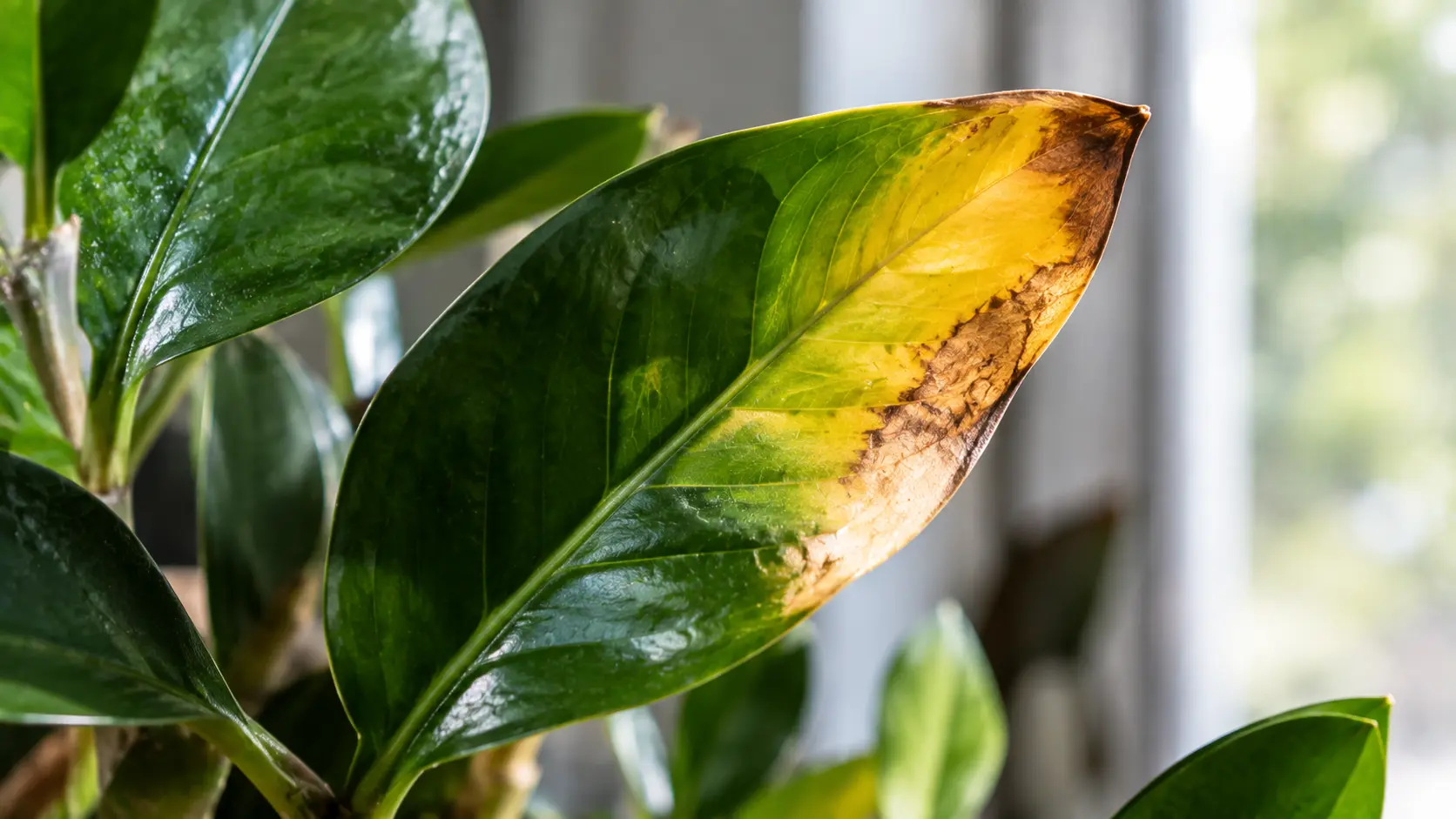
Fix: Move the plant back from the window, or add a sheer curtain to diffuse the intensity. Bright, indirect light supports healthy growth without the scorch risk that comes with unfiltered direct sun.
Nutrient Deficiencies
Nutrient deficiencies show up as yellowing with fairly specific patterns, depending on which nutrient is lacking. A potassium deficiency typically causes yellowing along the leaf edges, while a magnesium deficiency starts as yellowing between the veins of older leaves, leaving the veins themselves green. An iron deficiency shows up differently, affecting younger leaves first rather than older ones.
You do not need to pinpoint the exact nutrient to fix the problem in most cases, since a standard houseplant fertilizer typically addresses several nutrients at once.
Fix: Apply a balanced liquid fertilizer at half strength during the active growing season, following the product’s instructions. Avoid fertilizing in fall or winter, when the plant cannot use the extra nutrients and unused fertilizer simply builds up as salt in the soil.
Pests
Pests cause yellowing that tends to look scattered or patchy rather than concentrated on one stem or one side of the plant. Common culprits include mealybugs, thrips, and scale, all of which pierce the leaves and feed on plant sap, leading to discoloration and, in heavier infestations, leaf drop.
Check the undersides of leaves and along the stems for small bumps, webbing, or a sticky residue, since these are the clearest signs of an infestation rather than a watering or light issue.
Fix: Wipe affected leaves with a solution of mild soap and water, and follow up with a neem oil treatment if pests are still visible after the first cleaning. Isolate the plant from other houseplants while treating it to avoid the infestation spreading.
Natural Leaf Aging
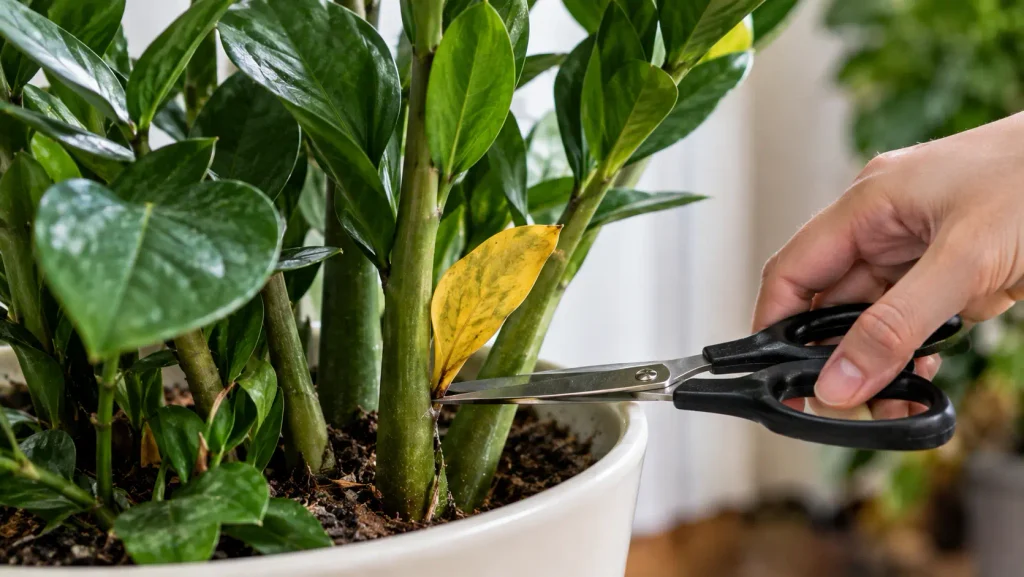
Not all yellowing signals a problem. It is normal for a ZZ plant to shed its oldest, lowest leaves occasionally as part of natural growth, redirecting energy toward newer stems and leaves.
This type of yellowing affects only the oldest leaves at the base of a stem, one at a time, rather than spreading across multiple leaves or stems simultaneously.
Fix: No action needed. Simply remove the yellowed leaf once it has fully turned, using clean scissors close to the stem.
How to Tell the Causes Apart by Pattern
| Yellowing Pattern | Likely Cause |
|---|---|
| Base of stem, multiple leaves, soil damp | Overwatering |
| Thin, dry leaves, soil bone dry | Underwatering |
| Sun-facing side, curling or scorched | Too much direct light |
| New growth affected, edges or between veins | Nutrient deficiency |
| Scattered, patchy, visible specks or webbing | Pests |
| Only the oldest, lowest leaf, one at a time | Natural aging |
How to Prevent Future Yellowing
Consistent watering habits prevent most cases of yellowing before they start. Check the soil before every watering rather than following a fixed schedule, and make sure the pot has drainage holes so excess water has somewhere to go.
If you’re still working out how often your specific plant needs water based on your pot type and the season, the ZZ plant care guide covers the full watering schedule and soil mix that helps prevent this exact problem.
FAQs
Will yellow ZZ plant leaves turn green again?
No, a leaf that has fully yellowed will not return to green. Once you have addressed the underlying cause, remove the yellowed leaf and focus on preventing further leaves from developing the same issue.
How do I know if my ZZ plant has root rot?
Unpot the plant and inspect the rhizomes. Firm, tan rhizomes are healthy, while soft, dark, or foul-smelling ones indicate rot that needs trimming before repotting into fresh, dry soil.
Is one yellow leaf on my ZZ plant a problem?
A single yellow leaf, especially an older one near the base of a stem, is usually just natural aging and not a cause for concern. Multiple leaves yellowing at once is more likely to indicate a genuine issue like overwatering.
Can cold temperatures cause ZZ plant leaves to turn yellow?
Cold stress is a less common cause but can contribute to yellowing, particularly below 50°F or near a cold draft. Keeping the plant in a consistently warm spot away from drafts helps rule this out.
How often should I water a ZZ plant to avoid yellow leaves?
Water only when the soil is completely dry, which is typically every 3 to 4 weeks in spring and summer and less often in fall and winter. Checking the soil directly is more reliable than following any fixed schedule.
Does a self-watering planter help prevent overwatering-related yellowing?
A self-watering planter can help maintain more consistent soil moisture, but it works best as part of a broader routine rather than a replacement for checking the soil. Since ZZ plants prefer to dry out between waterings, a self-watering setup needs to be monitored carefully to avoid keeping the soil too consistently moist.
Conclusion
ZZ plant yellow leaves come down to a short list of causes, and overwatering explains the large majority of them. Check the soil first, look at where the yellowing appears on the plant, and match the pattern to the cause before choosing a fix. Addressing the actual cause, rather than defaulting to more water, is what brings the plant back to its usual glossy green.
Pingback: ZZ Plant Pests: 6 Common Pests & How to Kill Them (2026)
Pingback: 9 ZZ Plant Beginner Mistakes to Avoid (Easy Fixes 2026)