ZZ Plant Pests: How to Identify and Treat the 6 Most Common Ones
ZZ plants have a reputation for surviving almost anything. They tolerate low light, missed waterings, and dry apartment air without complaint. But tough does not mean pest-proof. Sooner or later, most ZZ owners find sticky leaves, fine webbing, or tiny flies circling the pot, and the first question is always the same: what is eating my plant?
This guide covers the six pests that actually show up on ZZ plants, how to tell them apart at a glance, and the exact treatment that clears each one.
QUICK ANSWER: The most common ZZ plant pests are spider mites, mealybugs, scale insects, aphids, thrips, and fungus gnats. Isolate the plant, then treat foliage pests with neem oil or insecticidal soap, dab scale and mealybugs with rubbing alcohol on a cotton swab, and beat fungus gnats with drier soil plus yellow sticky traps. Repeat treatment weekly until no live pests remain.
QUICK TAKE: ZZ plants resist pests better than most houseplants, but sap-sucking insects still target their glossy leaves and fungus gnats still breed in damp potting mix. The good news is that most infestations clear up with simple home treatments when caught early. The bad news is that pest damage looks a lot like overwatering damage, so people often treat the wrong problem. Below you will learn how to identify each of the six common pests, what supplies to gather before you start, and how to tell whether your treatment is working or failing.
One mistake many people make is reaching for a strong chemical spray the moment they spot a bug. In practice, that usually stresses the plant more than the pests do. ZZ leaves are thick and waxy, which means contact treatments like neem oil and insecticidal soap sit on the surface and work well. The catch is that eggs survive the first application, so you need repeat rounds. Light mealybug outbreaks routinely clear in two to three weeks with nothing but alcohol swabs, a spray bottle, and patience.
Why ZZ Plants Get Pests Despite Being So Tough
Pests do not care how drought-tolerant your plant is. They care about food and conditions. ZZ leaves hold plenty of sap, and sap-sucking insects like mealybugs, scale, and aphids feed on exactly that. The thick leaflets give small insects shelter on the undersides where you rarely look.
Two common apartment conditions invite the other pests. Dry indoor air, especially in winter with heating running, is ideal for spider mites. They thrive when humidity drops. Soil that stays wet invites fungus gnats, whose larvae feed on organic matter and fine roots in the top layer of the mix. This is why overwatering a ZZ plant causes a double problem: it risks root rot and it rolls out the welcome mat for gnats. If your watering habits are shaky, read our guide on how often to water a ZZ plant before you blame the bugs.
New plants are the most common way pests enter your home. A ZZ plant can carry mealybugs or scale eggs from the nursery without showing a single symptom. That is why the first move with any new plant should be a two-week quarantine away from your other houseplants.
What You Need Before You Start
Gather these supplies before you treat anything. Having them on hand means you can act the same day you spot a problem, and speed matters with fast-breeding pests.
You need neem oil (cold-pressed, mixed per the label), a ready-to-use insecticidal soap spray, 70% rubbing alcohol, cotton swabs, a clean spray bottle of plain water, yellow sticky traps, and a soft damp cloth. Pruning shears help for thrip-damaged leaves, and fresh potting mix is useful if you end up repotting for fungus gnats.
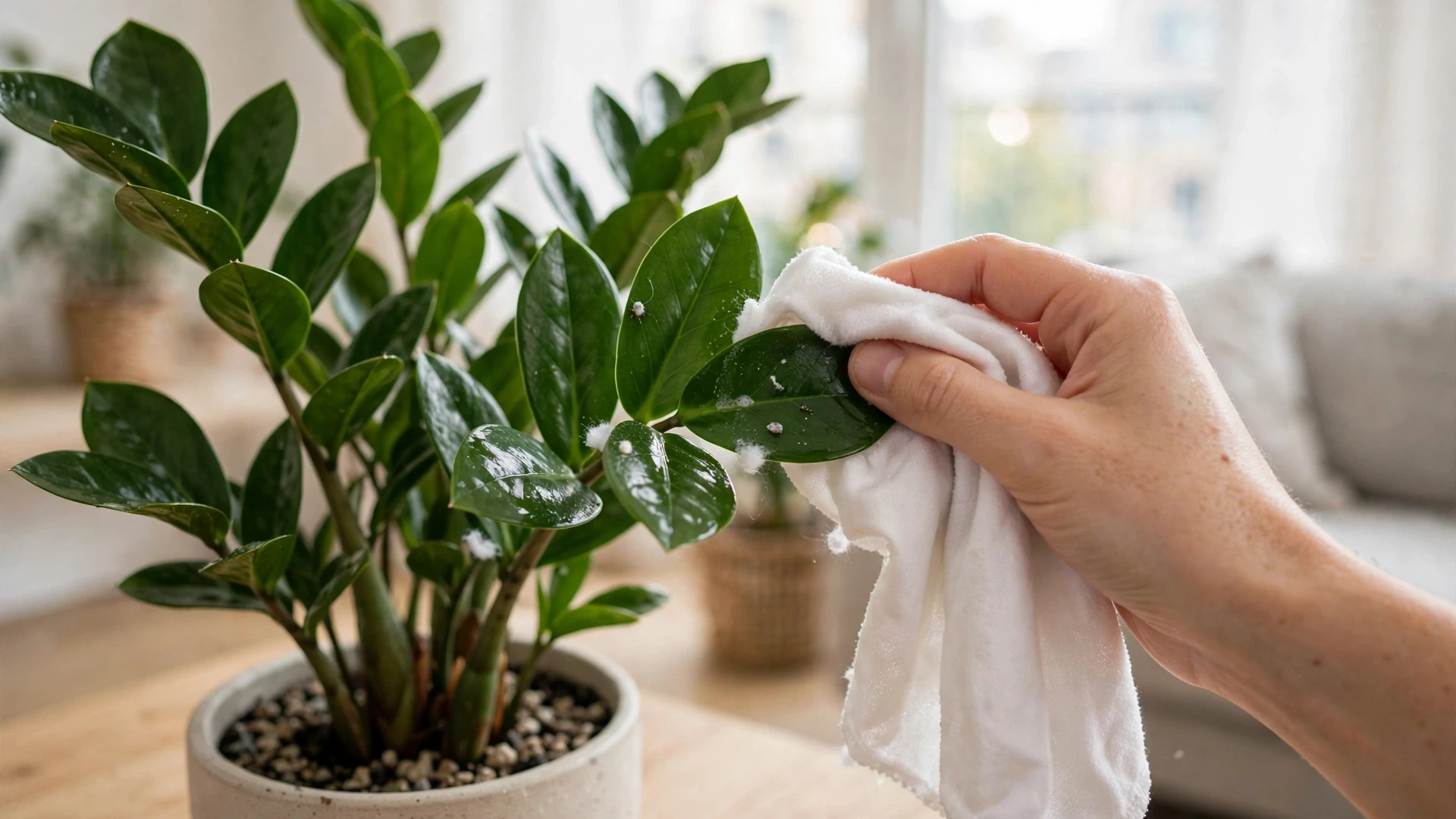
Test any spray on one leaf first and wait 24 hours. ZZ foliage is hardy, but insecticidal soap can scorch leaves if applied in direct sun, so treat in the evening or move the plant out of bright light for a day.
Spider Mites
Spider mites are the pest most ZZ owners meet first. These are not insects but tiny arachnids, barely visible as red, yellow, or green moving dots. They thrive in warm, dry air and drink sap from the leaves.
The giveaway sign is fine, silky webbing stretched between leaflets and along stems, usually starting on the undersides. As feeding continues, leaves develop a speckled, dusty look, then yellow and drop. By the time webbing is obvious, the population is already large.
Start by blasting the plant with a strong spray of water in the shower or sink. This physically knocks off a large share of the mites and their webs. Follow up with neem oil or insecticidal soap, coating leaf undersides thoroughly. Repeat weekly for at least three weeks. Raising humidity around the plant, even slightly, makes conditions less friendly for the next generation.
Mealybugs
Mealybugs look like tiny bits of white cotton tucked into leaf joints and along stems. They are soft-bodied sap feeders, and a heavy colony stunts growth and yellows leaves. They also excrete honeydew, the sticky coating you may notice on leaves or the shelf below the plant. Honeydew can grow sooty mold, which blocks light from the leaf surface.
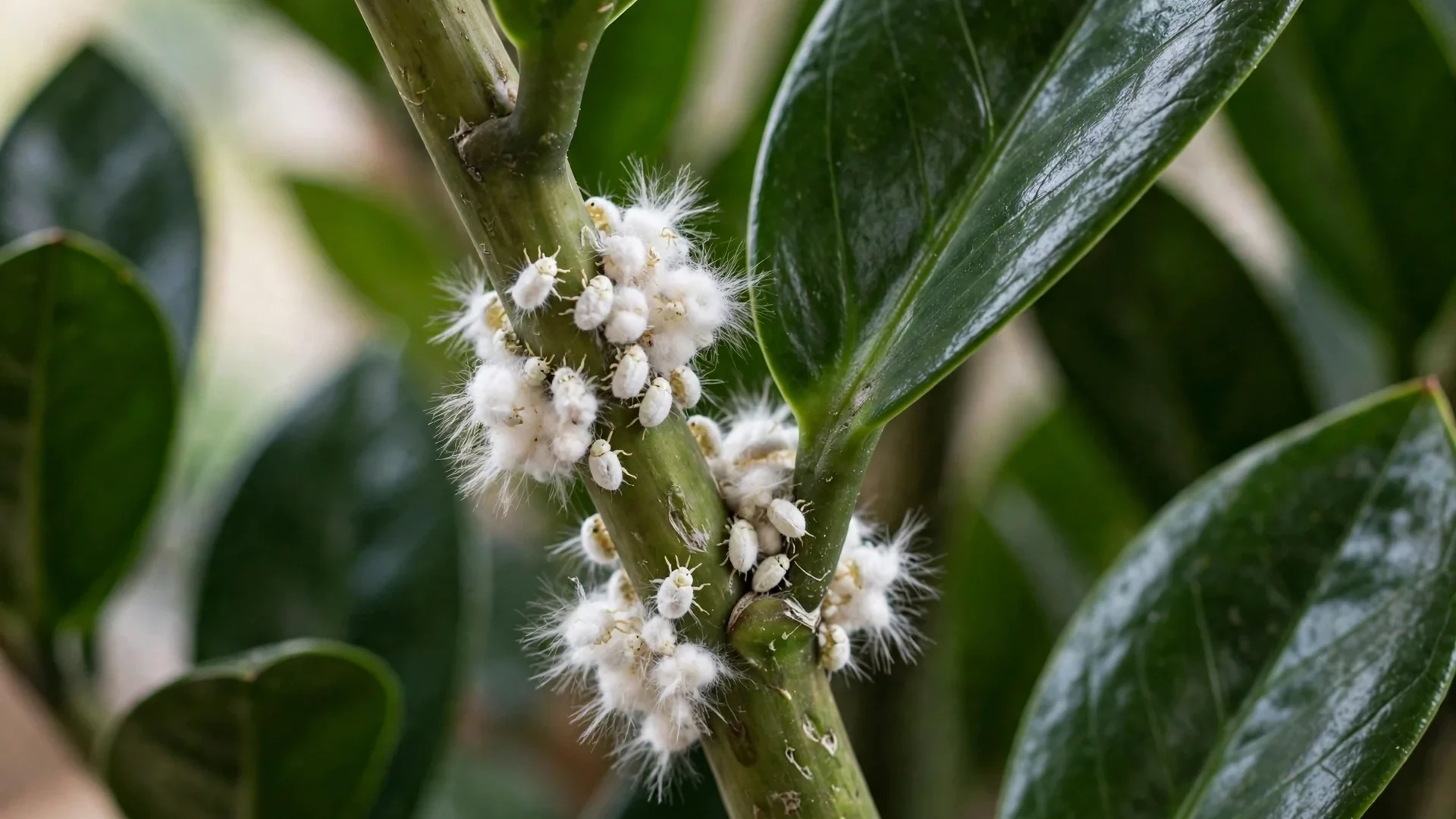
Dab each visible cluster with a cotton swab dipped in rubbing alcohol. The alcohol dissolves their waxy coating on contact. For larger infestations, follow up with an insecticidal soap spray, hitting every crevice where the white fluff hides. Check the plant every few days and re-treat weekly. Mealybugs spread to neighboring plants, so isolate the ZZ plant until the outbreak is fully gone.
Scale Insects
Scale insects are masters of disguise. They look like small brown or gray bumps stuck to stems and leaf undersides, and many people mistake them for part of the plant or a disease. Under that hard shell, they are sucking sap and weakening the plant. Like mealybugs, they produce sticky honeydew.
Because the shell shields them from sprays, manual removal works best. Scrape or wipe each bump off with a soft cloth, or dab it with a cotton swab dipped in rubbing alcohol. Then spray the whole plant with insecticidal soap or neem oil to catch the tiny crawlers that hatch from eggs. Expect to repeat for three to four weeks. Scale is stubborn, but consistent removal beats it.
Aphids
Aphids are small, soft-bodied insects that cluster on new growth and leaf undersides. They come in green, black, or brown, and they blend in surprisingly well against a ZZ plant. Signs include curling new leaflets, sticky honeydew on the foliage, and sometimes ants visiting the plant to farm the honeydew.
Aphids are the easiest pest on this list to beat. A strong jet of water dislodges most of them. Follow with insecticidal soap or neem oil for the stragglers. Because aphids reproduce fast, check the plant twice a week during treatment and re-spray as needed. If ants are present, deal with the ants too, or they will keep protecting the aphid colony.
Thrips
Thrips are slender, dark insects so small you may never see them clearly. Their damage is easier to spot: leaves develop silvery or brownish streaks and a wrinkled, papery texture. New growth comes out distorted.
Prune off the worst-damaged leaflets first, since thrips hide inside curled tissue where sprays cannot reach. Then treat the remaining foliage with neem oil or insecticidal soap, repeating weekly. Thrips also pupate in the top layer of soil, so let the surface dry well between waterings and consider replacing the top inch of potting mix. Sticky traps help you monitor whether adults are still active.
Fungus Gnats
Fungus gnats are the only pest on this list that lives mainly in the soil, not on the leaves. The adults are tiny black flies you see hovering around the pot. They are annoying but harmless. The real damage comes from their larvae, small translucent worms in the top few inches of mix that feed on organic matter and fine roots. Heavy larval feeding leaves a ZZ plant weak, with yellowing leaves and stalled growth.
The fix starts with water, not chemicals. Let the soil dry out fully between waterings, since gnats lay eggs only in moist mix. ZZ plants store water in their rhizomes and tolerate drought, so this step never harms the plant. Place yellow sticky traps near the pot to catch adults and break the breeding cycle. For stubborn cases, drench the soil with diluted hydrogen peroxide until it runs through the drainage holes, which kills larvae on contact.
If the infestation is severe, repot into fresh, well-draining mix and discard the old soil. Fungus gnat problems almost always trace back to overwatering, so if the gnats keep returning, read our guide on ZZ plant overwatering and root rot to fix the root cause.
At a Glance: Which Pest Is Eating Your ZZ Plant?
Use this table after reading the sections above to confirm your identification.
| Pest | Main sign | First treatment |
|---|---|---|
| Spider mites | Fine webbing, speckled yellowing leaves | Water blast, then neem oil weekly |
| Mealybugs | White cottony clusters, sticky honeydew | Alcohol swab, then insecticidal soap |
| Scale insects | Hard brown or gray bumps on stems | Scrape off, alcohol dab, then soap spray |
| Aphids | Curling new growth, sticky leaves, ants | Water jet, then insecticidal soap |
| Thrips | Silvery streaks, wrinkled distorted leaves | Prune damage, neem oil weekly |
| Fungus gnats | Tiny black flies, larvae in soil | Dry soil fully, sticky traps |
Signs the Treatment Is Working
You should see fewer live insects within a week of the first treatment. New growth comes out clean and undistorted. Sticky honeydew stops appearing on fresh leaves. For fungus gnats, the sticky traps catch fewer adults each day, and you stop seeing flies rise when you tap the pot.
Keep treating for at least one full week after the last sign of pests. Eggs and pupae survive most treatments, and stopping early is the number one reason infestations bounce back. Mark your calendar and do the final two applications even if the plant looks clean.
Signs It Failed and What to Do Next
If live pests are still present after four weeks of consistent weekly treatment, something needs to change. Switch products, since some populations tolerate one treatment but not another. For example, move from neem oil to insecticidal soap, or add manual alcohol removal to your routine.
Check whether the real problem is the environment. Constantly wet soil will keep fungus gnats returning no matter what you spray. A plant sitting in a dark, airless corner stays stressed and vulnerable.
As a last resort, discard heavily infested leaves or the whole plant. If mealybugs or scale have colonized every stem and the plant is dropping leaves faster than it grows them, replacing the plant protects the rest of your collection. Bag it, throw it out, and disinfect the pot before reuse.
How to Keep Pests Off Your ZZ Plant
Prevention is simpler than treatment. Inspect new plants closely, including leaf undersides and stem joints, and quarantine them for two weeks. Wipe ZZ leaves with a damp cloth every month or two. This removes dust and any eggs before they hatch, and it keeps the glossy foliage photosynthesizing well.
Water only when the soil is fully dry. This single habit prevents fungus gnats and root rot at the same time. Keep the plant in good light for its tolerance range, since a stressed, light-starved plant is more vulnerable to every pest. Finally, avoid overcrowding your plants. Good airflow between pots makes it harder for spider mites and thrips to spread from one plant to another.
Frequently Asked Questions
What are the most common pests on ZZ plants?
Spider mites, mealybugs, scale insects, aphids, thrips, and fungus gnats. Spider mites and mealybugs show up most often on indoor ZZ plants.
How do I get rid of mealybugs on my ZZ plant?
Dab each cottony cluster with a cotton swab dipped in rubbing alcohol, then spray the plant with insecticidal soap. Isolate the plant and repeat weekly until no mealybugs remain, usually two to three weeks.
Why does my ZZ plant have sticky leaves?
Sticky leaves mean honeydew, a sugary waste produced by mealybugs, scale, or aphids. Inspect leaf undersides and stem joints for the insects, then treat with alcohol swabs and insecticidal soap.
Can spider mites kill a ZZ plant?
A severe, long-ignored infestation can defoliate a ZZ plant, but the rhizomes usually survive and push new growth once the mites are gone. Catching them early with water blasts and neem oil prevents serious damage.
Do I need to repot a ZZ plant with fungus gnats?
Not always. Drying the soil fully between waterings plus yellow sticky traps clears most cases. Repot only if the infestation is severe or keeps returning, and use fresh, well-draining mix.
Can I treat ZZ plant pests with only neem oil?
Neem oil handles spider mites, aphids, and thrips well, but scale and mealybugs also need manual removal with rubbing alcohol, and fungus gnats need drier soil. One product rarely solves every pest.
ZZ plant pests look alarming at first, but they are all beatable with basic supplies and a few weeks of consistency. Identify the pest, match the treatment, and keep going until it is fully gone. For everything else your ZZ plant needs, from light to watering to feeding, read our complete ZZ plant care guide.