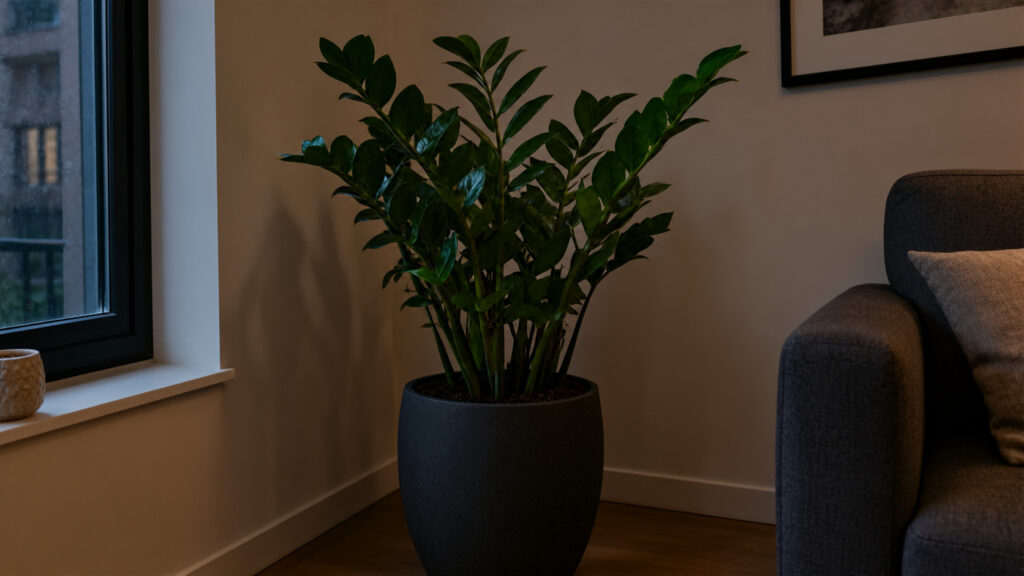
A ZZ plant not growing is often not actually a problem. This plant is naturally slow, sometimes adding only one or two new stems a year, and long stretches with no visible change are part of its normal pattern rather than a warning sign.
That said, a genuine growth stall does happen, and it usually traces back to one of a handful of causes: light, watering, pot size, temperature, nutrients, or the season itself. This guide walks through each cause, how to tell it apart from normal dormancy, and exactly what to do about it.
You will also learn how to tell the difference between a plant that is simply resting and one that is actually struggling, since the two look almost identical at first glance but need very different responses.
Quick Answer
A ZZ plant not growing is usually dormant rather than in trouble, especially in fall and winter when growth naturally slows to a near-stop. If the pause continues through spring and summer, check light first, since insufficient light is the most common cause of a genuine growth stall, followed by overwatering, a pot that is too large, cold temperatures, and being root-bound.
Quick Take
ZZ plants follow a “sleep, creep, then leap” growth pattern, where a newly potted, divided, or repotted plant spends months building roots and rhizome mass underground before any new stem appears above the soil. This makes a still, unchanging plant look concerning even when it is completely healthy. The real distinction to watch for is dormant versus struggling: a dormant plant stays firm and glossy with no decline, while a struggling plant shows yellowing, softening stems, or soil that stays wet far longer than it should.
One mistake many owners make is assuming a ZZ plant needs more fertilizer or more water the moment growth stops. In practice, overfeeding an already-slow plant does not speed it up and often stresses the roots further, while extra water on top of an already generous soil reserve is one of the most common ways to actually stall growth rather than restart it.
Is Your ZZ Plant Dormant or Actually Struggling?
Before troubleshooting a specific cause, it helps to know which situation you are dealing with, since the fixes are opposite.
A dormant ZZ plant looks stable. Stems stay firm, leaves stay glossy and upright, and nothing about the plant is getting worse over time, it is simply not producing anything new. This is completely normal in fall and winter, or for the first few months after repotting or dividing a plant, while it rebuilds its root and rhizome network before investing in visible growth.
A struggling ZZ plant gets worse as time passes. Yellowing spreads across more leaves, stems start to feel soft rather than firm, and the soil stays wet noticeably longer than it used to after watering. If you are seeing decline rather than simple stillness, move directly to the overwatering and pot size sections below.
Cause 1: Not Enough Light
Insufficient light is the single most common reason for a genuine ZZ plant growth stall. The plant is well known for tolerating low light, but tolerating dim conditions is not the same as thriving in them. When light stays too low for too long, the plant conserves energy by slowing its entire growth cycle, often for months at a time.
This shows up most in autumn and winter, when natural daylight hours shrink and a plant that was previously stable in a given spot suddenly gets less light than before. A ZZ plant positioned far from any window, or in a corner daylight never really reaches, cannot photosynthesize enough to support new stems.
Fix: Move the plant gradually closer to a bright, indirect light source over one to two weeks rather than all at once, which avoids shocking a plant that has adjusted to dim conditions. A north-facing window with a clear view of the sky, or a spot a few feet from an east-facing window, usually provides enough light to restart growth within a season.
Cause 2: Overwatering
Overwatering stalls growth before it causes any visible yellowing, which is part of why it catches people off guard. ZZ plant rhizomes already hold a significant internal water reserve, and wet soil on top of that cuts off oxygen from the root zone. Without oxygen, roots cannot absorb nutrients effectively, so growth stops well before any leaf symptoms appear.
Fix: Let the soil dry out completely between waterings, and lift the pot to judge moisture rather than relying on the calendar alone. A dry pot feels noticeably lighter than a wet one, which makes this an easy, quick check before every watering.
Cause 3: Pot Size Problems
Pot size causes more growth stalls than most people expect, and both extremes create issues. A pot that is too large holds excess moist soil the rhizomes are not using, and the plant redirects its energy into root growth rather than new stems while it tries to fill the space.
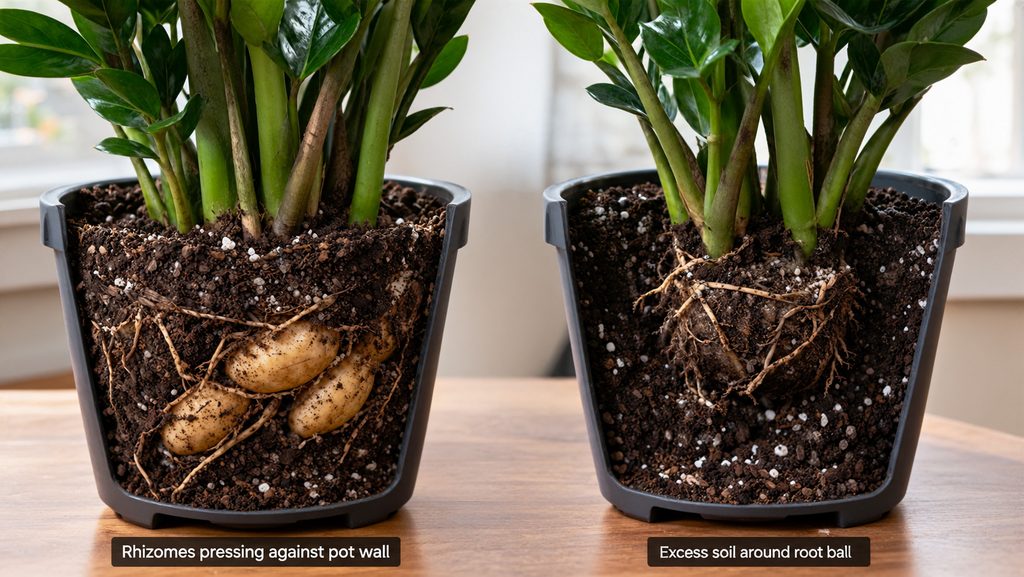
Being root-bound causes the opposite problem. Once the rhizomes run out of room, spear formation slows or stops entirely. Signs include rhizomes visibly pressing against the pot walls, water running straight through without being absorbed, and soil that dries out unusually fast after watering.
Fix: If the pot looks oversized relative to the plant, consider sizing down at the next repotting, moving no more than one size up from what the rhizomes actually need. If the plant is root-bound, repot into a container 1 to 2 inches larger in diameter, ideally in spring when the plant recovers fastest.
Cause 4: Cold Temperatures
ZZ plants prefer warm, tropical conditions, generally between 60°F and 85°F. Growth slows below that range, and temperatures under 50°F can push the plant into a survival mode where it halts growth entirely until conditions improve. A cold draft from a nearby window or door has the same effect, even if the general room temperature seems fine.
Fix: Move the plant away from drafty windows, exterior doors, and unheated rooms, and keep it clear of air conditioning vents that blow directly on the leaves. Consistent warmth, rather than occasional warm spells, is what restarts active growth.
Cause 5: Recent Repotting or Division
A four to eight week growth pause after repotting is completely normal. The plant spends this time rebuilding its root network below the soil before investing energy into anything visible above it. A newly divided or freshly potted ZZ plant follows this same pattern, often showing no top growth for several months while it establishes rhizome mass first.
Fix: Give the plant time rather than intervening further. Repotting again, adding fertilizer, or changing light conditions during this window usually adds stress rather than speeding recovery.
Cause 6: Wrong Season
ZZ plants slow to a near-stop during the cooler, dimmer part of the year, and this pause is a normal part of their growth cycle rather than a sign of a problem. Growth in this plant tracks light and warmth closely, so as days shorten and indoor temperatures drop, new shoots naturally pause until spring returns.
Fix: Maintain your normal care routine without increasing water or fertilizer to compensate. New spears typically resume once daylight hours lengthen and temperatures rise again.
Cause 7: Lack of Nutrients
Depleted, nutrient-poor soil can lead to stagnant growth over time, particularly in a plant that has not been repotted or fertilized in several years. Soil that drains poorly compounds this problem, since it prevents roots from taking up whatever nutrients remain.
Fix: Apply a low-dose liquid fertilizer during the active growing season only, following label instructions, and avoid fertilizing in fall or winter when the plant cannot use the extra nutrients. If the existing soil looks depleted or compacted, refreshing it at the next repotting addresses the root of the issue rather than masking it with more fertilizer.
Cause 8: Natural Slow Growth
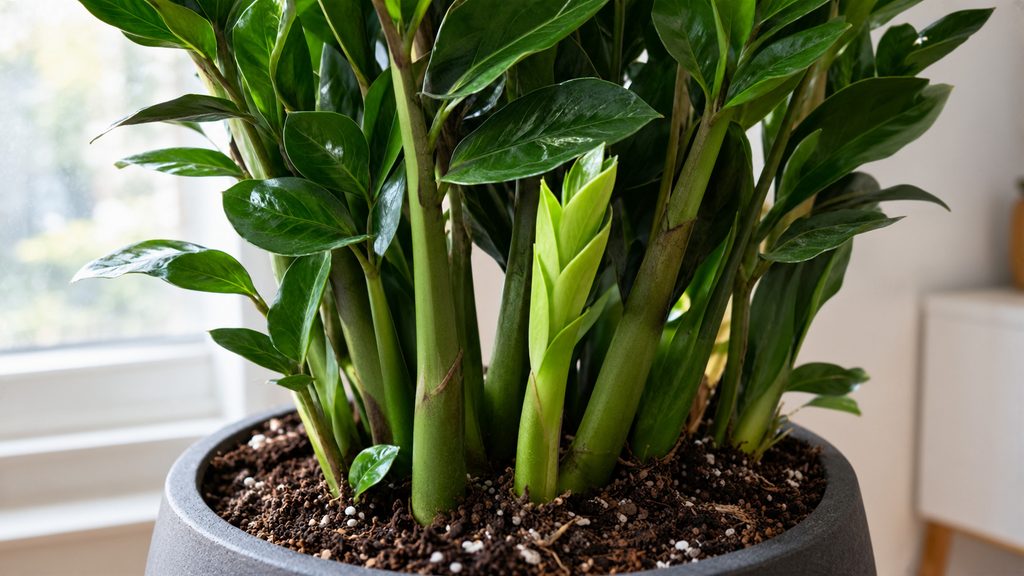
Even under ideal conditions, ZZ plants are simply slow growers. A plant of typical mature size often adds no more than two or three new stems a year, and these tend to arrive in occasional spurts rather than steady, continuous growth. A long quiet stretch between spurts is often just the plant’s normal rhythm rather than a sign that anything is wrong.
Fix: No action needed. Continue consistent light and watering, and expect growth in bursts rather than a steady trickle.
Common Causes at a Glance
| Cause | Key Sign | Fix |
|---|---|---|
| Not enough light | Stable plant, no new stems for months | Gradually move to brighter indirect light |
| Overwatering | Growth stalls before yellowing appears | Let soil dry fully; lift pot to judge moisture |
| Pot too large | Excess soil stays wet, energy goes to roots | Size down at next repotting |
| Root-bound | Rhizomes press pot walls, fast drying soil | Repot 1-2 inches larger, ideally in spring |
| Cold temperatures | Growth halts below 50°F or near drafts | Move away from drafts and cold windows |
| Recent repotting | 4-8 week pause, plant otherwise firm | Wait it out, avoid further intervention |
| Wrong season | Slowdown in fall and winter | Maintain routine, expect spring recovery |
| Lack of nutrients | Old, depleted, or compacted soil | Fertilize lightly in growing season only |
When to Actually Worry
Stillness alone is rarely a reason for concern with this plant. Start troubleshooting seriously only when you see active decline alongside the lack of growth, such as yellowing that spreads across multiple stems, bases that feel soft rather than firm, or soil that stays visibly wet for a week or more after watering.
If you’re unsure how your watering habits compare to what this plant actually needs by season and pot type, the ZZ plant care guide covers the full watering schedule in detail.
FAQs
How long can a ZZ plant go without producing new growth?
A ZZ plant can go many months, sometimes close to a year, without visible new growth while still being completely healthy. This is especially common after repotting, division, or during fall and winter dormancy.
Does fertilizing a ZZ plant make it grow faster?
Fertilizing only helps during the active growing season and only when the plant is otherwise healthy. Overfeeding does not speed up an already-slow plant and can stress the roots instead.
Should I repot my ZZ plant to encourage new growth?
Only repot if the rhizomes are visibly root-bound or pressing against the pot walls. Repotting a plant that does not need it adds unnecessary stress and often causes a longer growth pause rather than a shorter one.
Why does my ZZ plant look healthy but never grow?
A healthy-looking plant with no new growth is usually dormant rather than struggling, particularly if the stems stay firm and the leaves stay glossy. Check the season and how recently the plant was repotted before assuming something is wrong.
Can too much light stop a ZZ plant from growing?
Direct, intense sunlight is more likely to cause leaf scorch than to stop growth outright, though the stress from sun damage can slow the plant down indirectly. Bright indirect light supports the most active growth without this risk.
How do I know if my ZZ plant is root-bound?
Look for rhizomes pressing against or emerging from the pot’s drainage holes, water running straight through the pot without being absorbed, and soil drying out much faster than it used to. Any of these signs point to a plant that has outgrown its container.
Will my ZZ plant ever grow if I do nothing?
In most cases, yes. If the plant is simply dormant rather than struggling, maintaining a steady care routine without added intervention is usually all it takes for growth to resume when conditions improve.
Conclusion
A ZZ plant not growing is more often a normal pause than an actual problem, since this species is naturally slow and follows a dormant, then active growth pattern shaped by season, light, and recent repotting. Rule out active decline first, then work through light, watering, pot size, and temperature in that order, since these cause the vast majority of genuine growth stalls. In most cases, patience and a steady routine bring growth back on their own timeline rather than anything more dramatic.
Pingback: ZZ Plant Propagation: Division, Stem, and Leaf Cuttings
Pingback: Snake Plant vs ZZ Plant: Key Differences & Winner (2026)