ZZ plant propagation works through three methods: division, stem cuttings, and leaf cuttings, and each one moves at a very different speed. Division gives you a new plant almost instantly, while a single leaf cutting can take months before you see any real progress.
This guide walks through all three methods step by step, including what to expect at each stage and how long each one realistically takes. You will also learn how to tell whether a cutting is rooting or simply rotting, and what to do if a propagation attempt stalls.
Every method here works on a standard ZZ plant (Zamioculcas zamiifolia) grown indoors, whether you are dividing a mature plant or starting from a single leaf.
Quick Answer
ZZ plant propagation works best through division, which separates rhizomes from a mature plant into new pots for an instant, established plant. Stem cuttings root more reliably than leaf cuttings but still take one to several months to form a rhizome, while leaf cuttings are the slowest method, often taking four to nine months or longer.
Quick Take
A ZZ plant stores energy in underground rhizomes rather than a typical root system, and every propagation method depends on getting a piece of the plant to grow its own rhizome. Division works fastest because it gives each new section an existing rhizome from the start, while stem and leaf cuttings must build one from scratch, which explains why they take so much longer. Patience matters more with ZZ plants than almost any other houseplant, since visible progress can take weeks to months depending on the method.
One mistake many first-time propagators make is giving up on a leaf cutting after a few weeks because nothing visible has happened above the soil. In practice, the real progress with ZZ cuttings happens underground, where a small rhizome slowly forms before any new leaf appears, so a lack of visible growth in the first month or two does not mean the cutting has failed.
Why ZZ Plant Propagation Takes So Long
Most houseplants root quickly because a cutting only needs to grow new root cells, which can happen within days. A ZZ plant cutting needs to do something different: it has to build an entirely new rhizome, a thickened underground stem that stores water and starch, before it can support independent growth.
This is the same trait that makes ZZ plants nearly impossible to kill through neglect. The rhizome lets the plant survive missed waterings and low light for months, but it also means a cutting has to invest significant time forming that storage structure before new growth appears above the soil. Understanding this upfront changes how you judge progress, since a cutting that looks completely unchanged for two months may simply be doing all its work where you cannot see it.
What You Need Before You Start
A clean, sharp blade or pair of scissors matters more than most people expect, since a dull or dirty tool crushes plant tissue and introduces bacteria that can cause rot before the cutting even has a chance to root. Wipe your blade with rubbing alcohol between cuts, especially if you are taking multiple cuttings from the same plant.
A well-draining propagation medium, such as perlite or a mix of potting soil and perlite, works better than dense potting soil alone, since it keeps the cut end from sitting in excess moisture. Bright, indirect light and a consistently warm room, ideally above 65°F, both support faster rhizome development regardless of which method you choose.
Method 1: Propagation by Division
Division is the fastest and most reliable way to propagate a ZZ plant, since it works with rhizomes the plant has already grown rather than asking a cutting to form a new one.
When to Divide
Division works best on a mature plant with multiple stems growing from separate rhizomes, usually one that has filled or outgrown its current pot. A young plant with a single stem does not yet have enough rhizome material to divide safely.
How to Divide a ZZ Plant
Remove the plant from its pot and gently brush away the soil until you can see the pale, potato-like rhizomes underneath. Separate the rhizomes by hand wherever they naturally pull apart, keeping at least one healthy stem and a firm rhizome section with each division.
Plant each section into its own pot with fresh, well-draining potting mix, then water thoroughly. New growth typically resumes within a few weeks, since each division already has an established rhizome to draw energy from.
Division does put stress on the parent plant, so avoid dividing the same plant more than once every few years to give it time to recover. If any rhizome sections look soft or discolored during this process, set them aside rather than potting them, since planting compromised tissue alongside healthy divisions risks spreading the problem.
Method 2: Propagation by Stem Cuttings
Stem cuttings offer a middle ground between the speed of division and the patience required for leaf cuttings. A stem cutting includes a full stem with several leaves attached, which gives it more stored energy than a single leaf.
Rooting in Water
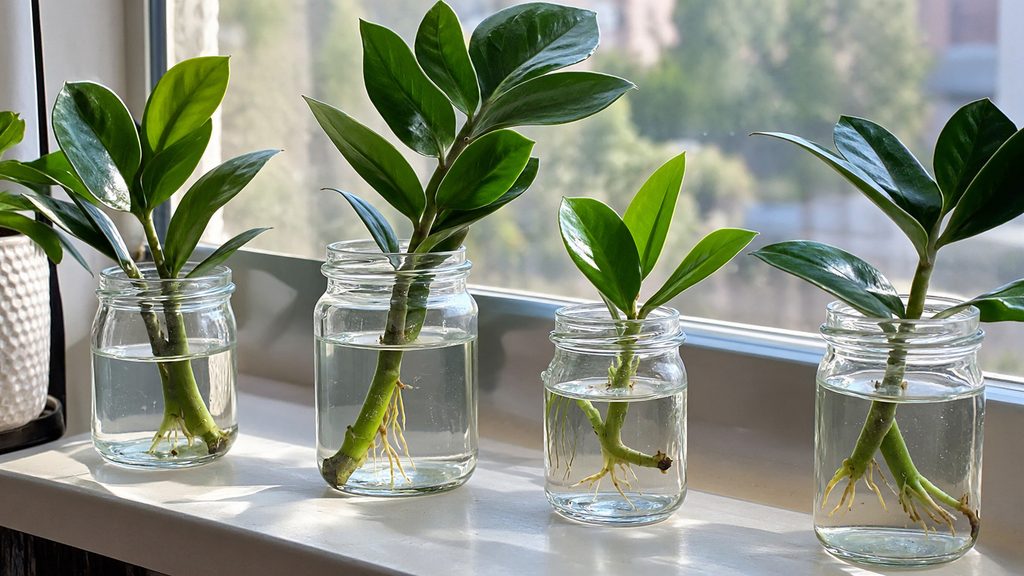
Select a healthy stem and cut it near the base with a clean, sharp blade. Let the cut end callus for one to two hours before placing it in a container of water, keeping the leaves above the waterline.
Set the container in bright, indirect light and change the water whenever it looks cloudy, since murky water often signals rot developing at the cut end. A small rhizome typically becomes visible at the base within one to a few months, at which point you can pot the cutting into soil.
Rooting in Soil
Let the cut stem callus the same way, then insert it about one to two inches into a well-draining propagation mix, such as a perlite and potting soil blend. Keep the mix barely moist, since soggy conditions encourage rot before a rhizome has a chance to form.
Rooting in soil skips the transplant shock that comes with moving a water-rooted cutting into potting mix, though you lose the ability to visually check on root progress.
Method 3: Propagation by Leaf Cuttings
Leaf cuttings produce the most new plants from a single stem, since each individual leaflet can become its own plant. This makes leaf cuttings useful when you want to maximize output, but it is also the slowest and least predictable method.
Remove a healthy leaflet, keeping its short petiole intact, since removing the petiole significantly lowers the chance of success. Let the cutting callus for one to two hours, then insert it about one to two centimeters deep into a moist, well-draining mix, or place the petiole end in water.
Keep the cutting in bright, indirect light and barely moist conditions, and expect the process to take four to nine months or longer before a rhizome forms and a new leaf emerges. Many leaflets taken from the same stem will root at noticeably different speeds, so do not judge a slower cutting as a failure just because others from the same batch progressed faster.
Propagation Methods Compared
| Method | Speed | Difficulty | Best For |
| Division | Fastest, weeks to establish | Easy | Mature plants with multiple stems |
| Stem Cuttings | Moderate, one to several months | Moderate | A balance of speed and multiple new plants |
| Leaf Cuttings | Slowest, four to nine months or more | Easy to start, slow to finish | Maximizing plant count from limited material |
Aftercare for New ZZ Plant Propagations
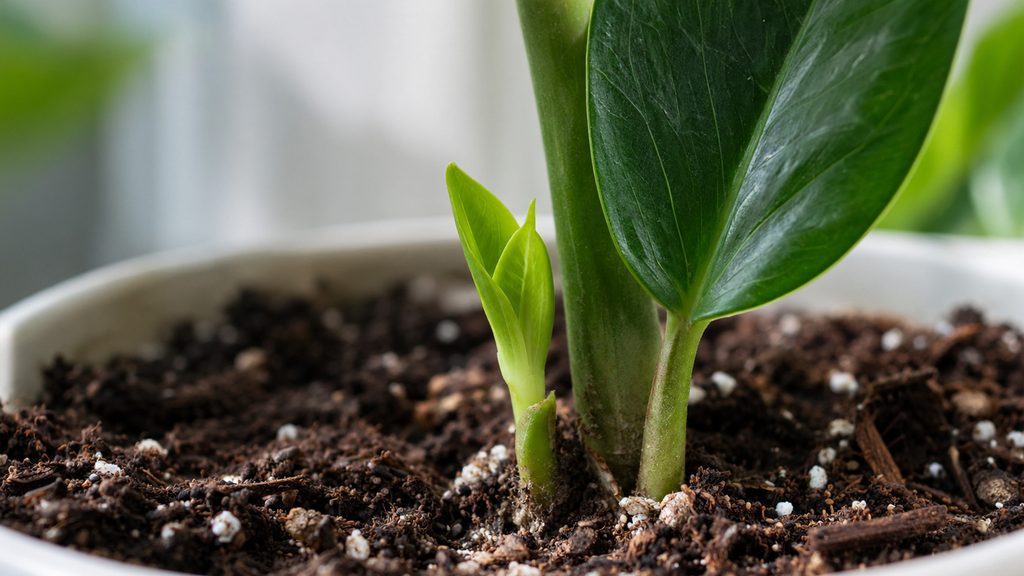
Keep every new cutting or division in bright, indirect light and away from direct sun, which can stress a plant that has not yet reestablished a full root system. Avoid overwatering during this period, since a cutting without established roots or rhizomes cannot absorb excess moisture and is especially prone to rot. The same overwatering risks that affect a mature plant apply here, often with even less margin for error given how little root structure a new cutting has.
Once you see new leaves forming, treat the plant as you would any established ZZ plant, gradually returning to a normal watering routine based on how quickly the soil dries out.
Signs Your ZZ Plant Cutting Is Working
A firm, unchanged cutting with no visible mush is a good early sign, even without any new growth above the soil. New leaflets emerging from the base, however small, confirm that a rhizome has formed underneath.
For water propagation, a small white or pale node at the cut end is the first visible sign of a developing rhizome. Clear water that stays free of cloudiness or odor also indicates the cutting is staying healthy rather than rotting.
Signs a Cutting Has Failed
A soft, mushy, or discolored cut end signals rot rather than rooting, and this section will not recover regardless of how long you wait. Cloudy, foul-smelling water in a water propagation setup is another clear sign of rot rather than normal root or rhizome development.
If a leaf or stem cutting yellows completely and detaches easily from the soil with no resistance, it has likely failed. Discard failed cuttings and try again with a fresh, healthy leaf or stem rather than continuing to wait on damaged material. If you notice a pattern of repeated rot across several cuttings, it is worth reviewing your watering habits, since the same overwatering mistakes that cause root rot in mature plants cause rot in cuttings as well, just more quickly given their smaller size.
What to Do If Growth Stalls Mid-Propagation
Occasionally a cutting that was clearly rooting, with a visible rhizome or node, stops making further progress for an extended stretch. In most cases this is simply the plant pausing rather than failing, particularly if the cooler months have arrived since you started.
Keep conditions stable rather than changing light, water, or location in response to a stall, since inconsistent conditions tend to prolong the pause rather than shorten it.
FAQs
How long does ZZ plant propagation take?
Division establishes a new plant within a few weeks, stem cuttings typically take one to several months, and leaf cuttings can take four to nine months or longer. The timeline depends heavily on light, temperature, and the specific method used.
Can you propagate a ZZ plant from just a leaf?
Yes, a single leaflet with its petiole intact can grow into a new plant, though this is the slowest method available. Keep the petiole attached, since removing it significantly reduces the chance of success.
Is water propagation or soil propagation better for ZZ plants?
Water propagation lets you watch root and rhizome development directly, which helps beginners catch rot early. Soil propagation skips the transplant shock of later moving a water-rooted cutting into potting mix.
Why is my ZZ plant cutting not growing after two months?
A ZZ cutting builds an underground rhizome before any new growth appears above the soil, so two months without visible progress is often still normal. For a broader look at why a ZZ plant may pause growth at any stage, see the ZZ plant not growing guide.
Can you divide a ZZ plant that only has one stem?
No, division requires multiple stems with separate rhizomes to safely split apart. A single-stem plant should be propagated through stem or leaf cuttings instead until it develops more growth.
Do ZZ plant cuttings need a grow light to root?
A grow light is not required, though bright, indirect natural light supports faster and more reliable rhizome development. A dim location can significantly slow the entire propagation process.
How many new plants can one ZZ leaf produce?
Each individual leaflet can develop into one new plant, so a single stem with many leaflets can theoretically produce many new plants. Success rates vary, and not every leaflet will form a rhizome.
Conclusion
ZZ plant propagation comes down to choosing the method that matches your patience and the material you have available. Division gives you an established plant within weeks if your ZZ plant already has multiple stems, stem cuttings offer a reasonable middle ground, and leaf cuttings work well when you want to maximize new plants from a single stem, provided you are willing to wait several months. Judge progress by firmness and eventual new growth rather than a fixed timeline, since the rhizome that ZZ plants rely on always forms out of sight before anything appears above the soil. For the full picture on caring for your ZZ plant once it is established, see the ZZ plant care guide.
Pingback: Snake Plant vs ZZ Plant: Key Differences & Winner (2026)