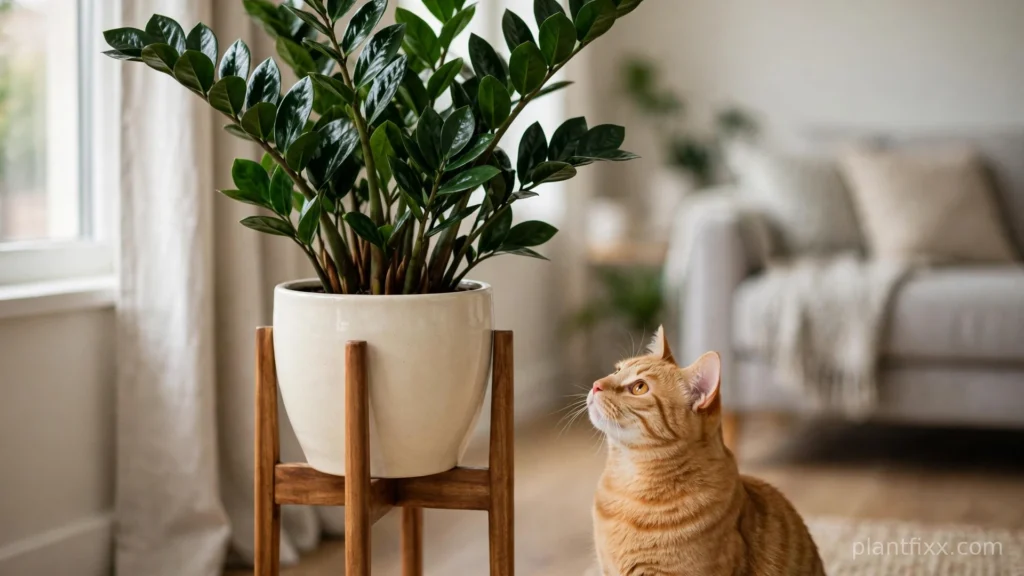
You bought a ZZ plant for its glossy leaves and forgiving nature, then one evening you caught your cat nibbling a leaflet. Now you are asking the question every pet owner eventually asks: is a ZZ plant toxic to cats and dogs?
The short answer is yes. But the word toxic does a lot of heavy lifting here, and most of the panic around it comes from not knowing what kind of toxic we are talking about.
This guide gives you the calm version: what is actually in the plant, what happens when a pet chews it, what to do in the first five minutes, and how to keep the plant and the pet in the same home.
Quick Answer: Yes, a ZZ plant is toxic to cats and dogs, but only mildly. Chewing the leaves releases needle-like calcium oxalate crystals that sting the mouth, cause drooling and sometimes vomiting. The reaction is local and self-limiting, not life-threatening, and most pets recover on their own within a few hours.
Quick Take: Every part of a ZZ plant holds insoluble calcium oxalate crystals: leaves, stalks and rhizomes. Intact foliage is harmless, but a chewed leaf delivers an instant mouth sting. Do not induce vomiting. Rinse the mouth, offer water, watch the clock, and call your vet if symptoms go past mild drooling. Placement is the real solution: a genuinely unreachable shelf, a closed room, or a hanging spot. Raven ZZ carries the same risk as the green type.
Years of repotting ZZ plants taught me about the sap the hard way: a snapped stalk once left my fingertips stinging and numb for an hour. That is why I now reach for gloves every time I prune one.
Why a ZZ Plant Stings: What Is Actually in the Sap
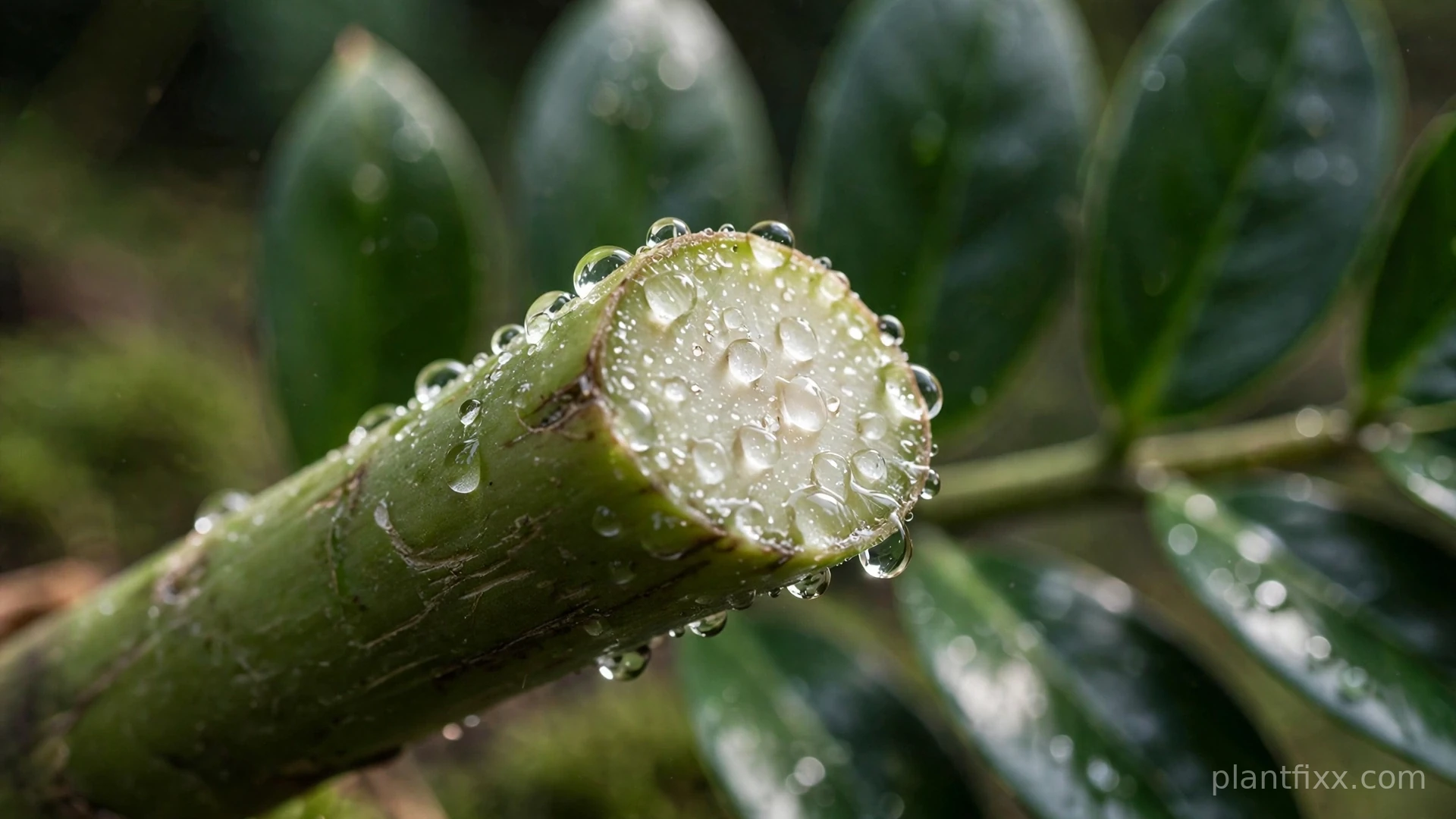
Every leaf, stalk and rhizome of a ZZ plant (Zamioculcas zamiifolia) holds microscopic, needle-shaped calcium oxalate crystals called raphides. When a pet chews a leaflet, those needles release into the mouth and jab whatever tissue they touch.
The sting is mechanical, not chemical. The crystals stay solid and never dissolve into the blood, so the damage happens at the point of contact, in the split second of the bite. Nothing is absorbed like a drug, which is why the reaction stays local and fades instead of spreading.
Intact, unbruised foliage is inert. The crystals only escape through broken tissue: a chewed leaf, a snapped stalk, or a cut sliced during pruning. A ZZ plant sitting untouched on a shelf is not leaking anything into your room.
What Happens When a Pet Chews a ZZ Plant
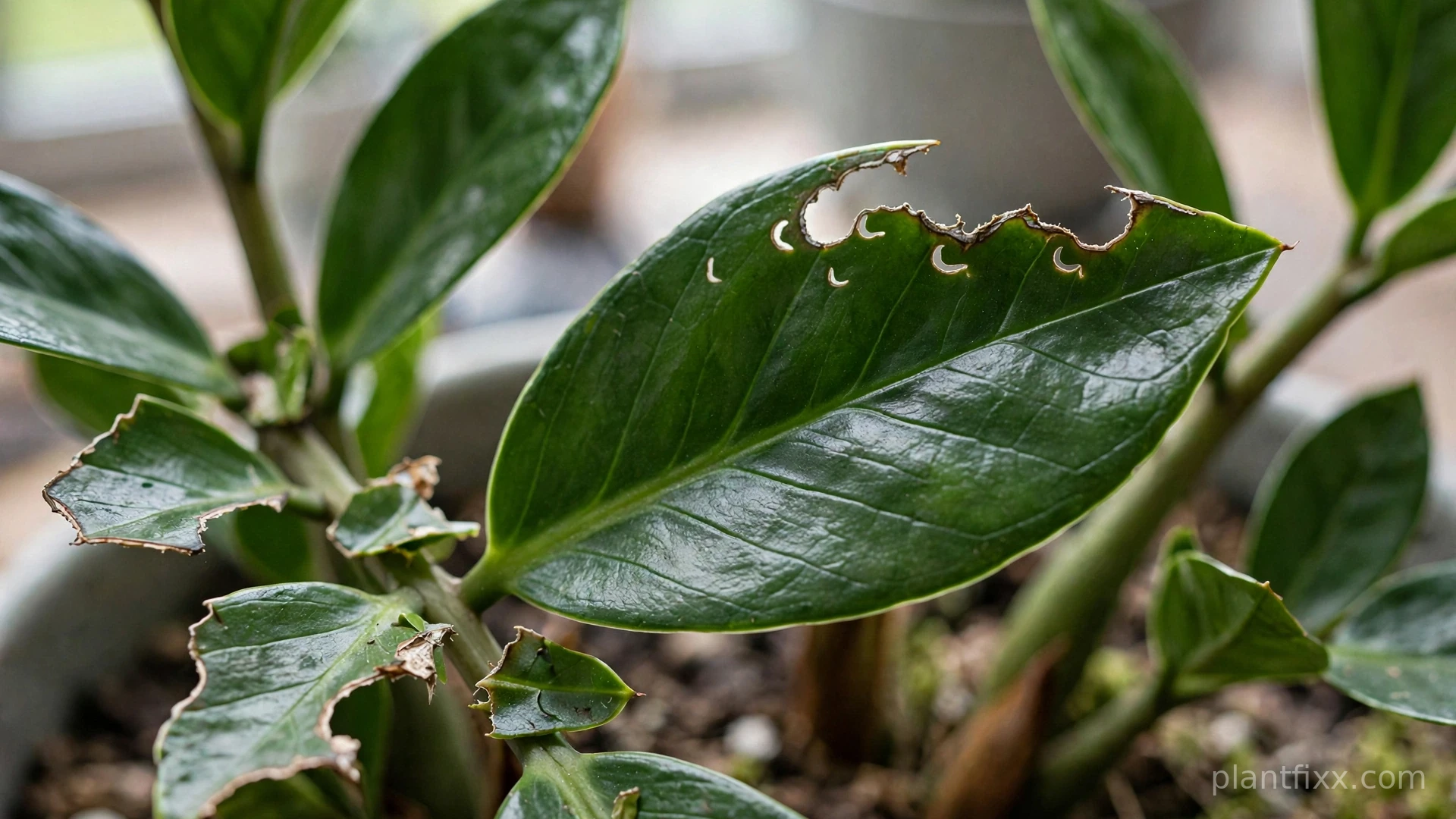
Within seconds of a bite, a cat or dog feels the sting and usually spits the leaf back out. That instant feedback is exactly why serious cases stay rare. What follows is an oral, short-lived reaction, not a slow internal poisoning. The mouth takes the hit.
If your cat chews a ZZ plant leaf
The sequence arrives in a predictable order. Immediately: pawing at the mouth, head-shaking and drooling. Within minutes: retching, nausea and loss of appetite. Over the next hour or two: possible vomiting or a little diarrhea. The heavy drooling that looks alarming in minute one usually eases within a few hours. A cat eating again by the next morning is a cat in the clear.
If your dog chews a ZZ plant leaf
The symptoms mirror the feline ones almost exactly: same crystals, same oral burning, drooling and the odd bout of vomiting. A bigger dog may chew a moment longer before the pain lands, so the mess looks worse without the danger being greater. The reaction still stays in the mouth and gut.
Can a ZZ Plant Kill a Cat or Dog?
No. Typical exposure is a mild, local irritation that resolves on its own, and the ASPCA classifies these exposures as not life-threatening.
To see where the ZZ plant sits on the danger scale:
| Plant | Danger level | Why it matters |
|---|---|---|
| True lilies (cats) | Life-threatening | A tiny nibble can cause fatal kidney failure |
| Sago palm (cats, dogs) | Life-threatening | Attacks the liver after ingestion |
| ZZ plant (cats, dogs) | Mild irritant | Local mouth sting from calcium oxalate crystals, fades on its own |
The rare exception is significant throat swelling that affects breathing. That is always an emergency, even though it is uncommon. For the same honest breakdown on another common plant, see our guide to snake plant toxicity for cats and dogs.
What to Do in the First Five Minutes
Your response in the first few minutes matters more than anything else. Rinse first. Hold off on anything drastic. Watch the clock.
- Clear the mouth. Gently remove any plant pieces still in your pet’s mouth, then wipe or rinse the crystals off the gums, lips and tongue with cool water.
- Soothe the sting. Offer cool water, or a small lick of plain yogurt.
- Move the plant out of reach so a second chew cannot happen while you are busy watching the first.
- Note the time and symptoms. A short log helps if you end up calling the vet.
- Do not induce vomiting unless a veterinarian or a poison hotline specifically tells you to. Forcing a mouthful of needle crystals back up rakes the throat a second time.
Save these numbers in your phone now: the ASPCA Animal Poison Control Center (888-426-4435) and the Pet Poison Helpline (855-764-7661), both staffed 24 hours a day.
Go to the emergency vet, do not wait at home, if you see difficulty breathing, significant swelling of the mouth or throat, repeated vomiting, or a pet that cannot swallow normally. When you call, have the plant’s name (ZZ plant, Zamioculcas zamiifolia), how much was chewed, and the current symptoms ready.
How to Keep a ZZ Plant in a Home With Pets
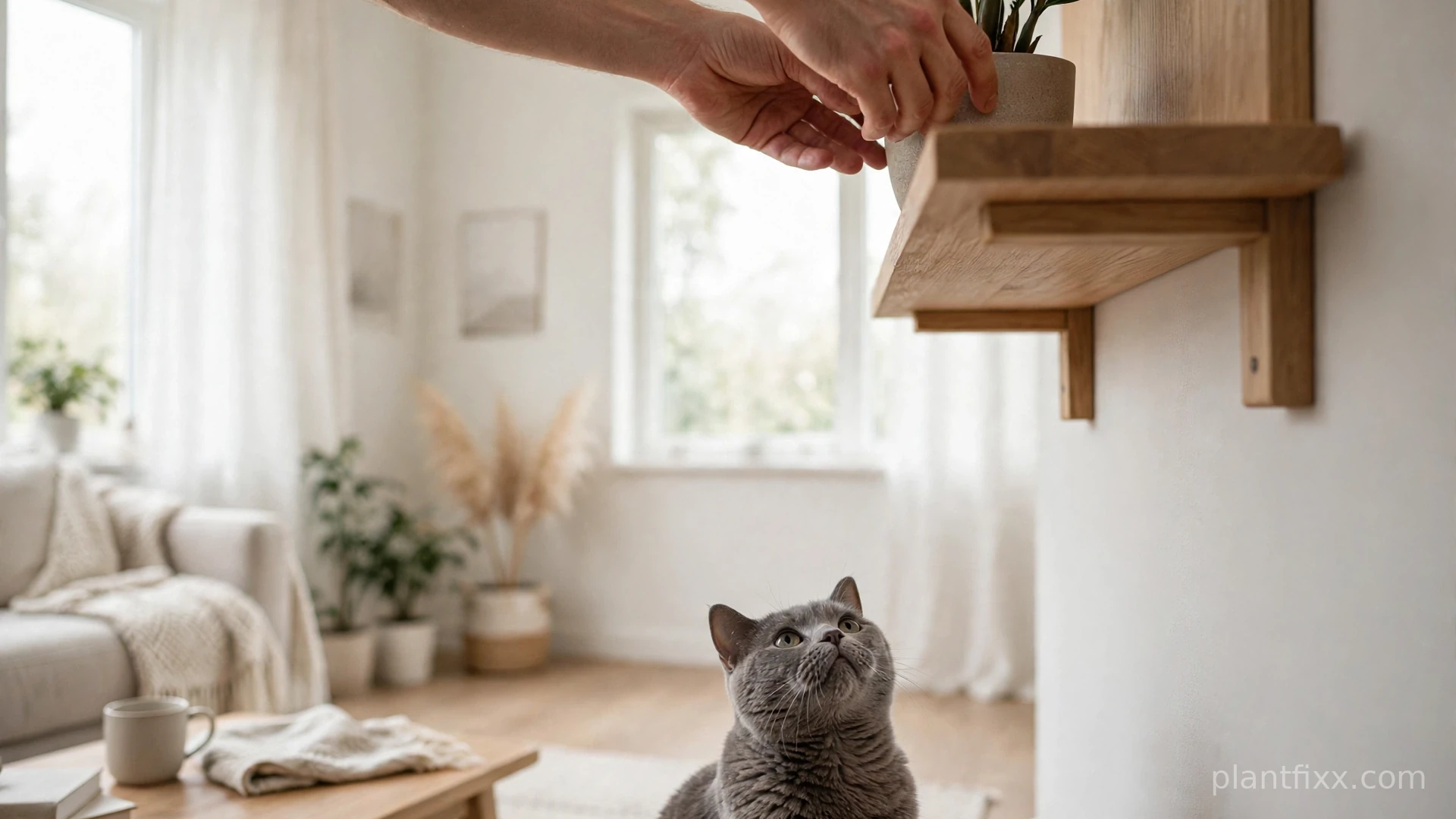
You do not need to rehome the plant. Placement beats every gadget, but only if your cat genuinely cannot leap to the spot. A low bookshelf is not the fortress it looks like.
The surest barriers are simple. A hanging basket lifts the foliage above a cat’s jump line and out of a dog’s reach. A closed door to a spare room is the one barrier no pet outwits. Pebbles or coarse gravel over the soil stops digging at the pot.
Scent deterrents come up a lot, and here is the honest verdict: a dish of citrus peel by the pot might help as a bonus, but it never replaces placement. If your cat is a known leaf-chewer, keep a pot of cat grass nearby as a safe chewing redirect.
Always clean up dropped leaves after pruning so none sit within paw’s reach. The ZZ plant is rarely your only question mark. Run each plant on your shelves through our Pet Safe Plant Checker to see which are safe for cats and dogs and which need the same high-shelf treatment.
ZZ Plant Safety for You, Not Just Your Pets
Touching an intact ZZ plant does nothing at all. The crystals stay locked inside undamaged tissue. Trouble only starts when cut or broken parts meet skin: the sap can leave a red, itchy contact irritation, exactly what I felt after that bare-handed pruning session.
Wear gloves whenever you prune, divide or repot, and wash your hands afterward. If sap gets in your eyes, rinse with cool running water and seek medical advice if irritation persists. For safe repotting steps, see our ZZ plant care guide.
One variety question comes up constantly: yes, Raven ZZ is toxic too. It is the same species with near-black leaves, so it carries the same calcium oxalate crystals. All the guidance on this page applies to it equally. If you are choosing between the two, our Raven ZZ vs regular ZZ comparison covers the real differences.
Pet-Safe Swaps That Fill the Same Spot
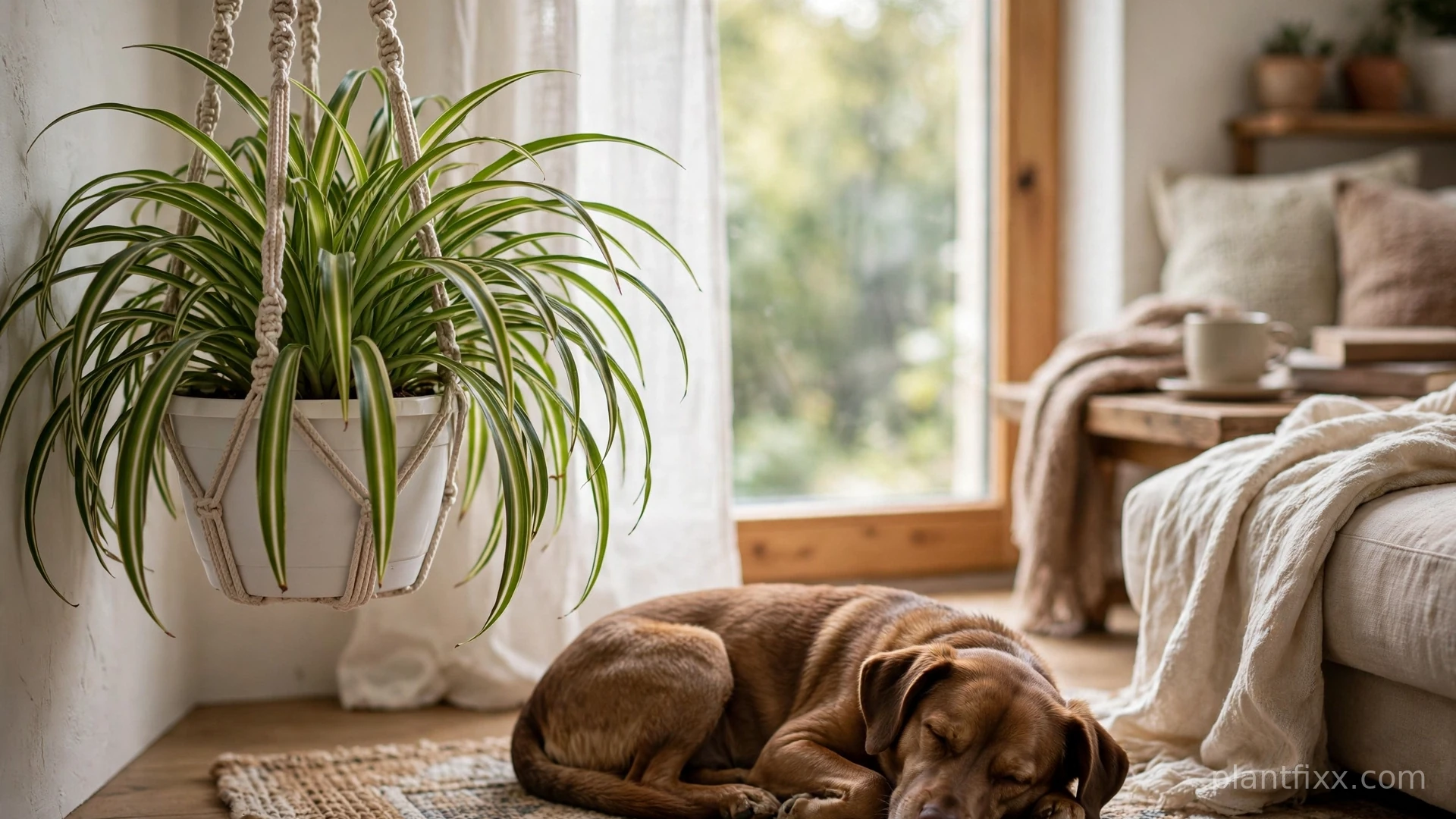
If the worry is simply not worth it in your home, plenty of plants fill a ZZ plant’s role without the toxicity. A spider plant is the easiest starting point: forgiving, arching, and completely non-toxic to cats and dogs. Parlor palm and Boston fern are two more low-drama options for similar indoor spots.
Still unsure about a plant you already own? The Pet Safe Plant Checker covers 40-plus common houseplants with toxicity levels, symptoms and safe alternatives, so you can audit your whole collection in a few minutes.
Frequently Asked Questions
Can a ZZ plant kill a cat?
Very unlikely. Typical exposure is a mild mouth irritation that fades within a few hours on its own. Severe throat swelling is rare but always needs an emergency vet.
Should I get rid of my ZZ plant if I have a cat?
No. The toxicity is a mild, local mouth sting, so placement solves it. Keep the plant where your cat cannot reach and save the emergency numbers.
Is a ZZ plant as dangerous as a lily for cats?
No. True lilies can cause fatal kidney failure in cats from a tiny nibble. A ZZ plant causes a painful but local mouth irritation. They sit in completely different danger tiers.
Are Raven ZZ plants toxic too?
Yes. Raven is a dark-leaved variety of the same species, so it contains the same calcium oxalate crystals and carries the same risk to cats, dogs and people.
What do I do first if my cat chews a ZZ plant leaf?
Gently clear plant pieces from the mouth, rinse with cool water, and offer water to drink. Do not induce vomiting unless a vet or poison hotline says so.
Is it safe to touch a ZZ plant with bare hands?
Yes, as long as the foliage is intact. Sap from a cut leaf can irritate skin, so wear gloves when pruning or repotting and wash your hands afterward.
The Calm Takeaway
A ZZ plant earns its toxic label honestly, but the label means a brief mouth sting, not a poison that stalks your pet’s organs. Rinse a chewed mouth, skip the vomiting, keep the hotlines saved, and give the pot a spot your pet cannot reach.
Want to audit the rest of your collection? Run every plant on your shelves through the Pet Safe Plant Checker.