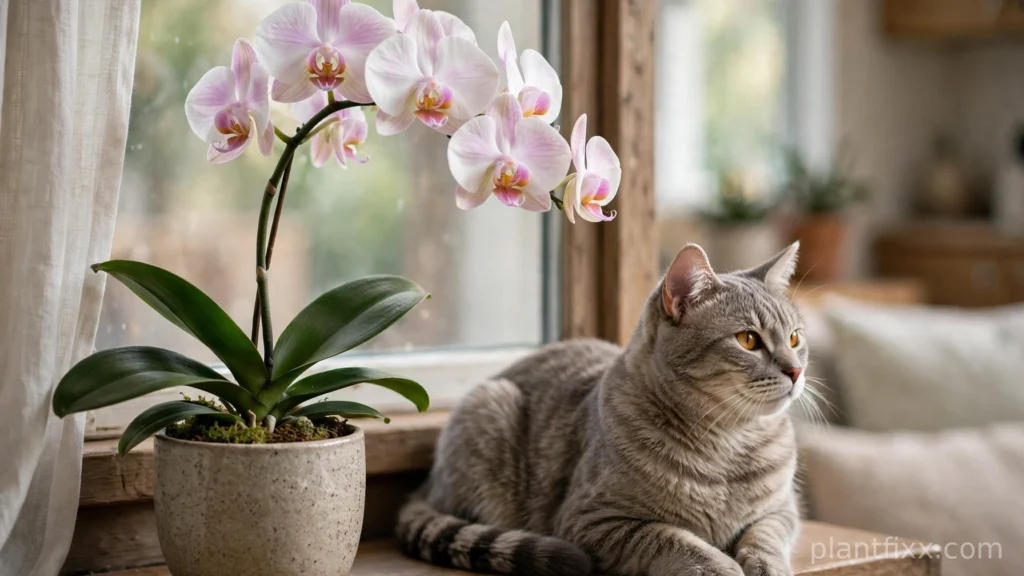
Orchids are not toxic to cats, according to the ASPCA, and that verdict covers the moth orchid most homes buy first. If you are asking are orchids toxic to cats after a sniff or a nibble, you can slow down and check what was actually eaten.
The plant itself carries no named poison. The pot around it is a different matter, because bark, feed and sprays can all reach a cat before a leaf does.
This guide sets out safety by type and by plant part, the mild signs a chew can cause, pot risks, and a grouping plan for a small home.
The Direct Answer: What the ASPCA Listing Actually Says
The ASPCA plant list gives the moth orchid its own entry under the heading Phalaenopsis Orchid. It lists the other common names as Moth Orchid and Moon Orchid, and the scientific name as Phalaenopsis sp.
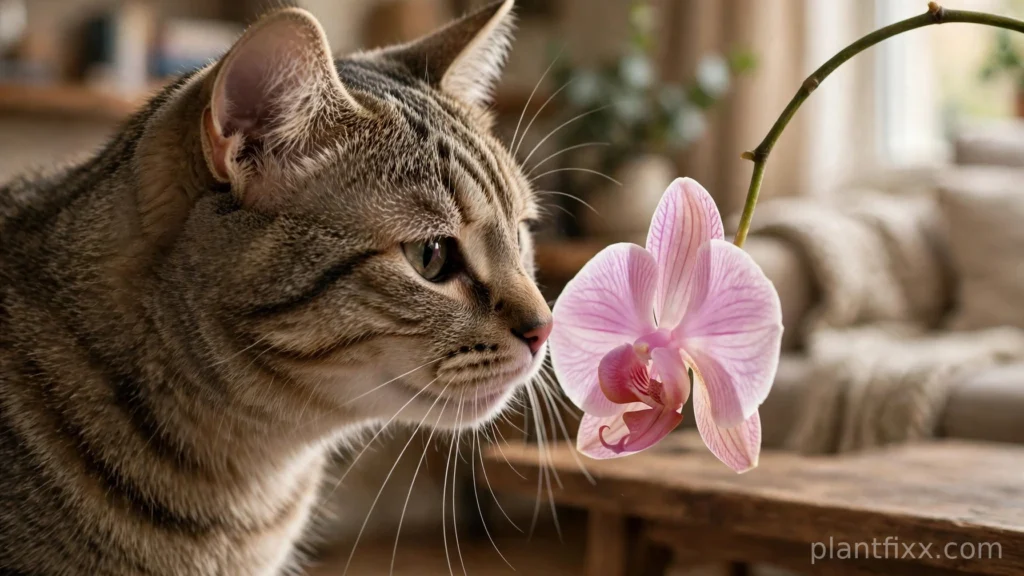
The family is given as Orchidaceae. Read the entry yourself on the ASPCA Phalaenopsis orchid page.
| Question | Answer from the ASPCA listing |
|---|---|
| Toxic to cats | No, listed non-toxic to cats |
| Toxic to dogs | No, listed non-toxic to dogs |
| Toxic to horses | No, listed non-toxic to horses |
| Toxic principle named | None on the entry |
| Clinical signs named | None on the entry |
Two limits sit on the wider ASPCA list. Eating any plant material may cause vomiting and stomach upset in dogs and cats, and the list covers the plants most often met in homes, not every plant in a family.
Before a new plant comes home, run its botanical name through our pet safe plant checker for cats and dogs. A label that says only orchid cannot match a listing.
Safety by Orchid Type: The Genera Table
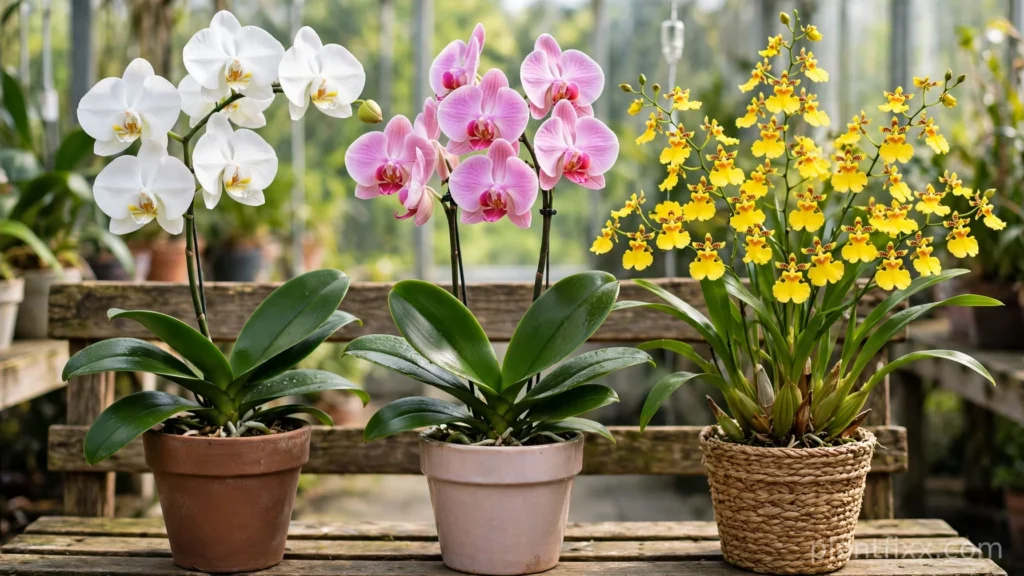
Orchids are sold by genus, and the ASPCA files its entries by named species and common name. A type by type check therefore gives a firmer answer than a family wide claim.
| Orchid type | Toxic or safe per ASPCA | Note |
|---|---|---|
| Phalaenopsis, moth orchid | Safe, non-toxic to cats | Own entry, Phalaenopsis sp. |
| Dendrobium | Safe, non-toxic to cats | Leopard Orchid entry, Dendrobium gracilicaule |
| Cattleya | Safe, non-toxic to cats | Christmas Orchid entry, Cattleya trianaei |
| Oncidium, dancing lady type | Safe, non-toxic to cats | Dancing Doll Orchid entry, Oncidium flexuosum |
| Vanda | No single ASPCA genus entry found | Check the exact species name first |
Phalaenopsis is the type to start with, as the orchid most widely sold and the clearest entry of the group. Lady slipper orchids in the Cypripedium group are reported elsewhere as a possible mild irritation case, so check that name with a vet.
For wider choices, our guide to pet safe indoor plants for cats and dogs groups safe plants by room and light, with orchids as the flowering option.
Why Orchids Carry No Toxic Principle
A houseplant poisons a cat through a named compound acting on a named organ or tissue. The Phalaenopsis entry names no such compound, and that blank is the core of the answer.
Toxic foliage plants usually work in known ways. Some carry needle shaped calcium oxalate crystals that injure the mouth on contact, and some carry compounds that act on the gut, heart or kidneys after swallowing.
Orchid tissue is not listed with any of those routes. A bite therefore delivers fibre and water, not a poison dose, and no hidden part of the plant stores a stronger one.
Every Part of the Plant: Flowers, Leaves, Stems, Roots and Pollen
Flowers and petals are the parts cats reach first, because they sit at nose height on an arching spike. They carry the same non-toxic status as the rest of the named plant.
Leaves are thick and fibrous, and stems, spikes and aerial roots are tougher still, so most cats tear off a small piece and lose interest. A dyed blue bloom is a separate case, since the listing does not cover dye taken up through its stem.
Pollen, and Why It Is Not the Lily Problem
Orchid pollen does not sit loose on the flower the way lily pollen does. Orchids pack pollen into small waxy masses called pollinia, held inside the flower until a pollinator lifts them out.
A cat brushing past a bloom therefore picks up little or no loose pollen on its coat. There is also no kidney toxin behind it, which is the point the lily section below covers.
Non-Toxic Does Not Mean Edible: The Stomach Upset Caveat
Cats digest meat, not leaves. Their gut has no long fermentation route for plant fibre, so a mouthful of leaf passes through with much of its bulk intact.
On the way it can irritate the stomach lining, so the normal result is a short spell of vomiting or loose stool. Amount sets the scale, and daily chewing keeps that irritation going while it ruins the plant, so safe never means a free salad bar.
What Happens If Your Cat Eats an Orchid
Most cats that nibble an orchid show no sign at all. They taste the leaf, dislike the texture, and go back to whatever they were doing before.
A cat that swallowed a larger piece may vomit once, pass a loose stool within a day, or skip a meal. Those signs fit fibre moving through a short gut, not poisoning.
Signs That Fit a Mild Response
- One bout of vomiting, with green or petal pieces in it
- Loose stool once, then normal litter box use again
- Brief drooling or lip licking straight after the chew
- Less interest in food for a few hours
- A quieter spell than usual, with normal drinking kept up
Read the direction of travel, not one sign in isolation. A mild response starts soon after the chew, peaks early, and eases over the rest of the day, with fresh water left down throughout.
What to Do If Your Cat Ate an Orchid
First, lift the plant out of reach and take any loose leaf or petal pieces out of the mouth with a soft cloth. Do that before you open a search page or call anyone.
Next, write down the plant name from its label, the part eaten, a rough amount, and the time. Keep the label and a photo of the chewed plant for any call.
Then offer water and watch the cat in a quiet room for the next few hours. Do not give milk, oil or a home remedy, and do not try to make the cat vomit.
That routine fits a named, listed orchid. For any unknown or toxic plant, use our full guide on what to do if your cat eats a toxic plant and call at once.
When Mild Is Not the Story: Signs That Need a Vet Promptly
Repeated vomiting, a cat that cannot keep water down, or blood in vomit or stool does not fit a fibre upset. Those signs need a vet on the same day.
Swelling around the mouth or face, hard breathing, collapse, shaking or a seizure means an emergency visit now. Do not wait at home to see whether such signs settle.
A mixed bouquet is the other common trap, since a toxic flower may have sat beside the orchid in the same gift. The ASPCA Animal Poison Control Center also takes calls on (888) 426-4435, day and night, all year, and a consultation fee may apply.
This page offers general information and cannot stand in for a vet who can examine your cat. If signs last, worsen or worry you, ring your own vet even though the plant is listed as safe.
The Real Risks Sit in the Pot, Not the Flower
An orchid bought in a shop arrives as a small system, not a bare plant. That system holds media, feed, treatments and hardware, and none of it shares the plant listing.
Fertiliser Granules and Feed Residue
Orchid feed often sits as granules on the surface or as a crust in the bark. A cat that digs or licks it eats feed salts, not plant, so apply feed away from the cat, water it in, and wipe the pot rim.
Pesticide Sprays and Shop Treatments
New orchids may carry a leaf spray, a shine product or a pest treatment from the grower. Systemic treatments move into the tissue itself, so rinsing cannot clear them. Ask the seller what was used, and keep a new plant in a closed room until you know.
Bark Media, Stakes and Clips
Orchids grow in chunky bark, not soil, and a swallowed chunk is a choking and blockage risk, a physical danger rather than a poison. Cover the surface with a fitted disc or large stones, keep loose moss strands out of reach, and remove the wire stake and its clip once the spike has finished.
Heavy Pots That Tip
A cat that bats a tall spike can pull the whole plant over, and a falling ceramic pot can cut a paw. Set the orchid on a wide, low and stable base, away from the edge of its surface.
Vase Water
Vase water may hold flower food, a florist treatment, or an old bacterial load, even though the cut flower itself is still non-toxic. Put vases where a cat cannot drink from them, and change the water often.
Orchids Are Not Lilies: The One Contrast That Matters
True lilies in the Lilium group, and daylilies, can cause kidney failure in cats from a small bite, from pollen licked off a coat, or from vase water. That danger has no parallel in an orchid.
Names cause the mix up, since peace lily and calla lily are not true lilies either and work by other routes. Keep true lilies out of a cat home altogether, in pots and in bouquets.
Grouping Orchids Safely With Cats in a Small Home
Place an orchid by its light first, then check the route a cat would take to reach it. A shelf beside a sofa back is a climbing step, not a safe spot, so pick a windowsill behind a closed door, a stand with no launch point, or a hanging planter.
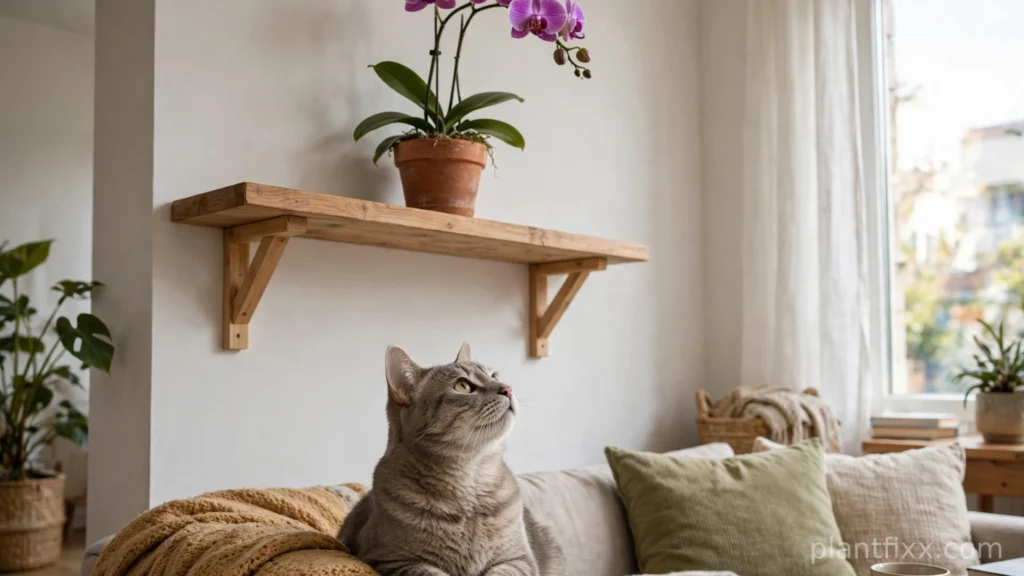
Group orchids together in that one defended spot, rather than scattering them through every room. One spot is easier to watch, water and feed than five pots at five different heights.
In a dim corner, pair the shelf with plants from our list of pet safe low light indoor plants, so every neighbour shares the same safe status. Orchids still need bright indirect light to rebloom, and our guide to the best low light indoor plants for small spaces helps you judge a room.
Give the Chewing a Better Target
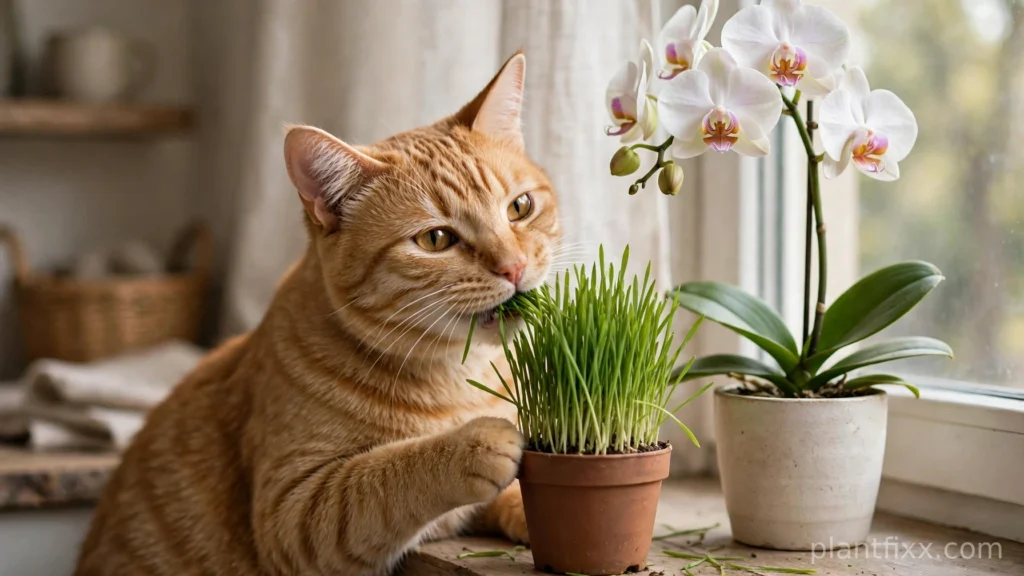
A pot of cat grass beside the stand gives a chewing cat a plant grown to be eaten, and wheatgrass or oat grass takes most of the attention. Pick up fallen petals and bark pieces the same day, since floor level litter is the easiest chew in the room.
Dogs and Horses: The Same Listing, Briefly
Dogs and horses sit on the same Phalaenopsis line as cats, listed as non-toxic. A dog is more likely to eat a whole flower or pull bark from the pot, so the upset and blockage points matter more there.
A Safe Flowering Plant, With Honest Limits
Orchids earn a place in cat homes on a named listing, not on habit or hearsay. Phalaenopsis is listed as non-toxic to cats, dogs and horses, and named Dendrobium, Cattleya and Oncidium entries point the same way.
A foliage plant such as calathea answers a separate pet safety question on this site, while orchids give a cat home its flowering option.
The limits are pot level, not petal level, so watch the surface, keep feed and sprays apart from the animal, and check any new flowering plant in the pet safe plant checker before it joins the group.
Are orchids toxic to cats?
No. The ASPCA lists Phalaenopsis sp. as non-toxic to cats, dogs and horses, with no toxic principle named. A large chew can still cause a short stomach upset from fibre.
Are all orchid types safe for cats?
Named ASPCA entries cover Phalaenopsis, Dendrobium, Cattleya and Oncidium types as non-toxic to cats. No single Vanda genus entry was found, so check that exact species name first.
What happens if my cat eats an orchid flower?
Usually nothing, or one bout of vomiting and a loose stool as the petal passes. Call a vet if signs repeat or drinking stops.
Is orchid pollen dangerous to cats?
No. Orchid pollen sits in waxy masses inside the flower, so a cat picks up little of it, and it carries no kidney toxin like true lily pollen.
Are orchids toxic to dogs?
No. Dogs share the Phalaenopsis listing as non-toxic, though bark and whole flowers still bring blockage risks.
Can my cat drink water from an orchid vase?
Keep it out of reach. Vase water may hold flower food or treatments and an old bacterial load, even though the flower is non-toxic.
Should I keep my cat away from a safe orchid?
Yes, as a habit. Steady chewing upsets the stomach, spreads bark and kills blooms, so a defended spot and cat grass are worth it.
Pingback: Best Pet Safe Low Light Indoor Plants for Cats and Dogs
Pingback: 10 Pet Safe Indoor Plants for Cats and Dogs (2026 Guide)