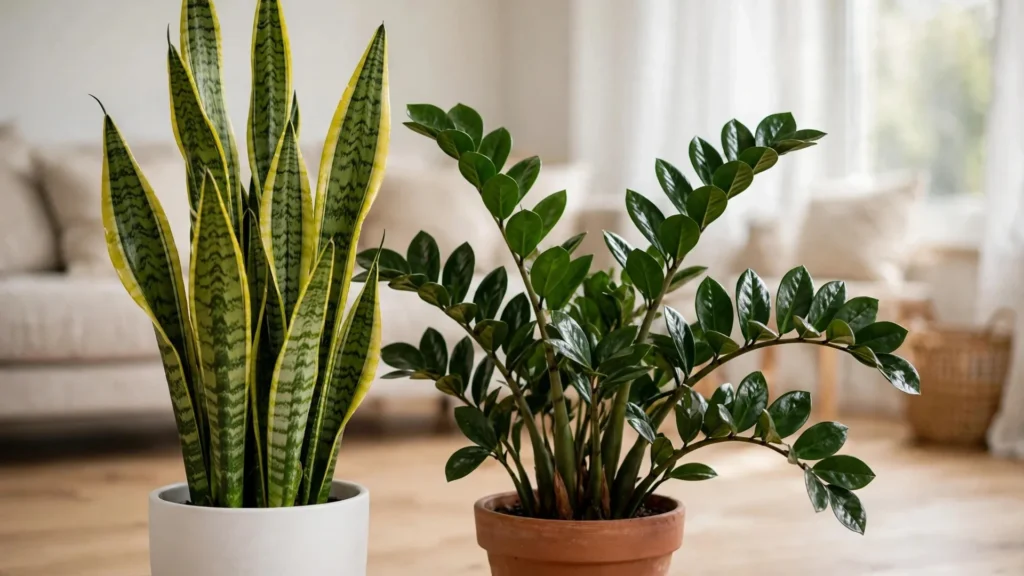
Walk into any plant shop and you will find them side by side: the snake plant with its tall sword leaves, and the ZZ plant with glossy leaflets arching outward. The snake plant vs ZZ plant debate never ends because both promise the same thing: a plant that survives you.
Both keep that promise, but they do it differently. One wants a brighter spot and grows upward. The other tolerates a dark corner and spreads outward. One multiplies fast from cuttings. The other makes you wait months.
This guide compares them across the seven things that actually matter: light, water, growth, propagation, toxicity, air purification, and looks. By the end you will know exactly which one belongs in your room.
QUICK ANSWER: For most homes, pick the ZZ plant for dim rooms and the snake plant for brighter spots or narrow corners. The ZZ tolerates lower light and longer dry spells, while the snake plant grows taller, propagates faster, and releases oxygen at night. Both are toxic to pets, and both die from overwatering long before drought harms them.
QUICK TAKE: Snake plants and ZZ plants look nothing alike but survive the same way. Underground rhizomes store water, so both coast through missed waterings that would kill fussier plants. The real split is shape and light tolerance. Snake plants grow upright and prefer brighter indirect light, while ZZ plants arch outward with glossy leaflets and hold their deep green color in dim rooms where snake plants fade. Snake cuttings also root noticeably faster. Neither plant is pet-safe, so match your pick to your room’s light and the shape your space needs.
One mistake many people make is treating these two as interchangeable “unkillable” plants. In practice, they fail for opposite reasons. Snake plants decline slowly in rooms that are too dark, while ZZ plants die quickly in pots that stay too wet. Knowing which failure mode matches your habits is the whole decision.
Why These Two Plants Get Compared
The comparison exists because both plants come from dry regions of Africa, both store water underground in rhizomes, and both earned a reputation as the toughest indoor plants you can buy. They ask for the same basic routine: infrequent water, well-draining soil, and no fussing.
That shared reputation hides real differences. Their rhizomes are shaped differently, their light needs are not the same, and they grow at different speeds. Once you see those differences, the choice stops being about which plant is “better” and starts being about which plant fits your room.
Snake Plant vs ZZ Plant: Head-to-Head
Light: ZZ Wins the Dark Corners
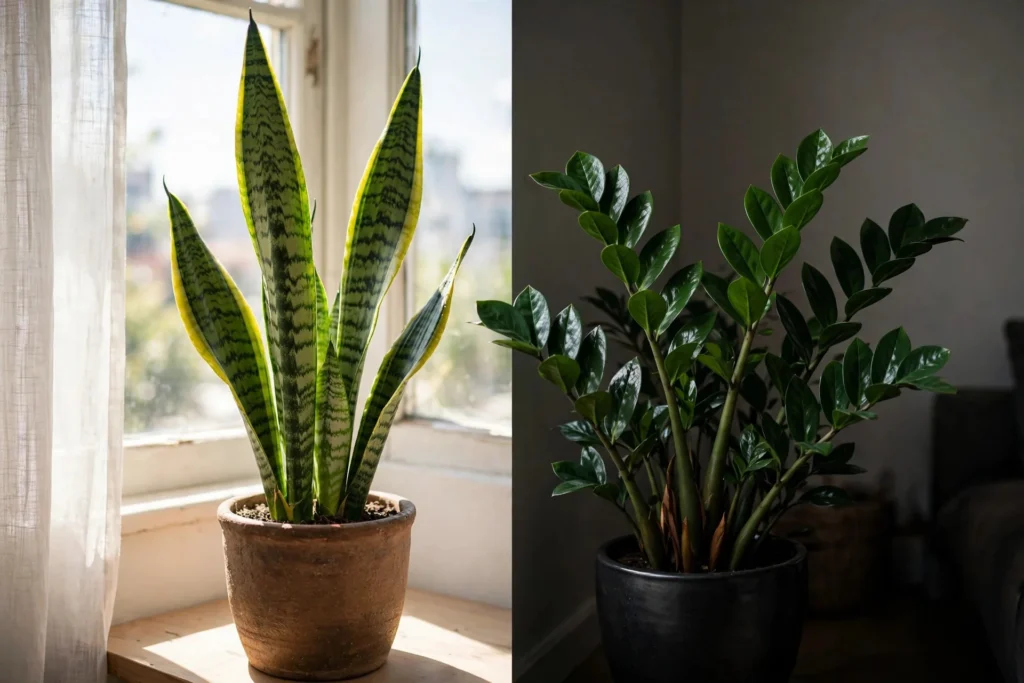
Light is the biggest real difference between them. The ZZ plant tolerates very low light better than almost any common houseplant. It keeps its glossy deep green leaves in dim rooms and north-facing corners where many plants fade.
The snake plant survives low light too, but it does not thrive there. In a dark spot it grows slowly, its leaves lose rigidity, and the variegation on patterned varieties dulls over time. Give it medium to bright indirect light and it grows faster and holds its shape.
Bottom line: for a truly dim room, the ZZ plant is the safer pick. For a spot with decent indirect light, either works. If you are mapping the darkest corners of an apartment, our best low light indoor plants guide ranks more options.
Watering: Both Forgive Drought, Neither Forgives Soggy Soil
Both plants store water underground, so both handle missed waterings with ease. The ZZ plant is the more extreme of the two. Its thick, potato-like rhizomes hold so much water that it prefers soil to dry out completely between drinks, often going three to four weeks indoors.
The snake plant wants water when the top couple of inches of soil dry out, roughly every two to three weeks. It is slightly more forgiving of an extra drink than the ZZ, but soggy soil still rots both. Overwatering kills more snake plants and ZZ plants than every other cause combined.
If your plant has stalled and you suspect watering is the cause, see why a ZZ plant stops growing for the full diagnosis.
Growth Rate and Size
Neither plant is fast, but the snake plant is the quicker of the two. In decent light it pushes new leaves steadily and can reach two to four feet indoors, with some varieties growing taller. Its upright growth suits narrow corners, tight entryways, and spots beside furniture where horizontal spread would be a problem.
The ZZ plant grows slowly and outward. Its stems arch, so a mature plant needs more horizontal room than its pot suggests. In a studio apartment that outward spread matters. Expect two to three feet of arching growth over several years, not months.
Propagation: Snake Plant Is Faster
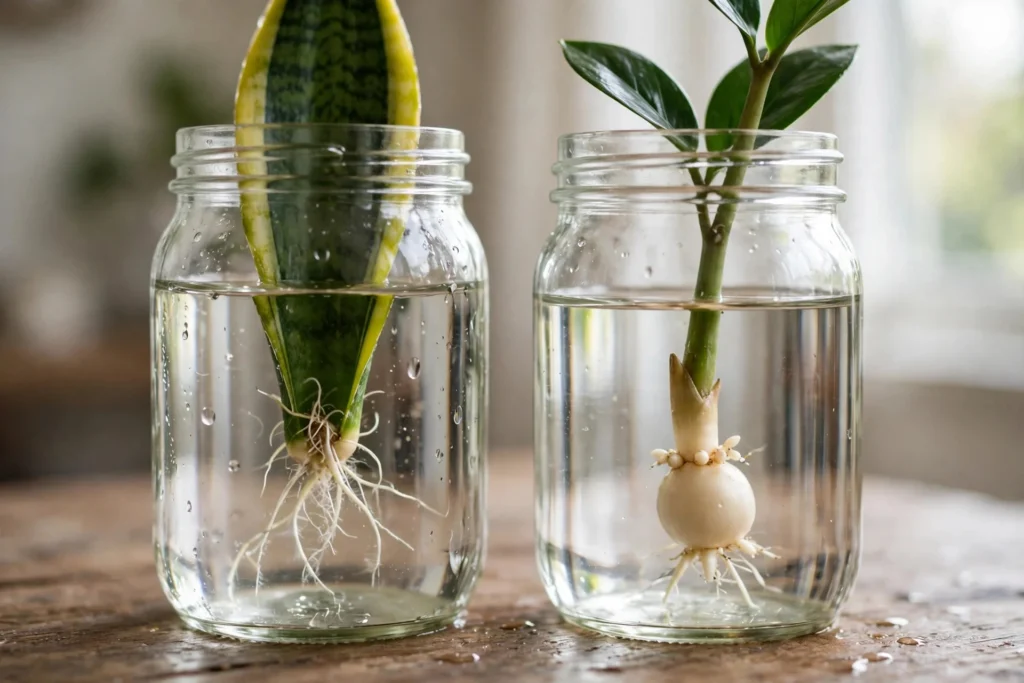
This is where the gap gets wide. Snake plant cuttings root in weeks and produce pups relatively quickly. A single leaf cutting can become a new plant within a few months. See our snake plant propagation guide for the step-by-step.
ZZ propagation works, but slowly. A stem cutting needs months, and a single leaf cutting can take six to twelve months before new growth appears, because the cutting must build an entirely new rhizome first. Our ZZ plant propagation guide covers realistic timelines for all three methods.
If multiplying your plants is part of the fun, the snake plant wins easily.
Pets and Toxicity: Both Are Toxic
This needs saying clearly because several comparison articles get it wrong: neither plant is pet-safe. The snake plant is listed as toxic to cats and dogs, causing nausea and vomiting if chewed. The ZZ plant contains calcium oxalate crystals that irritate the mouth and cause drooling and vomiting.
Keep both out of reach of curious pets and small children, or choose a different plant for low shelves. There is no winner here, only a tie you should respect.
Air Purification
The snake plant has the stronger reputation here. It was included in NASA’s 1989 clean air study plant list, and it uses CAM photosynthesis, which means it releases oxygen at night instead of only during the day. That trait is one reason snake plants are so often recommended for bedrooms.
The ZZ plant also filters indoor air in lab studies, but its results are less documented. Treat air purification as a bonus for either plant, not the reason to buy. No houseplant replaces ventilation.
Side-by-Side Comparison
| Feature | Snake Plant | ZZ Plant |
|---|---|---|
| Best light | Medium to bright indirect | Low to medium indirect |
| Low-light tolerance | Good | Excellent |
| Watering | Every 2-3 weeks | Every 3-4 weeks |
| Drought tolerance | High | Very high |
| Growth speed | Slow to moderate | Slow |
| Shape | Upright, vertical | Arching, spreading |
| Propagation speed | Fast | Slow |
| Pet safety | Toxic | Toxic |
| Nighttime oxygen | Yes (CAM) | No |
| Biggest killer | Overwatering, too-dark rooms | Overwatering |
Can You Plant Them Together in the Same Pot?
You can, but it is not a good idea. They dry out at different rates. The snake plant wants water when the top inches dry, while the ZZ prefers the whole pot bone-dry. In one shared pot you are stuck watering both on the same day, so one plant always ends up too wet.
Shared pots also mean a larger soil volume that stays wet longer, and if one plant develops rot or pests, the other sits right next to it. Group separate pots together instead. You get the same layered look with far less risk.
The Verdict: Which Should You Buy?
There is no single winner, but there is a right answer for your situation:
- Dim room or office corner: ZZ plant. It holds its color where the snake plant fades.
- Narrow vertical space: Snake plant. Upright leaves fit where arching stems cannot.
- You travel or forget water: ZZ plant. Its rhizomes buy you the most time.
- You enjoy propagating: Snake plant. Faster cuttings, quicker pups.
- Bedroom placement: Snake plant, for the nighttime oxygen trait.
- Pets or toddlers at plant level: Neither. Both are toxic.
Many plant lovers end up owning both, placed where each one’s strengths show. Once yours is established, our ZZ plant care guide covers the full routine.
Frequently Asked Questions
Which is easier for beginners, snake plant or ZZ plant?
Both suit beginners. The ZZ tolerates dimmer rooms and longer dry spells, while the snake plant is more forgiving of occasional overwatering and brighter spots.
Which does better in low light?
The ZZ plant. It keeps its glossy deep green leaves in dim rooms where a snake plant fades and slows down.
Can a snake plant and ZZ plant share the same pot?
Not recommended. They need water at different rhythms, so one always ends up too wet. Use separate pots grouped together.
Which is safer for cats and dogs?
Neither. Both are toxic if chewed. Keep them out of reach of pets.
Which grows faster?
The snake plant. It is still slow, but noticeably quicker than the ZZ, especially in decent light.
Snake plant or ZZ plant for a bedroom?
Snake plant. It tolerates typical bedroom light and releases oxygen at night through CAM photosynthesis.
Do they need the same soil and pot?
Both want well-draining soil and a pot with drainage holes. A cactus or succulent mix, or potting soil lightened with perlite, suits either plant.
Conclusion
The snake plant vs ZZ plant choice comes down to your room, not the plants. Dim corner and a hands-off routine point to the ZZ plant. A brighter spot, a narrow corner, or an interest in propagation points to the snake plant. Both punish overwatering and reward neglect, and both look sharp doing it. Pick the one that matches your light, give it drainage and restraint, and it will be with you for years. For your next easy win, see our snake plant propagation guide and multiply the winner.
Pingback: Snake Plant vs Pothos Plant: Which Is Right for You? (2026)