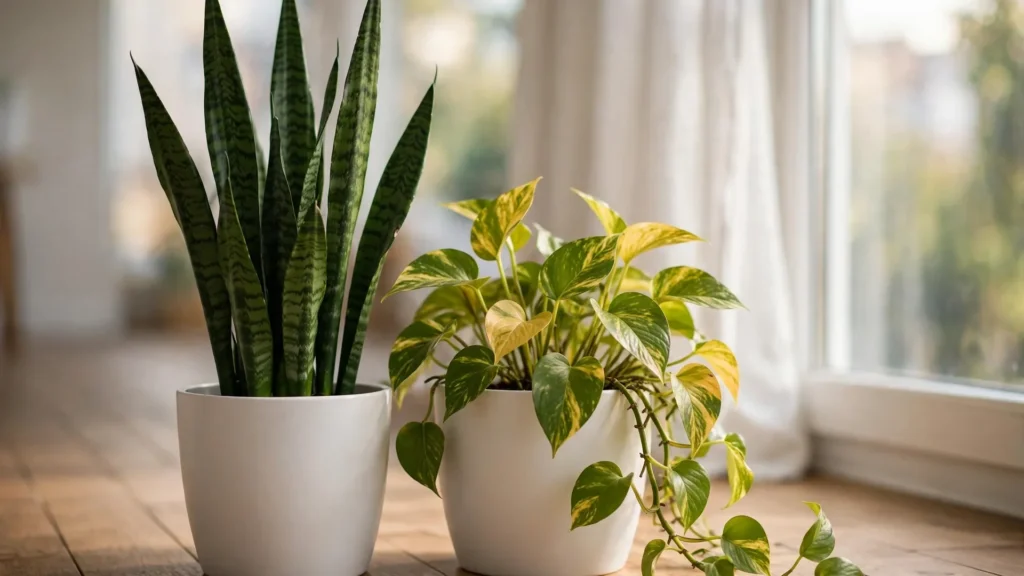

Every plant shop puts these two on the “hard to kill” shelf: the snake plant, stiff and architectural, and the pothos, soft and trailing. When you search snake plant vs pothos, you are really asking which one survives your north-facing window, your watering habits, and your cat.
Most online comparisons list thin specs and then hedge. This one does not hedge. Every claim below comes from real sources and official toxicity listings.
Quick Answer
Buy the snake plant if you forget to water or travel often. Buy the pothos if you want fast, forgiving growth and a trailing look. Both tolerate low light, both are toxic to cats and dogs, and neither purifies room air in any meaningful way. Match the plant to your watering habits, not to the “easy” label.
Quick Take
The honest split: snake plant wins on neglect tolerance, storing water in its thick leaves so it can sit dry for weeks. Pothos wins on visible reward, growing fast, bouncing back from dry soil quickly, and trailing beautifully off a shelf. Snake plant grows slowly and rots fast when overwatered. Pothos loses variegation in low light and its vines go bare without enough light.
One mistake many owners make is treating “hard to kill” as one trait. In practice, the two die from opposite causes. Snake plants die because owners water them on a fixed schedule. Pothos die because owners park them in dark corners and never prune.
Why This Comparison Confuses Everyone
Both get marketed as beginner-proof, both handle low light, and some comparison sites contradict themselves, calling pothos “easier” on one page and recommending snake plants “for complete beginners” on another. The missing piece is what “easy” means for your life. Snake plant ease is passive: you do nothing for weeks and it stays fine. Pothos ease is interactive: it shows you what it wants and forgives mistakes visibly.
Snake Plant vs Pothos: The Side-by-Side Table
| Factor | Snake Plant | Pothos |
|---|---|---|
| Light | Tolerates low light but prefers bright indirect | Low to bright indirect light, but variegated types need bright light to keep color |
| Watering | Every 2-3 weeks, only after soil dries 100% through | Roughly weekly, when top 2 inches of soil are dry |
| Neglect tolerance | Excellent (stores water in leaves) | Good (survives dry spells with a deep soak) |
| Overwatering risk | High (root rot is the top killer) | Moderate |
| Growth speed | Slow | Fast |
| Footprint | Vertical, 1-4 ft tall, small floor area | Trailing vines 6-10 ft long, needs a shelf or pole |
| Pet toxicity | Toxic (saponins) | Toxic (calcium oxalates), and soft leaves get chewed more |
| Propagation | Leaf cuttings, slow | Stem cuttings in water, fast and reliable |
| Beginner pick | Best for forgetful waterers | Best for fast feedback and visible wins |
Light: Which One Survives Your Windows
Snake plants adapt across the full spectrum of indoor light but do best in bright indirect light. In a dim corner they survive, though growth slows and leaves grow darker and softer. A north-facing window or hallway works fine.
Pothos handles low to bright indirect light with one real caveat: variegated varieties like Marble Queen lose their white and cream markings in low light. Solid green types like Jade hold up better in dim rooms.
Verdict: for a genuinely dark apartment, the snake plant keeps its look with less compromise.
Watering: The Number One Killer for Both
This is where the two differ most, and where most people go wrong.
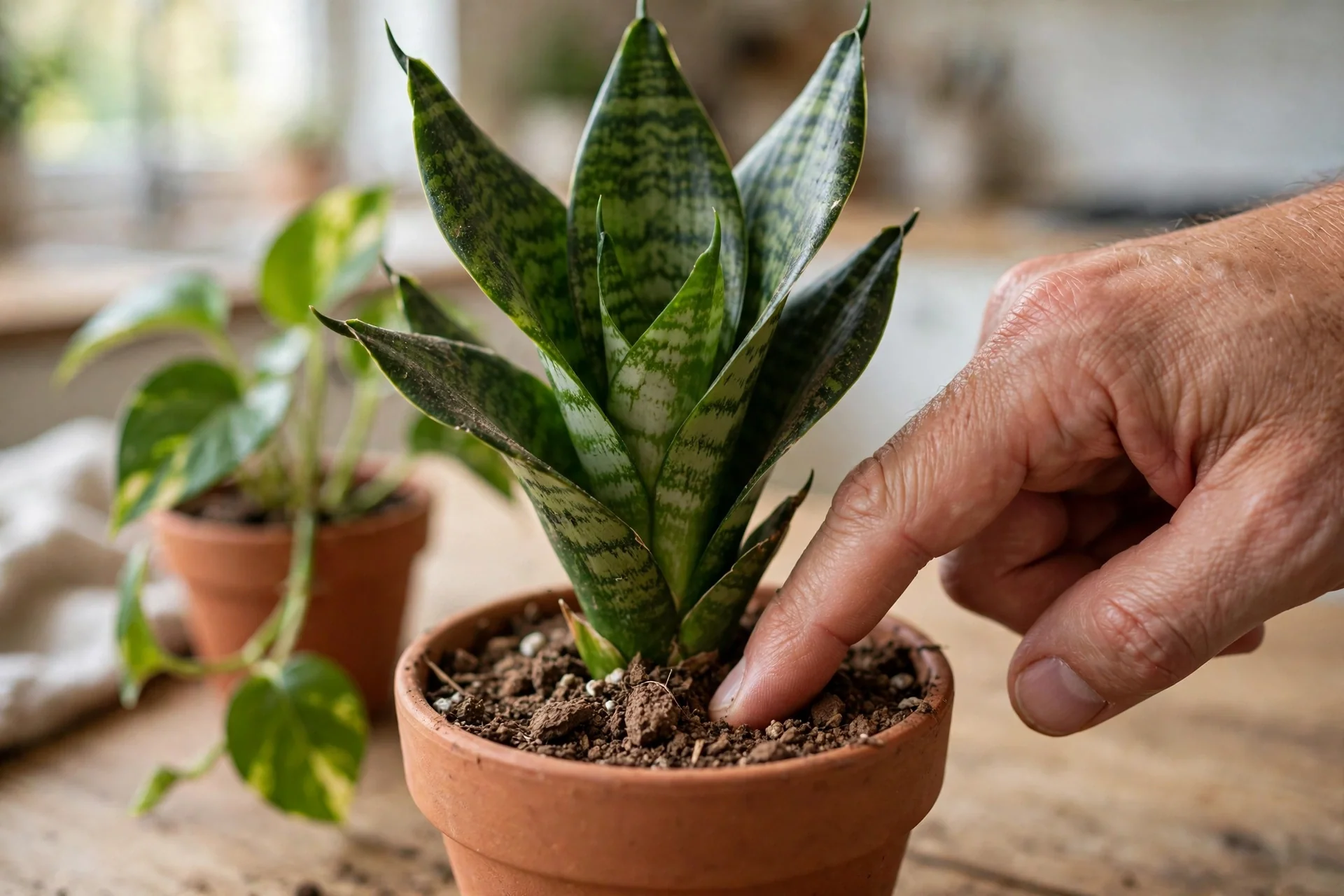
Water a snake plant every 2 to 3 weeks, only when the soil has dried completely from top to bottom. Its thick leaves store water, so a schedule is its enemy. Constantly moist soil rots the base, and by the time leaves flop, the roots are already gone. See our full guide on how often to water a snake plant for the seasonal routine.
Water a pothos when the top 2 inches of soil feel dry, roughly once a week in most homes. A deep soak followed by full drying beats frequent sips. Pothos handles drought well: one documented care guide notes it can survive a month without water after a deep soak.
Verdict: snake plant if you forget, pothos if you hover. Chronic over-waterers kill snake plants. Chronic under-waterers kill pothos.
Growth Speed and Footprint
Pothos grows fast. In a good window, a healthy plant can add several feet of vine in a season and bounces back quickly from a dry spell or a hard prune.
Snake plants grow slowly. A year of healthy growth might add a few inches and a couple of new leaves.
Footprint matters in apartments. A snake plant grows vertically and asks for a small patch of floor. A pothos grows outward and down, asking for a shelf, a hanging basket, or a moss pole. If you love the patterned look, our Golden Pothos vs Marble Queen breakdown compares the varieties in practice.
Air Purification: The Honest Truth
Buy either plant for beauty, not cleaner air. The famous 1989 NASA chamber study showed plants removing pollutants inside sealed lab boxes, and sellers stretched that into “one snake plant cleans your bedroom air.” Controlled room studies tell a different story: you would need roughly 10 to 1,000 plants per square meter to match what an open window does naturally.
Pet Safety: The Section You Cannot Skip
Both plants are toxic to cats and dogs. The ASPCA lists golden pothos as toxic to dogs and cats, with insoluble calcium oxalates as the toxic principle. Signs include oral burning, drooling, vomiting, and difficulty swallowing. Snake plant is listed as toxic to cats, dogs, and horses, with saponins as the toxic principle. Signs include drooling, nausea, vomiting, and diarrhea, usually mild.
In practice, pothos carries the higher household risk: its soft, trailing leaves hang at pet height and invite chewing, while stiff snake plant leaves are less tempting. If your cat chews plants, neither is safe.
Propagation: Which One Multiplies for Free
Pothos propagation is nearly foolproof. Snip a stem below a node, place it in water, and roots appear within days. One plant becomes five in a season.
Snake plant propagation works but tests patience. Leaf cuttings take months to root, and variegated varieties lose their pattern when grown this way. Division of the rhizome is faster but means repotting the whole plant.
Which Is Better for a Complete Beginner
If “beginner” means you travel, forget, and want a plant that asks for nothing for weeks, buy the snake plant. It is the most neglect-tolerant common houseplant. Our Snake Plant vs ZZ Plant comparison covers the other classic beginner debate.
If “beginner” means you want to learn care with fast, visible feedback, buy the pothos. It shows clearly what it needs, recovers fast from mistakes, and a leggy vine warns you about light before the plant gives up.
Room-by-Room: Where Each Plant Wins
Bedroom: snake plant. Needs little light and its vertical shape fits a narrow floor gap.
Living room shelf: pothos. Trailing vines soften a bookcase, and living rooms usually have the brightest light in the home.
Bathroom: pothos. Handles humidity and frosted-window light better than a snake plant handles damp, still air.
Office desk: pothos in a small pot. Pruning keeps it compact and gives free cuttings.
Entryway or hallway: snake plant. Narrow, architectural, and unbothered by drafts.
North-facing apartment overall: snake plant keeps its form with less compromise, though green pothos copes fine.

Can They Share a Room? What About the Same Pot?
Same room: absolutely. Place them by the same bright window and both thrive, giving you vertical structure plus trailing softness.
Same pot: no. Their watering needs conflict, so one schedule rots the snake plant or starves the pothos. Keep them in separate pots, even on the same shelf.
Signs Your Plant Is Thriving or Struggling
A thriving snake plant pushes new leaves from the center each season, stands stiff and upright, and keeps rich color. A struggling one turns yellow or mushy at the base (rot), flops (overwatered), or stalls in good light (rootbound).
A thriving pothos unfurls new leaves regularly with crisp variegation. A struggling one shows clusters of pothos leaves turning yellow (usually overwatering) or bare vines with leaves only at the tips (too little light).
FAQs
Which is better for beginners, snake plant or pothos?
It depends on your habits. Snake plant is better if you forget to water or travel. Pothos is better if you want fast, visible growth and quick feedback on your care.
Which grows faster, snake plant or pothos?
Pothos grows much faster, producing feet of vine in a season. Snake plants add just a few inches and a few leaves per year.
Are snake plants and pothos toxic to cats and dogs?
Yes, both are toxic. The ASPCA lists golden pothos as toxic to dogs and cats (calcium oxalates) and snake plant as toxic to cats, dogs, and horses (saponins).
Do snake plants and pothos purify the air?
Not meaningfully in a real room. You would need an unrealistic number of plants per square meter to change room air quality.
Which is better for a low-light apartment?
Snake plant keeps its appearance with the least compromise in genuinely dark rooms. A solid green pothos copes too, but variegated pothos loses its pattern in low light.
Can you put a snake plant and pothos in the same pot?
No. Their watering needs conflict, so one schedule will rot the snake plant or starve the pothos. Keep them in separate pots in the same room.
The Honest Bottom Line
There is no overall winner, only a right plant for your life. Forget watering for weeks: buy the snake plant. Want fast, visible growth: buy the pothos. Have a curious cat: buy neither. Dark corner: snake plant. Bright shelf that needs softening: pothos.
If pothos won you over, our pothos care guide sets up the routine that keeps the vines coming.