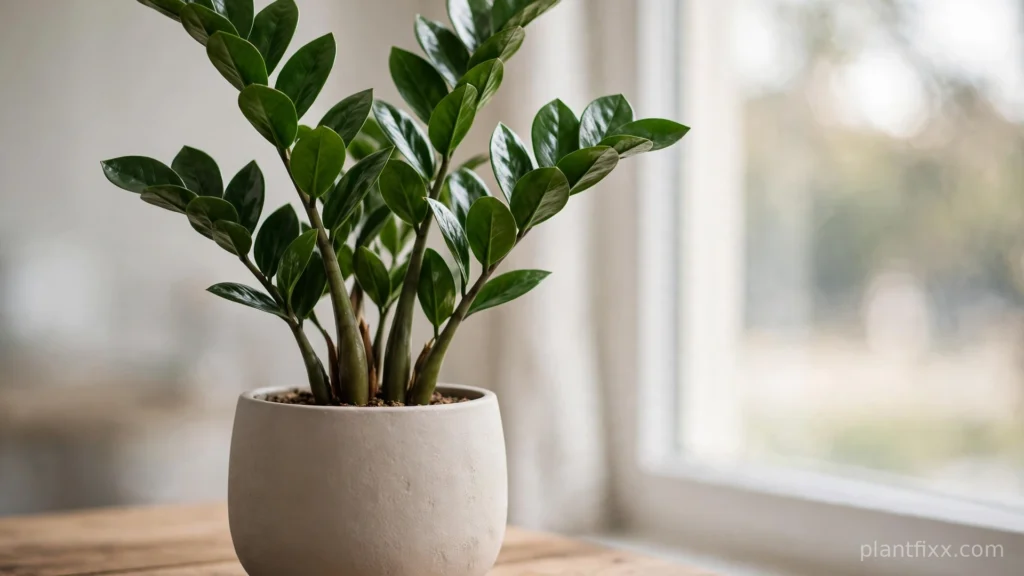
A ZZ plant almost never complains, and that silence is exactly why zz plant underwatering catches owners off guard. The plant does not wilt at the first missed watering the way a pothos or a fern does. It quietly spends the water stored in its rhizomes and stems, looks fine for weeks, and only shows damage once those reserves run low.
By the time the signs are obvious, the plant has usually been dry for a long stretch. Stems lose their shine and start to wrinkle, leaflets droop and curl, and the soil has pulled away from the sides of the pot. The decline looks sudden, but it has been building under the surface for a while.
This guide shows you how to confirm that thirst is really the problem before you water, because a drooping ZZ plant can also be rotting from too much water. You will get the full sign list, a rhizome check that settles the question, the soak that brings a dry plant back, and the timeline to judge the recovery by.
Quick Answer
ZZ plant underwatering builds slowly because the rhizomes store water. A thirsty ZZ plant shows wrinkled stems, drooping leaflets, curling leaves and bone-dry soil that pulls away from the pot. Confirm with a skewer pushed to the bottom, then revive it with one deep soak and let the soil dry again before the next watering.
Why a ZZ Plant Runs Dry So Slowly
A ZZ plant is built like a storage tank. Underground it grows thick, potato-shaped rhizomes that hold water and nutrients, and it releases them to the stems as the soil dries. The stems themselves are thick and fleshy, so they hold a second reserve. The leaflets carry a waxy coating that slows water loss to the air. Three layers of storage sit between the plant and real thirst.
That storage explains the timing of every underwatering case. The plant spends its reserves in order: soil moisture first, then the water held in the stems, then the rhizome supply. A stem stays upright on internal water pressure, and that pressure only falls once the stem starts spending its own water. This is why a ZZ plant can go a month or more without water and look unchanged, then wrinkle and droop within a short span once the buffer is gone.
Light and heat decide how fast the buffer drains. A plant in bright light near a warm window uses its reserves far faster than the same plant in a dim, cool corner. Active spring and summer growth also pulls harder on the stored water. One mistake many people make is watering a ZZ plant on the same relaxed schedule all year, because the schedule that was safe in winter can leave the plant dry for too long in summer.
Signs of ZZ Plant Underwatering
If you are asking why is my zz plant drooping, work through these signs in order before you reach for the watering can. A single sign can mislead. Three or four together, with dry soil underneath, confirm thirst.
Drooping and Wilting Stems
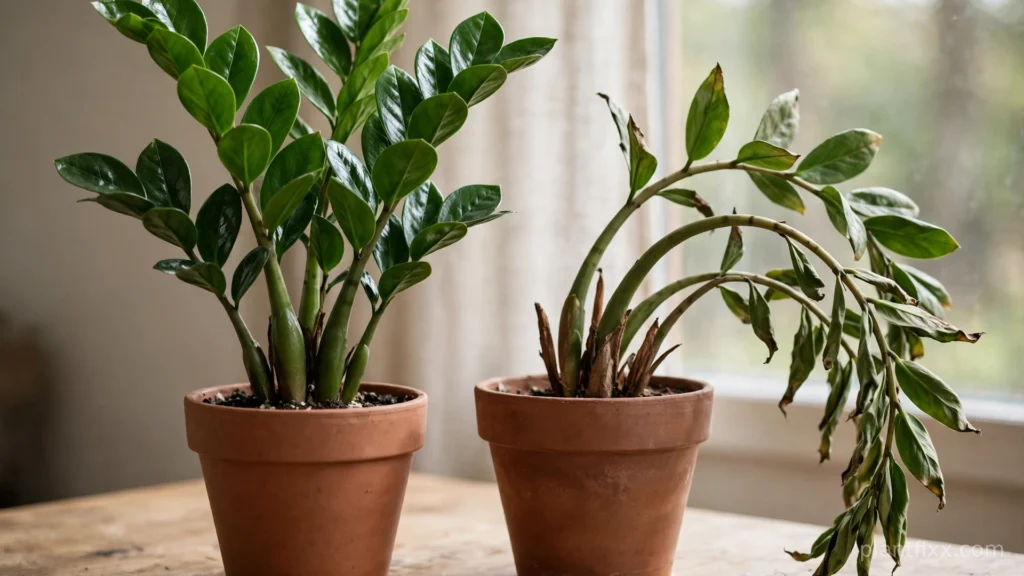
The classic picture of zz plant leaves drooping starts at the oldest stems. Leaflets hang lower than usual, the stem bows outward under their weight, and the whole plant loses the stiff, upright fountain shape it holds when hydrated. ZZ plant drooping leaves look dull rather than glossy, because a dry leaflet reflects less light than a plump one.
ZZ plant wilting from thirst develops gradually, not overnight. You will usually see the lowest and oldest leaflets soften first, then whole stems lean as the pressure inside them drops. If only one or two stems droop while the rest stand firm and glossy, check those stems at the base before blaming thirst, because a single failing stem often has a local cause such as damage or rot at its base.
Wrinkled Stems: The Sign Most Owners Miss
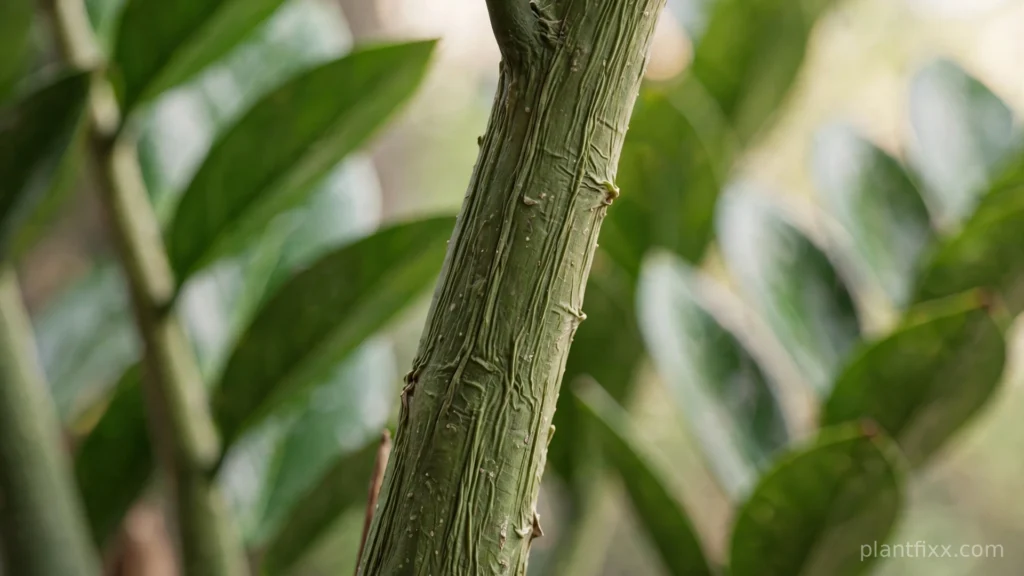
ZZ plant wrinkled stems are the earliest reliable warning, and they show up before the drooping starts. A hydrated ZZ stem is smooth, round and firm all the way down. A thirsty stem develops fine lengthwise wrinkles, like the skin of a grape that has started to dry, and it feels slightly soft when you squeeze it gently between two fingers.
The wrinkles mean the stem is spending its own stored water to keep the leaflets alive. Run the squeeze test weekly if your plant has form for drying out: a smooth, hard stem means reserves are fine, fine wrinkles mean the plant is into its reserves, and deep wrinkles with a stem that feels hollow mean the reserves are nearly spent. Wrinkled stems recover if they are still green, so treat this sign as a watering alarm rather than damage.
Curling Leaves, Inward and Outward
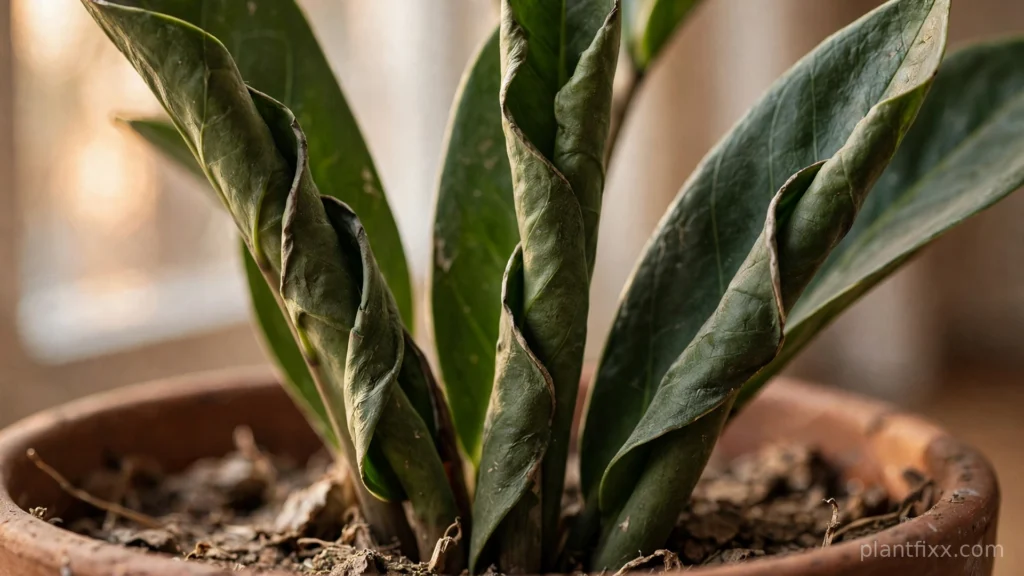
ZZ plant leaves curling is the leaflet-level version of the same defense. Of all the zz plant leaves curling causes on a dry plant, water conservation is the main one. A leaflet that curls reduces the surface it exposes to the air, and less exposed surface means slower water loss.
ZZ plant leaves curling inward is the common pattern: the edges of each leaflet roll toward the center vein, and the leaflet takes on a folded, boat shape. ZZ plant leaves curling outward shows up when a dry plant also sits in a hot, bright spot, where the leaflets cup backward away from the heat and harsh light. Both patterns start on the oldest leaflets, and both flatten out again once the plant rehydrates, as long as the tissue has not dried to the point of crisping.
Dry Crispy Leaves and Browning Tips
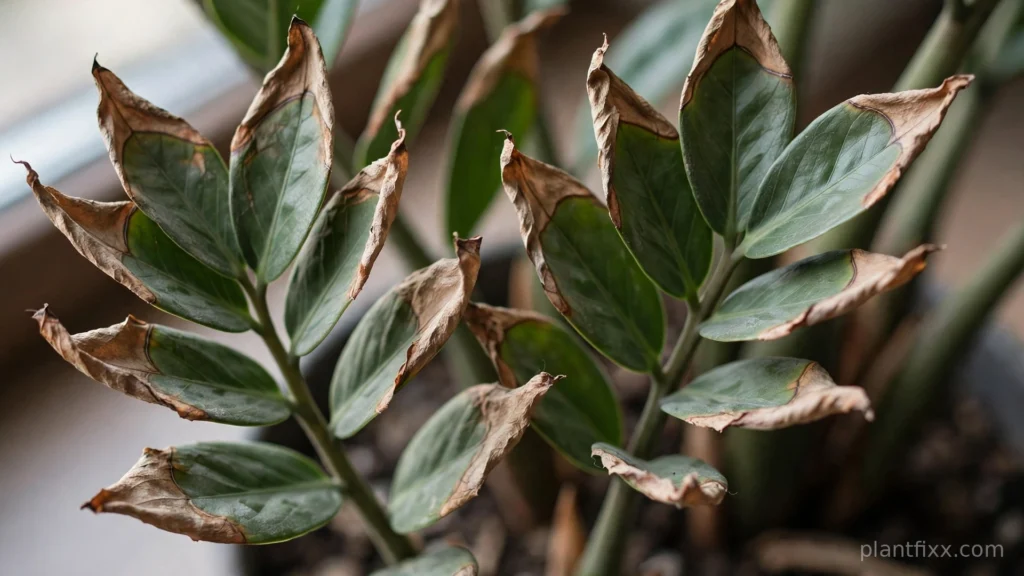
When the dry spell runs longer, leaflets stop curling and start drying. ZZ plant dry crispy leaves feel papery and brittle between your fingers instead of thick and waxy, and the tips and edges turn yellow, then brown and crisp. The plant also drops its oldest leaflets to cut its losses, which is why a long-dry ZZ plant often has bare lower stems.
Crispy tissue does not recover, even after perfect watering. What matters is whether the browning stops spreading once the plant is hydrated again. If brown tips keep appearing on new growth, the cause is usually not thirst, and our guide to zz plant brown tips covers the salt, light and water quality causes behind that pattern.
Dry Soil and a Suspiciously Light Pot
The soil gives the most honest reading of all. ZZ plant dry soil in an underwatering case is dry through most of the pot, not only at the surface. It often cracks, shrinks and pulls away from the inside wall of the pot, leaving a visible gap that water later runs straight down. The pot also feels strikingly light when you lift it, because dry mix weighs far less than moist mix. Choose the best soil for a ZZ plant, that rewets properly after drying out.
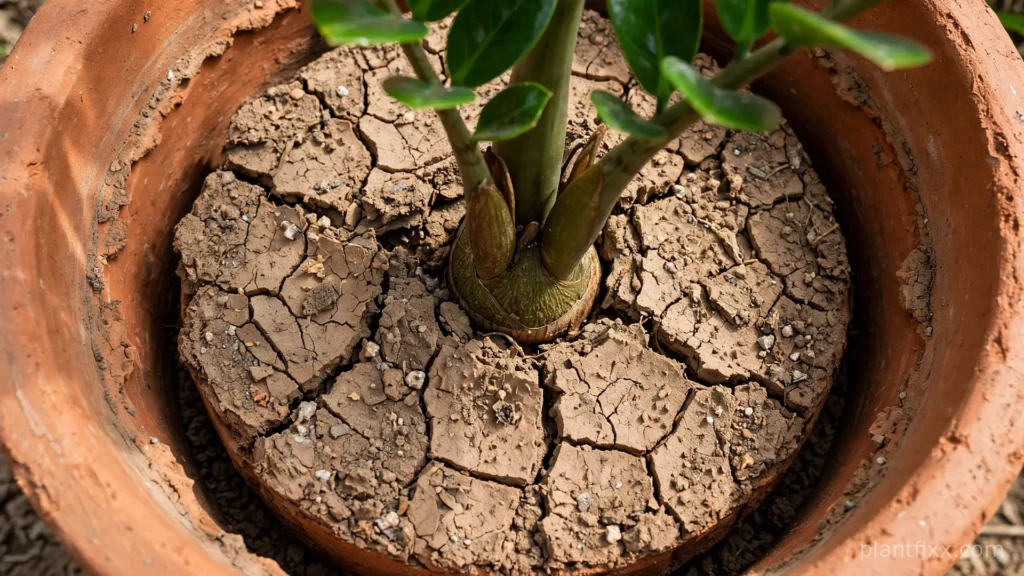
Trust the deep check over the surface. Push a wooden skewer or chopstick all the way to the bottom of the pot and pull it out. On a thirsty plant it comes out clean and dry with no mix clinging to it. Surface dryness alone proves nothing, since the top of the mix dries days before the root zone does.
What You Need Before You Start
- A wooden skewer or chopstick long enough to reach the bottom of the pot, for the soil check
- A basin, sink or bucket wide enough to hold the pot, for the bottom soak
- Room temperature water, since cold water shocks dry roots and rhizomes
- Clean, sharp scissors or pruners for removing dead leaflets and spent stems
- Gloves, because cut ZZ plant stems release a sap that irritates skin
- A tray or saucer to catch drainage while the pot drains after soaking
You do not need fertilizer, and you do not need a new pot unless the rhizome check below shows rot or a root ball so packed that water cannot move through it. Revival is water, time and observation, not products.
Check the Rhizome Before You Water
This check matters because the two causes of a drooping ZZ plant need opposite responses. Thirst needs a deep soak. Rot needs the water stopped and the dead tissue cut away, and soaking a rotting plant pushes it closer to collapse. ZZ plant stems falling over belong to both problems, so never treat the stems alone as proof of thirst.
Start above ground. Push the skewer to the bottom of the pot: dry to the bottom supports thirst, while mix that is still wet two weeks after the last watering argues against it. Then squeeze the base of the droopiest stem. A firm base supports thirst or a light problem. A soft, giving base is a rot warning, whatever the soil says.
If the picture is still unclear, slide the plant out of its pot and read the rhizomes directly. Healthy rhizomes are plump, firm and pale, like small potatoes. Rhizomes on a genuinely thirsty plant are still firm but look shrunken, with a wrinkled surface, because they have spent their stored water. Soft, brown or hollow rhizomes, especially with a sour smell, mean rot has taken hold, and that plant needs the rot cut back to firm tissue and a repot into fresh mix instead of a soak.
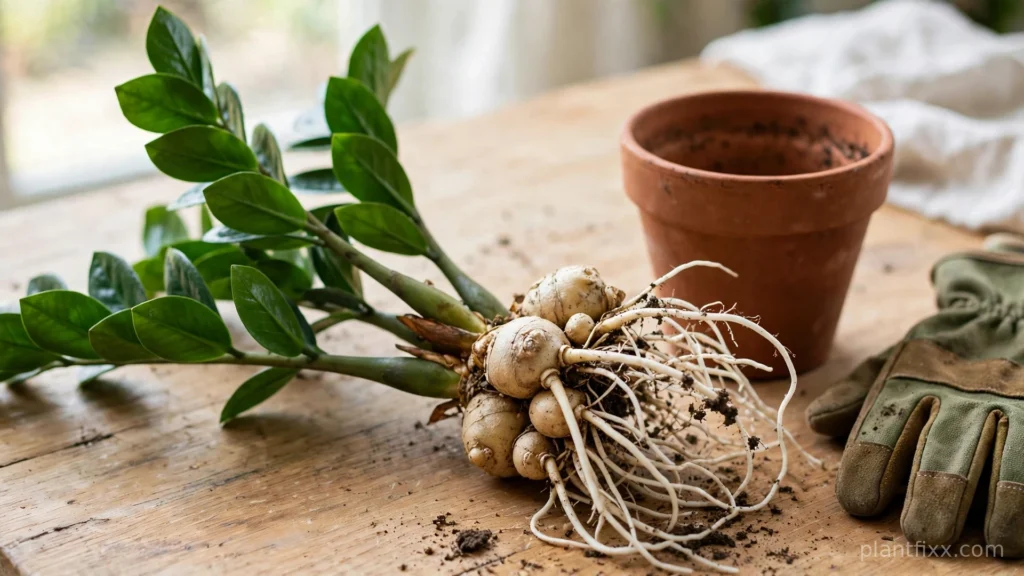
One judgment call saves plants here. When the rhizomes are firm, even if they are wrinkled and shrunken, proceed with the revival below. When any rhizome is soft, do not soak the plant first and check later. Deal with the rot first.
How to Revive an Underwatered ZZ Plant
Start with the soak, because that is the step a zz plant revive underwatered stems respond to best. Work through the steps in order, and resist the urge to water twice to speed things up.
Step 1: Water slowly from the top until water runs freely from the drainage holes. Pour in passes rather than one flood, waiting a minute between passes, so the mix absorbs water instead of shedding it. Dry mix often lets the first pass run straight through.
Step 2: If water races down the gap between the soil and the pot wall, the mix has turned hydrophobic and top watering is not reaching the roots. Set the pot in a basin with a few inches of room temperature water and leave it for 20 to 30 minutes. The mix pulls water up through the drainage holes and wets the root ball evenly, including the dry center.
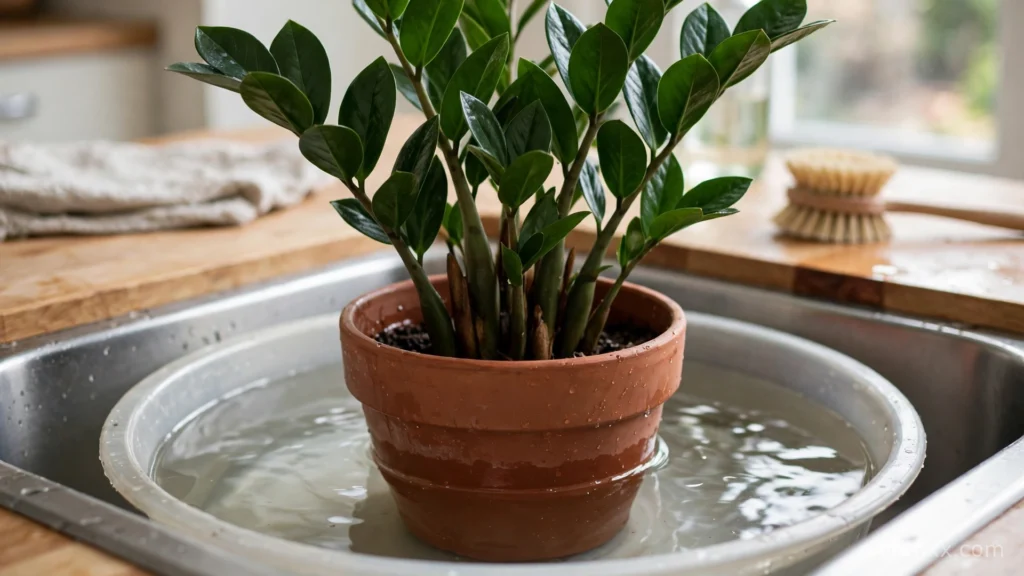
Step 3: Drain the pot completely. Lift it out of the basin, let it drip until the flow stops, and empty the saucer or cache pot. A revived plant should sit in evenly moist soil, never in standing water, because the same rhizomes you just saved will rot if they stay soaked.
Step 4: Trim only what is dead. Remove leaflets that are fully yellow, brown or crisp, and cut any stem that has dried out completely at its base. Keep every green stem, including the wrinkled and drooping ones, because those refill and firm up. Cutting living stems off a recovering plant only slows it down.
Step 5: Give the plant a steady recovery spot. Bright, indirect light is right while it rebuilds pressure. Keep it away from hot sun through glass and from heating vents, since both pull moisture from leaflets that are still refilling.
Step 6: Wait. Do not water again until the soil has dried through most of the pot, checked with the skewer. A ZZ plant that has just been rescued from drought goes straight back onto the dry-then-soak rhythm, and the next section explains why it may still look limp for a few days.
ZZ Plant Underwatering vs Overwatering
The zz plant underwatering vs overwatering question causes more bad decisions than any other part of ZZ plant care, because the two problems share their headline symptom. Both produce drooping stems, dull leaflets and a plant that looks tired. The difference sits below the soil line, in the moisture at depth and the firmness of the rhizomes and stem bases.
| Check | Underwatering | Overwatering |
|---|---|---|
| Soil moisture at depth | Dry through most of the pot, skewer comes out clean | Still wet one to two weeks after the last watering |
| Stem base feel | Firm, sometimes wrinkled higher up the stem | Soft, giving or mushy at the base |
| Rhizomes | Firm but shrunken, surface wrinkled | Soft, brown or hollow, may smell sour |
| Leaflets | Dry, thin, curling or crispy at the tips | Yellowing in patches, sometimes soft and translucent |
| Pot weight | Noticeably light | Heavy for its size |
| After a deep watering | Stems firm up over one to three days | No improvement, decline often speeds up |
Read the table honestly if your plant has stems falling over. Falling stems with dry soil and firm rhizomes point to severe thirst. Falling stems with wet soil and any softness at the base point to rot, and our zz plant overwatering and root rot guide walks through the unpotting, trimming and repotting that a plant in that state needs. When the checks disagree, trust the rhizomes over everything else.
ZZ Plant Drooping After Watering: What It Means
ZZ plant drooping after watering worries owners because the fix seems to have failed. In most cases it has not. Water has to move from the soil into the roots, refill the rhizomes, and only then rebuild pressure in the stems. On a plant built to move slowly, that refill takes one to three days, and badly wrinkled stems can take a week to smooth out. Judge the plant at the three-day mark, not the three-hour mark.
If the plant is still limp after three days with moist soil, look for one of three causes. First, the water may never have reached the center of the root ball, which happens when hydrophobic mix channels it down the pot wall and out. The pot feels heavy for an hour and light again by the next day. A bottom soak fixes it. Second, the fine roots may have died back during the long drought, so the plant drinks slowly while it regrows them. Keep the soil rhythm steady and give it two weeks. Third, the original problem may never have been thirst at all, in which case the rhizome check and the table above are the way back to the right diagnosis.
What not to do: water again. A second soaking on top of moist soil is how a thirsty plant becomes a rotting one.
Signs the Revival Is Working
- Stems feel firmer when you squeeze them gently, usually within one to three days of the soak
- Fine wrinkles on the stems start to smooth out over the first week
- Leaflets regain their gloss and the curled ones slowly flatten
- The browning stops at the tips instead of spreading to new leaflets
- The soil now dries at a normal pace over two to three weeks instead of staying bone dry or staying wet
- A new spear of growth appears at the base within a few weeks in the growing season
Signs the Plant Is Not Recovering
- Stem bases turn soft or mushy in the days after watering, which means rot was the real cause
- Leaflets keep yellowing and dropping a week after the soil became evenly moist
- Wrinkled stems stay hollow and papery instead of refilling, which means those stems have died
- A sour smell develops at the soil surface where none was present before
Act on these signs promptly. Unpot the plant, cut every soft rhizome and stem base back to firm, pale tissue with a clean blade, and repot into fresh, dry-leaning mix. If the rhizomes are gone entirely, healthy leaflets and stem sections can still be propagated, but ZZ propagation is slow and measured in months, so it is a backup rather than a plan.
Leggy Growth and Leaning Stems: A Light Problem, Not Thirst
One drooping pattern does not belong to watering at all. ZZ plant leggy growth produces long, thin, pale stems that lean and arch because they grew stretched in low light. The University of Florida IFAS describes this response, called etiolation, as the development of elongated shoots with reduced chlorophyll when plants grow without enough light. A leggy stem is built weak from the start, so it cannot hold its leaflets upright the way a compact stem can.
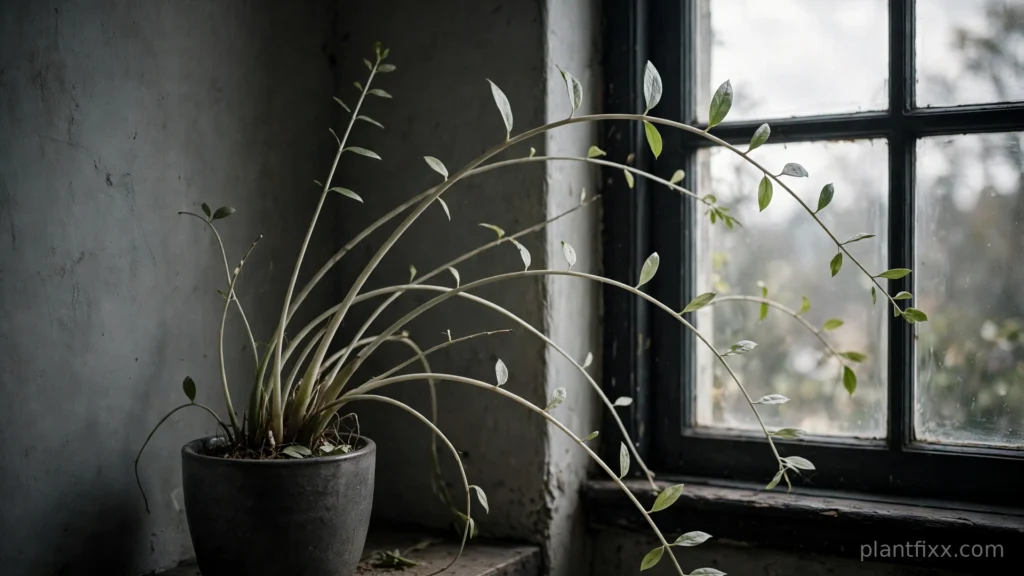
Tell leggy growth apart from thirst with two checks. Leggy stems feel firm, not wrinkled, and the soil moisture is usually normal, because the problem is light rather than water. The newest stems are the tallest and palest, which is the opposite of thirst damage, where the oldest growth suffers first.
Watering more will not straighten a leggy plant, and it risks rotting the rhizomes of a plant that was never thirsty. Move the plant gradually into brighter, indirect light and rotate the pot a quarter turn at each watering so growth stays even. Stems that already lean will stay leaned, so remove the worst ones whole at soil level and let the rhizome push compact replacements in the better light. The soil mix and light setup that keep new growth sturdy are covered in our zz plant light requirements guide.
Read the Watering Signs and Keep It From Happening Again
ZZ plant watering signs are easy to read once you build the habit, and they beat any calendar. The plant wants a full dry-down between waterings, but a dry-down that ends in a check, not in months of neglect.
- The skewer test: push a skewer to the bottom of the pot. Dry and clean means water now. Damp mix clinging to it means wait.
- The weight test: lift the pot after watering and again two weeks later. The difference teaches you your own plant faster than any schedule.
- The stem test: smooth and firm means reserves are fine. Fine wrinkles mean check the soil that day.
- The season check: expect the interval to shorten in bright, warm months and stretch in winter. Our zz plant watering schedule guide breaks the timing down by pot size, light and season.
Set a fixed checking day, weekly or every two weeks, and water only when the checks say dry. That single habit prevents almost every underwatering case, because the plant gets caught while it is still spending rhizome reserves instead of after they run out.
Frequently Asked Questions
How do I know if my ZZ plant needs water?
Push a wooden skewer to the bottom of the pot. If it comes out dry and clean, the pot feels light, and the stems show fine wrinkles, the plant needs water. Any one sign alone can mislead, so confirm with at least two.
Can an underwatered ZZ plant fully recover?
Yes, as long as the rhizomes are still firm. Stems refill, wrinkles smooth out and curled leaflets flatten. Leaflets that already turned crispy or fell do not come back, but the plant replaces them with new growth from the rhizomes.
How long does it take a ZZ plant to recover from underwatering?
Stems usually feel firmer within one to three days of a deep soak, wrinkled stems smooth out over about a week, and new growth takes weeks to appear. A plant that was dry for months recovers on the slow end of that range.
Why is my ZZ plant drooping after watering?
Usually it just needs time, since the rhizomes and stems refill over one to three days. If it stays limp beyond that, the water likely channeled past a hydrophobic root ball, or the droop was caused by rot or low light rather than thirst.
Will wrinkled ZZ plant stems plump back up?
Yes, if the stem is still green and its base is firm. Wrinkling means the stem spent its stored water, and it refills after a deep soak. A stem that has turned brown, dry and hollow has died and should be cut off at the base.
Should I cut off drooping ZZ plant stems?
Only the dead ones. Cut any stem that is mushy at the base or dried out completely, always whole at soil level. Green drooping stems recover on their own, and trimming the tip of a stem does nothing, since ZZ stems do not branch from a cut.
How often should I water a ZZ plant?
Only when the soil has dried through most of the pot, which works out to roughly every two to three weeks in an average home and less often in winter or low light. Judge by the skewer test, not by the calendar.
Can I bottom water a ZZ plant?
Yes, and it is the best method for a plant whose mix has gone hydrophobic. Stand the pot in a few inches of room temperature water for 20 to 30 minutes, then drain it fully and empty the saucer so the rhizomes never sit in water.
Conclusion
A drooping ZZ plant is usually a thirsty one, but the ZZ is the one houseplant where you check before you water, because rot wears the same disguise. Read the stems for wrinkles, run the skewer to the bottom of the pot, and trust the rhizomes when the signs disagree. Confirmed thirst gets one deep soak, a full drain, and time. That is the whole rescue.
From there, a weekly check keeps the plant out of trouble for good. For the light, soil, feeding and repotting routine that holds the whole care picture together, read our complete zz plant care guide.
How do I know if my ZZ plant needs water?
Push a wooden skewer to the bottom of the pot. If it comes out dry and clean, the pot feels light, and the stems show fine wrinkles, the plant needs water. Any one sign alone can mislead, so confirm with at least two.
Can an underwatered ZZ plant fully recover?
Yes, as long as the rhizomes are still firm. Stems refill, wrinkles smooth out and curled leaflets flatten. Leaflets that already turned crispy or fell do not come back, but the plant replaces them with new growth from the rhizomes.
How long does it take a ZZ plant to recover from underwatering?
Stems usually feel firmer within one to three days of a deep soak, wrinkled stems smooth out over about a week, and new growth takes weeks to appear. A plant that was dry for months recovers on the slow end of that range.
Why is my ZZ plant drooping after watering?
Usually it just needs time, since the rhizomes and stems refill over one to three days. If it stays limp beyond that, the water likely channeled past a hydrophobic root ball, or the droop was caused by rot or low light rather than thirst.
Will wrinkled ZZ plant stems plump back up?
Yes, if the stem is still green and its base is firm. Wrinkling means the stem spent its stored water, and it refills after a deep soak. A stem that has turned brown, dry and hollow has died and should be cut off at the base.
Should I cut off drooping ZZ plant stems?
Only the dead ones. Cut any stem that is mushy at the base or dried out completely, always whole at soil level. Green drooping stems recover on their own, and trimming the tip of a stem does nothing, since ZZ stems do not branch from a cut.
How often should I water a ZZ plant?
Only when the soil has dried through most of the pot, which works out to roughly every two to three weeks in an average home and less often in winter or low light. Judge by the skewer test, not by the calendar.
Can I bottom water a ZZ plant?
Yes, and it is the best method for a plant whose mix has gone hydrophobic. Stand the pot in a few inches of room temperature water for 20 to 30 minutes, then drain it fully and empty the saucer so the rhizomes never sit in water.
Pingback: ZZ Plant Brown Tips and Black Spots: Causes and Fast Fixes
Pingback: ZZ Plant Care Guide: Best Low-Light Apartment Plant (2026)