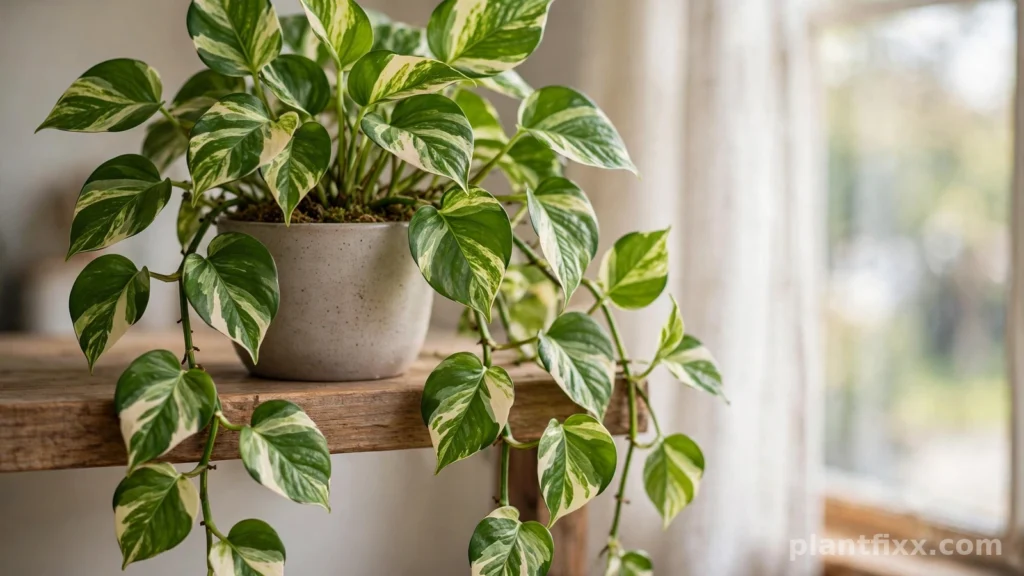
Most pothos problems trace back to three basics: light, soil and feeding. Get the pothos plant light requirements right and the plant grows fast with strong color. Get the soil mix right and the roots stay healthy for years. Feed on a sensible schedule and new leaves keep coming at full size. This guide covers all three in one place, with measured light levels, a soil recipe with ratios, and a feeding calendar you can follow without guesswork.
The three topics connect more than most care guides admit. A pothos plant in bright light drinks faster, so its soil dries sooner and it uses fertilizer faster. The same plant in a dim corner sips water slowly, sits in wet soil for weeks, and needs almost no feeding at all. Treat the three as one system and the plant becomes easy to read.
Think of this as a complete pothos care light soil fertilizer reference. You will find how much light a pothos plant needs in foot-candles and lux, where to place the pot near each window direction, the exact soil recipe to mix at home, and how to fertilize without burning the roots.
A pothos plant grows best in bright indirect light of 100 to 1,000 foot-candles, in a chunky soil mix of 2 parts potting mix, 1 part perlite and 1 part orchid bark, fed with a balanced fertilizer at half strength every 4 to 6 weeks in spring and summer.
Part One: Light, the Setting That Drives All the Others
Why Light Controls Everything Else in Pothos Plant Care
In the wild, pothos grows as a climbing vine on forest floors and tree trunks in tropical regions. It evolved under a canopy, where light arrives filtered and dappled rather than direct. That history explains its indoor behavior. The plant tolerates dim corners better than most houseplants, but tolerance is not the same as preference.
Light drives photosynthesis, and photosynthesis sets the speed of everything else. With more usable light, the plant builds bigger leaves, keeps the cream and yellow variegation on varieties like Golden Pothos and Marble Queen, and pushes out new vines steadily. With too little light, growth slows, new leaves come in smaller and plain green, and the gaps between leaves stretch out along the stem. That stretched, sparse growth is the plant spending energy on searching for light instead of building foliage.
Light also controls the water cycle in the pot. A plant in a bright spot pulls water from the soil far faster than one in a dark corner. This is why a watering routine that works on a sunny shelf can rot the roots of the same plant moved to a hallway. Once you understand pothos light needs, your watering and feeding decisions get much easier to judge.
One mistake many people make is moving a pothos plant from a dim spot straight into hard sun. Leaves that developed in shade burn quickly because they never built protection against strong light. Move the plant in stages over a week or two, closer to the window step by step, and it adjusts without scorch marks.
Pothos Plant Light Requirements in Foot-Candles and Lux
Light intensity indoors is measured in foot-candles or lux. One foot-candle equals about 10.76 lux. University extension services group indoor light into bands, and the table below follows the bands published by the University of Maryland Extension for indoor plants. Read the ranges as general guidance rather than exact cut-offs, because window size, season, weather and obstructions all shift the real number at your plant shelf.
| Light level | Foot-candles | Lux (approx.) | Where you find it at home | How a pothos plant responds |
|---|---|---|---|---|
| Low light | 25 to 100 | 270 to 1,100 | A few feet back from a north window, or a room lit mostly by lamps | Survives and holds its leaves, but new growth is slow, small and mostly plain green |
| Medium bright light | 100 to 500 | 1,100 to 5,400 | In front of a north window, or a few feet from an east or west window | Steady growth, healthy leaf size, variegation holds on most varieties |
| Bright indirect light | 500 to 1,000 | 5,400 to 10,800 | Close to a south window with a sheer curtain, or right beside an east or west window | Fastest growth, largest leaves, strongest variegation and full vines |
| Direct sun indoors | Over 1,000 | Over 10,800 | An unshaded south facing windowsill or a sunroom | Risk of scorched pale patches and crispy edges unless the plant is slowly acclimated |
The pothos plant low light reputation comes from the first row of that table. The plant genuinely survives at light levels that stall many other houseplants, which is why it ends up in offices and bathrooms. But survival mode has a cost. In low light the plant stops replacing old leaves at the same rate, vines thin out over time, and variegated varieties revert to green because green tissue captures more of the scarce light.
A free light meter app on your phone gives a rough reading of your spot. Phone sensors are not precise, but the reading still tells you which band you are in, and that is enough for placement decisions. Measure at the height of the leaves, at midday, on a typical day rather than the brightest day of the year.
Best Placement for Each Window Direction
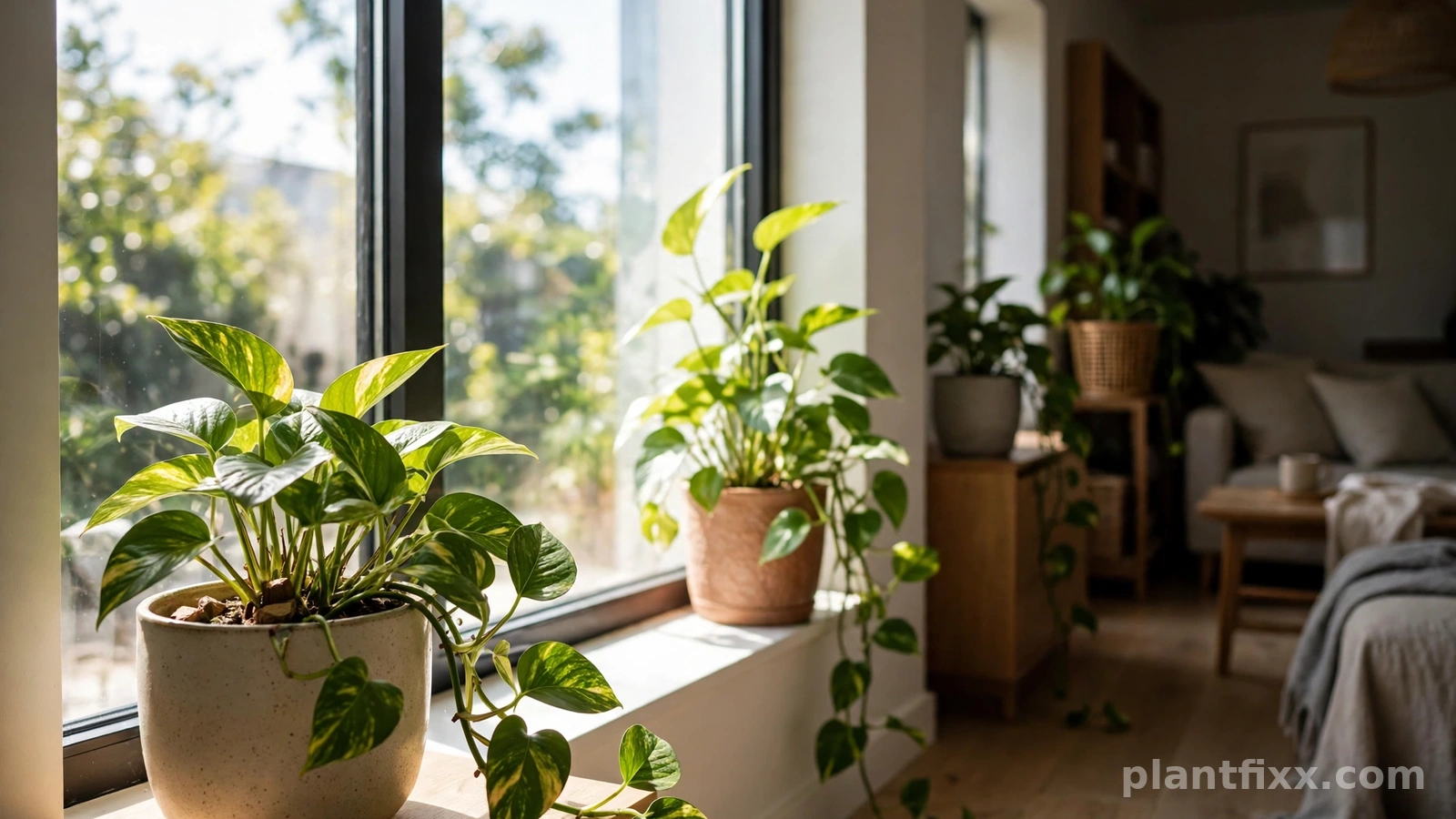
Ask experienced growers about the pothos best light setup and most give the same answer: bright indirect light for most of the day. Window direction decides how you reach that target in your home.
East facing windows
An east window gives gentle morning sun and soft light for the rest of the day. This is the easiest window for a pothos plant. Place the pot on the sill or within about 2 feet of the glass. Morning sun before midday rarely scorches leaves, and the plant gets the bright start that drives strong growth.
South facing windows
A south window delivers the strongest light in the home. Keep the pot 2 to 4 feet back from the glass, or hang a sheer curtain to soften the midday sun. In that position the plant sits in the bright indirect band for most of the day, which is the fastest growth zone for pothos.
West facing windows
A west window brings strong afternoon sun, which runs hotter than morning sun and is the most common cause of leaf scorch indoors. Place the plant 3 to 5 feet back, or use a sheer curtain during summer afternoons. Watch the leaf edges in the first two weeks after a move.
North facing windows
A north window gives the weakest light, steady and indirect all day. Put the pot directly on the sill to capture as much of it as possible. Growth will be slower and variegation softer, but a healthy plant holds its foliage. North windows pair well with a small grow light in winter, covered in the grow light section below.
Distance matters more than most people expect. Light falls off fast as you move away from glass, and a spot 8 to 10 feet into a room can measure a tenth of the light at the window. If your plant sits deep in a room and has stopped growing, distance is the first thing to fix.
Signs Your Pothos Plant Is Getting the Wrong Light
The plant reports light problems on its leaves and stems weeks before the damage turns serious. Read these signs early and one move usually fixes the problem.
Signs of too little light:
- New leaves come in smaller than the older leaves
- Long bare gaps appear between leaves along the vine
- Variegated leaves turn solid green on new growth
- Growth stops during spring and summer, the normal growing season
- Vines lean and stretch toward the nearest window
Signs of too much light:
- Pale, bleached or yellow patches on leaves facing the window
- Brown crispy edges or scorched spots on the most exposed leaves
- Leaves curl or angle away from the light source
- Soil dries out far faster than it used to in the same pot
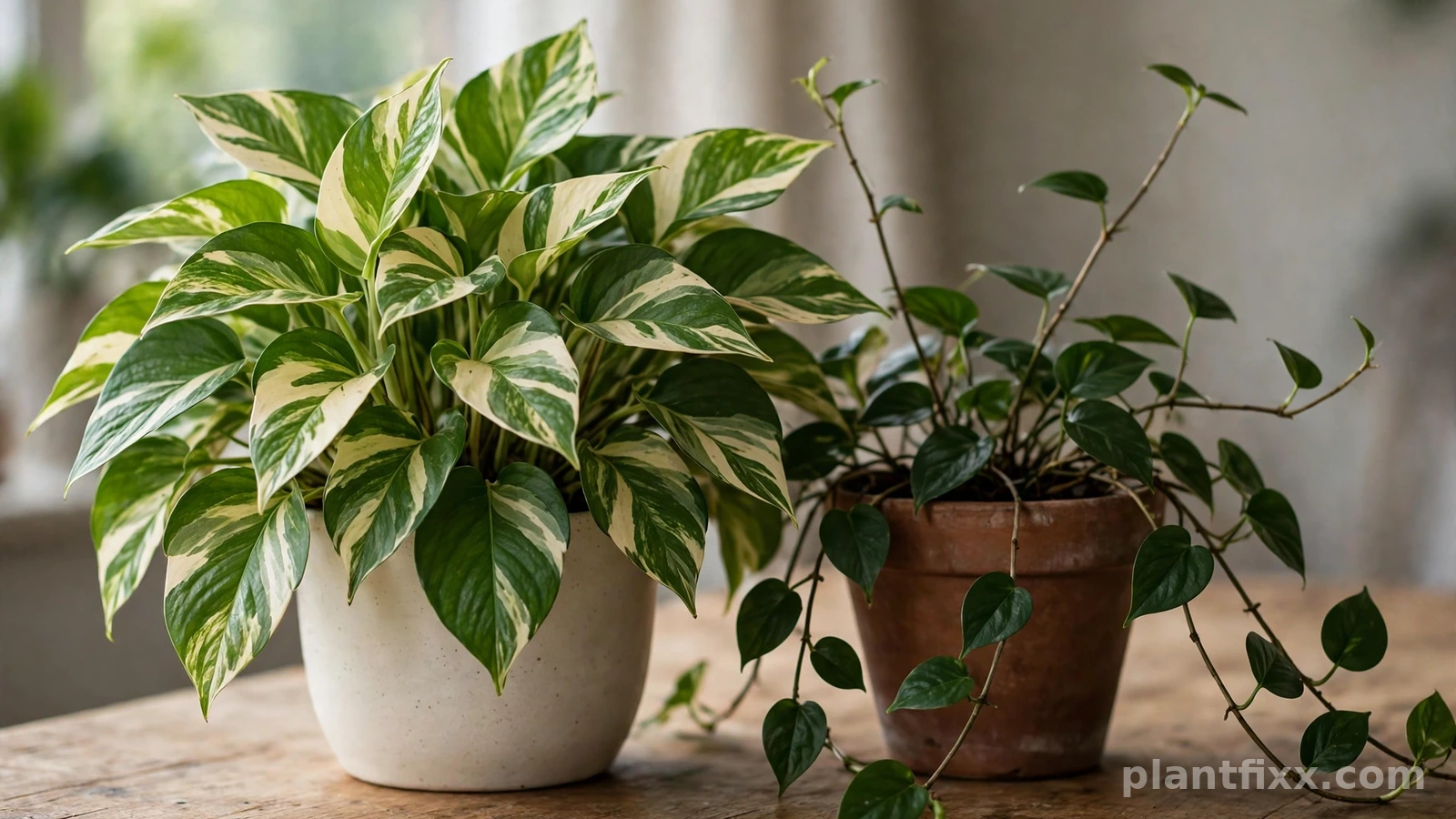
Variegation is the clearest light gauge you own. A Marble Queen or Golden Pothos that pushes out plain green leaves is asking for more light, and new growth returns to pattern within a few leaves of a brighter move. Leaves already turned green do not regain their pattern, so judge the fix by the newest leaves only.
Using a Grow Light for a Pothos Plant
A pothos grow light setup makes sense in three situations: a windowless room, a north facing room in winter, or a shelf far from any window. Pothos does not need expensive equipment. A full spectrum LED panel or bulb, the type sold for houseplants, covers its needs well.
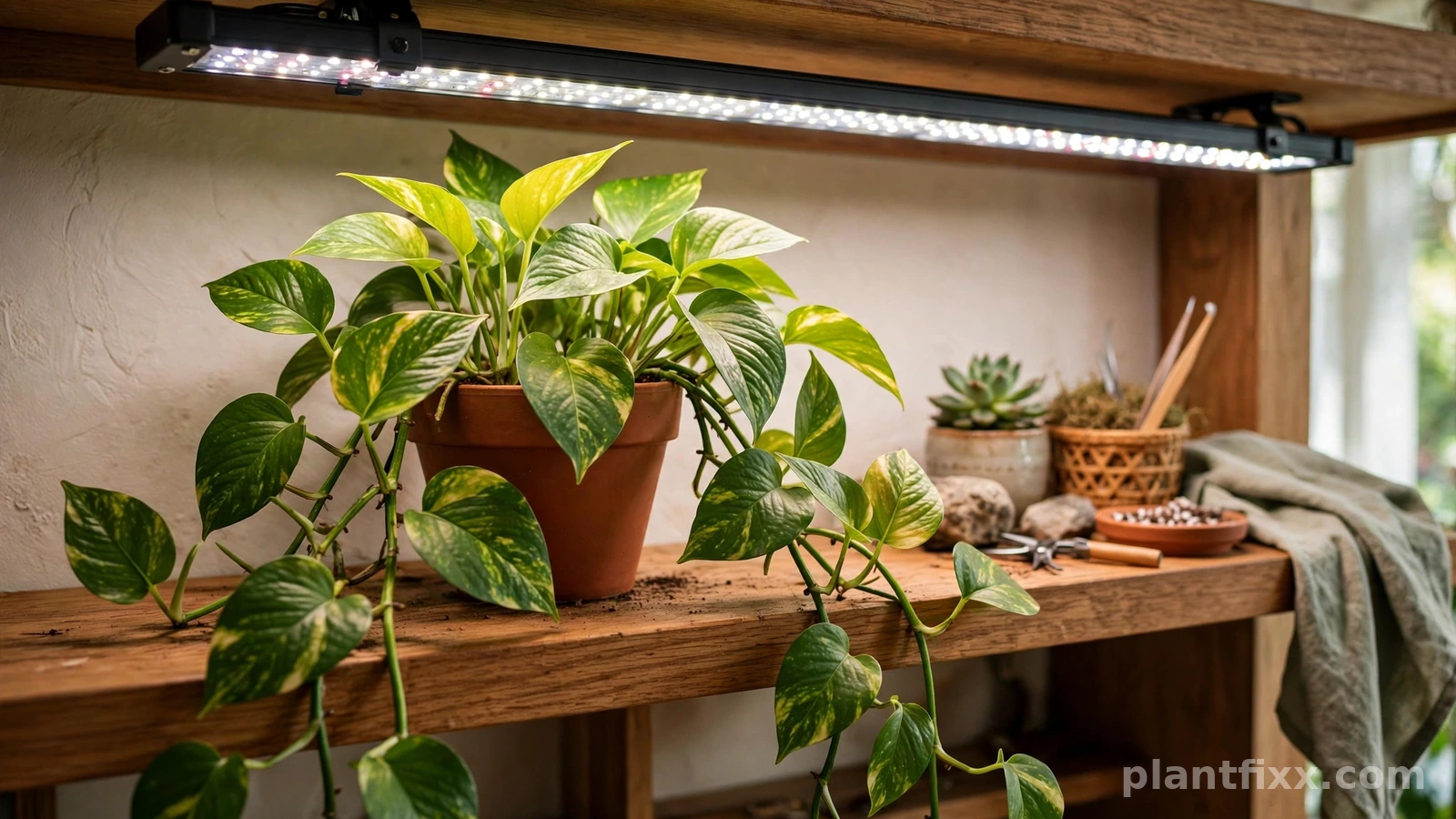
Hang or mount the light 12 to 24 inches above the top leaves. Closer than that risks pale, heat stressed foliage with most panels, and farther away wastes most of the output. Run the light 12 to 14 hours a day on a timer so the plant also gets a proper dark period for rest. Growth under a grow light often outpaces a north window, because the light is consistent every day of the year.
A regular household LED bulb can keep a pothos plant alive in a pinch, but it is built for human eyes and wastes much of its output in wavelengths the plant uses poorly. If the plant must live under artificial light full time, a full spectrum grow bulb in a normal lamp socket is a cheap and effective upgrade. Cuttings root faster under this kind of steady bright light too, and the step by step guide to propagating a pothos plant shows how to use that growth for new plants.
Part Two: The Soil Mix That Keeps Pothos Roots Healthy
What Pothos Roots Need From Soil
A pothos plant climbs trees in nature and sends roots into loose bark, leaf litter and moss rather than dense ground soil. Its roots expect two things at once: moisture held nearby, and air moving through the mix. Most potting problems start when a mix delivers one and not the other.
A dense mix holds water well but suffocates roots, and suffocated roots rot. A mix of pure bark drains fast but dries so quickly that the plant wilts between waterings. The right pothos soil mix balances the two, holding water in its fine particles while chunky pieces keep air channels open after every watering. Particle size, not brand, is what makes the difference.
Soil pH matters less for pothos than structure does. The plant is comfortable in a slightly acidic mix around pH 6.0 to 6.5, which is where standard peat or coco coir based potting mixes sit without any adjustment. Skip pH products and spend your effort on texture instead.
Best Soil for Pothos: A Recipe With Ratios
The best soil for pothos is a chunky, free draining mix built on a normal indoor potting base. The recipe below fills roughly a 6 to 8 inch pot and scales up easily. Measure by volume, using the same cup or scoop for every part.
Pothos soil recipe
- 2 parts indoor potting mix, peat or coco coir based
- 1 part perlite or pumice, for drainage and air
- 1 part orchid bark or coco chips, small to medium pieces, for structure
- Optional: one small handful of worm castings per pot, for slow gentle feeding
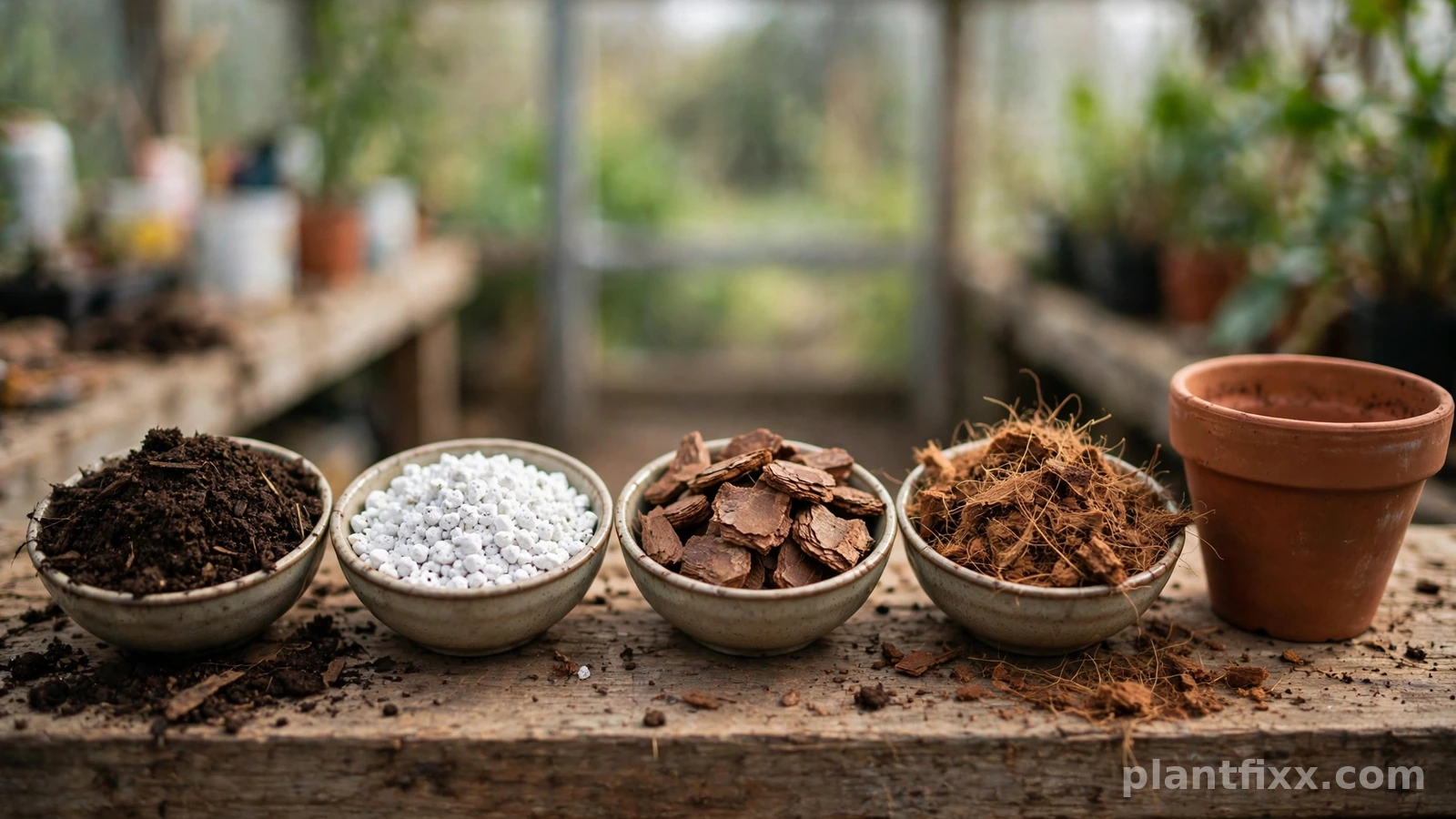
Each ingredient has a job. The potting mix base holds moisture and gives roots something soft to grow through. Perlite and pumice are the pale, lightweight stones that stop the mix from packing down, and they hold the air pockets open. Orchid bark and coco chips create larger gaps and break down slowly, so the mix keeps its structure for a year or more instead of collapsing into mud. Worm castings add a mild nutrient charge and beneficial biology without any burn risk.
Adjust the recipe to your home. If your plant sits in bright light and dries out in a few days, add a little extra potting mix base for moisture. If your plant sits in a dim corner and stays wet for two weeks, raise the perlite and bark share toward half the mix so the roots get more air between waterings.
How to mix it, step by step
- Put the dry ingredients in a bucket or tub, in the ratios above.
- Mix by hand until the perlite and bark are spread evenly through the base, with no pockets of pure potting mix.
- Add a little water and mix again. The finished blend should feel damp and crumbly, and a squeezed handful should hold together loosely, then break apart when poked.
- Fill the pot without packing the mix down. Plant at the same depth the pothos grew before, and water once to settle the mix around the roots.
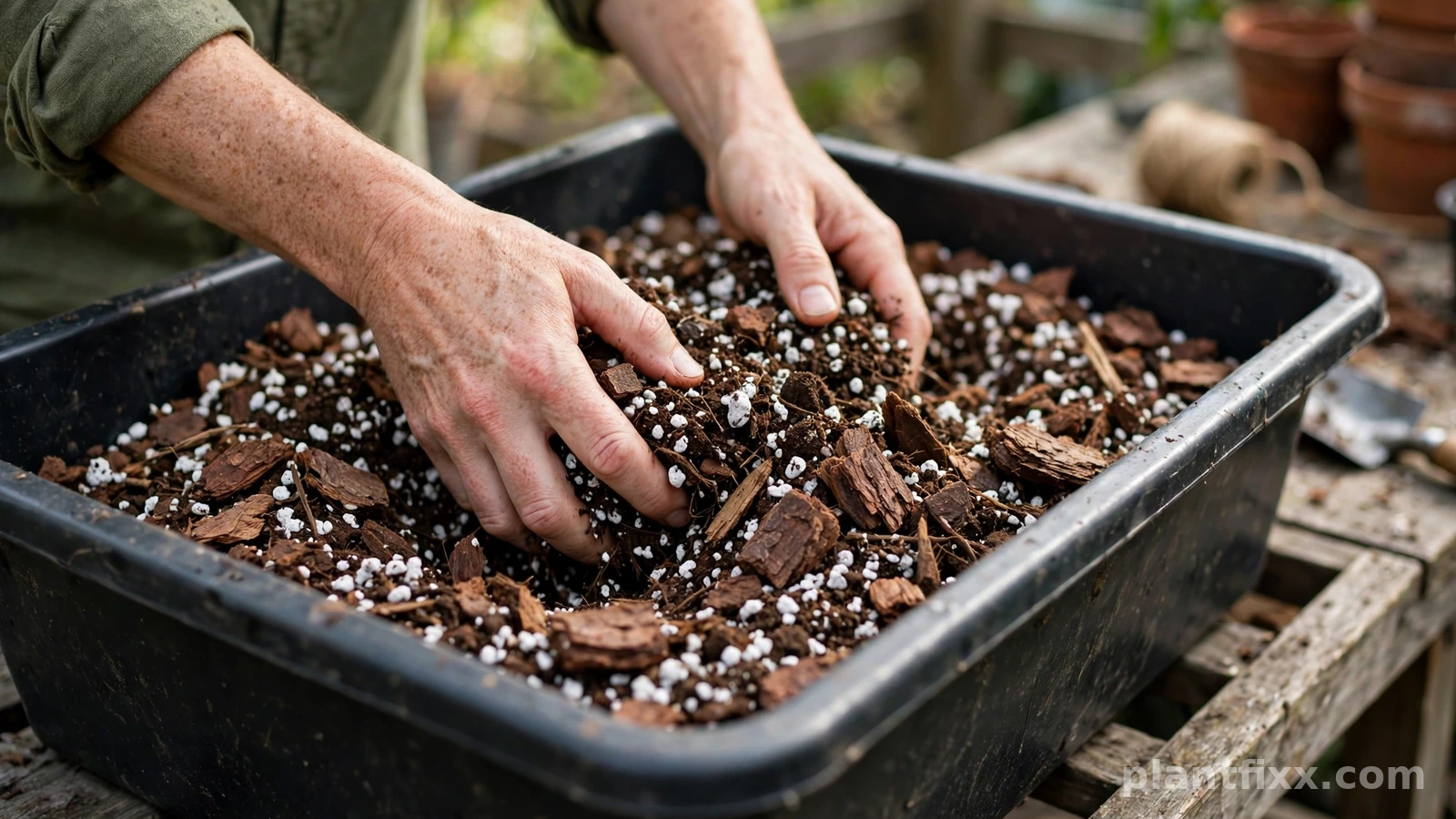
Check the result against one simple test. Water a filled pot and watch the drainage hole. Water should run out of the bottom within seconds, and the surface should not pool. If water sits on top or the pot still feels heavy and soggy two weeks later, the mix needs more chunk. That drainage behavior is what a sensible pothos watering routine depends on, because even perfect watering habits fail in a mix that never breathes.
Drainage Rules That Prevent Root Rot
Pothos soil drainage depends on the mix and the pot working together. A great recipe in a pot with no drainage hole still rots roots, because the water has nowhere to go. Follow these rules and the drainage side of care is handled.
- Use a pot with open drainage holes, always. If a decorative pot has no hole, keep the plant in a plain nursery pot inside it and lift it out to drain after watering.
- Empty the saucer or cachepot 15 to 30 minutes after watering. Roots sitting in standing water lose oxygen and rot starts quietly at the bottom of the pot.
- Skip the layer of rocks or gravel at the bottom of the pot. It does not improve drainage. The gravel layer pushes the wettest zone of soil higher into the root ball, a problem called a perched water table, and roots end up sitting closer to the soggy layer than before.
- Never use garden soil in a pot. It compacts hard indoors, drains poorly, and can carry pests and fungal problems into the house.
- Replace tired mix. After a year or two, fine particles wash down and pack tight. Refreshing the mix restores the air channels the roots depend on.
Most root rot cases start with a drainage failure rather than a single heavy watering. If you want the warning signs and the rescue steps, the guide to pothos plant root rot symptoms and treatment covers the full recovery process. The cheapest insurance is the routine above: the right mix, an open hole, and no standing water.
When Fresh Mix Matters Most: Repotting
The best time to fix soil is repotting day. When roots circle the bottom of the pot, poke out of the drainage holes, or the mix dries out every two days, the plant has outgrown its current home. Move up only 1 to 2 inches in pot diameter and fill the gap with fresh mix made from the recipe above. An oversized pot holds a large volume of wet soil that roots cannot reach, and that unused wet soil is where rot problems begin.
Spring and early summer are the safest seasons to repot, because the plant is growing actively and repairs root damage quickly. The step by step pothos plant repotting guide walks through the full process, including how to handle a root bound plant without tearing the roots apart.
Ready-Made Pothos Potting Mix: What to Buy and What to Avoid
Mixing your own gives you control, but a bagged pothos potting mix can work well with one adjustment. Look for mixes sold for aroids or tropical houseplants, which already include bark and perlite. If you buy a standard all purpose potting mix, lighten it before use by stirring in roughly one third perlite and bark combined, measured against the volume of mix you plan to use.
Avoid moisture control mixes with water holding gels for pothos. They are designed for thirsty outdoor containers and keep indoor roots wet far too long. Also avoid any bag that smells sour when opened, or mix that comes out of the bag as a dense, muddy block. Fresh mix smells earthy and falls apart in your hand.
Part Three: Fertilizer, Feeding Schedule and Burn Prevention
Does a Pothos Plant Need Fertilizer?
A pothos plant in the ground or in a forest draws nutrients from decaying leaves and soil biology. A potted plant has no such supply. The nutrients packed into fresh potting mix last a few months, and every watering washes a little more of them out of the drainage hole. After that, growth runs on whatever you add.
Pothos is a light feeder and forgives missed feedings for a long time, which is why so many neglected plants still look acceptable. The difference shows slowly: leaves get a little paler, new growth gets a little smaller, and vines thin out. Regular gentle feeding during the growing season keeps leaf size and color where they should be. This section works as a complete pothos feeding guide, from what to buy to how to fix feeding mistakes.
Best Fertilizer for Pothos and What NPK Means
The best fertilizer for pothos is a balanced, water soluble houseplant fertilizer. Balanced means the three numbers on the label are equal or close, such as 10-10-10 or 20-20-20. Those numbers are the pothos fertilizer NPK values, and they stand for nitrogen, phosphorus and potassium in that order.
- Nitrogen drives leaf and vine growth, and it is the nutrient a foliage plant uses most.
- Phosphorus supports root growth and helps the plant move energy where it is needed.
- Potassium supports overall health, water regulation and resistance to stress and disease.
When you compare pothos fertilizer NPK labels, ignore marketing words and read the three numbers and the dilution rate. A 20-20-20 product is simply twice as concentrated as a 10-10-10, so you use half as much per gallon of water. Liquid fertilizers are the easiest to control for pothos, because you can dilute them precisely and stop feeding at any time. Slow release granules work too, but once they are in the soil you cannot take them back, which makes overfeeding harder to correct.
Organic options feed gently and suit growers who prefer them. Fish emulsion and seaweed extract are the common choices, along with worm castings worked into the top of the mix at repotting time. They release nutrients slowly and carry a lower burn risk, but they also act slowly, so a clearly deficient plant responds faster to a diluted liquid feed.
Pothos Fertilizer Schedule by Season
Feed when the plant is growing and stop when it rests. The schedule below matches how pothos actually grows indoors in most homes.
| Season | How often to feed | Strength | Notes |
|---|---|---|---|
| Spring | Every 4 to 6 weeks | Half the label strength | Growth restarts. Resume feeding once you see new leaves forming. |
| Summer | Every 4 weeks | Half the label strength | Peak growth, especially in bright light. This is the main feeding window of the year. |
| Early fall | Once, then taper off | Half the label strength | Growth slows as days shorten. One last feed is enough for most homes. |
| Late fall and winter | Do not feed | None | The plant rests. Fertilizer added now builds up as salts in the soil instead of feeding growth. |
Two exceptions adjust the schedule. A plant under a grow light that keeps growing through winter can take a light feed every 6 to 8 weeks, because its growing season never fully stops. A plant in low light that barely grows should be fed at the long end of every range, or skipped, because unused fertilizer accumulates in wet soil and burns roots.
How to Dilute and Apply Fertilizer Safely
More feeding damage comes from strong mixing than from the product itself. Follow this routine each time you feed.
- Water the plant with plain water first if the soil is dry. Never apply fertilizer to a dry root ball, because concentrated salts hit thirsty roots at full strength.
- Mix the fertilizer at half the strength printed on the label. If the label says one teaspoon per gallon, use half a teaspoon.
- Pour the solution evenly over the soil until a little runs from the drainage holes, the same way you water.
- Empty the saucer after half an hour so the roots do not sit in fertilizer solution.
- Every two or three months, flush the pot with plain water, letting it run through freely, to wash out accumulated salts.
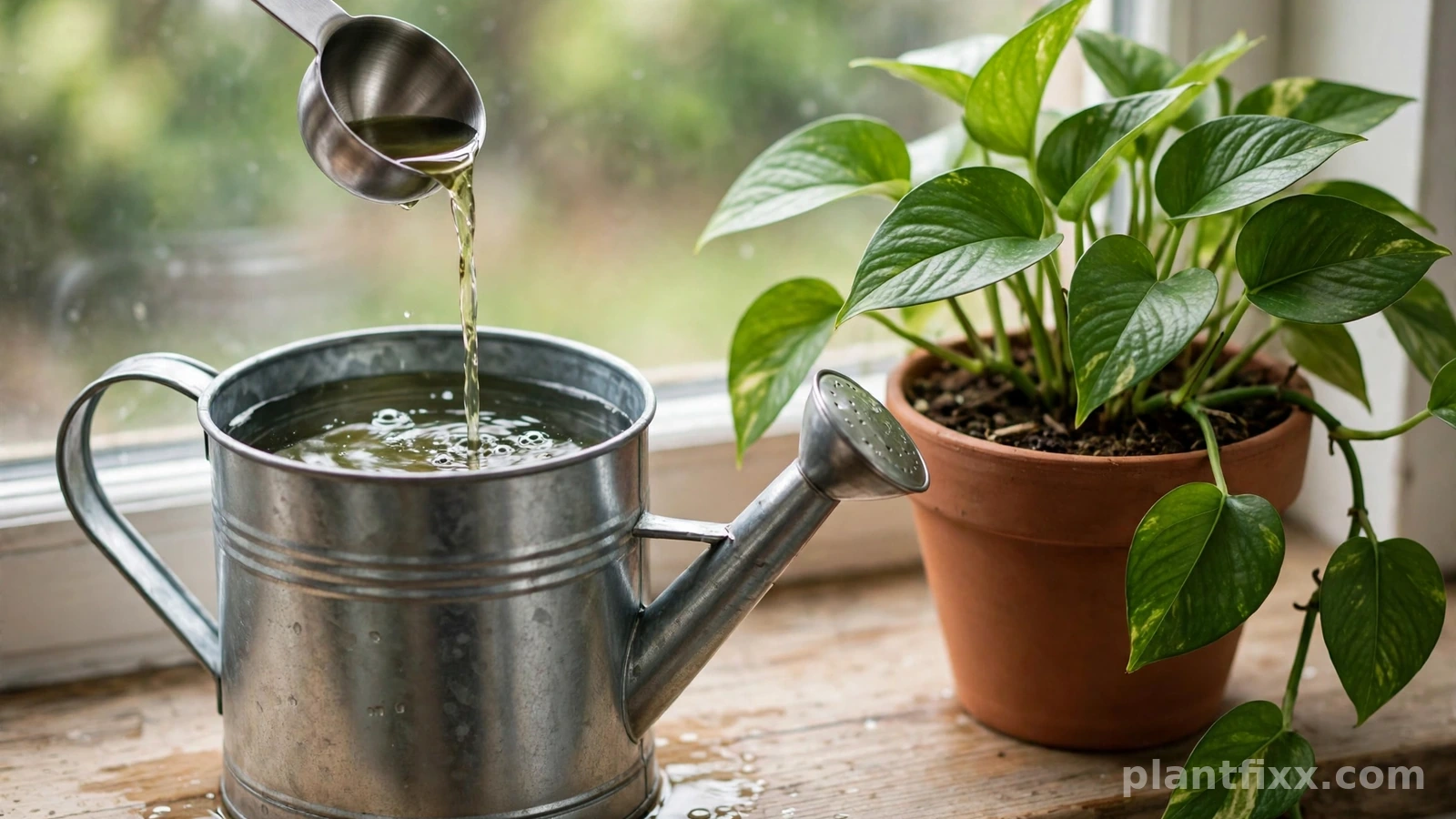
In practice, err on the weak side. A pothos plant fed at quarter strength every month looks better than one hit with a full strength dose that burns its leaf tips. You can always feed again in a few weeks. You cannot un-feed a burned plant.
Nutrient Deficiency or Fertilizer Burn? Read the Leaves
Feeding problems come in two opposite forms, and treating one like the other makes things worse. A pothos nutrient deficiency develops slowly over months of no feeding. Pothos fertilizer burn appears within days of a too strong or too frequent dose. The table below separates the two.
| Sign | Nutrient deficiency | Fertilizer burn |
|---|---|---|
| Leaf color | Older leaves turn pale green or yellow evenly, while the plant looks washed out overall | Leaf color stays normal at first, with damage at the edges instead |
| Leaf edges and tips | Edges stay intact, leaves may drop after yellowing | Tips and edges turn brown and crispy, starting on the most exposed leaves |
| New growth | New leaves come in smaller and paler than older leaves | New growth may stall or wilt even though the soil is moist |
| Soil surface | Looks normal, no residue | White or crusty salt deposits appear on the soil or pot rim |
| Timing | Builds up slowly after months without feeding or repotting | Shows within days of a feeding, or after repeated full strength doses |
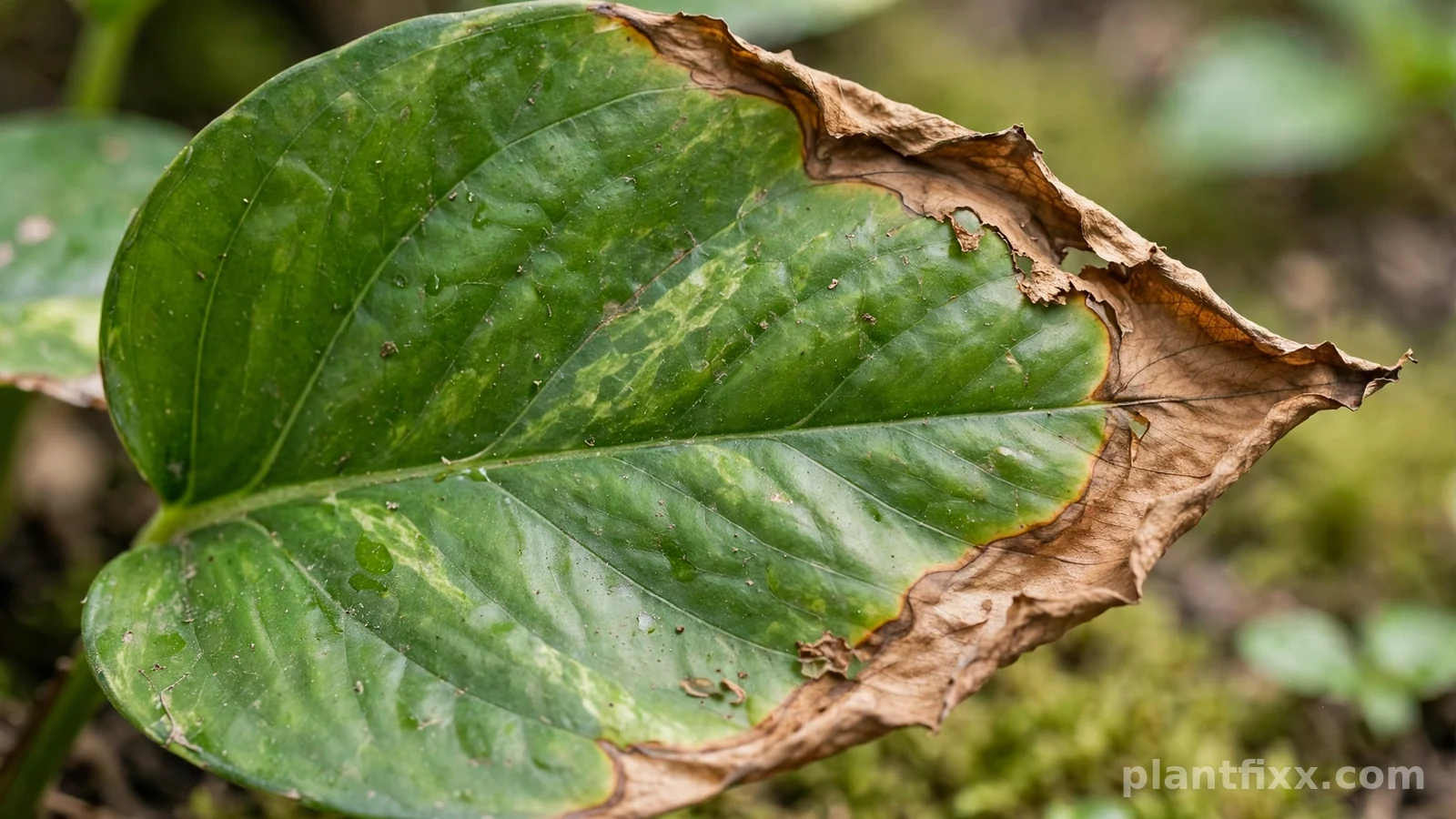
For a deficient plant, start feeding at half strength on the schedule above and judge the result by new leaves over the next month. Leaves that already yellowed will not turn green again. For a burned plant, stop feeding at once and flush the pot with plain water several times to carry the salts out. Trim leaves that are mostly brown, keep the plant in bright indirect light, and wait for fresh growth before feeding again at quarter strength. Serious pothos fertilizer burn can kill roots, but most cases caught early end with a few lost leaves and a full recovery.
How Light, Soil and Feeding Work Together
The three parts of this guide are one system. Bright light makes the plant drink and feed actively, so a chunky fast draining mix and a monthly half strength feed suit it. Low light slows everything down, so the same plant needs a mix with even more air and far less fertilizer. When a pothos plant declines, check the three in order: measure the light, feel the soil, then review the feeding. One of the three is almost always the cause, and it is rarely the third one.
For the rest of the care routine, including watering depth, humidity, pruning and safety around pets, the complete pothos plant care guide pulls everything into one checklist. Set the light, soil and feeding from this page first, because those three decisions make every other care task easier.
Frequently Asked Questions
Can a pothos plant survive in a windowless room?
Yes, if you replace the window with a grow light. Run a full spectrum LED 12 to 14 hours a day, 12 to 24 inches above the plant. Without any light source, the plant declines within months no matter how well you water or feed it.
How many hours of light does a pothos plant need each day?
Aim for 10 to 14 hours of bright indirect light a day. The plant tolerates shorter days in winter by slowing its growth, and it needs a dark period at night, so do not run grow lights around the clock.
Can I use a regular LED bulb instead of a grow light?
A regular LED bulb keeps a pothos plant alive near the bulb, but its spectrum is tuned for human eyes and the plant grows slowly under it. A full spectrum grow bulb in the same lamp socket costs little more and produces visibly faster, fuller growth.
What is the best soil for a pothos plant if I do not want to mix my own?
Buy a mix sold for aroids or tropical houseplants, since those blends already contain bark and perlite. If you only find standard potting mix, stir in about one third perlite and bark before potting so the roots still get air.
How do I know if my pothos plant needs fertilizer?
Look for slow growth during spring and summer, new leaves smaller than the old ones, and older leaves turning pale. If the plant was repotted into fresh mix within the last two or three months, it is still feeding from the mix and needs nothing yet.
Can fertilizer burn kill a pothos plant?
It can kill roots in severe cases, but most burn is caught early and costs a few leaves. Stop feeding, flush the soil with plain water several times, and let new growth prove the roots recovered before you feed again at quarter strength.
Should I fertilize a pothos plant in winter?
No, skip feeding in late fall and winter in most homes. Growth slows, the plant cannot use the nutrients, and the salts build up in the soil. The exception is a plant under a grow light that keeps producing new leaves all winter, which can take a light feed every 6 to 8 weeks.
Do pothos plants growing in water need fertilizer?
Yes. Plain water holds no nutrients, so add a balanced liquid fertilizer at quarter strength every 4 to 6 weeks and refresh the water regularly. Without feeding, water grown pothos slowly pales and stops growing.
Conclusion
Set the light first: bright indirect light in the 100 to 1,000 foot-candle range, placed by window direction or supplied by a grow light. Build the soil second: 2 parts potting mix, 1 part perlite, 1 part bark, in a pot with open drainage holes and no rock layer. Feed third: a balanced fertilizer at half strength every 4 to 6 weeks in the growing season, and none in winter. Keep those three settings matched to each other and a pothos plant rewards you with fast vines, full leaves and strong color for years. When you are ready to turn that growth into new plants, the propagation guide linked above shows you exactly where to cut.
Can a pothos plant survive in a windowless room?
Yes, if you replace the window with a grow light. Run a full spectrum LED 12 to 14 hours a day, 12 to 24 inches above the plant. Without any light source, the plant declines within months no matter how well you water or feed it.
How many hours of light does a pothos plant need each day?
Aim for 10 to 14 hours of bright indirect light a day. The plant tolerates shorter days in winter by slowing its growth, and it needs a dark period at night, so do not run grow lights around the clock.
Can I use a regular LED bulb instead of a grow light?
A regular LED bulb keeps a pothos plant alive near the bulb, but its spectrum is tuned for human eyes and the plant grows slowly under it. A full spectrum grow bulb in the same lamp socket costs little more and produces visibly faster, fuller growth.
What is the best soil for a pothos plant if I do not want to mix my own?
Buy a mix sold for aroids or tropical houseplants, since those blends already contain bark and perlite. If you only find standard potting mix, stir in about one third perlite and bark before potting so the roots still get air.
How do I know if my pothos plant needs fertilizer?
Look for slow growth during spring and summer, new leaves smaller than the old ones, and older leaves turning pale. If the plant was repotted into fresh mix within the last two or three months, it is still feeding from the mix and needs nothing yet.
Can fertilizer burn kill a pothos plant?
It can kill roots in severe cases, but most burn is caught early and costs a few leaves. Stop feeding, flush the soil with plain water several times, and let new growth prove the roots recovered before you feed again at quarter strength.
Should I fertilize a pothos plant in winter?
No, skip feeding in late fall and winter in most homes. Growth slows, the plant cannot use the nutrients, and the salts build up in the soil. The exception is a plant under a grow light that keeps producing new leaves all winter, which can take a light feed every 6 to 8 weeks.
Do pothos plants growing in water need fertilizer?
Yes. Plain water holds no nutrients, so add a balanced liquid fertilizer at quarter strength every 4 to 6 weeks and refresh the water regularly. Without feeding, water grown pothos slowly pales and stops growing.
Pingback: Pothos Plant Care Guide: Apartment Beginner Tips (2026)