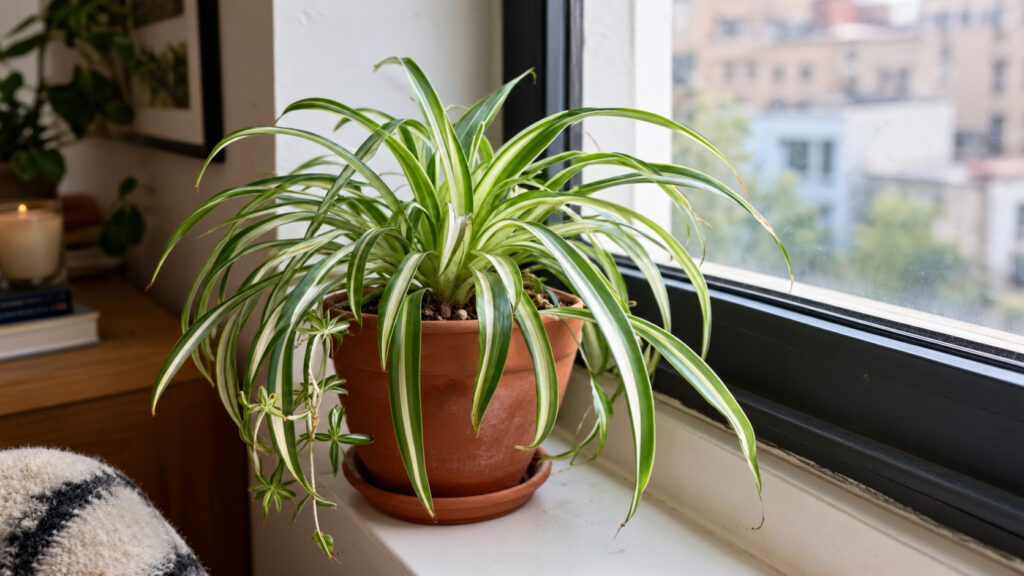
A spider plant for bathrooms and kitchens fits naturally into both rooms, since Chlorophytum comosum tolerates the humidity swings and variable light these spaces often bring better than many houseplants. Steam from a shower or a stovetop raises humidity periodically rather than constantly, and a spider plant handles that inconsistency well as long as light and drainage stay reasonable.
Quick Answer
A spider plant for bathrooms and kitchens works well as long as the spot gets some natural light, even indirect, and the pot has drainage holes to handle occasional splashes or higher ambient moisture. Both rooms’ natural humidity swings suit this plant better than constant dry indoor air does.
Quick Take
Bathrooms and kitchens both offer periodic humidity spikes from showers, cooking, and dishwashing, which spider plants tolerate well without needing constant moisture. Light tends to be the bigger challenge in these rooms, since many bathrooms have small or no windows and kitchens often place plants away from direct counter light. A spot near any window, even a small or frosted one, usually provides enough brightness, and a grow light fills the gap in a windowless bathroom. Good drainage matters more here than in a living room setup, since splashes and higher ambient moisture make consistently wet soil more likely without care.
In practice, a spider plant for bathrooms and kitchens does better with attention to light than to humidity, since this plant already tolerates average humidity fine and doesn’t need the boost these rooms provide to survive. Chlorophytum comosum’s main requirement stays consistent regardless of room: enough indirect light to support steady growth, which a kitchen with a window over the sink or a bathroom with even a small window usually provides.
Why Spider Plants Suit Humid Rooms
Spider plants tolerate average indoor humidity without issue, and the higher, if inconsistent, humidity in a bathroom or kitchen causes no harm and sometimes slightly reduces the brown leaf tips this plant is prone to in very dry air. Unlike plants that need constant high humidity to thrive, a spider plant handles the swing between a steamy shower and a dry afternoon without stress, making it one of the more forgiving choices for these variable environments.
Best Spots in a Bathroom
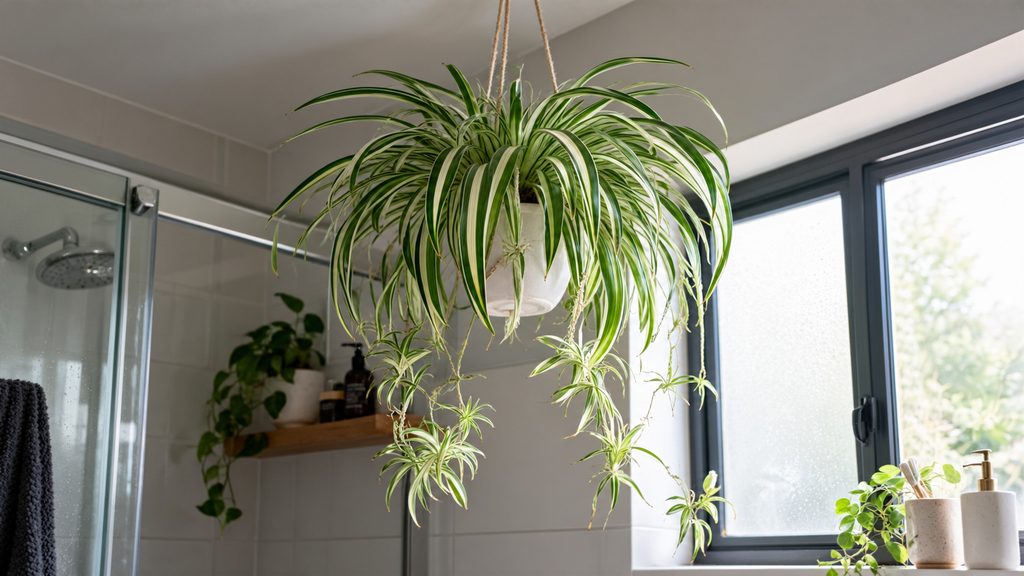
A shelf or windowsill near a bathroom window, even a small or frosted one, gives a spider plant enough indirect light to grow steadily. A spot directly above a shower gets the most humidity but often the least light, so balancing some natural brightness against maximum steam exposure usually works better than prioritizing humidity alone. Hanging the plant from the ceiling or a wall bracket keeps it out of the way in a small bathroom while still catching ambient light from the window or a vanity light left on for part of the day.
Best Spots in a Kitchen
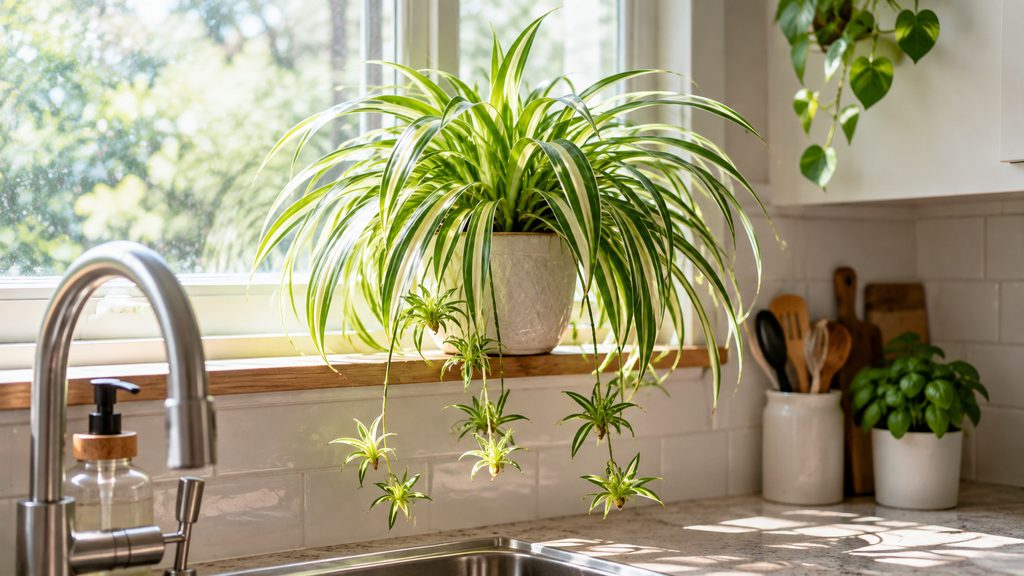
A windowsill above the sink ranks as one of the best kitchen spots for a spider plant, offering both decent light and proximity to the humidity generated during cooking and dishwashing. Open shelving away from a stove’s direct heat also works well, since steady indirect light from a nearby window supports growth without the temperature swings a spot too close to the stove would create. Keeping the plant a reasonable distance from a stovetop matters more than the light itself, since sustained heat exposure stresses the plant more than typical kitchen humidity does.
Setting Up for Success
Choose a pot with drainage holes, since splashes and higher ambient moisture in these rooms make a well-draining setup more important than in a typical living room spot. A saucer underneath catches excess water from watering or nearby splashes, and emptying it regularly prevents the roots from sitting in standing water. If the room lacks a window offering several hours of daylight, a small grow light run for eight to ten hours a day fills the gap without much visual disruption to the space.
What to Watch For in These Rooms
Cooler drafts near a bathroom exhaust fan or a kitchen door leading outside can stress a spider plant, so keeping some distance from these spots helps. Cleaning products and cooking oils sometimes drift onto nearby leaves in a kitchen, so wiping leaves down periodically keeps the plant healthy and looking its best. In a bathroom with limited light, watch for slower growth or fading variegation as signs the spot needs a brighter alternative or a grow light.
Spider Plant for Bathrooms & Kitchens at a Glance
| Factor | Bathroom | Kitchen |
| Humidity | High but inconsistent | Moderate, tied to cooking |
| Typical light challenge | Small or no window | Light often blocked by cabinets |
| Best spot | Near window, hanging from ceiling | Windowsill above sink |
| Main risk | Low light | Heat near stove |
Bathrooms and kitchens can provide useful humidity, but light and watering still matter for long-term health. For the complete care routine, see our Spider Plant Care Guide for Small Homes.
Final Takeaway
A spider plant for bathrooms and kitchens suits both rooms well, since this plant tolerates the humidity swings each brings without needing them to survive. Focus on finding a spot with some natural light first, keep the plant a reasonable distance from direct heat or cold drafts, and use a well-draining pot to handle the occasional splash. With those basics covered, either room makes a genuinely good home for a spider plant.
FAQ
Does a spider plant need extra humidity in a bathroom? No, spider plants tolerate average humidity fine, though the higher humidity in a bathroom causes no harm and may slightly reduce brown tips.
Can I keep a spider plant in a windowless bathroom? Not long term without supplemental light. A small grow light run for eight to ten hours a day works well as a substitute.
Will steam from cooking or showering hurt my spider plant? No, periodic steam exposure suits spider plants fine, since they tolerate humidity swings better than constant high or low humidity extremes.
Where should I place a spider plant in a small kitchen? A windowsill above the sink usually offers the best balance of light and distance from stovetop heat in a small kitchen.
Does a spider plant near a shower need a special pot? A pot with drainage holes and a saucer to catch excess water works well, since splashes and ambient moisture make good drainage more important.
Can heat from a stove damage a spider plant? Yes, sustained heat exposure from being too close to a stove stresses the plant more than typical kitchen humidity, so some distance helps.