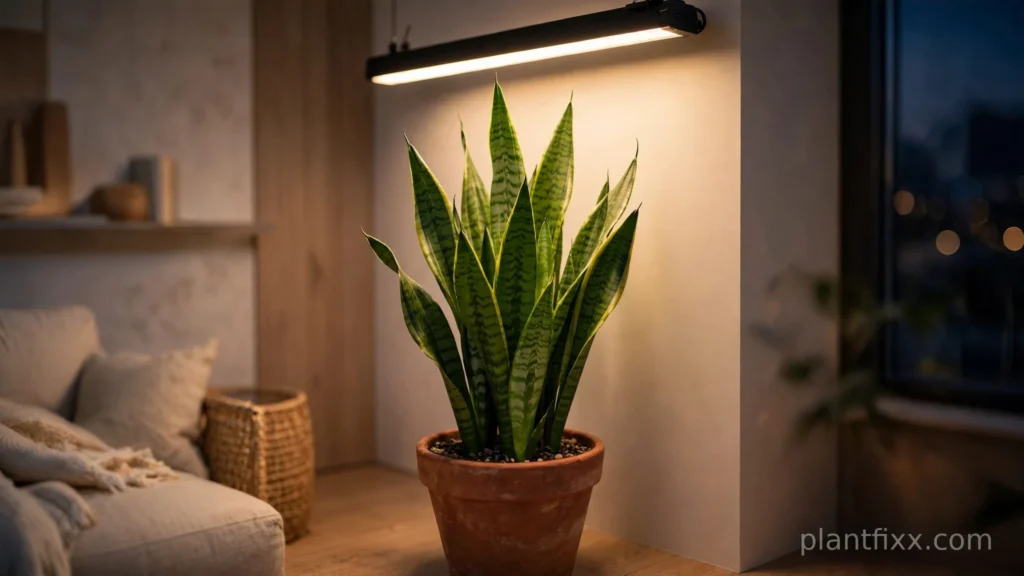
A snake plant grow light is the simplest fix for a plant stuck in a dark corner. Far from a window, in a windowless office, or in a basement, a snake plant survives but grows slowly, with pale, floppy foliage. The right grow light changes that.
Snake plants ask for very little. You do not need an expensive panel, a purple glow that takes over your room, or a greenhouse. A basic full-spectrum LED at the right distance, on a timer, gives results close to a bright window.
This guide covers how grow lights work for snake plants, whether yours needs one, the best light types, exact distance and hours, setup steps, and common mistakes.
A full-spectrum LED grow light placed 12 to 24 inches above your snake plant and run 12 to 14 hours a day on a timer is the ideal setup. Choose 4000K to 6500K, keep the light directly above the leaves, and give the plant a full dark night.
Quick Take: Snake plants tolerate low light but grow best with steady, moderate light. A grow light fills the gap in dark rooms, offices, and winter months. Pick a full-spectrum LED in the 4000K to 6500K range, hang it 12 to 24 inches above the foliage, and run it 12 to 14 hours daily on a timer. After two weeks, upright, firm, richly colored leaves mean the setup works. Leaning or bleached leaves mean adjust distance or duration.
One mistake many people make is buying the strongest panel they can find and blasting the plant from six inches away. Snake plants respond better to moderate, consistent light than to raw intensity. Start with the distance recommended below and let your plant’s response guide you.
How a Grow Light Helps a Snake Plant
Plants use light as fuel for photosynthesis. Snake plants use a water-saving version called CAM photosynthesis: they absorb carbon dioxide at night, so your plant needs a real dark period every night. A light that never turns off disrupts that cycle.
Spectrum matters more than brand. Blue wavelengths support leafy growth, red supports overall vigor, and full-spectrum white covers both. For snake plants, a neutral white light in the 4000K to 6500K range is the sweet spot: healthy growth without tinting your room purple. Growers recommend neutral white over warm-only bulbs for low-light foliage species like snake plants.
Does Your Snake Plant Need a Grow Light?
Not every snake plant needs one. Yours likely does if it lives in a windowless office or interior room, sits more than 8 to 10 feet from the nearest window, or has stopped growing and lost color despite correct watering. Then a grow light is not a luxury. It is the light source.
It probably does not need one within a few feet of an east or north window with bright indirect light most of the day. Unsure? Read our guide to snake plant light requirements first.
What You Need Before You Start
Before you buy, grab a tape measure, install a free light meter app on your phone, and get a timer or smart plug so the light runs on a schedule. Confirm the light can hang or clamp directly above the plant. Quick check you can do right now: hold your hand a foot above the plant at midday. A sharp shadow means decent light. A faint, fuzzy one means a grow light will help.
Types of Grow Lights That Work for Snake Plants
All four work for snake plants.
Clip-on gooseneck LED
Best for one plant on a desk or shelf. It clamps to the pot rim or a nearby surface, the flexible neck aims light straight down, and most models include a built-in timer.
LED panel or bar light
Best for a shelf of plants or a large snake plant. Panels and bars spread light evenly over a wide area, hang from a stand or mount under a shelf, and run cool enough to sit fairly close to foliage.
T5 fluorescent tube
A solid budget option for shelving. Tubes give even, gentle light and have kept houseplants alive for decades, but they use more electricity than LEDs and need replaced every year or two as output fades.
Screw-in full-spectrum bulb
The easiest option. It fits a normal desk lamp or pendant, so there is nothing to mount. Best for a single small plant where a lamp already exists.
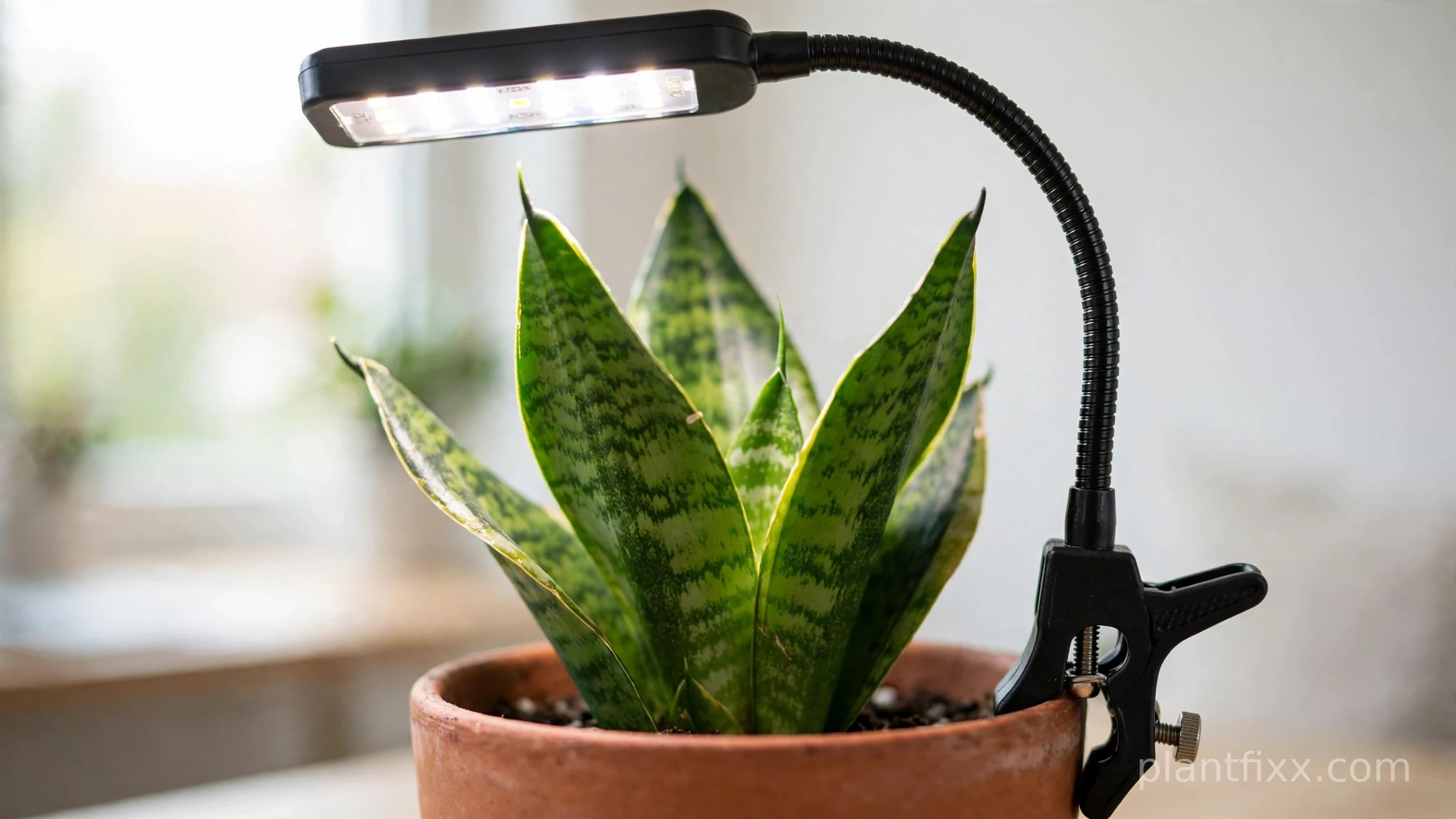
| Light type | Best for | Heat output | Notes |
|---|---|---|---|
| Clip-on gooseneck LED | One plant, desk or shelf | Very low | Timer often built in |
| LED panel or bar | Shelves, groups, tall plants | Very low | Even coverage over a wide area |
| T5 fluorescent tube | Shelving on a budget | Low | Replace tubes yearly as output fades |
| Screw-in full-spectrum bulb | Existing lamp, small plant | Low | Nothing to mount |
How to Set Up Your Grow Light, Step by Step
- Hang or clip the light directly above the plant, not off to the side. Side light makes snake plants lean and grow unevenly.
- The workable range is 12 to 24 inches, the standard grow light distance for snake plants: start at 18 inches above the tallest leaf tips, go closer for dim supplemental setups, farther for powerful panels.
- Aim the light straight down at the center of the plant so every leaf gets similar exposure.
- Set the timer for 12 to 14 hours per day, for example 7 am to 8 pm. Consistency matters more than the exact start time.
- Leave the plant in full darkness overnight for its night-time gas exchange. Do not run the light around the clock.
- Check for heat after a few hours. LEDs should feel barely warm. If the fixture is hot, raise it.
How Many Hours a Day Should the Grow Light Run?
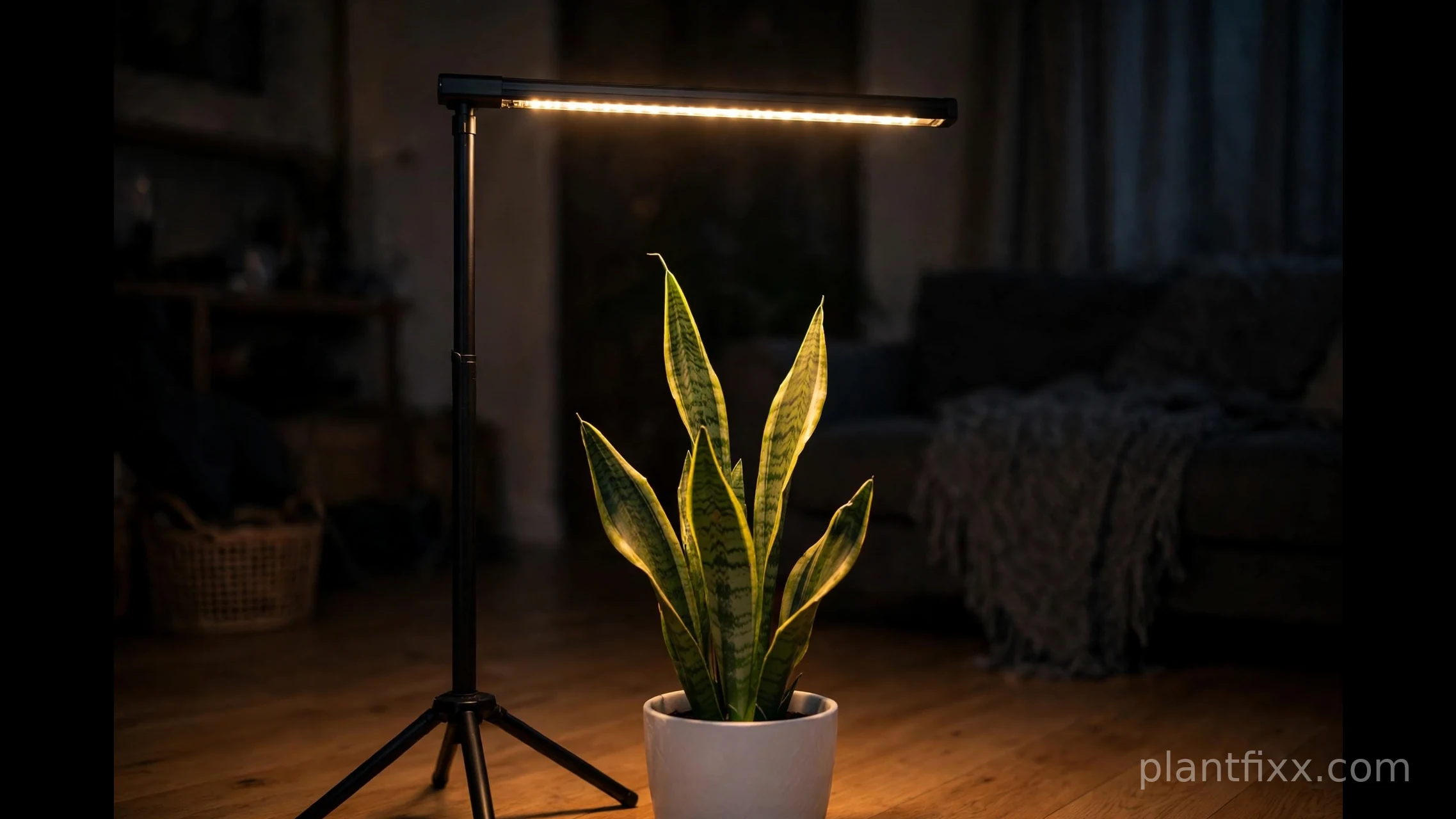
Twelve to fourteen hours a day is the standard recommendation. If your plant also gets some window light, 8 to 10 hours of supplemental light fills the gap. Never run the light 24 hours: snake plants need a dark night to complete their CAM cycle, and constant light stresses the plant while wasting electricity.
Signs Your Grow Light Setup Is Working
After two to four weeks, look for new leaves emerging upright and firm, rich green color with variegation that holds, no leaning toward the fixture, and steady new growth. A working setup shows quiet, consistent improvement, not a sudden burst.
Signs Something Is Wrong
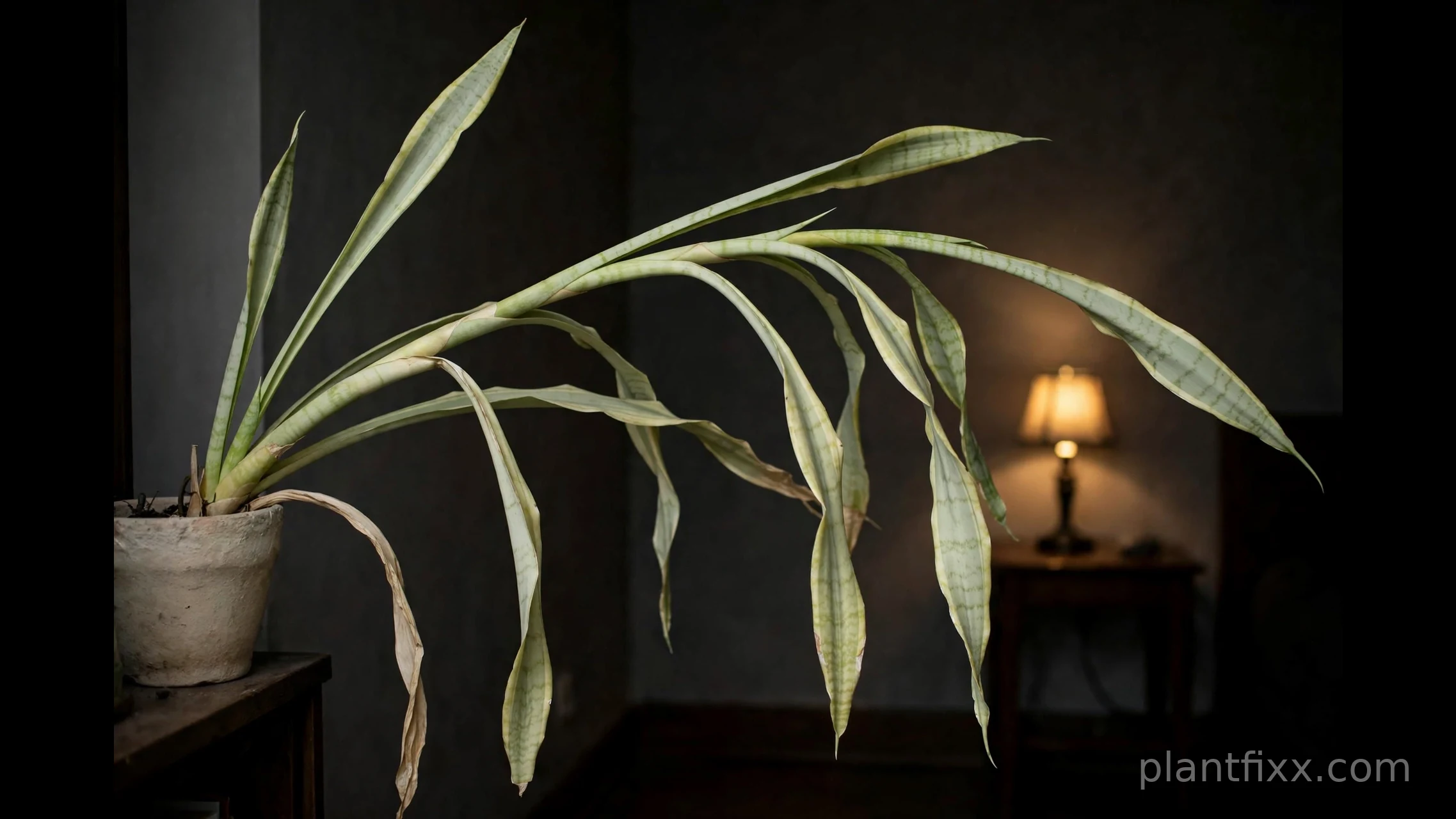
Leaning or stretched, pale new growth means the light is too far away or too weak. Move the fixture closer in 2-inch steps and reassess after a week.
Bleached patches or brown, crispy leaf tips mean the light is too close or on too long. Raise the fixture and shorten the hours. Similar damage comes from watering trouble, so check our guide to snake plant brown tips to rule that out.
Soil dries faster under a grow light, so check the soil before watering instead of following your old schedule. Our guide to watering your snake plant covers the right rhythm.
What to Do If Growth Stalls
Zero new leaves for months? Move the light closer, extend run time toward 14 hours, check night temperatures stay above 60°F, inspect for pot-bound roots, and review watering. Change one variable at a time, waiting two weeks between changes. For deeper diagnosis, see our guide on a snake plant not growing.
Using a Grow Light in Winter and in Small Spaces
Winter is when grow lights earn their keep. Shorter days and weaker sun stall growth, so add an hour or two to the timer or move the fixture slightly closer during the darkest months.
Small spaces are ideal for grow lights. A clip-on light on a bookshelf or a desk lamp with a full-spectrum bulb covers one plant without changing the room. In a windowless office or bathroom, a grow light can be the plant’s only light source, which is why snake plants rank among the best plants for rooms with no sunlight at all.
Running costs are small. A typical 10 to 20 watt LED running 12 hours a day uses about as much electricity as a phone charger left plugged in.
Frequently Asked Questions
Can a snake plant live with only a grow light and no sunlight?
Yes. A full-spectrum LED run 12 to 14 hours daily fully replaces window light, and snake plants tolerate artificial-only setups better than most houseplants.
How far should a grow light be from a snake plant?
Keep it 12 to 24 inches above the leaf tips. Start at 18 inches, then move closer if growth is pale and stretched, or farther if leaves bleach or crisp.
Can a grow light burn a snake plant?
Yes, if it sits too close or runs too long. Bleached patches and crispy brown tips are the warning signs. Raise the fixture, shorten the hours, and new leaves will emerge healthy.
Do snake plants need special purple grow lights?
No. Purple lights are built for commercial growers maximizing yield per watt. Full-spectrum white in the 4000K to 6500K range grows a snake plant just as well and looks far better in a home.
Should I leave the grow light on at night?
No. Snake plants need a dark night to complete their natural breathing cycle. Run the light during the day and let the plant rest in darkness overnight.
Will a grow light make my snake plant grow faster?
It supports healthy, steady growth rather than speed. A plant stalled in a dark corner will start producing new leaves again, but snake plants are naturally slow, so expect consistent improvement over months, not weeks.
The Bottom Line
A grow light does not need to be complicated. Pick a full-spectrum LED, hang it 12 to 24 inches above your snake plant, run it 12 to 14 hours on a timer, and give the plant dark nights. Watch the leaves for two weeks and adjust once.
If your plant still refuses to grow once the setup is dialed in, the light is probably not the problem. Our guide to why a snake plant stops growing walks through the remaining causes.
Pingback: Can Snake Plants Live Without Sunlight? No — Here's Why
Pingback: Snake Plant Light: How Much It Really Needs (Indoor Guide)