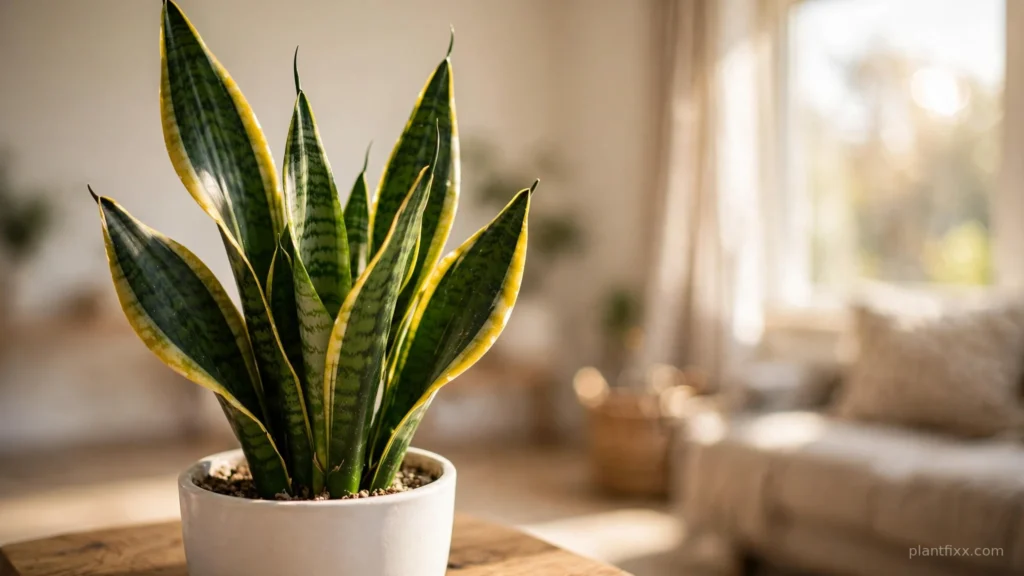
Snake plants have a reputation for surviving almost anything. Forget to water them for weeks, leave them in a dark hallway, and they keep standing tall. But snake plant temperature tolerance has one big hole: cold.
Cold is the fastest way to kill a healthy snake plant. A single freezing night can turn firm leaves into mush, and a long stretch in the low 40s can stall the plant for months. Heat is far less dangerous, but sustained temperatures above 90°F with dry soil still push it into stress.
The rules are simple, though. Once you know the temperature zones your snake plant can handle, most problems become easy to prevent and easy to spot early.
Quick Answer: Snake plants grow best between 70°F and 90°F (21-32°C) and stay safe above 50°F (10°C). They survive short dips to 50°F, but prolonged cold below that injures tissue, and freezing at 32°F kills the leaves. On the hot side, they tolerate up to 100°F as long as the soil is not bone dry and air keeps moving.
Quick Take: Temperature limits only tell you part of the story. In real homes, most damage comes from sudden swings, not steady readings: a leaf pressed against a cold window on a winter night, or hot dry air blasting from a vent inches away. The roots matter more than the leaves, because cold wet soil rots roots faster than cold air damages foliage.
One mistake many people make is treating a snake plant like indestructible decor, sticking it behind a curtain and forgetting it until February. I have seen more snake plants damaged by winter window placement than by any pest or watering mistake. A snake plant survives bad conditions far longer than it thrives in them, and temperature is where “surviving” quietly turns into damage.
Why Temperature Affects Snake Plants the Way It Does
Snake plants come from tropical West Africa, where temperatures stay warm and steady all year. Their thick leaves store water in big, juicy cells, and that storage is exactly what makes them fragile in the cold. When leaf tissue freezes, the water inside the cells forms ice crystals that rupture the cell walls. Once those walls rupture, the leaf cannot heal, so it turns soft, dark, and mushy.
In heat, the opposite happens. High temperatures speed up evaporation from the leaves and the soil, so the plant loses water faster than the roots can pull it up. Leaves wrinkle, and the edges can crisp.
The third factor is the root zone. Roots slow down sharply in cold soil, and wet cold soil is where root rot starts. A snake plant in dry soil at 52°F can be fine, while the same plant in wet soil at 55°F starts rotting. Temperature and moisture are a team, so judge them together.
The Temperature Zones Every Snake Plant Owner Should Know
| Zone | Temperature | What happens |
|---|---|---|
| Ideal growth | 70-90°F (21-32°C) | Active growth, firm upright leaves. The range to aim for. |
| Comfortable, slow | 60-70°F (16-21°C) | Growth slows. The plant rests but stays healthy. |
| Caution | 50-60°F (10-16°C) | Short exposure survivable. Keep soil dry, avoid further chilling. |
| Cold stress | 40-50°F (4-10°C) | Tissue damage likely within days. Mushy spots, dark patches. |
| Freezing | Below 32°F (0°C) | Cell walls rupture. Leaves blacken and turn mushy. Recovery unlikely. |
| Heat stress | 90-100°F (32-38°C) | Fine with water and airflow. Without them: wrinkling, curling, crisping. |
Cold Damage: Signs Your Snake Plant Is Too Cold
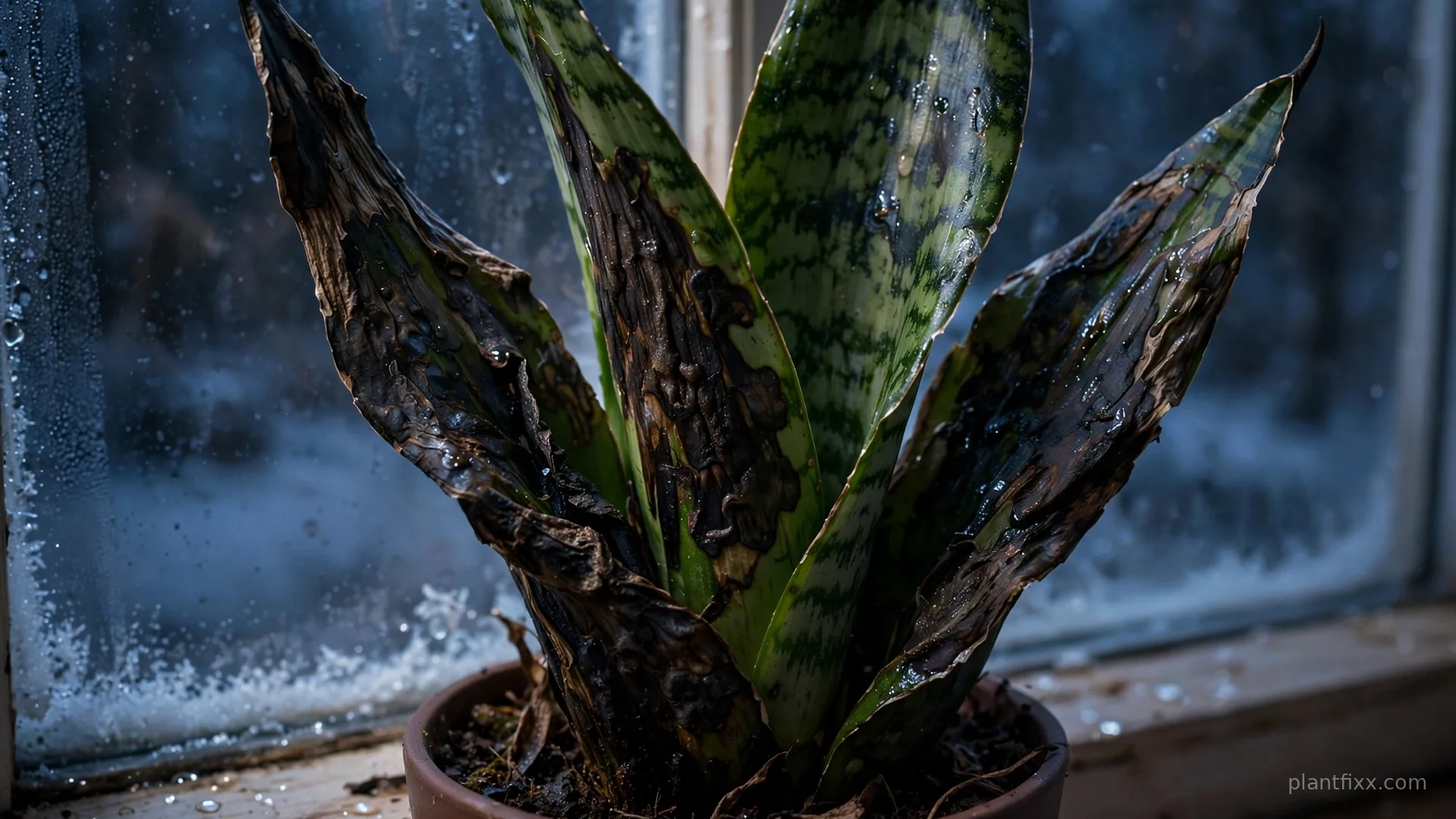
Cold damage has a distinct look, and it does not show up all at once. The first sign is often a change in texture: leaves that used to feel firm start feeling soft or rubbery, especially near the base. Next come dark patches, brown to almost black, spreading from the tips or edges inward. In the worst cases, the outer leaves fold over, the base smells sour, and the rhizome itself has rotted. When the base smells bad, the plant is usually finished. One detail that trips people up: cold damage can take days to appear, so judge by the exposure, not just the first look.
Heat Stress: The Side Most Guides Skip
Most temperature articles spend four pages on cold and one paragraph on heat, so this section fills that gap. Snake plants handle heat much better than cold, but they are not immune.
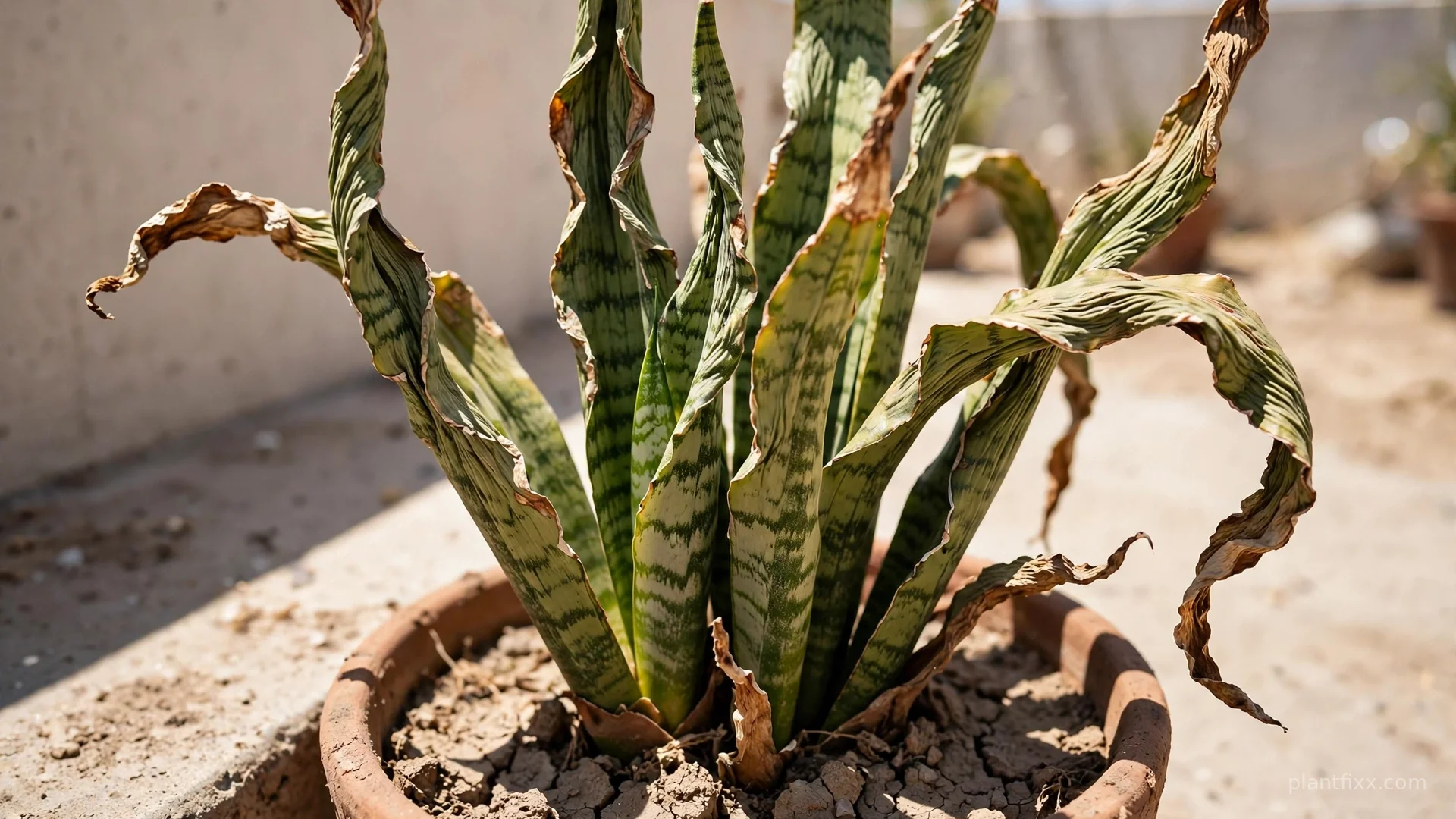
Above 90°F, watch for wrinkled leaves, inward curling, and dry brown tips or edges. In extreme cases the most exposed leaves develop bleached, papery patches (sunscald). Heat damage is almost always paired with dry soil, so if the soil is evenly moist and air is moving, a snake plant sails through 100°F days that would wreck a fern.
The worst heat setup is a small dark pot baking on a south-facing patio. The root zone overheats, the soil dries completely, and the leaves dry out from both ends. Outdoors in summer, check soil moisture daily during heat waves and give the plant some afternoon shade.
Check Your Home for Hidden Temperature Swings
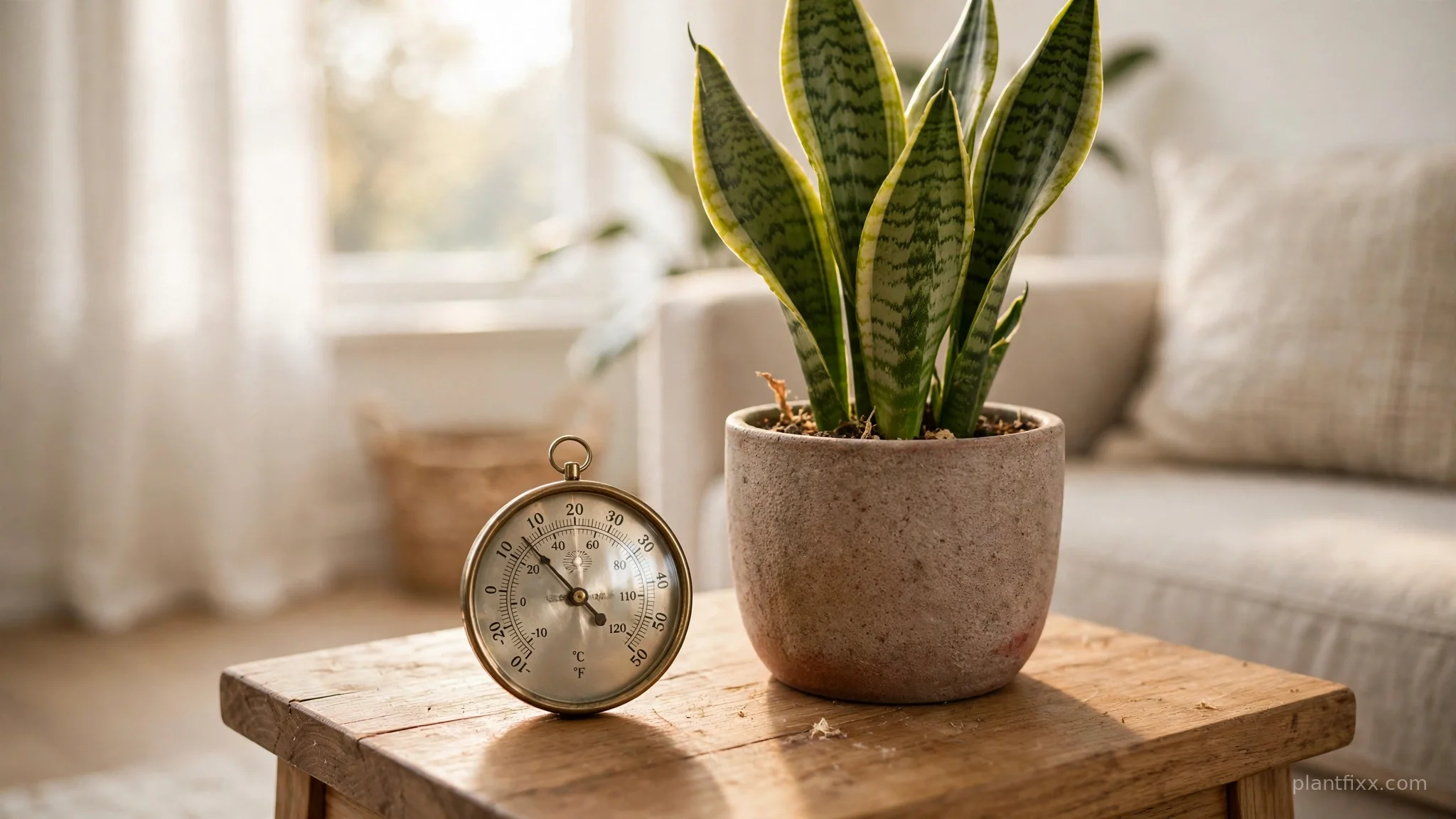
Steady indoor temperatures between 65°F and 78°F suit snake plants perfectly, and most homes sit in this range all year. The danger spots are local: a windowsill that drops to 45°F at 3 a.m. while the room reads 68°F, a leaf touching cold glass, a vent blasting cold air at the plant, or a cold tile floor chilling the pot from below.
You only need one tool for this: a cheap indoor thermometer. Set it where your plant stands for 24 hours, and check the lowest overnight reading and the highest daytime reading. If the swing is wider than about 15°F, move the plant to a steadier spot. Five feet away from a window or vent usually flattens the swing completely.
Signs Your Snake Plant Is Handling the Temperature Fine
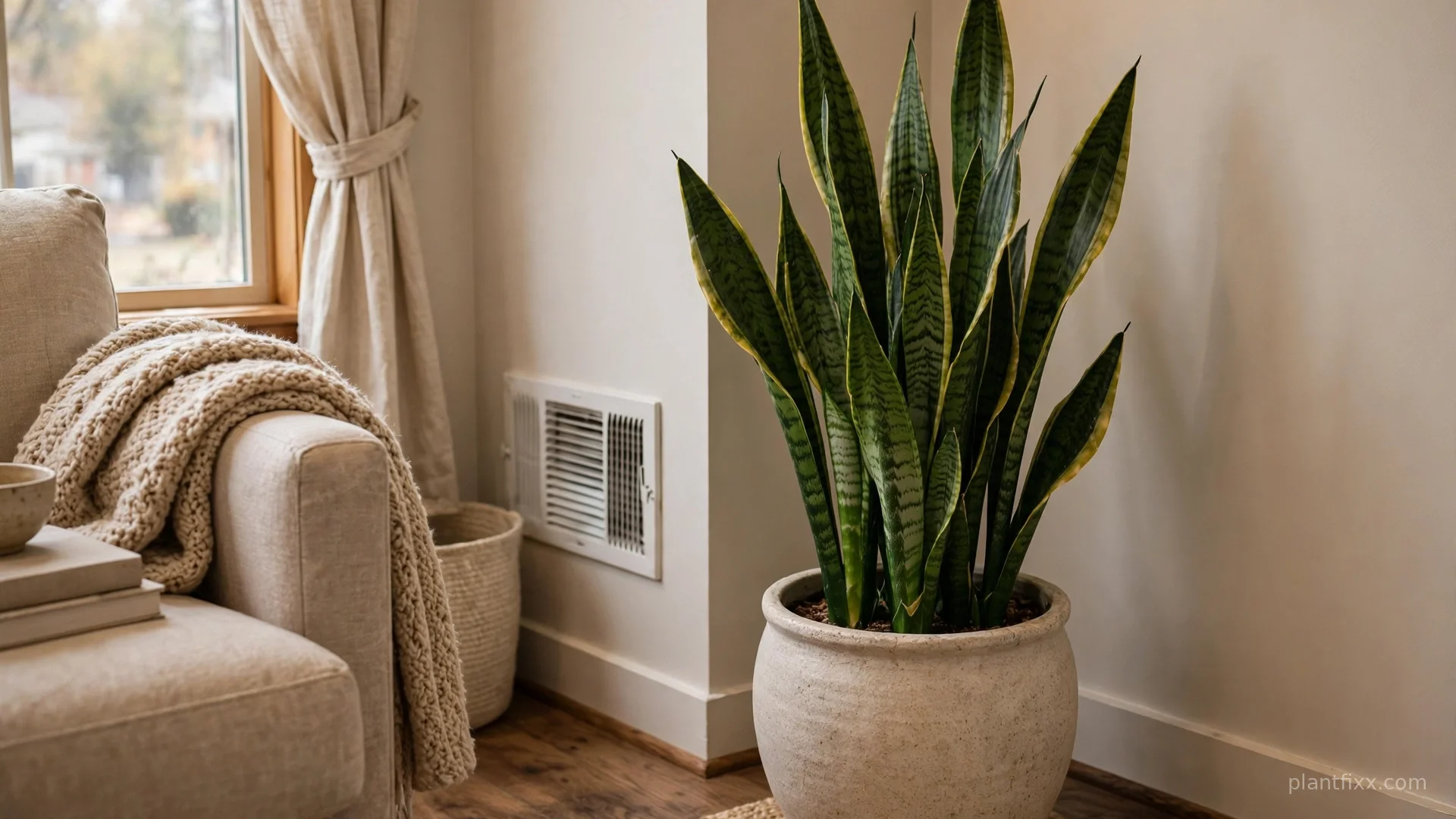
Not every mark means trouble. Firm, upright leaves with a slight natural arch is the best sign of all, and new growth from the center in spring means the temperature range is working. Small brown tips alone, without softness or spreading patches, usually point to water quality or dry air rather than temperature; our snake plant humidity guide covers that side of the story. A plant that slowed down over winter with no soft spots, no dark patches, and no smell is simply resting. Keep it dry and wait for spring.
How to Protect Your Snake Plant From Temperature Extremes
Keep these rules in order of importance.
First, never let the plant experience frost, not even for an hour. If nights drop toward 50°F and your snake plant lives outdoors or on a balcony, bring it in before the cold arrives, not after. For the full cold-season routine, see our snake plant winter care guide.
Second, keep the soil dry when temperatures drop. A snake plant in dry soil survives a cool room, while the same plant in wet soil at the same temperature rots. In winter, water only when the soil is completely dry, which may mean once every six to eight weeks. Our complete snake plant care guide covers the seasonal watering rhythm.
Third, pull the plant away from windows, doors, and vents in winter, at least a foot or two. Cold glass chills the leaves at night, and drafty doors deliver sudden blasts. In summer, keep the plant out of direct hot or cold air from vents and radiators.
Fourth, use a thick ceramic or insulated pot for cold spots, which protects the root zone better than thin plastic nursery pots. A plant stand or cork mat under the pot stops a cold tile floor from chilling the roots. And do not fertilize a cold-stressed plant: growth has stopped, and fertilizer salts just sit in the soil and burn roots.
What to Do If Your Snake Plant Already Took a Hit
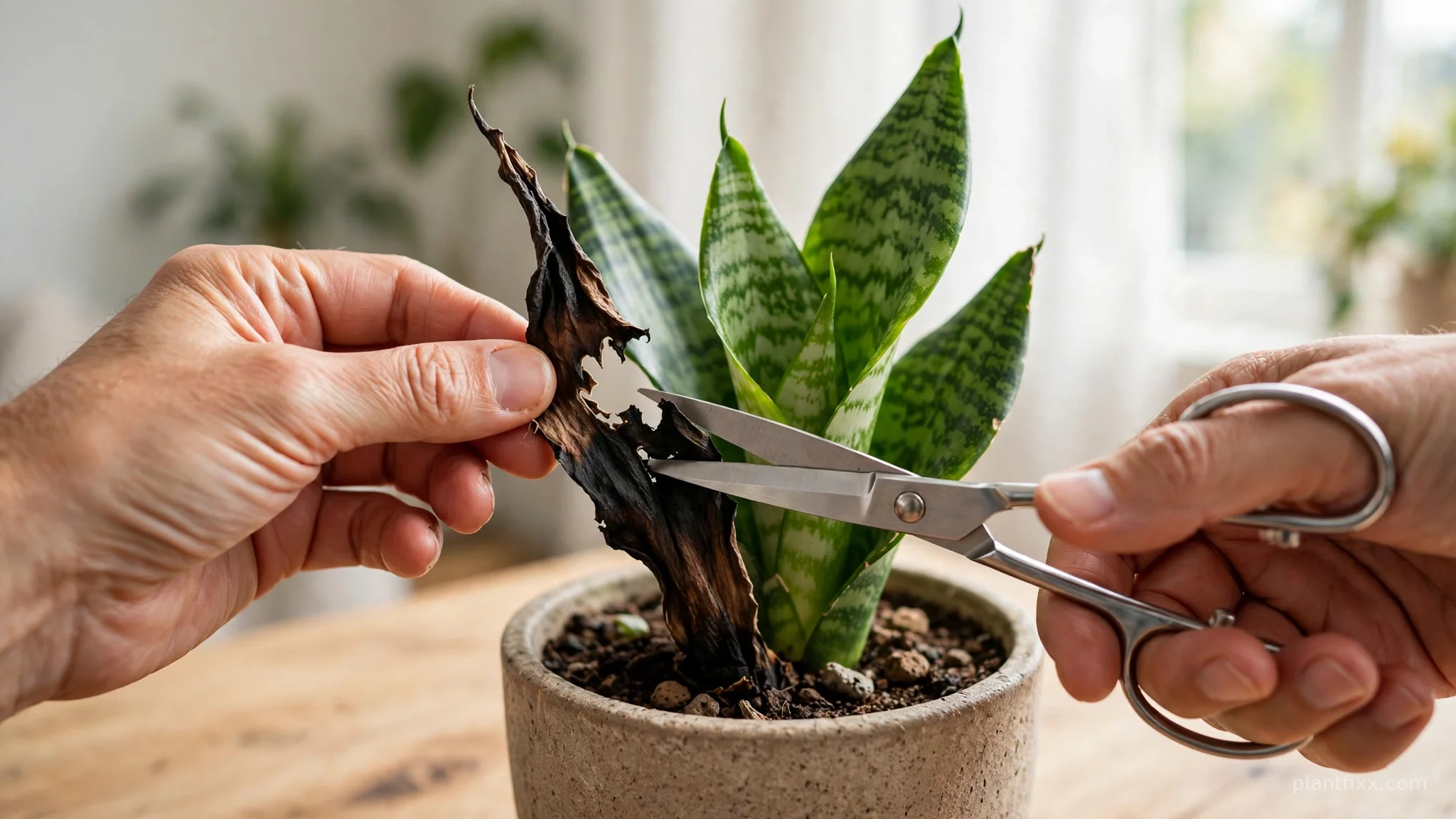
If your snake plant got cold-damaged, resist the urge to fix it fast. Move the plant to a warm room, around 70°F or higher, and leave it alone for several days. Damaged tissue reveals itself slowly, so trimming too early removes leaves the plant might have kept.
After a week, cut off only the leaves that are clearly mushy or blackened, using clean scissors. Do not water until the soil is fully dry, because cold-damaged roots are extremely rot-prone.
Recovery is slow. Expect no visible improvement for weeks, then new pups or leaves from the base if the rhizome survived. If the base is mushy and smells sour, discard the whole plant. It will not recover, and it can spread rot to neighbors. Cold-damaged leaves often end up wrinkling as they dry out, which our snake plant wrinkled leaves guide explains in detail.
Frequently Asked Questions
What temperature is too cold for a snake plant?
Anything below 50°F (10°C) for more than a day or two risks cold damage. Brief dips to 50°F are survivable in dry soil, but sustained cold injures tissue, and freezing at 32°F kills the leaves.
Can a snake plant survive winter outside?
Only in USDA zones 9-11, where winters stay frost-free. Everywhere else, treat them as indoor plants from fall through spring. The practical rule is the same everywhere: no frost, ever.
Is 90 degrees too hot for a snake plant?
Ninety degrees is not too hot if the soil has some moisture and air moves around the plant. Above 90°F, water more often and keep the plant out of harsh afternoon sun. Above 100°F, the real danger is a small pot baking dry in direct sun.
Will my snake plant recover from cold damage?
It can, if the rhizome is still firm and the base does not smell sour. Move it somewhere warm, keep the soil dry, trim only the clearly dead leaves after a week, and wait. Recovery takes weeks to months. If the base is mushy and sour-smelling, the plant is gone.