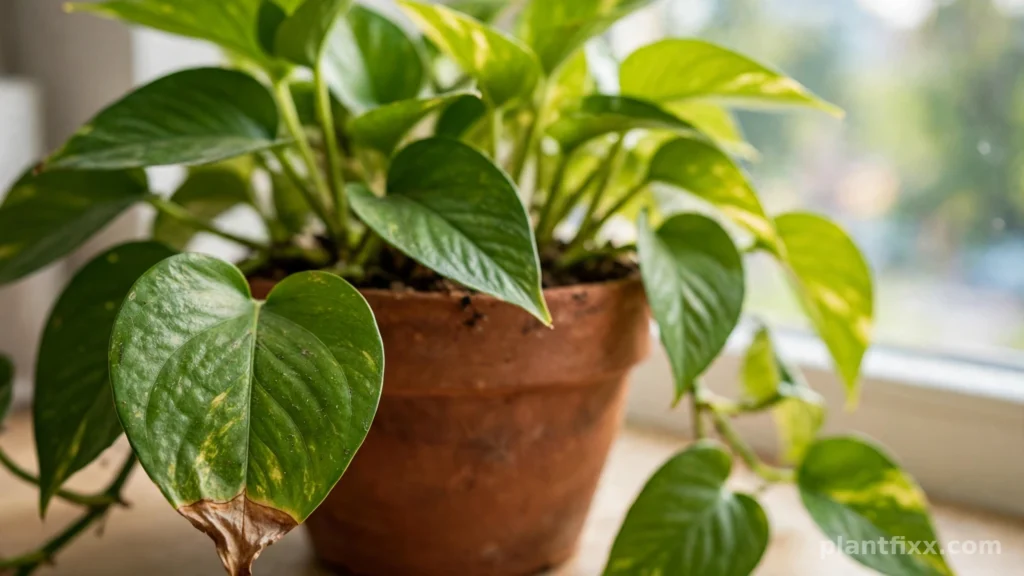
Brown tips on a pothos rarely mean the plant is dying. They do mean something in its routine is off, and the leaf is showing you exactly where to look. Pothos brown tips are the most reported of all pothos leaf problems, and they are also the most fixable once you read the pattern correctly.
The mistake most owners make is treating every brown mark the same way. A dry, crispy tip gets extra water even when the soil is already wet. A salt-burned leaf gets more fertilizer. Guessing adds new damage on top of the old, and the plant keeps browning while you try random fixes.
This guide works in a different order. You will learn to read the pothos leaf damage first, match it to one cause, confirm that cause with a quick check, and then apply the matching fix. One change at a time, so you know what actually worked.
Quick Answer
Pothos brown tips are usually caused by dry air, salts from tap water or fertilizer, or watering that swings between too dry and too wet. Match the pattern first. Crispy tips point to dryness, soft brown patches point to wet roots, and a white crust on the soil points to salt buildup. Fix that one cause and new leaves will grow in clean.
Read the Damage First: Tips, Edges, Spots and Patches
Browning is not one symptom. Where the brown sits on the leaf tells you most of the story, and each pattern has a short list of likely causes. Before you change anything, look at three or four affected leaves and note which pattern you see.
Tips only: the last few millimeters of the leaf turn brown and dry while the rest of the leaf stays green and firm. These are classic pothos brown leaf tips, and they point to dry air, mild underwatering, or minerals building up in the soil.
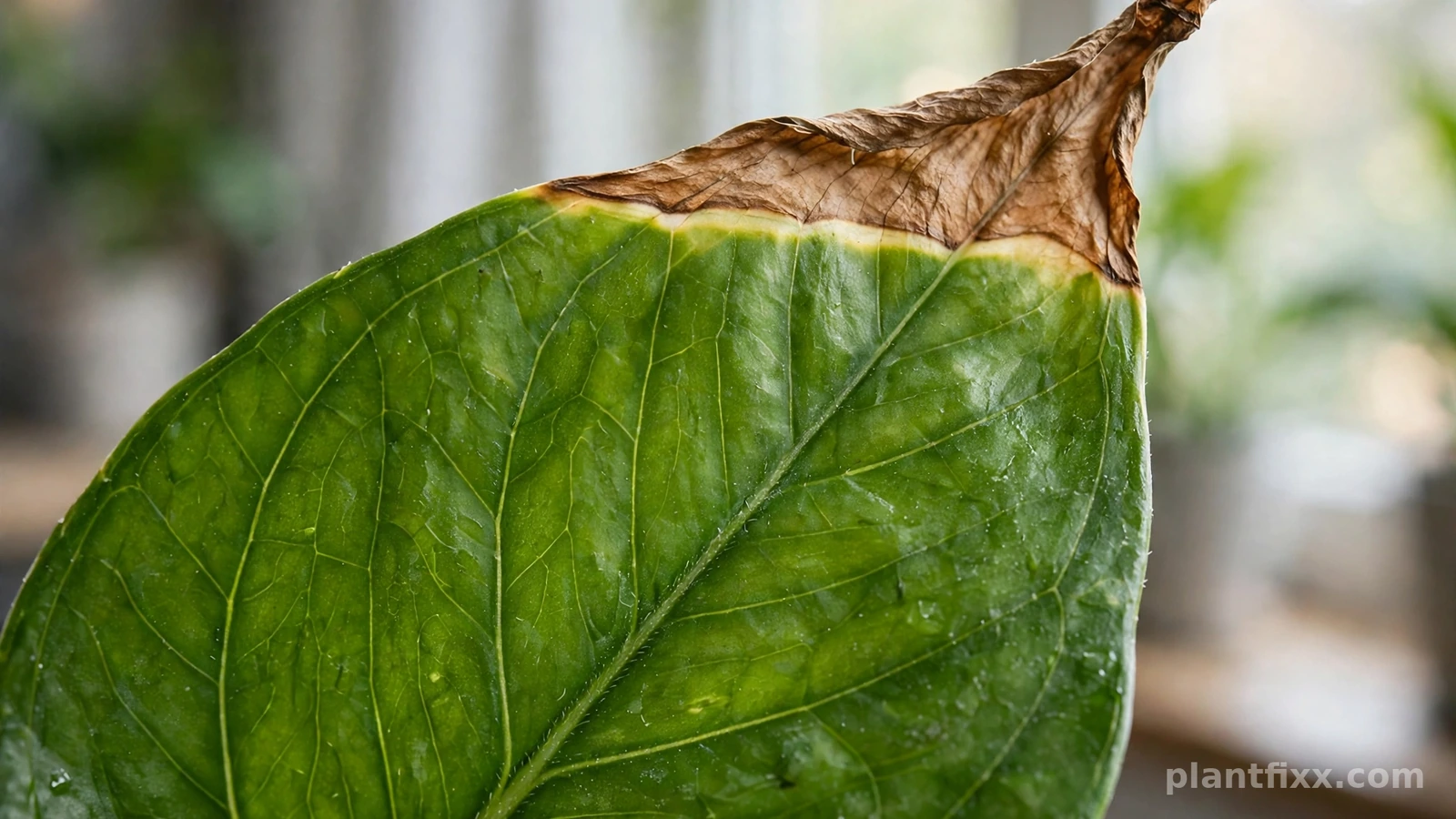
Edges: the brown starts at the tip and creeps along both margins of the leaf. Pothos brown edges that spread inward usually mean the dryness or salt problem has been going on longer, or the plant sits near a heat vent or a cold draft.
Spots and patches in the middle of the leaf: pothos brown spots that appear away from the edges are a different problem. Pale, bleached patches that turn papery brown are usually sun scorch. Small scattered spots with yellow halos can point to pests or a leaf spot infection, and those need a closer look at the undersides of the leaves.
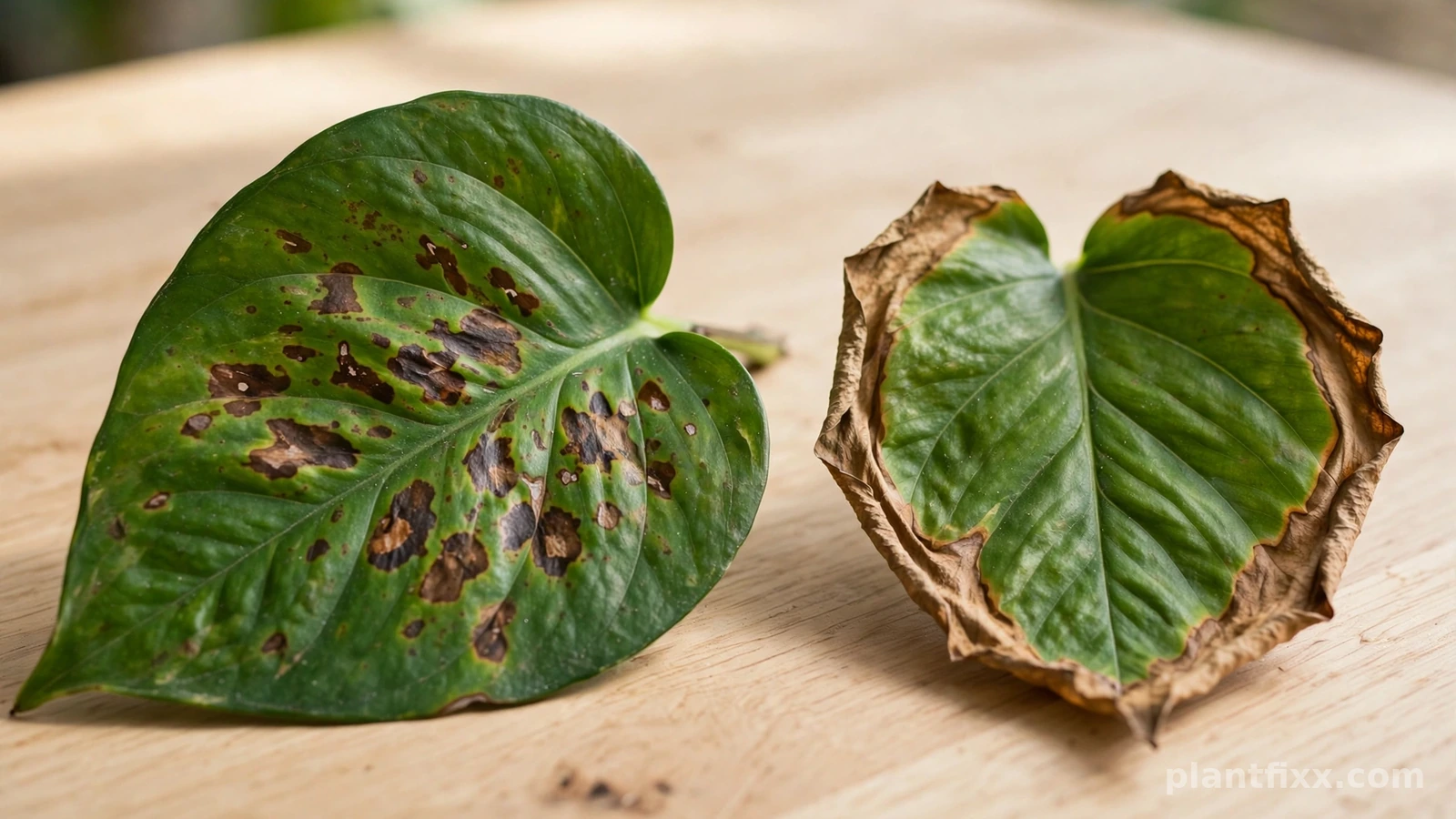
Soft brown patches: if the brown areas feel soft or mushy instead of crispy, water is the problem, not dryness. Soft browning that starts near the stem or spreads from the base of the leaf points to roots sitting in wet soil. Brown tissue never recovers, so your goal is to stop the pattern, not to heal the marks that are already there.
A Quick Diagnosis Table
Use this table to narrow the cause before you read the detailed sections. One caution before you start: pothos brown tips underwatering cases and pothos brown tips overwatering cases can look similar from across the room, but they need opposite fixes, so always confirm with the soil check in the third column.
| What you see | Most likely cause | Confirm it by |
|---|---|---|
| Dry brown tips only, rest of leaf green | Low humidity or tap water salts | Check for white crust on the soil surface |
| Crispy tips and edges, leaf feels papery | Underwatering | Soil dry several inches down, pot feels light |
| Soft brown patches, yellowing leaves | Overwatering or root rot | Soil still wet days after watering, sour smell |
| Bleached patches turning brown in the center of the leaf | Direct sun scorch | Damage on the side facing the window |
| Brown tips plus white crust on soil or pot rim | Fertilizer or mineral salt buildup | Review feeding strength and water source |
| Scattered small spots, sticky residue or webbing | Pests | Inspect the undersides of leaves with a phone light |
Work through the pothos brown tips causes below in the order your table result suggests. The right pothos brown tips fix is always the one that matches your confirmed cause, and changing one thing at a time tells you within a few weeks whether you picked correctly.
Why the Damage Starts at the Tips
A pothos leaf is fed by a supply line that runs from the roots, up the stem, and out to the far end of the leaf. The tip is the last stop on that line. Water and dissolved minerals travel with the flow, and whatever the water carries ends up concentrated at the tip and the margins, the points where water exits the leaf.
That single fact explains most browning patterns. When the air is dry, the tip loses moisture faster than the supply line can replace it, and the end cells dry out first. When the water carries fluoride and salts, those minerals are deposited at the tip every day, and the tissue there reaches a damaging level long before the rest of the leaf does. When roots are damaged and cannot supply the leaf at all, the far end of the line fails first.
It also explains why older leaves show tips first. They have been at the end of the supply line the longest, collecting minerals and dry-air damage for months. A few brown tips on the oldest leaves of an otherwise healthy plant are wear, not a crisis.
What You Need Before You Start
You need very little equipment for this diagnosis. Gather clean, sharp scissors for trimming later. A wooden chopstick or your finger works as a moisture probe. A basic room hygrometer helps if you suspect dry air, since indoor heating can pull humidity far below what the room feels like to you.
For water changes, have one alternative source ready: distilled water, collected rainwater, or filtered water. You also need access to a sink or tub for flushing the soil, and a tray or bucket to catch the runoff. Do the checks in this order: leaf pattern, soil moisture, soil surface, then roots only if the first three checks point that way.
Cause 1: Underwatering and Inconsistent Watering
Dry browning is the easiest pattern to read. The tips and edges feel thin, dry and papery, and they crumble when you rub them between your fingers. The soil is dry several inches down, the pot feels noticeably light, and the vines may droop slightly on hot days. Left longer, the result is pothos crispy leaves that curl at the edges as the plant tries to reduce moisture loss.
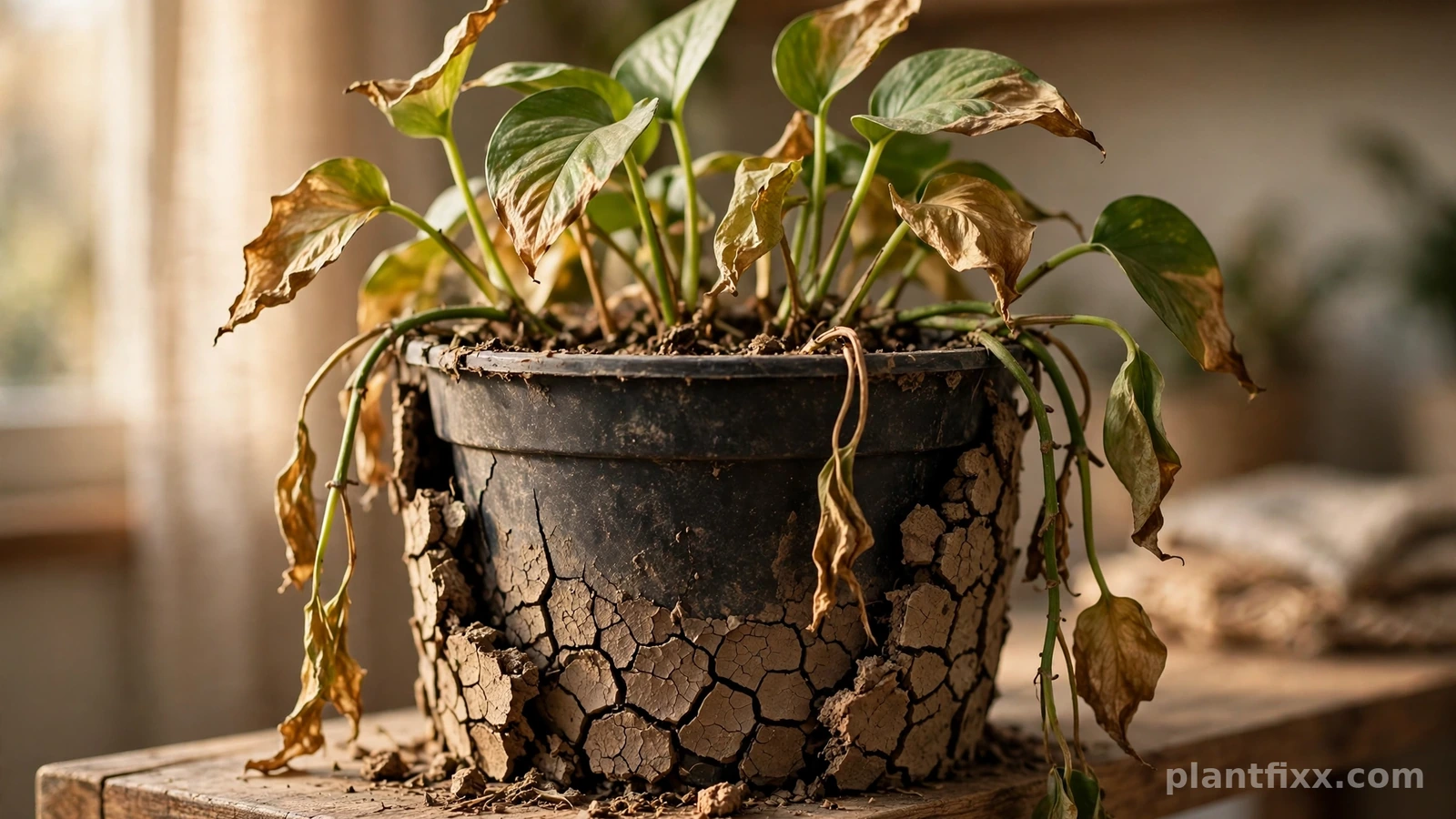
The fix is a deep, even drink, not a splash. Water slowly until it runs from the drainage holes, let the pot drain fully, and empty the saucer so the roots do not sit in the runoff. For a plant that has dried out hard, bottom watering for 20 to 30 minutes lets the soil rewet evenly. Our pothos underwatering and drooping leaves guide covers the full recovery routine for a plant that has gone too dry.
Then fix the pattern, not only the thirst. Pothos handles a light dry-down well, but repeated cycles of bone dry followed by flooding stress the leaf tips. A steady check with your finger or a chopstick, guided by how often to water pothos, keeps the soil in the middle range where tips stay green. Do not move to a fixed calendar schedule, because light and temperature change how fast the pot dries.
Cause 2: Overwatering and Root Rot
Wet browning looks and feels different. The brown areas are soft, darker, and often bordered by yellowing. Leaves may wilt even though the soil is wet, because rotted roots cannot take up water. A sour or swampy smell from the pot is a strong sign that roots are already decaying.
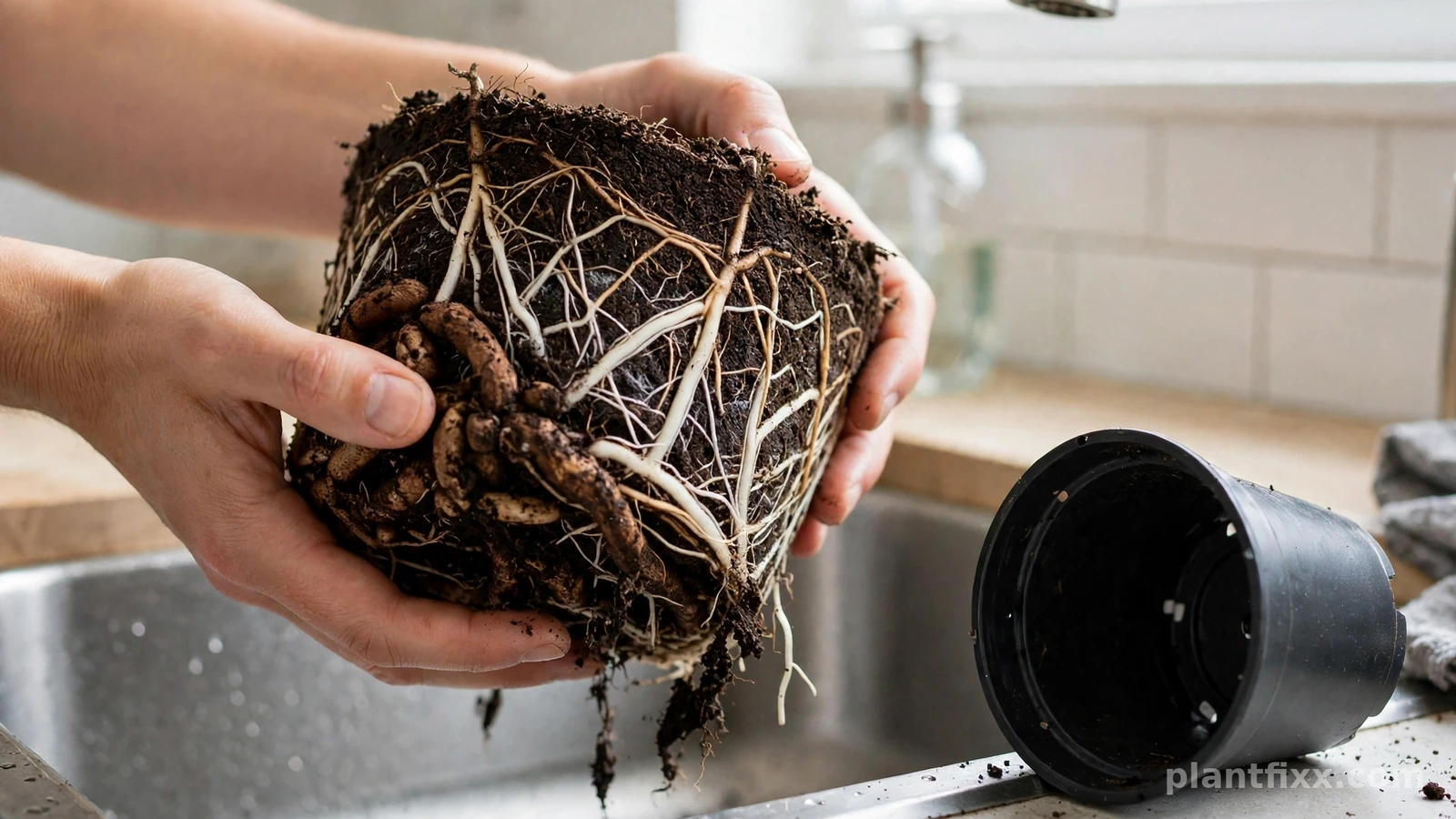
Confirm it before you treat it. Ease the plant out of its pot and look at the roots. Healthy pothos roots are white or light tan and firm. Rotted roots are brown or black, soft, and they may slide apart when touched. If you find rot, trim every soft root back to firm tissue with clean scissors, repot into fresh, well-draining mix, and hold water for a couple of days so the cut surfaces can seal. The full rescue process is in our pothos plant root rot treatment guide.
If the roots are healthy but the soil stays wet for a week or more, the problem is the setup, not disease. Check that the pot has drainage holes, that the plant is not sitting in a decorative pot full of runoff, and that the mix is not compacted into a dense block. Pothos brown leaves from wet soil stop appearing once the roots get air between waterings.
Cause 3: Low Humidity and Dry Indoor Air
The pothos brown tips humidity pattern is the slowest and mildest one. Only the far tips dry out, the rest of each leaf stays glossy and green, and the soil checks come back normal. It shows up most in winter, when heating systems run for months and indoor air turns desert dry, and near vents, radiators, or air conditioners that blow directly on the plant.
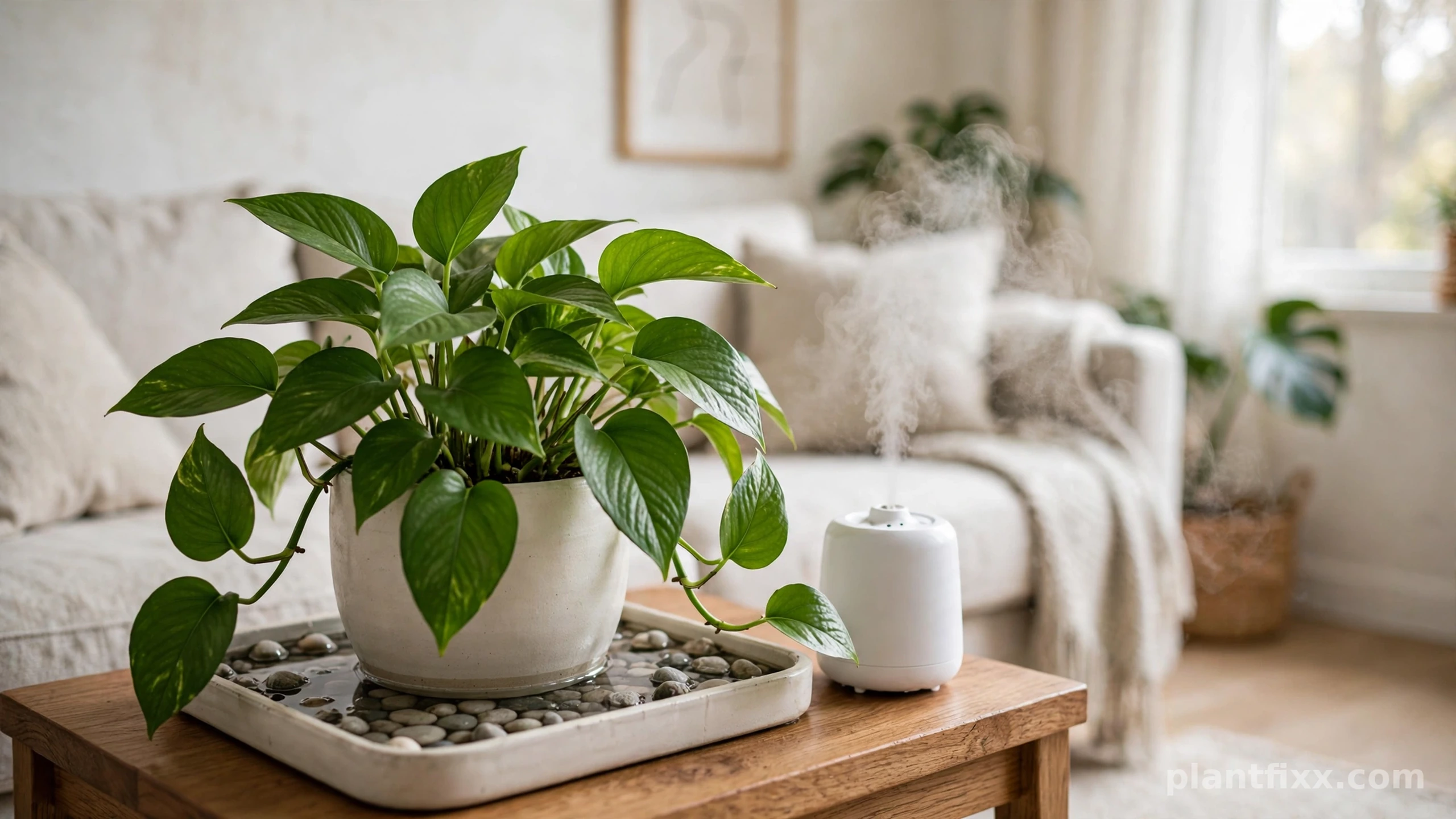
Pothos grows comfortably in the 40 to 60 percent humidity range that most homes can hold. Below roughly 30 percent, leaf tips start to dry even when watering is perfect. Raising the humidity around the plant works better than misting, because mist evaporates in minutes and wets the leaf surface without changing the air. Grouping plants together, setting the pot on a pebble tray of water, or running a small humidifier in the room all hold moisture in the air for hours.
Placement matters as much as equipment. Move the plant out of the direct path of heating and cooling vents, and give it some distance from radiators and cold window glass in winter. Many owners find that brown tips stop the week the plant moves, with no other change made.
Cause 4: Tap Water, Fluoride and Mineral Salts
Tap water is the cause most owners miss, because the plant looks fine for months before the tips start to go. Municipal water carries fluoride, chlorine and dissolved salts. The plant draws that water up, the water exits at the leaf tips, and the minerals stay behind. Day after day, the concentration at the tip climbs until the tissue burns. Extension guidance on houseplant tip burn, summarized well in the PlantCareToday guide to brown tips on houseplants, names fluoride buildup as a primary driver of this pattern.
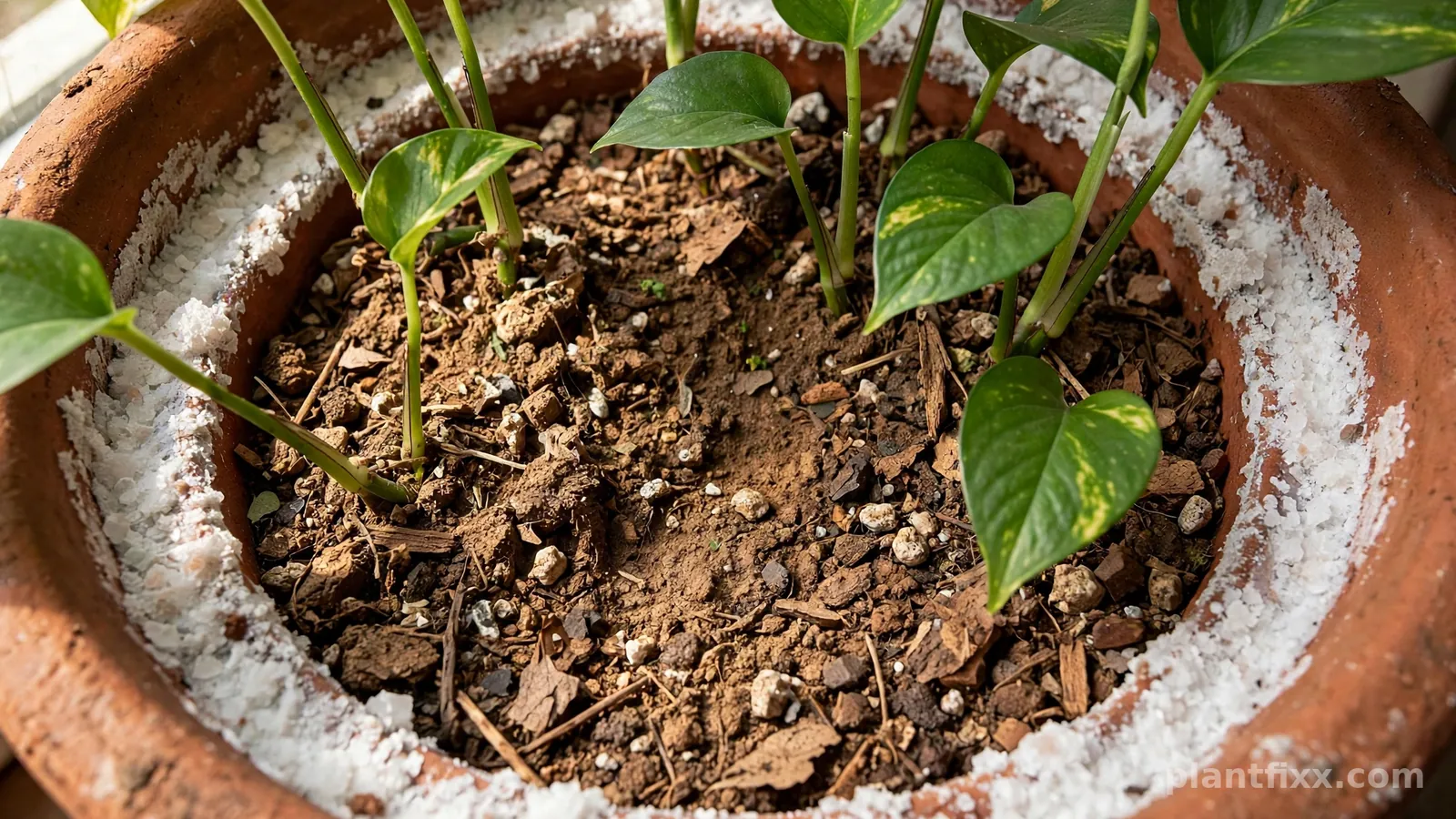
The telltale sign is a white or pale crust on the soil surface, around the drainage holes, or on the rim of a terracotta pot. If you suspect pothos brown tips tap water damage, that crust plus clean watering habits is your confirmation. Growers group this pattern under pothos brown tips fluoride damage, and pothos sits in the moderately sensitive range, so it shows up after months rather than weeks.
One popular tip needs correcting. Letting tap water sit out overnight removes chlorine, because chlorine is a gas that escapes into the air. It does not remove fluoride, which is a dissolved mineral and stays in the water no matter how long it stands. Many cities also use chloramine instead of chlorine, and chloramine does not evaporate at all. If water chemistry is your cause, switch to distilled water, collected rainwater, or water from a reverse osmosis or fluoride-rated filter for this plant.
Then clear what has already built up. Flush the soil by running water slowly through the pot for a minute or two and letting it drain freely, repeating once. Flush every two to three months if you keep using tap water. Avoid softened water for the flush and for regular watering, because softeners swap minerals for sodium salts and can make tip burn worse.
Cause 5: Fertilizer Burn
Fertilizer causes the same burn as tap water salts, only faster. Every feeding adds salts to the mix, and full-strength feeding of a plant that is not growing strongly pushes the concentration up quickly. The pattern looks like salt damage: brown tips and margins, sometimes with a yellow line between the brown edge and the green center, appearing in the weeks after a feeding.
The fix starts with a flush, the same as for tap water buildup, to carry excess salts out of the root zone. After that, feed at half the label strength, only during active growth in spring and summer, and always into soil that is already moist, never into a dry pot. Feeding a dry plant concentrates the solution around the roots and burns them directly. Our combined pothos light, soil and fertilizer guide lays out a feeding schedule that keeps growth steady without the salt load.
Do not try to compensate for brown tips by feeding more. Browning from salts is damage, not hunger, and extra fertilizer deepens it. If the plant has not been fed in months and shows pale, slow growth instead of burned edges, that is a different diagnosis, covered in the same guide.
Cause 6: Sun Scorch, Drafts and Pests
Some browning has nothing to do with water at all. Direct sun through a south or west window bleaches the exposed side of a leaf, and the bleached area turns papery brown. The marks sit in the middle of the leaf where the sun hit, not at the tips, and only the window side of the plant is affected. Move the plant back from the glass or behind a sheer curtain, and the pattern stops.
Cold drafts and heat vents create similar edge damage on the side facing the vent or the window gap. Sudden appearance is the clue: scorch and draft damage show up within days of a move or a season change, while salt and humidity damage build over weeks.
Pests are the last check. Spider mites, mealybugs and scale feed on leaf tissue and leave scattered small spots, stippling, sticky residue, or fine webbing on the undersides. Spots surrounded by yellowing can also signal a leaf spot infection, and if the browning spreads from leaf to leaf while the rest of your checks come back clean, compare it with our notes on why pothos leaves turn yellow to separate color-change problems from burn problems. Isolate a plant with pests, wipe the leaves, and treat the undersides where the insects feed.
How to Trim Brown Tips the Right Way
Trimming is cosmetic. It does not fix the cause, but it makes the plant look cared for and lets you watch new damage clearly. Wait until you have identified and started the real fix, then trim once, so any fresh browning afterward tells you the fix is not working yet.
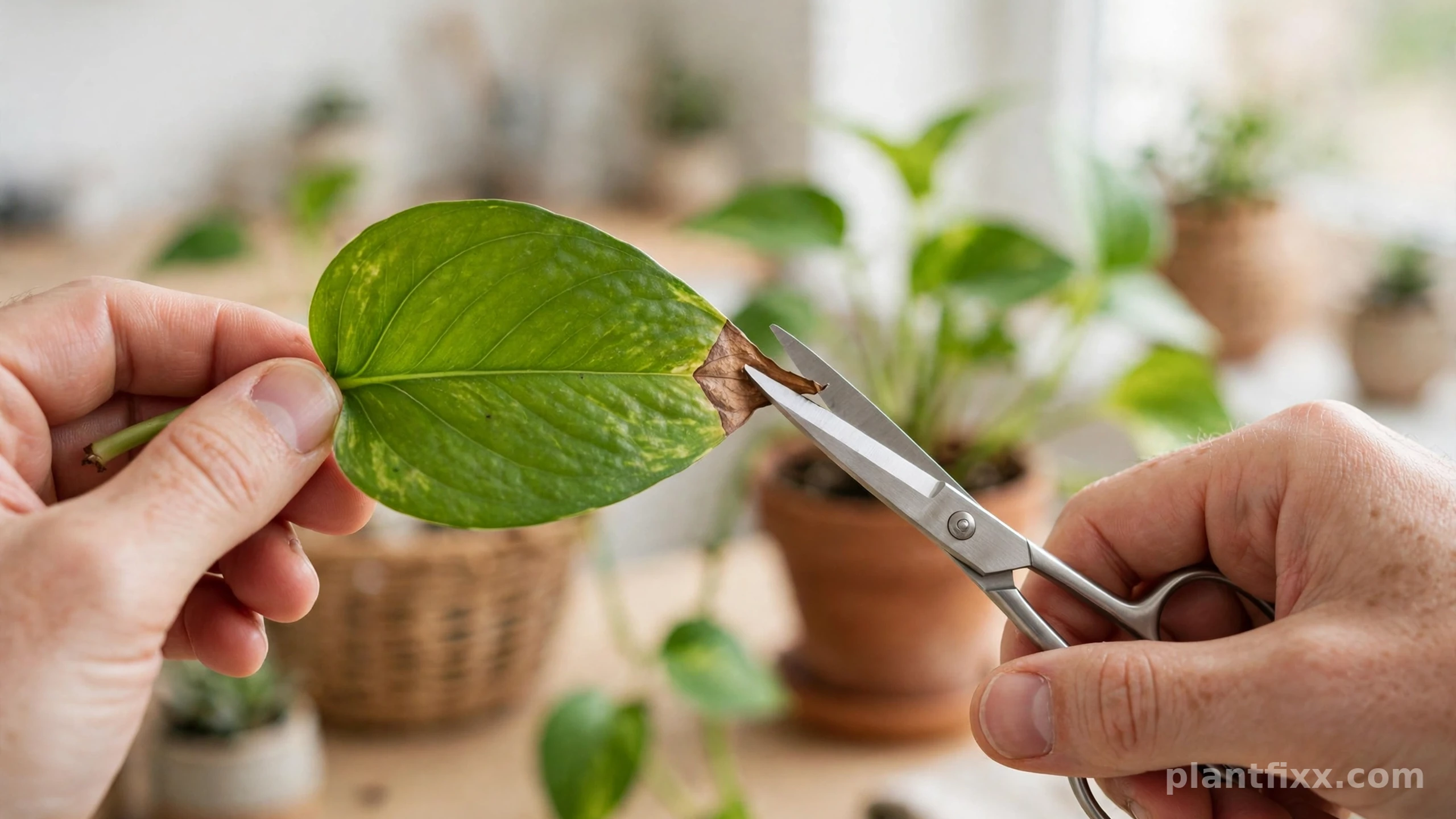
Use clean, sharp scissors, wiped with rubbing alcohol if you have trimmed a sick plant recently. Cut along the natural pointed shape of the leaf rather than straight across, so the leaf keeps its outline. Leave a thin line of brown tissue, about a millimeter, between your cut and the green part of the leaf. Cutting into healthy green tissue opens a fresh wound edge, and that edge usually dries and browns again within days, which makes the leaf look worse than before.
If more than half of a leaf is brown, remove the whole leaf at its stem instead of trimming. The plant puts its energy into new growth, and a mostly dead leaf contributes little. Never strip many leaves at once from a stressed plant, because it needs its remaining green leaves to recover.
Signs the Fix Is Working, and Signs It Is Not
Judge your fix by new growth, never by the damaged leaves. Brown tissue is dead and stays brown. The working signs are these: new leaves open fully green, existing brown tips stop extending, and no fresh leaves join the pattern over two to four weeks of normal growth.
The warning signs are the reverse. Tips that keep extending on leaves that were clean when you made the change mean the cause is still active. New leaves opening with brown edges mean the problem sits in the roots or the water, not the air. Browning that spreads to many leaves in a few days, especially with wilting or a sour smell, means stop and check the roots that day, because root rot moves faster than any other cause on this list.
Give each fix time to prove itself. Humidity and water changes show on new growth within a few weeks in spring and summer, and slower in winter when the plant barely grows. Changing three things at once feels faster, but it leaves you guessing which one mattered, and the problem tends to return.
A Simple Prevention Routine
Pothos brown tips prevention is mostly a short routine repeated on time. Water by the soil check, not the calendar, letting the top one to two inches dry before you water again. Keep the plant in bright, indirect light, away from vents and cold glass. Hold room humidity near the middle range with grouping or a tray during heating season.
Flush the pot every two to three months if you use tap water or feed regularly, and feed at half strength only while the plant is growing. Wipe the leaves with a damp cloth once a month, which clears dust, keeps the leaf surface working, and gives you a regular close look at the undersides for pests. Repot every one to two years into fresh mix, which resets salt levels and gives the roots room.
Fold these habits into the routine in our complete pothos plant care guide, and brown tips become a rare event instead of a recurring one. When a tip does appear, treat it as an early signal. The plant is telling you which part of the routine slipped, weeks before the problem would turn serious.
Frequently Asked Questions
Should I cut the brown tips off my pothos?
Yes, trimming is safe and makes the plant look tidy, but do it after you fix the cause. Cut along the natural shape of the leaf and leave a thin line of brown tissue, because cutting into green tissue creates a new edge that often browns again.
Will brown tips on pothos leaves turn green again?
No. Brown tissue is dead and cannot recover its color. The leaf still works for the plant, so keep it unless most of it is damaged. Success shows up as clean new leaves, not as repaired old ones.
Does letting tap water sit overnight remove fluoride?
No. Standing removes chlorine, which escapes as a gas within about a day. Fluoride is a dissolved mineral and stays in the water. Use distilled water, collected rainwater, or reverse osmosis water if fluoride is your confirmed cause.
Why do the oldest leaves get brown tips first?
The tip is the far end of the leaf supply line, and the oldest leaves have collected minerals and dry-air stress the longest. A few tipped old leaves on a plant pushing clean new growth are normal wear, not a new problem.
How can I tell if brown tips come from overwatering or underwatering?
Feel the brown tissue and check the soil. Underwatering damage is dry, thin and crispy with dry soil. Overwatering damage is soft and darker, the soil stays wet, and the roots may smell sour. The soil check settles it in seconds.
Can too much fertilizer cause brown tips on pothos?
Yes. Fertilizer salts build up in the mix and burn leaf tips and margins, much like tap water minerals. Flush the soil with plain water, then feed at half strength, only during active growth, and only into moist soil.
How long until my pothos grows clean leaves after the fix?
In the growing season, expect to judge the result within two to four weeks, when new leaves open and stay green. In winter, growth slows and the wait is longer. Judge by new leaves only, since damaged leaves never change back.