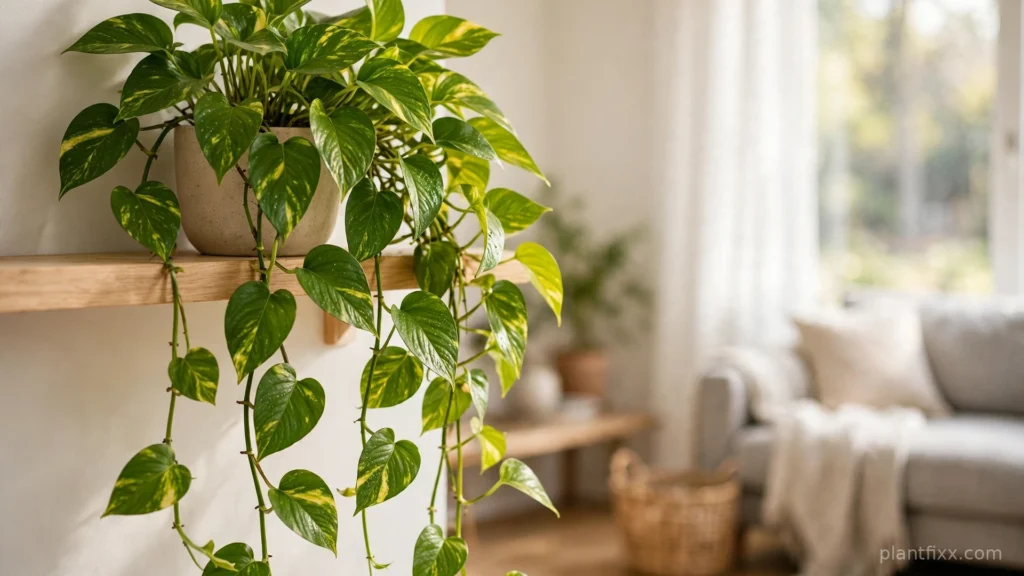
You watered on schedule last week, the plant looked fine, and now the vines hang limp over the edge of the pot. That sudden slump is the classic face of pothos underwatering. The leaves lose their firmness, the stems go soft, and a plant that looked full yesterday suddenly looks tired and flat.
The good news is that pothos wilting from thirst is one of the easiest houseplant problems to fix. The roots are usually still alive and working, and the plant is simply waiting for water to reach them again. Caught early, most plants lift their leaves the same day you water them.
This guide walks through the signs that confirm thirst, the soak that brings the plant back, and the checks that tell you the revival worked. It also covers the confusing cases, like a plant that keeps drooping even after you watered it.
Pothos underwatering is the most common reason a pothos plant droops. A thirsty pothos plant shows drooping, curling leaves, dry soil that pulls away from the pot, and a pot that feels light. Water it deeply, ideally with a 30 to 45 minute bottom soak, and healthy leaves usually lift again within 2 to 12 hours.
Why a Pothos Plant Droops When It Runs Dry
A healthy pothos leaf stays firm because water pressure inside its cells pushes outward against the cell walls. Botanists call this turgor pressure, and it is what holds soft stems upright and leaves flat. As long as the roots keep supplying water, the pressure stays up and the plant holds its shape.
When the soil dries out, the supply stops but the loss continues. Leaves keep releasing moisture into the air, the pressure inside the cells falls, and the tissue goes soft. Stems bend, leaves fold, and the whole plant slumps. This is why is my pothos drooping such a common question after a holiday or a busy week, because the change looks sudden even though the soil has been drying for days.
Curling is part of the same defense. A thirsty leaf rolls its edges inward to shrink the surface it exposes to the air, which slows water loss. The plant is not being dramatic. It is rationing what little moisture it has left, and it will sacrifice its oldest leaves first to protect the growing tips.
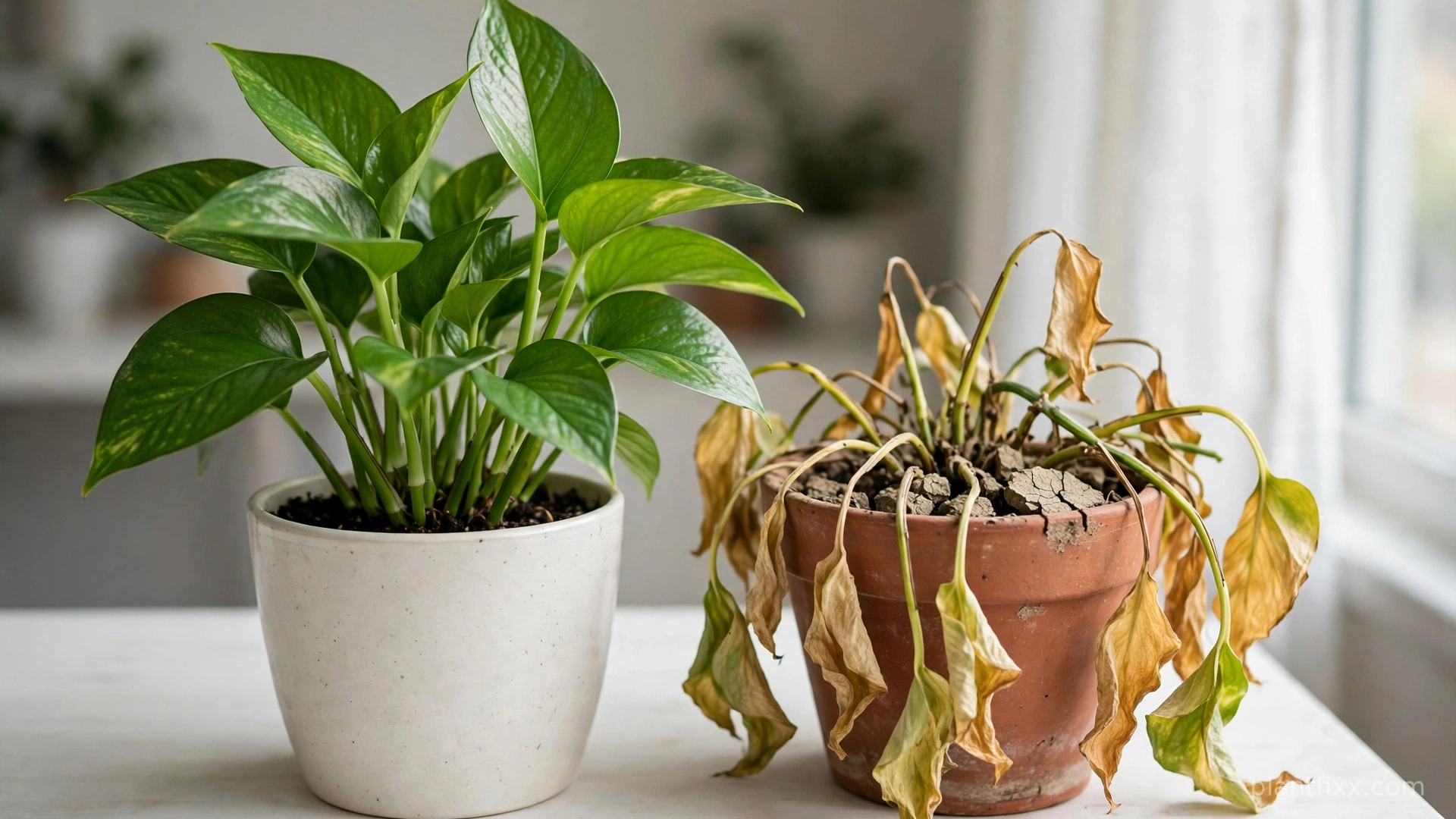
The contrast matters for diagnosis. A watered plant holds its leaves out and slightly up, while a thirsty one lets them hang straight down from limp stems. If your plant matches the second picture and the soil feels dry, you are almost certainly looking at thirst rather than disease.
Signs of Pothos Underwatering
Pothos leaves curling and drooping together are the headline act, but a thirsty plant leaves several other clues. Work through the signs below before you water, because the same droop can come from too much water, and the fix for that problem is the opposite of the fix for this one.
Curling Leaves
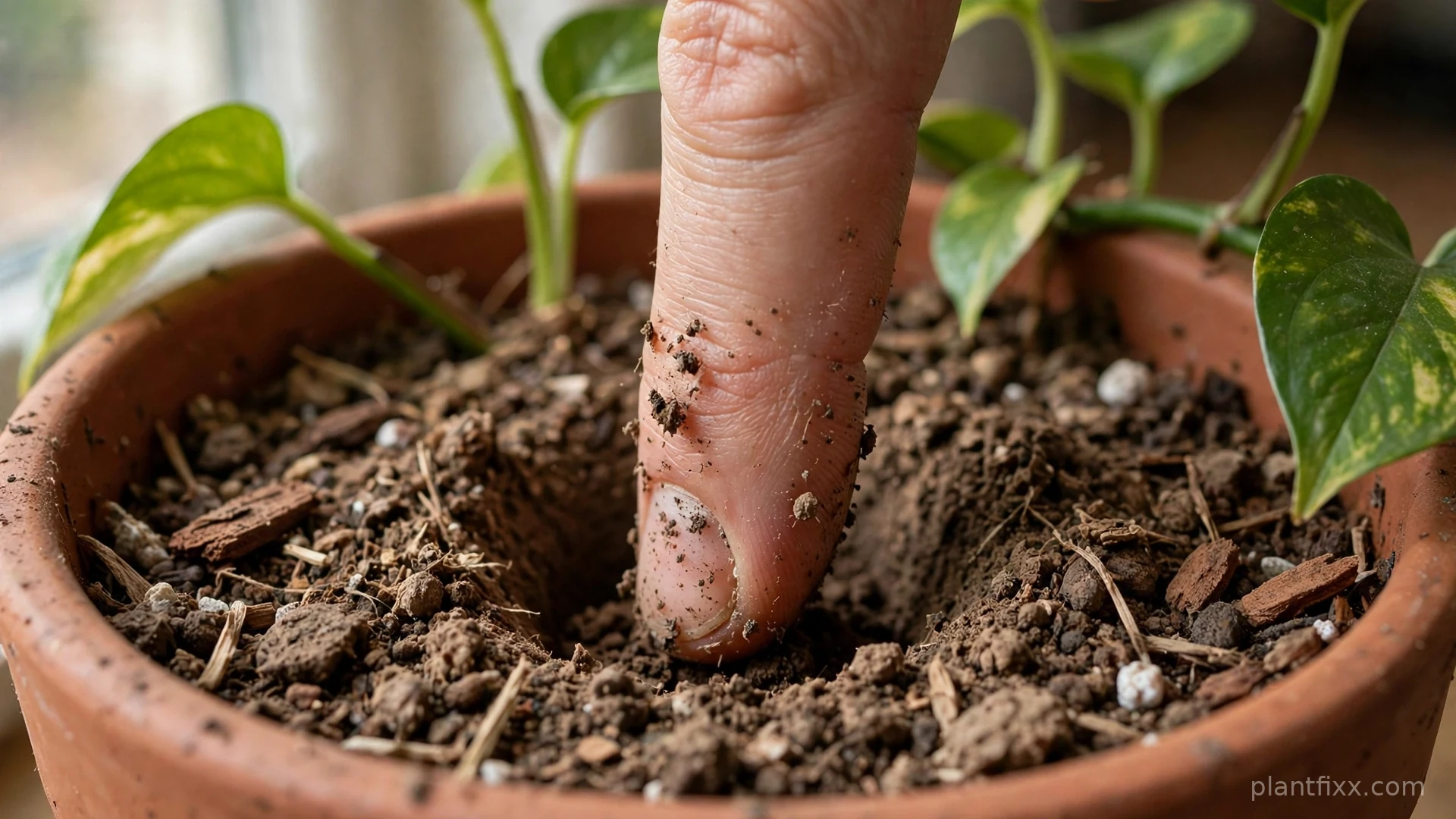
Pothos leaves curling inward is the earliest visible warning for most plants. The edges roll toward the underside of the leaf, and the leaf takes on a cupped shape. Of all the pothos leaves curling causes, plain thirst is the first one to rule out, because it is the most common and the fastest to test. Push a finger into the soil, and if it is dry, the curl has its explanation.
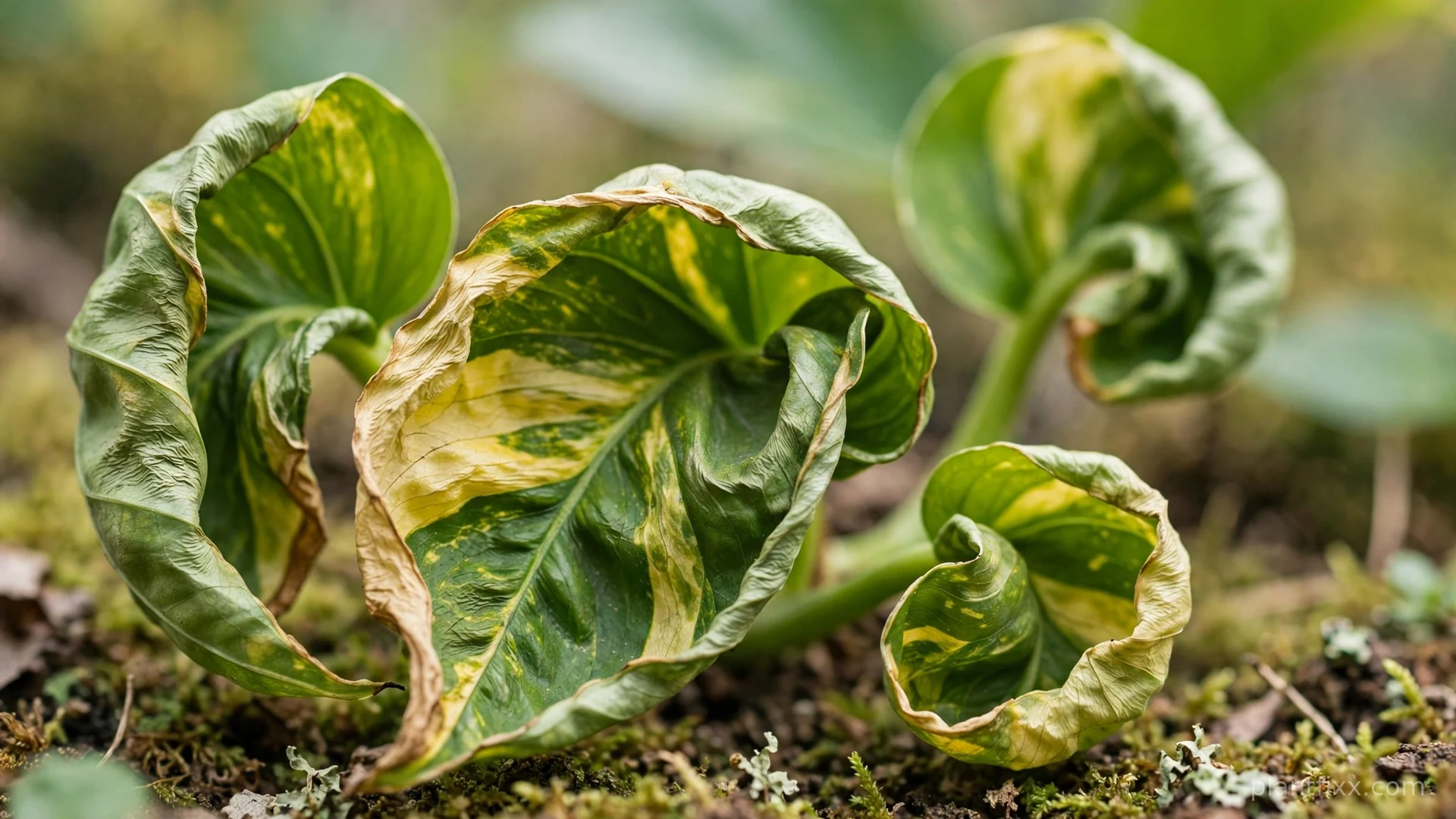
Watch the direction as the drought deepens. Pothos curling leaves start by rolling at the edges, then turn into pothos leaves curling down at the tips as the tissue loses pressure. A leaf that curls while the soil is wet points elsewhere, toward pests feeding underneath or fertilizer salts in the mix, so the soil check always comes first.
Drooping, Wrinkled and Crispy Leaves
- Pothos leaves drooping along the whole vine, with stems that feel soft and bendy instead of springy.
- Pothos wrinkled leaves, where the surface looks puckered and the leaf feels thin and papery between your fingers.
- Pothos dry crispy leaves at the tips and edges when the drought runs long, because those parts of the leaf dry out first. Our guide to pothos plant brown tips covers how to trim and prevent that edge damage.
- Slower growth and smaller new leaves, since a plant short on water puts out weak growth or stops growing entirely.
- Older leaves yellowing and dropping when dry spells repeat, a pattern explained in detail in our article on why pothos plant leaves turn yellow.
What the Soil and Pot Tell You
The soil confirms what the leaves suggest. Bone dry pothos dry soil often cracks at the surface and shrinks away from the inside wall of the pot, leaving a visible gap. Lift the pot as well. A dry pot feels strikingly light compared with a freshly watered one, and growers who lift their pots weekly learn to read that weight faster than any other test.
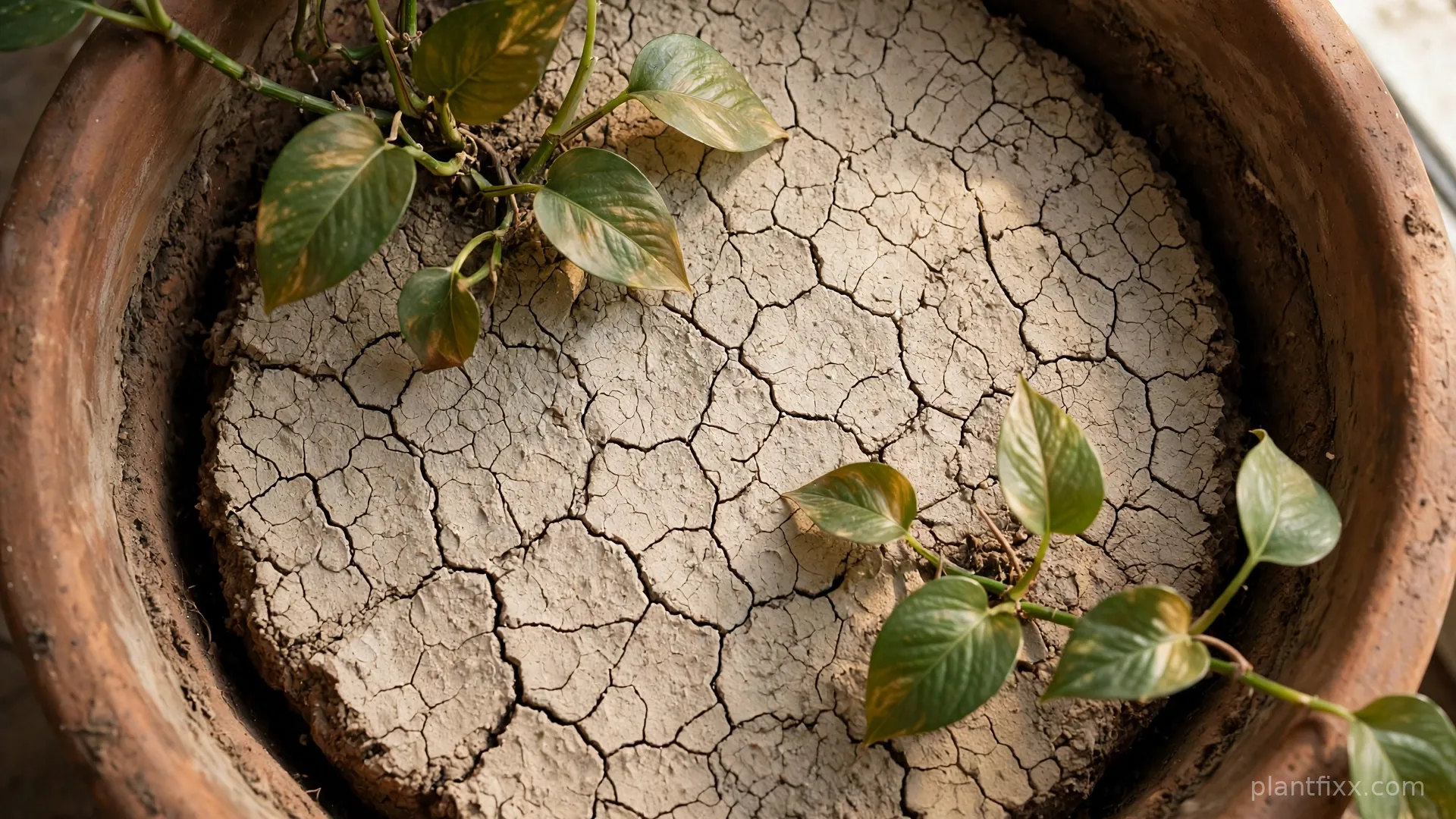
One mistake many people make is judging moisture by the surface alone. The top can look dry while the root zone still holds water, and the top can look damp an hour after watering while the center of the root ball stayed dry. Always check two inches down, where the roots actually drink.
What You Need Before You Start
- A sink, basin or bucket wide enough to hold the pot, for bottom watering.
- Room temperature water. Cold water shocks dry roots, and hot water damages them.
- Clean scissors or pruners for removing leaves that are fully dead.
- A saucer or tray to catch drainage once the plant goes back to its spot.
- A wooden skewer or a simple moisture meter, if you want a second opinion on soil moisture.
- About 45 minutes of patience. Revival is mostly soaking and waiting, not work.
Check the pot before you begin. A pot without drainage holes holds the soak water against the roots afterward, which trades one problem for another. If your plant sits in a decorative pot with no holes, lift the inner nursery pot out and soak that instead.
How to Revive an Underwatered Pothos Plant
Start with the pothos revive underwatered vines respond to fastest, a full bottom watering soak. Work through these steps in order.
Step 1: Confirm the soil first. Push your finger two inches into the mix. If it comes out dry with no soil sticking to it, thirst is confirmed and you can water with confidence. If it comes out damp, stop and read the comparison section below instead, because watering a wet plant makes things worse.
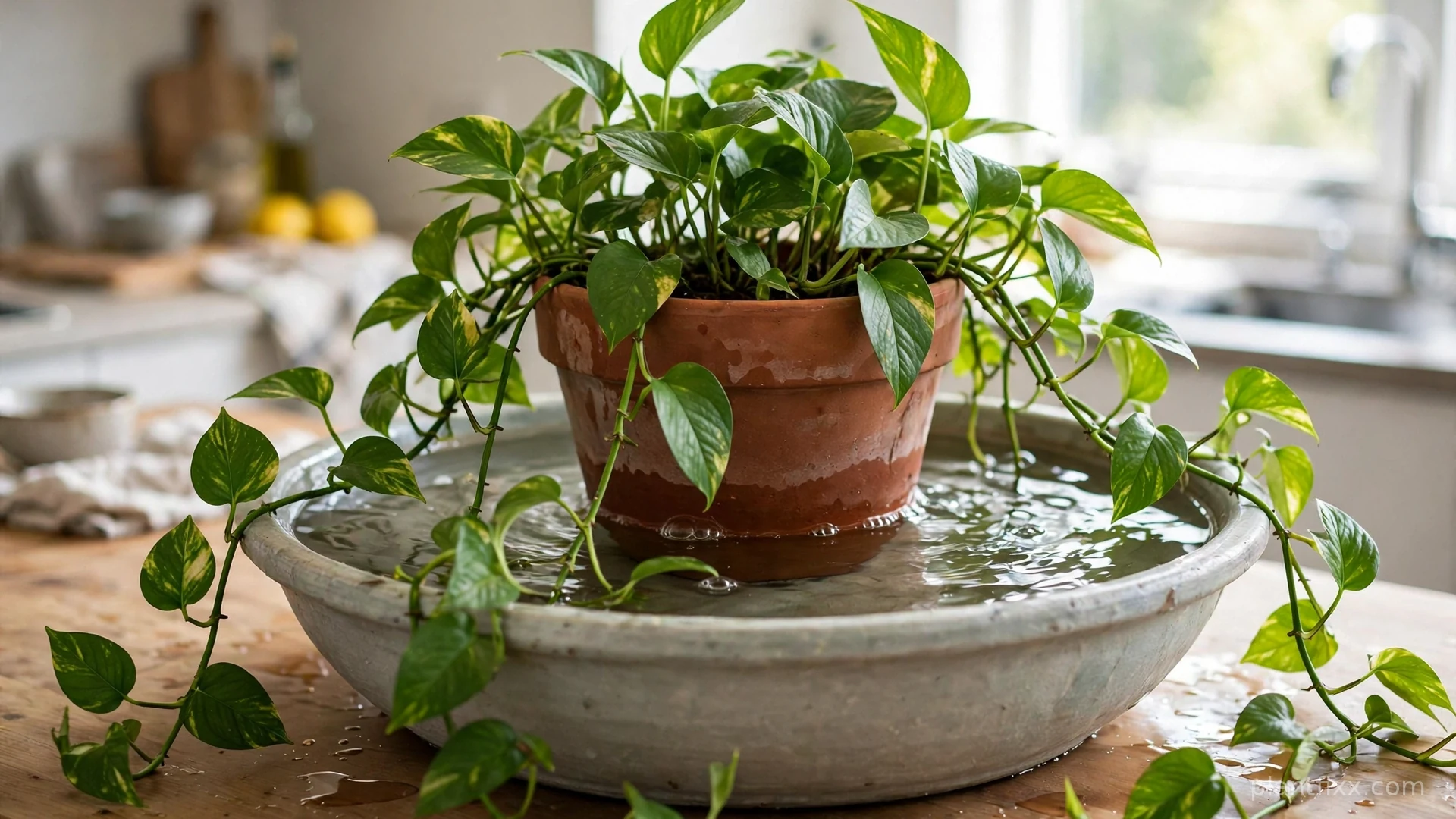
Step 2: Soak the pot from below. Set the pot in a basin with three to four inches of room temperature water and leave it for 30 to 45 minutes. The mix pulls water up through the drainage holes and wets the root ball evenly, including the dry center that top watering often misses.
Step 3: Deal with soil that refuses to wet. Severe dry soil turns hydrophobic, which means it repels water at first and lets it run down the gap between the soil and the pot wall. If that happens, keep the soak going longer, press the surface gently with your fingers to break the crust, or water from the top in two slow passes ten minutes apart so each pass has time to sink in.
Step 4: Drain completely. Lift the pot out, let it drain until the dripping stops, and empty the saucer after it goes back to its spot. A revived plant should sit in moist soil, never in standing water.
Step 5: Tidy up carefully. Remove only leaves that are fully yellow, brown or crisp, since those will not recover. Leave every green leaf in place, even the curled ones. Most of them flatten again within a day or two, and the plant needs them to rebuild its energy.
Step 6: Give it a gentle recovery spot. Bright indirect light is right. Keep the plant away from direct sun, heating vents and cold drafts while it recovers, because all three pull moisture from leaves that are still refilling. Normal room humidity is fine, and grouping the plant with others raises the air moisture around it a little.
Pothos Drooping After Watering: Why It Happens
Few things confuse growers more than pothos drooping after watering. You gave the plant a proper drink and it still hangs limp an hour later. In most cases nothing is wrong. Water has to travel from the roots up through the stems and refill millions of leaf cells before pressure returns, and that takes time. Check again the next morning before you worry, because most thirsty plants are visibly firmer by then.
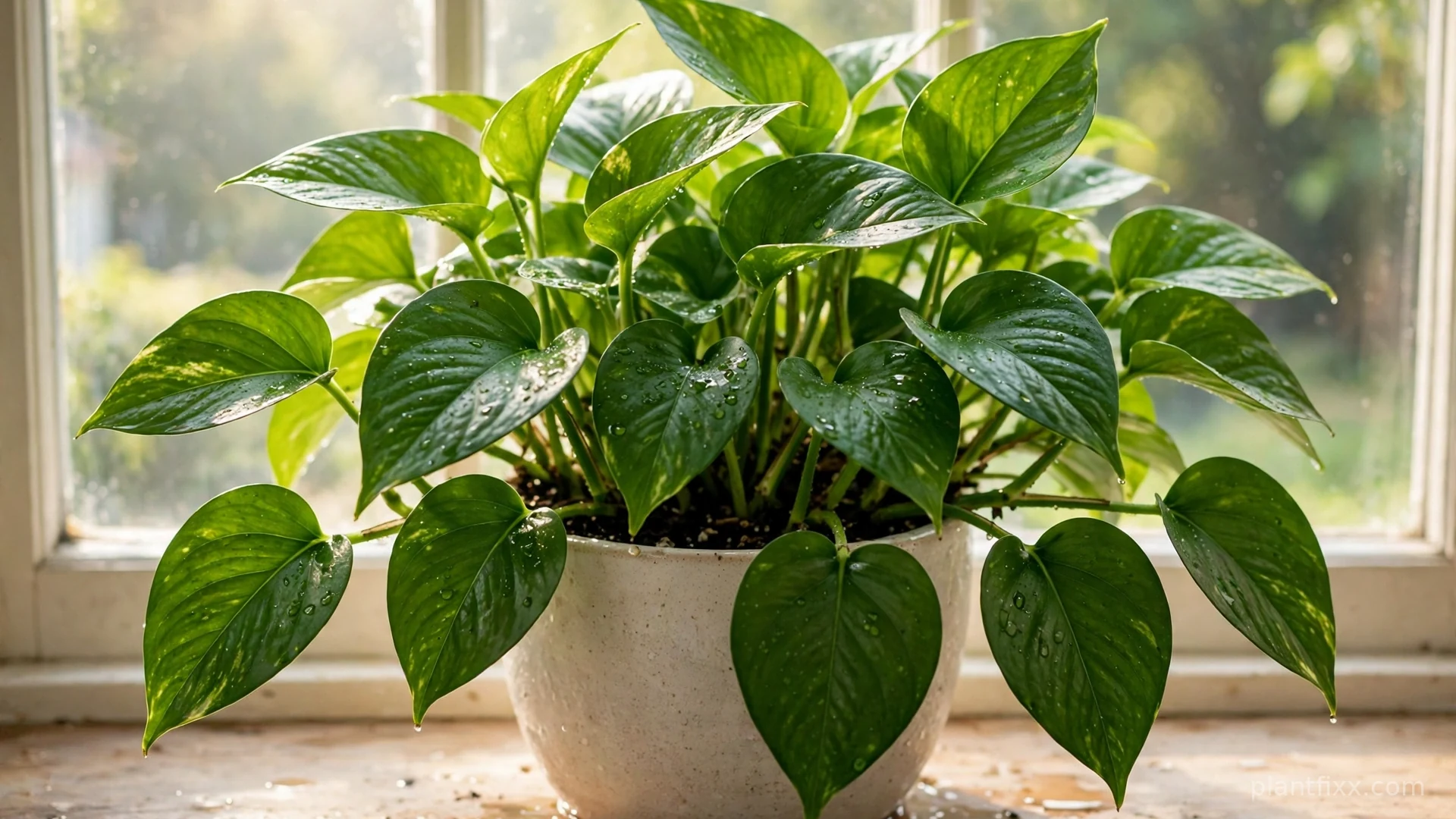
There are three other explanations worth knowing. First, the water may never have reached the roots, which happens when dry soil channels it straight down the pot wall and out of the drainage hole. The pot feels heavy for a moment, then light again, and the center of the root ball stays dry. A longer bottom soak fixes it. Second, a long drought kills off the fine root hairs that do most of the absorbing, so the plant drinks slowly for a week or two while it regrows them. Keep the soil lightly moist during that window and hold off on fertilizer. Third, if the soil was wet before you watered and the droop is getting worse, thirst was never the problem, and the next section shows you how to tell.
Pothos Underwatering vs Overwatering: The Quick Check
The pothos underwatering vs overwatering question matters because pothos drooping leaves show up in both problems, while their fixes are opposites. The soil decides it in ten seconds.
Underwatered
- Soil dry two inches down, often cracked or pulled away from the pot.
- Pot feels light when lifted.
- Leaves feel dry, thin and papery, and curl inward.
- Stems are limp but the soil smells like plain earth.
Overwatered
- Soil wet or soggy days after the last watering.
- Pot feels heavy when lifted.
- Leaves droop with a soft, swollen feel and yellow patches.
- Stems may feel mushy at the base and the soil can smell sour.
That is the short version, kept on the watering side on purpose. If the soil is wet, the stems feel mushy and the decline continues, the problem has moved into the roots, and our full pothos plant root rot guide walks through the root inspection, the trimming and the repot that a plant in that state needs.
Signs Your Pothos Plant Is Recovering
- Leaves begin lifting within 2 to 12 hours of the soak, and the plant looks firm again by the next morning.
- Curled leaves flatten out over one to three days as the tissue refills.
- Stems feel springy again when you touch them gently.
- New growth appears within one to two weeks, which confirms the roots are working.
- The soil stays moist for a normal span of days instead of drying out almost overnight.
Signs the Damage Went Too Far
Not every leaf survives a long drought, and that is normal. Tissue that dried completely cannot refill, so judge the plant by its stems and roots rather than by its worst leaves.
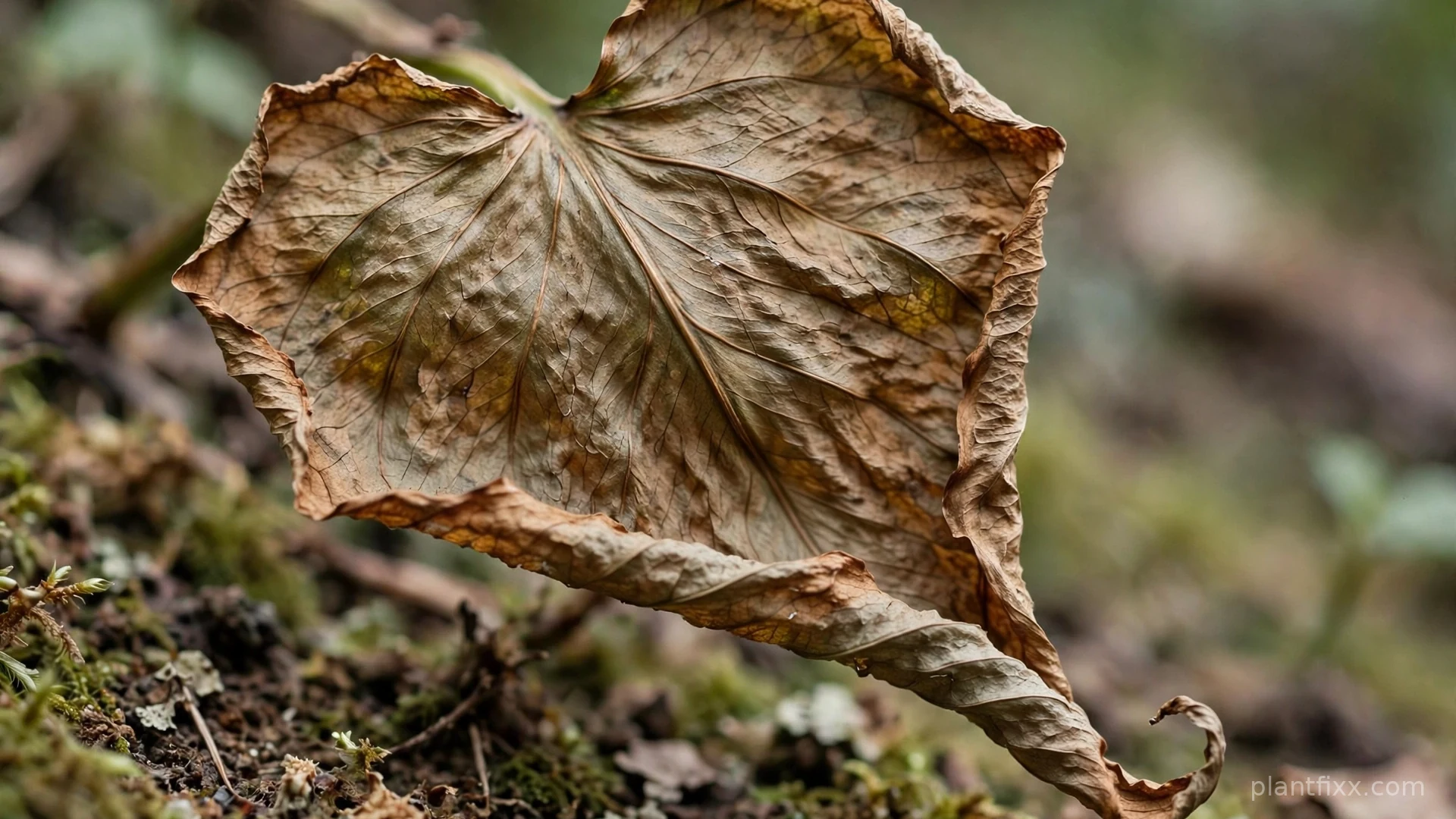
- Leaves that stay yellow, brown or crispy 48 hours after the soil is moist again will not recover. Prune them off so the plant stops spending on them.
- Stems that feel dry, hollow or brittle have died back. Cut them back to firm, green growth.
- A vine with no living leaves but firm green stems can still regrow from its nodes. Cut it back, keep the soil lightly moist, and take a few healthy stem cuttings for water propagation as a backup.
Pothos Watering Signs: Read the Plant, Not the Calendar
Recovery is only half the job. The other half is learning the pothos watering signs so the plant tells you when it is thirsty, long before it has to droop to get your attention. Calendar schedules fail because a plant drinks at different speeds across the year.
- The finger test: water when the top two inches of soil feel dry. This simple check matches the advice in the Clemson University Extension guide to growing pothos indoors, which advises letting the soil dry out before watering again.
- The weight test: lift the pot after watering and again a few days later. The difference is obvious once you have felt it twice.
- The leaf test: healthy leaves feel firm and slightly cool. A leaf that feels soft and bends too easily is asking for a soil check that day.
- The skewer test: push a wooden skewer to the bottom of the pot. If it comes out with damp soil stuck to it, wait. If it comes out clean and dry, water.
Expect the timing to shift. A plant in bright light, warm air or a terracotta pot can need water every week in summer, while the same plant in a cool winter room may go two weeks or more. Our full guide on how often to water a pothos plant breaks the timing down by season, pot type and light level.
How to Stop Underwatering From Coming Back
- Tie the soil check to an existing habit, like a fixed morning every week. Checking takes ten seconds and only leads to watering when the soil is dry.
- Repot a plant that dries out every two or three days. A root bound pothos plant in a small pot holds too little moisture, and moving up one pot size stretches the interval.
- Use a mix that holds some moisture while it drains. A standard indoor mix with perlite suits most homes, while a very gritty mix in a hot room dries faster than the plant can use it.
- Move the plant out of harsh spots. Direct sun through glass, heating vents and fans all strip moisture and shorten the time between waterings.
- Plan for trips. Give the plant a deep soak before you leave, move it a little farther from the brightest window, and group it with other plants so the shared air stays more humid.
Frequently Asked Questions
How do you revive a drooping pothos plant?
Confirm the soil is dry two inches down, then bottom water the pot in a basin of room temperature water for 30 to 45 minutes. Drain it fully, remove only the fully dead leaves, and keep the plant in bright indirect light while it recovers.
How long does it take a pothos plant to perk up after watering?
A mildly thirsty plant starts lifting within 2 to 12 hours and looks normal by the next morning. Curled leaves take one to three days to flatten, and a plant that went through a long drought may need a week or two of steady moisture before it grows again.
Why is my pothos plant still droopy after watering?
Usually the plant needs more time, since refilling leaf cells takes hours. Other causes are water channeling past a dry root ball without wetting it, or fine root hairs that died during the drought. If the soil was already wet, the droop points to overwatering instead.
Can a severely underwatered pothos plant fully recover?
Yes, as long as the stems stay firm and green and some roots survive. Expect to lose the worst leaves, prune dead growth back to healthy nodes, and give the plant steady light moisture while it pushes out new leaves.
How do I know when my pothos plant needs water?
Push a finger two inches into the soil. If it feels dry at that depth and the pot feels light when lifted, it is time to water. Leaves that feel slightly soft are an early warning to run the check the same day.
Why are my pothos leaves curling inward?
Curling inward is how a thirsty pothos leaf slows water loss, and dry soil is the cause in most cases. If the soil turns out wet, check the leaf undersides for pests and consider fertilizer salt buildup in the mix.
Should I cut off the droopy leaves on my pothos plant?
No, not while they are still green. Droopy and curled green leaves usually recover after watering. Cut only leaves that have turned fully yellow, brown or crispy, since those cannot refill or photosynthesize again.
Is bottom watering better than top watering for a dry pothos plant?
For a very dry plant, yes. Bottom watering wets the root ball evenly and defeats the channeling problem that dry, shrunken soil causes. For routine watering of soil that is only partly dry, thorough top watering until it drains works just as well.
Conclusion
A drooping pothos plant is usually a thirsty one, and thirst is the kindest diagnosis this plant can give you. Confirm with the finger test, revive it with a slow bottom soak, and give it a day before judging the result. The leaves that stay green will almost always come back.
From here, the fix is a habit rather than a rescue. A ten second soil check each week keeps the plant ahead of trouble. For the light, feeding and repotting routine that ties the whole care picture together, read our complete pothos plant care guide.
How do you revive a drooping pothos plant?
Confirm the soil is dry two inches down, then bottom water the pot in a basin of room temperature water for 30 to 45 minutes. Drain it fully, remove only the fully dead leaves, and keep the plant in bright indirect light while it recovers.
How long does it take a pothos plant to perk up after watering?
A mildly thirsty plant starts lifting within 2 to 12 hours and looks normal by the next morning. Curled leaves take one to three days to flatten, and a plant that went through a long drought may need a week or two of steady moisture before it grows again.
Why is my pothos plant still droopy after watering?
Usually the plant needs more time, since refilling leaf cells takes hours. Other causes are water channeling past a dry root ball without wetting it, or fine root hairs that died during the drought. If the soil was already wet, the droop points to overwatering instead.
Can a severely underwatered pothos plant fully recover?
Yes, as long as the stems stay firm and green and some roots survive. Expect to lose the worst leaves, prune dead growth back to healthy nodes, and give the plant steady light moisture while it pushes out new leaves.
How do I know when my pothos plant needs water?
Push a finger two inches into the soil. If it feels dry at that depth and the pot feels light when lifted, it is time to water. Leaves that feel slightly soft are an early warning to run the check the same day.
Why are my pothos leaves curling inward?
Curling inward is how a thirsty pothos leaf slows water loss, and dry soil is the cause in most cases. If the soil turns out wet, check the leaf undersides for pests and consider fertilizer salt buildup in the mix.
Should I cut off the droopy leaves on my pothos plant?
No, not while they are still green. Droopy and curled green leaves usually recover after watering. Cut only leaves that have turned fully yellow, brown or crispy, since those cannot refill or photosynthesize again.
Is bottom watering better than top watering for a dry pothos plant?
For a very dry plant, yes. Bottom watering wets the root ball evenly and defeats the channeling problem that dry, shrunken soil causes. For routine watering of soil that is only partly dry, thorough top watering until it drains works just as well.
Pingback: Pothos Plant Brown Tips: 6 Causes and How to Fix Them Fast
Pingback: Pothos Plant Care Guide: Apartment Beginner Tips (2026)