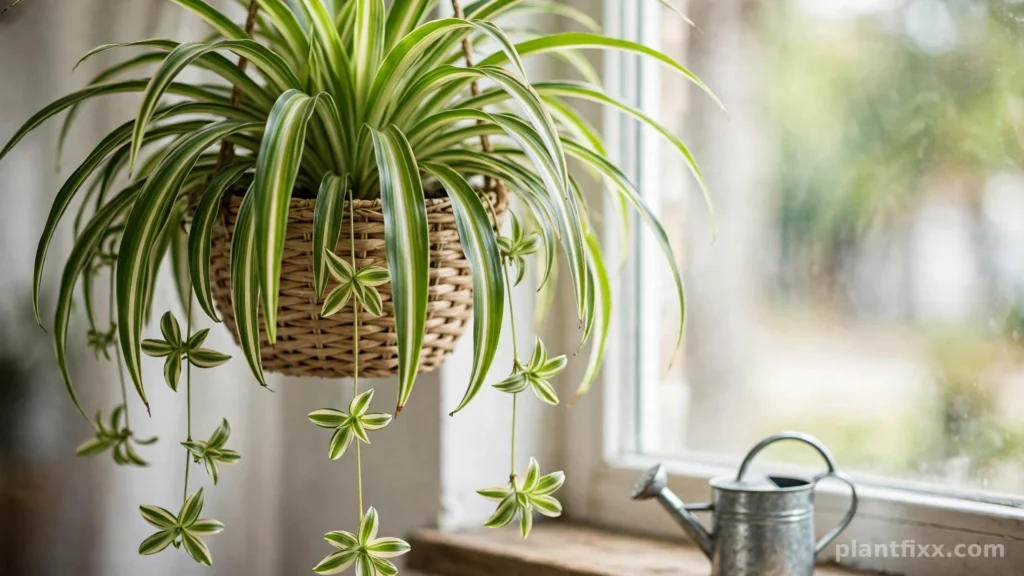
Spider plants forgive missed waterings, low light, and months of neglect. Feeding is the one job where good intentions do the damage. Most brown tips, stalled growth, and salt-crusted soil trace back to fertilizer that was too strong, too frequent, or poured onto dry roots.
This spider plant feeding guide covers the full routine. You will learn the best fertilizer for spider plant health, the right NPK ratio, exact dosage, a season-by-season schedule, and how to fix fertilizer burn when it happens. It follows the same feeding routine used across our spider plant care guide, expanded here with the detail that general care pages leave out.
One rule runs through everything below. Spider plants are light feeders. When you are unsure whether to feed, skip the feeding and water instead.
Quick Answer
Feed a spider plant with a balanced liquid fertilizer such as 10-10-10 or 20-20-20, diluted to half strength, once a month in spring and summer. Half strength once a month during active growth is enough, and no fertilizer at all is the right dose in winter. Stop feeding at the first sign of brown, crispy leaf tips.
Quick Take
Spider plants evolved in poor, rocky soil, so restraint matters more than product choice. A balanced spider plant liquid fertilizer at half strength, applied monthly in spring and summer and paused in winter, covers almost every plant. Most feeding damage comes from full-strength doses, feeding dry soil, and skipping the seasonal flush that clears built-up salts from the pot.
Why Spider Plants Need So Little Fertilizer
Spider plants (Chlorophytum comosum) come from coastal South Africa, where they grow in thin, rocky ground that holds few nutrients. Thousands of years in that soil produced a plant that stores water and food in thick, fleshy roots and asks for very little from you. A spider plant in a pot of standard potting mix already sits in richer soil than it would ever meet in the wild.
That history explains the plant’s whole feeding pattern. It grows fast when conditions suit it, pushing out arching leaves and long runners with plantlets, yet it does this on modest inputs. Fertilizer supports that growth. It does not create it. Light, water, and room to grow decide how fast a spider plant grows, and fertilizer only tops up the nutrients that watering slowly washes out of the pot.
It also explains why overfeeding hurts this plant more than underfeeding. Every dose of fertilizer leaves mineral salts behind in the soil. A heavy feeder uses those salts up. A spider plant does not, so the salts accumulate, pull moisture out of the roots, and show up as brown, crispy leaf tips. In practice, a spider plant that has never been fed looks far better than one fed at full strength every two weeks.
One mistake many people make is copying the feeding routine of a hungry plant, such as a tomato or a petunia, and applying it to a spider plant. The dose that keeps a tomato producing will burn a spider plant within a few feedings. Treat the spider plant as the light feeder it is and it will reward you with steady growth and a regular supply of pups.
What You Need Before You Start
Feeding takes about five minutes when everything is within reach. Gather these items first:
- A balanced, water-soluble houseplant fertilizer (10-10-10 or 20-20-20)
- A measuring spoon or the fertilizer cap, so the dose is measured and not guessed
- A watering can that holds at least one quart, for mixing the diluted feed
- Plain water for the pre-watering and the seasonal flush
- A saucer or sink where the pot can drain freely
Check two conditions before you mix anything. The soil should be moist, never bone dry, because fertilizer solution poured onto dry soil concentrates around the roots and burns them. The plant should be healthy and actively growing. A stressed, sick, or freshly repotted plant gets plain water only, and the sections below explain why. If this is your first houseplant, feed only after it has settled in for at least a month.
The Best Fertilizer for Spider Plants
The best fertilizer for spider plant growth is a balanced, water-soluble formula with an NPK ratio of 10-10-10 or 20-20-20, used at half the strength printed on the label. Balanced means the three numbers are equal, so the plant receives nitrogen, phosphorus, and potassium in even proportions. A slightly nitrogen-forward ratio such as 3-1-2 also works well, because this plant’s main output is leaves.
Reading the spider plant fertilizer NPK numbers
The three numbers on every fertilizer label show the percentage of nitrogen (N), phosphorus (P), and potassium (K) by weight. Nitrogen drives leaf growth and keeps foliage green. Phosphorus supports roots and energy transfer inside the plant. Potassium regulates water balance and overall vigor. For spider plants, the spider plant fertilizer NPK balance matters more than the size of the numbers. A 20-20-20 product diluted to half strength feeds the same as a 10-10-10 product at full strength, and both suit this plant when the dose stays modest.
Avoid two product types. Bloom booster formulas with a high middle number, such as 15-30-15, deliver far more phosphorus than a spider plant can use, and the surplus locks up iron and other micronutrients in the soil. High-nitrogen lawn fertilizers are too strong for container roots and burn them quickly. Variegated cultivars such as ‘Vittatum’ and ‘Variegatum’ need even less nitrogen than solid green plants, because excess nitrogen fades the white bands and pushes the leaves back toward plain green. Feed variegated plants at quarter strength.
Liquid, granular, and slow-release compared
A spider plant liquid fertilizer gives you the most control. You measure the dose, dilute it in the watering can, and apply it during a normal watering, so you can weaken or skip a feeding the moment the plant shows stress. Liquid feeds act fast, and you usually see deeper leaf color within a few weeks. Their downside is frequency: you repeat the job every month through the growing season.
Granular fertilizers sit on the soil surface or get mixed into the top layer and release nutrients as you water. Dosing them evenly in a small pot is hard, and a heavy hand in one spot can burn the roots below it. Slow-release pellets and spikes solve the measuring problem by feeding gradually for three to six months, and a 14-14-14 slow-release product applied once in spring is a reasonable low-effort option. The trade-off is control. Pellets keep releasing salts even when the plant slows down in fall, and you cannot take a dose back once it is in the soil. For most indoor spider plants, liquid feeding at half strength is the safer default.
Organic and Homemade Options
Spider plant fertilizer organic choices
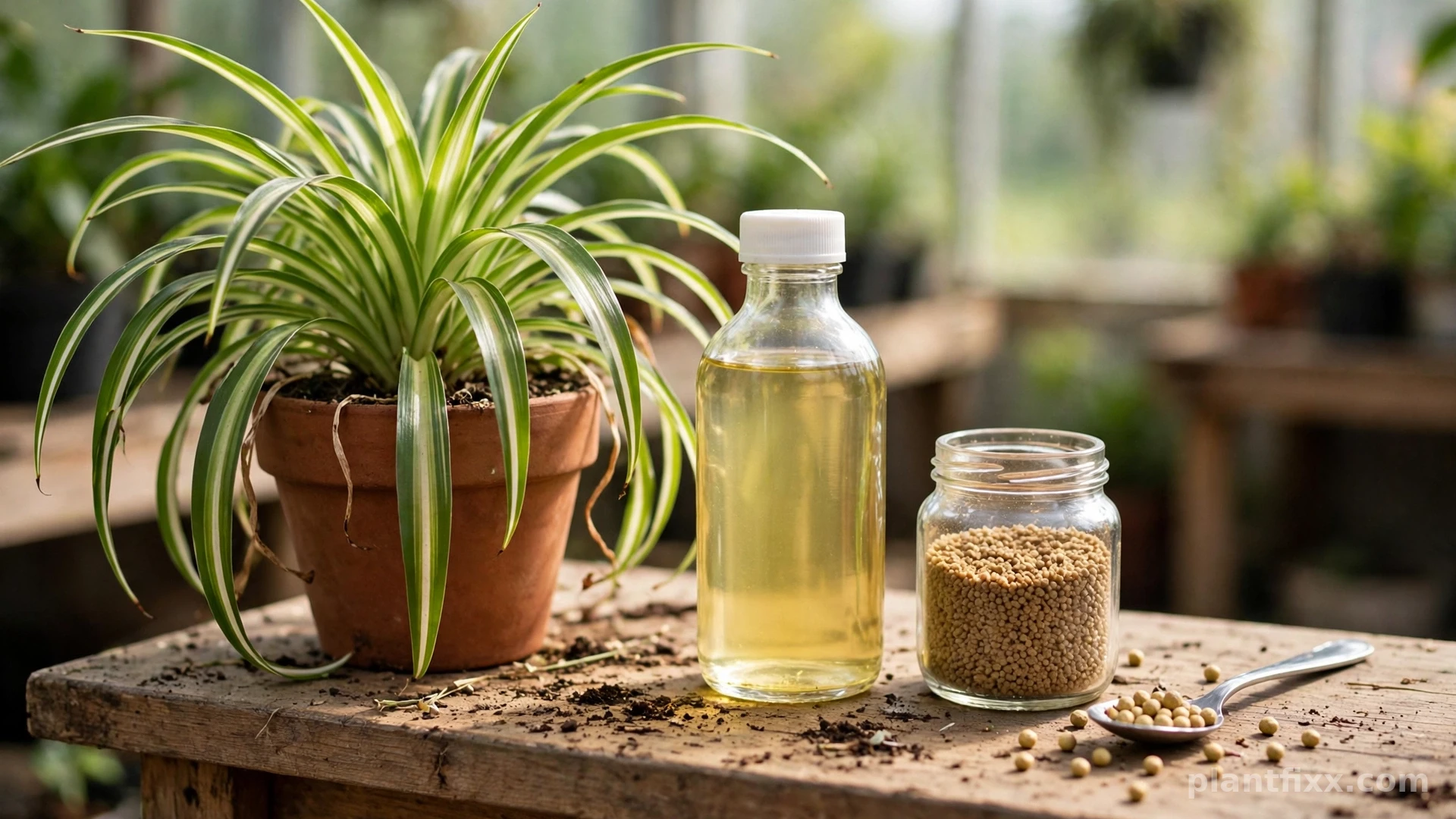
If you prefer a spider plant fertilizer organic routine, three options have a long track record. Fish emulsion, typically a 5-1-1 formula, is gentle and rarely burns, and a monthly application in spring and summer is enough. Its weakness is the smell, which lingers indoors for a day, so many growers save it for plants that can sit outside after feeding. Worm castings work differently. Work a small handful into the top of the soil or steep them in water to make a mild tea. Castings release nutrients slowly and improve the soil itself, so they almost never cause burn. Compost tea and diluted liquid seaweed sit in the same gentle category, feeding lightly while adding trace minerals. Organic feeds are milder than synthetic ones, so results build over a season rather than a few weeks, and that slow pace suits a light feeder well.
Spider plant fertilizer homemade options, with honest limits
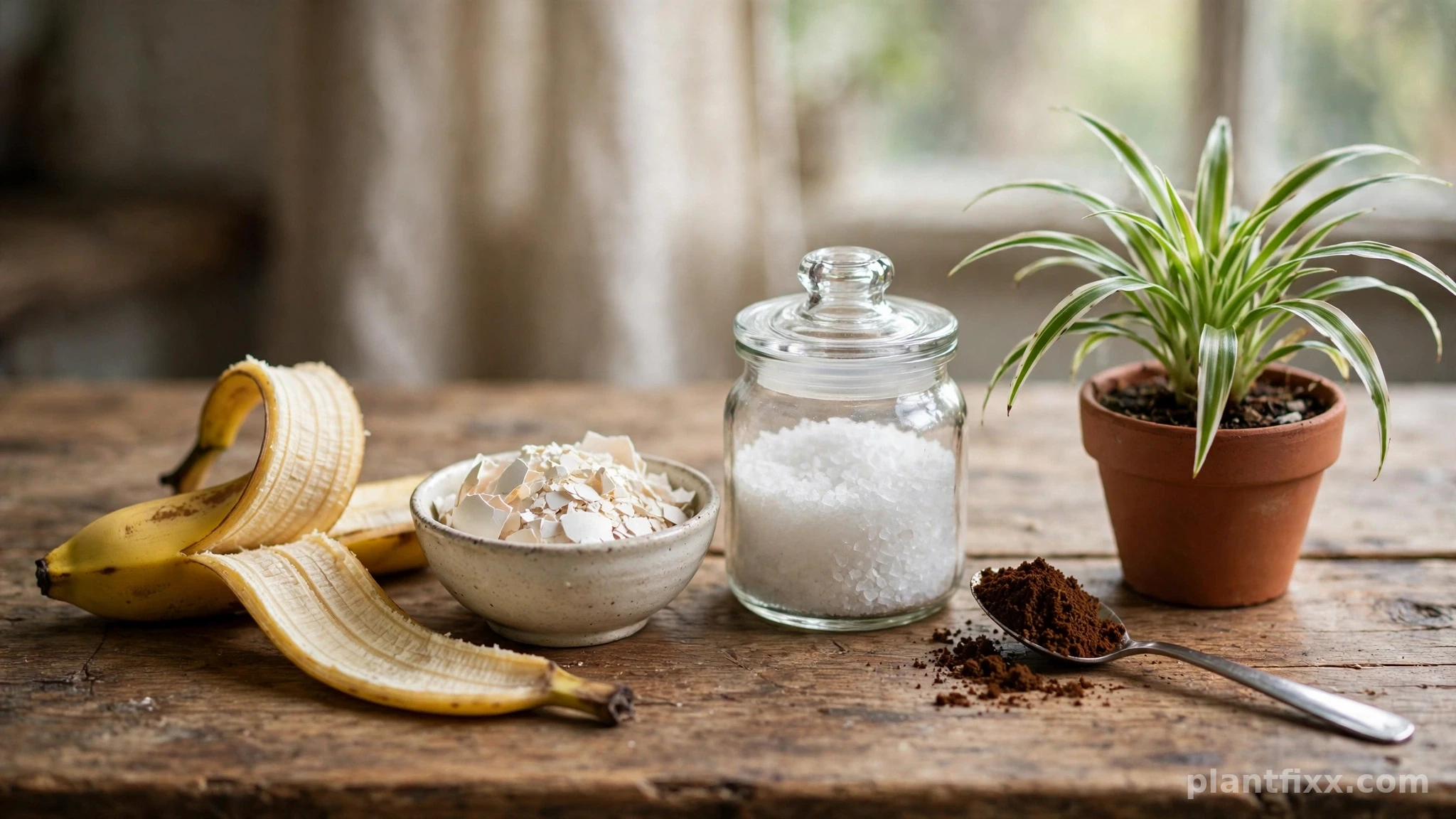
A spider plant fertilizer homemade routine can work, but it helps to know what each kitchen ingredient actually supplies. Banana peel tea adds potassium. Chop a peel, soak it in water for at least five hours, strain the liquid, and use it to water the plant, a method described in Gardening Know How’s guide to homemade plant food. Crushed eggshells add calcium. Boil the shells, dry them, grind them to a powder, and sprinkle a spoonful onto the soil, where it breaks down over months. Epsom salt supplies magnesium and sulfur. Dissolve one to two tablespoons in a gallon of water and use it in place of a regular feeding no more than once or twice a season. Used coffee grounds add a little nitrogen. Use only brewed grounds, because unbrewed grounds are too acidic, and work a spoonful into the topsoil rather than leaving a thick layer that can mold.
Be honest about the limits. Homemade mixes have unknown strength, so you cannot dose them precisely, and they supply single nutrients rather than a balanced feed. Coffee grounds are the most misused option and are not a complete fertilizer on their own. Use homemade feeds as an occasional supplement to a balanced routine, or as your main feed only if your plant grows slowly and you accept that trade-off.
Spider Plant Fertilizer Schedule by Season
The spider plant fertilizer schedule follows growth, not the calendar alone. Feed while the plant produces new leaves and runners. Pause when growth stops. The spider plant fertilizer frequency below assumes a plant in bright, indirect light with a half-strength balanced liquid feed.
| Season | What to use | Strength | Frequency |
|---|---|---|---|
| Spring (March to May) | Balanced liquid 10-10-10 or 20-20-20 | Half strength | Every 4 weeks |
| Summer (June to August) | Balanced liquid 10-10-10 or 20-20-20 | Half strength | Every 4 to 6 weeks |
| Fall (September to November) | Balanced liquid, or one last slow-release dose in early fall | Quarter to half strength | One feeding in early fall, then stop |
| Winter (December to February) | None | None | No feeding |
The spider plant fertilizer in winter rule is simple: do not feed. Growth slows or stops, root uptake drops, and fertilizer applied to a resting plant sits in the soil as salt. Resume in spring only after you see new, upright leaves emerging from the center of the plant. That new growth is the signal that the roots are active again.
Adjust the schedule to the plant in front of you. A spider plant in lower light grows slowly and needs feeding at the long end of every range, or less often. Our guide to the best light for a spider plant shows how much growth changes with light levels. Plants in hanging baskets dry out and leach nutrients faster than plants on a shelf, so a basket plant can take a feeding every 3 to 4 weeks at peak season, at the same half-strength dilution.
How to Fertilize a Spider Plant, Step by Step
Follow this order every time. The sequence matters as much as the dose.
- Water the plant with plain water first, ideally the day before feeding or at least an hour ahead. Moist roots handle nutrients safely. Dry roots burn.
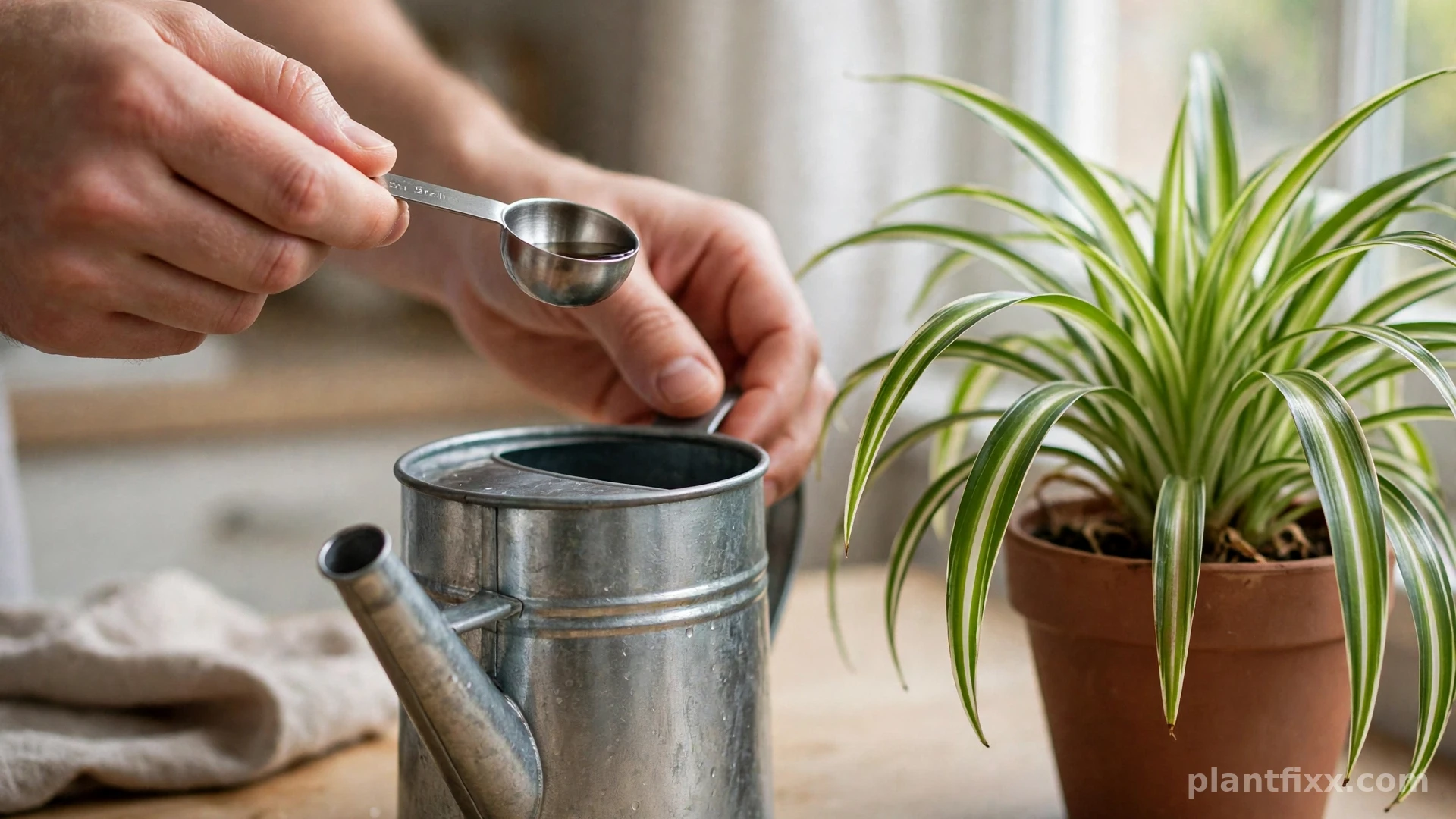
- Mix the feed in the watering can. Measure half the amount the label directs for a gallon of water, stir until it dissolves fully, and use room-temperature water.
- Pour the solution slowly and evenly over the soil surface until it runs from the drainage holes. Keep it off the leaves and out of the crown, and wipe off any splashes with a damp cloth.
- Let the pot drain completely. Never leave the plant standing in a saucer of fertilizer solution.
- Flush the soil with plain water every three months during the growing season, running two to three pot volumes of water through the soil. This clears the salts that feeding leaves behind. The flushing routine matches the one in our spider plant watering guide.
Spider Plant Fertilizer Dosage, Worked Out
The spider plant fertilizer dosage rule is half the label rate, every time. Labels are written for hungry garden plants, and this plant wants roughly half of that. One clear example from Simplify Plants’ fertilizer dosage breakdown: if the label says one tablespoon per gallon of water, use half a tablespoon per gallon. If the label gives a teaspoon rate, halve that too.
For granular products, sprinkle about half the recommended amount over the soil and water it in thoroughly so no dry granules sit against the stems. For slow-release pellets, follow the label count for the pot size and apply once in spring. When in doubt, feed less. You can always add another light feeding next month. You cannot remove a dose once it is in the soil.
Feeding After Repotting, and Feeding Plants With Pups
The spider plant fertilizer after repotting rule is patience. Fresh potting mix carries starter nutrients, and repotted roots need time to settle and resume uptake before they can use a feed. Wait at least four to six weeks after repotting, and feed only once you see new leaf growth. Feeding a freshly repotted plant is one of the fastest ways to burn tender new roots.
A mother plant covered in runners is doing extra work, because every plantlet draws water and nutrients through the shared stems. Keep a producing plant on the standard monthly half-strength schedule through summer and it will keep making pups. Once you pot up the babies, treat each new plant gently. Our guide to spider plant pups covers rooting and potting in detail. Give a newly potted pup plain water for its first four to six weeks, then start at quarter strength for the first two feedings before moving to half strength.
Signs Your Feeding Is Working
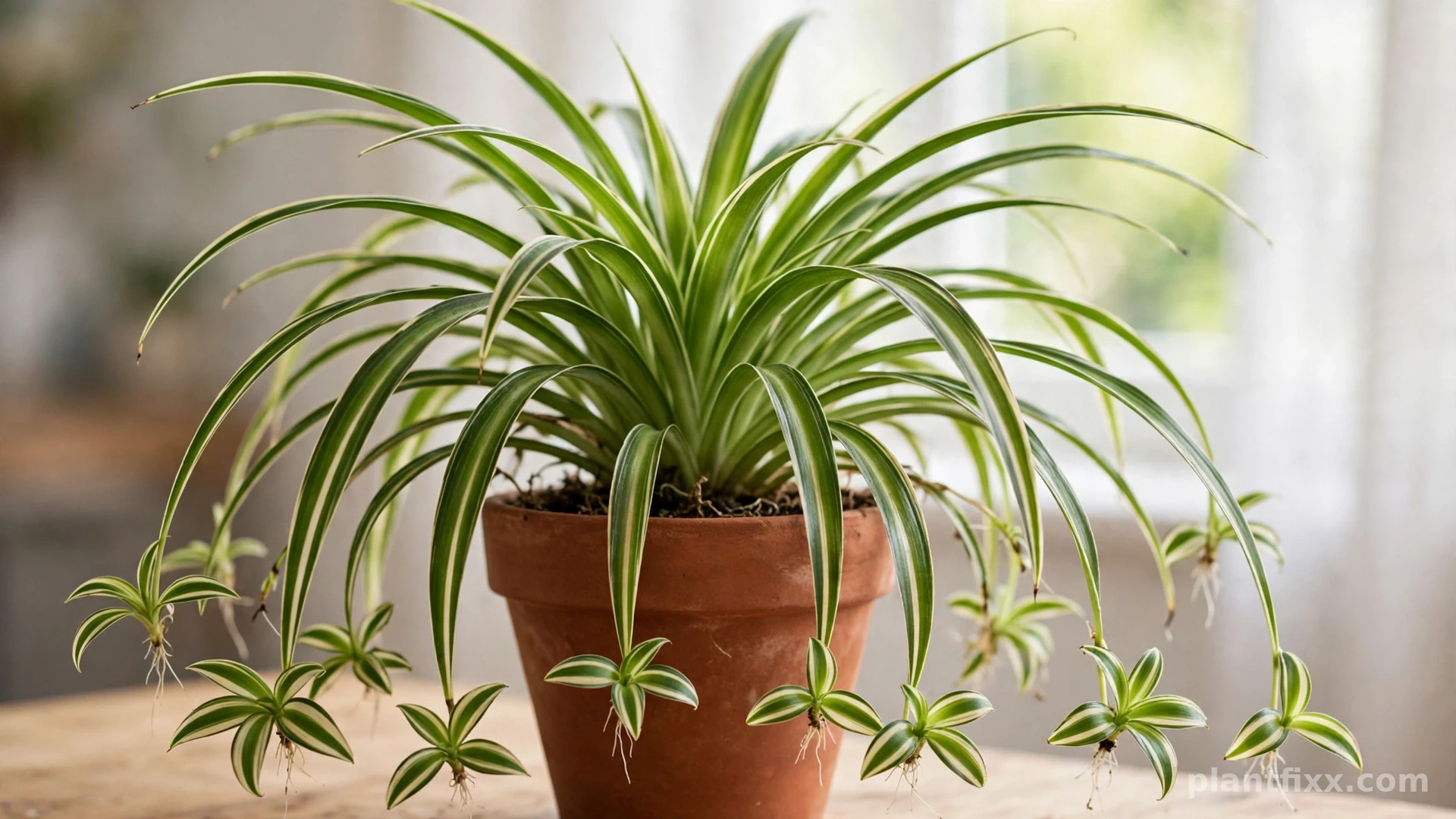
Read the spider plant fertilizer signs in both directions. The working signs appear gradually over four to eight weeks of the growing season:
- New leaves emerge a deeper, richer green and hold their color as they mature
- Leaf blades grow wider and longer than the previous set
- The plant produces fresh runners, and the plantlets on them size up steadily
- Variegated leaves keep crisp white or cream stripes with no fading
- Growth stays steady through spring and summer with no leaf tip damage on new leaves
Judge by the new growth, not the old leaves. Existing brown tips never heal, so a plant can be feeding perfectly while its oldest leaves still show old damage. If new leaves come in clean and green, your schedule is right.
Fertilizer Burn and Other Feeding Problems
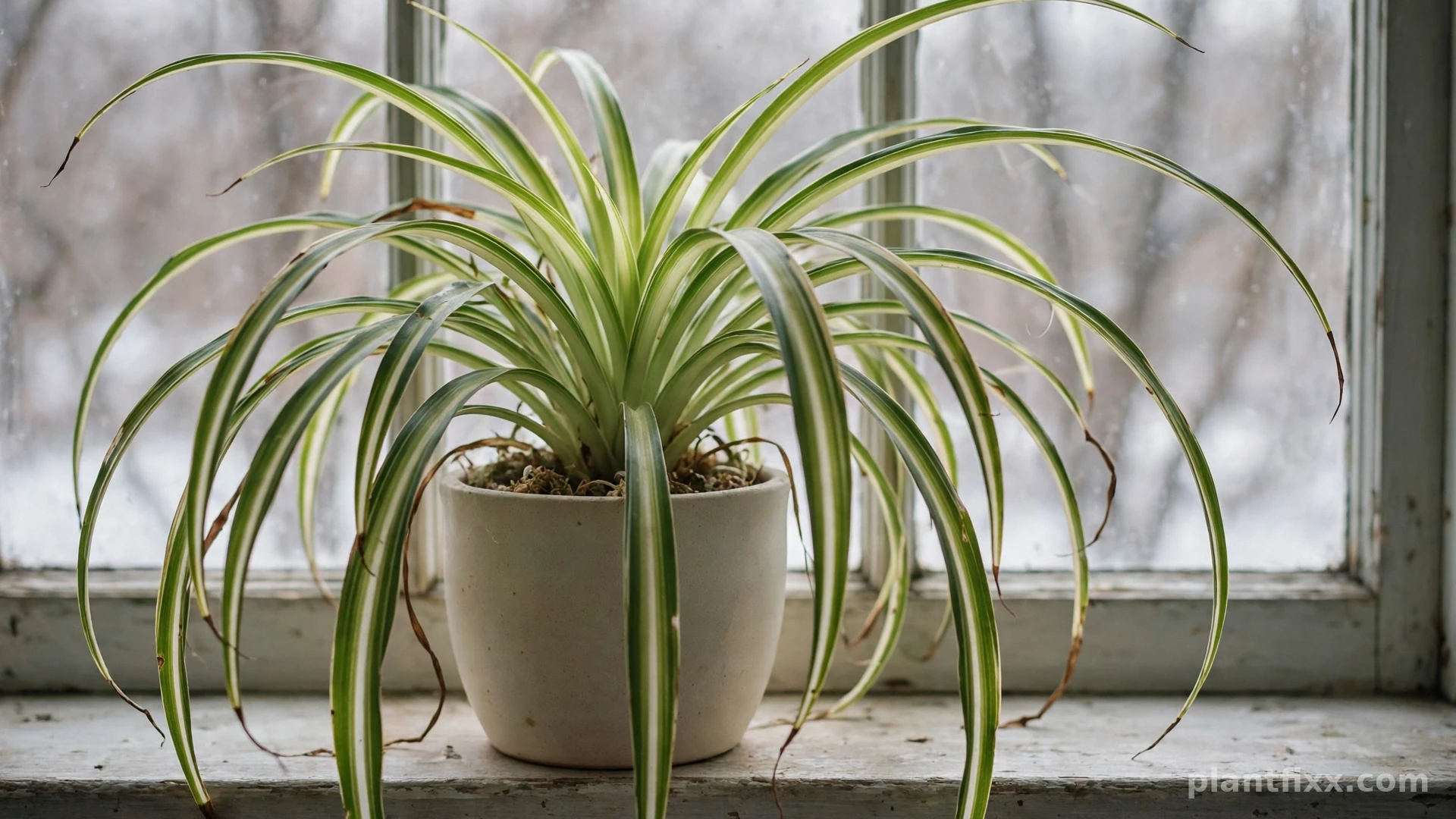
Most spider plant fertilizer problems come from too much, not too little. Spider plant fertilizer burn has a recognizable pattern. Brown, crispy tips and edges appear within days of a feeding and creep down the leaf blade with each new dose. A white crust forms on the soil surface or the pot rim. Leaves yellow or turn brittle, growth stalls, and a heavily overfed plant stops producing pups. Those crusty tips look much like the damage covered in our guide to spider plant brown tips, and the timing after a feeding is what gives fertilizer away as the cause.
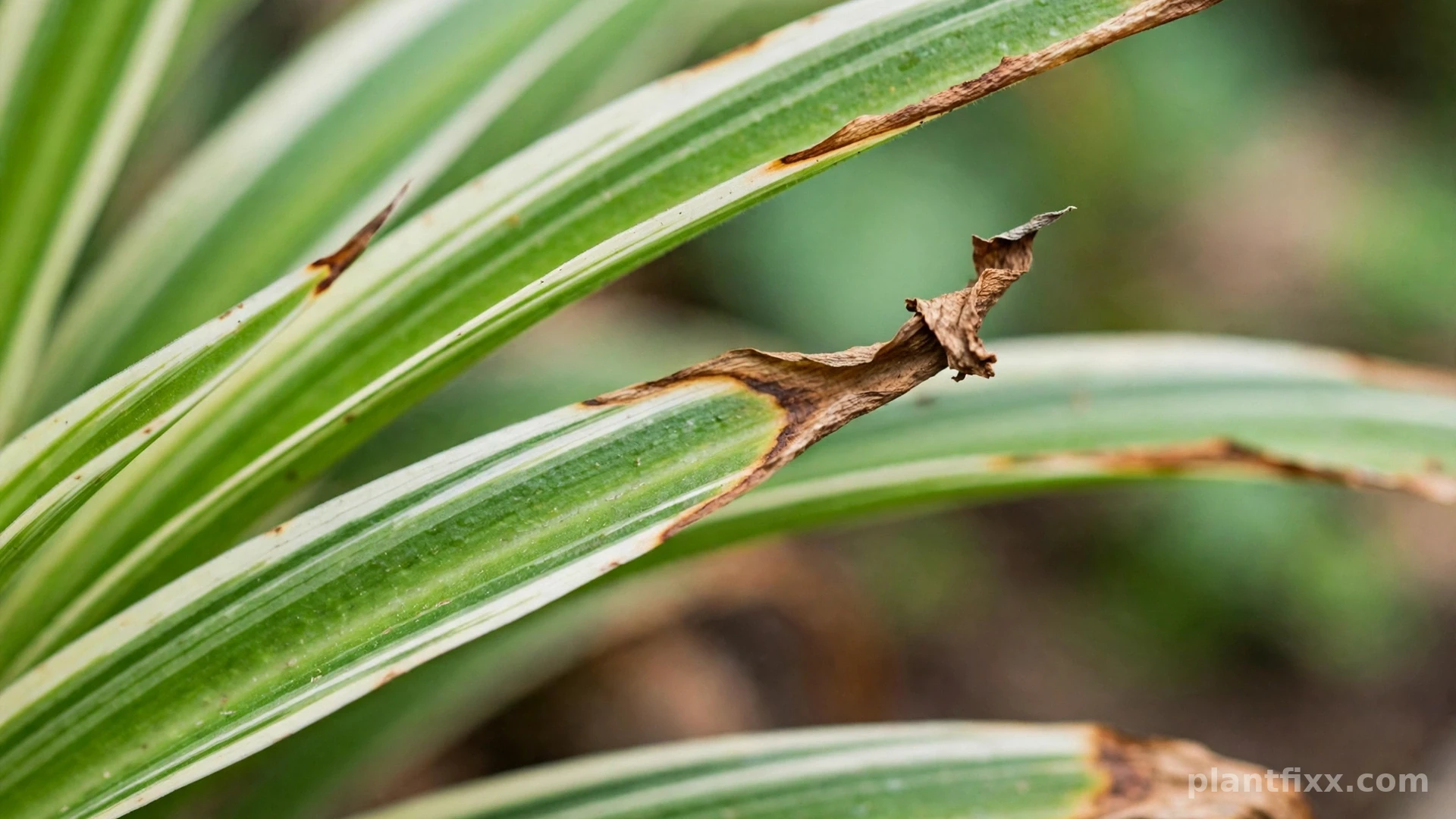
Fix burn in this order. Stop fertilizing immediately. Flush the pot with plain water for one to two minutes, letting it drain freely, and repeat the flush a week later. Trim the dead brown tips with clean scissors, following the natural point of the leaf, once the plant stabilizes. Pause feeding for at least two months, then resume at quarter strength. If the soil is old and heavily crusted, repotting into fresh mix resets the plant faster than flushing alone.
The opposite problem, spider plant nutrient deficiency, is slower and quieter. A plant that has gone a year or more without food in old soil fades gradually. Older leaves pale first, growth shrinks, new leaves come in smaller, and pup production stops. Correct it gently. Start at quarter strength every three to four weeks, move to half strength after a month, and expect color to return over the following weeks. If the plant is pale but also wilted or in soggy soil, the cause is more likely watering or roots than food. Our spider plant not growing checklist helps separate those causes before you change the feeding routine.
When Not to Fertilize
Skip the feeding whenever any of these apply:
- Winter, or any period when the plant has stopped growing
- The first four to six weeks after repotting
- Dry soil that has not been watered first
- A plant that is sick, pest-infested, heat-stressed, or recovering from root rot
- Very low light conditions, where slow growth means the plant cannot use the nutrients
- A plant already showing brown tips or a salt crust on the soil
Waiting costs nothing. A spider plant tolerates a missed feeding far better than a mistimed one.
What is the best fertilizer for a spider plant?
A balanced, water-soluble houseplant fertilizer with an NPK ratio of 10-10-10 or 20-20-20, diluted to half strength. Liquid formulas are easiest to control. Organic options such as fish emulsion and worm castings work too, at the same monthly rhythm in spring and summer.
How often should I fertilize my spider plant?
Once a month in spring and summer at half strength. Feed every 4 to 6 weeks if the plant grows slowly or sits in lower light. Give one last light feeding in early fall, then stop completely for winter.
Can I use Miracle-Gro on a spider plant?
Yes. Standard balanced Miracle-Gro houseplant formulas suit spider plants when diluted to half the label strength and applied monthly in the growing season. The brand matters less than the ratio and the dose. Avoid high-phosphorus bloom formulas.
Why does my spider plant have brown tips after fertilizing?
That pattern points to fertilizer burn. Salts from the feed build up in the soil and pull moisture from the roots, and the leaf tips show the damage first. Stop feeding, flush the soil with plain water for one to two minutes, and resume at quarter strength after a two-month pause.
Should I fertilize my spider plant in winter?
No. Spider plants rest in winter, growth slows or stops, and unused fertilizer accumulates as salt in the soil. Water sparingly, skip feeding from December through February, and restart in spring when new leaves appear at the center of the plant.
Can I fertilize a spider plant I just repotted?
Wait at least four to six weeks. Fresh potting mix already contains starter nutrients, and repotted roots burn easily while they settle. Feed only after you see new leaf growth, and start at quarter strength for the first feeding.
Is fertilizer safe to use on a spider plant kept around pets?
Spider plants are non-toxic to cats and dogs, so the plant itself is safe. Store fertilizer concentrates out of pet reach, water the diluted feed into the soil rather than onto leaves, and let the pot drain before putting it back. You can check any other plant in your collection with our pet safe plant checker.
Conclusion
Feeding a spider plant comes down to three habits. Choose a balanced fertilizer and cut the dose in half. Feed monthly while the plant grows, and stop when it rests. Flush the soil every few months so salts never get ahead of you. Everything else in this guide is refinement on those three points.
For the rest of the routine, light, water, soil, and repotting, work through our complete spider plant care guide and keep your feeding notes alongside it. A plant fed this way stays green, keeps its stripes, and produces pups season after season.
Pingback: Spider Plant Care Guide: Full 2026 Guide
Pingback: Spider Plant Brown Tips? 7 Causes + How to Fix Them (2026)