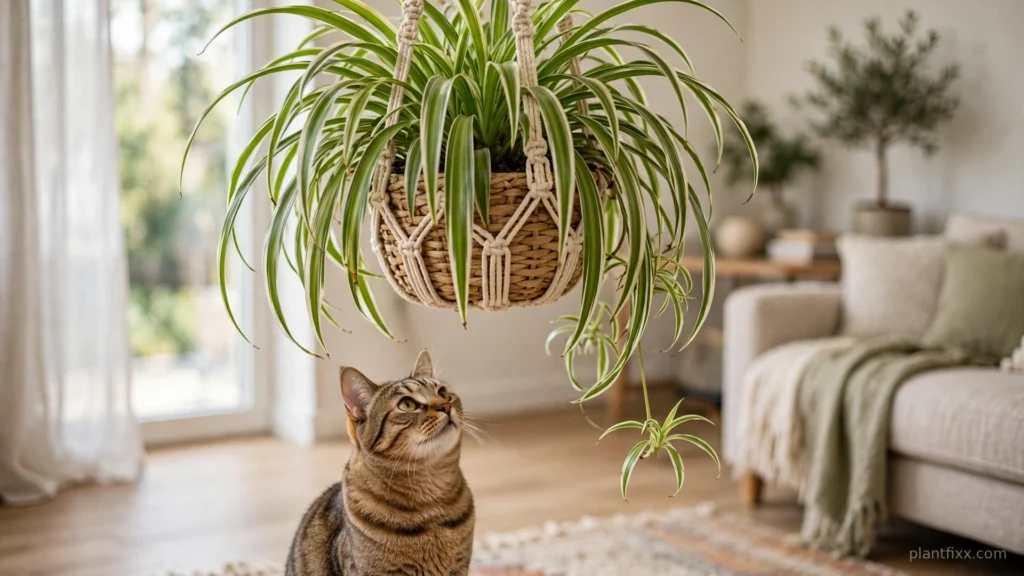
You walk into the living room and catch your cat mid-chew, a long striped leaf of your spider plant dangling from her mouth. Your stomach drops. Is this an emergency vet visit, or is she going to be fine?
Here is the short version: spider plants are one of the safest houseplants you can own with pets. The ASPCA lists Chlorophytum comosum as non-toxic to both cats and dogs. But “non-toxic” does not mean “chew all you want,” and cats in particular have a strange obsession with these plants that you need to understand.
This guide covers what actually happens after a nibble, why cats cannot leave spider plants alone, the toxic lookalikes you must not confuse them with, and how to set up your home so the plant and the pet both survive.
Yes, spider plants are safe for cats and dogs. The ASPCA lists Chlorophytum comosum as non-toxic to both, so a nibble will not poison your pet. Heavy chewing can still cause mild drooling, vomiting, or soft stool, usually passing within 24 hours. Call your vet if symptoms last longer, or if you see blood, swelling, or breathing trouble.
Quick take: spider plants are among the safest houseplants for pet homes, and also among the most chewed, because many cats react to them a little like catnip. Keep the plant but manage the chewing: hang it out of reach, offer cat grass as an alternative, and learn which symptoms need a vet. Remember that non-toxic does not mean chew-proof: a shredded plant looks ragged and a vomiting cat makes a mess, so managing the habit matters as much as the safety status itself.
One mistake many people make is treating “non-toxic” as permission to let the cat graze. I have seen spider plants chewed down to stubs within weeks, and the real problems were never poisoning. The cat vomited on the rug, the plant stopped growing because every new leaf got shredded, and the owner spent days worrying about something serious. Non-toxic means safe, not chew-proof. Once you accept that, the rest is simple management.
Why cats cannot resist your spider plant
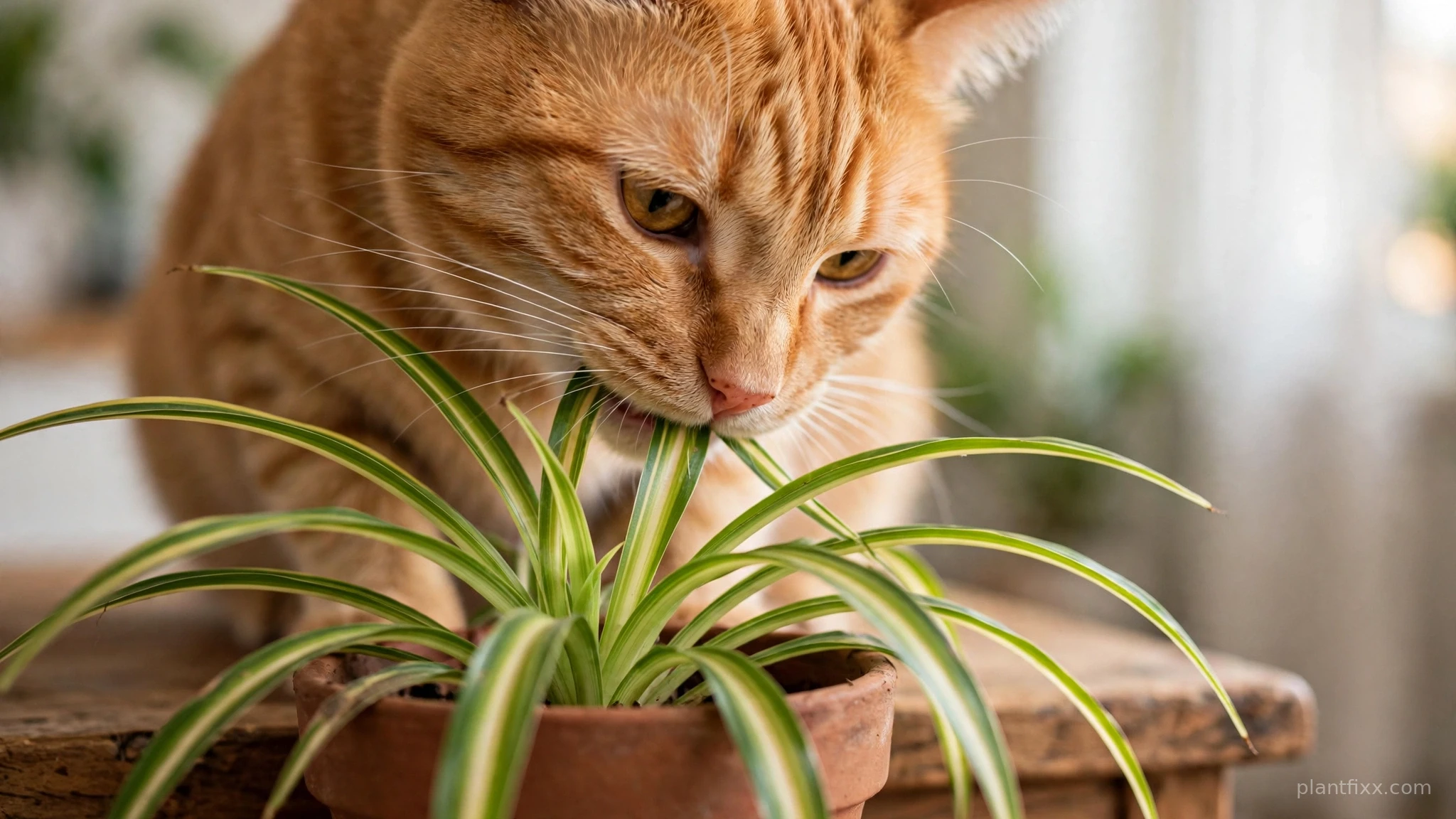
If you own both a cat and a spider plant, you already know this is not a casual interest. Cats stalk these plants with unusual dedication. There are a few reasons, and the first one is the most interesting.
Many cat owners report that their cats act slightly “high” after chewing spider plant leaves, playful and zoned out in a way that looks a lot like a catnip reaction. This effect is widely reported but not scientifically proven, so treat it as a strong anecdotal pattern rather than a fact. Whatever the chemistry, the behavior is consistent enough that you should plan for it.
Second, movement: long, arching leaves sway in air currents, triggering the same prey interest as a toy on a string. Third, texture: fibrous leaves are satisfying to shred. Fourth, placement: hanging baskets dangle at exactly paw height.
What actually happens after a nibble
Because spider plants contain no meaningful toxins, you are dealing with mechanical irritation, not poisoning. A cat that eats indigestible plant fiber may simply throw it back up.
| Symptom | What it looks like | Typical course |
|---|---|---|
| Drooling or lip-smacking | Wet chin, repeated swallowing right after chewing | Fades within a few hours |
| Vomiting | Clear or foamy, sometimes with leaf pieces | Single episode, resolves within 12 hours |
| Soft stool | Looser than normal, no blood | Back to normal within a day |
| Temporary appetite dip | Skips a meal, less interested in treats | Eating normally within 24 hours |
When this happens: fresh water, smaller meals for the rest of the day, and watch. Do not induce vomiting or try home remedies.
One judgment call matters: a single vomit after chewing is normal, but repeated vomiting across several hours is not “just the plant” anymore, because dehydration becomes the real risk.
When a nibble becomes a vet visit
Three situations still deserve a vet’s input: symptoms that will not stop, symptoms that look wrong for a simple nibble, and uncertainty about what the pet actually ate.
| Situation | What to do |
|---|---|
| One vomit or soft stool, pet otherwise normal | Monitor at home for 24 hours |
| Vomiting or diarrhea lasting more than 24 hours | Call your vet, dehydration risk |
| Blood in vomit or stool | Vet visit, same day |
| Swelling of face or paws, hives, breathing difficulty | Emergency clinic, possible allergic reaction or wrong plant |
| Tremors, disorientation, collapse | Emergency clinic, this is not a spider plant reaction |
| Very young, senior, or pregnant pet showing any symptom | Call the vet sooner rather than later |
| You are not 100 percent sure it was a spider plant | Treat it as a possible toxic ingestion and call |
If you call, have the plant’s name, roughly how much was eaten, and when symptoms started ready. A photo helps the vet confirm the species. The ASPCA Animal Poison Control Center at 888-426-4435 is the backup option if your own vet is unreachable.
Plants that look like spider plants but are not pet-safe
Most safety articles skip this, and it is the one that actually protects your pet. Several genuinely toxic plants share that grassy, striped look, and nursery labels are not always reliable.
| Plant | Why it gets confused | Safety status |
|---|---|---|
| Spider plant (Chlorophytum comosum), incl. ‘Vittatum’ and ‘Variegatum’ | The real thing, arching striped leaves | Non-toxic to cats and dogs (ASPCA) |
| Dracaena reflexa ‘Song of India’ / ‘Song of Jamaica’ | Striped yellow-green leaves, similar rosette shape | Toxic to cats and dogs, causes vomiting and drooling |
| Lucky bamboo / ribbon plant (Dracaena sanderiana) | Grassy striped leaves, often sold in water like a spider plant pup | Toxic to cats and dogs |
| Snake plant (Dracaena trifasciata) | Grassy, sword-like leaves that new owners lump in with “striped plants” | Toxic to cats and dogs, see our snake plant toxicity guide |
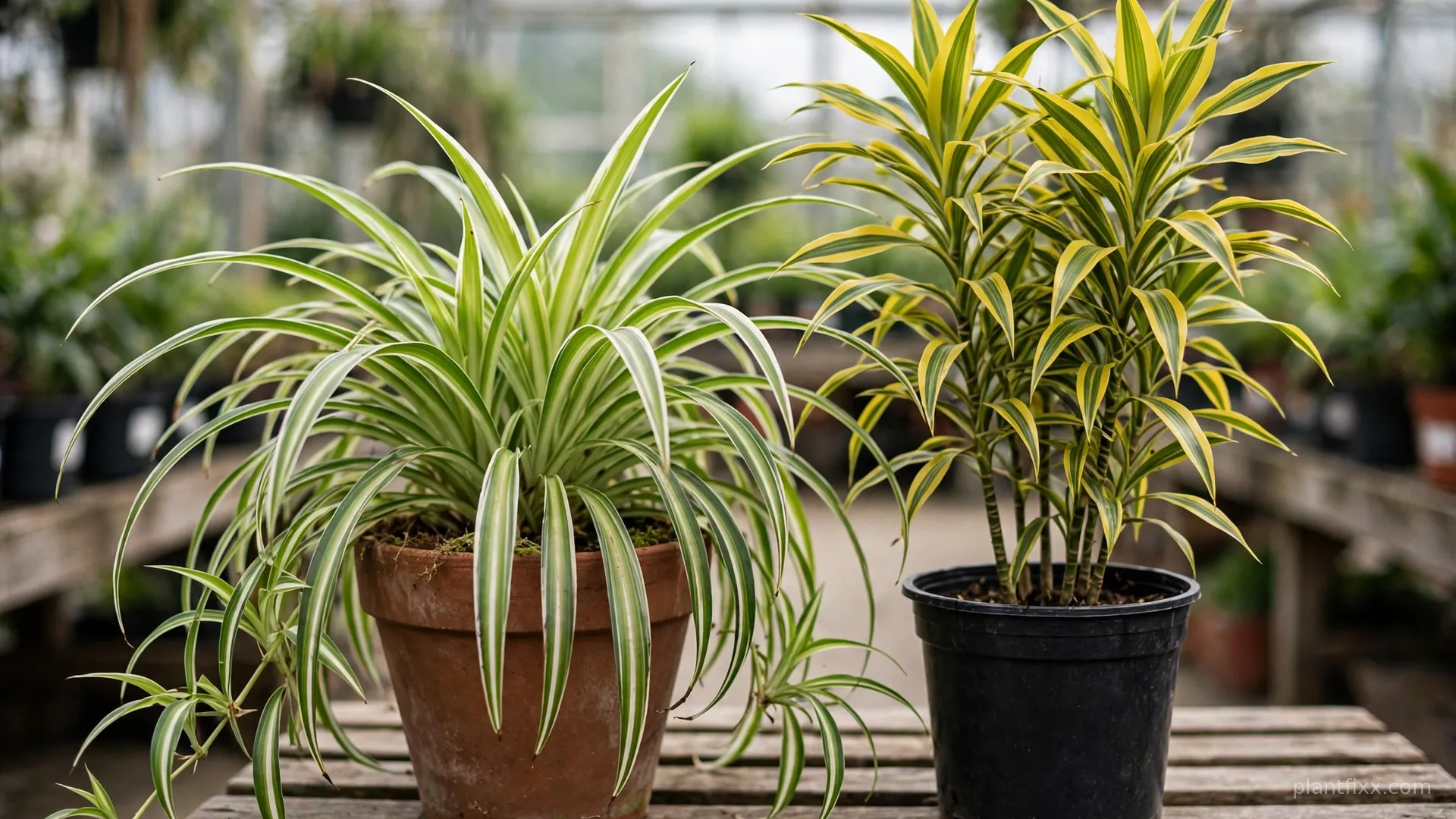
Before you assume any striped, grassy plant is a spider plant, check the exact species on the ASPCA toxic and non-toxic plant database. If your plant came unlabeled, that five-minute check is worth more than any article. When in doubt, keep it out of reach until you are sure.
How to pet-proof a spider plant in a small home
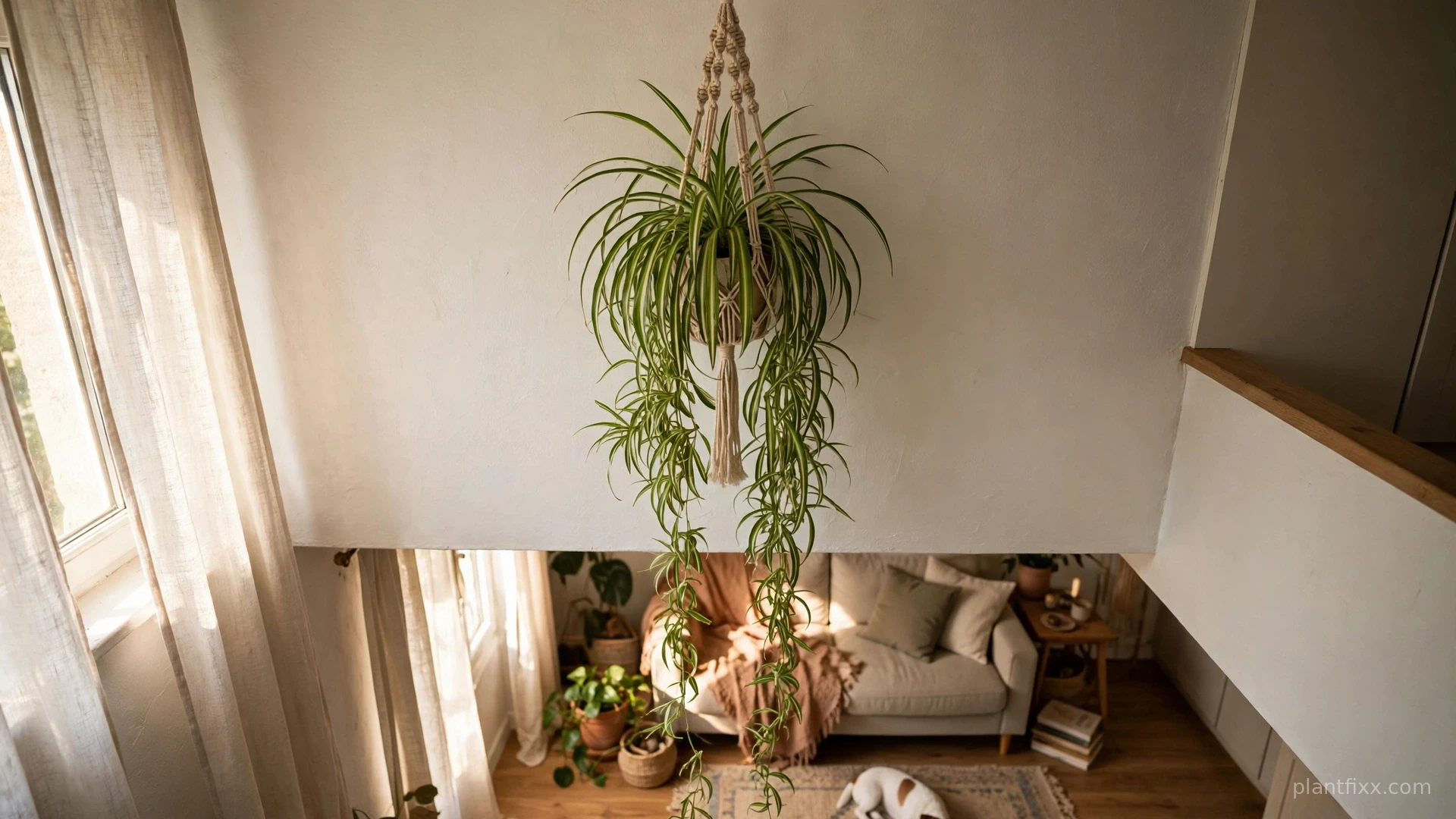
You do not need to give up the plant. Make chewing inconvenient and offer something better. In a small apartment, where every surface is within cat range, that takes planning.
Height is the only fix that works on determined cats. Hang it so the lowest leaves sit well above reach, and measure from the nearest furniture, not the floor, because cats jump. Wall-mounted planters beat hanging baskets, because swinging leaves tempt cats even more.
Cover the soil with a layer of pebbles or decorative stones. This stops diggers and discourages cats that treat the pot as a litter box. Use stones too large to swallow.
Give your cat a legal alternative. A small pot of cat grass, usually wheat or oat grass, satisfies the same chewing urge and is completely safe. Place it near the plant. Most cats switch within days once the alternative is easier to reach.
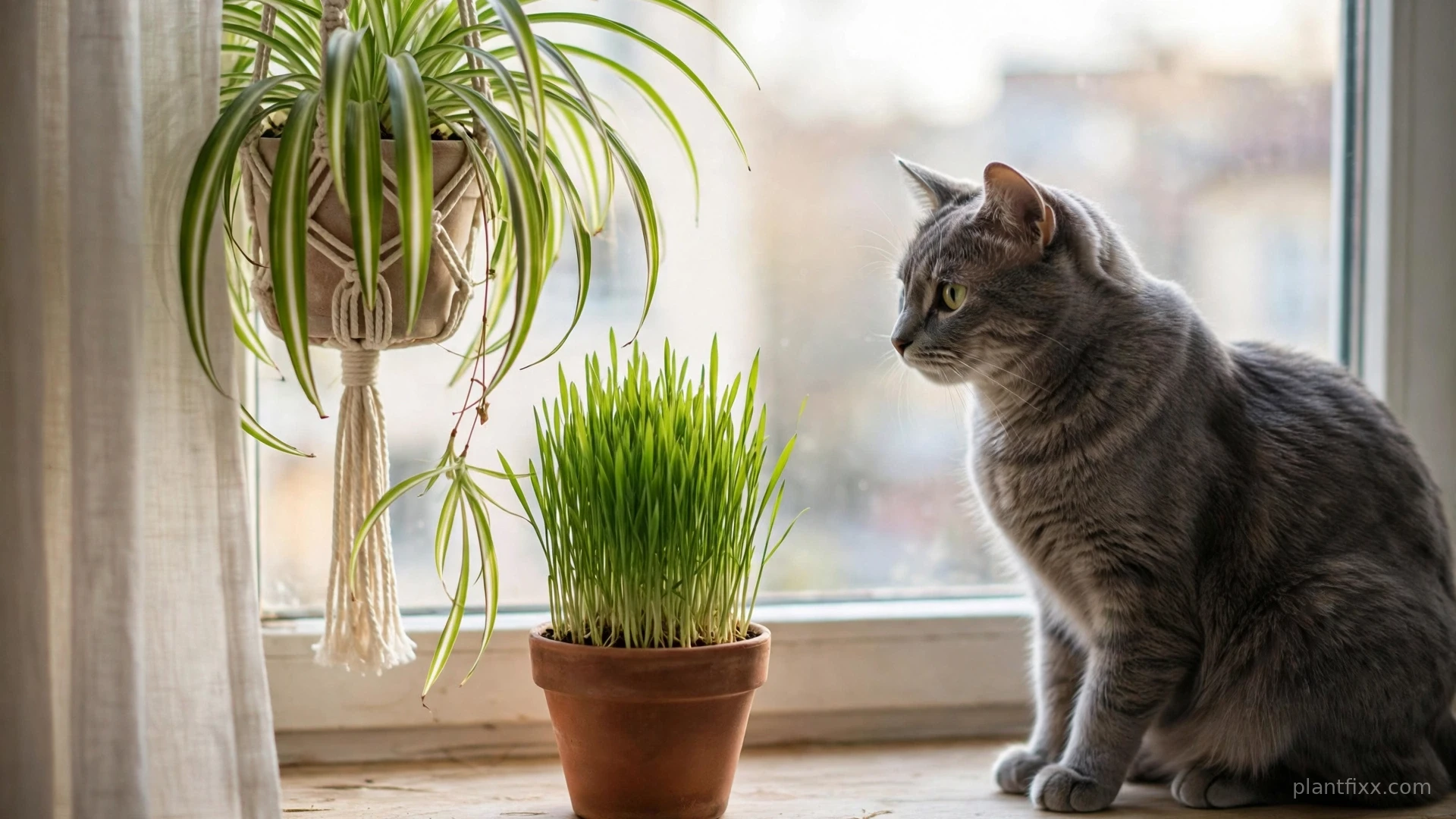
For mild chewers, a bitter apple or citrus deterrent sprayed on the leaves once a week works. Reapply after watering or misting, because the scent fades. For heavy chewers, skip the spray and go straight to height.
A healthy spider plant also recovers from nibbling damage faster, so keep up with basic care. Our spider plant care guide covers light, watering, and the brown-tip problem most owners run into. And before you bring any new plant home, run it through the Pet Safe Plant Checker to confirm it is safe for your cats and dogs.
FAQs
Are spider plants toxic to cats?
No. The ASPCA lists spider plants as non-toxic to cats. Heavy chewing can cause mild vomiting or diarrhea, but there is no poisoning risk.
Are spider plants toxic to dogs?
No. Spider plants hold the same non-toxic status for dogs. Most dogs show little interest in them beyond an occasional nibble.
Why does my cat keep eating my spider plant?
Many cats react to spider plants a little like catnip, becoming playful or zoned out after chewing, though this effect is anecdotal and not proven. The swaying leaves also trigger prey interest. Offering cat grass usually redirects the habit.
Will a spider plant hurt my cat if she eats a whole leaf?
Very unlikely. Expect at most vomiting or soft stool that passes within a day. Watch for 24 hours and call your vet if symptoms persist or you see blood, swelling, or lethargy.
Are spider plant babies (plantlets) safe for cats?
Yes. The dangling plantlets are the same plant with the same non-toxic status. They are also the part cats find hardest to resist, so they are the first thing to move out of reach.
How do I stop my cat from chewing my spider plant?
Hang it above jumping reach, cover the soil with pebbles, and put a pot of cat grass nearby as an alternative. Bitter deterrent sprays help mild chewers, but height is the only reliable fix for determined ones.
Is Chlorophytum comosum the same as a spider plant?
Yes, that is the botanical name for the common spider plant. Use it to verify nursery labels, because several toxic lookalikes like dracaena varieties are sometimes sold under vague “spider plant” style names.
The bottom line for pet owners
Spider plants earn their reputation as the pet-friendly houseplant: non-toxic to cats and dogs, forgiving to grow, and cheap to replace if a determined chewer wins a round.
Your side of the deal is management, not worry: confirm it is really a spider plant, keep it where paws cannot reach, and give your cat something safe to chew.
If pet safety is your deciding factor for every plant you buy, bookmark the Pet Safe Plant Checker and check each new plant before it comes home. And if you are deciding between pet-safe options, our ZZ plant vs spider plant comparison shows why only one of those two belongs in a house with curious pets.
Pingback: Is a Pothos Plant Toxic to Cats and Dogs? Symptoms First
Pingback: Spider Plant Care Guide: Full 2026 Guide
Pingback: Is Peace Lily Plant Toxic to Cats? Symptoms and First Aid
Pingback: Pet Safe Hanging Indoor Plants for Cat Owners: 5 Picks
Pingback: 10 Pet Safe Indoor Plants for Cats and Dogs (2026 Guide)