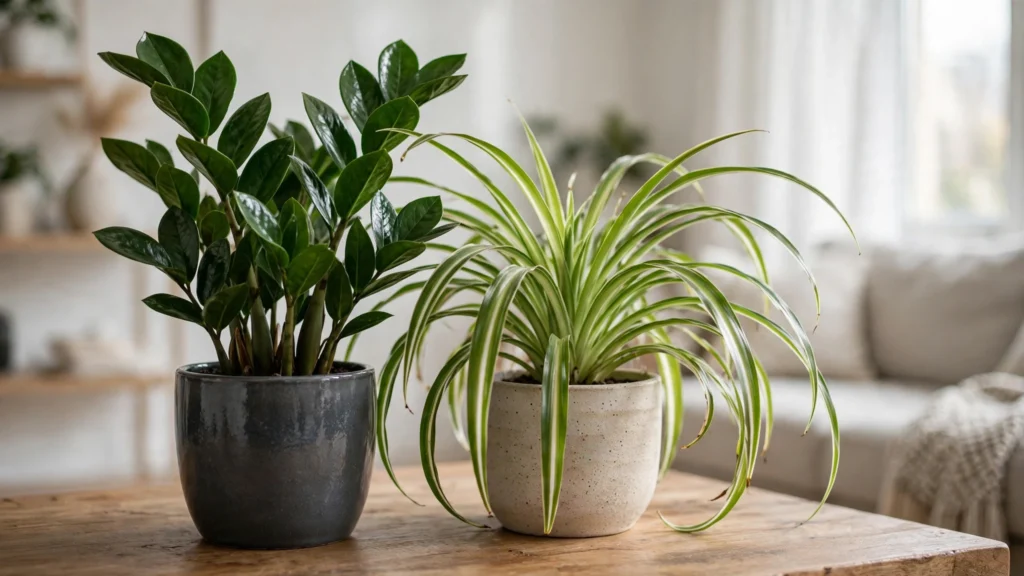
In any plant shop you will see them side by side. The ZZ plant stands glossy and still. The spider plant arcs and trails, already throwing out babies before you pay. Both wear the beginner friendly label, and both are cheap. The choice looks easy. It is not.
The real question in this zz plant vs spider plant comparison: which plant forgives your habits? Do you forget to water for weeks, or keep a cat that chews leaves? Want a corner filled fast, or a plant that stays put for years? Read on, then pick once.
Quick Answer: Pick the spider plant if you have pets or want fast growth. Pick the ZZ plant if you want one that survives dark corners and weeks without water. The ASPCA lists spider plants as non-toxic to cats and dogs, while ZZ plants hold calcium oxalate crystals that irritate mouths and stomachs. Both suit beginners. Pick by habits.
Quick Take: The spider plant wins on pet safety, propagation, and speed. It grows fast, makes free baby plants, and will not harm your cat. The ZZ plant wins on neglect tolerance and dark rooms. Its rhizomes store water and energy, so it survives forgotten watering and dim light. One question decides it: do you need a plant that survives you, or one that grows with you?
Both are labeled easy, yet they fail in opposite ways. ZZ plants die from too much care, watered like thirstier plants until the rhizomes rot. Spider plants fail in the wrong spot, with brown tips and pale leaves in dark corners or with harsh tap water. Each section below tells you which failure mode you are signing up for.
ZZ Plant vs Spider Plant at a Glance
| ZZ Plant | Spider Plant | |
|---|---|---|
| Botanical name | Zamioculcas zamiifolia | Chlorophytum comosum |
| Light | Low to bright indirect, handles dim corners | Bright indirect best, tolerates medium |
| Water | Every 2 to 3 weeks, stores water in rhizomes | Weekly, keep lightly moist |
| Growth speed | Slow, stays put for years | Fast, fills pots in a season |
| Pet safety | Toxic, calcium oxalate crystals | Non-toxic to cats and dogs (ASPCA) |
| Propagation | Division or cuttings, takes months | Snip plantlets, roots in days |
| Repotting | Rarely, every 2 to 3 years | Often, can outgrow a pot yearly |
| Best for | Forgetful owners, dark rooms | Pet owners, fast results, hanging baskets |
How They Handle Light
The ZZ plant evolved in dry East Africa, and its thick rhizomes store water and energy. That is why it keeps glossy leaves in a dim hallway or north facing room. It will not grow fast there, but it will not punish you either. Bright indirect light brings faster growth. Direct sun scorches leaves, so keep it a few feet from harsh windows.
The spider plant is pickier, and this is the first real trade off. It tolerates medium light but wants bright indirect light to stay compact and striped. In a dark corner it survives while slowly losing the variegation you paid for. One good window belongs to the spider plant. A dim corner belongs to the ZZ plant. More on placement in our spider plant care guide.
Watering Is Where They Split
ZZ plants store water in underground rhizomes, so they survive weeks of neglect. Water every 2 to 3 weeks in warm months, less in winter, only when soil is fully dry. The number one killer is a caring owner watering on a schedule meant for other plants. Yellow leaves and soft stems mean rot has started. When in doubt, wait. A thirsty ZZ plant curls its leaves inward, a far gentler warning than rot. See our full schedule for how often to water a ZZ plant.
Spider plants have no such storage. They like lightly moist soil, so water about once a week when the top inch feels dry. They forgive an occasional miss, but repeated drought brings brown tips and dull leaves. Travel often or forget? Pick the ZZ plant. Enjoy a weekly routine and want visible feedback? The spider plant responds faster.
Growth Speed and What It Costs You
A healthy spider plant fills its pot within a growing season and starts hanging plantlets over the edge. That looks wonderful in a hanging basket and messy on a shelf. Fast growth means yearly repotting and trimming plantlets to hold its shape. Want visible change month to month? This is your plant. Want one you can ignore? The speed becomes a chore.
The ZZ plant pushes up a few new stems a year and can sit in the same pot for 2 to 3 years. It will not fill an empty corner quickly, so buy the size you want. But that slowness is why offices love it. It looks the same in January as in June.
Pets and Safety: The Deciding Factor
For pet owners, this section decides it. The spider plant (Chlorophytum comosum) is classified as non-toxic to cats and dogs by the ASPCA, making it one of the safest houseplants. Cats love the dangling leaves. Heavy chewing can cause mild stomach upset, but there is no poisoning risk. (Source: ASPCA classification of Chlorophytum comosum as non-toxic to dogs and cats)
The ZZ plant is mildly to moderately toxic. All parts hold calcium oxalate crystals, which irritate the mouth, throat, and skin, and can cause drooling and vomiting in pets. It can irritate skin during pruning too, so wash hands after handling cut stems. With pets, keep it on a high shelf or in a pet-free room. If your cat chews plants, do not bring one within reach. (Source: ZZ plant toxicity and calcium oxalate content)
Propagation: Free Plants in Weeks vs Months of Patience
The spider plant is the most generous propagator among common houseplants. A mature plant sends out stems tipped with baby plantlets carrying tiny root nubs. Snip one off, set it in water or moist soil, and it roots within days to weeks. One spider plant becomes five within a year. Our guide to spider plant pups shows the steps.
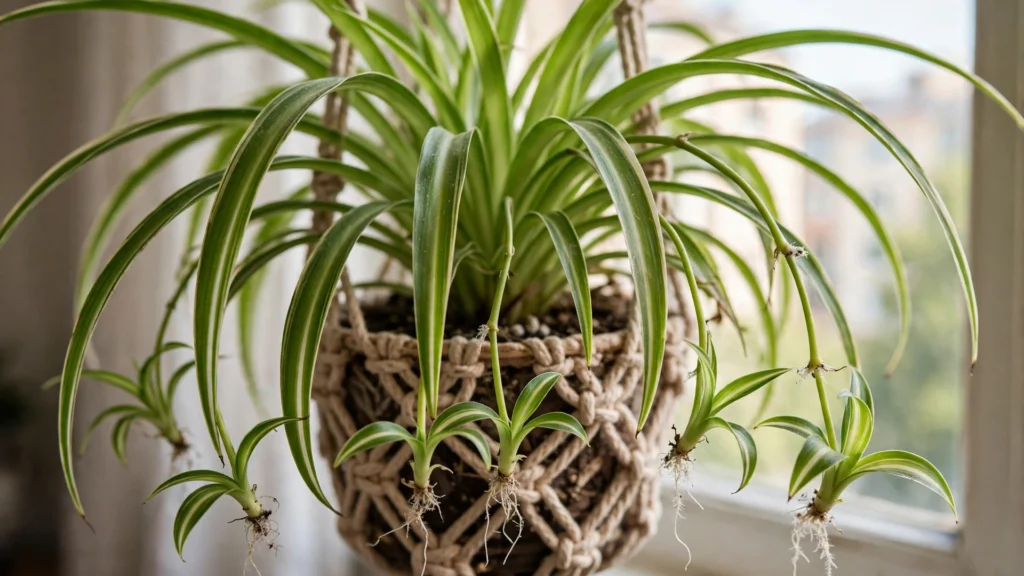
ZZ plants propagate by division or leaf cuttings, and both test patience. A leaf cutting can take months just to form a rhizome, and a year or more to look like a real plant. If free plants excite you, the spider plant wins by a mile.
Everyday Problems and Honest Fixes
Spider plants complain with brown leaf tips. Usual causes are fluoride or chlorine in tap water, low humidity, or dry soil. Switch to filtered or rested water, trim the brown tips, and new growth comes in clean. Wipe leaves occasionally to stop spider mites in very dry air. These are cosmetic, and the plant grows through them.
ZZ plants fail silently from overwatering. The rhizomes hold so much water that the plant looks fine while rot spreads underground. By the time stems turn mushy, it is surgery. Prevention is everything: chunky fast draining soil, a drainage hole, and watering only when soil is fully dry. Our ZZ plant care guide covers the routine.
Which One for a Small Apartment?
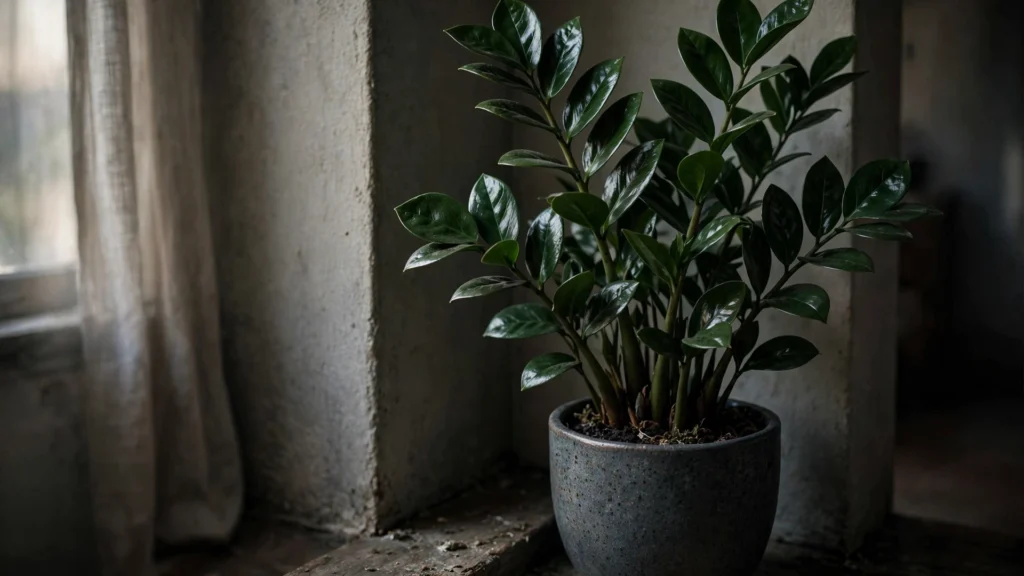
The ZZ plant is the small apartment specialist. It fits on the floor in a dim corner or on a bookshelf away from windows, and its upright shape takes little floor space. It suits the apartment where the only good light is already taken.
The spider plant wants that good light and earns it by looking better there than the ZZ plant ever could. It shines in hanging baskets, which use the vertical space small apartments have. A hanging spider plant in front of a bright window fills empty air with movement a still ZZ plant cannot match.
Final Verdict: Pick by Your Life, Not the Hype
No overall winner, only a winner for your situation. Pick the spider plant if you have pets that chew, want fast growth, enjoy free plants, or have a bright window. It asks for weekly watering and decent light, and pays back quickly.
Pick the ZZ plant if you forget to water, travel often, have dim corners, or want a plant that never needs fussing. It asks for almost nothing except dry soil between waterings. Many people keep both, with the ZZ plant in the dark corner and the spider plant in the window. Still torn? See our snake plant vs ZZ plant comparison.
Is a ZZ plant or spider plant better for beginners?
Both suit different beginners. The spider plant suits those who want fast feedback and enjoy a routine. The ZZ plant suits those who want a plant that survives neglect.
Which is better for low light, ZZ plant or spider plant?
The ZZ plant, clearly. Its rhizomes store water and energy, so it stays healthy in dim corners where a spider plant loses variegation.
Are ZZ plants safe for cats and dogs?
No. ZZ plants hold calcium oxalate crystals that irritate the mouth and stomach if chewed. The spider plant is the safe alternative, listed as non-toxic to cats and dogs by the ASPCA.
Which grows faster, ZZ plant or spider plant?
The spider plant, by far. It fills a pot in one season and makes plantlets continuously. The ZZ plant adds a few stems a year and can stay in one pot for 2 to 3 years.
Can I keep a ZZ plant and a spider plant together?
Yes, in the same room but not the same pot. The ZZ plant wants dry soil between waterings, while the spider plant likes light moisture.
Which is better for offices, ZZ plant or spider plant?
The ZZ plant suits most offices. It survives weekends without water and tolerates dim light. The spider plant fits offices with good natural light and weekly watering.
Conclusion
The ZZ plant and the spider plant earned their reputations for opposite reasons. One survives your worst habits, the other rewards your best ones. Pets and bright windows point to the spider plant, dark corners and forgotten waterings to the ZZ plant. Either way you get a plant that asks little and gives a lot. Picked the spider plant? Start with our spider plant care guide.