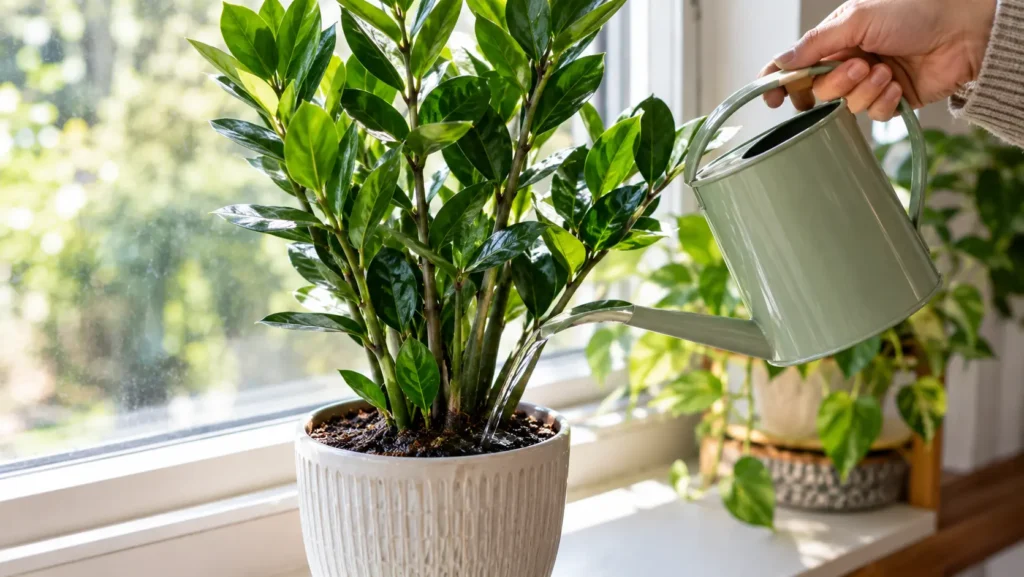
How often to water ZZ plant depends less on a fixed number of days and more on two variables: how much light it gets and what season it is. A ZZ plant near a bright window in summer dries out far faster than the same plant in a dim winter corner, which is why a single blanket schedule rarely works for long.
This guide breaks down watering frequency by light level and season, gives you a simple soil check to confirm timing, and shows you how pot type changes the pace as well.
Use the ranges here as a starting point, then let the soil itself guide the exact timing for your specific plant.
Quick Answer
Water a ZZ plant after the potting mix has dried, checking below the surface rather than following a fixed number of days. Bright light, warm rooms and small pots can shorten the interval; low light, cool rooms and larger pots can lengthen it. Seasonal ranges are estimates, not watering deadlines.
Quick Take
A ZZ plant’s watering needs shift with two factors working together: light drives how fast the plant photosynthesizes and loses moisture, and season determines whether the plant is actively growing or resting. Bright light and warm temperatures in spring and summer speed up water use, while low light and cool temperatures in fall and winter slow it down considerably. Checking the soil before every watering, rather than counting days, is what keeps you accurate across both variables at once.
One mistake many owners make is watering on the same schedule year-round regardless of how the light in their apartment changes with the seasons. In practice, a plant that needed water every 2 weeks in summer near a bright window may not need it again for over a month once winter arrives and daylight hours shrink.
How Light Affects Watering Frequency
Brighter light speeds up photosynthesis, which increases how much water the plant uses and how quickly the soil dries out. A ZZ plant in bright indirect light, close to an east or south-facing window, typically needs water every 2 to 3 weeks.
In medium light, further from a window or in a room with partial obstruction, watering stretches to roughly every 3 to 4 weeks. In low light, such as a north-facing room or a spot several feet from any window, the plant’s reduced metabolic rate slows water use significantly, often extending the interval to 5 to 6 weeks or longer.
How Season Affects Watering Frequency
Spring and summer make up the ZZ plant’s active growing period, when warmer temperatures and longer daylight hours increase both photosynthesis and soil evaporation. Watering every 2 to 3 weeks is typical during this stretch, depending on light level.
Fall and winter bring a natural slowdown. Cooler temperatures and shorter days reduce the plant’s water use considerably, and watering every 4 to 6 weeks, sometimes longer, is common during this period. Continuing a summer schedule into winter is one of the most frequent causes of overwatering in ZZ plants.
Watering Frequency by Light and Season
| Light Level | Spring/Summer | Fall/Winter |
|---|---|---|
| Bright indirect | Every 2-3 weeks | Every 4-5 weeks |
| Medium indirect | Every 3-4 weeks | Every 5-6 weeks |
| Low light | Every 4-6 weeks | Every 6-8 weeks |
How Pot Type Changes the Schedule
Pot material affects how quickly soil dries, independent of light or season. Terracotta pots are porous and allow moisture to evaporate through the sides as well as the surface, which dries the soil noticeably faster than a plastic or ceramic pot holding the same plant. Learn how the right ZZ plant soil mix changes your watering rhythm.
A ZZ plant in a terracotta pot may need water a week or so sooner than the same plant in a glazed ceramic or plastic pot under identical light conditions. Factor this in alongside light and season rather than treating pot type as a separate variable.
The Soil Check (More Reliable Than Any Schedule)
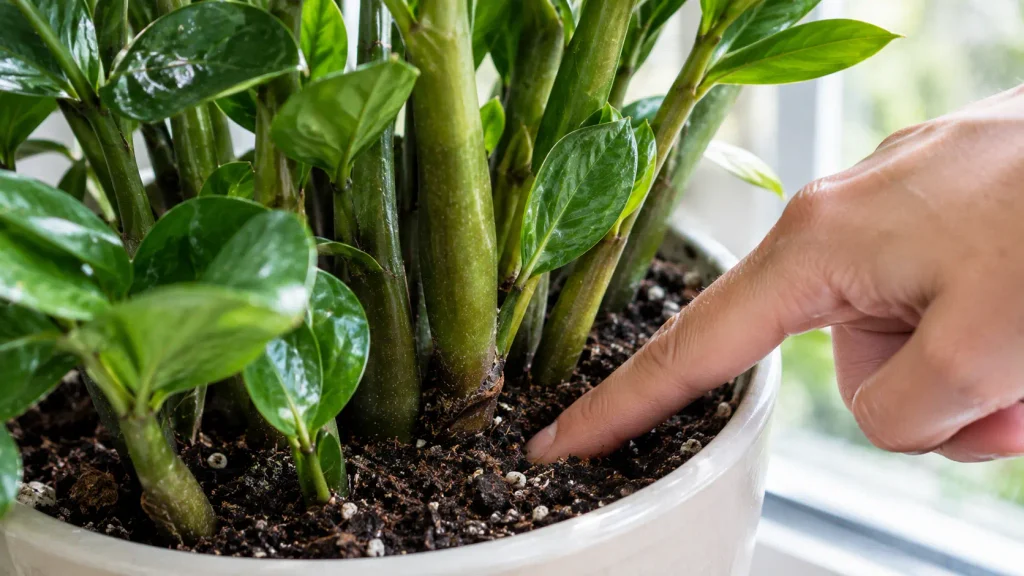
Push your finger 2 to 3 inches into the soil before every watering. If it feels dry at that depth, water thoroughly until it runs from the drainage holes, then let the pot drain completely. If it still feels even slightly moist, wait and check again in a few days.
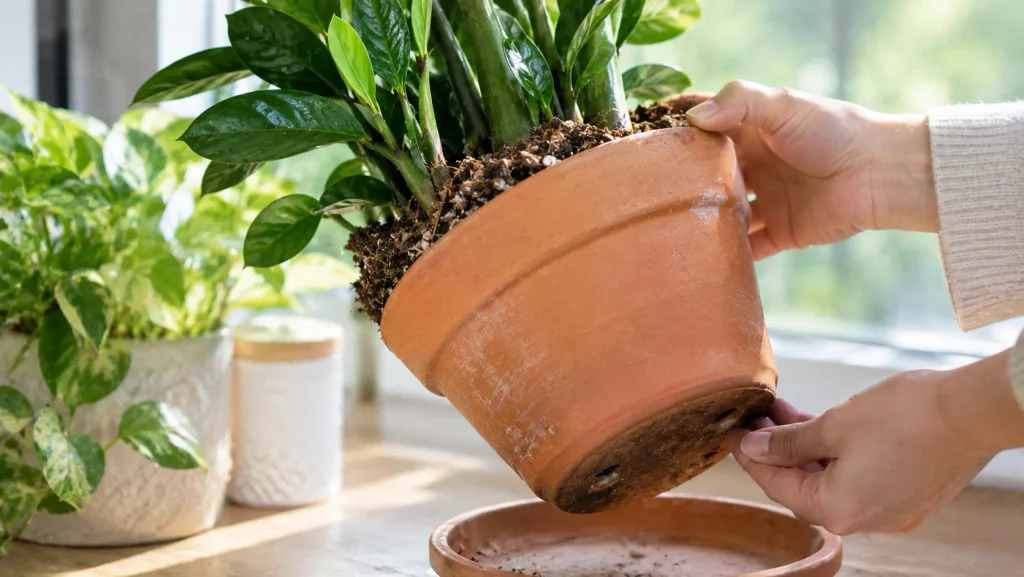
Lifting the pot is a useful secondary check once you know your plant’s typical weight. A pot with dry soil feels noticeably lighter than one that is still holding moisture, which makes it easy to judge without disturbing the soil each time.
Signs Your Schedule Needs Adjusting
Leaves that feel thin, wrinkled, or slightly limp between waterings suggest the current interval is too long for the plant’s light and season. Soil that still feels damp a full week after your last watering suggests the opposite, and the interval should be extended.
Yellowing leaves combined with soil that has stayed wet for more than a week points toward overwatering rather than a normal seasonal adjustment. If you’re seeing this pattern along with soft stems, it’s worth checking the rhizomes directly, since this typically signals the early stages of root rot rather than a simple timing issue.
Watering Method
Water slowly and evenly across the soil surface until it flows freely from the drainage holes, which ensures moisture reaches the full root and rhizome system rather than just the top layer. Empty any water that collects in the saucer within 30 minutes, since standing water around the base keeps the rhizomes wet long after the top soil has dried.
Room-temperature water is gentler on the roots than cold water straight from the tap. For the full soil mix and pot requirements that support proper drainage between waterings, see the ZZ plant care guide.
FAQs
How do I know if my ZZ plant needs water right now?
Check the soil 2 to 3 inches deep with your finger. If it feels completely dry, water thoroughly, and if it still feels moist, wait a few more days before checking again.
Should I water my ZZ plant more in a brighter room?
Yes, brighter light increases photosynthesis and water use, so a ZZ plant near a bright window typically needs water every 2 to 3 weeks compared to 4 to 6 weeks in low light.
Does a ZZ plant need less water in winter?
Yes, cooler temperatures and shorter days slow the plant’s growth and water use considerably, often stretching the watering interval to every 4 to 6 weeks or longer.
Can I water my ZZ plant on a fixed weekly schedule?
A fixed weekly schedule usually leads to overwatering, since ZZ plants need considerably less frequent watering than most houseplants. Checking the soil before each watering gives a far more accurate result.
Does pot size affect how often I should water my ZZ plant?
Yes, a larger pot holds more soil and retains moisture longer than a smaller one with the same plant, which can extend the interval between waterings. Always confirm with a soil check rather than assuming based on pot size alone.
What happens if I underwater my ZZ plant?
A ZZ plant tolerates underwatering far better than overwatering, thanks to the water stored in its rhizomes. Leaves may look slightly limp or wrinkled, but the plant typically recovers fully once watering resumes.
Conclusion
How often to water a ZZ plant comes down to combining light level and season rather than following one fixed number. Expect every 2 to 3 weeks in bright light during spring and summer, and every 4 to 6 weeks in low light or during fall and winter, always confirmed with a soil check before watering. Adjusting for these two factors, rather than watering on autopilot, is what keeps this plant healthy year-round. That drought tolerance is also one of the reasons this plant is so popular. See the full picture in our guide to zz plant benefits at home.
Sources and further reading
For species-level growing conditions, see the NC State Extension Plant Toolbox. Match that guidance to the light, pot and drying conditions in your home.
Pingback: ZZ Plant Overwatering & Root Rot: Signs and Rescue
Pingback: Best Low-Light Spots for ZZ Plant in Apartments
Pingback: ZZ Plant Pests: 6 Common Pests & How to Kill Them (2026)
Pingback: 9 ZZ Plant Beginner Mistakes to Avoid (Easy Fixes 2026)
Pingback: ZZ Plant vs Spider Plant: Which Is Better for Your Home?
Pingback: Raven ZZ Plant vs Regular ZZ Plant: 7 Key Real Differences
Pingback: ZZ Plant vs Money Plant: Pick the Right One for Your Home
Pingback: ZZ Plant Underwatering: Signs, Causes and How to Revive It
Pingback: ZZ Plant Light Requirements, Soil Mix & Fertilizer Guide
Pingback: ZZ Plant Benefits at Home: Real Perks and Honest Downsides
Pingback: Best Soil for ZZ Plant: 3 Exact Mix Recipes That Prevent Rot