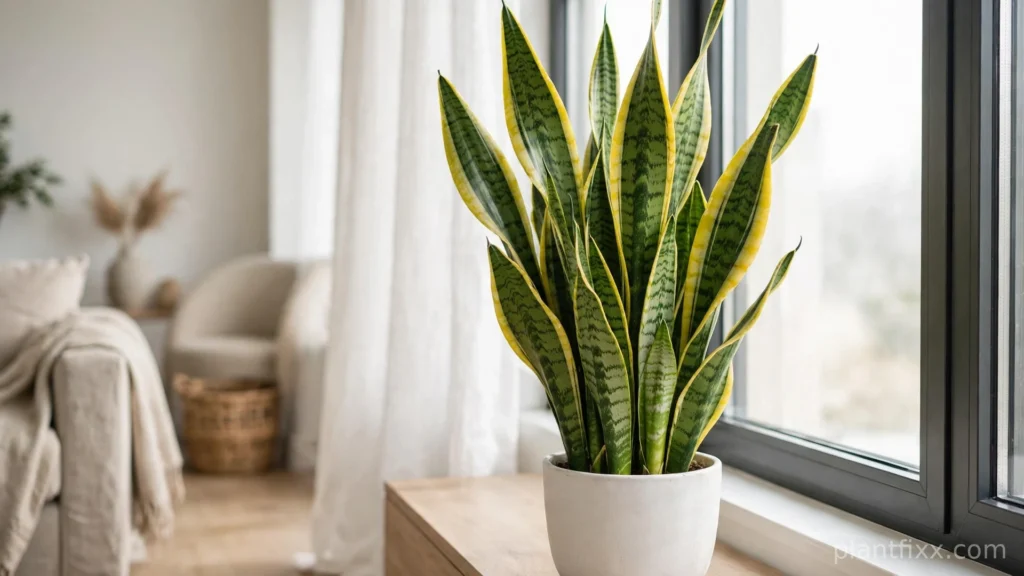
Plant shops give two opposite pieces of advice about the snake plant. One person calls it a tropical plant that loves moisture. Another says it is basically a succulent that wants to be left alone.
So where does snake plant humidity really need to land? Your living room is almost certainly fine already. But the details are worth knowing, because humidity causes more snake plant trouble than most people realize, just not in the way they expect. This guide covers the ideal range, the signs your air is too dry or too humid, and safe fixes for both. No humidifier required.
Snake plants do best at 40 to 60 percent relative humidity, the range most homes already sit in. They handle dry air far better than damp, stagnant air. Above 70 percent with poor airflow, soil stays wet and roots can rot. Skip misting and humidifiers. Give the plant airflow and gritty, well-draining soil instead.
Think of humidity as background noise for a snake plant, not the main event. Watering, light, and drainage decide whether it thrives. If your home feels comfortable to you, the humidity is almost certainly fine. Problems only start at the extremes. Dry air near a winter heater can crisp the leaf tips, and a steamy, still bathroom can keep soil wet for weeks. Both are fixable without special equipment. The one rule that beats every gadget: let the soil dry fully between waterings, and let the air in your room set how long that takes.
One mistake many people make is treating a snake plant like a tropical plant. The advice that saves calatheas and ferns, mist daily, run a humidifier, keep the air moist, is exactly what rots a snake plant’s thick rhizomes. I have seen more snake plants decline in humid, unventilated bathrooms than in dry, heated apartments.
Why Humidity Affects a Snake Plant
A snake plant’s thick leaves are water tanks. The plant stores moisture in its leaves and underground rhizomes, which is why it survives weeks of neglect. It loses water slowly, opening its leaf pores mostly at night, so it never drinks from the air the way a fern does.
Humidity does not feed a snake plant. It changes how fast water leaves the soil. In humid, still air, evaporation slows and the soil can stay damp for weeks after one watering. Wet soil plus no airflow invites root rot and fungal problems.
Snake plants are native to the arid regions of West Africa, where the air is dry and rainfall is infrequent. They evolved to handle dry air with ease. Constant dampness is the unfamiliar condition, not dryness.
The Ideal Humidity Range for Snake Plants
Most homes sit between 30 and 50 percent relative humidity, and snake plants are comfortable across that band. The sweet spot is 40 to 60 percent. Plant retailer BWH Plant Co. notes this is roughly the average of our homes, which is why these plants thrive indoors with no humidity equipment. GrowCycle adds that the snake plant has no special humidity requirements and does well in both arid and humid environments.
How the zones play out in practice:
| Humidity level | What your snake plant does | What you should do |
|---|---|---|
| Below 30% | Copes well; tips may brown near heaters | Keep it away from heat vents; wipe leaves now and then |
| 40-60% | Ideal range; normal healthy growth | Change nothing |
| 60-70% | Fine as long as air moves | Space plants out; keep the soil extra gritty |
| Above 70% | Soil stays wet; rot and fungus risk rises | Improve airflow; water much less often |
You do not need to measure this precisely. A cheap hygrometer only helps if you suspect an extreme, like a constantly steamy bathroom or a room with the heater blasting all winter.
Signs the Air Is Too Dry
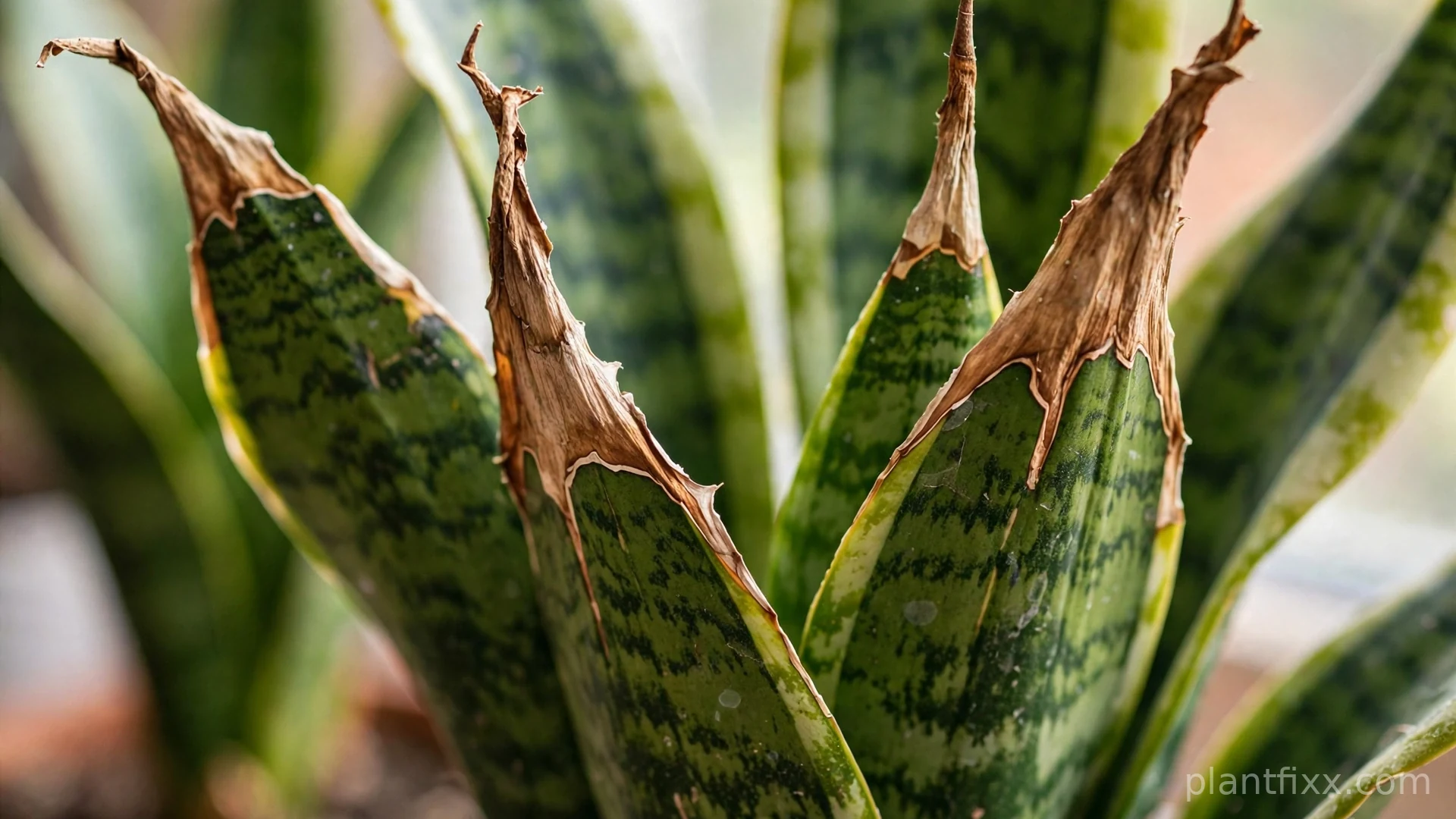
Very dry air rarely kills a snake plant, but it leaves marks. Watch for brown, crispy leaf tips, especially on leaves near a radiator or heating vent. Leaves may also look slightly wrinkled or papery, as if the plant is thirsty even though you watered recently.
Before blaming the air, rule out underwatering, which causes the same wrinkled look. If the soil is watered and tips still crisp, dry air near a heat source is the likely cause, most often in winter when heating drops humidity sharply. Our snake plant winter care guide covers the full seasonal adjustment, and snake plant leaves wrinkled helps you tell dry air apart from a watering problem.
Signs the Air Is Too Humid
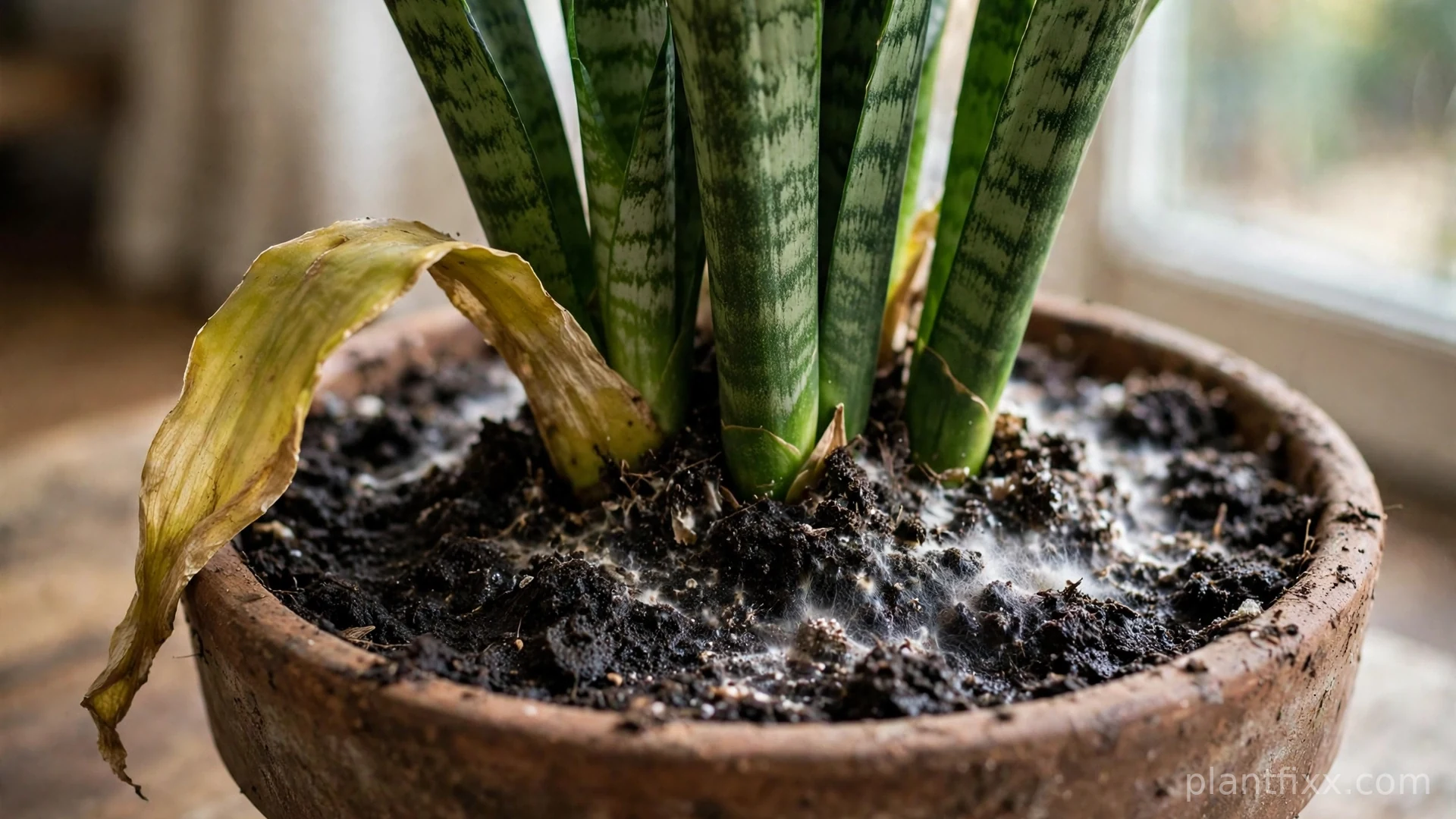
Too much humidity is the more dangerous direction. Watch for soil that stays damp two or more weeks after watering, lower leaves turning yellow and soft at the base, white mold or a fuzzy film on the soil surface, a musty smell when you check the soil, and small dark fungal spots on the leaves.
If you see these, check whether the pot has drainage holes and whether the soil is heavy and moisture-retentive. Humid air plus dense soil is the combination that kills. Stagnant, humid corners also attract pests, so inspect the leaf bases. Mealybugs love these conditions; see our snake plant mealybugs guide. Fungal spots are covered in snake plant white spots.
How to Raise Humidity the Safe Way
If your air is extremely dry, resist the urge to mist. Daily misting leaves water sitting in the tight crevices where leaves meet the base, and that standing moisture invites fungal problems without meaningfully raising humidity.
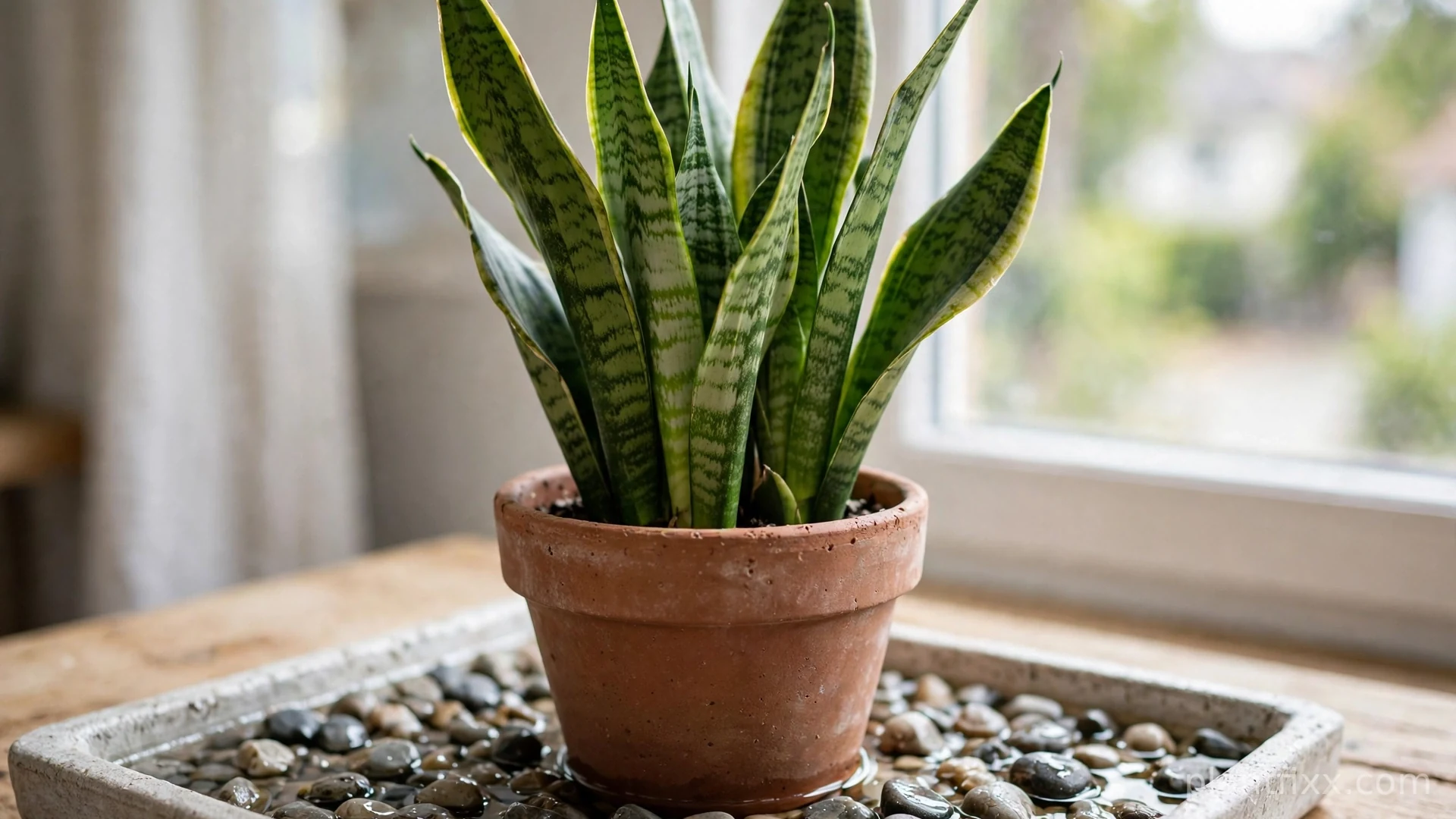
Safer options: group your plants together, since a cluster of leaves creates a slightly more humid microclimate. Or set a shallow tray of pebbles filled with water near the plant, with the pot resting on the pebbles above the waterline, never in the water.
Wiping leaves with a damp cloth every few weeks also helps in dry, dusty rooms, though it removes dust rather than raising humidity.
A snake plant does not need a humidifier. If you run one for other plants, keep the snake plant a few feet away with decent airflow, and cut back on watering while it runs.
How to Lower Humidity Around Your Snake Plant
Lowering humidity is mostly about airflow and soil. Move the air with a small fan on low, an open window, or simply by spacing plants apart, which prevents the still, damp pockets where fungus starts. Switch to a terracotta pot, since unglazed clay wicks moisture so the mix dries faster. Make the soil grittier with a cactus mix plus extra perlite or coarse sand. Water less often: in a humid room, soil may take three to four weeks to dry fully. Bright, indirect light also speeds up evaporation from the soil surface.
Can You Keep a Snake Plant in the Bathroom?
Yes, with two conditions: decent light and ventilation. A bathroom with a window or exhaust fan works well, since snake plants tolerate humidity as long as air moves and soil dries between waterings.
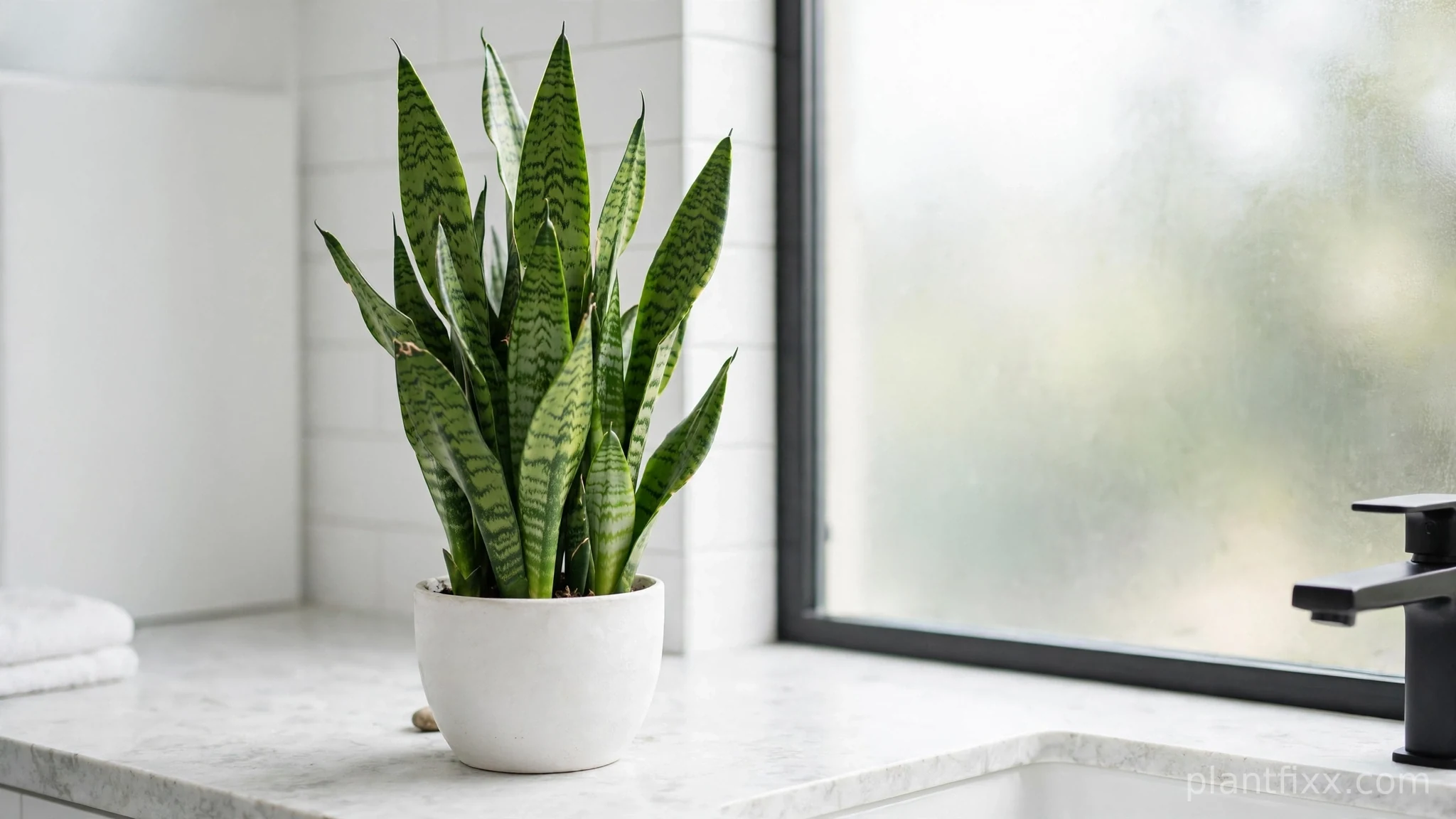
It fails in a windowless, dark, steamy bathroom. Low light plus constant moisture is the worst combination: soil never dries, roots sit wet, and rot follows. With no window and no fan, put the plant somewhere else.
When the setup is right, water less often. Soil in a humid bathroom can stay damp twice as long, so check with your finger or a chopstick before every watering. Wipe white mold off the soil surface and improve airflow at the first sign of it.
Adjust Your Watering to Your Home’s Humidity
The rule that ties it together: humidity does not change how much water your snake plant needs. It changes how fast the soil dries. Match watering to the drying time, not to a calendar.
In a humid summer, stretch your intervals: soil that dried in two weeks in spring may take four in August. In a dry, heated winter, the soil dries faster, but the plant grows slowly and drinks less, so still water less often.
Never water on a schedule. Push your finger two inches into the soil, or slide a wooden chopstick to the bottom of a deep pot. If you feel any coolness or dampness, wait. The plant always forgives a late watering faster than an early one.
For the complete routine beyond humidity, our snake plant care guide covers light, soil, and feeding in one place.
Frequently Asked Questions
Do snake plants like humidity?
Not particularly. They tolerate a wide range, from dry heated rooms to humid bathrooms, but they do not need or prefer high humidity. Average indoor air suits them perfectly.
What is the best humidity level for a snake plant?
40 to 60 percent relative humidity is ideal. They handle 30 percent and lower without real harm, and up to about 70 percent as long as the air circulates and the soil drains well.
Do snake plants need a humidifier?
No. A humidifier is unnecessary for snake plants and can raise rot risk if it keeps the air constantly damp around the plant. Save it for your tropical plants.
Should I mist my snake plant?
No. Misting does not meaningfully help a snake plant and can encourage fungal problems where water collects at the leaf bases. Wipe the leaves with a damp cloth instead.
Can I put my snake plant in the bathroom?
Yes, if the bathroom has decent light and ventilation. Cut back on watering, since the soil dries much more slowly in humid air. Skip windowless, fanless bathrooms.
Can high humidity kill a snake plant?
Indirectly, yes. Sustained humidity above 70 percent with poor airflow keeps the soil wet for too long, which leads to root rot. The humidity itself is not the killer; the constantly wet roots are.
Final Word
Humidity is one of the easiest parts of snake plant care because the answer is almost always to do nothing. Keep it in normal room air with airflow and fast-draining soil, and let the soil dry fully before watering again. Handle the extremes simply, distance from the heater on the dry side, a fan and less water on the humid side, and the plant does the rest. For the full care picture, start with our snake plant care guide.
Pingback: Snake Plant Temperature Tolerance: How Cold Is Too Cold?
Pingback: Snake Plant Care Guide: Water, Light & Mistakes to Avoid