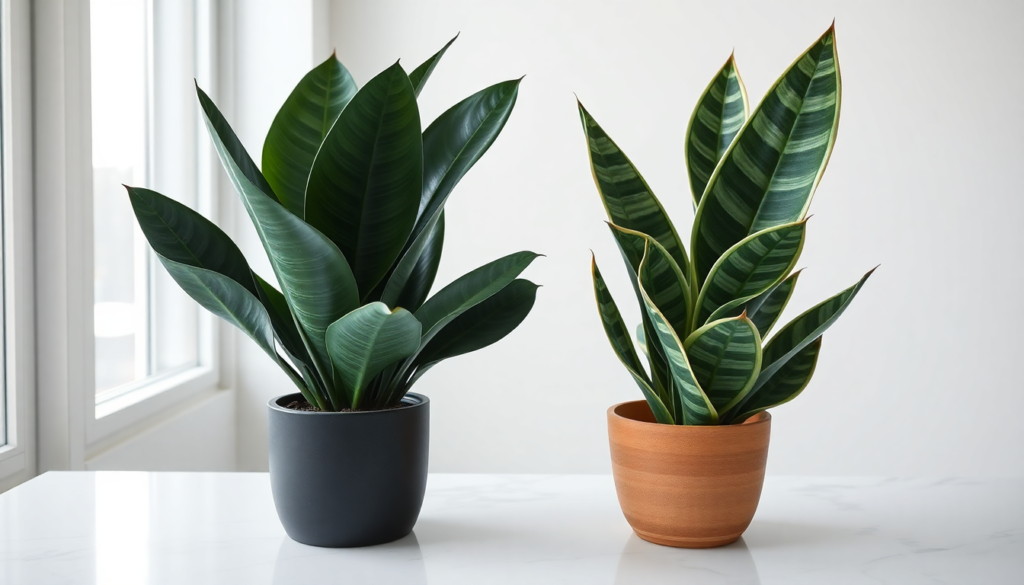
The black coral vs zeylanica debate comes up constantly among snake plant buyers, and for good reason. Both plants look similar at first glance in a nursery, both carry the same low-maintenance reputation, and both are sold under overlapping common names that cause real confusion. Buying the wrong one for your space or lighting situation is an easy mistake to make.
This guide puts black coral vs zeylanica directly side by side across every variable that matters: leaf color, height, light tolerance, growth rate, propagation, and which interior style each variety suits best.
Quick Answer
Black Coral has darker, near-black deep green leaves with faint grey-silver horizontal banding and grows more compactly upright to about 2 to 3 feet. Zeylanica has lighter green leaves with prominent dark green and silver wavy stripes, grows slightly broader and bushier to 2 to 3 feet, and tolerates lower light better. Both need the same basic care.
Quick Take Black Coral (Dracaena trifasciata ‘Black Coral’) and Zeylanica (Dracaena zeylanica) are two distinct snake plant varieties with different leaf color, banding patterns, and growth habits. Black Coral suits modern, dark, or minimalist interiors where drama and contrast are the goal. Zeylanica suits a wider range of interiors and handles lower light slightly better. Both share the same watering, soil, and temperature requirements and are equally low-maintenance for beginners and experienced growers.
What They Actually Are
Before comparing black coral vs zeylanica, it helps to know what each plant actually is botanically, because the nursery industry mislabels both regularly.
Black Coral, also known as Black Robusta, is a cultivar of Dracaena trifasciata (formerly Sansevieria trifasciata). It produces deep, dark green leaves with wavy horizontal bands of lighter green. Despite its name suggesting near-black coloring, the leaves are a very deep, saturated dark green that appears almost black in lower light or against lighter backgrounds.
Zeylanica (Dracaena zeylanica, synonym Sansevieria zeylanica) is a separate species rather than a cultivar of trifasciata. It was first scientifically described in 1799 and is native to Sri Lanka rather than West Africa. Its strong fibrous leaves were traditionally used by indigenous communities to make bowstrings and ropes, which is why it carries the common name Ceylon bowstring hemp.
This species distinction matters practically. Zeylanica is frequently mislabeled in nurseries as a Trifasciata. Without yellow leaf margins to distinguish it from Laurentii, the two look similar at first glance, and zeylanica is often sold simply as a plain green snake plant. When you are shopping and see an unlabeled plain green snake plant with wavy silver-green banding and no yellow edges, it is most likely a Zeylanica.
Full Side-by-Side Comparison
| Feature | Black Coral | Zeylanica |
| Botanical name | Dracaena trifasciata ‘Black Coral’ | Dracaena zeylanica |
| Leaf color | Deep dark green, near-black | Medium green with silver-grey |
| Banding pattern | Faint grey-silver, subtle | Prominent dark and light wavy stripes |
| Leaf width | Medium, upright | Slightly narrower, slightly flared |
| Mature height | 2 to 3 feet | 2 to 3 feet |
| Growth habit | Upright, compact | Slightly broader and bushier |
| Light tolerance | Low to bright indirect | Low to bright indirect |
| Watering frequency | Every 2 to 4 weeks | Every 2 to 4 weeks |
| Propagation | Leaf cuttings, division, pups | Leaf cuttings, division, pups |
| Variegation in cuttings | Not applicable (solid color) | Banding preserved in cuttings |
| Best interior style | Modern, minimalist, dark-toned | Versatile, natural, Scandinavian |
| Pet safe | No | No |
| Price availability | Moderate, widely available | Widely available, often cheaper |
Leaf Color and Visual Difference
This is the most important distinction between black coral vs zeylanica and the one you notice immediately when both plants are side by side.
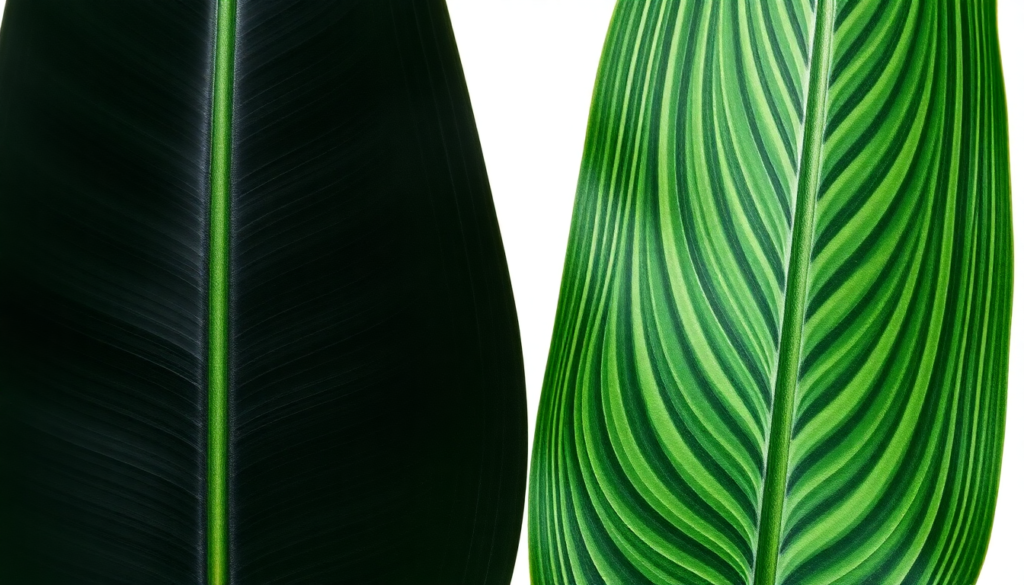
Black Coral displays much darker, near-black foliage color with very faint silver striping. The darkness of the leaf is what makes this variety stand out. In a bright room, the leaves read as very deep forest green. In a dim corner or against a white wall, they read as near-black with barely visible horizontal markings. For deep, luxurious color, Black Coral cannot be beat among commonly available snake plant varieties.
Zeylanica features a lighter green base color with distinct dark green horizontal bands covering the entire leaf. The soft and dark green mottled banding of Zeylanica sets it apart, with an eye-catching zebra-like pattern on long, slightly flared leaves. The contrast between the banding colors is stronger and more visible on Zeylanica than on Black Coral, which makes Zeylanica the more patterned-looking of the two from across a room.
Height, Growth Rate, and Growth Habit
Both black coral and zeylanica reach a similar mature height of 2 to 3 feet indoors under typical conditions, so height alone does not determine which one to buy. The difference lies in the growth habit rather than the final size.
Black Coral tends to be more upright and compact, making it an excellent choice for both modern and traditional decor. Its manageable size makes it a favorite among plant enthusiasts. The leaves grow tightly together in a relatively narrow cluster. This upright, structured habit gives Black Coral an architectural quality that suits tight spaces and corners where a broader plant would feel crowded.
Zeylanica tends to have more leaves creating a bushier plant, though this varies enormously between individual specimens. The slightly broader spread of a mature Zeylanica gives it a fuller, more lush appearance that suits open shelving, floor positions in wider spaces, and rooms where a denser plant silhouette fits the styling.
Black Coral is known for its slow to moderate growth rate, typically taking 5 to 10 years to reach full size. Zeylanica grows at a similar slow to moderate rate. Neither variety is fast-growing under standard indoor conditions, so do not expect dramatic size changes within the first year of ownership.
Light Requirements
Both varieties share the same fundamental light tolerance, which is one of the reasons they are often compared and confused. Both handle low to bright indirect light without decline, and both suffer from the same direct sun exposure problems.
The practical difference is slight. Zeylanica can put up with darker locations better than some other snake plants, and growers who have kept both varieties report that Zeylanica maintains its color and produces new leaves more reliably in genuinely low-light positions compared to Black Coral. Black Coral in very low light tends to look less dramatic since the already-dark leaves lose even more visible contrast in dim conditions.
For bright indirect light positions, both varieties perform equally well. Position either plant within 3 to 6 feet of an east or south-facing window for best results. Neither plant needs direct sunlight and both develop the bleached, pale patches of sun scorch when placed in direct afternoon sun without a curtain.
Care Requirements: Where They Are Identical
One of the most useful facts about black coral vs zeylanica is that their care requirements are completely identical. Once you know how to care for one, you know how to care for the other.
Both need watering only when the top 2 to 3 inches of soil are completely dry, which falls every 2 to 4 weeks in spring and summer and every 5 to 8 weeks in winter. Both need fast-draining soil with at least 30% perlite and a pot with drainage holes. Both prefer temperatures between 60 and 80 degrees Fahrenheit and suffer cold damage below 50 degrees. Both are toxic to cats and dogs. Both benefit from half-strength balanced fertilizer once per month during spring and summer only. Both need repotting every 2 to 3 years.
One mistake many buyers make is assuming the darker, more dramatic-looking Black Coral has different or more demanding care needs. It does not. The visual difference is entirely in the genetics of the leaf pigmentation, not in the plant’s care requirements.
Propagation Differences
Both varieties propagate through leaf cuttings in water or soil, rhizome division, and pup separation. The one practical difference between black coral vs zeylanica in propagation relates to what the new plants look like.
Black Coral is a cultivar of Dracaena trifasciata. Leaf cuttings from Black Coral produce plants that look essentially the same as the parent, since the dark coloring is a stable trait of the cultivar rather than chimeric variegation. Division and pup separation also reliably produce dark-leafed offspring.
Zeylanica, as a true species rather than a chimeric cultivar, also preserves its banding pattern through leaf cuttings. Unlike Laurentii or other chimeric variegated varieties where cuttings revert to solid green, Zeylanica cuttings maintain the horizontal stripe pattern in the new plants they produce. This makes Zeylanica one of the easier snake plant varieties to multiply without losing the visual character that made you buy it.
Which One Should You Buy?
The decision between black coral vs zeylanica comes down to three practical factors: your interior style, your light level, and what visual effect you want the plant to create.
Buy Black Coral if your interior uses dark, moody, or monochromatic color schemes. Black Coral works best in modern, industrial, and minimalist spaces where its near-black leaf color creates a bold focal point without competing with colorful decor. It suits dark-toned pots, concrete surfaces, and white or grey walls where the color contrast is strongest. If you want a snake plant that reads as a dramatic, architectural statement piece, Black Coral is the correct choice.
Buy Zeylanica if your interior is lighter, more natural, or more eclectic in style. Zeylanica’s visible striped patterning shows up well in both bright and mid-lit rooms, and its slightly fuller growth habit suits a wider range of styling contexts. It also performs marginally better in genuinely low-light positions, which makes it the more practical choice for apartments with limited window access. If you want a snake plant that adapts to more spaces and looks good in more conditions, Zeylanica is the correct choice.
If you want both qualities and have space for two plants, they pair extremely well together precisely because their leaf colors contrast. A dark Black Coral beside a lighter Zeylanica creates a visually interesting combination that does not require any additional care management since both plants run on an identical schedule.
Frequently Asked Questions
What is the difference between Black Coral and Zeylanica snake plants? Black Coral is a cultivar of Dracaena trifasciata with very dark, near-black deep green leaves and faint grey-silver horizontal banding. Zeylanica is a separate species, Dracaena zeylanica, with medium green leaves and prominent, clearly visible dark green and silver wavy horizontal stripes. Black Coral grows more compactly upright while Zeylanica tends to be slightly broader and bushier at full maturity.
Is Black Coral or Zeylanica better for low light? Both handle low light well, but Zeylanica performs marginally better in genuinely dim conditions because it maintains its growth and color more reliably in positions far from windows. Black Coral loses visual impact in very low light since its already-dark leaves show even less contrast in dim rooms.
Do Black Coral and Zeylanica need the same care? Yes, completely. Both varieties need the same watering frequency, soil type, pot requirements, temperature range, fertilizer schedule, and repotting timeline. The differences between black coral vs zeylanica are entirely visual, not in care requirements.
Which snake plant variety is easier to find, Black Coral or Zeylanica? Both are widely available at plant nurseries and garden centers. Zeylanica is often cheaper and more commonly stocked as a standard option. Black Coral is available at most larger plant retailers but may cost slightly more due to its striking appearance and popularity in interior design contexts.
Do Zeylanica leaf cuttings preserve the stripe pattern? Yes. Unlike chimeric variegated varieties such as Laurentii where leaf cuttings revert to solid green, Zeylanica cuttings preserve the horizontal banding pattern because the striping is a stable species trait rather than chimeric variegation. Black Coral cuttings also preserve the dark leaf color of the parent plant.