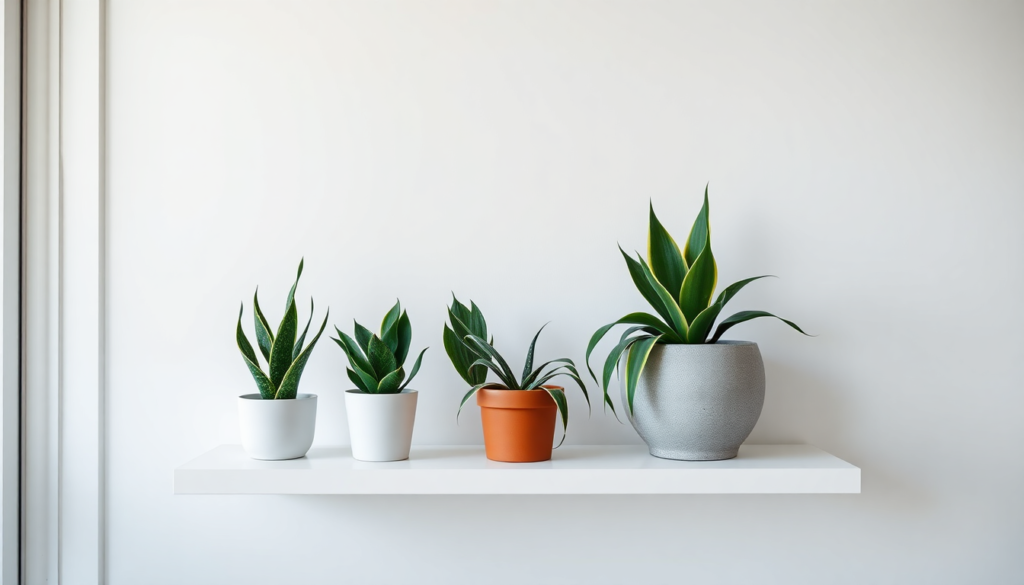
Most snake plant varieties grow 2 to 4 feet tall. That works in a house. In a studio apartment or a small bedroom with limited shelf space, a full-sized Laurentii eventually becomes a floor plant that dominates the room.
The good news: over 70 Dracaena trifasciata varieties exist, and several of them stay naturally small. Not stunted from neglect, but genuinely compact by design. They reach their full mature height at 6 to 15 inches and stop. They fit on windowsills, desk corners, bathroom shelves, and kitchen counters without taking over.
These 9 varieties are the best options for apartment living in 2026.
Quick Answer
The best small snake plant varieties for apartments are Bird’s Nest Hahnii (6 to 10 inches), Twisted Sister (12 to 15 inches), Sansevieria Cleopatra (10 to 12 inches), and Futura Robusta (16 to 20 inches). All stay compact naturally, tolerate low light, need watering every 2 to 4 weeks, and thrive in 4 to 6 inch pots.
Quick Take Small snake plant varieties are ideal for apartment living because they stay compact permanently, require minimal watering, tolerate the low light common in apartments, and handle dry indoor air from heating and air conditioning without complaint. They grow from rhizomes and store water in thick leaves, which means they survive missed waterings and inconsistent care better than most compact houseplants. All varieties listed here max out under 20 inches at full maturity.
What Makes a Snake Plant Variety “Small”
A snake plant qualifies as small when it reaches its natural mature height at or under 20 inches indoors. This is not about keeping a plant small through pot restriction or low light. Restricting a tall variety in a small pot stunts it but does not change its growth habit. These varieties are compact by genetics.
One mistake many apartment plant owners make is buying a standard Sansevieria trifasciata from a grocery store without checking the variety. It looks small at purchase but grows to 3 or 4 feet tall over time. Buying a named compact variety from the start eliminates this problem.
Variety Comparison Table
| Variety | Max Height | Pot Size | Best Placement | Light Need |
| Bird’s Nest Hahnii | 6 to 10 inches | 4 inch | Desk, windowsill, shelf | Low to bright indirect |
| Gold Hahnii | 6 to 10 inches | 4 inch | Desk, windowsill | Bright indirect |
| Twisted Sister | 12 to 15 inches | 4 to 6 inch | Shelf, bathroom | Low to bright indirect |
| Sansevieria Cleopatra | 10 to 12 inches | 4 to 6 inch | Desk, shelf | Bright indirect |
| Futura Robusta | 16 to 20 inches | 6 inch | Floor corner, shelf | Low to bright indirect |
| Futura Superba | 16 to 20 inches | 6 inch | Shelf, floor corner | Bright indirect |
| Sansevieria Ballyi | 6 to 8 inches | 4 inch | Windowsill, desk | Bright indirect |
| Sansevieria parva Kenya Hyacinth | 14 to 16 inches | 4 to 6 inch | Shelf, windowsill | Bright indirect |
| Whitney | 14 to 18 inches | 4 to 6 inch | Shelf, desk | Low to bright indirect |
1. Bird’s Nest Hahnii
Max height: 6 to 10 inches Pot size: 4 inch Best spot: Desk, windowsill, bathroom shelf
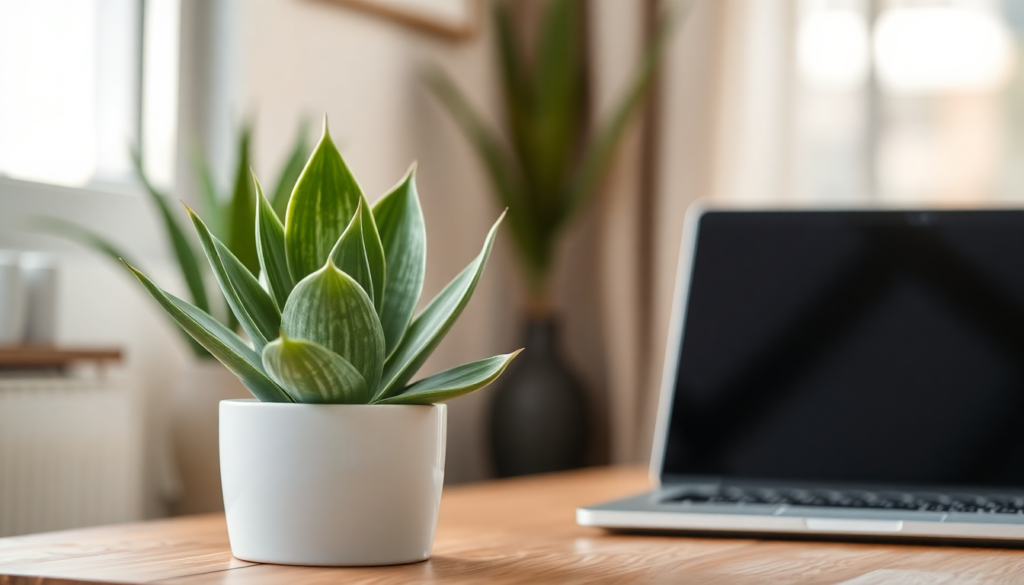
Bird’s Nest Hahnii is the most popular compact snake plant variety for a reason. It grows in a tight circular rosette rather than upright sword-like leaves, which makes it visually distinct from standard snake plants and perfectly proportioned for small spaces.
The dark green leaves have silver-grey horizontal banding. New leaves emerge from the center of the rosette and push outward. The plant never outgrows a 4-inch pot for several years, making it the best choice for anyone with extremely limited space.
It tolerates low light better than most compact varieties. A north-facing window or a position several feet from a bright window still keeps it alive and growing slowly.
2. Gold Hahnii
Max height: 6 to 10 inches Pot size: 4 inch Best spot: Windowsill, shelf with bright light
Gold Hahnii is the variegated version of Bird’s Nest Hahnii. The leaves carry bright golden-yellow edges that frame deep green centers, making it one of the most visually striking small snake plants available.
It needs slightly more light than the standard Hahnii to maintain its gold variegation. In low light, the yellow edges fade toward green. Position it within 2 to 3 feet of an east or south-facing window for the best color. Use division or pup separation to propagate and preserve the gold edges since leaf cuttings revert to solid green.
3. Twisted Sister
Max height: 12 to 15 inches Pot size: 4 to 6 inch Best spot: Bathroom shelf, bedroom desk
Twisted Sister is a Hahnii hybrid with a twist, quite literally. Its leaves spiral and curl outward from the center in an irregular, fan-like pattern rather than growing in a neat rosette. Each leaf has yellow edges and irregular green and gold banding.
The twisted growth habit gives this variety a sculptural, architectural quality that works well in modern apartment interiors. It stays under 15 inches at full maturity and grows slowly enough that a 5-inch pot lasts for 2 to 3 years before repotting.
It handles low light reasonably well, though bright indirect light keeps the yellow variegation vivid.
4. Sansevieria Cleopatra
Max height: 10 to 12 inches Pot size: 4 to 6 inch Best spot: Desk centerpiece, windowsill display
Cleopatra is one of the rarer compact varieties and one of the most visually detailed. Its leaves grow in a tight, symmetrical rosette with intricate dark green web-like patterning on a lighter green base. The leaf edges carry fine brown serrations that add texture.
It grows extremely slowly and stays under 12 inches permanently. This makes it one of the best desk plants for apartment dwellers who want something unusual and conversation-worthy without sacrificing space.
Cleopatra needs bright indirect light to show its full patterning. In low light, the intricate markings fade and the plant loses much of its visual appeal.
5. Futura Robusta
Max height: 16 to 20 inches Pot size: 6 inch Best spot: Floor corner, larger shelf
Futura Robusta is a compact mid-sized variety with wide, sword-shaped leaves in silvery-green with subtle dark horizontal banding. It grows taller than the Hahnii varieties but stays well under 2 feet at full maturity, making it suitable for floor placement in smaller apartments or on a prominent shelf.
It is one of the most low-light tolerant varieties on this list, performing well even in rooms with north-facing windows or ambient artificial light. It is a reliable choice for apartment hallways, bathrooms, and dim living room corners.
6. Futura Superba
Max height: 16 to 20 inches Pot size: 6 inch Best spot: Shelf, floor corner with moderate light
Futura Superba is similar in size to Futura Robusta but carries yellow leaf margins and darker green coloring. It bridges the gap between a compact variety and a statement plant, providing visual impact without needing floor space for a large pot.
The yellow edges add warmth to neutral apartment interiors. Like all variegated varieties, it needs more light than its solid green counterparts to maintain its yellow margins.
7. Sansevieria Ballyi
Max height: 6 to 8 inches Pot size: 4 inch Best spot: Windowsill, small shelf
Ballyi is one of the smallest Sansevieria species available, maxing out at just 6 to 8 inches. Its leaves are cylindrical, thin, and dark green with pale banding, emerging in tight clusters from a central rhizome. The overall effect is delicate and grass-like rather than the bold architectural look of larger snake plants.
It is harder to find than Hahnii varieties but worth sourcing for anyone who wants the most genuinely tiny snake plant available. It prefers bright indirect light and dries out faster than wider-leafed varieties due to its smaller water storage capacity.
8. Sansevieria parva (Kenya Hyacinth)
Max height: 14 to 16 inches Pot size: 4 to 6 inch Best spot: Windowsill, bedroom shelf
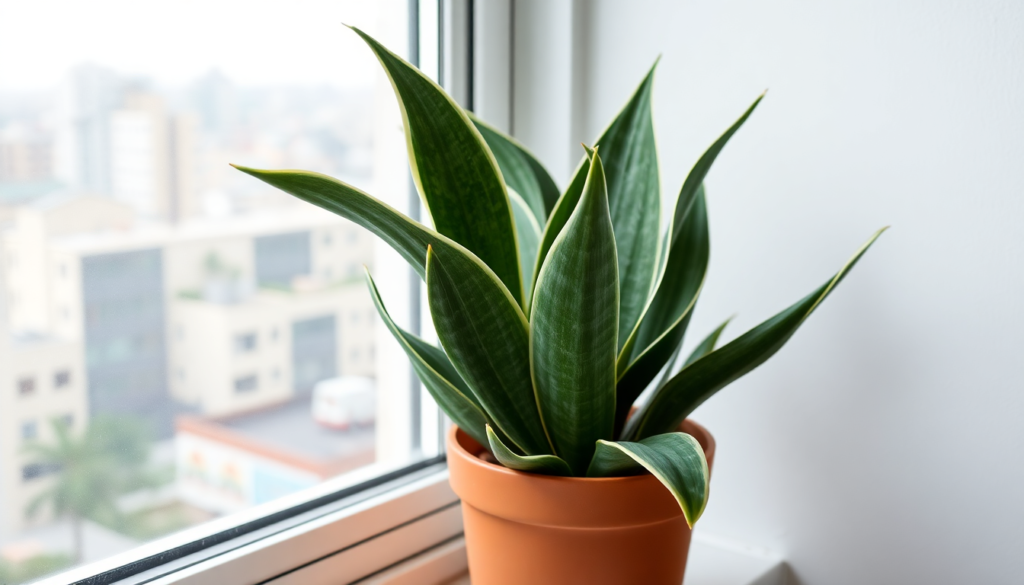
Kenya Hyacinth stands out from every other variety on this list because it actually blooms regularly indoors. The flowers are small, white, and tubular with a faint sweet fragrance, appearing on a tall spike from the center of the plant. Most indoor snake plants never bloom. Kenya Hyacinth does so more reliably than almost any other variety.
Its leaves are slender, arching, and dark green with pale edges, growing in a loose rosette to about 14 to 16 inches. The overall shape is softer and more flowing than the rigid upright varieties, which suits apartment interiors with warmer, organic styling.
It prefers bright indirect light and consistent warmth. Keep it above 60 degrees Fahrenheit and away from cold drafts.
9. Whitney
Max height: 14 to 18 inches Pot size: 4 to 6 inch Best spot: Desk, shelf, bathroom
Whitney is a Hahnii hybrid that grows slightly taller than the original Bird’s Nest but keeps the same compact, manageable character. Its leaves are dark green with broad white margins and silvery-green horizontal banding. The high contrast between the dark green and white makes it one of the most visually striking compact varieties available.
It handles lower light better than most variegated varieties, since the white margins take up a smaller proportion of the leaf surface than on varieties like Gold Hahnii. This makes it a reliable choice for apartments with limited window access.
Care Tips That Apply to Every Variety on This List
All 9 varieties share the same fundamental care needs as standard snake plants:
- Watering: Every 2 to 4 weeks in spring and summer. Every 5 to 8 weeks in winter. Always check soil first.
- Light: Low to bright indirect light. No direct sun, which bleaches leaves and causes brown edges.
- Soil: Fast-draining mix with at least 30% perlite. Never standard potting mix alone.
- Pot: Always use drainage holes. Terracotta works best for compact varieties since small pots dry faster and terracotta wicks extra moisture.
- Fertilizer: Half-strength balanced liquid fertilizer once a month in spring and summer only.
- Repotting: Every 2 to 3 years or when roots visibly fill the pot.
Frequently Asked Questions
What is the smallest snake plant variety? Sansevieria Ballyi and Bird’s Nest Hahnii are the smallest commonly available varieties, both maxing out at 6 to 10 inches at full maturity. They grow in compact rosettes and stay small permanently, not from pot restriction but from their natural growth habit.
Do small snake plant varieties need less water than large ones? Yes, slightly. Smaller varieties have less leaf mass to store water and smaller root systems. They also dry out faster in small pots. Check soil moisture weekly and water when the top 2 to 3 inches are completely dry, which typically happens every 2 to 3 weeks in the growing season.
Which small snake plant variety is best for low light apartments? Bird’s Nest Hahnii, Futura Robusta, and Whitney all perform well in low light conditions. Avoid placing highly variegated varieties like Gold Hahnii or Futura Superba in dim spots, since they need more light to maintain their yellow or white margins.
Do compact snake plant varieties stay small forever? Yes. Compact varieties reach their genetic maximum height and stop. They do not continue growing indefinitely like standard trifasciata. This is determined by genetics, not by pot size or light restriction.
Are small snake plant varieties safe for apartments with pets? No. All Dracaena trifasciata varieties, including compact ones, are toxic to cats and dogs if ingested. They contain saponins which cause nausea, vomiting, and drooling. Keep them out of reach of pets or choose a pet-safe alternative.
Pingback: Snake Plant Care Guide: Water, Light & Mistakes to Avoid