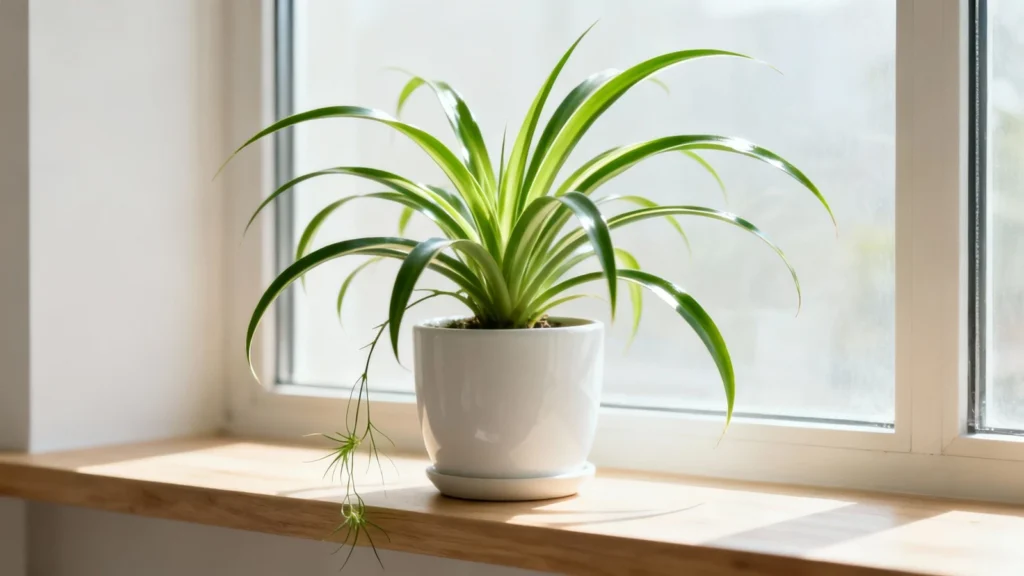
Spider plant winter care is a short list of adjustments, not a new routine. Spider plant winter care means watering less often, giving the plant your brightest indirect light, and keeping it away from heating vents and cold window glass. Growth slows as the days shorten, so the plant uses water more slowly and needs no fertilizer until spring.
The winter risks are rarely cold alone. Soil that stays wet, dry air from heating, and leaves pressed against a cold pane cause more trouble than the season itself. Small changes to watering, placement and humidity carry the plant through to spring.
What Changes for a Spider Plant in Winter
Days get shorter and the sun sits lower in the sky. A spot that gave bright indirect light in July can give weak light in December, even on a clear day.
The plant responds by slowing its growth. Slower growth means slower water use, so the soil stays damp far longer than it did in summer.
Indoor heating adds a second pressure. Radiators and vents dry the room air, leaf tips lose moisture faster, and the air next to a vent or a cold pane swings between hot and cold.
Watering a Spider Plant in Winter
Check the soil instead of following a calendar. Push a finger into the mix and water only when the top inch or two feels dry.
In many homes that works out to every two to three weeks, but the soil check decides, not the date. When in doubt, wait another day and check again.
When you water, water fully. Soak the mix until water runs from the drainage holes, then empty the saucer so the roots never stand in water.
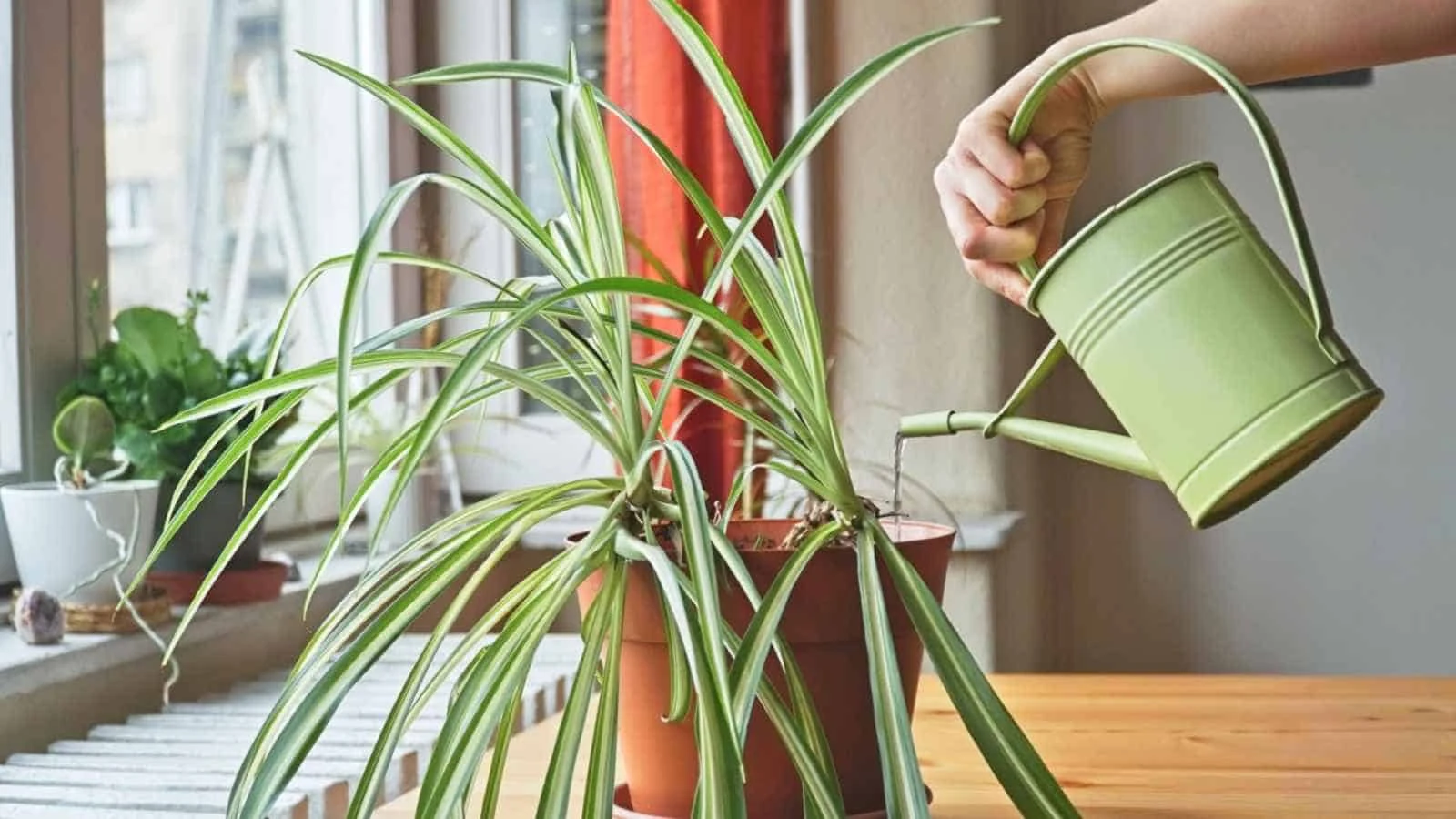
Small sips wet only the surface and leave the lower root ball dry. Our spider plant watering guide covers the full soak and drain method in detail.
A spider plant stores water in its thick, fleshy roots, so a short dry spell is safer than soil that stays wet for weeks. Use water at room temperature where you can, since very cold water on cold roots slows uptake.
Light in Winter: Brighter Spot, Leaves Off the Glass
Move the plant closer to your brightest window as the winter light drops. A spot a little back from an east or south facing window usually gives the bright indirect light this plant prefers.
Keep the leaves off the glass itself. A pane can turn cold enough overnight to chill any foliage touching it, and a plant trapped between glass and a closed curtain sits in the coldest air in the room.
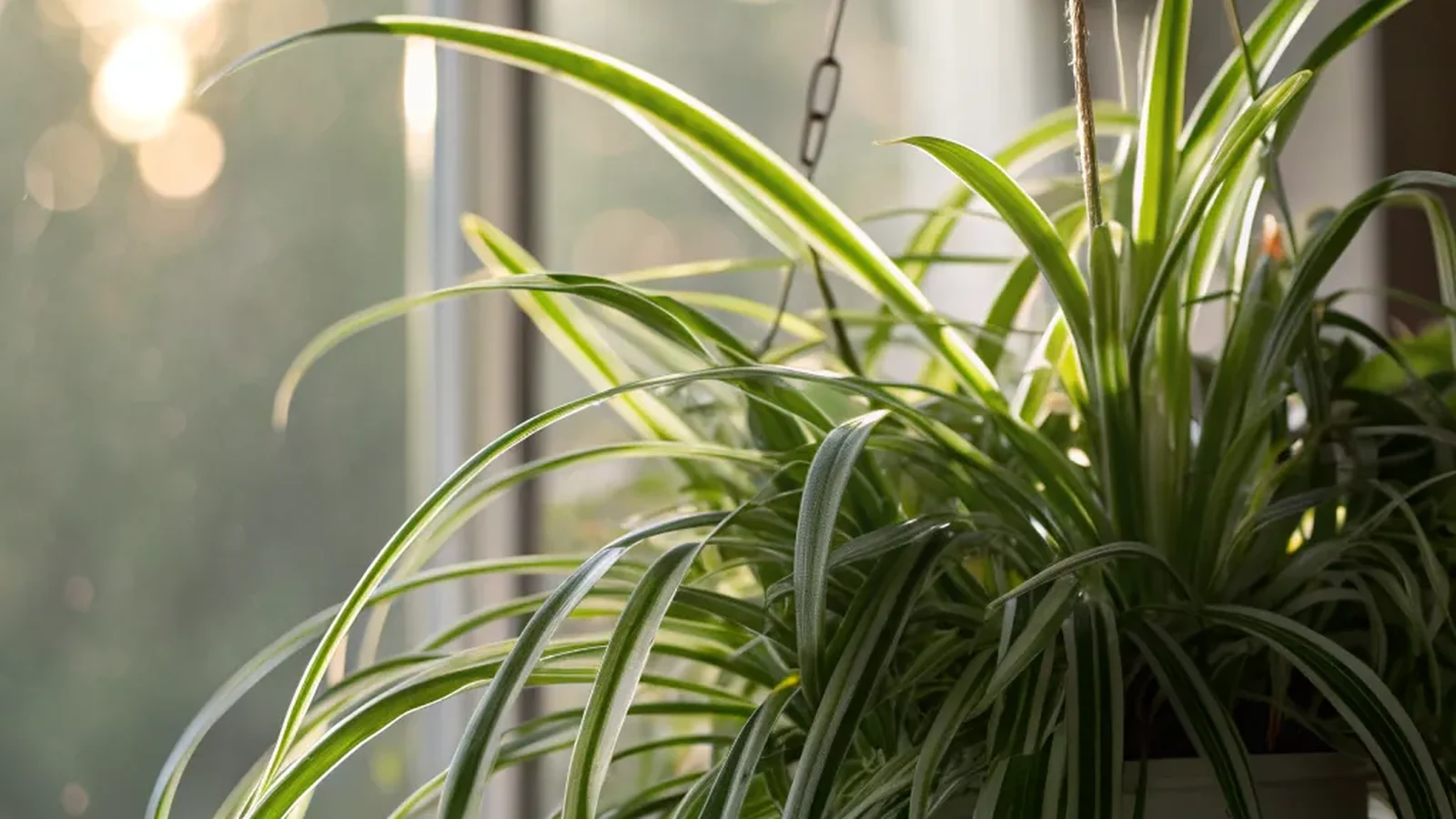
Rotate the pot a quarter turn each week so every side gets a share of the light and growth stays even. Fading stripes and long, pale leaves are signs the plant wants more light, and our guide to the best light for a spider plant explains how to judge each window.
If no window gives enough light, a grow light on a timer for part of the day can hold the leaf color. Treat it as support for a dim room, not as a replacement for the watering and placement changes above.
Indoor Heating, Dry Air and Humidity
Keep the plant out of the direct path of heating vents, radiators and fan heaters. Air blowing straight from a vent dries the leaves faster than the roots can replace the moisture, and the tips brown even when the soil is fine.
Extension guidance lists medium humidity as a good match for this plant, and heated winter rooms often sit below that. The leaves show the gap first, usually as dry, browning tips.
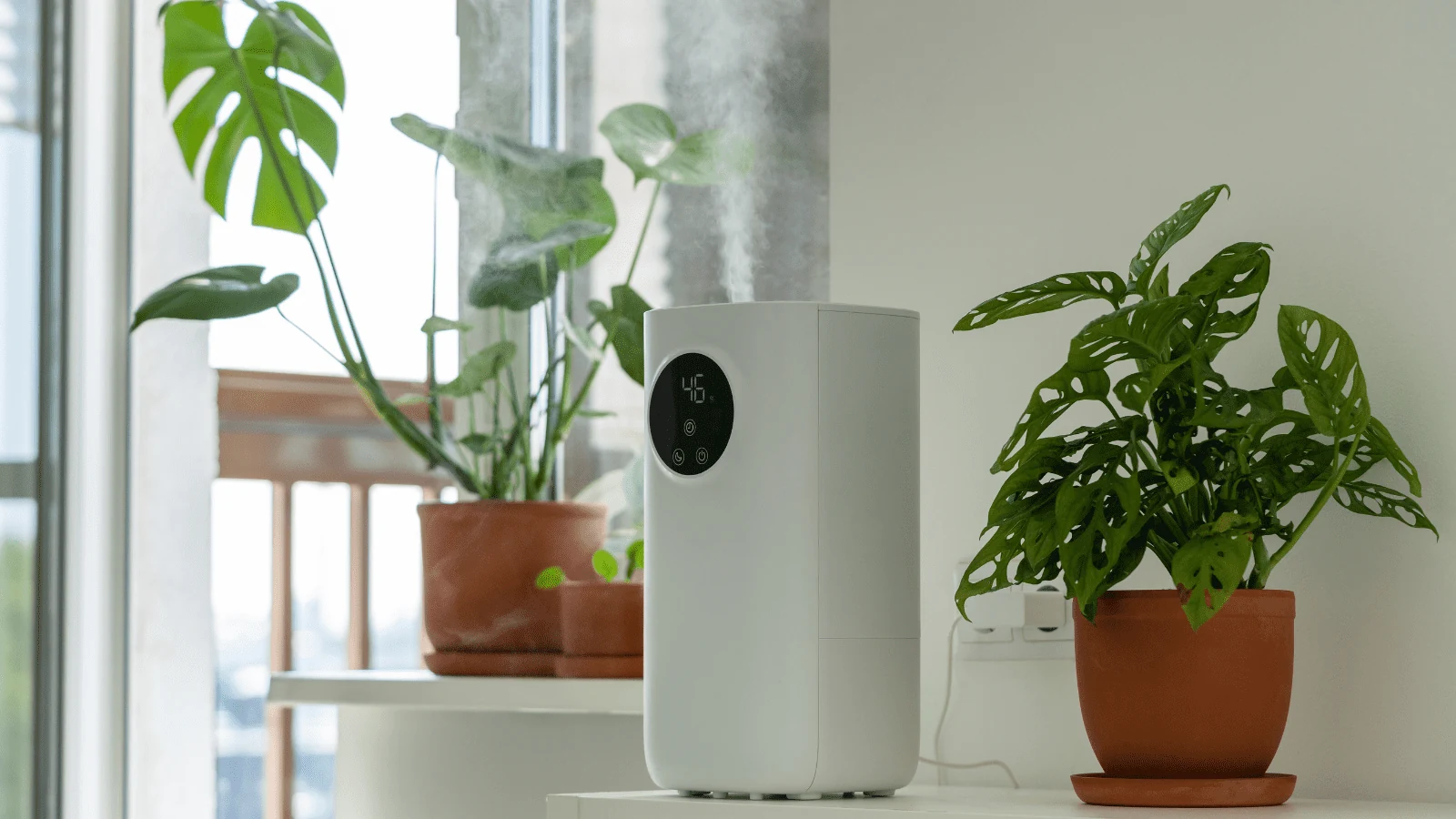
A room humidifier near the plant raises humidity more reliably than misting. Misting wets the leaves for a few minutes and does not change the air around the plant for long.
Grouping plants together and standing the pot on a tray of pebbles and water can help at the edges. Both give modest gains, so treat them as support next to good placement, not as the main fix.
Temperature and Drafts: Picking the Safe Winter Spot
Clemson Extension gives 65 to 75°F during the day and 50 to 55°F at night as the ideal range for a spider plant. A normal heated room sits inside that range, so temperature is rarely the problem away from windows and doors.
NC State Extension advises keeping spider plants above 45°F. Treat that figure as a floor, not a target, because a plant on a cold sill or beside a drafty door can dip toward it on a winter night.
Check the spot at leaf level on a cold evening. If the leaves feel cold to the touch near the glass, move the plant a foot or two into the room and make up the light with a brighter spot or a lamp.
Cold drafts from doors opened through the day matter as much as the overnight low. A plant that gets a blast of cold air every hour sits under stress that no watering routine can fix.
Pause the Fertilizer Until Spring
Stop feeding from late autumn until spring. The plant is not building new growth in winter, so it cannot use the nutrients you add.
Unused fertilizer does not sit harmlessly in the pot. It builds up as salts in the mix, and extension guidance lists excess fertilizer and soluble salts among the causes of brown leaf tips on this plant.
Winter feeding can create the very symptom owners then try to fix with more feeding. Hold off, and let the plant rest on plain water alone.
Resume in spring when new growth shows, at the strength and timing set out in our spider plant fertilizer guide. If no new growth has appeared yet, wait, because feeding a resting plant does not wake it up.
Brown Tips in Winter: What They Usually Mean
Brown tips often get worse once the heating comes on. Dry air is one contributor, and extension sources list low humidity among the possible causes alongside fertilizer salts, water quality and soil that stays too dry.
Water quality deserves a cautious look. NC State notes that chlorine and fluorides in tap water can cause leaf tip burn, so rainwater or distilled water is a reasonable trial if the tips keep worsening.
A change after switching water does not prove fluoride was the cause, since several winter factors shift at the same time. Check the vent position and the feeding history before you change anything else.
Trim the brown ends with clean scissors if the look bothers you, cutting only into the brown tissue. The green part of the leaf still feeds the plant, and our spider plant brown tips guide covers every cause and fix in full.
What to Leave Alone in Winter
Skip repotting in winter unless the plant is in clear trouble, such as roots sitting in sour, wet mix. A resting plant recovers slowly from root disturbance, and fresh mix holds more water around roots that are drinking less.
Expect fewer plantlets and slower leaf growth through the short days. That pause is normal seasonal behavior, not a problem to solve with extra water or feed.
Leave propagation for spring as well. Plantlets root faster in active growth, and the mother plant puts energy into new roots more readily once the light returns.
Winter Problem Check
Use this table when something looks off. Match the sign to a likely cause, check that cause first, and then act.
| What you see | Likely cause to check first | Next step |
|---|---|---|
| Soil stays wet for weeks | Growth has slowed and the roots drink less | Let the mix dry farther before watering again, and empty the saucer after each watering |
| Brown tips spread after the heating starts | Dry air, salts, or water quality | Move the plant away from vents, review the feeding history, and trial rainwater or distilled water |
| Pale leaves and fading stripes | Light has dropped below what the plant needs | Move it closer to a bright window with leaves off the glass, or add a grow light on a timer |
| Leaves limp near a window or door | Cold draft or chilled glass | Move the plant into the room, away from panes and door drafts |
| No new growth for weeks | Normal winter rest | Keep water and feed steady and wait for spring growth before changing anything |
A Simple Winter Routine
Spider plant winter care comes down to restraint and placement. Water only when the soil check says so, give the plant the brightest safe spot you have, and keep it clear of vents, radiators and cold glass.
None of these changes needs new equipment or a strict schedule. Check the plant once a week, adjust one thing at a time, and let it rest until spring growth returns.
For the year round routine behind these seasonal changes, read our complete spider plant care guide.
Frequently Asked Questions
How often should I water a spider plant in winter?
Water less often than in summer, and let the soil guide you. Water when the top inch or two of mix feels dry, which often works out to every two to three weeks in a heated home.
Do spider plants go dormant in winter?
They slow down rather than entering a true dormancy indoors. Growth pauses or creeps along in low light and cool rooms, and that rest is normal and healthy.
Can I fertilize my spider plant in winter?
Pause feeding until spring. The plant cannot use the nutrients while it rests, and the salts left behind in the mix can add to brown leaf tips.
Why are the tips of my spider plant turning brown in winter?
Several causes can sit behind the same symptom, including dry heated air, fertilizer salts, water quality and soil that stays too dry. Check the plant position near vents and your feeding history first, since those are the easiest to fix.
Does a spider plant need a grow light in winter?
Only if your windows are dim. Fading stripes, pale new leaves and long, stretched growth are the signs that natural light has dropped too far, and a grow light on a timer for part of the day can cover the gap.
Should I repot my spider plant in winter?
Wait until spring if you can. A resting plant recovers slowly from root disturbance, so repot in winter only for a clear problem, such as roots rotting in wet mix.