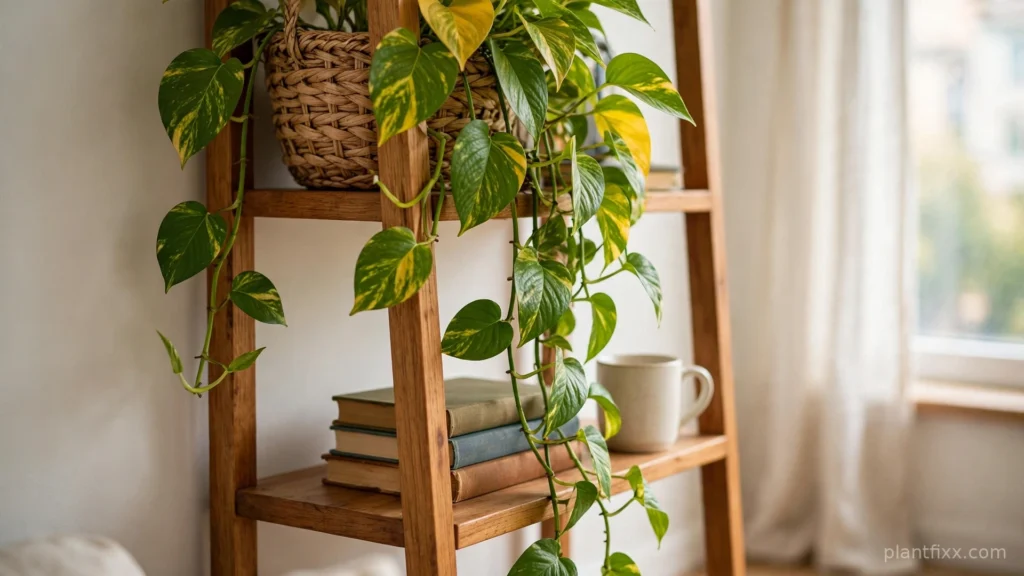
Pothos is the plant people recommend when someone says they kill everything. That advice is mostly right, but the pothos plant benefits you read on most sites mix the real ones with marketing. A few of the famous claims hold up in a real home. A few do not.
This guide sorts the two apart: the benefits that make life easier, the honest version of the air cleaning claim, the limits nobody mentions, and the disadvantages.
The short version: pothos earns its reputation through forgiveness and speed, not through any special power over your air.
The real pothos plant benefits are simple: it survives beginner mistakes, grows fast in average indoor light, trails beautifully in small spaces, and turns one cheap plant into many through cuttings. The famous air cleaning claim is the weak one, since the lab results behind it came from sealed chambers, not real rooms.
Pothos Plant Benefits at a Glance: Real vs Hype
Most lists of the benefits of pothos plant ownership repeat the same claims with no sorting. Here is the sorted version.
| Claim you will see | Honest verdict |
|---|---|
| Cleans the air in your home | Overstated. Plants removed chemicals inside sealed lab chambers. A normal ventilated room clears its own air far faster than a few pots can. |
| Raises humidity and fixes dry air | Mostly hype. One plant adds a trace of moisture around its leaves, nothing a dry room would notice. |
| Thrives in low light | Half true. It survives low light, but growth slows, leaves shrink, and patterned leaves fade toward plain green. |
| Grows fast enough to see progress | True. In bright indirect light a healthy plant pushes out new leaves through the whole growing season. |
| Easy for complete beginners | True. It tolerates missed waterings, droops when thirsty, and perks up the same day you water it. |
| Gives you free plants from cuttings | True. Any stem cutting with a node roots in water within a few weeks. |
| Releases oxygen at night, so it suits bedrooms | Hype. Pothos breathes like other common houseplants, and the oxygen from one plant is too small to notice either way. |
It Forgives the Mistakes Beginners Actually Make
The first benefit is the one that matters most. Pothos tolerates the errors that kill other houseplants in their first month. It evolved on forest floors in Southeast Asia, where light is filtered and rain arrives in spells, so an apartment is an easy life by comparison.
Three traits do the work. The fleshy stems store water, so a forgotten watering is a shrug instead of a death sentence. The plant slows down in poor conditions instead of collapsing, which buys you time to notice and fix the problem. And it talks to you: a thirsty pothos droops in a way you cannot miss, then stands back up within hours of a proper soak.
In practice this changes how owning a plant feels. Water a week late and nothing is lost. Put it in a dull corner and it waits rather than dies. Most problems announce themselves early and reverse cleanly, which is why beginners who start with pothos tend to keep going and buy a second plant.
Forgiving is not the same as unkillable, though. The one mistake pothos does not forgive is constant wet soil. Watering on a fixed calendar rots the roots quietly until the plant folds. Every other pothos benefit in this article depends on that single habit: check the soil, then decide.
It Grows in Corners Other Plants Refuse, Within Limits
Most homes have more dim corners than bright windowsills, and pothos is one of the few trailing plants that will live in them. A pothos a few feet back from a window keeps growing where a sun hungry plant would stall. For renters and small apartments, that opens up shelves, hallways, and bathroom corners that would otherwise stay bare.
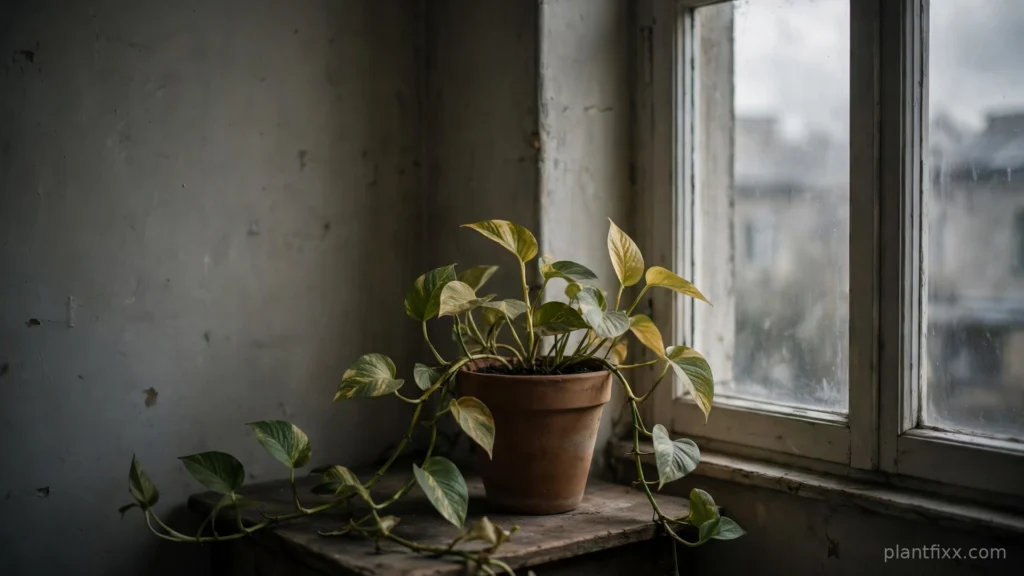
Be honest about what tolerance means, though. Tolerating low light is not thriving in it. In a dim spot the plant grows slowly, the gaps between leaves stretch out, and new leaves come in smaller. Given a brighter spot near a window, the same plant grows tighter, fuller, and faster. Low light is a survival mode you can use, not the setting where the plant looks its best.
The second limit hits patterned varieties. The yellow and cream parts of a leaf contain no chlorophyll, so a variegated pothos in low light protects itself by producing plainer green leaves. A golden pothos slowly loses its gold, and a marble queen can fade toward green entirely. Solid green types like jade pothos hold their look best in dim rooms, since they have no pattern to lose. If the corner is truly dark, pick green and expect slow growth. Patterns need a spot within a few feet of real light.
When a pothos has already stretched into long bare vines, the fix is better light first and pruning second. Our guide on why a pothos plant gets leggy and how to fix it walks through the diagnosis and the repair.
The Air Purification Claim, Honestly
Now the claim that sells more pothos than any other. There is a real study behind the air cleaning story, and it deserves a fair telling before the honest limits.
In 1989, NASA published research on whether indoor plants could remove pollutants from the air, and you can read the original 1989 NASA study record yourself. Golden pothos was among the plants tested, and inside the test setup it did pull chemicals such as formaldehyde and benzene out of the air. That part is true.
The catch is the test setup. The plants sat in small sealed chambers with a set dose of chemicals and no fresh air coming in. Your living room is the opposite of that chamber. Doors open, windows leak, and ventilation constantly dilutes whatever is in the room. Later reviews concluded that ordinary ventilation removes these pollutants far faster than plants do in a real room, and that matching one open window would take an impractical number of plants. One pothos on a shelf does not move your air quality in any way you could measure.
So how should you file this benefit? As a bonus, not a reason. A room full of healthy plants does make a space feel calmer and more alive, and that is a fair reason to keep plants. But buy a pothos for its looks, its toughness, and its growth. If cleaner air is the goal, open a window. No houseplant is an air purifier in the appliance sense, and any site that tells you one pothos scrubs your bedroom air is repeating marketing, not research.
Fast Growth You Can Actually Watch
Many easy plants are easy because they barely do anything. A snake plant can sit unchanged for months. Pothos is different. In a decent spot it visibly grows, unfurling new leaves through spring and summer and extending its vines week by week. That visible progress is a genuine benefit, because it rewards the care you give.
Growth also makes the plant more useful over time. A small pot bought this spring can be trailing off a shelf by autumn. Long vines can be guided along a shelf edge or trained up a small trellis or moss pole, where the leaves grow larger as the vine climbs.
Fast growth does ask something back. A thriving pothos outgrows a small pot within a year or two and needs the occasional trim. Speed is the benefit and the maintenance bill in one package.
One Plant Becomes Ten: Propagation Is a Real Saving
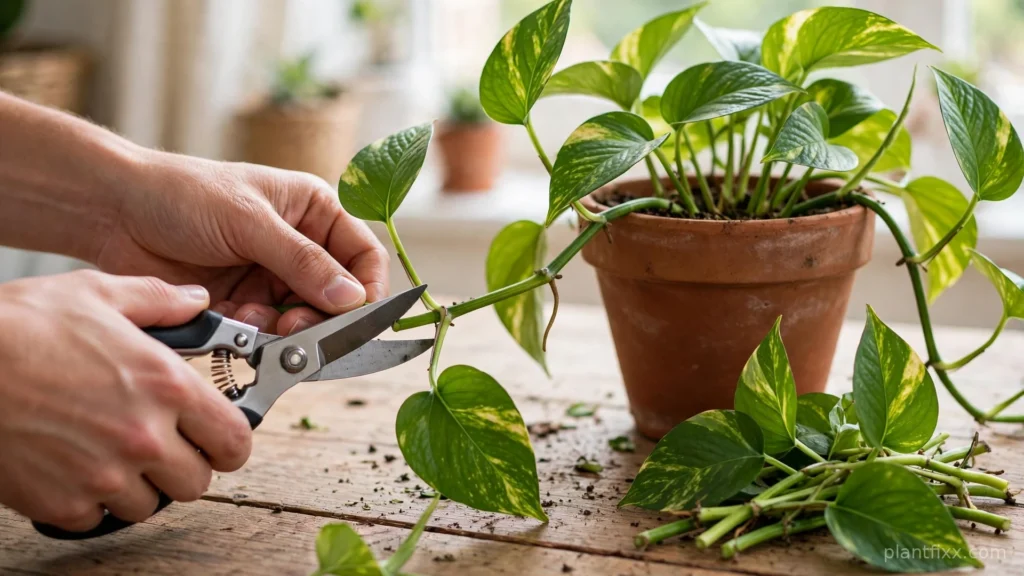
Ask pothos owners how many plants they have and many will laugh, because the later ones were free. Pothos roots from its nodes, the small bumps along the stem where leaves attach. Snip a stem below a node, set the cut end in water, and roots usually appear within one to three weeks. When roots reach two to three inches, the cutting goes into soil as a new plant.
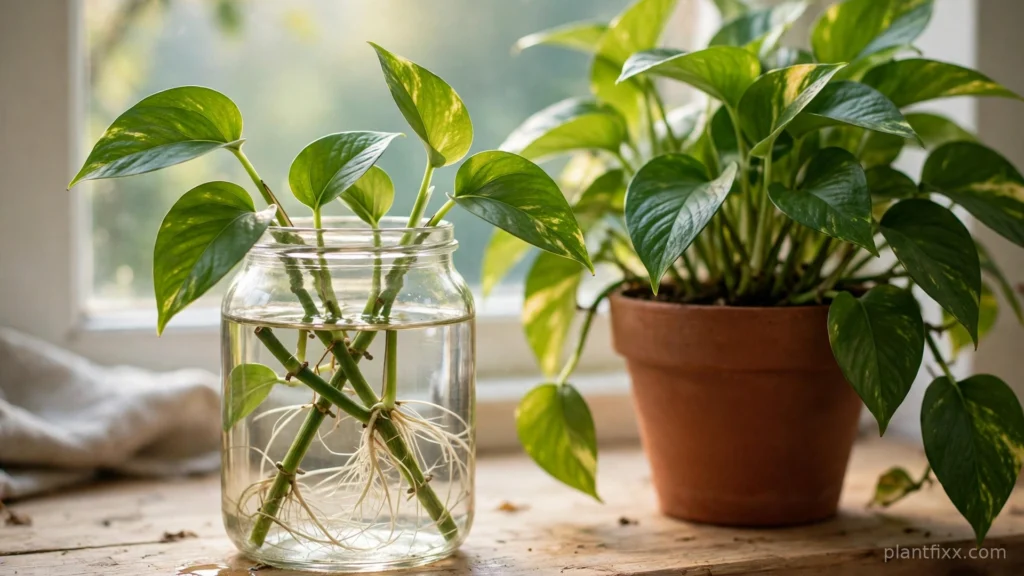
This is a practical benefit, not a hobby extra. Cuttings planted back into the mother plant’s pot are the fastest way to turn a thin plant bushy. They stock your shelves and make gifts at no cost. And they act as insurance: if the mother plant ever fails, a rooted cutting on the windowsill carries the same plant forward.
The signs are easy to read. Working cuttings show white roots lengthening in the water. A failed cutting goes soft and brown at the cut end, which means the piece had no healthy node or sat in stale water. Change the water weekly, keep a node under the surface, and failures stay rare. For the full method, including soil and layering options, see our step by step guide to propagating a pothos plant.
Trailing Decor That Works in Small Spaces
Pothos decorates vertically, the one kind of space small homes have spare, and it needs no floor area at all. It pours off the top of a bookcase, softens a shelf edge, and turns a bare wall corner into the greenest part of the room.
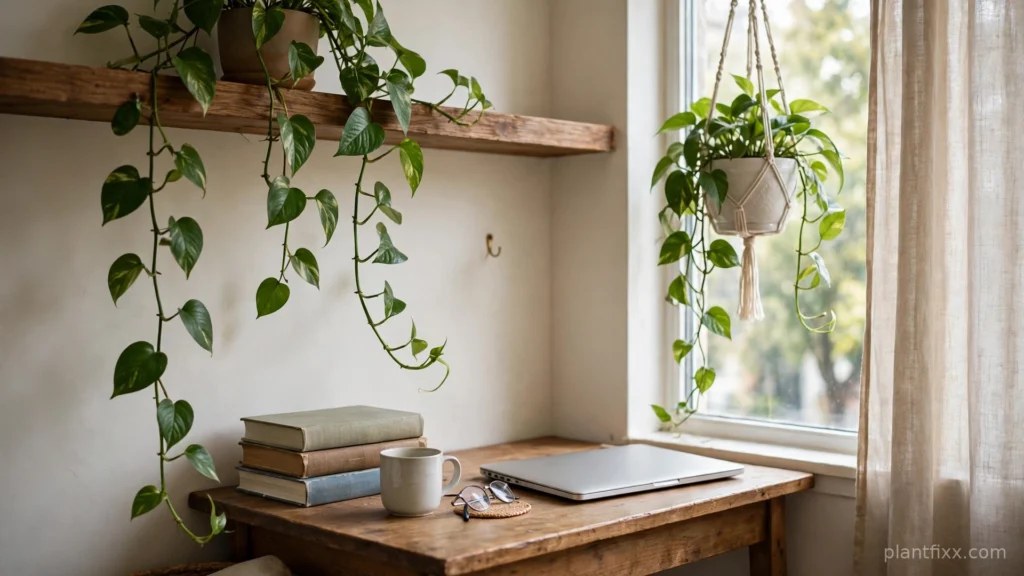
Placement ideas by spot, based on what the plant can actually handle:
- Top of a bookshelf or cabinet near a window. Light is decent up high, vines trail freely, and the plant stays out of pet reach.
- A hanging basket in a bright bathroom. Pothos handles bathroom humidity happily, and frosted window light suits it well.
- A desk corner in a small pot. Prune it short and it stays a compact green accent, and every pruning gives you cuttings.
- Along a kitchen shelf or the top of the fridge. Warm rooms suit this tropical plant, as long as it sits clear of the stove’s direct heat.
- A hallway shelf with a grow light above it. The one honest fix for a windowless spot.
Two placement warnings. First, trailing vines near a floor lamp or heater get scorched on the side facing the heat, so keep a hand’s width of clearance. Second, the look changes as it grows. A vine framing a shelf this month reaches the floor next season unless you trim or redirect it, so treat styling as a light monthly habit.
Golden Pothos Benefits, and Picking the Right Variety
When people praise pothos, they are usually describing the golden pothos. It is the toughest and fastest of the common types. The golden pothos benefits stack up quickly for a first plant: it tolerates the widest range of light, grows the longest vines, and roots from cuttings with the least fuss. If you buy one pothos and never learn another name, this is the one.
The variety you pick changes what you get, though. Jade pothos is plain deep green and holds its color in the lowest light of any type, the honest pick for dim rooms. Marble queen is the prettiest, all cream and green marbling, but it grows slower and needs bright indirect light to keep that marbling. Compact types like N’Joy and glacier stay small and neat on a desk.
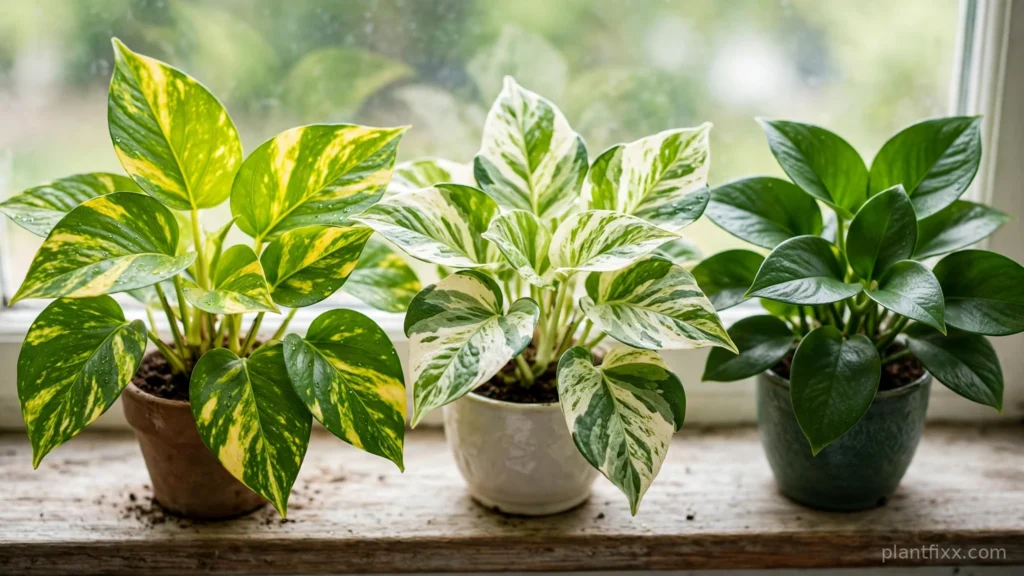
None of them needs different care, just different light honesty. Our guide to pothos plant varieties and how they differ compares 13 types side by side, so you can match the plant to your light instead of hoping a pretty one copes.
Cheap to Buy, Cheap to Keep
Stack the pothos benefits together and the money case is simple. A small pothos is one of the cheapest plants in any shop, often sold for the price of a coffee or two. It needs no special soil, no special pot beyond one with drainage holes, and no equipment at all. Your finger, pushed into the soil to check dryness, is the only tool it asks for.
Keeping costs stay low because the plant replaces itself: cuttings are free plants, so a shelf of greenery costs one purchase plus time. Feeding is a half strength dose of basic fertilizer monthly in spring and summer, and nothing in winter.
The Honest Disadvantages
A benefits article that skips the costs is an advert, so here they are. Three disadvantages are real, and one of them should decide whether pothos enters your home at all.
The serious one is pet toxicity. The ASPCA lists golden pothos as toxic to dogs and cats, because the leaves carry insoluble calcium oxalate crystals. A pet that chews a leaf gets a burning mouth, drooling, and sometimes vomiting or trouble swallowing. It is a local irritant rather than a deep poison, but it is miserable for the animal. The workable fix is placement: hang the plant or put it on a high shelf, and measure the gap from the lowest leaf to the nearest surface a cat can launch from, not to the floor. Our full guide to pothos plant toxicity for cats and dogs covers the signs and placement rules in detail. If your cat chews every plant it can reach and you have no safe high spot, skip pothos.
The second disadvantage is legginess. Left alone in average light, vines stretch into long stems with leaves only near the tips, and the lush look you bought disappears. The third is the pruning that prevents it: keeping a pothos full means trimming vines a few times a year. None of it is hard work, but it is work, and the low maintenance label should not hide it.
The Care Basics Behind Every Benefit
Every benefit above rests on five simple habits. Light: bright indirect is best, a few feet from a window, with low light tolerated at the cost of speed and pattern. Water: only when the top two inches of soil feel dry, then soak until water drains, and empty the saucer. Soil: any standard well draining potting mix in a pot with holes. Food: half strength liquid fertilizer monthly in spring and summer, none in winter. Pruning: cut just above a node whenever a vine gets bare, and root what you cut.
That is the whole routine, minutes a week. For the full version with repotting and problem diagnosis, our complete pothos plant care guide covers the plant end to end.
Who a Pothos Suits, and Who Should Skip It
Buy a pothos if you are a beginner who wants visible progress, a renter decorating shelves and corners, or anyone who travels and needs a plant that shrugs off a dry week. On pothos benefits versus effort, it is close to the best trade in houseplants.
Skip it if a plant chewing pet rules your home and you have no unreachable spot. Skip it if you want a plant that looks identical in five years with zero pruning, since a pothos always wants to travel. And if your home is very dark and you will not add a grow light, an upright plant may suit you better. Our snake plant vs pothos plant comparison settles that choice by watering habits and light.
What are the benefits of a pothos plant at home?
The real ones are forgiveness of missed waterings, growth in average indoor light, fast trailing growth that decorates shelves and corners, free new plants from cuttings, and a low purchase and upkeep cost. The air cleaning fame is the overstated part, as the next answer explains.
Does a pothos plant really purify the air?
Not in any way you could measure at home. The 1989 NASA research behind the claim tested plants in small sealed chambers. In a normal room, fresh air moving through doors, windows, and vents removes pollutants far faster than a plant can, so enjoy the leaves and open a window for the air.
Can a pothos plant grow in low light?
Yes, it survives low light better than most trailing plants. Expect slower growth, smaller leaves, and longer bare gaps between leaves. Patterned types also fade toward plain green, so for a dim spot choose a solid green jade pothos.
How fast does a pothos plant grow?
In bright indirect light, a healthy plant pushes new leaves steadily through spring and summer and can extend its vines by feet over a season. Growth slows sharply in winter and in low light. Feeding monthly in the growing season keeps the pace up.
Is a pothos plant safe around cats and dogs?
No. Golden pothos is listed as toxic to cats and dogs because of calcium oxalate crystals in the leaves, which burn the mouth and cause drooling and vomiting. Keep it hanging or on a high shelf a pet cannot reach, or choose a pet safe plant instead.
Which pothos variety is best for a beginner?
Golden pothos. It grows fastest, tolerates the widest range of light, and roots from cuttings most reliably. Jade is the better pick only when the spot is genuinely dim, since it has no variegation to lose. Marble queen is prettier but slower and fussier about light.
Can I keep a pothos plant in a bathroom or bedroom?
Yes to both. Bathrooms suit pothos well thanks to the humidity, as long as some natural light reaches the room. Bedrooms are fine too, but place it near the window, and ignore the claim that it improves sleep by releasing oxygen at night.
Why does my pothos look plain green instead of patterned?
Almost always light. When a variegated pothos cannot photosynthesize enough, it grows greener leaves and the pattern fades. Move it closer to a bright window and new leaves should come in patterned again. Leaves already green will not regain their markings.
The Bottom Line
Pothos deserves its reputation, just not for the reason on the shop label. Its real value is a tough, fast, trailing plant that forgives your learning curve and fills small spaces with green for very little money. Keep it for those reasons, place it out of pet reach, and let the air cleaning story go. Start with one golden pothos on your brightest shelf, and let the cuttings do the rest.
Pingback: Pothos Plant Care Guide: Apartment Beginner Tips (2026)
Pingback: Pothos Plant Varieties: 13 Types Compared for Your Home (2026)
Pingback: How to Propagate Pothos Plant: Water, Soil & Layering
Pingback: 8 Hanging Pothos Plants Ideas for Renter-Friendly Apartments
Pingback: Snake Plant vs Pothos Plant: Which Is Right for You? (2026)
Pingback: Why Is My Pothos Plant Leggy? Causes, Fixes & Tips