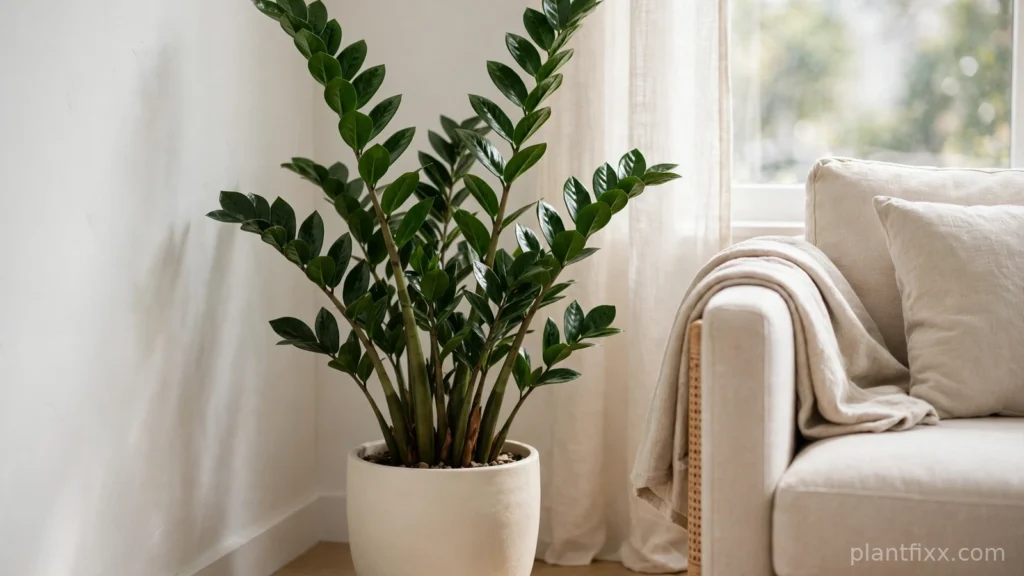
Most people meet the ZZ plant after a run of losses: a fern crisped, a calathea sulked, a pothos stretched into bare stems. The zz plant benefits get repeated so often at that point, low light, no watering, impossible to kill, that it is fair to ask which of them survive a real home.
Some do, and they are the ones that matter. A ZZ plant, Zamioculcas zamiifolia, earns its place through drought tolerance, low light tolerance, tidy looks and a care routine measured in minutes per month. It does not earn it through air cleaning, luck or better sleep.
This guide gives you the mechanism behind the real benefits, a room by room breakdown, the disadvantages at the same depth, and a plain verdict on who should buy one.
Quick Answer
The real zz plant benefits are low light tolerance, drought tolerance, almost no upkeep and glossy looks that stay tidy all year. Those four hold up in real homes. The air cleaning, good luck and better sleep claims do not, and the honest limits are pet toxicity, slow growth and one real weakness for soggy soil.
Why the Benefits Are Real: It Starts With the Rhizome
Every real benefit here traces back to one piece of anatomy. Under the soil, a ZZ plant grows thick, fleshy rhizomes, underground stems that work as storage tanks. NC State Extension describes it as a rhizomatous perennial from tropical Africa whose rhizomes and glossy leaves store water and make it highly drought tolerant.
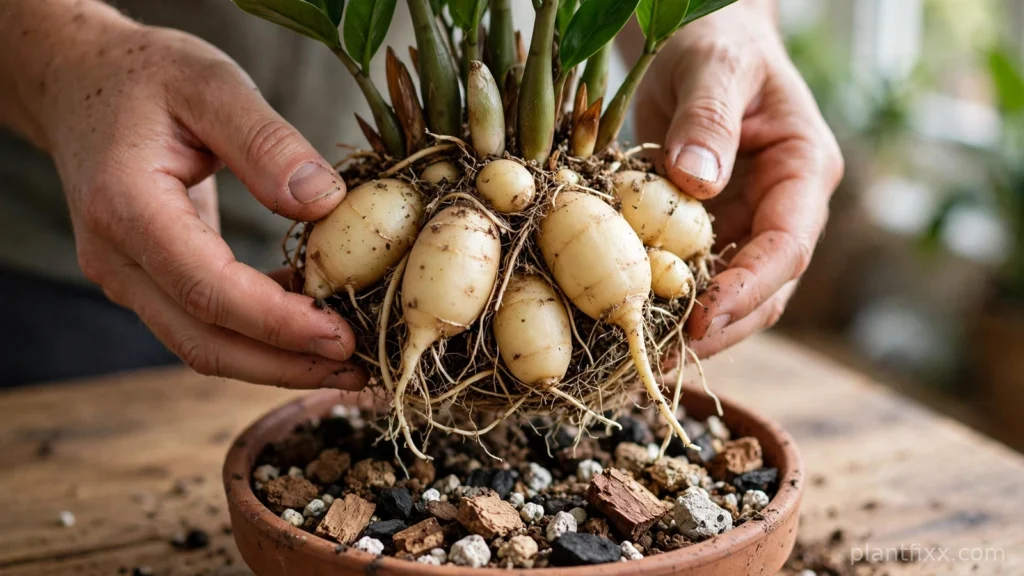
The system has three layers. Rhizomes hold the main reserve of water and energy. Swollen stem bases hold a second reserve above ground. Thick, waxy leaflets lose water slowly to dry indoor air. Slow growth keeps spending low, so a small income of light and water balances the budget where a fast grower would run a deficit in weeks.
The same design predicts the one real weakness. Tissue built to hold water rots when it sits in water. Wet soil fills the air spaces around the rhizomes, the tissue softens, and rot moves up into the stems. So the benefits of a zz plant and its main risk come from the same place. In practice, owners kill this plant with a weekly watering given from habit, not with a forgotten one.
The Real ZZ Plant Benefits, One by One
Strip away the marketing and the benefits of zz plant ownership reduce to six practical traits. Each one comes with the limit honest guides leave out, because a benefit without its limit sets you up for the mistake that cancels it.
It Holds Its Green in Low Light
A ZZ plant tolerates low light better than almost any common houseplant. Extension guidance notes it will grow in very low light, even under fluorescent light alone, which is why it survives north facing rooms, hallways and office interiors where sun loving plants fade.
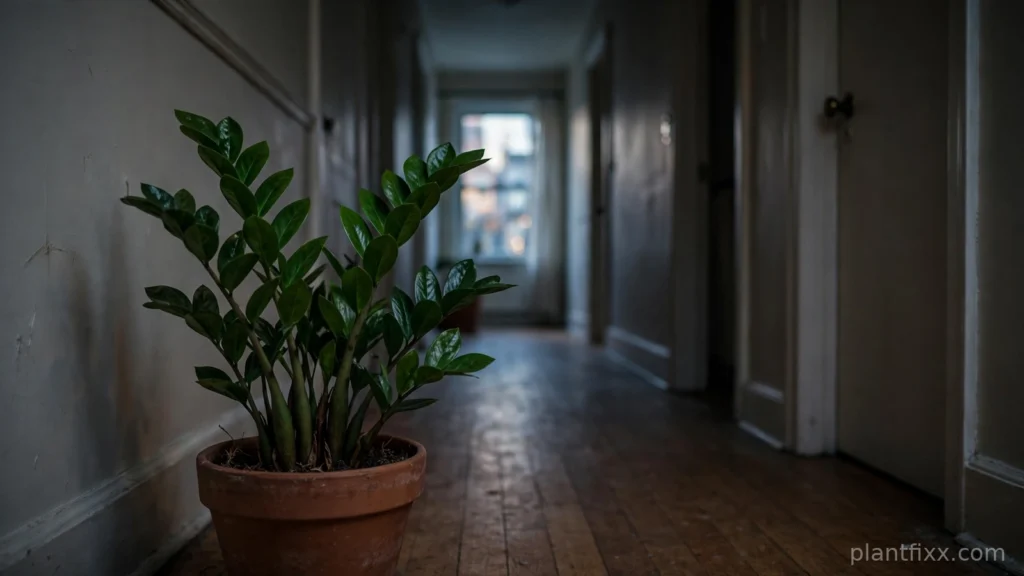
The limit is survival versus thriving. In low light it holds its stems and color, but new growth slows to a stem or two a year and stems can lean toward the window. In bright indirect light it pushes thicker stems with larger leaflets. Our guide to ZZ plant light requirements covers placement by window and distance.
It Shrugs Off Missed Waterings
A settled plant in average room conditions commonly goes three to four weeks between waterings, and longer in a dim winter room. The rhizomes fund the plant through the gap, so a two week holiday is a non event.
The limit is that the reserve is not immunity. Months without water drop leaflets and cost a full season of recovery. Water deeply, then wait until the soil dries through the pot. Our guide to how often to water a ZZ plant sets the interval by light and season.
It Asks for Almost No Routine Upkeep
There is no misting schedule, no humidity tray, no weekly feeding and no regular pruning. The standing jobs are a deep watering when the soil is dry, a leaf wipe when dust dulls the shine, and a feed once or twice a year. Repotting waits until rhizomes push against the pot, which can take years.
The limit is that low upkeep is not no upkeep. Dust cuts the light leaves can use, a pot without drainage holes stores the water that rots rhizomes, and a plant never checked shows its warning signs a month late.
It Looks Finished All Year
Upright stems arch at the top, leaflets sit in neat pairs, and the surface shine keeps the plant looking polished under ordinary room light. It is evergreen, so there is no bare season, no flower drop to sweep and no leggy phase to hide.
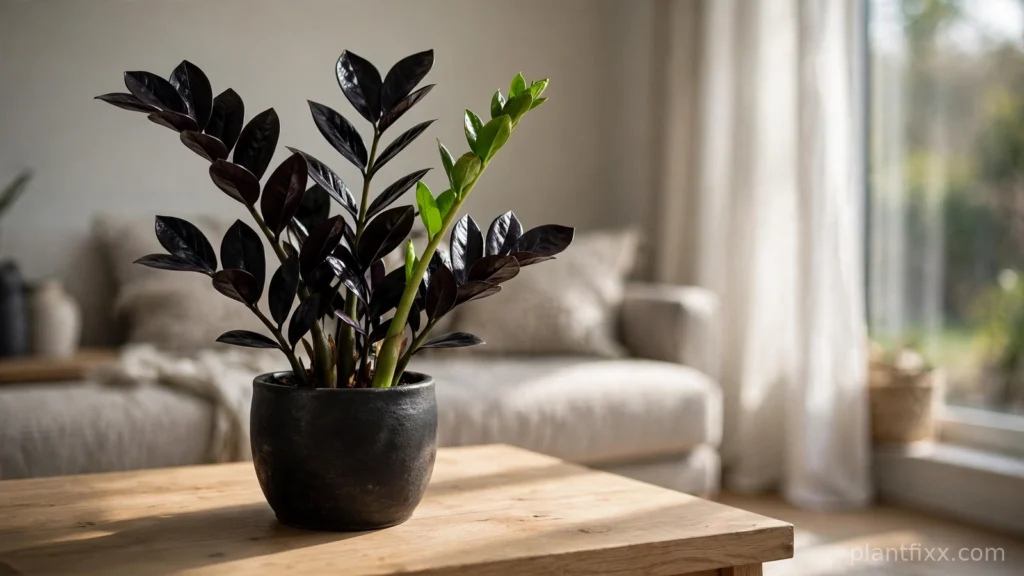
The Raven variety offers the same care with a darker look. New leaves open bright green, then deepen to near black purple, which suits modern rooms. Light, water and feeding stay identical, so the choice is purely about looks.
It Fits Small Spaces Without Spreading
Growth goes up before it goes out. A young plant occupies the footprint of its pot, suiting shelves, side tables and the strip beside a sofa. It does not trail onto the floor, climb the wall or drop leaves across a walkway.
The limit arrives with age. A mature plant reaches two to four feet in height and width, and arching stems claim more air than the pot suggests. Buy it for the space it fills in three years, not today.
It Rarely Troubles You With Pests
Extension guidance lists no significant pest or disease problems for this plant, with scale insects as the one item to watch. Thick, waxy leaflets give soft sap feeders a harder surface, and the dry soil routine removes the damp conditions fungus gnats breed in.
The limit is that pest free is not a promise. Scale hides along stem joints and leaflet undersides, so a ten second look during each watering is the whole prevention plan.
Real Benefits or Hype: The Honest Check
The table below sorts the full claim list, zz plant benefits and disadvantages in one view, before the three biggest claims get checked.
| Claim | Verdict | What is actually true |
|---|---|---|
| Low light tolerance | Real | It holds color in low light and grows best in bright indirect light |
| Drought tolerance | Real | Rhizome water storage carries it for weeks between waterings |
| Low upkeep | Real | Minutes per month, feeding once or twice a year is enough |
| Good looks all year | Real | Evergreen, glossy and upright, with no bare season |
| Cleans the air in your home | Hype at normal plant counts | Chamber results do not scale to a ventilated room |
| Brings luck and prosperity | Cultural belief | A Feng Shui and Vastu tradition, not a measured effect |
| Improves sleep, oxygen at night | Not supported | One plant exchanges a trivial amount of gas next to a sleeper |
| Makes a room feel calmer | Small and general | Greenery softens a room, an effect most houseplants share |
| Reduces background noise | Negligible | Too little leaf area to change room sound measurably |
Air cleaning has the longest history. Old chamber studies sealed plants in small boxes and measured gases falling, and the results were real for a box. In 2019, Cummings and Waring reviewed twelve chamber studies and converted the results into clean air delivery rates. You would need between 10 and 1000 plants per square meter of floor to match ordinary ventilation, as the Drexel University report on the 2019 air quality review sets out.
Luck is a different category. Feng Shui and Vastu traditions link the plant with prosperity and steady growth, and it is a common gift for new homes and businesses. That is a genuine cultural meaning, not evidence the plant changes income. If the luck angle draws you, our comparison of ZZ plant vs money plant puts the two traditional luck plants side by side.
Sleep claims fail on scale. One plant exchanges a tiny amount of gas compared with the person sleeping beside it, and no study shows a ZZ plant improving sleep quality. Keep one in the bedroom for the practical reasons below.
ZZ Plant Benefits at Home, Room by Room and Person by Person
This is where zz plant benefits at home stop being a list and become a placement decision, because the right room multiplies the benefits and the wrong one creates the only problems this plant has.
In an Office or Workspace
The office may be the strongest case. Overhead artificial light that defeats other species is enough for a ZZ plant to hold its color. Watering intervals in weeks survive holidays and closures. The upright shape looks professional on a desk or in reception and never trails across paperwork.
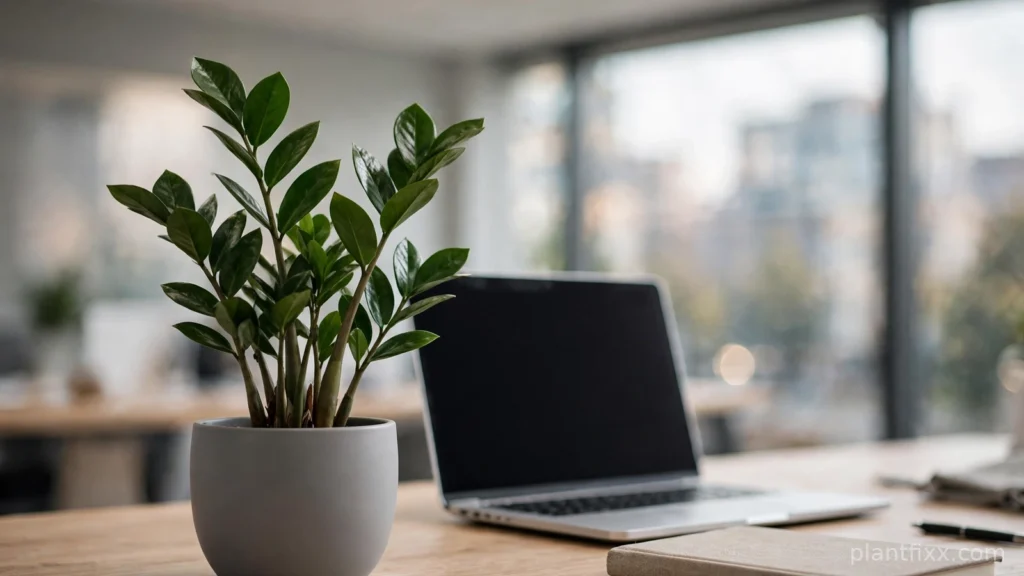
Put one named person in charge of the soil check. Shared plants die from shared watering. One owner, one check, one watering at a time.
In a Bedroom
Bedrooms are often the darkest lived in rooms, with curtains drawn much of the day. A ZZ plant handles that light without complaint, asks for nothing at night, and stays tidy on a dresser, with no falling petals and no soil gnats when the routine stays dry.
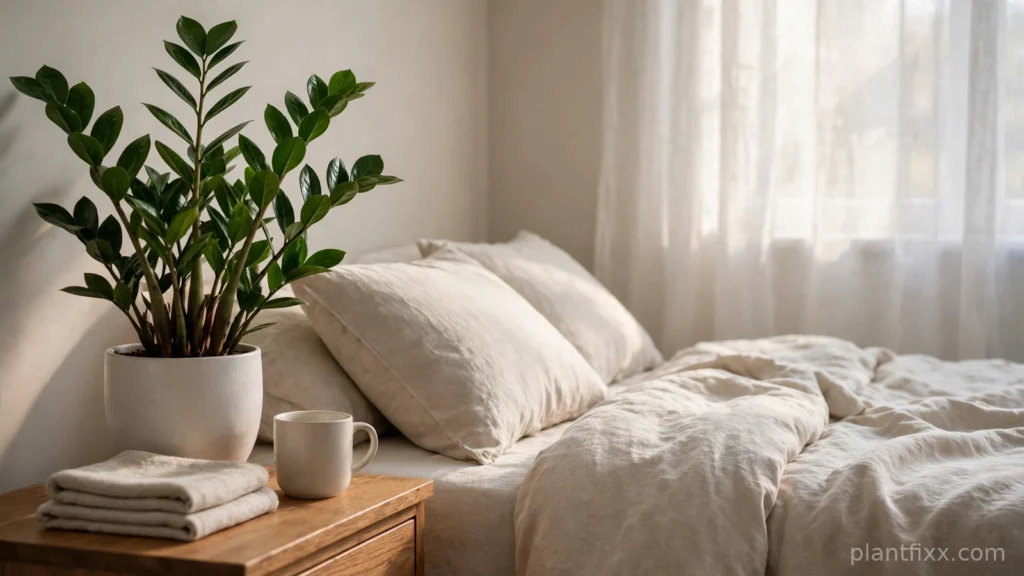
It will not improve your sleep, scent the room or humidify the air in any way you can feel. It stays green where fussier plants decline, and that is the whole job.
In a Small Apartment
Small homes punish plants that spread, trail or demand the one bright windowsill. This plant grows upright from a compact pot, tolerates the dim corner nothing else uses, and tolerates dry heated air better than thin leaved tropical plants.
Watch two traps. A windowless bathroom can fall below even the light it can use for long, so rotate it to a lit room every few weeks. And floor placement in a tight walkway gets stems knocked, so a shelf or stand suits it better.
For Beginners
Beginners do not mainly fail on knowledge. They fail on timing, watering too often, in the wrong light, on a guilty schedule. The ZZ plant removes most timing pressure. It waits, giving a new owner weeks to learn the dry then drench rhythm on a plant that does not collapse after one mistake.
It also teaches the lesson that transfers to every houseplant: check the soil before you water. The one error it does not forgive is the weekly watering habit, covered below.
For Frequent Travelers
If you travel for two to four weeks at a time, the list of plants that cope without a sitter is short, and this one tops it. Water deeply before you leave, move the pot out of direct sun, and the rhizomes fund the plant until you return.
Do not set up wicks, water globes or a neighbor told to water weekly. Those solve a problem this plant does not have and create the one it does, wet soil. For trips past a month, one check in visit halfway is enough.
ZZ Plant Benefits and Disadvantages: The Other Half
Weighing zz plant benefits and disadvantages together is the only fair way to judge this plant. Three disadvantages matter, and each has a workable rule attached.
It Is Toxic to Pets and Children
All parts of the plant contain calcium oxalate crystals. NC State Extension rates it as a medium toxicity plant for cats and dogs in its Plant Toolbox entry, and chewing leaves can bring mouth irritation, drooling and vomiting, with diarrhea possible if a quantity is eaten.
The rule is placement. A high shelf, a stand a pet cannot climb, or a room pets do not enter removes most risk, and fallen leaflets should be picked up. Our full guide to whether a ZZ plant is toxic to cats and dogs covers signs and next steps. If your pet chews plants and no safe spot exists, skip this species.
It Grows Slowly
Slow growth powers the low light and low upkeep benefits, and it is also a real cost. Expect a few new stems in a growing season, not a transformation. A small plant takes years to reach the two to four foot mature size, and propagation is slow too, since a leaf cutting must build a new rhizome first.
The rule is to buy the size you want to look at. Paying for a mature specimen buys years you cannot shortcut, and many owners find the larger plant is the honest value.
Overwatering Is Its One Real Weakness
The failure path is always the same. Soil stays wet, rhizomes sit in that moisture, tissue softens and rots, and the first sign above ground is a yellowing stem or a stem base that feels soft and leans. By then the damage underground is weeks old. Wet feet are not tolerated.
The rule is dry then drench, with drainage. Pot with holes, a mix that drains freely, water only when the soil has dried through, and empty the saucer every time.
The Simple Care That Keeps the Benefits True
The benefits are what you get when five basics stay in place, and the whole routine takes minutes a month.
- Light: bright indirect light for growth, low light accepted for survival. A few feet from an east or north window suits most rooms.
- Water: only when the soil has dried through the full pot, then deeply until it drains. Often every three to four weeks indoors, longer in winter.
- Soil and pot: a free draining mix and a pot with drainage holes, one size up only when you repot.
- Food: a balanced feed once or twice a year is enough for a plant that grows this slowly.
- Leaves: wipe dust off the leaflets every month or two so the shine and light capture stay.
Two warning signs tell you a benefit is slipping. Stems that stretch and lean hard toward the window are asking for more light. Yellowing stems with a soft base are asking for less water and an immediate rhizome check.
Verdict: Who Should Buy a ZZ Plant and Who Should Not
Buy one if your home has a dim room you want green, if your schedule includes travel or forgetful stretches, if you are new to houseplants, or if you want one polished plant per room with almost no routine attached.
Choose differently in three cases. For height, a narrow outline in a brighter spot, or cuttings that root in weeks, a snake plant serves you better, and our side by side comparison of snake plant vs ZZ plant settles that choice. For fast change and trailing vines, pick a pothos. If pets chew plants and every surface is within reach, pick a pet safe plant instead.
Are the benefits of a ZZ plant real or mostly hype?
Both kinds exist, and they split cleanly. Low light tolerance, drought tolerance, low upkeep and good looks are real, resting on the rhizome system. Air cleaning, luck and better sleep are hype or tradition. Judge the plant on the first group.
Does a ZZ plant clean the air in a home?
Not in any amount you could measure. The 2019 review of the chamber research found you would need 10 to 1000 plants per square meter to match ordinary ventilation. Open windows and ventilation do the air work.
Is a ZZ plant good for a bedroom?
Yes, for practical reasons. It tolerates the low light of a curtained bedroom, needs no evening routine and stays tidy on a dresser. It will not improve sleep or add meaningful oxygen at night.
How long can a ZZ plant go without water?
A settled plant handles three to four weeks, and longer in a dim or cool winter room. Treat that reserve as cover for travel and busy months, not a target, and check the soil before watering again.
Is a ZZ plant safe for cats and dogs?
No. Its leaves and stems contain calcium oxalate crystals, and extension guidance rates it medium toxicity for cats and dogs. Chewing can cause mouth irritation, drooling and vomiting. Keep it out of reach or choose a pet safe plant.
Does a ZZ plant bring good luck?
That is a cultural belief, not a measured effect. Feng Shui and Vastu traditions link it with prosperity and steady growth, and it is a popular gift for new homes and businesses. Buy it for its care profile.
Why is my ZZ plant not growing if it is meant to be easy?
Slow growth is normal, and low light slows it further. A healthy plant in a dim room may add a stem or two a year. Move it closer to bright indirect light and confirm the soil dries between waterings. New spears follow light, not fertilizer.
ZZ plant or snake plant, which is better for a dark room?
The ZZ plant holds color and shape in lower light. A snake plant survives a dark room but slows and can lose firmness. For the darkest corner choose the ZZ plant, for a narrow outline in a brighter spot choose the snake plant.
That is the full picture: a plant whose strengths are patience, storage and polish, sold honestly once the hype is stripped away. Our complete ZZ plant care guide takes you from first watering to repotting and propagation, step by step.
Pingback: ZZ Plant Care Guide: Best Low-Light Apartment Plant (2026)
Pingback: Snake Plant vs ZZ Plant: Key Differences & Winner (2026)
Pingback: How Often to Water ZZ Plant: By Light and Season
Pingback: ZZ Plant Light Requirements, Soil Mix & Fertilizer Guide
Pingback: Is a ZZ Plant Toxic to Cats and Dogs? The Honest Answer