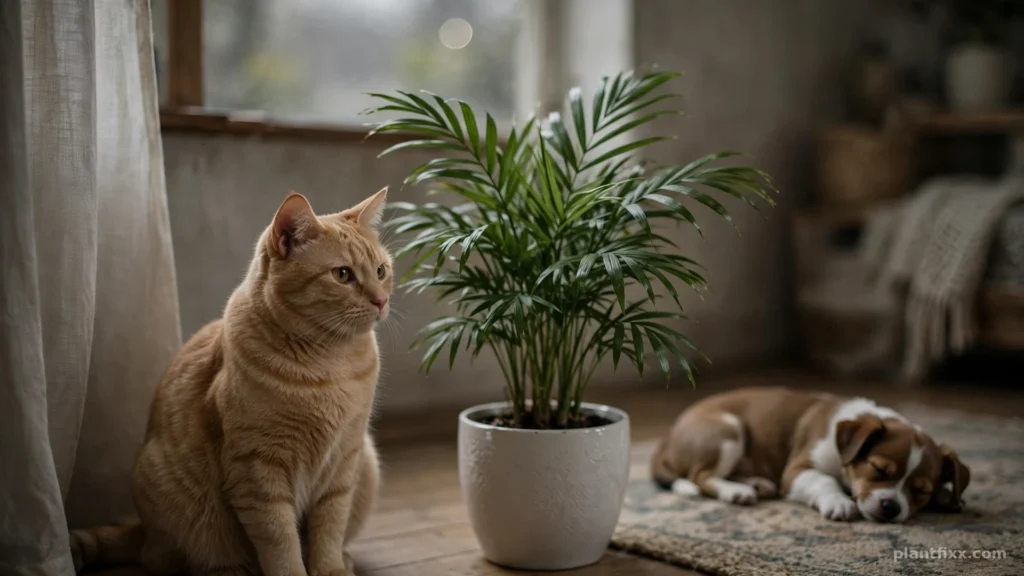
Quick Answer: The best pet safe low light indoor plants are parlor palm, prayer plant, calathea, Boston fern, bird’s nest fern, spider plant, peperomia, nerve plant, Chinese money plant, and polka dot plant. All ten are non-toxic to cats and dogs and tolerate 50-250 foot-candles of light, which is what most dim rooms provide.
Quick Take: Most “best low light plant” lists recommend pothos, snake plant, ZZ plant, and peace lily, all toxic to pets. Here are ten shade-tolerant plants that will not harm cats or dogs, with minimum light levels in foot-candles, dim-room watering rules, cat and dog placement tips, safe swaps for toxic plants you may already own, and the poison-control numbers to save.
Most “best low light plants” articles solve only half of your problem: they recommend pothos, snake plants, and ZZ plants, which tolerate shade but are toxic to cats and dogs. Ten safe options handle genuinely low light. Below: each plant’s minimum light level, watering rules for dim rooms, and safe swaps for the toxic plants you may already own.
What “Low Light” Actually Means (and What It Does Not)
Low light is not darkness. The University of Missouri Extension defines low-light plants as plants needing roughly 50 to 250 foot-candles (about 540 to 2,700 lux). A north-facing window, a spot a few feet back from an east or west window, or a bright hallway all sit in this range.
A windowless room gets far less, often under 25 foot-candles, and no plant survives there without a grow light. Check your spot with a free light meter phone app before you buy.
Low light also changes watering. Plants in dim rooms grow slowly and drink slowly, so soil stays wet longer. Never water on a fixed schedule while the soil is still damp. Our guide to the best low light indoor plants for small spaces covers light measurement in more detail.
Why Pet Safety Narrows Your Low Light Choices
Here is the frustrating truth. The toughest low-light plants people recommend first are toxic: pothos, philodendrons, ZZ plants, and peace lilies contain calcium oxalate crystals that irritate a pet’s mouth, while snake plants and dracaenas contain saponins that cause stomach upset. Unsure about a plant you own? Run it through the Pet Safe Plant Checker before it goes near your pet.
Peace lilies deserve a special note for cat owners. A peace lily is not a true lily, so it does not carry the kidney-failure risk of true lilies and daylilies. It still irritates the mouth and stomach, so keep it out of reach. See is peace lily toxic to cats for the full breakdown.
If you already own the toxic favorites, swap them for lookalikes:
| Instead of this toxic plant | Try this safe swap | Same job |
|---|---|---|
| Pothos plant | Hoya or Swedish ivy | Easy trailing vines |
| Snake plant | Parlor palm | Upright height in a dim corner |
| Peace lily | Prayer plant or rattlesnake calathea | Leafy plant for shade |
| ZZ plant | Cast-iron-free choice: bird’s nest fern | Tough plant for dark rooms |
| Philodendron | Peperomia | Compact leafy desk plant |
10 Pet Safe Low Light Indoor Plants
Every plant below is listed as non-toxic to cats and dogs by the ASPCA. Minimum light values are approximate.
| Plant | Min. light (foot-candles) | Water | Difficulty |
|---|---|---|---|
| Parlor palm | ~100 | Top inch dry | Easy |
| Prayer plant | ~100 | Keep lightly moist | Easy |
| Calathea | ~100 | Keep lightly moist | Moderate |
| Nerve plant | ~100 | Keep lightly moist | Easy |
| Spider plant | ~150 | Top inch dry | Easy |
| Boston fern | ~150 | Keep lightly moist | Moderate |
| Bird’s nest fern | ~150 | Keep lightly moist | Easy |
| Peperomia | ~150 | Let half the soil dry | Easy |
| Chinese money plant | ~200 | Top 1-2 inches dry | Easy |
| Polka dot plant | ~250 | Keep lightly moist | Easy |
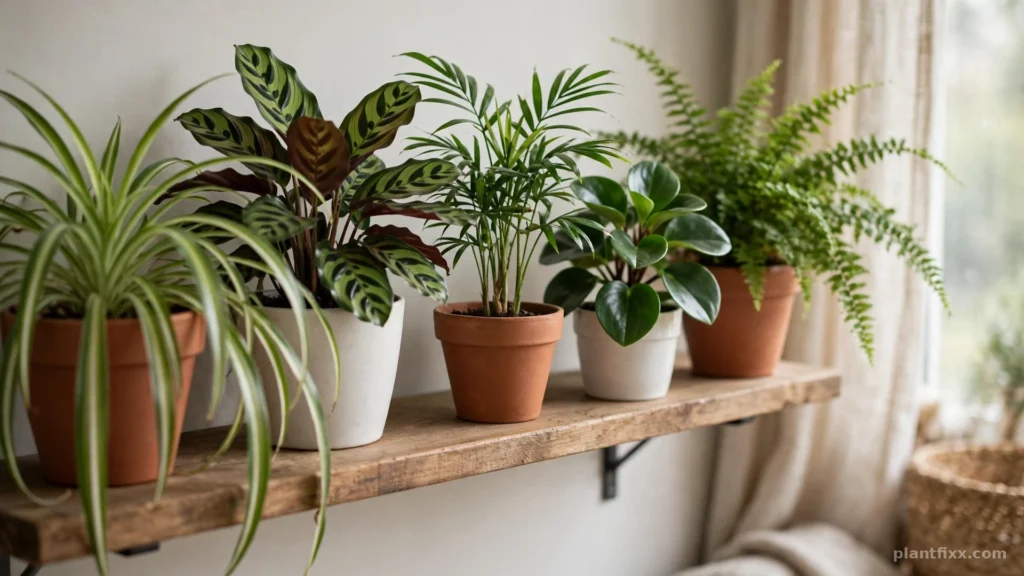
1. Parlor Palm (Chamaedorea elegans)
The best all-around pick for a genuinely dim room. Sits several feet back from a window without dropping fronds and grows slowly. Water when the top inch of soil is dry. Check the label says Chamaedorea: sago “palms” look similar and are dangerously toxic.
2. Prayer Plant (Maranta leuconeura)
Patterned leaves that fold up at night, made for dim shelves. Shade fades the patterns; direct sun burns them. Keep soil lightly moist, never soggy.
3. Calathea (Goeppertia spp.)
The showiest safe choice for low light and a natural bathroom plant. The trade is fussiness: dry air and hard tap water cause brown leaf edges, so mist regularly.
4. Nerve Plant (Fittonia albivenis)
Tiny veined leaves that handle real shade. Wilts dramatically when thirsty and perks up within hours of watering. Likes steady moisture and terrariums.
5. Spider Plant (Chlorophytum comosum)
The classic beginner plant, and a safe one. Bounces back from missed waterings. Cats love chewing the arching leaves, which is harmless to the cat but hard on the plant, so hang it high. See are spider plants safe for cats and dogs for the full picture.
6. Boston Fern (Nephrolepis exaltata)
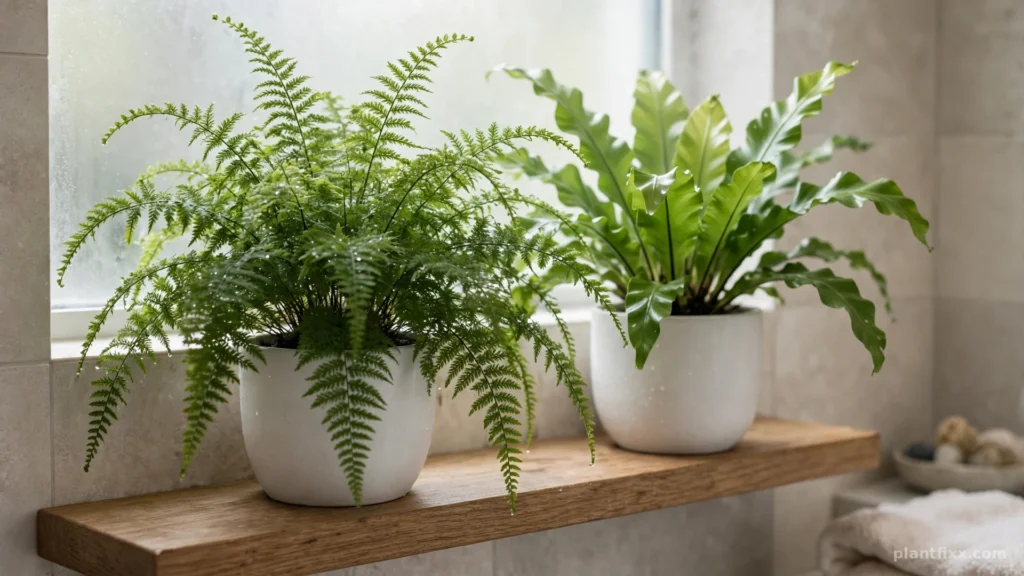
Lush arching fronds for humid, shaded spots like bathrooms. Needs consistent moisture and hates dry air. A pebble tray or daily misting keeps it happy.
7. Bird’s Nest Fern (Asplenium nidus)
Wide, wavy fronds that handle lower light than most ferns. Water at soil level, never into the central crown, where trapped water causes rot.
8. Peperomia (Peperomia obtusifolia and relatives)
Compact, thick-leaved plants that forgive forgotten waterings. Growth simply slows in lower light. Let the top half of the soil dry out: rot is the main killer.
9. Chinese Money Plant (Pilea peperomioides)
Round coin leaves with a clean, modern look. Leans toward the nearest window, so rotate the pot weekly. Let the top one or two inches of soil dry between waterings.
10. Polka Dot Plant (Hypoestes phyllostachya)
Pink, red, or white speckled leaves, the only real color on this list. Needs the most light of the ten. Pinch it back to keep it bushy when stems go leggy.
Cats vs Dogs: Placement That Keeps Both Safe
In practice, I have seen more plants ruined by placement than by wrong care. Non-toxic does not mean snack-proof: a pet that eats a lot of any plant can still get an upset stomach, and potting mix, fertilizer granules, and decorative stones are their own hazards.
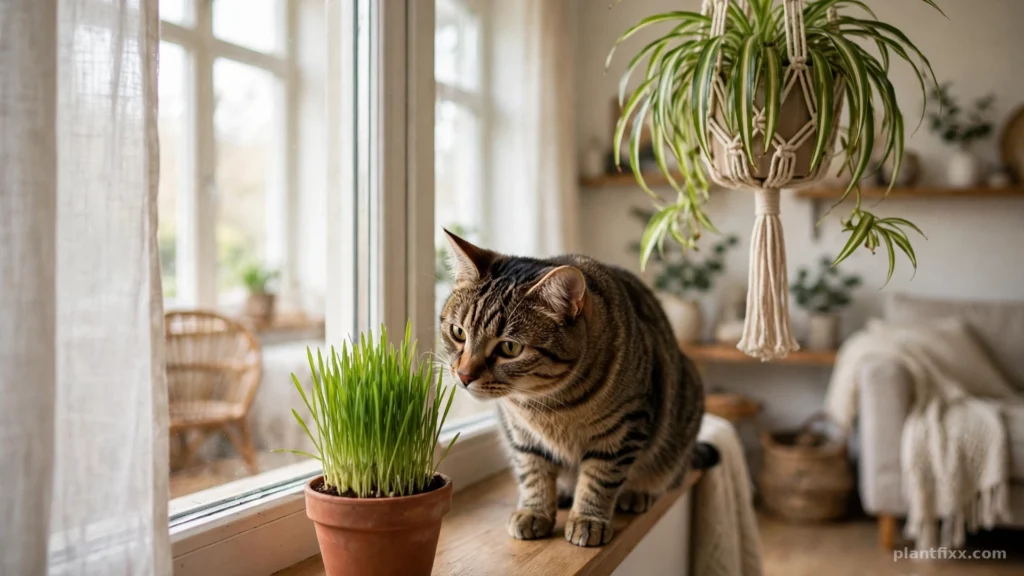
Cats chew leaves and climb. Give chewers a small pot of cat grass (wheat or oat grass) near their favorite spot. Hang trailing plants high, keep floor plants in heavy pots, and use a closed room for a determined cat. Dogs dig and knock things over, so anchor large plants in heavy-bottomed pots in a corner and keep granular fertilizer out of reach. Our pet safe hanging indoor plants for cat owners guide covers hanging setups for both species.
What To Do If Your Pet Chews a Plant
First, move the plant away and check that your pet is breathing normally. Do not try to make them vomit or give home remedies unless a vet tells you to.
Second, identify the plant. Photograph the leaves and stem, keep the nursery tag, and note what part was chewed and when. The scientific name is the most useful thing you can give a vet.
Third, call the ASPCA Animal Poison Control Center at (888) 426-4435 or the Pet Poison Helpline at (855) 764-7661. Both charge a consultation fee. Call before symptoms appear, and go to an emergency vet at once for difficulty breathing, collapse, or seizures.
Mistakes That Ruin Pet Safe Low Light Setups
The number one mistake is treating a dark corner as low light. If you cannot read a book comfortably there at midday, it is too dark for any plant. Move it closer to the window or add a grow light.
The number two mistake is watering on schedule. In dim rooms, growth slows and soil stays wet for days longer than you expect. A finger test beats any calendar.
The number three mistake is trusting common names. “Rubber plant” (Ficus elastica) is toxic; “baby rubber plant” (Peperomia obtusifolia) is safe. Always check the botanical name against the ASPCA database before a plant enters a pet home.
Frequently Asked Questions
What is the best low light plant that is safe for cats?
The parlor palm. It tolerates genuinely dim rooms and is non-toxic to cats and dogs. A Boston fern is the runner-up if you can keep humidity up.
Is pothos safe for cats?
No. Pothos contains calcium oxalate crystals that irritate the mouth and stomach, yet it appears on many low light lists.
Are calathea plants safe for cats and dogs?
Yes. Calatheas and prayer plants are non-toxic to cats and dogs. Check the botanical name at the nursery, since common names get reused.
Can pet safe plants still make my pet sick?
Yes. Eating a lot of leaves can cause vomiting or diarrhea even with no toxic compounds. Discourage chewing.
What plant looks like a snake plant but is safe for pets?
No exact match exists. A parlor palm gives similar height in a dim corner; a bird’s nest fern gives bold structure lower down.
Do these plants need a grow light in a dark room?
Yes, in a windowless room. Low light still means 50 to 250 foot-candles. Below that, even the toughest plants decline without supplemental light.
How do I stop my cat from chewing my plants?
Offer cat grass as a legal chew target, move plants out of grazing range, and use hanging planters or closed rooms for repeat offenders.
Safe Plants, Dim Rooms, Happy Pets
A dim room and a curious pet do not mean giving up on plants. Parlor palms, prayer plants, ferns, and peperomias handle low light and sit on the ASPCA’s non-toxic list. Measure your light, swap the toxic favorites, and keep chewing and tipping hard to do.
If you want the full pet-safe collection beyond low light, our guide to 10 pet safe indoor plants for cats and dogs covers brighter rooms too.