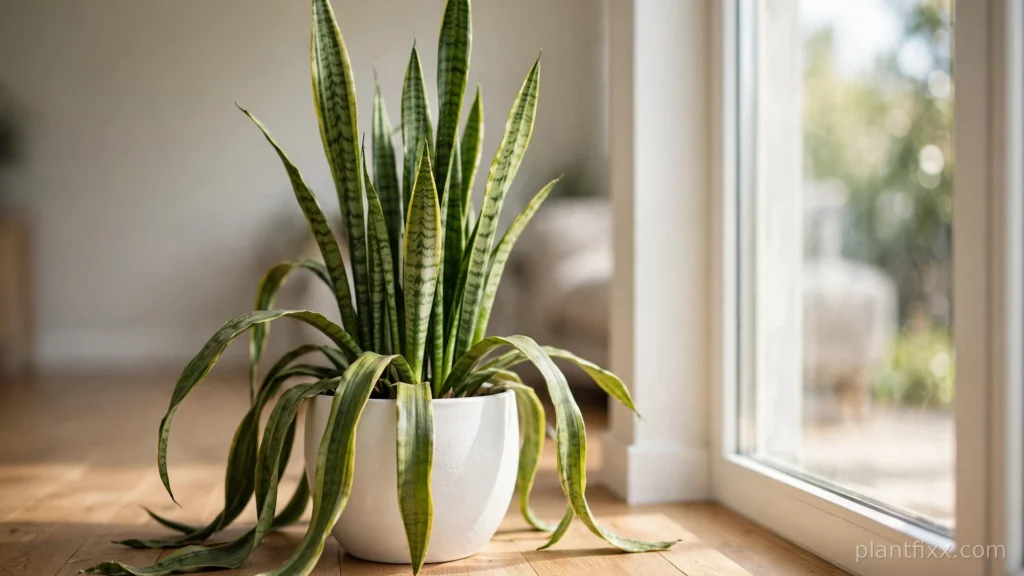
Why Snake Plant Leaves Fall Over
A healthy snake plant holds its leaves upright on its own. Each leaf is a stiff, water-filled blade anchored by a rhizome and a shallow root system. When that anchor weakens, gravity wins and the leaf flops.
Falling leaves are a symptom, not a disease on their own. A top-heavy plant needs a heavier pot. A plant with rotting roots needs a rescue, not a stake.
Start with the one-minute diagnosis below, then use the fix for your cause.
Most snake plant leaves fall over because of root rot from overwatering, a top-heavy plant in a light pot, low light that grows thin weak leaves, crowded roots pushing the plant upward, or transplant shock after repotting. Press the base first. A soft base means rot. A firm base points to light, pot weight, or crowded roots.
Quick Take: Do not reach for a stake or a watering can first. Feel where the leaves meet the soil. A soft, sour-smelling base is rot and needs unpotting and trimming right away. A firm base means the plant needs brighter indirect light, a heavier and snugger pot, or more room for its roots. Bent leaves will not straighten, but new growth comes in firm and upright once the cause is fixed.
One mistake many people make is treating every flopped snake plant the same way. Check the base and the soil first, then match one fix to one cause.
What You Need Before You Start
Gather these before you touch the plant: clean sharp scissors, fresh fast-draining mix, a heavy pot with a drainage hole only slightly wider than the root ball, and rubbing alcohol for tools. Do not reuse old mix from a rotted plant.
Diagnose First: The 60-Second Base Test
Start here every time. First, press the base. Push a finger gently into the soil where the leaves meet the surface. A firm base points away from rot. A soft, mushy base, especially with a sour smell, points straight at rot.
Second, check the soil. Soil still wet days after watering, paired with limp leaves, supports a rot diagnosis. Dry soil with firm, pale, stretched leaves points to light or weight instead. Third, look at the whole plant. A plant that leans as one unit with a tipping pot is usually top-heavy.
| What you see and feel | Likely cause | First action |
|---|---|---|
| Soft base, wet soil, yellow leaves | Root rot | Unpot, trim rot, repot in dry mix |
| Firm base, plant and pot tipping | Top-heavy plant | Move to a heavier, wider pot |
| Firm base, pale thin leaves stretching | Low light | Move to bright indirect light |
| Firm base, roots circling, plant riding high | Root-bound rhizomes | Repot one size up or divide |
| Firm base, flop started after repotting | Transplant shock | Leave alone, bright light, no feed |
Cause 1: Root Rot From Overwatering
Overwatering is the most common reason snake plant leaves fall over. Snake plants store water in their leaves, rhizomes, and roots. When soil stays wet, roots cannot get air, fungi attack them, and they turn soft and brown and stop anchoring the plant. The base weakens, leaves crease near the soil line, and then they fall. Warning signs: a soft base, soil wet long after watering, leaves yellowing from the base upward, and sometimes a sour smell.
How to rescue a rotted snake plant
- Slide the plant out of its pot and shake off the old mix.
- Inspect every root. Healthy roots feel firm and look pale. Rotted roots feel soft and look brown or black.
- Cut away all soft tissue back to firm tissue. Clean the blades with rubbing alcohol between cuts.
- Let cut surfaces air-dry for a few hours, or overnight for large cuts.
- Repot into fresh, fast-draining mix in a clean pot with a drainage hole, at the same depth as before.
- Wait several dry days before the first light watering, and hold off on fertilizer until you see new growth.
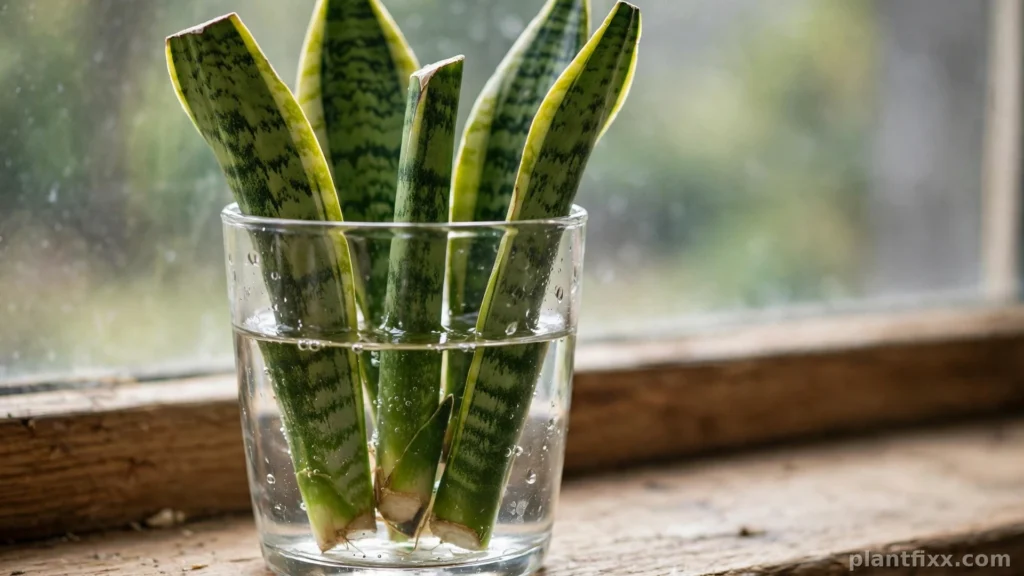
If the roots are beyond saving but a few leaves are still firm, propagate those leaves as cuttings. If every leaf is soft at the base, the plant is usually past saving. For the soil side of this fix, see our guide to the best soil mix for snake plants.
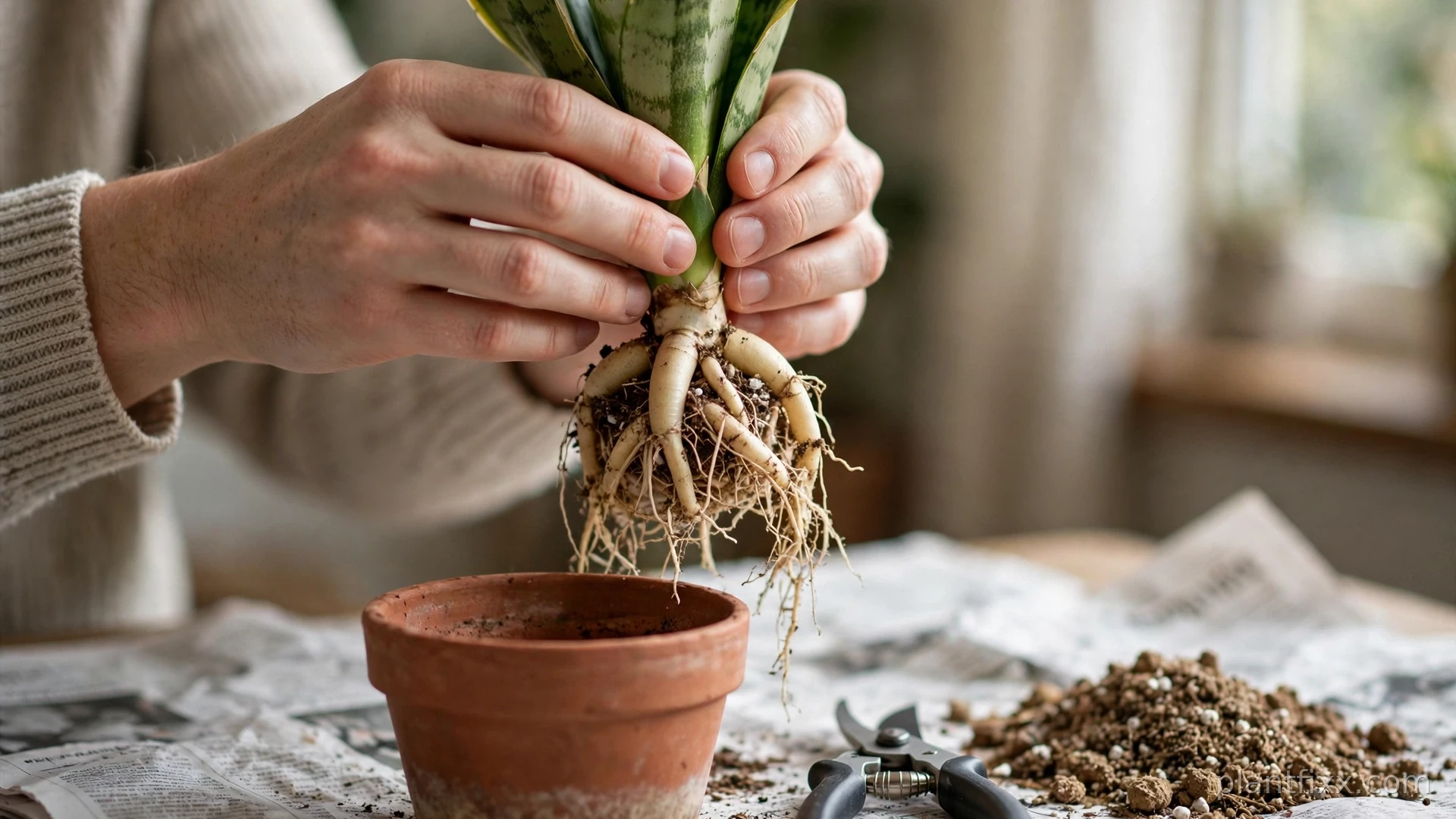
Cause 2: A Top-Heavy Plant in a Light Pot
A healthy snake plant can fall over for a purely physical reason. Tall varieties grow leaves several feet high on a shallow root system. When most of the weight sits up high and the pot below is small, light, or narrow, the whole plant tips.
Confirm it by feel: leaves firm and green, base solid, whole plant leaning or pot tipping. The fix is weight and a snug fit, not a stake. Move the plant into a heavy pot, such as unglazed terracotta or ceramic, only one or two inches wider than the root ball. A much larger pot holds extra wet soil and brings you back toward rot.
Cause 3: Low Light Growing Thin, Weak Leaves
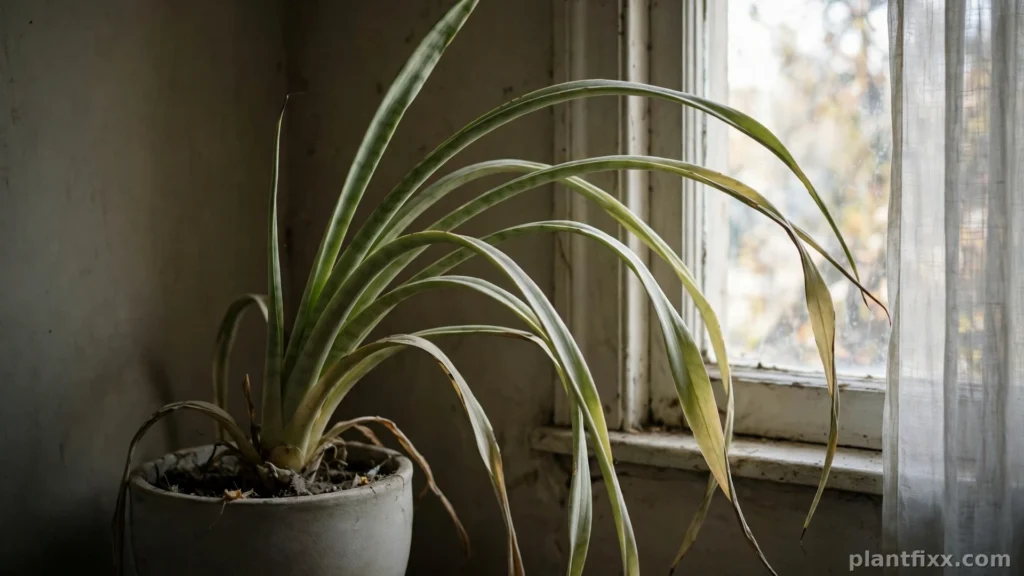
Light is the cause most owners miss. Snake plants survive in dim corners, but surviving is not the same as growing strong. In low light, the plant cannot build the dense tissue that keeps a leaf stiff. New leaves come in pale, thin, and stretched, and those under-built leaves lean, then flop.
Look for leaves narrower and paler than older growth, a plant leaning toward the brightest window, and slow new growth. Move it into bright, indirect light, such as a few feet from an east or west facing window. Direct sun through hot glass can scorch leaves. Rotate the pot a quarter turn each week.
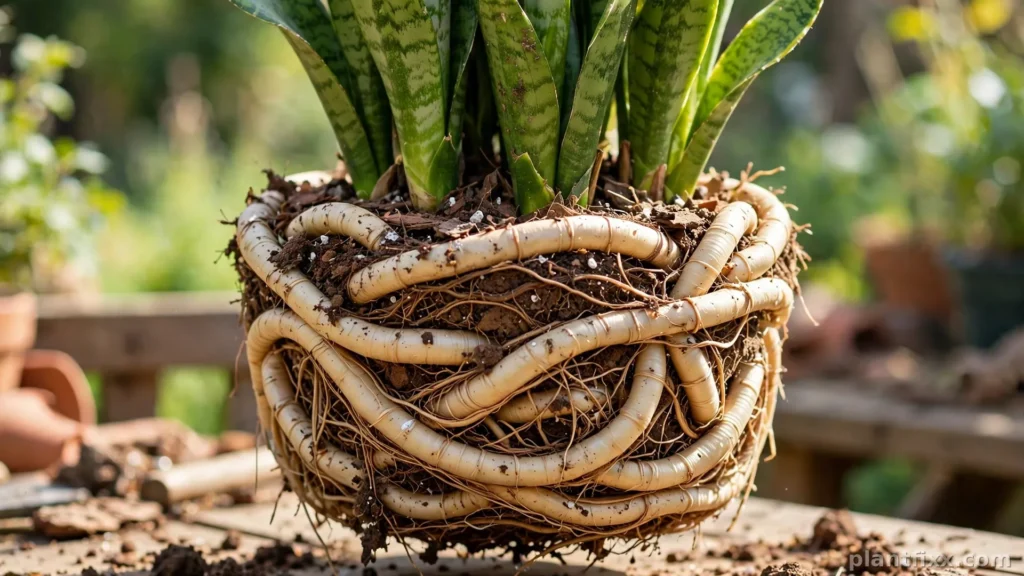
Cause 4: Root-Bound Rhizomes Pushing the Plant Up
Snake plants spread through thick horizontal rhizomes under the soil. When those rhizomes run out of room, they push against the soil surface and heave the plant upward and sideways. Leaves tilt, the root ball rides high, and in severe cases the pot bulges or cracks.
Check the signs before you assume rot: roots circling the pot bottom or coming out of the drainage hole, soil that dries out very fast, and a firm base. Move the plant into a pot one or two inches wider at the same depth, and wait several dry days before watering.
Cause 5: Transplant Shock After Repotting
A snake plant that flops within days of repotting is usually in transplant shock, not failing. Its roots were disturbed, and this species resents root handling. Signs: a firm base, a recent repot, and a lean that lasts a week or two. The treatment is patience. Keep the plant in bright, indirect light, wait several dry days before the first watering, and skip fertilizer until it is growing again. Read more in our guide to plant shock after repotting.
What to Do With Leaves That Already Fell
A bent or creased snake plant leaf will not straighten. The tissue is damaged, and no amount of light or staking restores it. Cut damaged leaves at the soil line with clean shears. Removing them lets the plant direct energy to new growth, and it removes tissue that can rot. Do not trim just the bent tip, since a snake plant leaf does not regrow from a trimmed tip. Keep cuttings away from children and pets, since snake plants are mildly toxic if eaten. If a fallen leaf is still firm above the crease, cut it into sections and propagate them.
Signs It Is Recovering
Recovery is slow, so look for the right signals instead of watching the old leaves. New leaves emerge from the center, firm and upright. The base feels solid when you press it gently. Remaining leaves hold their color and stop yellowing.
Signs It Is Getting Worse
Act quickly if you see these. More leaves flop week after week. The base gets softer or the sour smell spreads. Yellow spreads from the base up the leaves. Soil stays wet for many days after watering. No new growth appears after a month in good light.
How to Keep Your Snake Plant Upright
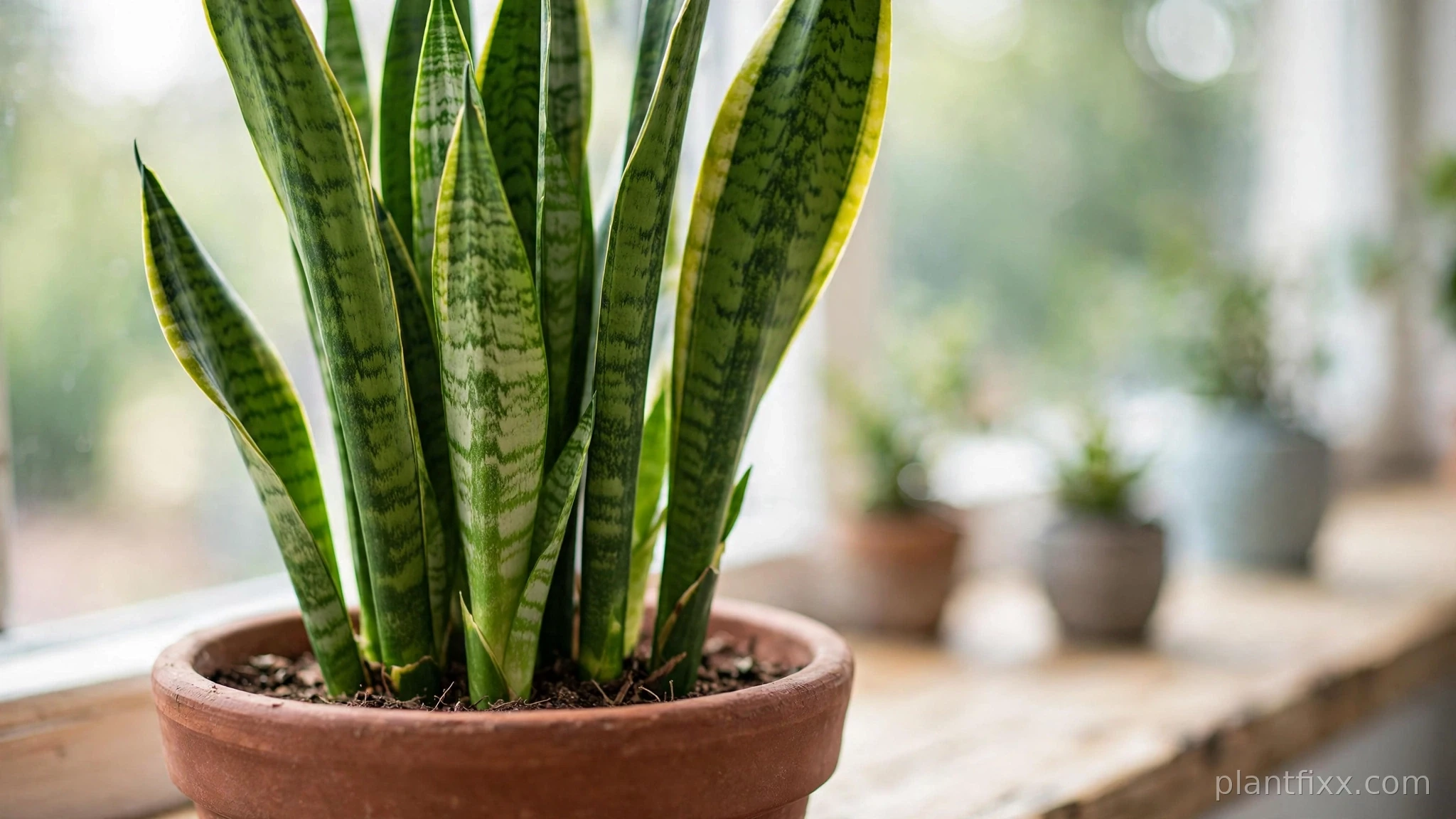
Prevention is the same routine that fixes most cases. Water only when the soil has dried through, and always let excess water drain away. Use a heavy pot with a drainage hole and a fast-draining mix. Give the plant bright, indirect light and a weekly quarter turn. Keep it away from cold drafts in winter. For the full routine, see our snake plant care guide.
A Steady Plant Comes From the Right Cause and the Right Fix
A falling snake plant looks alarming, but it is rarely a mystery once you check the base, the soil, and the light. Most plants come back with one correct fix and a few weeks of patience.
Want the full routine? Read our snake plant care guide and keep your plant standing tall.
Why is my snake plant falling over?
Root rot, a top-heavy pot, low light, crowded roots, or transplant shock. Press the base: soft means rot, firm points to light, pot weight, or crowded roots.
Can a snake plant fall over just because it is top-heavy?
Yes. Tall leaves on a shallow root system can tip the plant, especially in a small, light pot with dry soil. Move it to a heavy, wider pot.
How do I fix a floppy snake plant?
Match the fix to the cause: repot rotted plants in dry mix, move light-starved plants to bright indirect light, and give top-heavy plants a heavier pot.
Will bent snake plant leaves straighten again?
No. A bent leaf stays bent. New growth comes in firm and upright. Prune the worst old leaves at the soil line once new growth appears.
Should I stake a falling snake plant?
Only as short-term support after repotting. A stake does not fix the cause and can hide rot. Diagnose first.
Can I save a snake plant with root rot?
Often, if you act early. Cut away all soft tissue, let cuts dry, and repot in fresh fast-draining mix.
How long after repotting until my snake plant stands upright again?
Most firm up within one to five weeks in bright, indirect light. Water lightly and skip fertilizer.
Pingback: Snake Plant Light Requirements: Indoor vs Outdoor Guide 2026
Pingback: Snake Plant Overwatering? Spot the Signs and Save Your Plant