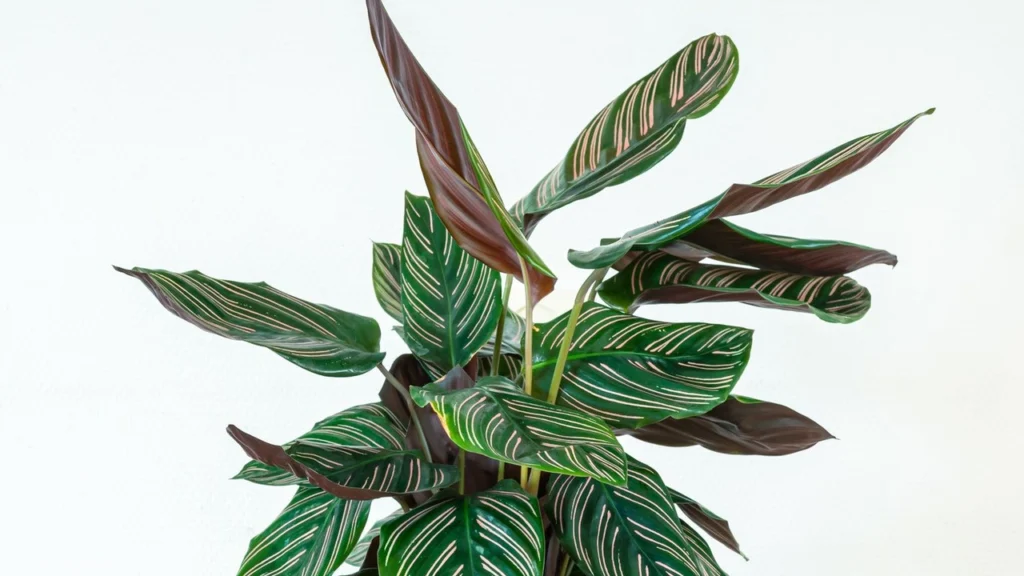
There is no fixed day of the week for this plant. Water when the top inch of soil feels dry to your finger, and let that check set the rhythm. In many homes that works out to about once a week in spring and summer, and every 10 to 14 days in winter.
Learning how often to water calathea plant comes down to three checks you can do in under a minute: a finger in the mix, the weight of the pot, and a wooden skewer. This guide walks through each check, the winter heating trap that changes the rhythm, and how filtered, distilled and tap water compare.
Why Calathea Watering Runs on Moisture, Not a Calendar
A calathea comes from the floor of Central and South American rainforests, where rain arrives often and the ground rarely dries out. That history is written into the roots. The plant expects steady moisture, and it expects that moisture to arrive evenly.
Steady does not mean soaked. Roots need air as well as water, and the University of Minnesota Extension makes the point plainly: wet soil lacks air, and roots need oxygen to grow well. A mix that never breathes starts to lose roots.
This is why a calendar fails. The same pot can dry out in days beside a bright window and stay wet for well over a week in a cool corner. The soil is the only schedule that knows your room.
Watering sits inside a bigger routine of light, humidity and feeding. If you are setting that routine up from the start, work through our complete calathea plant care guide first, then use this page for the watering rhythm itself.
How Often to Water Calathea Plant: The Working Rhythm
In the growing season, spring and summer, an indoor calathea in active growth typically settles into a drink about once a week. That is a starting point, not a promise. Small pots, terracotta and bright rooms pull the gap shorter, sometimes to a few days.
In autumn and winter the gap stretches. Growth slows, light drops, and the roots drink less, so many plants land near every 10 to 14 days. A large pot in a cool room can go longer, and the check still decides.
Hold one rule above both patterns. Never water because the day arrived, and never wait for a set day while the mix is dry. Check first, then water or wait based on what your fingers find.
Three Ways to Check Soil Moisture Before You Water
Each check reads the same thing at a different depth and cost. Use the finger check for everyday pots, the weight check when you know your pot, and the skewer when the pot is deep or your finger cannot reach the root zone.
The Finger Check
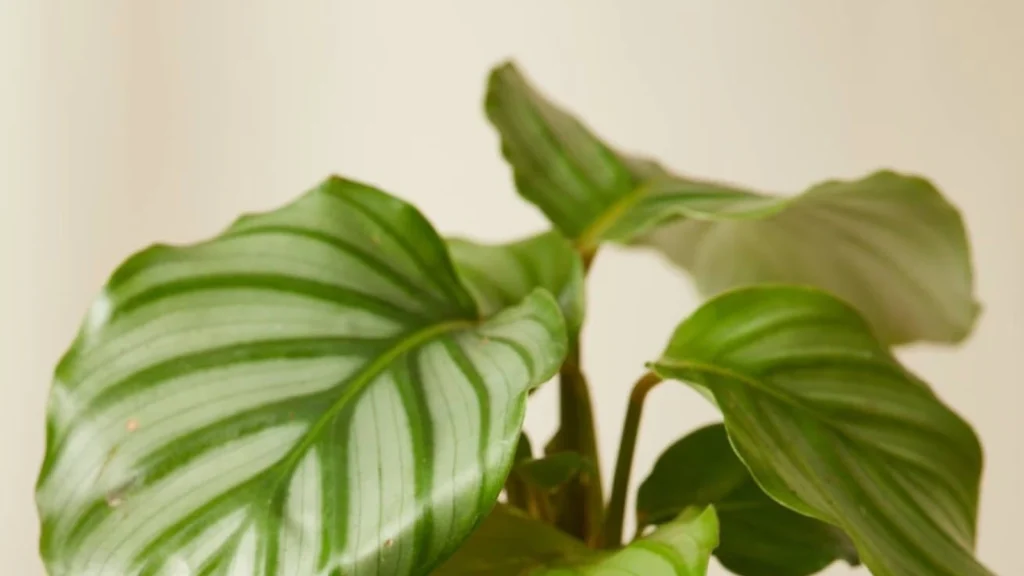
Push a finger into the mix up to the second knuckle, about an inch to an inch and a half down. If that depth feels dry and little soil sticks to your skin, the plant is ready for water.
If the mix feels cool and damp and soil clings to your finger, wait and check again in two or three days. The University of Minnesota Extension gives the same basic test: feel the top few inches of soil and water if it is dry.
The Pot Weight Check
Lift the pot right after a full watering and note how heavy it feels. Lift it again every few days. A pot that feels light has lost most of its water, and Extension guidance uses the same read: light means dry, heavy means still moist.
This check shines with decorative outer pots, where you cannot see or reach the mix. It takes a week or two to learn the two weights, and after that it is the fastest check you own.
The Wooden Skewer Check
Push a wooden skewer or chopstick gently down to near the bottom of the pot, leave it for a few seconds, and pull it out. Soil clinging along the lower half means moisture remains where the roots sit.
A skewer that comes out clean and dry means the root zone is dry even if the surface looks dark. Push it in near the edge so you do not spear the crown.
| Method | What you learn | Best for | Limit |
|---|---|---|---|
| Finger check | Moisture in the top inch or two | Everyday pots and quick reads | Reads the surface layer only |
| Pot weight | Water left in the whole pot | Cachepots and pots you lift often | Needs a learned reference weight from a fresh watering |
| Wooden skewer | Moisture deep in the root zone | Deep or large pots and tall plants | Reads one point, so test in one or two spots |
How to Water Once the Check Says Yes
Pour room temperature water slowly over the whole surface until it runs from the drainage holes. Wetting the full surface matters, because a single pour point can leave dry pockets around the roots while the top looks soaked.
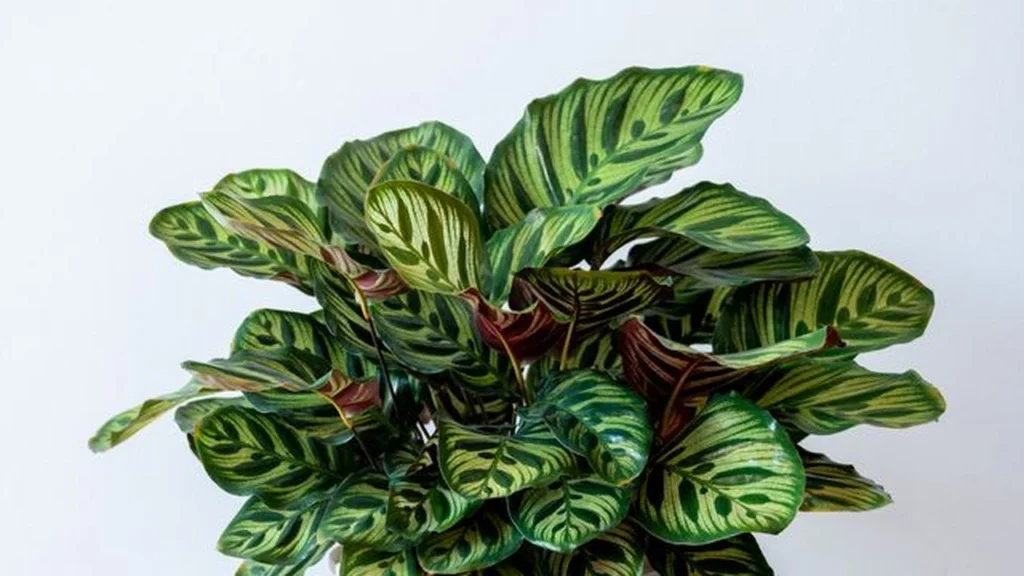
Let the pot drain fully, then empty the saucer. The University of Minnesota Extension warns that letting plants sit in water can lead to root rot, yellowing leaves or a fungus gnat invasion, and each of those starts in a full saucer.
For a double potted plant, lift the inner pot out, water it in the sink, and let it drain completely before it goes back. Extension gives the same routine, and it keeps the outer pot from becoming a hidden reservoir.
Bottom watering is the backup method for a mix that has dried hard and sheds water off the surface. Set the pot in a container with water covering the drainage holes, let the mix take up water, then drain it well.
Winter Heating Changes the Rhythm
Winter pulls the rhythm in two directions at once. Short days and slow growth mean the roots drink less, so the mix stays wet longer and the gap between drinks grows. Watering on your summer rhythm now is how roots end up sitting in cold, wet mix.
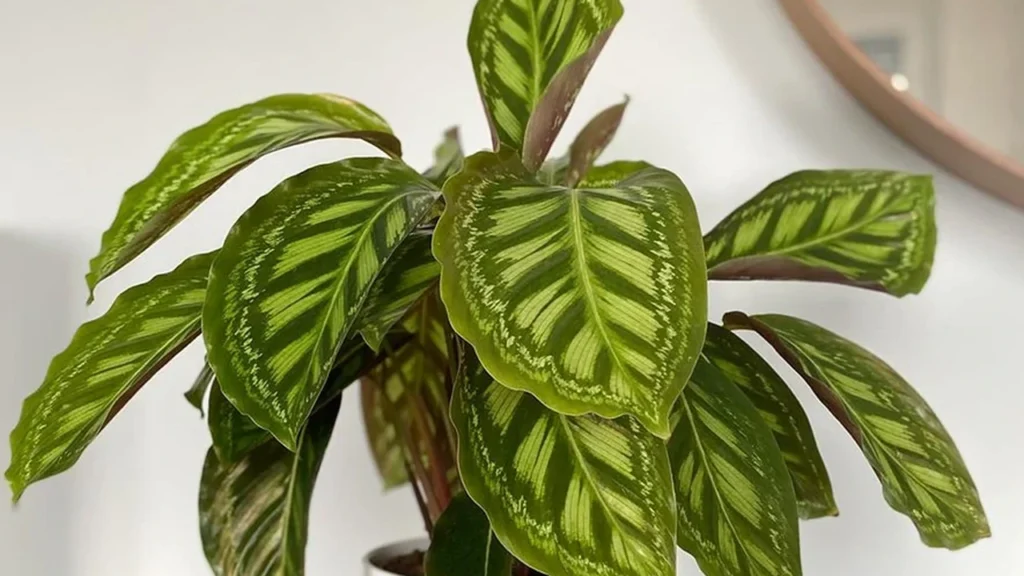
Heating pulls the other way. Radiators, vents and fan heaters dry the air and the surface of the mix, so the top inch can read dry while the root zone is still wet. A pot standing in a stream of heated air loses leaf moisture faster too.
The fix is to check more often and water less blindly. In the heating season, test twice a week, trust the skewer over the surface, and move the plant out of the direct path of vents and radiators where you can.
Expect uneven drying and forgive it. One side of the pot near a heat source can dry days ahead of the far side, which is another reason a single surface touch can mislead you in January.
Filtered vs Distilled vs Tap Water for Calathea
Frequency is only half of watering. Calathea leaves react to what the water carries, and the damage pattern is slow: minerals and salts travel up with the water, the water leaves through the leaf, and what it carried stays behind at the tips and edges.
The University of Minnesota Extension guidance on watering houseplants notes that municipal water may be treated with fluoride and other additives that can negatively affect some plants, and it suggests rainwater or filtered water for sensitive plants. Calathea sits firmly in that sensitive group.
The same guidance keeps chlorine in proportion: the amount in most drinking water is below toxic levels for plants, and chlorine dissipates when water stands open to the air. Standing a jug overnight helps with chlorine only, and it does nothing for fluoride or dissolved minerals.
| Water | What is in it | What that means for calathea | Keep in mind |
|---|---|---|---|
| Tap water | Varies by city, and may carry fluoride, chlorine and dissolved minerals | Fine for some homes, and the likely suspect when clean brown tips keep spreading | Let it stand overnight for chlorine, and judge it by your newest leaves |
| Filtered water (standard carbon filter) | Chlorine and many taste and odor compounds reduced | A step up from raw tap water for many homes | Standard carbon filtration does not reliably remove fluoride, so brown tips can continue |
| Distilled water | Minerals and fluoride removed during distillation | The most predictable option when tap water keeps marking leaves | It brings no minerals at all, so steady light feeding in the growing season matters more |
Use your plant as the test. If new leaves open clean on your tap water, your supply is fine and there is no reason to switch. If tips brown while moisture and humidity are steady, change the water before you change the schedule.
Signs Your Rhythm Is Working, and Signs It Is Not
Working looks quiet. New leaves unfurl flat and hold their pattern, the mix dries at a steady pace between checks, and older leaves age slowly one at a time. In the growing season you should see new spears rising from the crown.
Thirst shows first in the leaves. A dry calathea rolls its leaves inward to slow water loss, and a deep watering can relax a fresh roll within a day. Our guide to calathea plant leaves curling and what each pattern means reads each curl shape in turn.
Too much water shows in the opposite pairing: leaves yellowing while the mix stays wet. Extension gives the warning behind it, since a wilted or yellowing plant in wet soil can be losing roots to rot rather than asking for another drink.
Brown tips with a steady rhythm point away from frequency and toward the water or the air. Work the order this guide used: soil moisture first, then water type, then the heated air around the plant.
The Rhythm to Keep
Check the mix before you water, water deeply when the check says yes, and empty what drains away. Stretch the gap when winter slows the plant, test deeper when the heating runs, and let the newest leaves grade your water.
For the light, soil, humidity and feeding routine that surrounds watering, keep our complete calathea plant care guide open beside this page. The two together cover the whole plant, and this page stays your reference for the watering rhythm.
How often should I water my calathea?
When the top inch of soil feels dry. In many homes that is about once a week in spring and summer and every 10 to 14 days in winter, but your pot, light and room set the real gap, so the check decides.
Can I use tap water for calathea?
You can if your supply is gentle and new leaves open clean. If brown tips and edges keep spreading while moisture is steady, treat the water as the suspect and move to filtered or distilled water for a month to compare.
Is distilled water good for calathea?
Yes, it is the most predictable choice because distillation removes the fluoride and minerals that mark leaves. It also removes minerals the plant can use, so keep feeding light and steady in the growing season rather than skipping food entirely.
Should I water calathea from the top or the bottom?
Top watering is the default, because it wets the whole surface and flushes salts down and out. Bottom watering helps when a dried out mix sheds water or when you want the surface to stay dry, and the pot must drain fully afterward.
Why are my calathea leaves turning brown and crispy?
The usual causes are minerals building up from the water, dry heated air, or both together. Check the mix first, then review your water type, then look at humidity and heat sources before you change the watering frequency itself.
How do I know if my calathea needs water?
Use the checks in this guide: a finger an inch down, the weight of the pot, or a skewer read at root depth. Dry at root depth plus a light pot means water now. Damp mix means wait, whatever the calendar says.
Pingback: Calathea Plant Care Guide: Light, Water, Humidity and Pet Safety
Pingback: Calathea Plant Leaves Curling: Read the Curl Pattern and Fix It