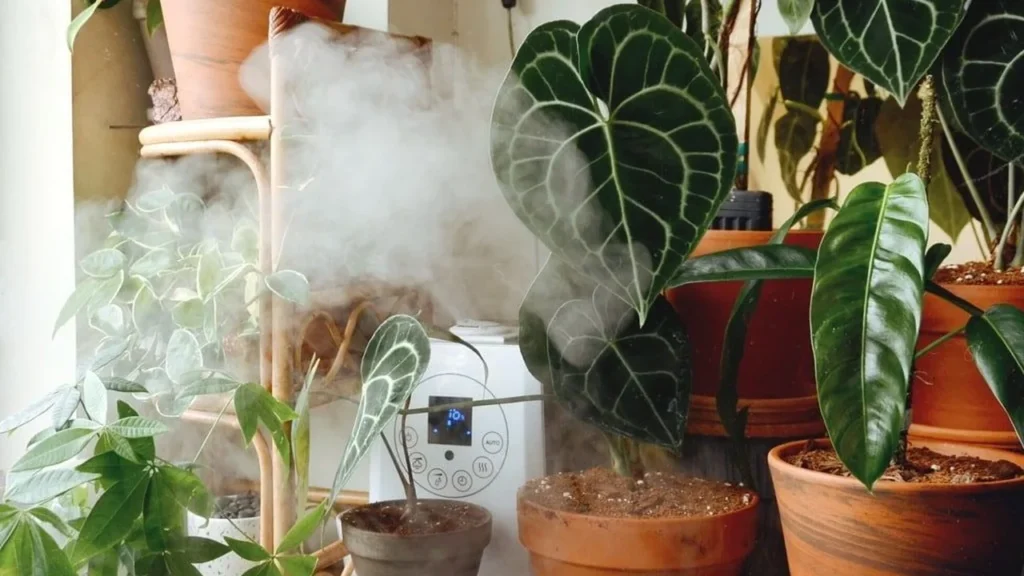
Heating dries the air in an apartment fast. Cold outdoor air holds little moisture, and warming that air indoors lowers the relative humidity further, so leaf edges can turn brown even when the soil moisture is fine.
The fix starts with a measurement, not a purchase. Set a hygrometer at leaf height, then run a small humidifier near the plants, group the pots together, and move them away from vents and radiators.
According to the University of New Hampshire Extension, most houseplants prefer a relative humidity of 40 to 60 percent. This guide shows you how to check your own number, set up a humidifier safely, and judge which extra methods deserve your time.
Why Heated Air Dries Out the Room Around Your Plants
Relative humidity is the amount of moisture in the air compared with how much that air can hold at its current temperature. The University of New Hampshire Extension explains that cold air holds less moisture than warm air. When dry outdoor air comes inside and heating warms it, the air could hold far more moisture than it carries.
Leaves release water vapor into the air all day, and dry air pulls that moisture away faster. The Extension notes that foliage turning dry, brown and brittle around the leaf margins can be a sign that a plant needs extra humidity.
Brown tips alone do not prove the air is dry, though. Watering problems, fertilizer salts and low light can mark leaves in similar ways. Work through the other causes first with our guide to brown tips on a prayer plant, and let a hygrometer reading confirm the air is part of the problem.
Some plants care far more than others. The Extension puts the preferred range for most houseplants at 40 to 60 percent, while tropical species can thrive at 70 to 80 percent. Cacti, succulents and a few others tolerate dry air without help.
A calathea white fusion sits at the demanding end of that scale, and our calathea white fusion plant care guide shows how steady humidity fits into its full care routine.
What You Need Before You Start
You need little to work through this guide in order. The meter comes first, because every later step depends on knowing your starting number.
- A digital hygrometer, ideally a thermometer and hygrometer in one unit
- A small portable humidifier sized for one room
- Distilled or other low-mineral water for the humidifier tank
- A small brush for cleaning the humidifier
- A shallow tray and a bag of pebbles, if you want to test a pebble tray
Check the Air First: How to Use a Hygrometer
Where to Place the Hygrometer
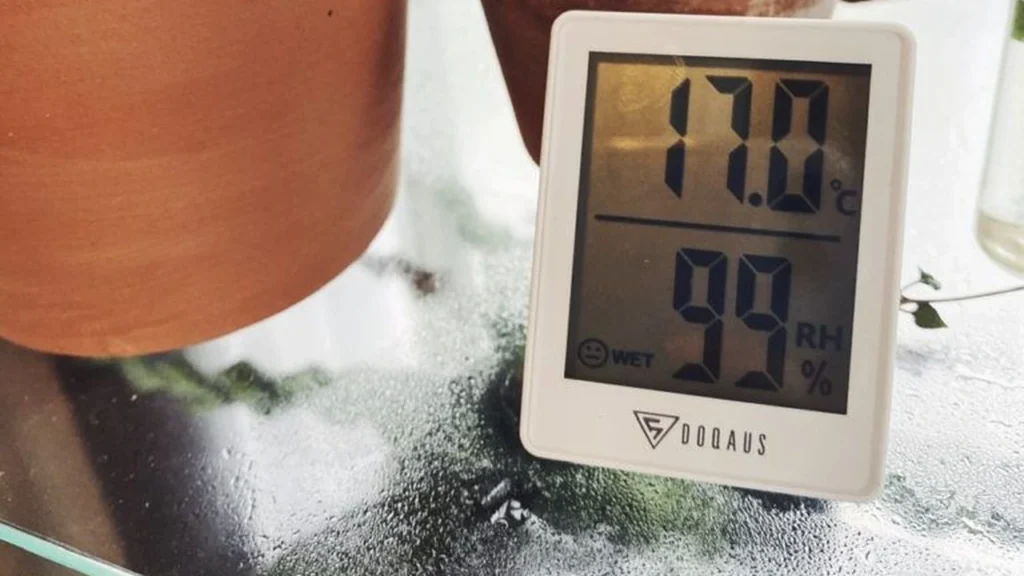
Set the hygrometer at leaf height, on the same shelf or stand as the plants it speaks for. That is the air your leaves live in. A reading taken across the room can look fine while the plant corner stays dry.
Keep it out of the humidifier stream and away from radiators, heating vents and sunny glass. Mist drifting straight onto the sensor inflates the reading, and a nearby heat source drags it down.
How to Read the Number
The large percentage on the display is the relative humidity, and the smaller number is the temperature. Read the pair together, because warm heated air can hold more moisture than cool air at the same percentage.
Check the meter at different times over two or three days. Readings usually fall when the heating runs hardest. The lowest repeated reading is the one your plants have to live with.
What the Reading Tells You
If your plant corner sits below 40 percent for long stretches, it is under the range the University of New Hampshire Extension gives for most houseplants. Between 40 and 60 percent, foliage plants are inside the recommended zone.
Do not chase tropical numbers across the whole apartment. Holding an entire home at 70 percent invites condensation on windows and damp walls. Keep the room moderate, and give the fussiest plants a local boost instead, as the enclosure section below explains.
How to Increase Humidity for Houseplants With a Small Humidifier
A portable humidifier is the one tool here that adds moisture to a whole room, not only to the air touching one leaf. Iowa State University Extension calls humidifiers an excellent way to increase the relative humidity in the home.
Place the humidifier close to your plant group, on a stable raised surface such as a stool or shelf. The University of New Hampshire Extension says placing the humidifier close to the plants offers the most benefit, particularly in larger rooms. Close means in the same plant corner, not across the room.
Aim the mist into the open air beside the foliage, not straight onto the leaves. Leaves that stay wet for hours can develop spots, and a shelf that stays damp under the unit is a sign to move it back or turn the output down.
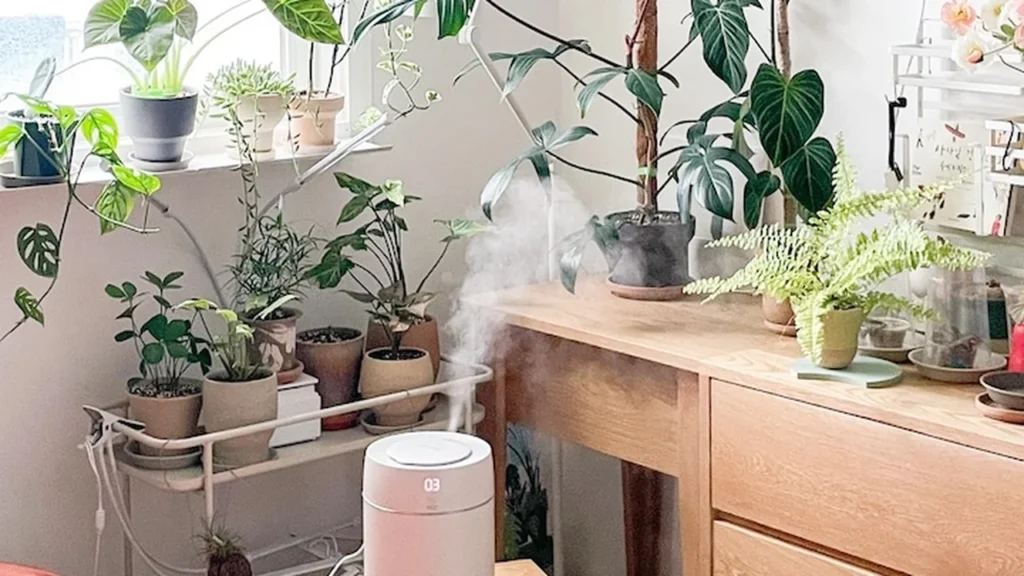
Expect the unit to run for multiple hours every day during the heating season, as the Extension notes. Check the hygrometer after the first hour, then adjust the output until the plant corner holds your target range.
Clean the Humidifier on a Schedule
A humidifier only helps if the water inside it stays clean. The US Environmental Protection Agency warns that dirty humidifiers can disperse microorganisms and minerals into indoor air. The routine below comes from the EPA guidance for portable humidifiers.
- Empty the tank, wipe all surfaces dry, and refill it every day. Unplug the unit before you handle it.
- Clean the unit every third day. Scrub away any scale, deposits or film with a brush, then wipe the surfaces dry.
- Fill with distilled or other low-mineral water. The EPA notes that low-mineral water reduces scale build-up and the minerals released into the air.
- Rinse the tank thoroughly if you use any cleaning product, so no residue is dispersed when the unit runs again.
If white dust settles on leaves near an ultrasonic unit, that is mineral residue from the water, and your cue to switch to distilled water. Turn the output down if the surface under the unit stays damp.
Group Your Plants to Build a Shared Microclimate
Grouping is free, and it works on a simple mechanism. Water evaporates from the potting mix, and leaves release moisture as they transpire. When several plants stand together, that shared moisture lingers around the group instead of dispersing into the room.
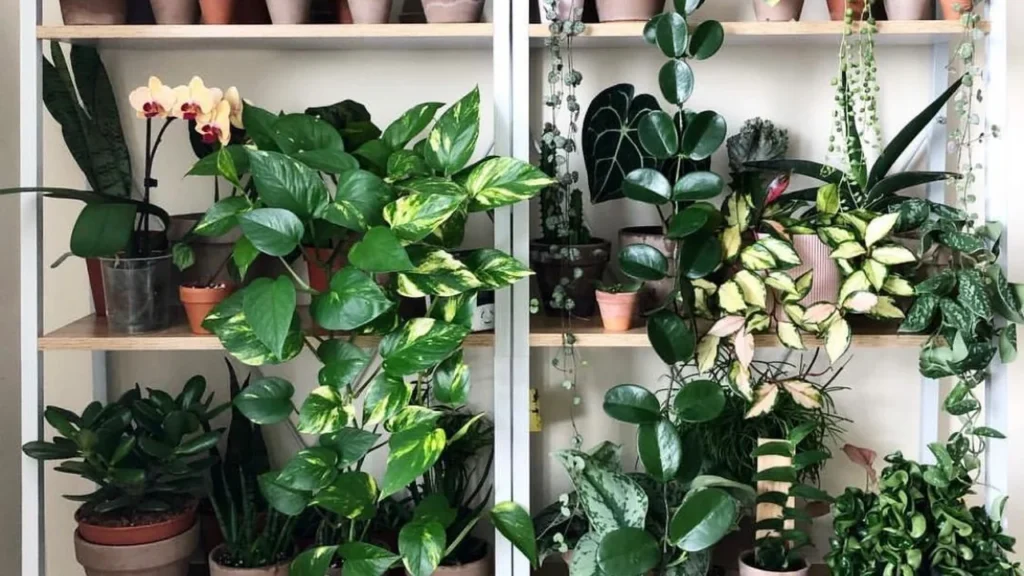
The University of New Hampshire Extension describes this as a microclimate, and notes that more plants expand the effect. It also works best in a small room with low airflow, where the moist air is not carried away quickly.
Group plants with similar light and watering needs so the arrangement is easy to keep. Leave small gaps between pots so you can still inspect leaves for pests. Keep the group away from the radiator.
Pebble Trays and Misting: Small Help, Honest Limits
A pebble tray is a shallow tray, two to three inches deep, filled with pebbles and water, with the pots resting on the stones. The University of New Hampshire Extension is clear that the pot must not sit in the water. Evaporation from the tray gives a small local benefit around the plant.
That benefit is modest, and the Extension notes it is strongest with several plants in a room with low air circulation. Treat a tray as a support act for a plant group, not as a room solution. Refill it as the water drops, and rinse it when a film builds up on the stones.
Misting needs an honest verdict. Iowa State University Extension states that misting is not an effective way to raise relative humidity, because the level rises for only a few minutes after misting. You would have to spray many times a day for any lasting effect.
Keep the spray bottle if you enjoy it for wiping dust from leaves. Do not count it as humidity care, though, and do not let it replace a method that holds moisture in the air for hours.
A Glass Enclosure for One Fussy Plant
Some tropical plants want 70 to 80 percent humidity, and no apartment should be held at that level. A terrarium, glass cloche or small aquarium solves the mismatch by holding a pocket of moist air around one small plant.
The University of New Hampshire Extension calls these enclosures an excellent way to maintain a high-moisture environment. Lift the lid of a closed vessel now and then to release excess moisture build-up. Closed enclosures suit smaller, compact plants best.
How the Methods Compare
The humidifier is the only method here that changes the air of a whole room.
| Method | What it does | Effort and upkeep | Best for |
|---|---|---|---|
| Humidifier | Adds moisture to the air of a whole room | Daily refill, cleaning every third day | A dry room with several plants |
| Grouping plants | Shared evaporation and transpiration lift the air around the group | None beyond normal watering | A shelf or corner collection |
| Pebble tray | Evaporation adds a small local boost near one plant or group | Refilling and occasional rinsing | Support for a plant group |
| Terrarium or cloche | Traps a pocket of high humidity around one plant | Occasional venting of the lid | One small tropical plant |
| Misting | Wets the leaves for a few minutes | Repeated spraying all day | Not a humidity method |
Signs Your Setup Is Working, and Signs to Dial It Back
A working setup holds the plant corner inside your target range through the hours when the heating runs, not only right after the humidifier starts. Check the reading at the same times for a week before you change anything.
New growth tells the slower story. Leaves that unfurl without crispy edges, and older leaves that stop browning at the margins, suggest the air is suiting the plant better. Old damage does not heal, so judge by the new leaves.
Dial the output back if you see condensation running on the windows, a damp patch on the wall behind the plants, or a musty smell in the corner. Those are signs the room, not the plant zone, is getting too wet.
One caution from the University of New Hampshire Extension is worth repeating here. Do not water the soil more often because you are working on the air. Humid air and wet roots are different problems, and overwatering can harm a plant faster than dry air.
Conclusion
Start with the meter, because a heated apartment can feel comfortable to you while the air at leaf height sits far below what your plants prefer. A small humidifier near the group does the heavy lifting, grouping and a pebble tray support it locally, and an enclosure covers the one plant that wants more than the room should give.
If a humidity-hungry plant is the reason you started, see how steady moisture fits into its complete routine in our calathea white fusion plant care guide. Pick one method, run it for a week, and let the hygrometer tell you whether it worked.
What humidity level do houseplants need?
The University of New Hampshire Extension puts the preferred range for most houseplants at 40 to 60 percent relative humidity. Tropical species can thrive at 70 to 80 percent, while cacti and succulents tolerate much drier air. Aim for the middle of the range at leaf height, where your plants sit.
Does misting plants raise the humidity?
Only for a few minutes. Iowa State University Extension states that misting is not an effective way to raise relative humidity, because the level drops again as soon as the droplets dry. A humidifier, a plant group or a pebble tray holds moisture in the air far longer.
Where should I put a humidifier for my plants?
Put it close to the plant group, on a stable raised surface, with the mist aimed into the open air beside the leaves. The University of New Hampshire Extension says a humidifier placed close to the plants offers the most benefit.
How often should I clean a humidifier?
The US EPA advises emptying the tank, wiping it dry and refilling it daily, and cleaning a portable humidifier every third day. Scrub away scale and film, and use distilled or low-mineral water to reduce build-up.
How can I raise humidity without a humidifier?
Group your plants so their shared moisture forms a microclimate, and set pots on pebble trays so evaporation lifts the air nearby. Moving plants to a bathroom or kitchen can help if the light is adequate. These methods give modest local gains, so a room that stays dry through the heating season may still need a humidifier.
Pingback: Brown Tips on Prayer Plant: Causes and Fixes That Work
Pingback: Calathea White Fusion Care: Light, Water & Humidity