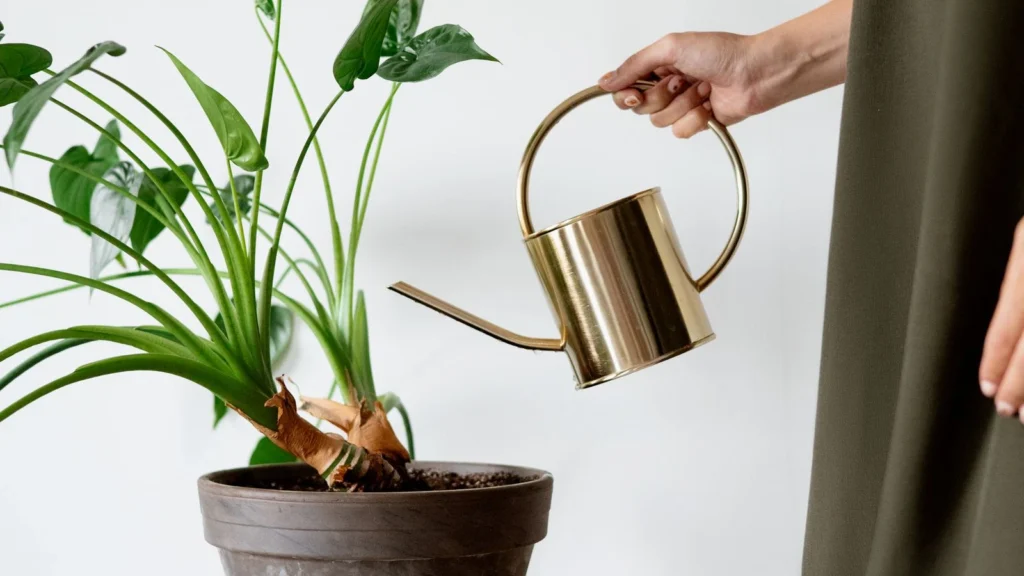
When houseplant soil is not absorbing water, the mix has usually dried past the point where it can wet itself again. Peat and coir based mixes turn hydrophobic when they dry out fully, so water beads on the surface or slips down the gap between the shrunken mix and the pot wall. The pot drains fast, yet the center of the root ball stays dry.
The fix is contact time, not more water poured faster. Set the pot in a few inches of water and let the mix drink from below, or water slowly in two or three passes with pauses between them. Then check the weight of the pot and the moisture in the center before you decide the job is done.
How to Confirm the Mix Is Hydrophobic Before You Treat It
Start with identification, not treatment. Fast drainage on its own does not prove the mix is hydrophobic, because a coarse bark mix and a pot with a blocked drainage hole can look similar at first glance.
Virginia Cooperative Extension gives a simple set of checks for this problem. Work through them in order the next time you water.
- Lift the pot right after watering. A pot that still feels light has kept very little of the water you poured on it.
- Push a finger into the middle of the pot. If the center is dry while the edges feel damp, the water took a shortcut around the root ball.
- Slide the root ball out with one hand flat over the surface. Wet patches next to dry patches show the water never spread through the mix.
- Look at the rim. A visible gap between the mix and the pot wall is the channel the water escapes through.
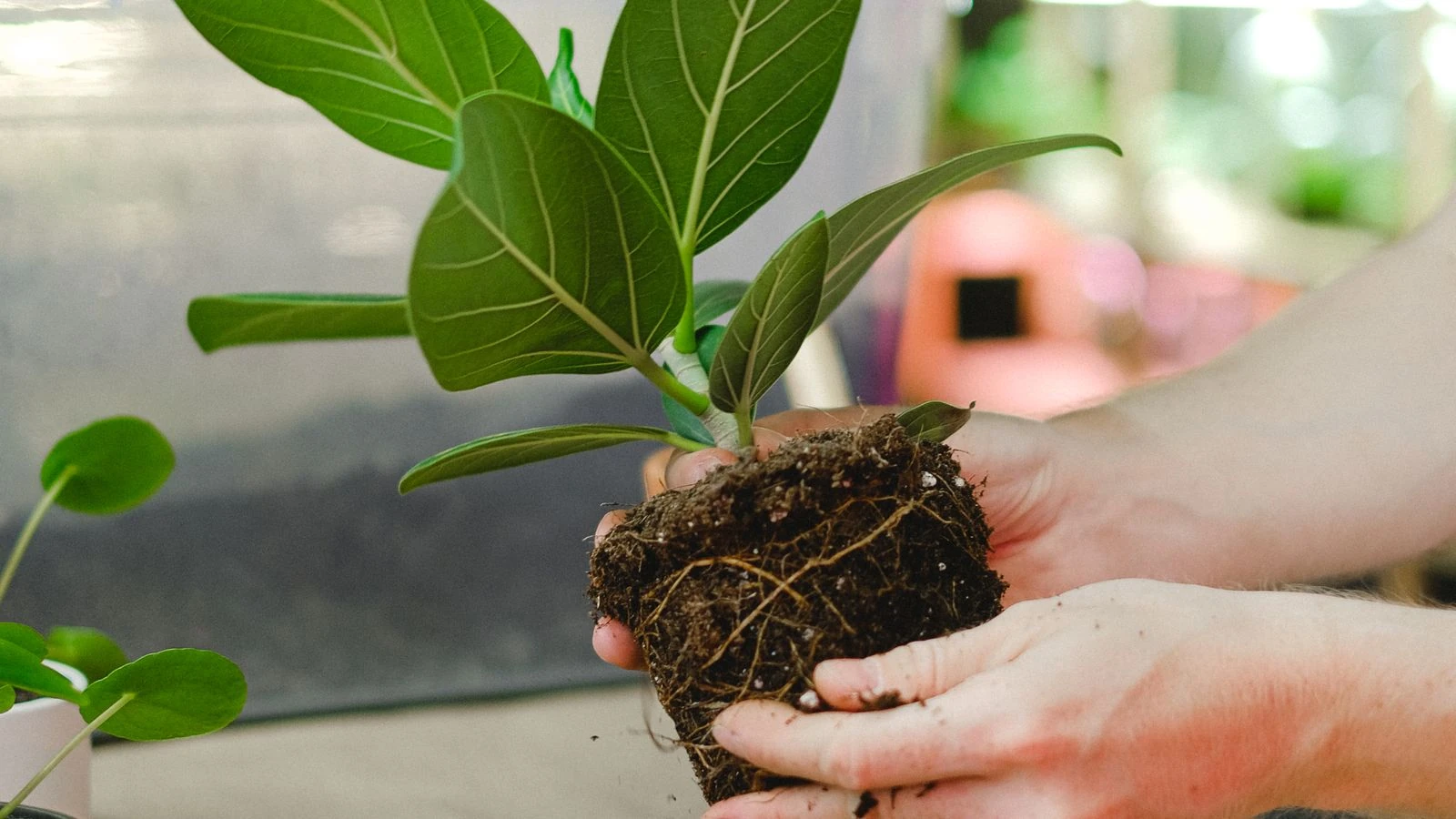
UC Master Gardeners describe the same trap from the other side. Water can run between the side of the pot and a dry root ball, wet only the outer surface, and leave the center of the root ball dry while the saucer fills.
Use this table to match what you see with the likely cause before you change anything.
| What you see | What it points to | First check |
|---|---|---|
| Water beads or pools on the surface | Hydrophobic surface layer | Finger check in the center of the pot |
| Water exits the drainage hole within seconds and the pot stays light | Water channeling down the pot wall gap | Look for a gap at the rim |
| Surface is hard and cracked, edges damp after watering | Dry mix with a surface crust | Break the crust gently, then recheck |
| Mix is wet through and the pot stays heavy, but the plant still wilts | A different problem, such as root damage | Read the overwatering and underwatering signs compared side by side before adding more water |
| Pot is packed with roots and holds little mix | Root bound pot, not hydrophobic mix | Slide the root ball out and look at the root to mix ratio |
Do not soak, repot or add any product until these checks point to dry, water repellent mix. Treating the wrong problem wastes time and can keep roots wet that were never dry.
Why Houseplant Soil Is Not Absorbing Water
Peat and coir change when they dry out
Peat moss is the traditional base of bagged potting mixes, and coir is the common peat replacement. Iowa State University Extension warns that both materials become hydrophobic if they are allowed to dry out, and that rewetting them can be a major challenge.
Virginia Cooperative Extension says the same about finished mixes. Dry potting soils, especially peat or bark based ones, can become hydrophobic, which means the mix repels water instead of taking it in.
While the mix stays moist, water spreads across the particles and moves into the pores. Once the mix dries fully, the particle surfaces resist wetting, so poured water looks for any open path instead of soaking in.
The mix shrinks away from the pot wall
Dry mix also changes shape. As peat based mix dries, it shrinks and pulls away from the sides of the container, leaving a gap at the rim.
That gap is the fastest route out of the pot. Water poured on top runs down the gap, out of the drainage hole, and into the saucer, while the root ball in the middle stays dry.
This is why a full saucer can mislead you. Clemson Extension advises watering until water runs out of the bottom so the lower part of the pot gets wet, but that advice assumes the mix can absorb water in the first place.
Old mix breaks down and compacts
Mix does not stay the same for the life of the plant. Iowa State notes that organic components such as peat, coir and bark slowly decompose, while mineral components such as perlite change very little.
As the organic part breaks into finer pieces, the mix holds less air and packs tighter. A tight surface crust can then shed water even when the mix below is not fully hydrophobic.
Compaction alone is not the same diagnosis as hydrophobicity. The checks above separate the two, and the fix below handles both, starting with the gentlest method.
What You Need Before You Start
- A sink, basin or bucket wide enough to hold the pot
- Room temperature water (Clemson gives 62 to 72 °F as a suitable range for watering indoor plants)
- A timer, so a soaking pot is not forgotten
- A chopstick or similar blunt tool if the surface has crusted
- A saucer or tray you can empty after draining
Work in a sink or tub where spills do not matter. Move the plant back only after the pot has drained fully.
How to Rewet Soil That Will Not Take Water
Try the methods in this order. Move to the next one only if the checks show the center of the root ball is still dry.
Method 1: Water slowly in two or three passes
Virginia Cooperative Extension recommends two or three slow applications of water to help hydrate dry potting soil. Pour a modest amount over the whole surface, wait for it to sink in, then repeat.
Clemson Extension gives the same idea as double watering. Water once, then water again half an hour later, so the first pass can soften the surface for the second.
If a hard crust has formed, scratch it lightly with the chopstick before the first pass. Keep the tool away from the crown of the plant and from thick surface roots.
Method 2: Bottom soak the pot
Set the pot in a basin with 2 to 3 inches of water so water enters through the drainage holes. Virginia Cooperative Extension puts the soak at 15 to 30 minutes, depending on how dry the mix is, and notes that hydrophobic mix can take longer and may need the soak repeated.
Take the pot out once the surface feels moist. Do not leave a houseplant standing in tray water for more than 60 minutes, because Virginia Cooperative Extension warns that standing water raises the risk of root rot.
UC Master Gardeners add that bottom watering a stubborn pot can take an hour or more in total. If your pot needs longer, lift it out at the limit, let it rest, and repeat the soak later instead of leaving it standing.
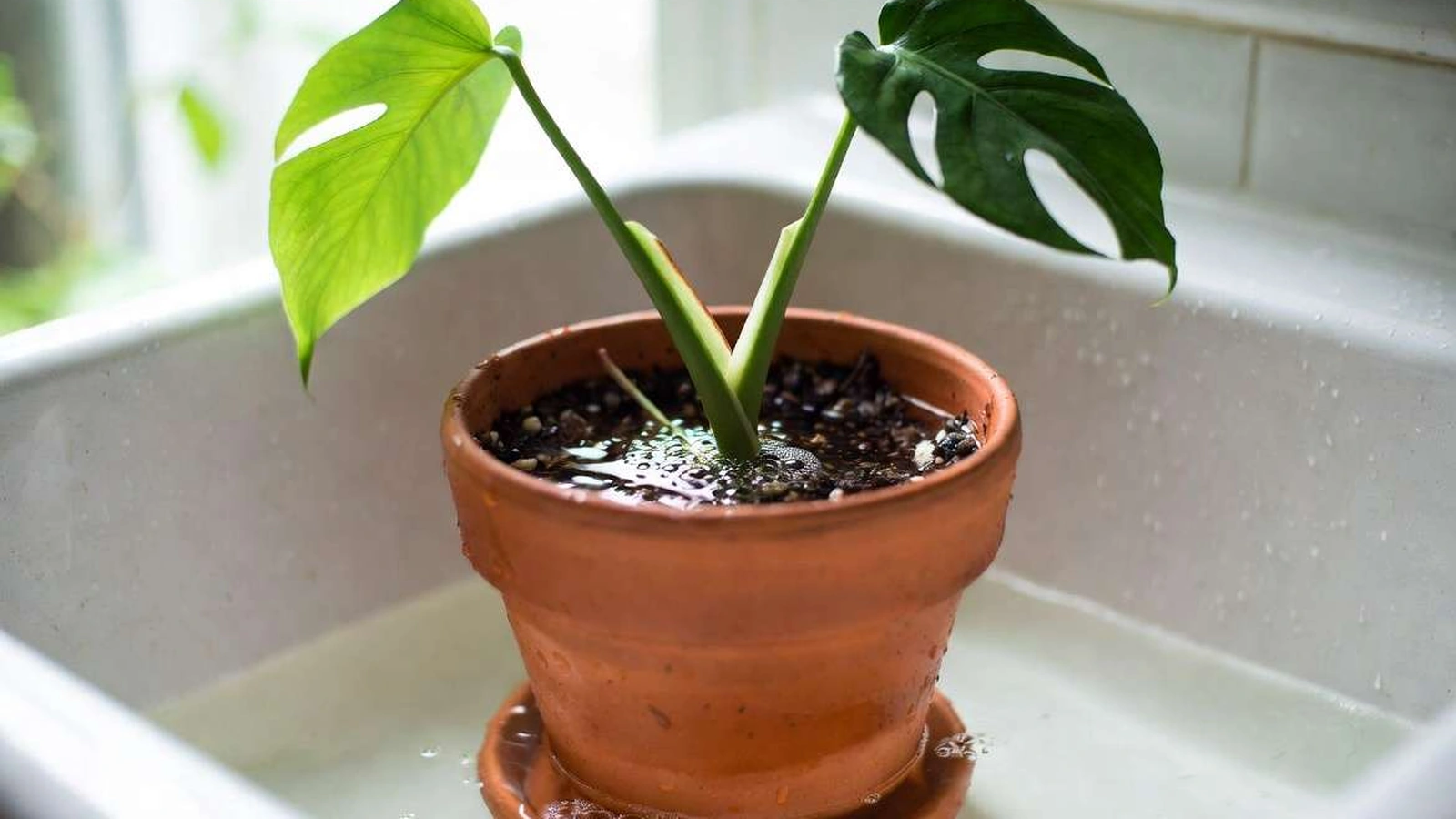
Method 3: Submerge a small pot
For a small pot that still will not wet, UC Master Gardeners suggest submerging the whole pot in a bucket of water. The pot may float at first because of the air trapped in the dry root ball.
Hold it under and watch the bubbles. When the bubbling stops, the air has been displaced by water, and you can lift the pot out and let it drain.
Clemson describes the same rescue in simpler terms. Place the pot in a sink or a bucket of water, remove it when the soil surface is moist, and allow the pot to drain fully.
Method 4: Trickle water onto large plants you cannot lift
A large floor plant cannot go in a bucket. UC Master Gardeners suggest trickling water onto the surface slowly enough that it has time to absorb instead of running off.
Set a timer if you use a hose or a slow drip from a watering can refill routine. A forgotten trickle can flood a saucer and keep the mix wetter than the plant needs.
Press the mix gently back against the pot wall with your fingers first, so the rim gap closes and the trickle lands on mix, not in the channel.
Signs the Rewetting Worked
Check results before you put the plant back. A darker surface alone is not proof, because the edges wet faster than the center.
- The pot feels clearly heavier than it did before the soak.
- A finger pushed into the center of the pot finds moist mix, not dry crumbs.
- The surface color is even, with no pale dry island in the middle.
- Water poured slowly on top now sinks in instead of running to the rim.
If the center is still dry after two rounds of soaking, the mix is no longer taking water even with long contact time. That is the point where repotting gives a better result than a third soak.
When Rewetting Is Not Enough: Repot Into Fresh Mix
Repot when the root ball stays dry in the middle after repeated soaks, or when the mix has shrunk into a hard plug that pulls away from the pot wall every time it dries.
Clemson Extension adds a reason not to delay. Peat that is allowed to dry completely is not only difficult to rewet, it also holds less water afterward than it could hold before it dried.
Pre-moisten the fresh mix before it goes into the pot. Iowa State describes the target feel: you can squeeze the mix into a ball that holds its shape in your hand, breaks apart easily, and releases little to no water when pressed.
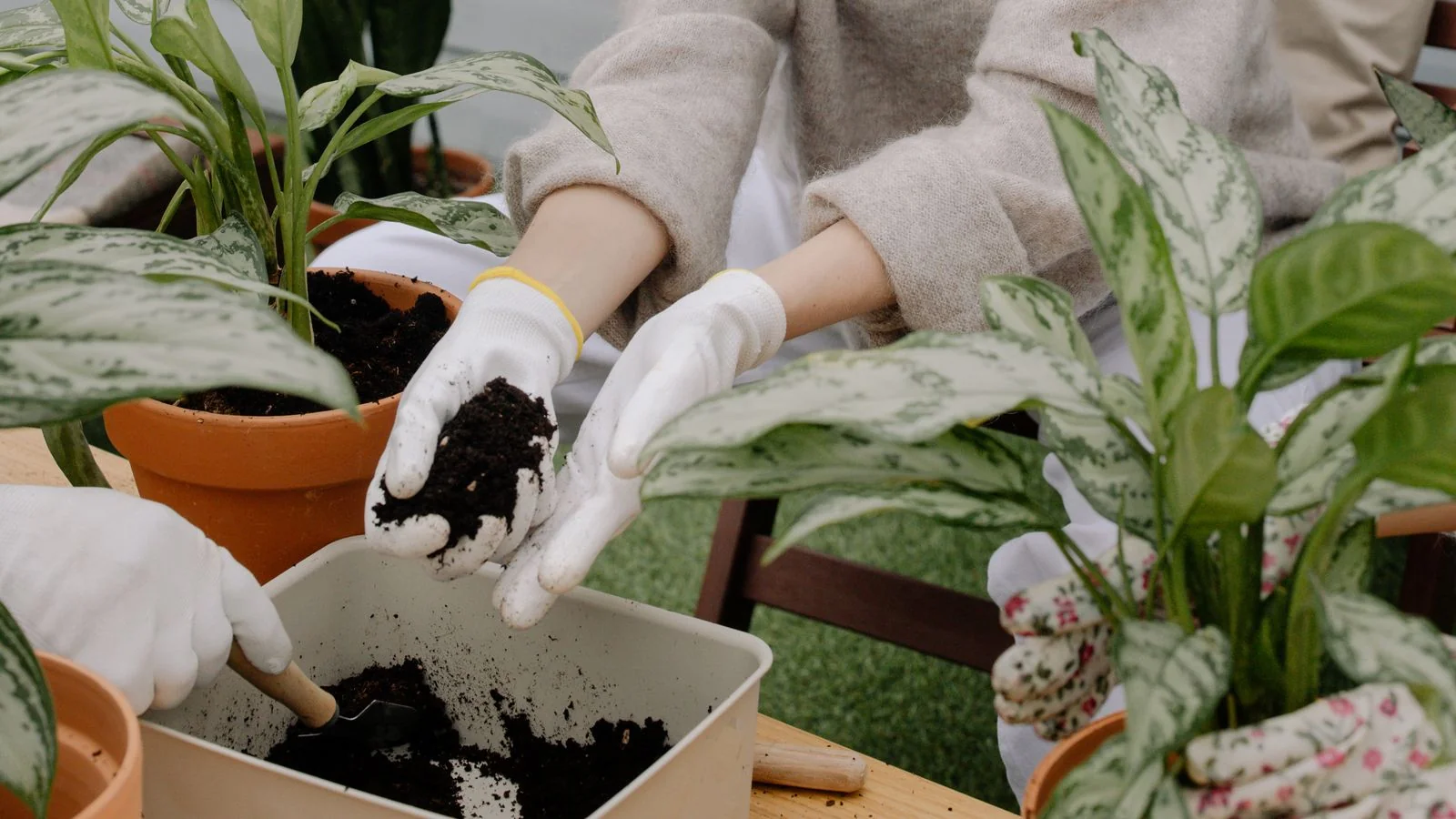
Fill the pot with the moistened mix, settle the plant at its previous depth, and water once more so the mix and roots make contact. For the handling side of the move, see how to manage plant shock after repotting before you start.
Do not repot a plant that only needed a soak. Repotting is the last step in this sequence, not the first response to one fast draining watering.
Wetting Agents and the Dish Soap Question
Many bagged mixes already contain a wetting agent, added by the grower or the mix maker because dry peat resists water. That is one reason a fresh bag usually wets more easily than an old, dried out pot.
If you use a wetting agent product, choose one labelled for container plants or potting media and follow the label rate exactly. Extension sources warn that wetting agents can injure plants when overdosed, so more than the label rate is not a shortcut.
Dish soap comes up often in home advice. None of the extension sources reviewed for this article recommend dish soap as a treatment for hydrophobic mix, so this guide does not either. The soak methods above solve the problem without adding a product the plant was never labelled to receive.
How to Stop It Happening Again
Prevention is a watering habit, not a product. The mix turned hydrophobic because it dried past the point where it could wet itself again.
- Water before the mix dries out completely, especially peat and coir based mixes in small pots and terracotta. Clemson notes that unglazed clay loses water through its walls, so those pots dry faster than plastic or glazed ones.
- Water thoroughly when you water. Virginia Cooperative Extension advises watering container plants until the mix is wet all the way through, then letting the pot drain until dripping stops.
- Empty the saucer after draining instead of leaving the pot standing in runoff.
- Check moisture by finger and by pot weight between waterings, the same checks used in the identification section. Our guide to watering indoor plants properly walks through that routine in full.
- Pre-moisten dry mix from a new bag before you pot with it, working water in until it is evenly damp.
No schedule fits every plant. Species, pot size, light and room conditions all change how fast a pot dries, so the checks matter more than the calendar.
Conclusion
Houseplant soil that will not absorb water is a dry mix problem before it is a plant problem. Confirm it with the weight, finger and root ball checks, then give the mix contact time through slow passes, a bottom soak or submersion.
Once the center of the pot is moist again, keep the mix from drying out fully and the problem rarely needs the rescue steps again. If fast drainage is only one of several watering problems at home, start with the watering indoor plants properly guide linked above and rebuild the routine from there.
Why does water run straight through my houseplant pot?
The mix has usually dried out fully and turned hydrophobic, so water runs down the gap between the shrunken mix and the pot wall and out of the drainage hole. Virginia Cooperative Extension notes that excessive, quick drainage usually indicates the mix did not hydrate sufficiently.
Can hydrophobic soil recover, or do I have to replace it?
It can often be rewetted with slow passes, a bottom soak or submersion, and the checks in this article tell you whether it worked. If the center stays dry after repeated soaks, or the peat has dried out fully many times, fresh mix is the better fix.
How long should I bottom water a dry plant?
Virginia Cooperative Extension suggests 15 to 30 minutes in 2 to 3 inches of water, repeated if the mix is still dry. Do not leave the pot standing in water for more than 60 minutes.
Does dish soap help soil absorb water?
The extension sources reviewed for this article do not recommend dish soap for this problem. Use slow soaking first. If you use a wetting agent, use a product labelled for potting media and follow the label.
How do I know the soil has rewetted properly?
Lift the pot and feel the weight gain, then push a finger into the center of the pot. Moist mix in the center and a clearly heavier pot are the two checks Virginia Cooperative Extension and UC Master Gardeners both rely on.
My plant wilted even though I watered it every week. Was this the cause?
It is a possible cause, and the checks above can confirm whether water was bypassing the root ball. Wilting can also come from root damage in wet mix, so check the root ball before assuming. A plant that stayed dry at the roots for a long period may not recover, and no watering method can promise that it will.